

Why Finding the Right Interior Painting Contractor Matters
When you’re ready to refresh your home, finding the right interior painting contractor in my area can feel overwhelming. You need someone skilled, reliable, and trustworthy. But how do you sort through the options?
Quick Answer: How to Find an Interior Painting Contractor in Your Area
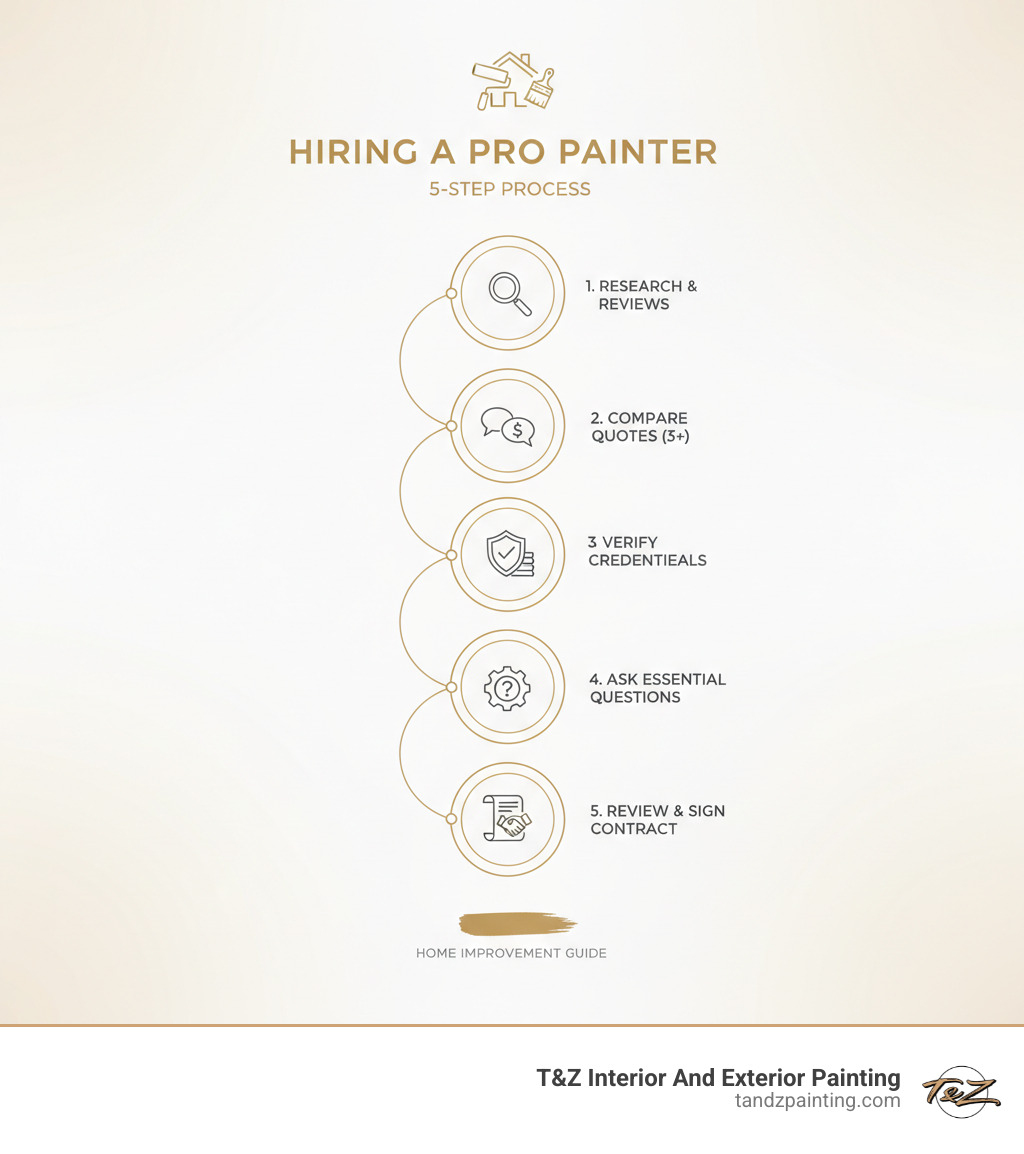
- Check online reviews on platforms like Google, Angi, or the Better Business Bureau (BBB).
- Verify licensing and insurance to protect yourself from liability.
- Request detailed written quotes from at least 3 contractors.
- Review their portfolio of completed interior painting projects.
- Ask for local references from recent customers.
Hiring a professional painter transforms your home, but choosing one shouldn’t be a guessing game. With interior painting projects ranging from $917 for a single room to nearly $5,000 for multiple rooms, you deserve a contractor who delivers quality results without the headaches.
This guide cuts through the confusion. We’ll walk you through what to look for when hiring an interior painting contractor, what questions to ask, and what a professional job looks like from start to finish. You’ll learn how to find a painter who delivers beautiful, lasting results.
The “Why”: Professional vs. DIY Painting
DIY vs. Hiring a Professional Painter: A Breakdown
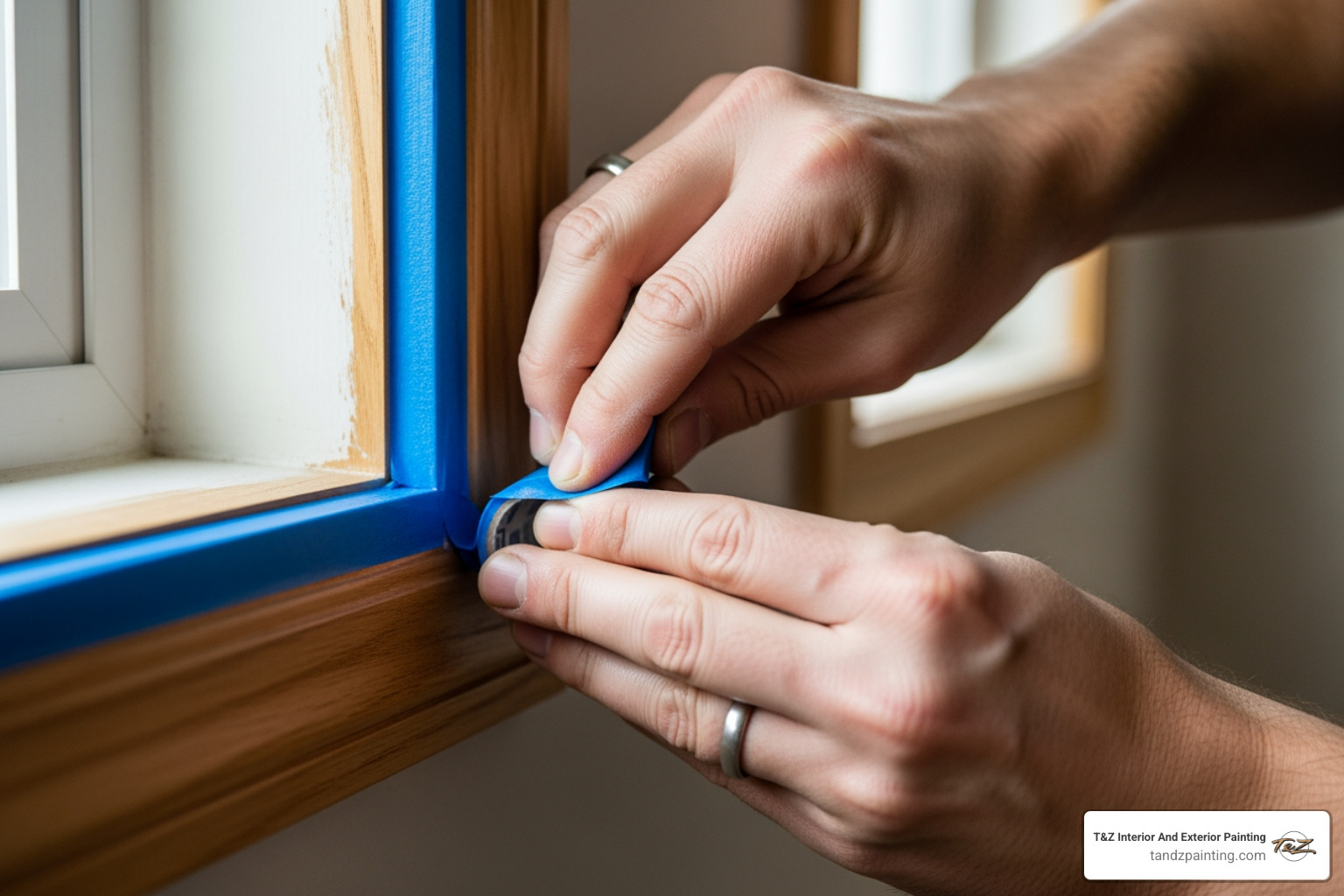
While the idea of saving money with DIY painting is appealing, it’s important to consider the full scope of the project. A seemingly quick weekend job can easily stretch into weeks of prep, painting, and cleanup, especially without experience.
Professional painters bring invaluable experience. They’ve painted thousands of rooms and know how to handle tricky corners, high ceilings, and textured walls. A skilled interior painting contractor in my area can often complete a project in a fraction of the time it takes a DIYer, delivering a smooth, even finish built to last.
Here’s a quick breakdown of the key differences:
- Cost: DIY seems cheaper, but hidden costs include equipment, fixing mistakes, and the value of your time. A professional quote includes all materials, labor, and expertise for a predictable price.
- Time: Professionals work efficiently in teams, completing projects much faster than the average homeowner, who often underestimates the time required for prep and multiple coats.
- Quality: Professionals deliver consistently smooth finishes, free of brush strokes, drips, or uneven coverage. They have mastered surface preparation and application techniques.
- Safety: Painting can involve ladders and chemical fumes. Professionals are trained in safety protocols and have the right equipment for any job, including high ceilings or stairwells.
- Equipment: Professionals arrive with specialized tools for every task, from high-quality brushes and rollers to sprayers, ensuring better and more efficient results.
For homeowners in areas like Elmhurst or Downers Grove who value their time and want a flawless finish, hiring a professional is often the smarter investment.
Does a Fresh Coat of Paint Really Add Value to Your Home?
Yes, a fresh coat of paint is one of the most cost-effective ways to increase your home’s value. Fresh, clean walls signal that a home is well-cared-for, making rooms feel brighter, larger, and more inviting to potential buyers. It’s one less project for them to tackle, which is a significant selling point.
While the exact return on investment (ROI) varies, interior painting consistently ranks among the top home improvements for visual impact. If you’re selling, neutral, modern colors help buyers envision their own style in the space. Even if you’re not selling, the value of living in a freshly painted home that you love is immeasurable.
The Unseen Benefits: Why Quality Paint and Primer Matter
When you hire a professional, you’re investing in a finish that lasts. This starts with using the right materials.
Quality paint offers richer pigments for truer colors, better coverage with fewer coats, and superior durability against fading and wear. Cheaper paint may save money upfront but often requires more coats and chips easily, leading to more frequent repainting.
Primer is the secret to a professional paint job. It’s essential for:
- Adhesion: It creates a uniform surface for paint to stick to, preventing peeling or flaking.
- Stain Blocking: It seals water stains, smoke damage, or bold colors, ensuring they don’t bleed through the new paint.
- Consistent Color: It provides a neutral base, which is crucial when making dramatic color changes (e.g., dark to light), so the final color is true and vibrant.
Professional painters understand that high-quality materials like these are essential for a finish that transforms your home and stands the test of time, whether you’re refreshing a room or considering The Pros and Cons of Painting Ceilings the Same Color as Walls.
The “What”: Decoding a Painter’s Services, Costs, and Timelines

When searching for an interior painting contractor in my area, it’s important to understand what services are offered and how they are priced. Let’s break it down.
What Services Do Interior Painting Contractors Offer?
Professional interior painting is more than just rolling color on walls. A comprehensive service addresses every detail for a lasting finish. Key services include:
- Wall and Ceiling Painting: The core service, which brightens rooms and can make them feel larger.
- Trim, Molding, and Door Painting: Creates crisp, clean lines that frame your rooms for a polished look.
- Cabinet Painting: A cost-effective way to transform your kitchen or bathroom without a full renovation.
- Surface Preparation: The most critical step, including drywall repair (patching holes and cracks), wallpaper removal, cleaning, sanding, and priming to ensure a flawless, durable finish.
How Much Does It Cost to Hire an Interior Painter?
While a precise quote requires an in-person estimate, we can provide some general figures. Nationally, projects can range from $917 for a single room to nearly $5,000 for multiple rooms.
Most painters charge by square footage, typically between $2 and $6 per square foot, which includes labor, materials, and prep. Some may charge hourly, with rates from $20 to $50 per hour on average, though this can vary.
For a rough idea:
- An average 12×12-foot room might cost around $400-$600 to paint.
- Ceiling painting often costs between $3 and $8.50 per square foot.
- Wallpaper removal can add around $3 per square foot due to the intensive labor.
We provide transparent, comprehensive quotes that break down all costs, so you know exactly where your investment is going. You can also review our Pricing approach on our website.
What Key Factors Influence the Final Price?
Several factors determine your final price. We consider all of them when creating your personalized estimate:
- Project Size: The total square footage to be painted.
- Condition of Walls: The amount of prep work needed, such as patching holes, sanding, or removing wallpaper, will impact labor costs.
- Wall and Ceiling Height: High ceilings require more time and specialized equipment.
- Number of Coats: Drastic color changes or covering stains may require extra coats.
- Type and Quality of Paint: High-quality paints cost more but offer better durability and coverage.
- Surface Texture: Textured walls require more paint and time than smooth walls.
- Geographic Location: Labor and material costs vary by region. We offer competitive pricing for homeowners in areas like Elmhurst and Naperville.
- Furniture and Room Prep: We can handle moving and covering furniture, which is factored into the labor cost.
Your Checklist: How to Choose the Best Interior Painting Contractor in My Area
Finding the right interior painting contractor in my area is about finding a partner you trust in your home. Here’s how to choose with confidence.
What to Look For in an Interior Painting Contractor in My Area
When vetting professionals, look for these key indicators of quality and reliability:
- Positive Online Reviews: Check Google, Angi, the Better Business Bureau (BBB), and Thumbtack for consistently high ratings. Look for comments on professionalism, cleanliness, and attention to detail.
- Insurance and Licensing: This is non-negotiable. A contractor must have liability insurance and worker’s compensation to protect you. Always ask for proof.
- Professionalism: Do they communicate clearly, return calls promptly, and arrive on time for the estimate? These small things indicate how they’ll manage the entire project.
- Detailed, Written Quotes: A vague estimate is a red flag. A professional quote breaks down costs for labor, materials (including paint brand/type), and all prep work.
- A Strong Portfolio: Reputable contractors are proud to show their work. Review their Interior Painting Portfolio for projects similar to yours, like our work in Interior Painting Elmhurst IL or Cabinet Painting Naperville.
- Recent References: A confident contractor will gladly provide references. Speaking with past clients offers invaluable insight.
- A Solid Warranty: A warranty shows the contractor stands behind their work.
Essential Questions to Ask a Potential Interior Painting Contractor in My Area
Once you have a shortlist, ask these questions to find the best fit:
- Who will perform the work? Are they employees or subcontractors?
- What specific materials (paint brand and type) do you use?
- How will you protect my home, floors, and furniture?
- What is the estimated project timeline from start to finish?
- Can you provide a few recent references?
- What does your warranty cover and for how long?
- Are you licensed and insured? Can I see the documentation?
- What is included in the quote, and what could cost extra?
A professional interior painting contractor in my area will welcome these questions and provide clear, confident answers.
Understanding the Painter’s Warranty
A warranty is a contractor’s promise of quality. Most reputable painters offer a warranty of around two years for residential projects.
- What’s typically covered? Issues resulting from workmanship or material defects, such as chipping, peeling, or blistering.
- What’s not covered? Normal wear and tear, accidental damage, structural issues, or problems from pre-existing conditions like moisture.
The warranty provides peace of mind, assuring you that the contractor stands behind their work. Always get the warranty details in writing before the project begins.
The “Prep & Process”: What to Expect Before, During, and After
Working with a professional interior painting contractor in my area should be a smooth process. A little preparation on your end helps us work efficiently and protect your belongings.
How to Prepare Your Home for the Painters
The more you can do ahead of time, the faster we can start changing your space. For a full guide, see our post on How to Prepare a House for Painting.
- Clear the Area: Remove small decorative items, lamps, electronics, and fragile objects from the rooms being painted.
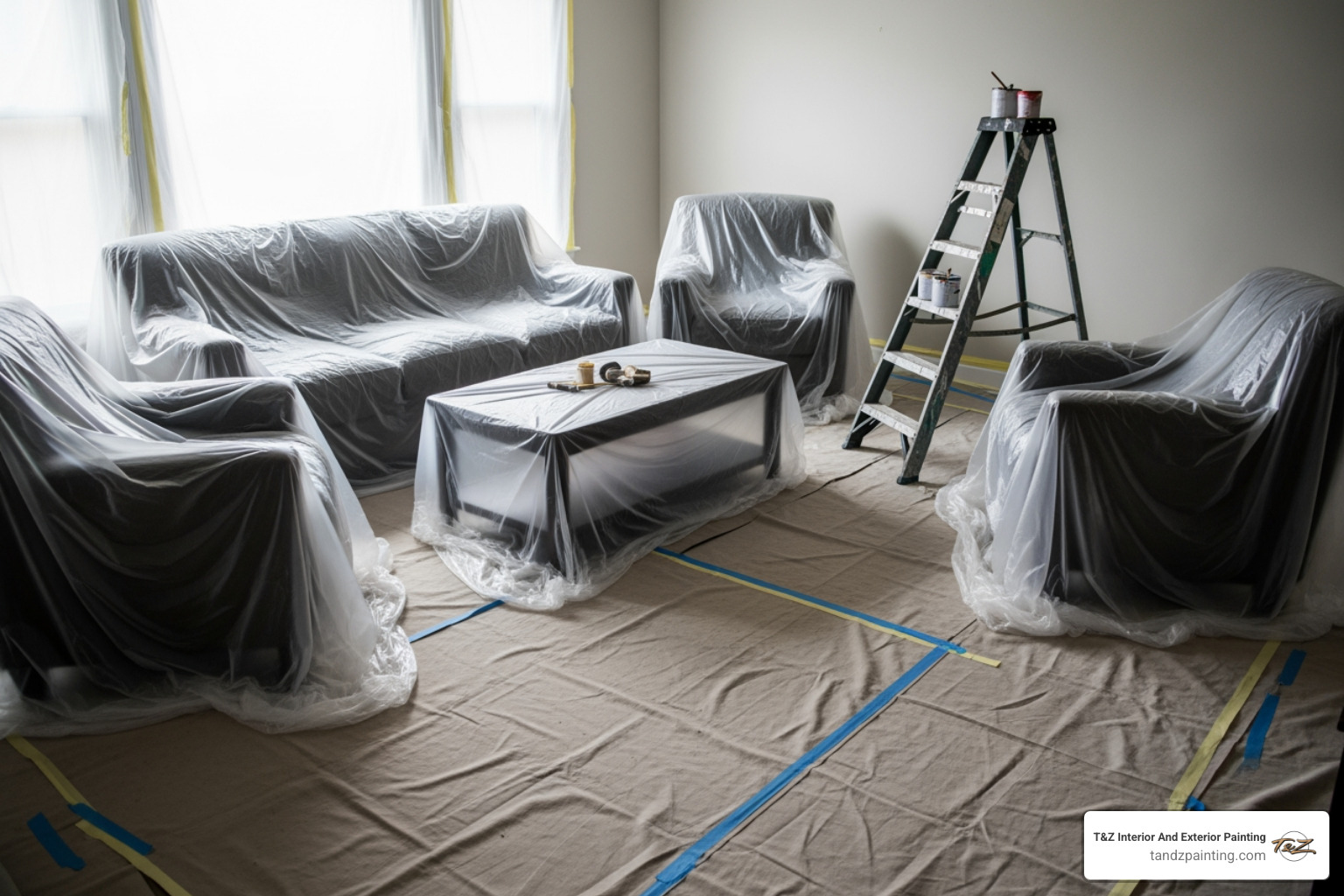
- Move Furniture: While we can help with large items, moving smaller furniture beforehand is a great help. We will cover everything remaining with protective plastic.
- Remove Wall Hangings: Take down all pictures, mirrors, curtains, and art. Also, remove outlet covers and switch plates.
- Secure Pets: For their safety and ours, please keep pets in a separate area away from the work zone.
- Ensure a Clear Path: We need a clear path to carry equipment and materials from the entrance to the work area.
Choosing the Right Paint Finish for Every Room
The paint finish you choose is as important as the color. It affects durability, cleanability, and the overall look.
- Matte/Flat: Has no sheen and is great for hiding imperfections. Best for low-traffic areas like ceilings and formal dining rooms.
- Eggshell: Offers a soft, low sheen and is more durable than flat. A popular choice for living rooms and bedrooms.
- Satin: Has a smooth, slightly glossy appearance. It’s easy to clean, making it ideal for high-traffic areas like hallways, kids’ rooms, and family rooms.
- Semi-Gloss: Noticeably shiny and highly durable. Perfect for high-moisture areas like kitchens and bathrooms, as well as for trim, doors, and cabinets.
- High-Gloss: The most durable and reflective finish. It creates a mirror-like surface but highlights imperfections, so prep must be perfect. Used on trim and furniture for a dramatic effect.
What to Expect During and After the Job
We follow a clear process to minimize disruption and maximize results.
- Setup: We arrive on time, review the plan with you, cover all furniture and floors, and tape off trim for clean lines.
- Surface Preparation: This is where the magic happens. We clean walls, fill holes and cracks, sand surfaces smooth, and apply primer as needed.
- Professional Painting: Our experienced painters apply two coats of your chosen paint, ensuring even coverage and a uniform finish.
- Daily Cleanup: At the end of each day, we clean up our tools and materials, leaving your home tidy.
- Final Walkthrough: Once painting is complete, we walk through the project with you to ensure you are 100% satisfied. If anything needs a touch-up, we’ll fix it on the spot.
- Final Cleanup: After your approval, we remove all our equipment and coverings, leaving you with a beautifully refreshed space.
Throughout the process, you can expect clear communication and respect for your home from top-rated painters in your area, including communities like Downers Grove and Wheaton.
Frequently Asked Questions about Interior Painting
As you consider hiring an interior painting contractor in my area, you may have more questions. Here are answers to some common inquiries.
How often should interior walls be repainted?
The lifespan of interior paint varies, but here are some general guidelines:
- High-Traffic Areas (Hallways, Kitchens, Kids’ Rooms): Every 2 to 3 years due to scuffs and wear.
- Low-Traffic Areas (Guest Rooms, Formal Dining Rooms): Every 5 to 10 years.
- General Living Spaces (Bedrooms, Living Rooms): Typically every 3 to 5 years.
Factors like homes with pets or children, direct sunlight exposure, and the original paint quality will influence this timeline. If your walls look faded, scuffed, or you simply want a change, it’s time for a refresh.
Can a painter match my existing wall color?
Yes, absolutely. Professional painters use color-matching technology to replicate your existing wall color with high accuracy. The best way to ensure a perfect match is to provide a small, dry paint chip from the wall. We can then have the color analyzed and recreated. It’s also important to match the original finish (e.g., eggshell, satin), as a different sheen will reflect light differently and alter the appearance.
How long does it typically take to paint a room?
The time required depends on the room’s size and the amount of prep work needed.
- Average-Sized Room (e.g., 12×12 ft): A professional team can typically complete the job, including prep and two coats, in 4 to 6 hours.
- Small Room or Accent Wall: This can often be done in half a day.
Factors that can extend the timeline include extensive drywall repairs, high ceilings, intricate trim work, or drastic color changes that require extra drying time between coats. We will provide a clear timeline with your project estimate.
Conclusion
Choosing the right interior painting contractor in my area is straightforward when you know what to look for. By vetting contractors, understanding costs, and preparing for the process, you can confidently invest in your home’s beauty and longevity.
A professional paint job is about more than color—it’s about meticulous preparation, skilled application, and a lasting finish. We are committed to delivering stunning results with experienced teams, top-brand materials, and excellent customer service.
For homeowners in Downers Grove, Wheaton, Lombard, Elmhurst, Addison, Carol Stream, La Grange, Lockport, Plainfield, Lemont, Glenview, Wilmette, Woodridge, and Chicago, we are ready to transform your space with precision and care.
Ready for a change? Contact us for your free interior painting estimate today!