
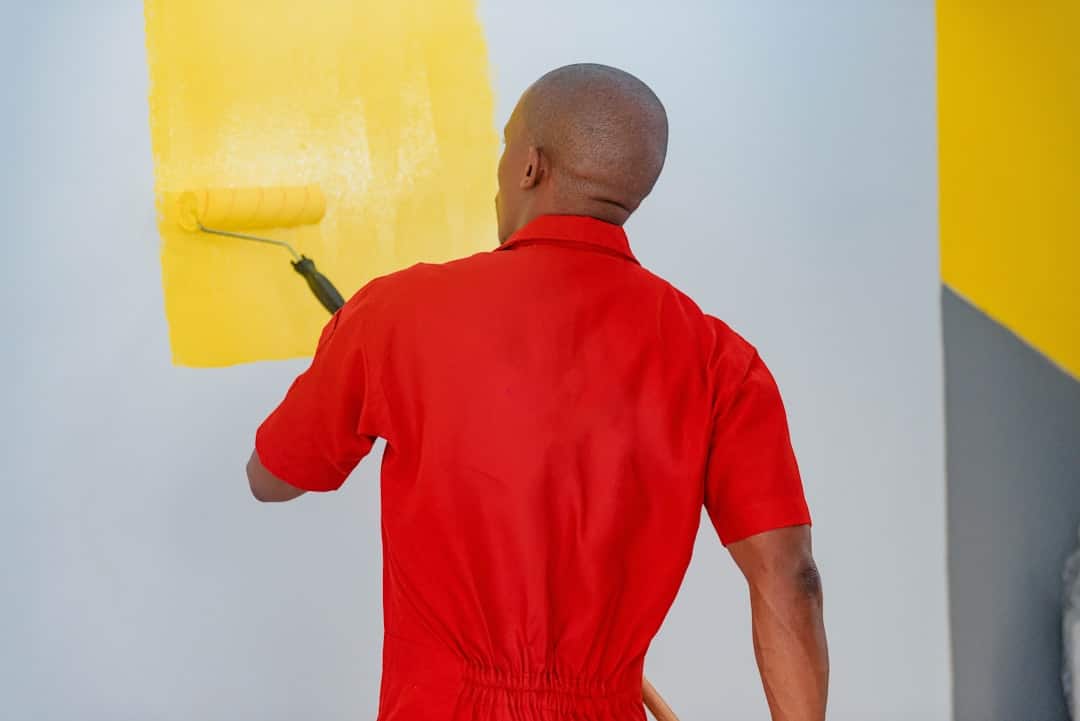
Why Professional Wall Painting Transforms Your Home
Professional wall painting delivers results that go far beyond what a weekend DIY project can achieve. The difference lies in meticulous preparation, quality materials, and expert technique.
Quick Answer: What Makes Professional Wall Painting Different?
- Proper Preparation – Professionals spend significant time repairing, cleaning, and priming surfaces.
- Quality Materials – They use high-grade brushes, rollers, and professional primers.
- Expert Technique – Skills like “cutting in” for crisp edges and proper rolling create a uniform finish.
- Layering System – A coat of primer plus two finish coats ensures durability.
- Time Efficiency – A 1,200 sq ft house takes pros about 2 days, versus weeks for a DIYer.
Many people underestimate the skill involved. As one professional painter notes, “Most of my friends think I’ve got the easiest job on the planet. After all, anybody can paint walls and ceilings, right?” The reality is that the gap between a DIY attempt and a professional finish is significant.
A professionally painted room doesn’t just look better—it lasts longer, often up to 7 years. The crisp lines, smooth finish, and durability all result from the specific methods this guide will reveal. Whether you’re deciding between DIY and hiring a pro or want to improve your own skills, you’ll learn what separates amateur work from true craftsmanship.
The Foundation: Preparation and Tools Pros Swear By
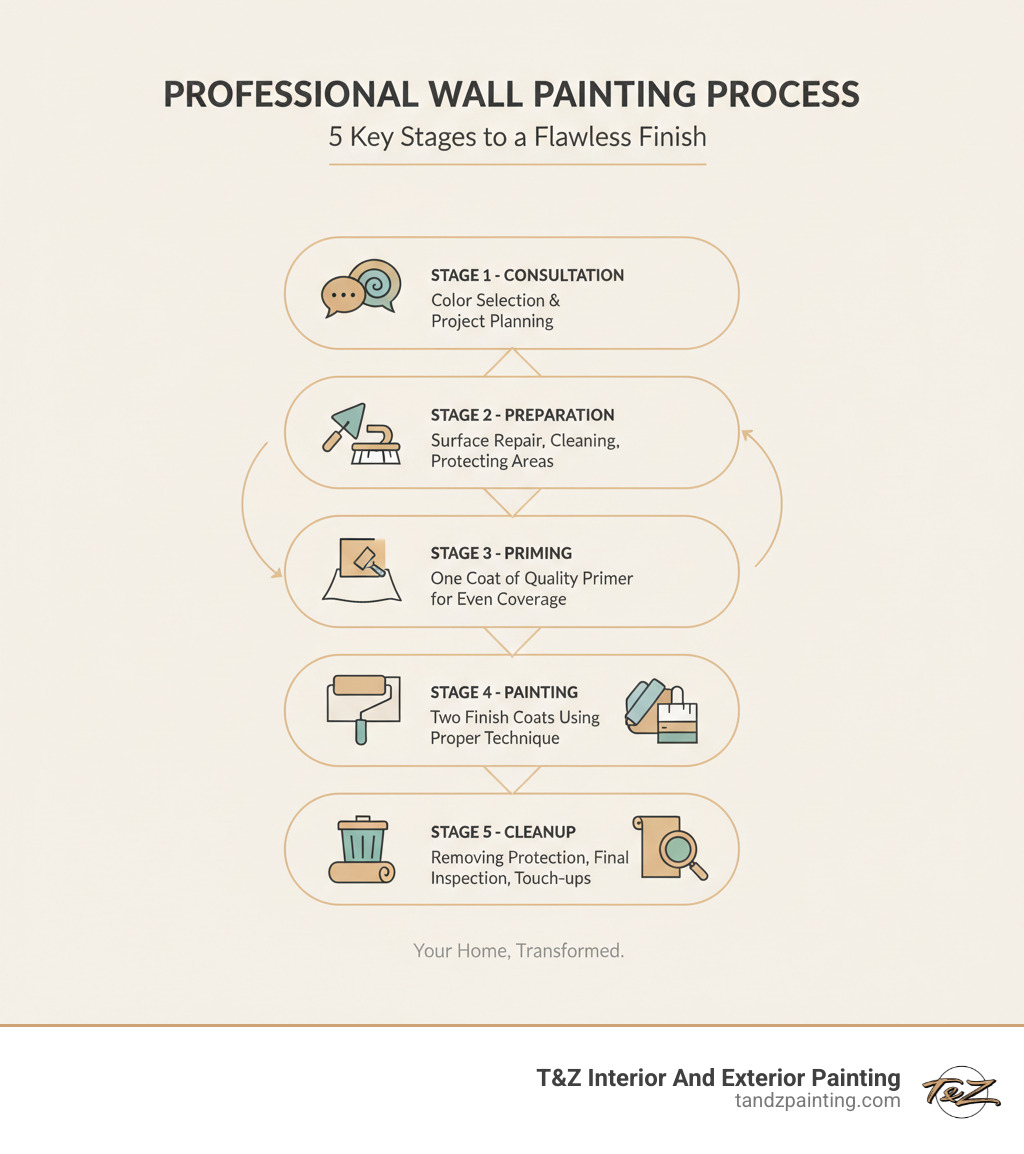
Professional wall painting is won or lost before you even open the paint can. A flawless finish that lasts for years starts with creating the perfect canvas through meticulous preparation and the right tools.
How Professionals Prepare Walls for Painting
Before painting, we inspect every inch of your walls for issues. Small holes and dents are filled with spackle, while gaps between trim and walls are sealed with high-quality paintable caulk. Knowing when to use spackle versus caulk is a key professional detail.
Once repairs dry, we sand the patched areas until they are perfectly smooth. Skipping this critical step means every imperfection will show through the new paint. Next, we clean the walls thoroughly. Dust and grease prevent proper paint adhesion, so we use a TSP (trisodium phosphate) solution to ensure the surface is pristine.
Protecting your floors and furniture is a top priority. We use heavy-duty canvas drop cloths and carefully wrap furniture. You can learn more in our guide on How to Prepare a House for Painting. Finally, we apply painter’s tape with precision to protect trim and casings, ensuring crisp, clean lines.
Choosing Your Arsenal: Pro-Grade Paint, Primer, and Tools
Using the right tools is non-negotiable. A high-quality 2 to 2.5-inch angled brush ($15-$25) is essential for “cutting in” clean lines. For large surfaces, we use a 9-inch roller with a microfiber roller cover, with the nap thickness chosen based on wall texture. To work efficiently, we use roller grids inside 5-gallon buckets, which saves time and reduces splatter.
Primer is the unsung hero of a paint job. It seals the surface, ensures adhesion, and provides even coverage. We use tinted primers when covering dark colors and alkyd-based stain-blocking primers for tough stains.
For paint, latex (water-based) is standard for interiors due to its low odor and easy cleanup. We also prioritize low-VOC and eco-friendly paint options to improve indoor air quality.
Paint finishes are chosen for both look and function. Matte/flat hides imperfections, while eggshell and satin balance a subtle sheen with durability. Semi-gloss and high-gloss are ideal for trim, doors, and bathrooms due to their high durability. Our work adheres to the highest benchmarks, including the PCA Industry Standards for quality, ensuring quality craftsmanship.
The Professional Wall Painting Process: From Brush to Roller
Once preparation is complete, the painting begins. This is where technique and precision transform a surface into a beautifully finished room. The difference in professional wall painting comes down to how the brush and roller are handled to create a uniform, streak-free finish.
Mastering the Cut: How to Get Crisp Lines and Edges
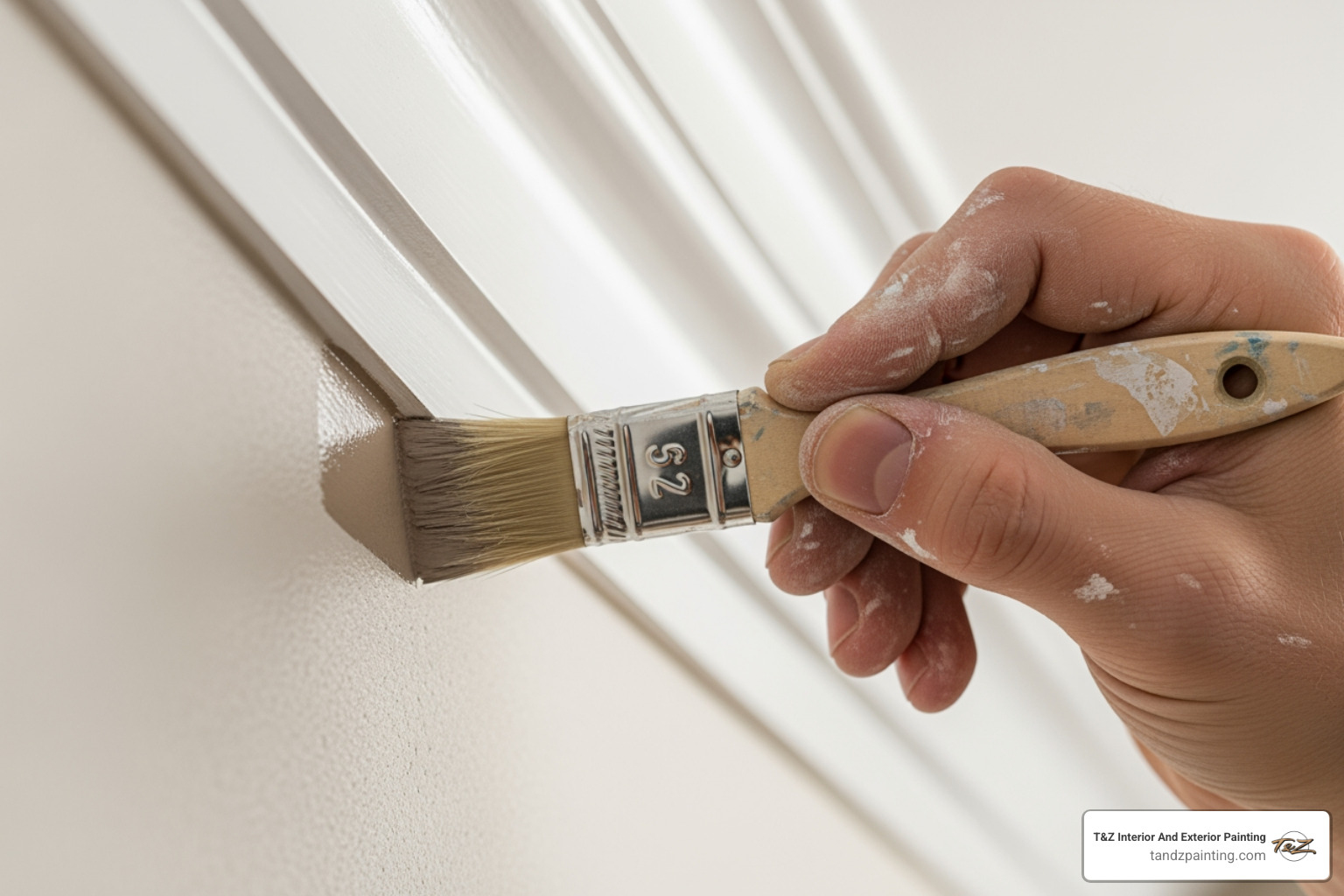
The sharp, clean lines that define a professional job are achieved through a technique called “cutting in.” Using a high-quality 2 to 2.5-inch angled brush, we gain the control needed to paint a straight line, often freehand. Properly loading the brush is key to avoiding drips.
Our technique involves starting slightly away from the edge and working the paint toward the line. A smart strategy is to paint the trim first, as it’s easier to tape off trim than a freshly painted wall. When cutting in, we overlap onto the main wall surface slightly, ensuring the roller can blend seamlessly without leaving a gap.
Achieving a Flawless Finish: The Art of Professional Wall Painting
Once the edges are cut in, we roll the main wall surfaces. We start with a “W” pattern on a 3-4 foot square section to distribute paint evenly, then fill it in with overlapping vertical strokes.
The key to avoiding streaks is maintaining a wet edge, meaning we blend new paint into the previous section before it dries. Consistent, firm pressure on the roller is also vital for even coverage. For some surfaces, we use back-rolling—lightly going over the wet paint to smooth the texture.
The professional standard is one coat of primer and two coats of finish paint, with adequate drying time between coats. Rushing this step compromises the final result.
Tackling Tricky Areas with Confidence
Certain areas require specialized techniques for a professional finish.
- Windows and Doors: We paint these methodically, often starting with recessed panels and moving to rails and stiles to ensure even coverage.
- Cabinets: This is a specialty that requires extreme precision. We offer dedicated Cabinet Painting Services, which involves removing hardware and doors for a factory-smooth finish.
- Trim and Baseboards: These are typically painted with a durable semi-gloss or high-gloss finish for easy cleaning and a pleasing contrast.
- Corners and Ceilings: We use careful cutting-in for corners and maintain a wet edge on ceilings to avoid lap marks.
- Hardware: We always remove light fixtures, outlet covers, and switch plates before painting. This small step makes a huge difference in the final, clean look.
The Pro vs. DIY Dilemma: Making the Smart Choice
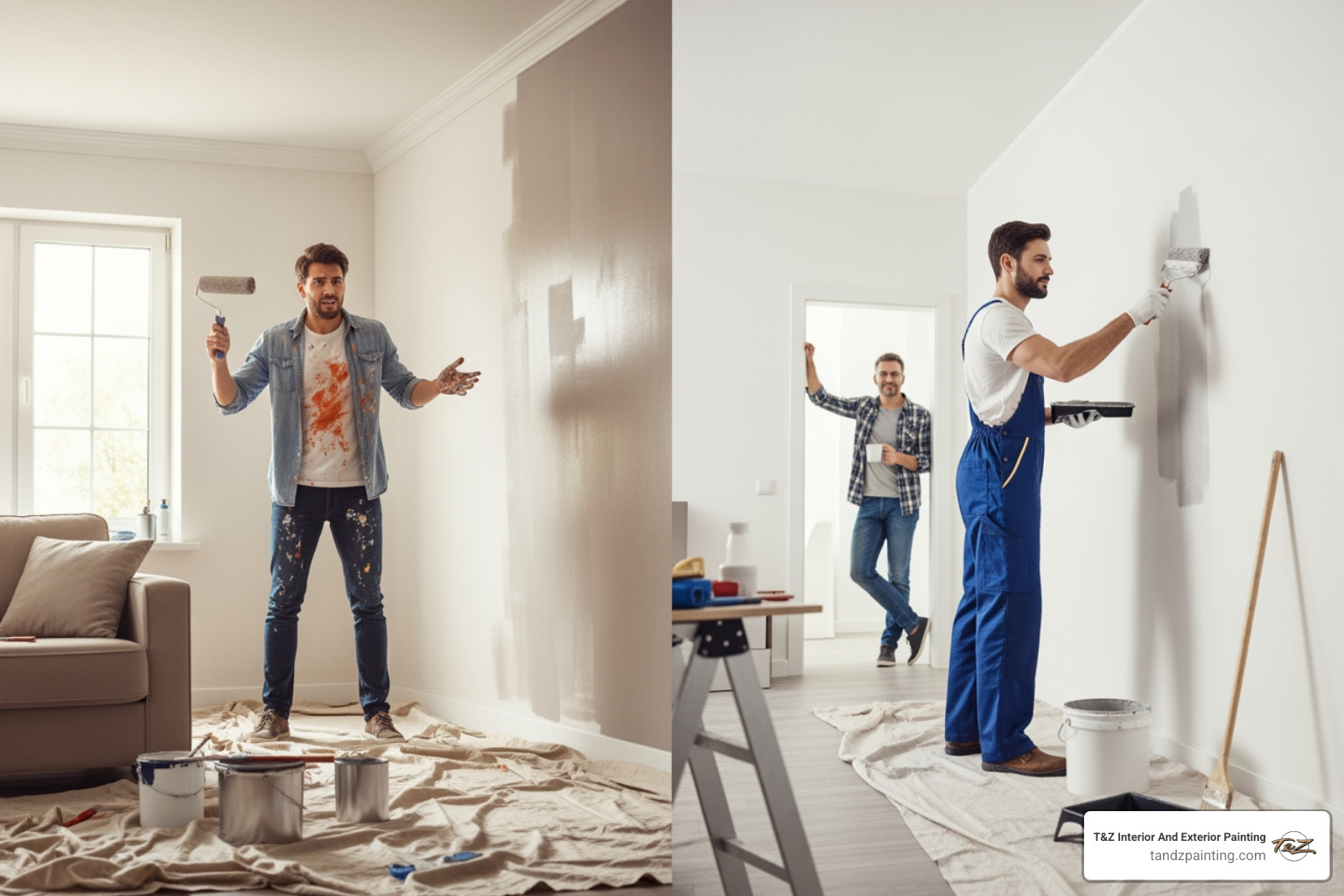
The decision between a DIY project and calling in experienced painters isn’t just about money. It’s about your time, stress levels, and the quality you expect. While DIY can feel empowering, professional wall painting delivers results that are worth the investment.
Benefits of Hiring a Professional Painter
When you hire professionals, you’re investing in expertise, efficiency, and peace of mind.
- Quality and Durability: We deliver smooth, uniform finishes with crisp lines that can last seven years or more. Our reputation in Lombard, Wheaton, and Elmhurst is built on these results.
- Time Savings: Our crew can paint a 1,200 sq ft house in about two days—a project that could take a DIYer weeks.
- Proper Equipment: We use professional-grade tools, including scaffolding for high ceilings, ensuring safety and a better finish.
- Problem-Solving Experience: We know how to handle moisture issues, stubborn stains, and other unexpected challenges for your Interior Painting Services project.
- Warranty and Accountability: Reputable companies offer warranties, protecting your investment.
- Stress Reduction: We handle the messy, tedious work so you can focus on your life.
- Increased Home Value: A professional paint job boosts appeal and market value.
Key Factors Influencing the Cost of Professional Wall Painting
The cost of professional wall painting typically ranges from $1.28 to $2.74 per square foot, but several factors influence the final price:
- Project Size and Scope: The total square footage is the primary driver.
- Wall Condition: Walls with extensive damage (holes, cracks, stains) require more prep labor, increasing the cost. High ceilings also add to the complexity.
- Color Changes: Drastic color changes often require extra coats of primer and paint.
- Prep Work: The amount of patching, sanding, and repair is a significant cost factor and the foundation of a quality job.
For a detailed estimate for your project in areas like Elmhurst or Downers Grove, visit our Pricing page for a clear assessment.
| Aspect | DIY Painting | Professional Painting |
|---|---|---|
| Cost | Materials only (paint, tools, supplies) | Materials + Labor + Overhead + Warranty |
| Time | Significantly longer (prep, paint, dry, clean) | Efficient (2 days for 1200 sq ft house) |
| Quality | Varies with skill, potential for flaws | Consistent, high-quality, durable finish |
| Equipment | Basic tools, often rented or bought cheaply | Professional-grade tools, specialized equipment |
| Cleanup | Your responsibility, potentially messy | Thorough, included in service |
| Expertise | Learning curve, trial and error | Years of experience, problem-solving skills |
| Warranty | None | Often includes a service warranty (e.g., 2 years) |
| Stress | High, can be frustrating | Low, managed by professionals |
When to DIY vs. When to Call the Experts
Consider DIY for:
- A small, single room with walls in good condition.
- Simple touch-ups or a single accent wall where perfection isn’t critical.
Call the professionals for:
- Large-scale projects: Painting multiple rooms or an entire home.
- High ceilings and tricky access: Vaulted ceilings and stairwells require special equipment and safety expertise.
- Intricate trim work: Detailed molding or multi-color schemes demand a professional’s steady hand.
- Wallpaper removal and significant wall repair: These jobs are often more complex than they appear.
- Commercial spaces: Businesses need the efficiency and minimal disruption that our Commercial Painting Services provide.
For anything beyond a simple project, hiring a pro saves time and stress while guaranteeing a superior result.
Beyond the Final Coat: Maintenance and Modern Trends
The story of your professional wall painting doesn’t end with the final coat. Proper care ensures your walls look beautiful for years, while staying aware of trends can inspire your next project.
Maintaining Your Professional-Looking Paint Job
To keep your new paint job looking fresh, follow a few simple maintenance tips.
- Allow for Curing Time: Paint feels dry in hours, but it takes 2-4 weeks to fully cure. Be gentle with your walls during this period.
- Clean Gently: For dust and minor scuffs, use a soft cloth with water. For tougher marks, use a mild, non-abrasive cleaner, but test it in an inconspicuous area first.
- Use Your Touch-Up Kit: We provide leftover paint for a reason. Address scuffs and chips promptly with a small brush to keep them from becoming noticeable.
- Control Humidity: In bathrooms and kitchens, use exhaust fans to manage moisture, which helps prevent mold and protects the paint.
Latest Trends in Wall Painting Colors and Finishes
The world of paint is always evolving. Here are some of the latest trends we’re seeing in homes across Lombard, Wheaton, and Elmhurst.
- Enduring Neutrals: Whites, grays, and warm tans remain popular for creating a bright, versatile backdrop.
- Bold Accent Walls: A single wall painted in a dramatic color like deep navy or emerald green adds personality and a focal point.
- Sophisticated Textures: Textured paints and color washing techniques are gaining traction, adding depth and character to walls.
- Matte Finishes: While eggshell and satin are prized for durability, non-reflective matte finishes are popular for their modern look and ability to hide imperfections.
- Eco-Friendly Paints: Demand is growing for low-VOC and zero-VOC paints that improve indoor air quality.
For more inspiration, check out more color ideas on our blog to find the perfect palette for your home.
Conclusion
The secret to professional wall painting isn’t magic—it’s a combination of meticulous preparation, quality tools, and expert technique. While a small DIY project can be rewarding, professional work delivers a superior finish that lasts longer, looks better, and saves you from weeks of frustration.
Investing in a professional painter means you’re buying expertise, efficiency, and peace of mind. You get a flawless result that improves your home’s value while freeing you up to enjoy your time.
At T&Z Interior And Exterior Painting, we have perfected our craft across Lombard, Wheaton, Elmhurst, and the surrounding areas. Our experienced teams use top-brand materials and treat your home with care to deliver stunning results every time.
Ready to transform your space with a dazzling, long-lasting finish? Explore our expert House Painting Services.