
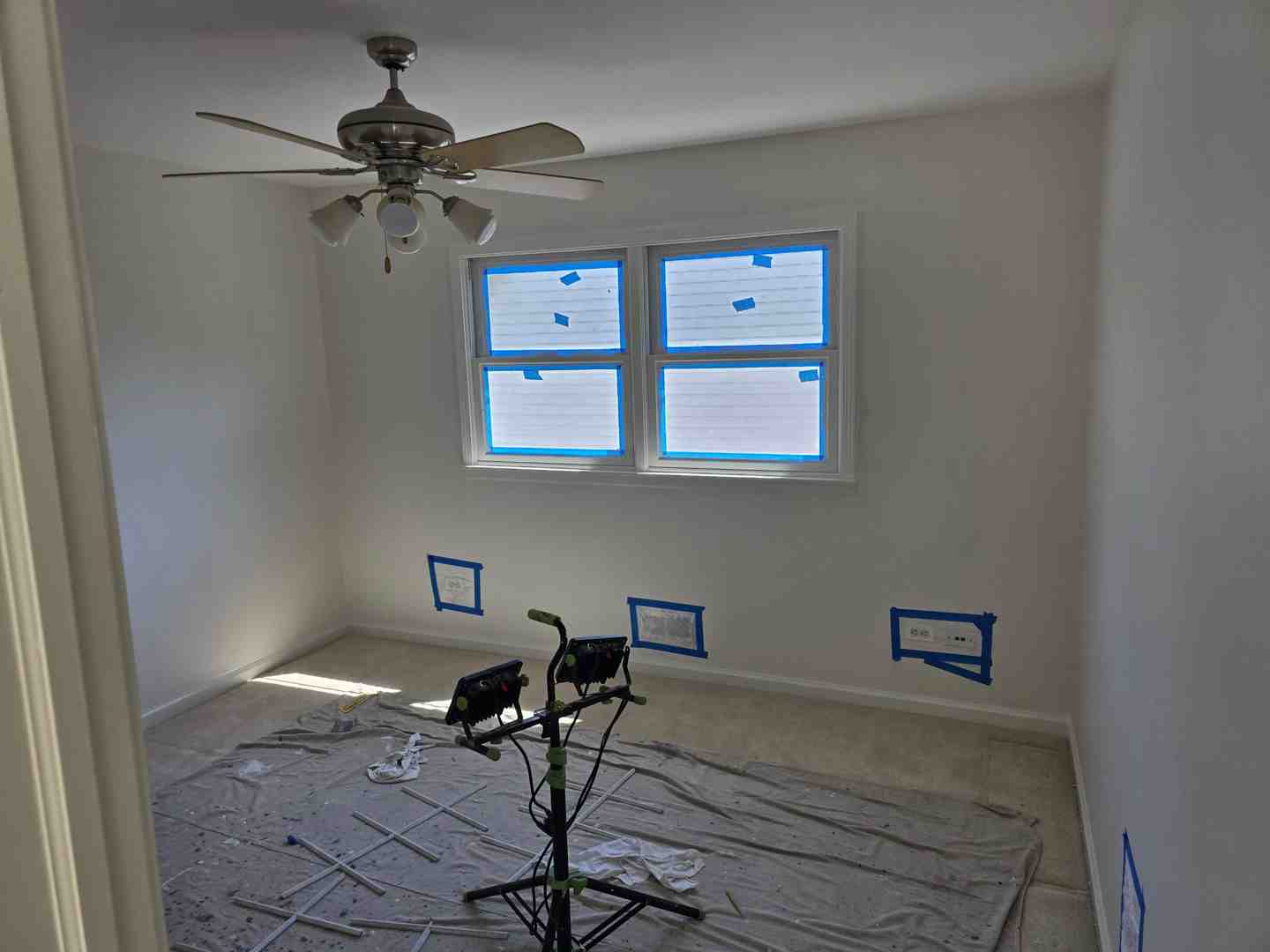
Why Odor Sealing Paint Matters for Your Home
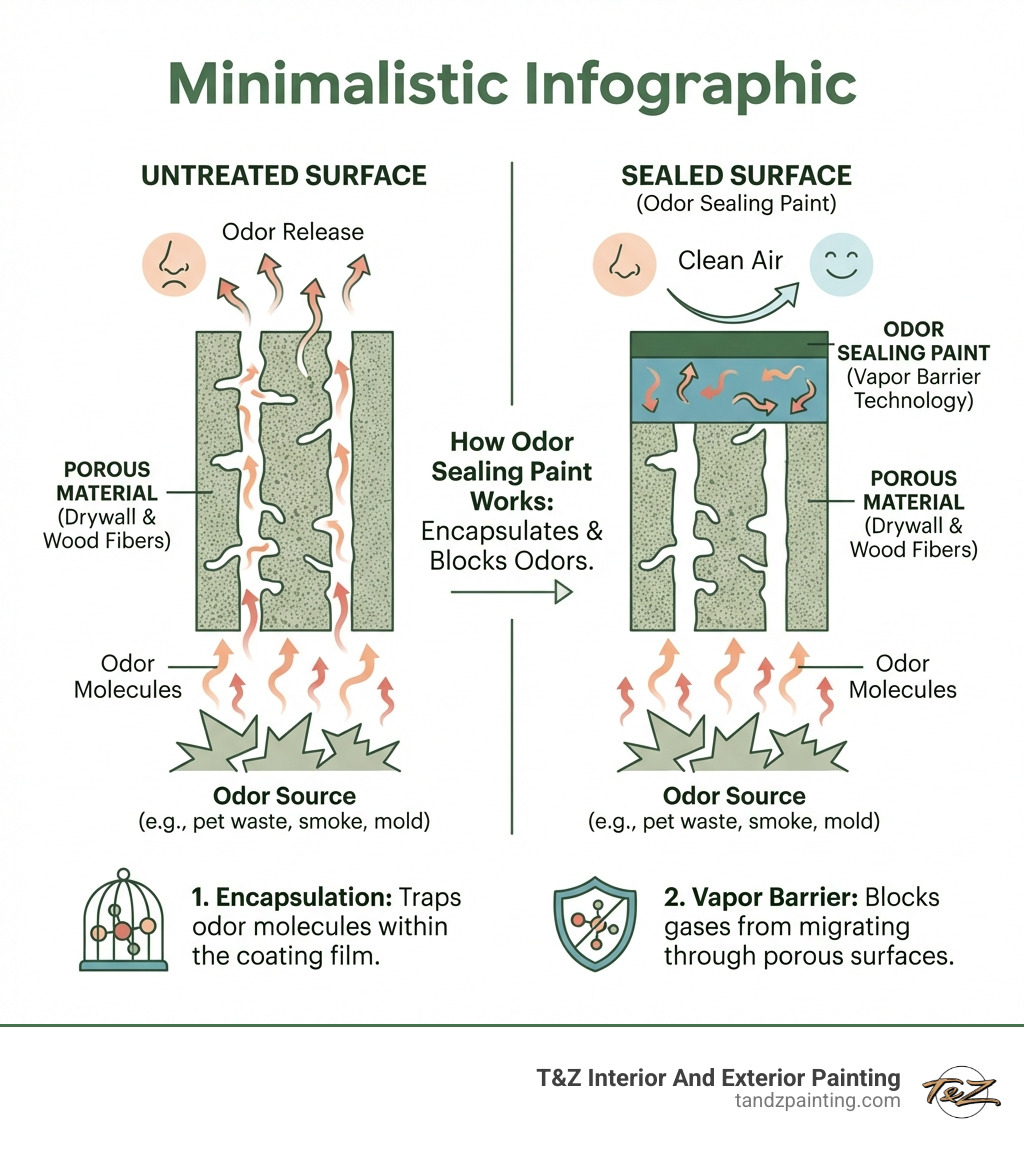
Odor sealing paint is a specialized primer or coating designed to permanently encapsulate and block stubborn odors from penetrating through walls, ceilings, and other surfaces. Unlike regular paint, these products use advanced technologies to trap malodors within the coating, preventing them from migrating to the surface even as temperature and humidity change.
Top Odor Sealing Paint Options:
- KILZ Restoration – Water-based primer for severe smoke, pet, and fire damage odors
- Zinsser B-I-N – Shellac-based sealer for maximum stain and odor blocking
- RECON Smoke Odor Sealer – Professional-grade with OdorLock technology for fire restoration
- ECOBOND OdorDefender – Eco-friendly, low-VOC formula with seaweed-derived additives
- Zinsser Odorless Oil Base – Oil-based performance without strong solvent smell
These products work by creating a vapor barrier that prevents odor molecules from passing through porous materials like drywall, wood, and concrete. They’re essential when dealing with smoke damage, pet odors, cooking grease, mildew, or fire restoration projects where standard primers simply wick odors back to the surface.
How Odor Sealing Paint Works:
- Encapsulation – Traps odor molecules within the coating film
- Vapor Barrier – Blocks gases from migrating through porous surfaces
- Permanent Adhesion – Bonds to nearly any substrate without releasing sealed odors
- Breathability – Allows moisture to escape while keeping odors locked in
Regular paint and primers aren’t formulated to handle these challenges. They can actually make odor problems worse by trapping moisture or allowing odor molecules to wick through as the coating dries. The result? Persistent smells that return weeks or months after painting.
I’m Tomasz Niemotko, and over the past 13 years with T&Z Interior And Exterior Painting, I’ve helped countless homeowners in the Lombard area permanently eliminate stubborn odors using professional-grade Odor sealing paint products and proper application techniques. Whether you’re dealing with fire damage restoration, pet odors in rentals, or tobacco smoke from previous occupants, choosing the right odor-blocking primer makes all the difference between a temporary fix and a lasting solution.
Similar topics to Odor sealing paint:
Understanding Odor Sealing Paint and How It Works
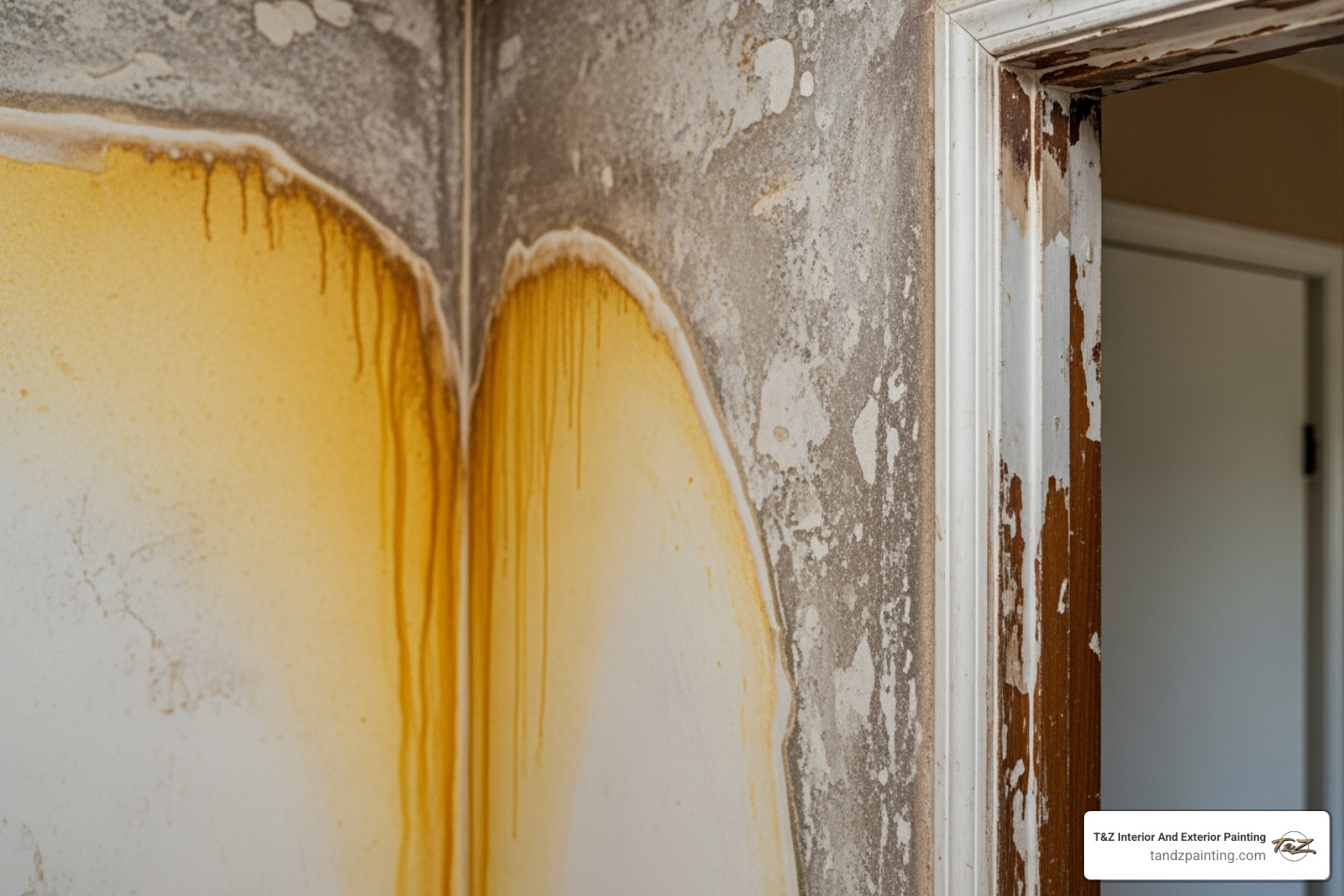
When we walk into a home in Wheaton or Elmhurst that has suffered from fire damage or years of heavy smoking, the walls often look like they are “sweating” yellow nicotine or soot. These substances aren’t just on the surface; they have soaked deep into the pores of the drywall and wood.
Odor sealing paint works through a process called permanent encapsulation. While a standard primer might cover the color of a stain, a specialty odor-sealing product uses technologies like “OdorLock” to create a molecular cage. This prevents smoke odors and stains from migrating through the coating. Unlike typical water-based paints that might “wick” the odor to the surface as they dry, these sealers are designed to be highly permeable to moisture (breathable) while remaining an absolute barrier to vapors and smells.
It is also vital to remember safety during these projects. If you are working on an older home in Chicago or La Grange, you must be aware of lead paint. According to the EPA, scraping or sanding old paint can release toxic lead dust, which is especially dangerous for children and pregnant women. Professional interior painting often requires specialized equipment to handle these hazards safely.
Why standard primers fail
You might be tempted to grab a “all-purpose” primer for a smelly room, but we’ve seen why this often fails. Standard water-based primers are prone to “wicking.” Because they are water-based, they can actually re-wet the odor-causing particles (like nicotine or pet urine salts), drawing them up into the new layer of paint.
Furthermore, some cheap paints trap moisture against the substrate, which can lead to “alligatoring” or peeling when the temperature changes. When performing house painting, using a dedicated sealer ensures that the bond is permanent and the barrier is absolute.
Common odors blocked by specialty coatings
Specialty odor blockers are formulated to tackle the “Big Five” of household smells:
- Pet Urine: Specifically the ammonia and salts that react with humidity.
- Tobacco Smoke: The sticky tar and nicotine that coat every surface.
- Fire Damage: The pungent, acrid smell of charred wood and plastic.
- Cooking Grease: Rancid oils that have atomized and settled on kitchen walls.
- Mildew: The musty “old basement” smell caused by fungal growth.
Products like the Stain & Odor Barrier Primer – FixALL Paint are specifically engineered to provide a solvent-free alternative to traditional shellac, locking in these specific malodors so they never reach your nose again.
Top Recommended Odor Sealing Paint Products
Choosing the right product depends on the severity of the odor and the environment. Here in the Chicago suburbs, we use a variety of professional-grade tools to ensure the job is done right the first time.
- KILZ Restoration: This is a heavy-duty water-based primer that performs like an oil-based sealer. It is fantastic for fire damage and severe pet odors.
- Zinsser B-I-N: The gold standard for many pros. It’s a shellac-based primer that dries incredibly fast and can seal in almost anything, including the smell of a wood-burning fireplace.
- RECON Smoke Odor Sealer: A professional restoration favorite. It’s uniquely formulated to be used even in HVAC ductwork and meets strict NFPA standards for fire safety.
- KILZ Original Low Odor: If you need the strength of an oil-based sealer but are sensitive to chemicals, the KILZ® Low Odor Primer, Sealer, and Stainblocker is an excellent choice for occupied spaces like offices or schools.
Eco-friendly odor sealing paint options
For our clients in Glenview or Wilmette who prioritize indoor air quality, there are impressive eco-friendly options. The ECOBOND® OdorDefender® 5 Gallon is a standout. It uses a patented blend of food-grade mineral additives and seaweed-derived alginates to absorb odors rather than just covering them up. These products are often Zero-VOC, meaning they don’t release the “new paint smell” (which is actually chemicals off-gassing) into your home.
Versatile odor sealing paint for pet and food smells
For everyday household challenges like a kitchen that smells like last week’s fish or a mudroom with a “doggy” aroma, the Odor-Sealing Primer | Dutch Boy is very user-friendly. Their “Twist & Pour” container makes it easy for DIYers to handle, providing heavy-duty coverage over stains and food smells with excellent adhesion to previously painted surfaces.
Surface Preparation and Professional Application Methods
No Odor sealing paint will work if the surface is filthy. We always tell our clients that the finish is only as good as the prep.
Our cleaning protocols usually involve a thorough wash with a heavy-duty cleaner to remove surface soot or grease. For glossy surfaces, “scuff sanding” is essential to give the primer something to “bite” into. If we are dealing with mold or mildew, we treat the area with a dedicated mildew remover before the first drop of primer touches the wall.
Essential tools for odor remediation
Depending on the scale of the project, we utilize different application methods:
- Airless Sprayer: Best for large-scale fire restoration or reaching into cabinet painting nooks. It provides the most uniform coverage.
- Natural Bristle Brush: Ideal for oil-based or shellac-based primers.
- Synthetic Roller: Perfect for water-based odor blockers on drywall.
When using spray-painting techniques, a NIOSH-approved respirator is a non-negotiable safety requirement to protect against vapors and atomized particles.
Coverage rates and drying times
Understanding the math of painting helps ensure you buy enough material. Most odor-sealing primers offer a coverage rate of 300-400 sq. ft. per gallon on smooth surfaces. However, if you’re painting porous masonry in a Lockport basement or unsealed wood in a Plainfield attic, that coverage can drop to 100-200 sq. ft. per gallon.
According to the Zinsser® Odorless Interior Oil Base TDS, these products dry to the touch in about 30 minutes, but you should wait at least 2 hours before recoating. For a full cure—where the paint reaches its maximum hardness and odor-blocking strength—it can take up to 7 days.
Comparing Oil-Based vs. Water-Based Odor Blockers
| Feature | Oil-Based (e.g., KILZ Original) | Water-Based (e.g., KILZ Restoration) | Shellac-Based (e.g., B-I-N) |
|---|---|---|---|
| Adhesion | Excellent on most surfaces | Good on porous surfaces | Superior (sticks to glass/tile) |
| Odor Blocking | High | High to Very High | Highest |
| VOC Levels | High (330-350 g/L) | Low to Zero | Moderate (Alcohol-based) |
| Cleanup | Mineral Spirits | Soap and Water | Ammonia or Denatured Alcohol |
| Dry Time | 1-2 Hours | 1 Hour | 15-30 Minutes |
For exterior painting, oil-based products are often preferred for their durability against the Chicago weather. However, for interior painting, many homeowners now opt for modern water-based “solvent-free” technologies that offer high performance without the lingering chemical smell.
Frequently Asked Questions about Odor Sealing Paint
Can odor sealing paint handle severe fire damage?
Yes, but it requires a specific protocol. For professional fire restoration, we use products like RECON Smoke Odor Sealer. These are designed to encapsulate charred structural surfaces and can even be used in HVAC ductwork. They meet NFPA 90A and 90B standards, ensuring they don’t add a fire hazard to your ventilation system.
Is odor sealing paint safe for indoor use?
Modern formulations have come a long way. While traditional oil-based primers have a strong “solvent” smell, many new products feature “fast odor dissipation technology.” This means the “paint smell” disappears quickly after application. Always ensure proper ventilation—crack the windows and use fans—especially in smaller rooms in older Addison or Woodridge homes.
Do I need a topcoat over odor-blocking primers?
Usually, yes. While some products like ECOBOND can act as a standalone coating, most odor-sealing primers are designed to be “flat” to help the next layer of paint stick. For the best result, wait at least 24 hours before applying a high-quality acrylic latex topcoat. This ensures the primer has fully “locked in” the odors before you seal it with your final color.
Conclusion
Your home should be a sanctuary, not a reminder of past smokers, pets, or kitchen mishaps. Choosing the right Odor sealing paint is the most critical step in reclaiming your space. From the heavy-duty encapsulation of RECON to the eco-friendly innovation of ECOBOND, there is a solution for every nose and every budget.
At T&Z Interior And Exterior Painting, we pride ourselves on delivering quality, stunning results across Lombard, Schaumburg, and the entire Chicago area. We don’t just paint over problems; we solve them using the best materials and a decade of expertise.
If you’re ready to breathe easy again, contact our interior painting experts today for a consultation. Let us help you turn that “old house smell” into a “new home” feel!