
Why the Best Paint for Fascia Boards Matters More Than You Think
The best paint for fascia boards protects one of your home’s most weather-exposed surfaces — and choosing the wrong product means peeling, rot, and costly repairs within just a few years.
Quick answer — top picks for fascia board paint:
| Paint | Finish | Best For | Warranty |
|---|---|---|---|
| Sherwin-Williams Duration | Satin or Semi-Gloss | All-climate durability | 15 years |
| Valspar StormCoat | Satin or Semi-Gloss | Harsh weather, wide temp range | 15 years |
| Zinsser Allcoat Exterior | Satin | Multi-surface, metal and wood | 15 years |
| Dutch Boy Forever Exterior | Satin | Paint + primer in one, fast recoat | Lifetime |
Key rules of thumb:
- Use satin or semi-gloss — never flat — on exterior fascia and soffits
- Always prime bare wood before painting
- Apply two coats of 100% acrylic exterior paint for best results
- In hot, sun-heavy climates, prioritize UV resistance and mildew inhibitors
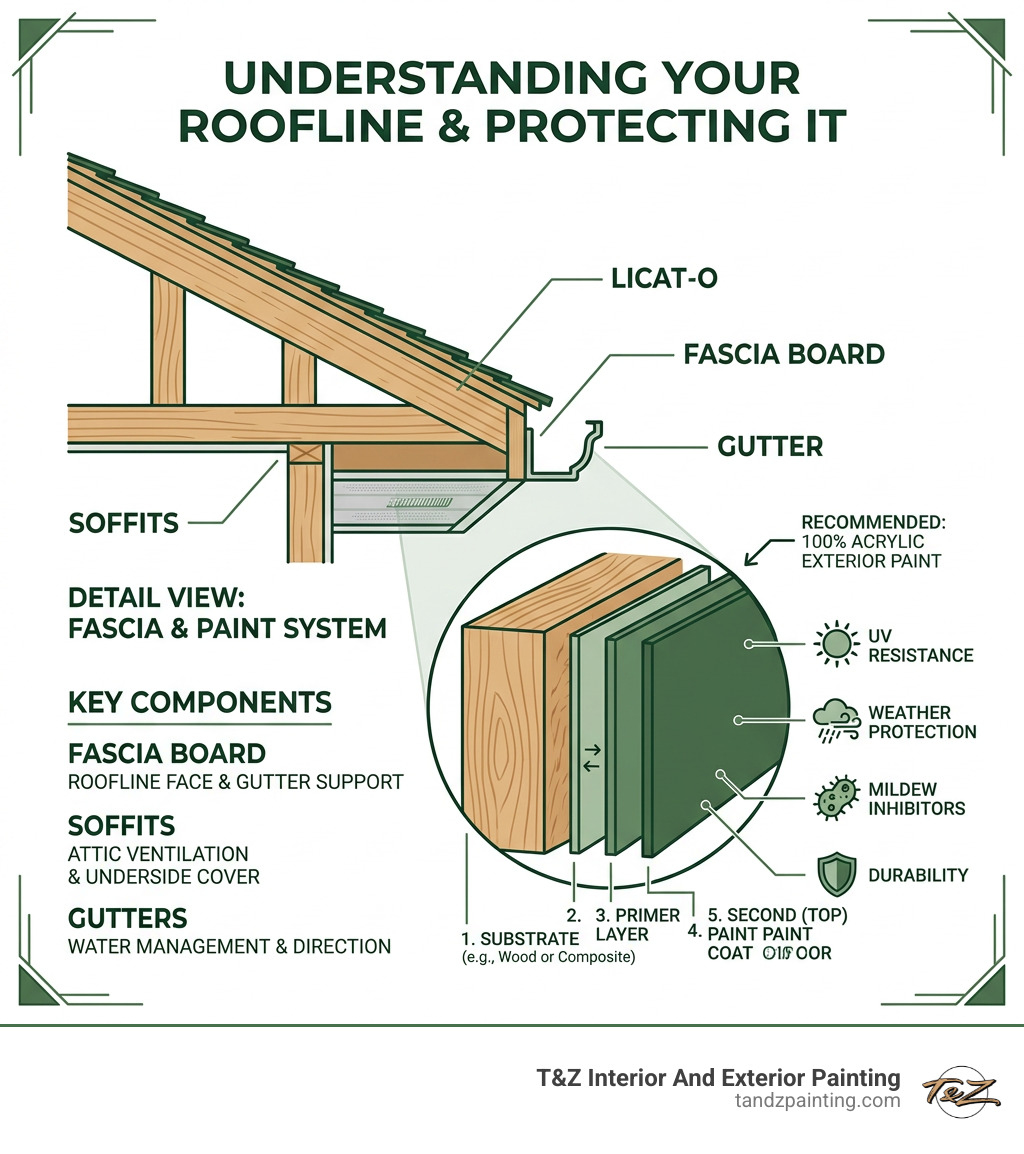
Fascia boards run along the roofline, holding your gutters in place and sealing the roof edge from moisture. Soffits sit just underneath, providing ventilation for your attic. Together, they take a constant beating from sun, rain, wind, and temperature swings — which is exactly why the paint you choose here is so much more important than the paint you’d pick for, say, an interior wall.
A homeowner on a popular DIY forum put it well when planning to repaint her soffits and fascia after water damage: she wanted something that would hold up to high heat and storms without spending a fortune — and she quickly learned that not all exterior paints are built the same.
I’m Tomasz Niemotko, owner of T&Z Interior And Exterior Painting, and after more than 13 years painting home exteriors across Lombard and the surrounding suburbs, I’ve tested and applied a wide range of products that qualify as the best paint for fascia boards in real-world conditions. In the sections below, I’ll break down exactly what to look for — and what to avoid.
Choosing the Best Paint for Fascia Boards and Soffits
When we walk a property in Wheaton or Glenview to provide a consultation, the first thing we look at is the condition of the trim. Fascia boards are the “face” of your roofline. Because they are often tucked behind gutters or subjected to roof runoff, they are the first line of defense against wood rot.
Choosing the best paint for fascia boards starts with understanding sheen. While you might love a flat finish for your siding, it is generally a mistake for trim. Flat paint is porous; it holds onto dirt, encourages mildew growth, and is difficult to clean.

Satin vs. Semi-Gloss: The Great Debate
For most homes in the Chicago suburbs, we recommend a Satin finish. It offers a soft luster that hides imperfections in the wood—which is vital for older homes in Addison or Elmhurst where the fascia might have some minor dings or grain texture. Satin provides excellent moisture resistance and is much easier to wipe down than flat paint.
Semi-gloss is the runner-up. It is even more durable and “scrubbable” than satin, making it a favorite for homeowners who want a high-contrast, polished look. However, the higher the shine, the more you will see every nail hole and wood knot. If your fascia boards are brand new and perfectly smooth, semi-gloss looks stunning.
Weatherproof Coatings and Thermal Expansion
Our local climate is tough. We deal with the “Big Freeze” in the winter and humid, stormy summers. This causes wood to expand and contract. The best paint for fascia boards must be flexible. If the paint film is too brittle, it will crack as the wood moves, allowing water to seep in. Modern 100% acrylic latex paints are designed with “breathability” or vapor permeability, allowing moisture trapped inside the wood to escape without blistering the paint.
Best Paint for Fascia Boards in High-Humidity Climates
In high-humidity areas, mildew is your biggest enemy. Soffits, in particular, stay shaded and damp, making them a breeding ground for spores. We look for paints with built-in mildewcides.
Acrylic latex is the industry standard for a reason. It dries quickly, cleans up with water, and remains flexible over time. But safety comes first. If your home was built before 1978, there is a high probability of lead-based paint on those trim boards. Before you start scraping, it is vital to review scientific research on lead paint testing and safety. At T&Z, we prioritize safe preparation to protect both your family and our crew.
Best Paint for Fascia Boards for Maximum Durability
If you want a “one and done” solution that lasts 15 years or more, you need a 100% acrylic formula. These paints use high-quality resins that act like a liquid rubber coating. They offer:
- Flex Technology: To handle the Chicago freeze-thaw cycle.
- UV Inhibitors: To prevent the sun from “chalking” or fading your crisp white trim.
- Color Retention: Ensuring your “Pure White” doesn’t turn yellow or dingy gray after three seasons.
You can see the results of these high-durability coatings in our portfolio of exterior painting in Elmhurst IL, where we focus on long-term protection against the elements.
Top-Rated Exterior Paint Brands for Long-Lasting Trim
Not all paint cans are created equal. When we talk about “professional grade,” we are referring to the volume of solids in the paint. Higher solids mean a thicker, more protective film once the water evaporates.
Using our house painting expertise, we have narrowed down the field to a few heavy hitters that consistently perform well on fascia, soffits, and gutters.
Sherwin-Williams Duration and SuperPaint
Sherwin-Williams is often the gold standard for professional contractors in Lombard and Carol Stream.
- Duration: This is a premium, “self-priming” paint. It is incredibly thick and provides a flexible layer that is resistant to peeling and blistering. It contains advanced mildewcides, which is perfect for the underside of soffits.
- SuperPaint: A slightly more budget-conscious but still high-quality option. It offers great cold-weather application properties, which is a lifesaver when we are trying to finish a project during the unpredictable Chicago autumn.
Knowing when is the best time to paint the exterior of your home is key to making these paints perform. Ideally, you want a stretch of days where the temperature stays above 35°F and the humidity is low.
Specialized Weatherproof and Multi-Surface Coatings
Sometimes, your trim isn’t just wood. You might have aluminum gutters attached to wood fascia, or PVC soffit vents.
- Zinsser Allcoat Exterior: This is a “problem solver” paint. It sticks to almost anything—wood, metal, plastic, and even masonry. It is known for a 15-year performance life and is excellent for those who want one product to cover all their trim.
- Valspar StormCoat: Available at big-box stores like Lowe’s, this is a surprisingly durable 100% acrylic paint. It features “Rain-Ready Technology,” meaning it can handle a surprise Chicago rain shower just 2.5 hours after application.
When choosing your look, consider outside house painting colour combinations. While white is the classic choice for fascia, darker tones like Anthracite Grey are becoming incredibly popular for modernizing the roofline.
Professional Preparation and Application Techniques
You could buy the most expensive paint in the world, but if you slap it over dirty, peeling wood, it will fail by next summer. Preparation is 90% of the job.
The T&Z Prep Protocol
- Surface Cleaning: We start by removing dirt, spider webs, and bird nests. A mild detergent or a specialized cleaner like “Wet & Forget” can help kill mildew spores.
- Power Washing: This must be done carefully. Too much pressure can gouge wood or force water into your attic through the soffit vents.
- Scraping and Sanding: Any loose or flaking paint must go. We use 120-grit sandpaper to “feather” the edges where the old paint meets the bare wood, ensuring a smooth transition.
- Wood Filler and Caulking: We fill old nail holes and cracks with a high-quality wood filler. Most importantly, we caulk the seams where the fascia meets the soffit or the house body to prevent moisture intrusion.
For a deeper dive, check out our guide on how to prepare a house for painting.
Priming Requirements for Wood and Concrete
Do you always need a primer? If the existing paint is in good shape and you are just changing the color, a “Paint + Primer” like Dutch Boy Forever might suffice. However, if you have bare wood or “tannin-bleeding” woods like cedar or redwood, you must use a dedicated primer.
- Oil-Based Primers: We recommend Zinsser Cover Stain for bare wood. It blocks tannins from seeping through and turning your white paint yellow.
- Bonding Primers: If you have concrete or masonry trim, a specialized bonding primer ensures the topcoat doesn’t peel off in sheets.
You can see the difference proper priming makes by browsing our exterior painting portfolio.
Step-by-Step Application for a Flawless Finish
- Soffits First: Always paint the soffits before the fascia. Use a mini-roller for the flat areas and a synthetic brush for the edges.
- Fascia and Gutters: Once the soffits are dry, move to the fascia. Use long, even strokes to avoid brush marks.
- Two-Coat System: Never settle for one coat. The first coat seals the surface; the second coat provides the “wear layer” and the true color depth.
- Drying Intervals: Follow the manufacturer’s instructions. Usually, you’ll need 4 hours between coats.
Painting Aluminum and Composite Fascia Surfaces
Many homes in Lombard and Schaumburg have moved away from wood in favor of aluminum or composite (like HardieBoard) fascia and soffits. The good news? These can absolutely be painted.
Aluminum and Galvanized Metal
Aluminum doesn’t rust, but it does oxidize, creating a white powdery film. This must be cleaned off before painting.
- Avoid Ammonia: Never use ammonia-based cleaners on aluminum, as it can cause a chemical reaction that creates gas bubbles under the paint.
- Etching Primers: For bare aluminum, an etching primer helps the paint “bite” into the metal surface.
- Direct-to-Metal (DTM) Paints: These are fantastic for gutters and downspouts, providing a factory-like finish that lasts for years.
Vinyl and Composites
If you are painting vinyl trim, you must choose a “Vinyl Safe” color. Dark colors absorb too much heat and can cause vinyl soffits to warp or buckle. Stick to lighter shades or colors specifically formulated for vinyl.
Frequently Asked Questions about Fascia Painting
Is satin or semi-gloss better for exterior fascia?
For most residential properties, Satin is the winner. It provides enough sheen to be durable and moisture-resistant while hiding the natural imperfections and grain of the wood. If you have brand-new, smooth-sanded wood and want a very “clean” look, semi-gloss is a great alternative.
How many coats of paint are needed for fascia boards?
We always recommend two coats. The first coat often gets absorbed into the primer or the old paint. The second coat ensures even coverage, better UV protection, and a more durable finish that can withstand the Chicago wind and rain.
Can you paint aluminum gutters and soffits?
Yes! In fact, painting your gutters to match your fascia is one of the fastest ways to improve curb appeal. Just ensure they are cleaned of all oxidation and that you use a 100% acrylic paint that does not contain ammonia.
Conclusion: Trust the Experts at T&Z
Choosing the best paint for fascia boards is about more than just a trip to the hardware store—it’s about protecting your home’s structural integrity. At T&Z Interior And Exterior Painting, we bring over 15 years of experience to every roofline in the Chicago area.
Whether you are in Lombard, Wheaton, or Downers Grove, our teams use only top-tier materials like Sherwin-Williams Duration and professional-grade preparation techniques to ensure your trim looks stunning and stays protected for a decade or more. We don’t just “paint”—we provide a long-lasting shield for your home.
Ready to transform your home’s exterior and protect your investment? Contact our expert exterior painters today for a consultation and experience the T&Z difference in quality and service.