
Residential Painting Projects in Lombard, IL
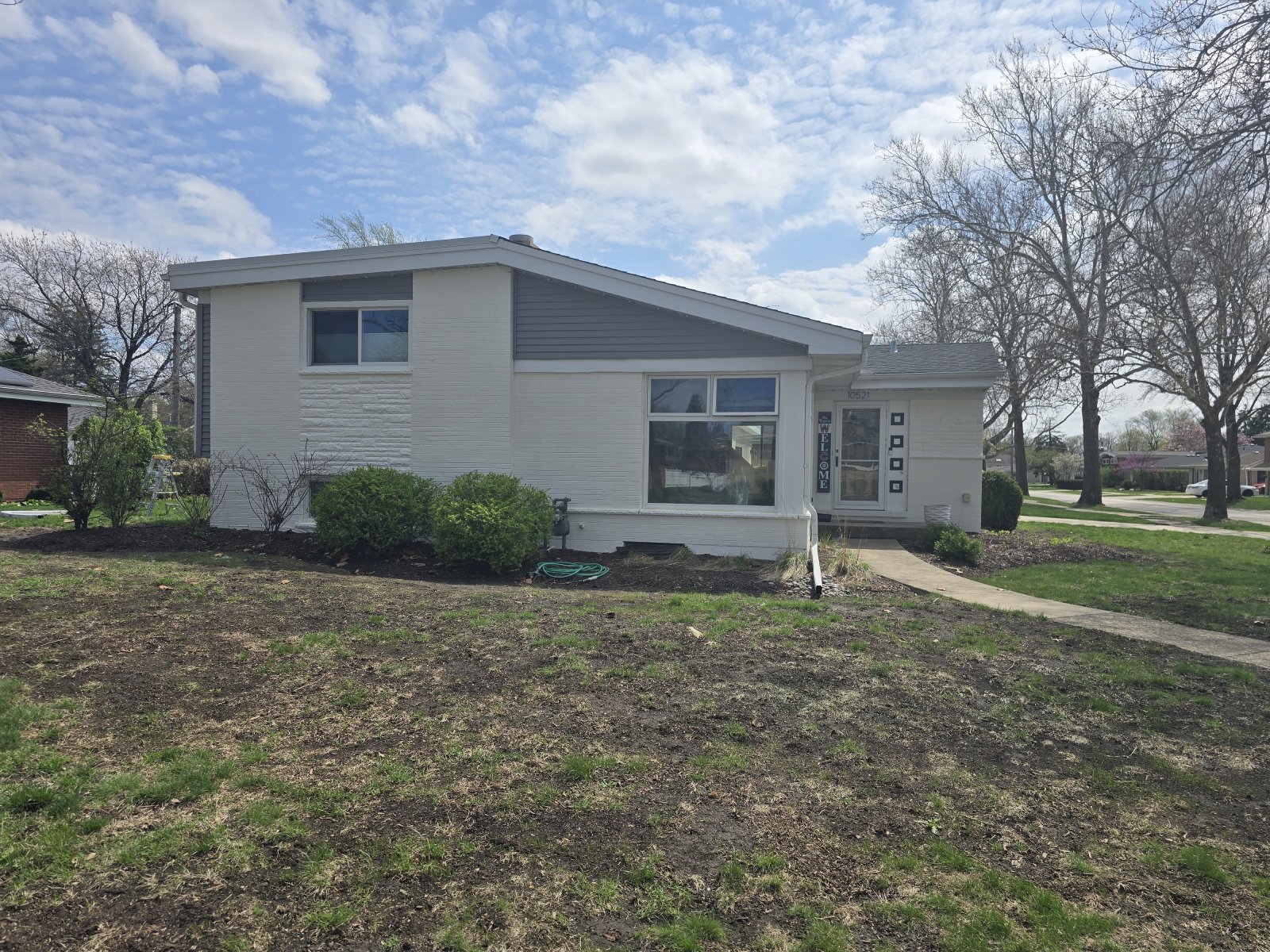
Every Lombard home has a painting project waiting. Sometimes it’s a single room that’s looked tired for years. Sometimes it’s an exterior that’s peeling through its third winter. Sometimes it’s a complete interior and exterior repaint before a sale or after a renovation. T&Z Interior and Exterior Painting handles residential painting projects of every scope — single rooms, full interiors, exterior repaints, trim, cabinets, and whole-home transformations — for homeowners across Lombard and the surrounding area. Call us for a free on-site estimate. Exterior projects run spring through early fall; interior work is available year-round. We’re a licensed Painter with 15+ years serving Lombard homes, and we manage every project from the first estimate through the final walkthrough.
Exterior Paint Colors That Make Lombard Homes Look Polished and Well-Maintained
What makes an exterior color scheme look expensive:
The answer isn’t a specific color. It’s the relationship between colors and the qualities they share. Exterior palettes that read as polished and well-considered share a few consistent traits:
Saturation and depth. Colors at the extremes — very deep or very clean — tend to read as more deliberate than muddy mid-tones. A deep navy body, a rich charcoal, or a clean warm white all communicate intentionality. Washed-out builder colors in the middle of the saturation range tend to look accidental rather than chosen.
Contrast between body and trim. The single most impactful upgrade most Lombard homeowners can make is sharpening the contrast between the main body color and the trim. A home with a medium gray body and medium gray trim reads as flat and unfinished. The same gray body with bright white or black trim reads as architectural. The contrast defines the lines of the house and makes the structure itself look more considered.
Consistency with architectural style. A Victorian with deep jewel tones looks intentional. The same colors on a 1970s ranch look wrong. Colonial-style Lombard homes carry navy, white, and black well. Mid-century ranches suit warm neutrals, olive greens, and earthy tones. Contemporary builds work with cool grays, blacks, and warm whites. T&Z advises on palettes specific to the home’s architectural style and street context at every estimate — color consultation is included, not charged separately.
Current high-performing exterior palettes for Lombard homes:
- Soft white or warm cream body with deep charcoal or black trim and a contrasting front door in navy or forest green
- Warm gray or greige body with crisp white trim and black shutters and hardware
- Deep navy or dark green body with bright white trim — high contrast, classic, and broadly appealing
- Soft sage or muted olive on craftsman-style homes with cream trim and a natural wood or dark stained door
Lombard’s housing stock spans Tudor revivals, mid-century ranches, split-levels, brick colonials, and contemporary builds from the 2000s forward. What works on one style can look completely wrong on another. The goal at the estimate is to find a palette that fits the architecture, reads well on the specific street, and will photograph well for anyone looking at the home from the curb or online.
Paint Colors That Date a Lombard Home — and What to Use Instead
Outdated exterior colors:
Mauve and dusty rose. The defining exterior palette of the late 1980s and early 1990s. On older Lombard homes, this combination — dusty pink or purple-tinged body with beige or cream trim — is one of the clearest signals of a home that hasn’t been updated. Replacement: warm greige, soft sage, or warm white body with darker trim.
Hunter green on full exteriors. Not to be confused with deep, saturated forest green, which is currently popular. The specific hunter green of the 1990s — a muted, slightly yellow-toned dark green — reads as dated on most Lombard home styles. Replacement: deeper, cooler forest green or navy with clean white trim.
Full tan and builder beige. The most common and least distinctive exterior color in Lombard’s housing stock from the 1990s through the early 2000s. Beige on beige on beige — body, trim, and shutters all within three shades of the same color — is the fastest way to make a home disappear on its street. Replacement: warm cream or greige body with meaningfully darker trim that defines the architecture.
Bold primary color accents on trim. Red shutters on a beige house, bright blue trim on a gray house — accent colors that don’t relate to the body color or the neighborhood context look restless and unresolved. Replacement: accents that are darker or lighter versions of the body color, or classic neutrals — black, white, or deep charcoal.
Outdated interior colors:
Golden yellow feature walls. The early 2000s accent wall in warm gold or mustard — often in dining rooms and kitchens — has aged visibly. Replacement: warm off-white, soft terracotta that’s lighter and less saturated, or warm sage.
Gray-purple neutrals. The dominant interior color of the 2010s — a cool, slightly purple-toned gray sold under names like greige and mushroom — has become ubiquitous enough to feel dated. Replacement: warm greige with yellow or pink undertones, warm white, or soft earthy neutrals.
Heavily saturated single accent walls. A bold teal, bright orange, or deep red accent wall in an otherwise neutral room was a design staple of the 2000s and 2010s. It now reads as a trend rather than a design decision. Replacement: a wall treated with limewash, a deeper version of the room’s neutral, or a textured finish that adds dimension rather than color contrast.
Homes in Westmore and Maple Knoll preparing for sale in Lombard’s competitive market benefit most from neutral, broadly appealing exterior palettes. Colors that photograph well, appeal to buyers across multiple taste preferences, and communicate a well-maintained, move-in-ready property are the goal. T&Z advises on pre-sale color strategy as part of the estimate conversation.
How to Get a Long-Lasting Exterior Paint Job on a Lombard Home
The realistic lifespan of exterior paint in Chicagoland:
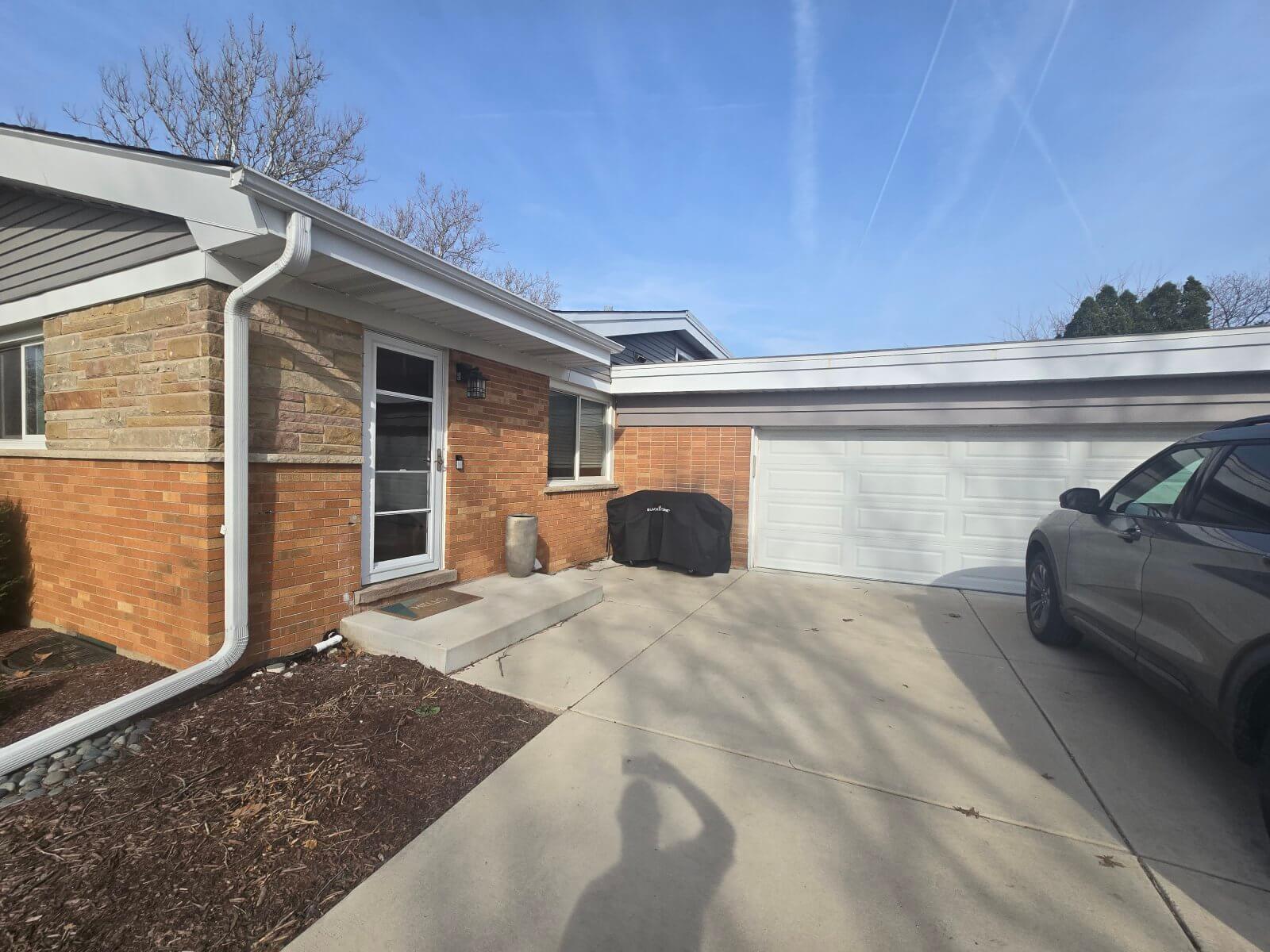
A professionally painted exterior on a Lombard home, done correctly, lasts 7 to 10 years on wood siding. Masonry — brick, stucco, and concrete block — with the right elastomeric primer and a quality 100% acrylic topcoat can reach 10 to 15 years. Getting to the upper end of these ranges requires doing the unglamorous parts of the job correctly.
No paint product achieves 25-year life in Lombard’s climate without near-perfect surface prep, correct primer selection, appropriate coat count, and favorable conditions during application and cure. The marketing claim is technically achievable under ideal laboratory-adjacent conditions. Lombard’s 20-plus freeze-thaw cycles per winter, summer UV on south and west facades, and spring moisture loading are not ideal conditions.
What actually determines lifespan, in order of importance:
Surface prep quality — the largest factor by far. Paint bonds to a prepared surface. It doesn’t bond to dirt, chalk, mill glaze, moisture, or failing old paint. A premium product applied over inadequate prep will fail at the same rate as a standard product over the same inadequate prep. Pressure washing, scraping, sanding, caulking, and priming bare areas aren’t optional steps that can be abbreviated — they’re the reason the topcoat holds.
Primer selection. The primer’s job is to bond to the substrate and give the topcoat a stable, sealed surface to adhere to. A stain-blocking primer seals tannins and stains from bleeding through. A binding primer consolidates chalked or weathered surfaces. An elastomeric primer on masonry bridges hairline cracks and prevents moisture intrusion at the substrate level. The wrong primer — or no primer — removes the foundation the topcoat needs.
Paint quality and formulation. 100% acrylic exterior paint outperforms vinyl-acrylic blends in flexibility, UV resistance, and adhesion over the long term. Flexibility matters in Lombard’s climate — a paint film that can expand and contract with wood and masonry through freeze-thaw cycles without cracking lasts significantly longer than one that becomes brittle. Quality matters, but it’s third in this list for a reason — it can’t overcome inadequate prep.
Coat count. Two topcoats on all exterior surfaces are the standard for full protection and color depth. One coat on bare or stripped wood is not sufficient — the first coat absorbs into the surface and leaves the substrate under-protected.
Application conditions. Temperature above 50°F at application and for 48 hours after. Low humidity. No rain in the immediate forecast. No application in direct afternoon sun on heated surfaces. These conditions aren’t hard to meet in Lombard’s spring and summer — but they require forecast tracking and the willingness to reschedule rather than push through marginal conditions.
T&Z focuses on prep first on every Lombard residential project. No paint product compensates for inadequate surface preparation, and no lifespan claim holds up without it.
When not to paint regardless of temperature:
- During rain or within 24 hours of significant rain — surfaces must be dry to the touch and beyond
- In direct hot afternoon sun above 90°F on south and west walls — paint skins over before it can level
- When humidity exceeds 85% — moisture in the air slows dry time and interferes with film formation
- In wind above 15 mph — overspray risk and uneven film deposition on spray applications
What a Complete Residential Painting Project in Lombard Actually Involves
Phase 1 — Estimate and color consultation. T&Z visits the property, walks every surface being considered for painting, and identifies all prep needs before quoting. This isn’t a quick measure-and-leave — it’s a surface assessment. Peeling sections, moisture damage, failing caulk, substrate types, previous paint conditions — all of it is evaluated and factored into the scope. Color consultation happens at this visit. If you haven’t chosen colors yet, T&Z advises on palette options appropriate for the home’s architecture, street context, and your goals for the project.
Phase 2 — Surface preparation. Exterior prep: power washing all surfaces, allowing full dry time, scraping all loose or peeling paint, sanding rough areas flush, filling cracks and gaps with appropriate patching compound, caulking all joints at trim, windows, and transitions, and priming all bare wood, stained areas, and surfaces requiring a specialty primer.
Interior prep: cleaning surfaces with TSP or equivalent, patching nail holes and drywall damage, skim-coating damaged areas, sanding all patches smooth, caulking gaps at trim and ceiling lines, and priming bare drywall and stain areas.
On Lombard homes with mixed exterior substrates — a combination of brick, stucco, and wood siding — each material gets the prep sequence appropriate for its specific requirements. T&Z identifies all substrate types at the estimate so the correct products are on-site before work begins.
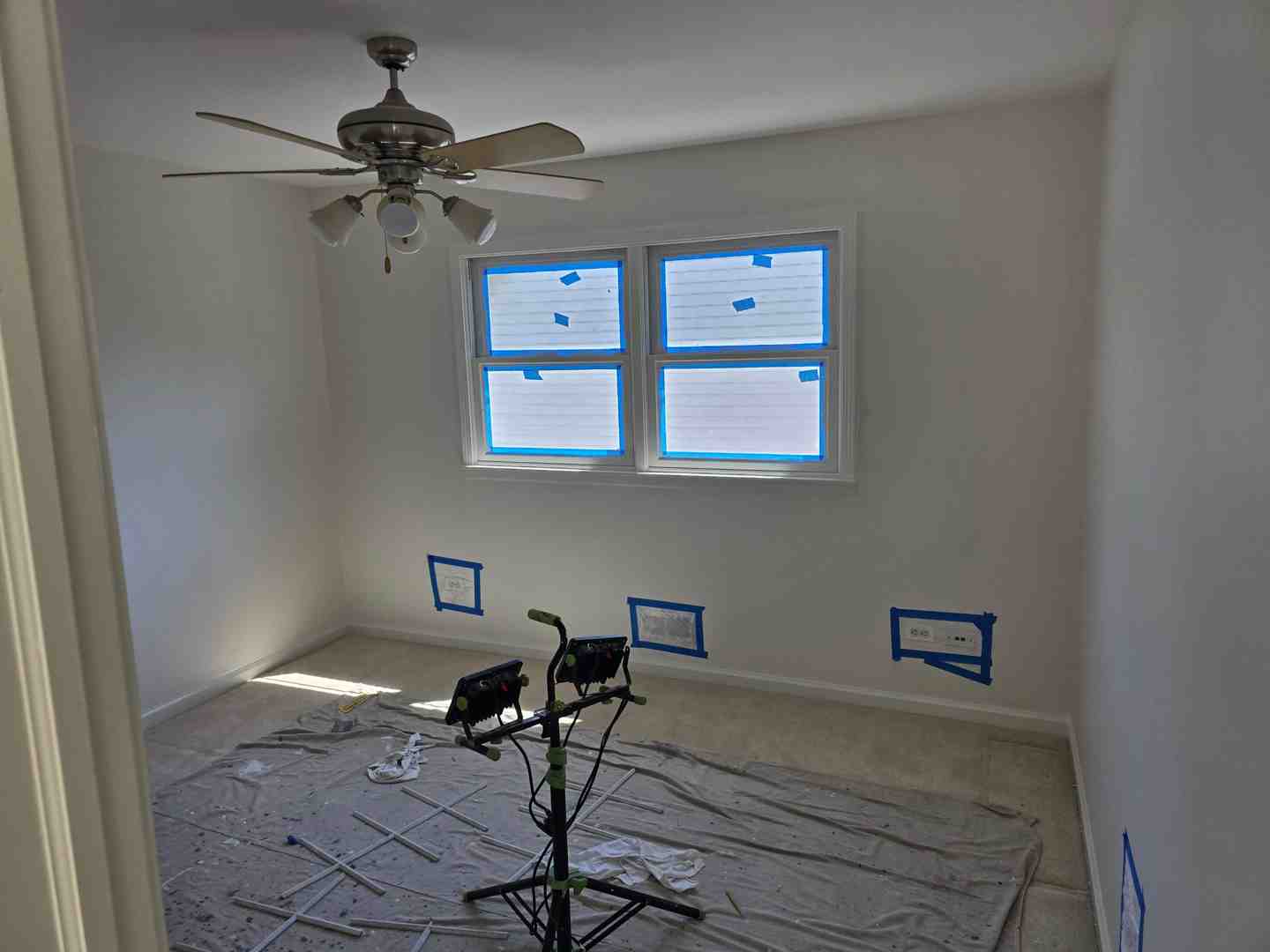
Phase 3 — Protection. Every surface not being painted is protected before a brush or roller touches the wall. Exterior: windows, doors, trim not being painted, light fixtures, meters, and plantings all masked. Interior: floors covered wall-to-wall with drop cloths, furniture moved and covered, trim and casings taped, switch plates and outlet covers removed.
Phase 4 — Application. Primer applied to all surfaces requiring it. First topcoat applied in the correct sequence for the project — ceiling first, walls second, trim last on interiors; top to bottom on exteriors. Full dry time between coats. Second topcoat applied. Spray, brush, or roller selected per surface based on size, texture, and location requirements.
Phase 5 — Cleanup and final walkthrough. All masking removed carefully to avoid pulling fresh paint. Surfaces cleaned of any drips, tape residue, or dust. T&Z walks the completed project with the homeowner — every room, every exterior wall, every trim section — before the job is considered finished. Any missed spots or touch-up items identified in the walkthrough are addressed before the team leaves.
How Lombard Homeowners Keep a Fresh Paint Job Looking Good for Years
Spring inspection — the most important annual maintenance step.
Every spring, before Lombard’s rain season fully arrives, walk the exterior of the house and look at the caulk lines. The joint between trim and siding, the caulk around window casings, the seal at door surrounds — these are the first places moisture enters a painted exterior. After a winter of freeze-thaw movement, caulk gaps open up at joints that were sealed the previous season. A fresh bead of paintable exterior caulk in April costs nothing compared to the moisture damage that accumulates over a season behind an open joint.
Touch up exterior chips within 60 days.
A chip down to bare wood sounds minor. In Lombard’s climate, it isn’t. Bare wood absorbs moisture the first time it rains. After one winter of freeze-thaw cycles, that small chip becomes a lifted edge as the wood beneath swells and the paint film separates from the expanding substrate. The paint that was intact around the chip starts lifting too. What was a five-minute touch-up in October becomes a sand-and-reprime job in April. Keeping a small container of the exterior color on a shelf and checking the paint surface annually — especially at corners, trim edges, and anywhere two surfaces meet — is the simplest maintenance step with the highest return.
Clean interior walls gently.
Interior paint film is more durable than most homeowners assume, but it’s vulnerable to the wrong cleaning approach. A damp cloth with mild dish soap removes most marks from satin and semi-gloss surfaces without damage. Abrasive cleaners, rough sponges, and Magic Erasers cut through paint film and leave dull, roughened patches that are visible in raking light and can’t be touched up without repainting the whole section. On flat and eggshell finishes, even gentle scrubbing can damage the surface — blotting rather than wiping is the correct approach for stains on low-sheen walls.
Plan interior repaints by room traffic level.
Not all rooms age at the same rate. High-traffic interiors — hallways, kitchen walls, children’s rooms, mudrooms — show wear significantly faster than low-traffic bedrooms and formal spaces. Planning repaints on a 5 to 7 year cycle for high-wear rooms and a 10-plus year cycle for lower-traffic rooms is more practical and cost-effective than repainting the entire interior on a single schedule.
Inspect south and west-facing exteriors first.
South and west-facing walls in Lombard receive the most direct sun exposure — afternoon sun in summer and the most UV accumulation over the full year. These facades fade, chalk, and degrade measurably faster than north and east-facing walls. The south and west sides of the house are always the leading indicators of when a full exterior repaint is approaching. If they’re chalking or showing color fade, the rest of the exterior is close behind even if it looks fine from the street.
Send Us a Message
FAQ
What exterior colors make a Lombard home look its best for resale?
Deep neutrals with strong trim contrast — warm white, greige, or deep navy body with crisp white or black trim reads as polished and well-maintained to the broadest buyer pool. Avoid dated mauve, hunter green, and undifferentiated builder beige where body and trim color are nearly indistinguishable.
What is the coldest temperature T&Z will paint a Lombard home exterior?
50°F minimum — both at application time and for 48 hours after the final coat. Daytime highs alone aren’t sufficient. Night temperatures below 50°F during the cure window permanently weaken adhesion, producing a finish that fails the following spring rather than lasting its full lifespan.
Is it okay to paint the outside of a Lombard home in November?
Not recommended. Lombard November nights regularly drop below the 50°F cure threshold. Paint applied on a warm November afternoon and left to cure through a 35°F night is permanently compromised. Exterior projects that can’t be completed by mid-October should be rescheduled to spring — the risk of a full redo outweighs any urgency to finish before winter.
How long does a professionally painted Lombard home exterior last?
7 to 10 years on wood siding with correct prep and application. 10 to 15 years on masonry with elastomeric primer and 100% acrylic topcoat. Lifespan depends more on prep quality than paint brand — no product overcomes inadequate surface preparation in Lombard’s climate.
What paint colors are considered outdated on Lombard homes right now?
Mauve and dusty rose exteriors, hunter green on full exterior bodies, undifferentiated tan-on-tan schemes, and golden yellow interior walls. Replacing these with warm off-whites, greiges, deep navy, soft sage, or classic charcoal updates a Lombard home’s appearance more effectively than any other single change.
Does T&Z handle both interior and exterior residential painting on the same project?
Yes. T&Z coordinates full interior and exterior residential projects, scheduling phases to minimize disruption and ensure a cohesive color scheme and finish quality throughout the home. Interior and exterior work can be scoped together or handled as separate projects depending on the homeowner’s timeline and priorities.