
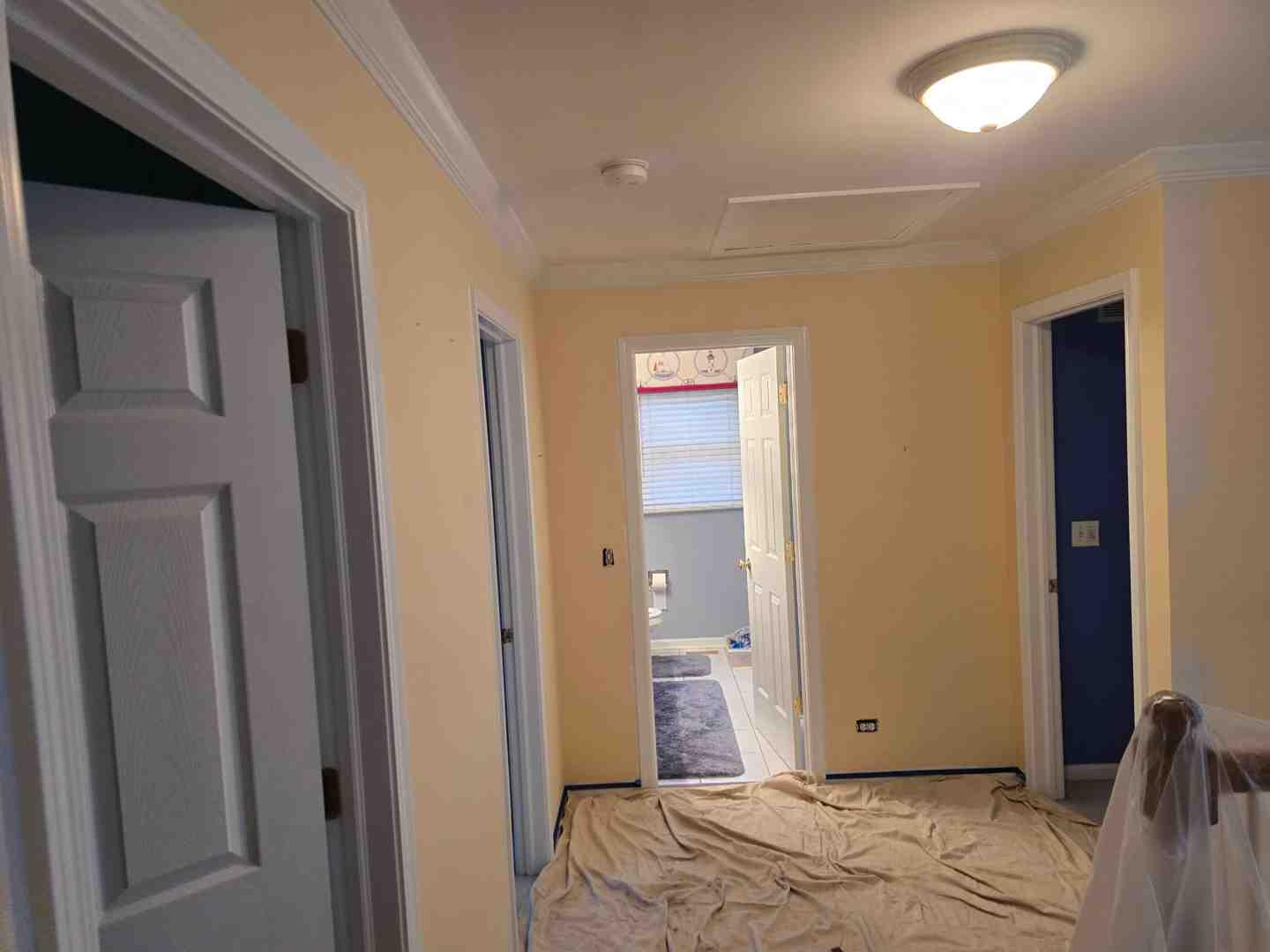
Why Choosing the Right Paint for Trim and Baseboards Changes Everything
The best paint for trim and baseboards makes a bigger difference than most homeowners expect. Fresh, crisp trim instantly makes a room look cleaner, more polished, and more finished — even if the walls haven’t changed.
Quick answer: Here are the top picks for trim and baseboard paint:
| Paint | Type | Best For |
|---|---|---|
| Benjamin Moore Advance | Waterborne Alkyd | Best overall — self-levels, low yellowing |
| Sherwin-Williams Emerald Urethane | Hybrid Urethane | Hardest finish, fastest recoat |
| INSL-X Cabinet Coat | Acrylic Enamel | Best bonding to old or glossy surfaces |
| Behr Premium Cabinet & Trim | Urethane Alkyd | Solid mid-range option |
| KILZ Tribute Trim & Door | Acrylic | Budget-friendly, versatile |
Finish: Semi-gloss is the standard choice for trim — durable, easy to wipe clean, and highlights architectural details.
Coats needed: Two coats for consistent coverage and long-term durability.
Trim and baseboards take a beating every day — kicks, scuffs, vacuum bumps, furniture scrapes. Regular wall paint simply isn’t built for that kind of punishment. It burnishes, chips, and stains fast.
The right trim paint hardens into a tough, washable surface that holds up for years. The wrong one means repainting sooner than you’d like.
Choosing the right product — and applying it correctly — is what separates a trim job that lasts from one that looks tired within a year.
I’m Tomasz Niemotko, owner of T&Z Interior And Exterior Painting in Lombard, IL, and over 13+ years of professional painting work has taught me exactly which products deliver lasting results on trim and baseboards. In this guide, I’ll share what we’ve learned about the best paint for trim and baseboards so you can make a confident, informed decision.
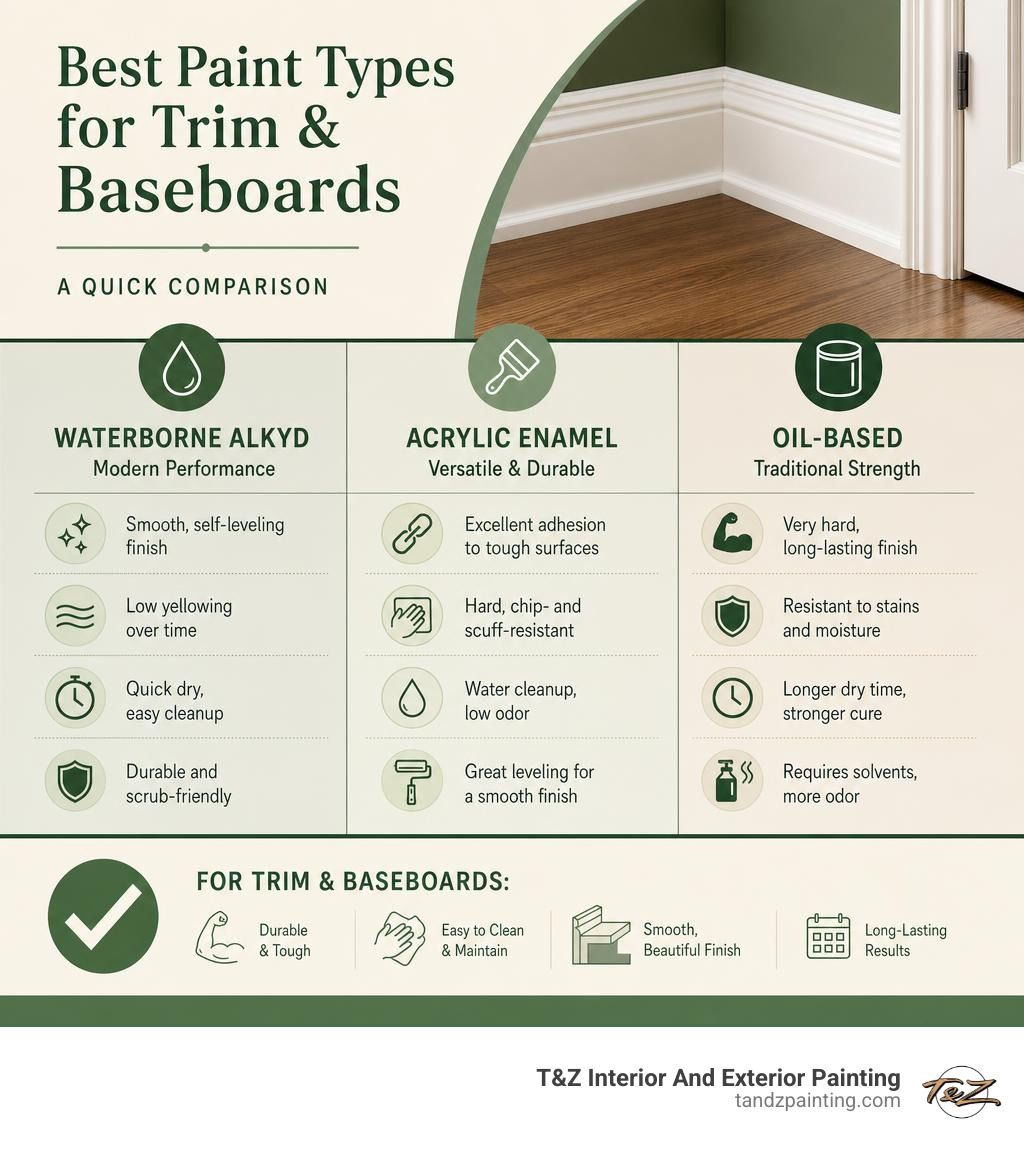
Handy best paint for trim and baseboards terms:
Key Factors in Selecting the Best Paint for Trim and Baseboards
When we select a top-tier paint for baseboards and casings, we look at several performance metrics that go far beyond what you would expect from standard wall paint. Trim is a high-impact zone. Unlike walls, which rarely handle anything more than occasional dust, baseboards are subjected to vacuum cleaners, pet paws, muddy shoes, and shifting furniture.
To stand up to this daily abuse, the paint you choose must excel in three critical areas:
- Durability and Hardness: The dry paint film must cure to a rock-hard finish. Standard latex wall paints remain relatively soft and flexible even when dry, which makes them easy to dent and scrape. A dedicated trim paint cures to a rigid, protective shell.
- Scuff Resistance: High-quality trim paints are engineered with advanced resins that resist friction. When a shoe or a toy rubs against the baseboard, a scuff-resistant paint prevents the material from transferring or leaving a dark mark.
- Washability and Scrubbability: Because baseboards collect dust, pet hair, and dirt, they require frequent wiping. The paint must withstand regular cleaning with damp microfiber cloths and mild detergents without losing its sheen or wearing away.
Understanding the chemical differences between your options is the first step in making the right choice. Discover our guide to high-quality paints to see how premium ingredients impact performance.
Here is how the three main categories of trim paint compare:
| Feature | Acrylic Enamel | Waterborne Alkyd | Traditional Oil-Based |
|---|---|---|---|
| Cleanup | Soap & Water | Soap & Water | Mineral Spirits |
| Drying Time | Very Fast (1–2 hours) | Moderate (4–6 hours) | Very Slow (16–24 hours) |
| Self-Leveling | Moderate | Excellent | Outstanding |
| Yellowing | None | Extremely Low | High (especially in dark areas) |
| Hardness | High | Very High | Maximum |
| Odor | Low | Low | Very Strong |
Top Professional Paint Formulations for Trim Work
To get a flawless, factory-like finish on your trim, the paint must have excellent application properties. The two most important features professionals look for are self-leveling and block resistance.
Self-leveling refers to the paint’s ability to flow out and flatten after it is applied, allowing brush marks and roller stipples to disappear as the paint dries. Block resistance is the paint’s ability to resist sticking to itself. This is absolutely critical for doors and windows; without high block resistance, a newly painted door will stick to its frame and peel when opened.
Another major consideration is yellowing resistance. Traditional oil-based paints are notorious for yellowing over time, especially in hallways, closets, or rooms with limited natural sunlight. Modern waterborne formulations have solved this issue, providing the hardness of oil without the unsightly color shift.

Why Waterborne Alkyd is the Best Paint for Trim and Baseboards
If you ask professional painters to name the best paint for trim and baseboards, the majority will point you toward waterborne alkyds. These innovative coatings represent a massive leap forward in paint technology.
A waterborne alkyd is essentially an oil-based paint (alkyd) suspended in a water-based solution. This hybrid formulation gives you the absolute best of both worlds:
- The Application of Oil: It has a longer “open time” (the period the paint remains wet and workable). This allows the paint to self-level beautifully, leaving behind a smooth, glass-like surface free of brush strokes.
- The Convenience of Water: It cleans up easily with simple soap and water, has a low odor, and dries much faster than traditional solvent-based oil paints.
- No Yellowing: Unlike old-school oils, modern waterborne alkyds do not turn yellow in low-UV environments, keeping your whites bright and crisp for years.
To see how these hybrid coatings perform under rigorous testing, you can read about the tested performance of interior trim paints across various durability and yellowing metrics.
Top Brand Formulations for the Best Paint for Trim and Baseboards
When we paint homes in the Lombard, IL area, we rely on a few proven, professional-grade formulations. Depending on your specific goals, here are the top brand options you should consider:
- Benjamin Moore Advance: This is widely considered the gold standard of waterborne alkyd paints. It behaves exactly like a traditional oil-based paint, flowing out smoothly to erase all brush marks. It is incredibly easy to sand between coats if you need to fix any minor runs, and it cures to a furniture-grade finish. That it has a longer recoat window (typically 16 hours), so you will need to plan for a multi-day project. If you are near Downers Grove, you can find expert advice and Benjamin Moore products at the JC Licht Downers Grove IL Store.
- Sherwin-Williams Emerald Urethane Trim Enamel: This hybrid urethane-modified alkyd is a favorite for high-traffic homes. It cures to an exceptionally hard, scuff-resistant film and offers a much faster recoat time (4 hours) than Benjamin Moore Advance, allowing you to apply two coats in a single day. You can pick up this premium paint at several local stores in our service areas, including the Lombard, IL #703388 – Sherwin-Williams Paint Store, the Carol Stream, IL #703011 – Sherwin-Williams Paint Store, the Lockport, IL #703403 – Sherwin-Williams Paint Store, and the Plainfield, IL #703262 – Sherwin-Williams Paint Store.
- INSL-X Cabinet Coat: Made by Benjamin Moore, this urethane acrylic paint is legendary for its adhesion. It is designed to stick to hard, glossy surfaces with minimal prep, making it an excellent choice for repainting old, varnished trim or existing oil-based coatings.
- BEHR PREMIUM® Cabinet, Door & Trim Enamel: This is a fantastic waterborne alkyd that offers excellent flow, leveling, and early block resistance so your doors won’t stick. Check out the details on the BEHR PREMIUM® Interior/Exterior Cabinet, Door & Trim Enamel Paint | Behr Pro.
- KILZ Tribute Trim, Door & Cabinetry: This is a highly versatile interior/exterior semi-gloss paint that offers outstanding block resistance and a durable, hard finish. You can view the full product specifications on the KILZ Tribute Trim, Door & Cabinetry Semi-Gloss Paint | KILZ.
If you are looking for other high-quality paint suppliers near the La Grange area, you can browse THE BEST 10 Paint Stores near LA GRANGE, IL 60525 – Yelp to find local dealers.
Understanding Sheen and Finish Options
Choosing the right sheen is just as important as choosing the right paint formulation. The sheen affects both the look of your architectural trim and how easy it is to keep clean.
- Semi-Gloss: This is the industry standard and the most popular choice for trim and baseboards. It offers a beautiful, clean reflection that highlights the architectural details of your moldings while providing excellent washability. It strikes the perfect balance between durability and aesthetics.
- Satin: Satin has a lower gloss level, offering a softer, more modern look. It is highly forgiving of surface imperfections and dings, making it a popular choice for older homes with uneven trim.
- Gloss / High-Gloss: This finish is highly reflective and dramatic. It is incredibly durable and easy to wipe down, but it requires flawless surface preparation because the high reflectivity will highlight every single dent, scratch, or brush mark.
For a deeper dive into how sheens behave and how to select the right one for your home, take a look at our guide to wall paint finishes. If you want to know why semi-gloss is highly favored for high-use woodwork, read about why semi-gloss is the secret sauce for cabinets and trim.
Additionally, we have compiled several helpful resources on managing paint sheens throughout your home:
- Stop the Sheen Stress and Pick the Perfect Cabinet Finish
- Get That Perfect Sheen: Our Favorite Semi-Gloss Cabinet Paints
- Why Semi-Gloss Cabinets Might Be Your Kitchen’s Best Friend
- How to Choose the Best Kitchen Paint Finish Without Losing Your Sheen
How to Prepare and Paint Trim Like a Pro
Applying the best paint for trim and baseboards will only yield professional results if the surface is prepped correctly. In fact, professional painters spend about 70% of their time on preparation and only 30% on actual painting. If you paint over dust, grease, or glossy old paint, your new coating will eventually chip, peel, or crack.
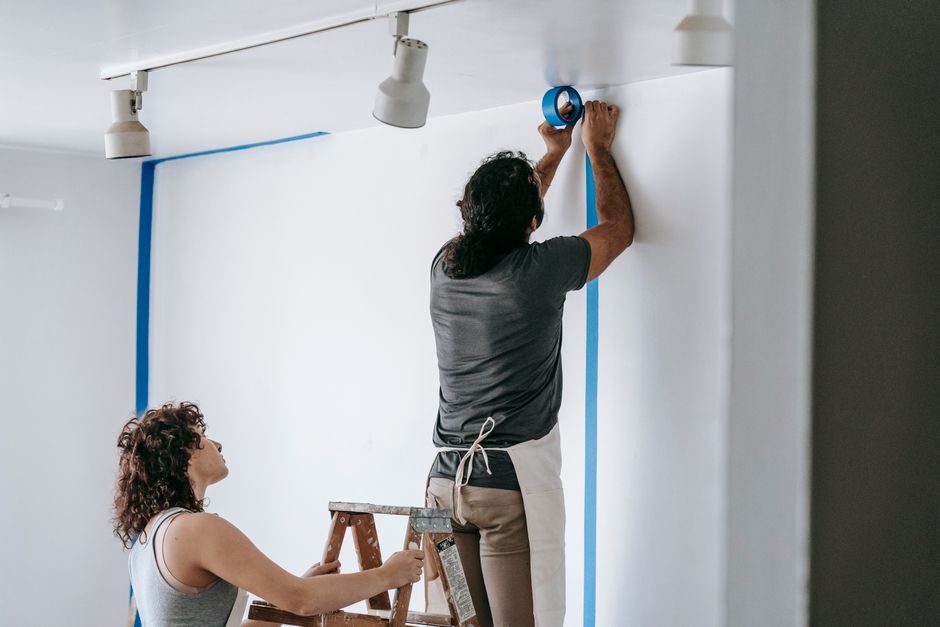
To get a sense of how extensive professional preparation is for an entire home, read our guide on how to prepare a house for painting.
Step-by-Step Surface Preparation
To prepare your trim and baseboards for a flawless coat of paint, follow this proven step-by-step sequence:
- Clean Thoroughly: Baseboards collect grease, wax, and dirt. Wipe them down with a mixture of warm water and a mild degreaser like TSP (trisodium phosphate) or soap. Rinse with clean water and let dry completely.
- Scuff Sand: If the existing paint is glossy, the new paint won’t be able to grip it. Use a medium-to-fine sanding sponge (100-to-150-grit) to lightly scuff the surface. This creates a microscopic “tooth” for the new paint to bond to. You don’t need to sand down to bare wood — just dull the shine.
- Fill Holes and Cracks: Use a high-quality wood filler to fill nail holes, dents, and deep scratches. Once dry, sand the filler smooth and flush with the surrounding wood using 220-grit sandpaper.
- Caulk the Gaps: Run a bead of paintable acrylic latex caulk along the joint where the trim meets the wall, and where baseboards meet the floor (if there is a gap). Smooth the bead with a damp finger. This hides ugly dark gaps and gives your trim a seamless, built-in look.
- Tack Rag: Wipe away all sanding dust with a tack cloth or a damp microfiber towel before opening your paint can.
For more expert advice on prep work and product selection, check out the expert tips on preparing trim.
Professional Application Techniques
Once your prep work is complete, use these professional techniques to apply your paint smoothly:
- Use the Right Brush: Skip the cheap brushes. Use a high-quality 2-inch or 2.5-inch angled sash brush made of synthetic filaments (nylon/polyester blend). The angled shape gives you incredible control when cutting in along walls and floors.
- Apply Thin, Even Coats: It is always better to apply two thin coats rather than one thick coat. Thick coats lead to runs, sags, and extremely long curing times.
- Maintain a Wet Edge: Paint in sections, working from one end of the room to the other. Always brush back into the wet paint you just applied to avoid overlapping marks.
- Follow the Wood Grain: Apply your final brush strokes in long, smooth sweeps that follow the direction of the wood grain.
- Allow Proper Drying Time: Do not rush the second coat. If you are using a waterborne alkyd like Benjamin Moore Advance, wait the recommended 16 hours. Re-coating too early traps solvents and prevents the paint from curing to its maximum hardness.
For a detailed look at how we achieve flawless finishes on walls and woodwork, explore our guide to professional wall and trim painting.
Frequently Asked Questions About Trim Painting
Do I need to prime before painting trim and baseboards?
You do not always need to prime, but it is highly recommended in several scenarios:
- Bare Wood: Raw wood is highly porous and will absorb paint unevenly. A primer seals the wood fibers.
- Stained or Varnished Wood: If you are painting over old, dark wood trim or stained moldings, you must use a stain-blocking primer (such as a shellac-based or oil-based primer) to prevent the wood tannins from bleeding through your beautiful white topcoat.
- Switching Paint Types: If you are applying a modern water-based paint over an old, glossy oil-based paint, a high-bonding primer (like Insl-X Stix) is mandatory to prevent the new paint from peeling off in sheets.
Should I paint trim before or after the walls?
Most professional painters prefer to paint the trim before painting the walls.
Here is why: It is much easier and faster to paint the trim first without worrying about getting a little trim paint on the walls. Once the trim is dry, you can apply painter’s tape to the top edge of the baseboards and casings, then cut in and roll your walls. This sequence makes it much easier to get perfectly straight, sharp lines.
What is the most popular color for baseboards and trim?
White remains the undisputed king of trim colors, accounting for roughly 85% of all trim painted. It provides a clean, classic frame that makes wall colors pop.
Some of the most popular designer-approved white shades include:
- Sherwin-Williams Alabaster: A soft, warm off-white that feels cozy and inviting.
- Sherwin-Williams Pure White: A versatile, clean white with just a touch of warmth, making it highly adaptable to almost any wall color.
- Benjamin Moore Chantilly Lace: A bright, clean, neutral white that is highly favored for modern and contemporary homes.
- Contrasting Trim: A growing modern trend involves painting trim in a darker, contrasting color (such as a soft gray, charcoal, or deep navy) paired with lighter walls for a bold, dramatic look.
Conclusion
Finding the best paint for trim and baseboards and applying it with precision is the key to a beautiful, long-lasting home transformation. While high-quality paints and meticulous preparation require a bit of patience, the stunning, durable results are absolutely worth the effort.
If you would rather leave the sanding, caulking, and precision brushwork to the experts, the team at T&Z Interior And Exterior Painting is here to help. As a premier Lombard painting contractor with over 15 years of experience, we serve homeowners throughout Lombard, IL, and surrounding towns like Wheaton, Downers Grove, Carol Stream, Elmhurst, and Glenview. Our licensed and insured teams use only top-brand materials and expert craftsmanship to deliver flawless, lasting results that we back with our 5.0 Google Reviews rating.
Ready to elevate your home’s interior with beautifully painted trim, walls, or cabinets? Schedule professional interior painting services with T&Z Interior And Exterior Painting today.