
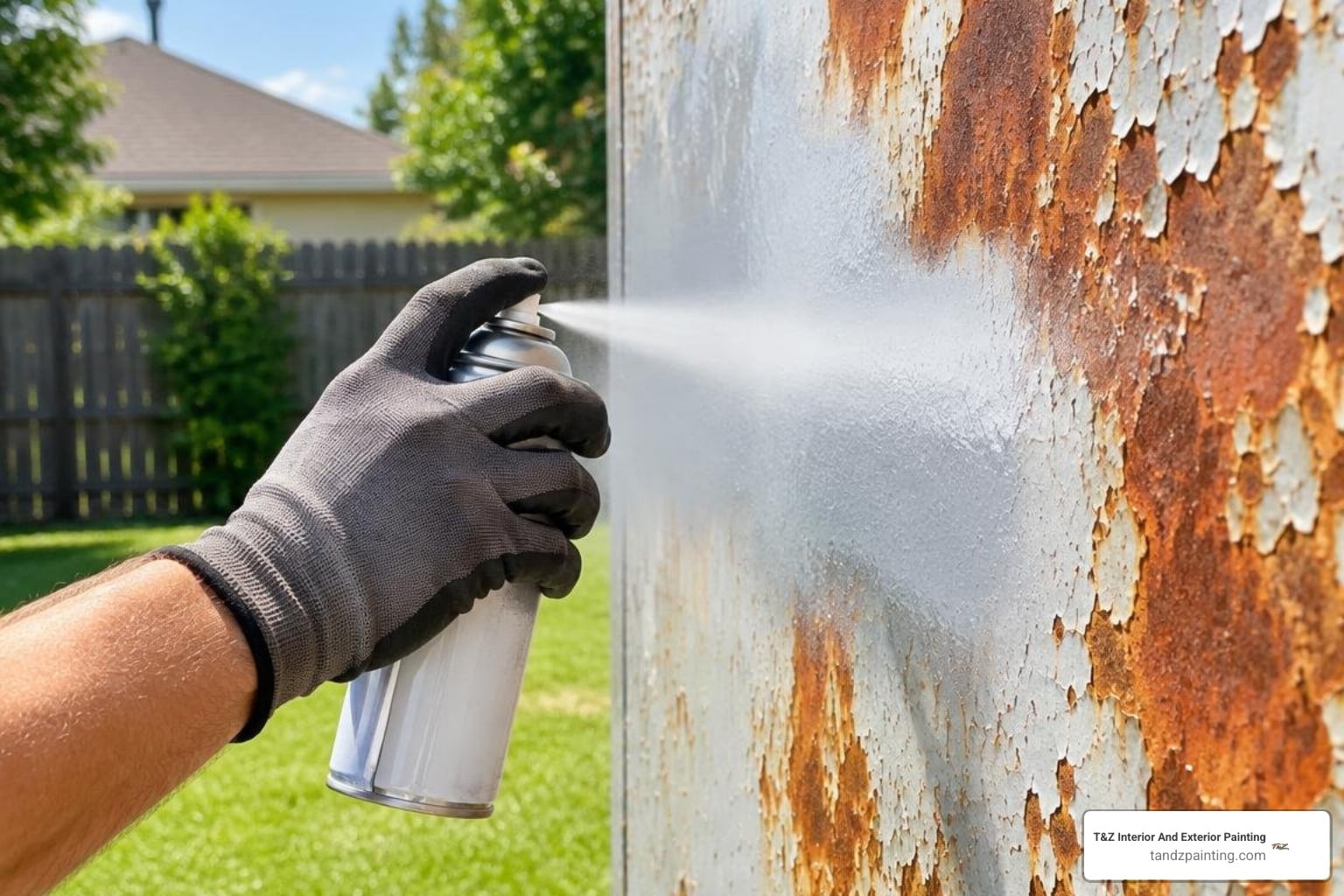
How to Spray Paint Rusted Metal
For a finish that lasts, spray painting rusted metal starts with removing loose rust. Wire-brush and sand the surface, clean off dirt and grease, and let it dry fully. Apply a rust-inhibiting metal primer, then build up the color with thin, even coats of metal spray paint. Follow each can’s directions for drying and recoating.
You do not need to grind away every trace of rust if the remaining metal is sound and your primer is made for rusty surfaces. But paint sprayed over flaky rust is likely to peel.
I’m Tomasz Niemotko, owner and founder of T&Z Interior And Exterior Painting, a licensed and insured painting contractor founded in 2009 in Lombard. My over 15 years of painting experience inform this guide to surface prep and spray painting rusted metal.
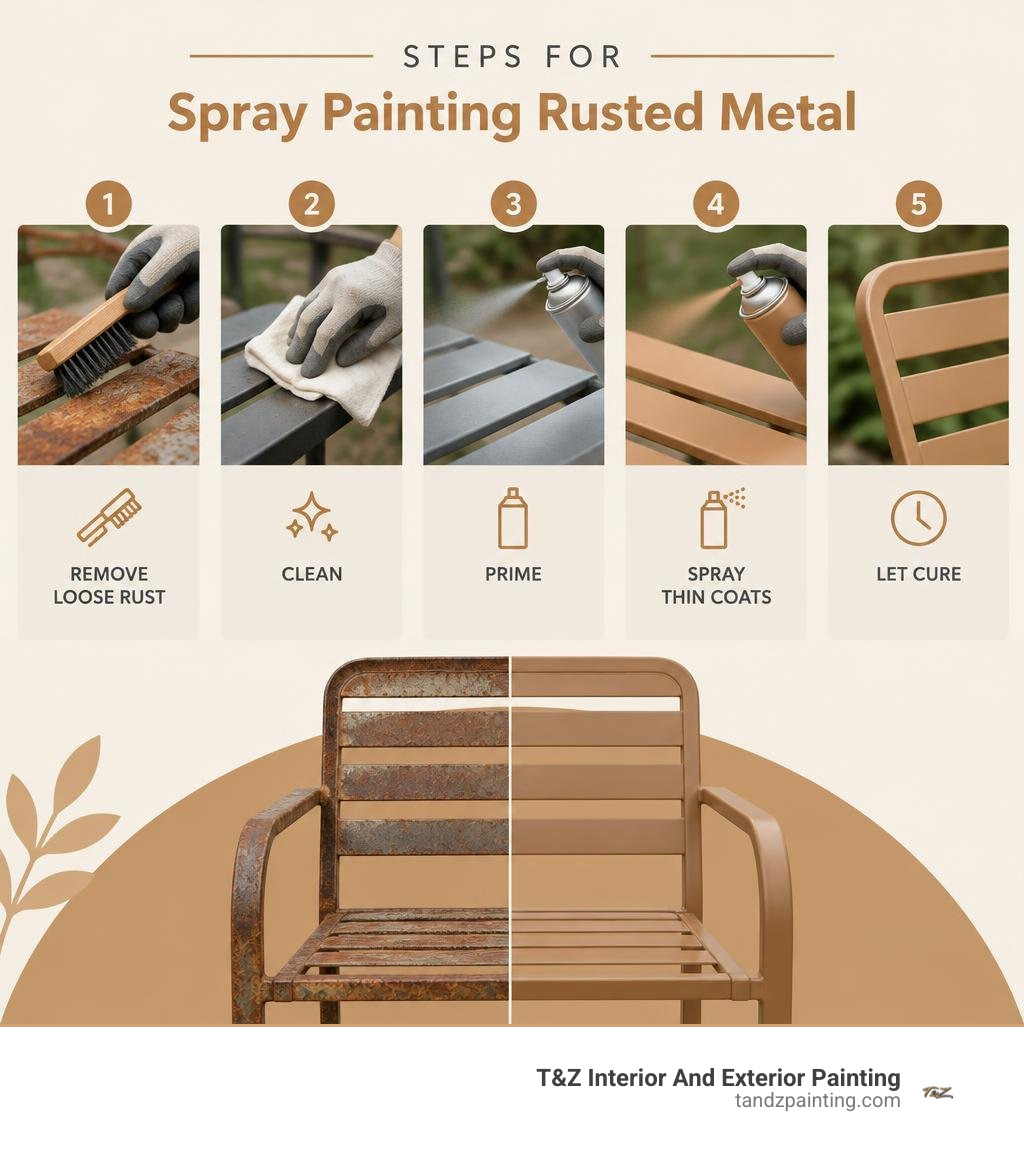
Key spray painting rusted metal vocabulary:
Essential Tools, Materials, and Safety Gear

Before tackling any rusted iron railing, patio chair, or garden gate, gathering the right safety equipment and preparation tools will save you time and frustration. Spray paints and rust particles can irritate your eyes, skin, and lungs, so setting up a safe workspace is just as important as the painting process itself.
Here is the essential checklist you need before starting:
- Safety Equipment: Safety glasses or goggles, heavy-duty nitrile gloves, and an N95 respirator mask or particulate mask suitable for paint fumes and sanding dust. If working on items painted before 1978, keep in mind that lead-based paints were common on architectural and decorative metal, requiring careful handling to prevent lead dust inhalation.
- Abrasion Tools: A stiff wire hand brush, wire wheel attachment for a drill or angle grinder (for extensive surface rust), medium-grit sandpaper (120-grit to 180-grit), and fine-grit sandpaper (220-grit) for feathering edges.
- Cleaning Agents: A specialized degreasing cleaner or denatured alcohol to remove oils and residues, clean water, and lint-free microfiber rags.
- Site Protection: Painter’s tape, plastic sheeting, and heavy canvas drop cloths to catch sanding residue and block overspray.
- Coatings: High-quality rust-inhibiting spray primer or rust reformer, premium exterior metal spray paint, and an optional clear enamel protective topcoat.
Always plan to work in a well-ventilated, shaded outdoor area or a garage with doors wide open. Doing so protects your health and keeps wet paint away from direct sun, windblown dust, and stray insects.
Preparing Surfaces and Choosing Primers for Spray Painting Rusted Metal
When tackling rusted metal, surface preparation accounts for roughly eighty percent of your end result. Skipping prep work ensures that trapped moisture and loose oxidation will push your new paint off the metal in sheets within a few months. Learning proper metal preparation methods helps create a stable, clean foundation that allows primers and paints to form an unbroken chemical and mechanical bond.
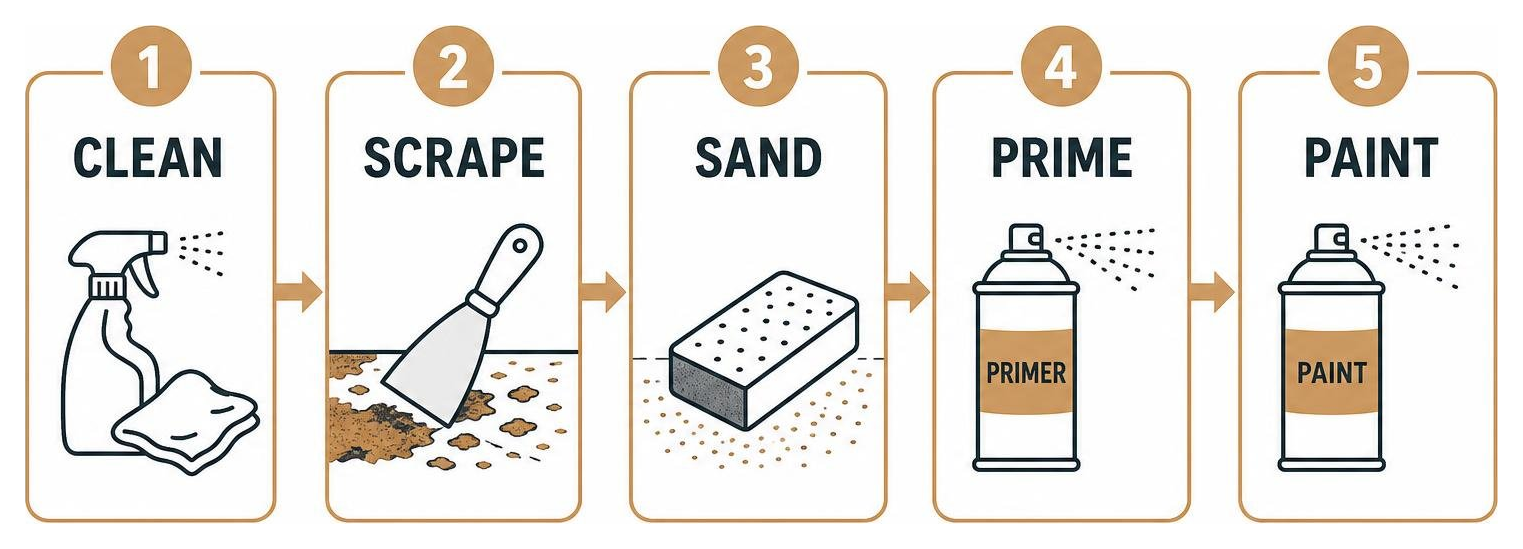
Wire Brushing, Mechanical Scraping, and Surface Sanding
Begin by attacking the worst of the rust. Use a stiff hand wire brush or a putty knife to scrape away large, loose flakes, bubbling paint blisters, and crumbly scale. If you are restoring a large surface like a wrought iron fence or trailer frame, a wire wheel attached to a power drill speeds up the task significantly.
Once you have removed the loose debris, switch to 120-grit to 180-grit sandpaper. Medium grits remove rust without gouging into the sound metal below. Sand across the transition zones where old, sound paint meets bare metal. This process—known as feathering—creates a smooth taper so the paint edges will not show through your final topcoat.
Follow these practical steps to finish your mechanical prep:
- Brush away heavy scale until no loose flakes fall when you tap the piece.
- Sand the entire piece lightly to scuff shiny areas and remove surface roughness.
- Vacuum up loose dust using a shop vacuum fitted with a brush attachment.
- Wipe the surface with a degreaser or denatured alcohol on a lint-free cloth to lift oils, grease, and microscopic metal dust.
- Allow the surface to dry completely before applying any coating.
Rust Converters Versus Rust-Inhibiting Primers
Homeowners often ask whether they should use a chemical rust converter or a traditional rust-inhibiting primer. Both stop corrosion, but they function differently.
A rust converter contains active ingredients like tannic acid or phosphoric acid. When sprayed onto tight, residual rust, it chemically reacts with iron oxide to transform it into an inert, black protective barrier (ferric tannate or magnetite). Products like Rust-Oleum Stops Rust Rust Reformer Spray Paint dry to a flat black finish in as little as 15 minutes, covering up to 12 square feet per can. However, converters require real rust to react; they are not intended for clean, bare steel or galvanized metal. Converters work best on pitted, ornate metalwork where sanding every nook is impossible.
A traditional rust-inhibiting primer, by contrast, is formulated with active anti-corrosive pigments (such as zinc oxide or fish-oil-derived alkyd binders) that physically seal the substrate and passivate the metal against moisture penetration.
| Feature | Chemical Rust Converter | Rust-Inhibiting Primer |
|---|---|---|
| Primary Mechanism | Converts active rust into inert black iron tannate | Seals metal and blocks moisture with corrosion inhibitors |
| Ideal Surface | Pitted, tightly rusted metal where rust cannot be fully sanded | Cleaned, lightly rusted, or bare ferrous metal |
| Application on Bare Steel | Not recommended; needs rust to initiate chemical reaction | Excellent; bonds tightly to raw and sound metal |
| Drying Time Before Topcoat | Requires 24-hour drying period for full chemical cure | Recoatable within 15 minutes to 2 hours |
| Finish Color | Dries to a flat black base | Red oxide, gray, brown, or white |
Choosing the Right Primer Before Spray Painting Rusted Metal
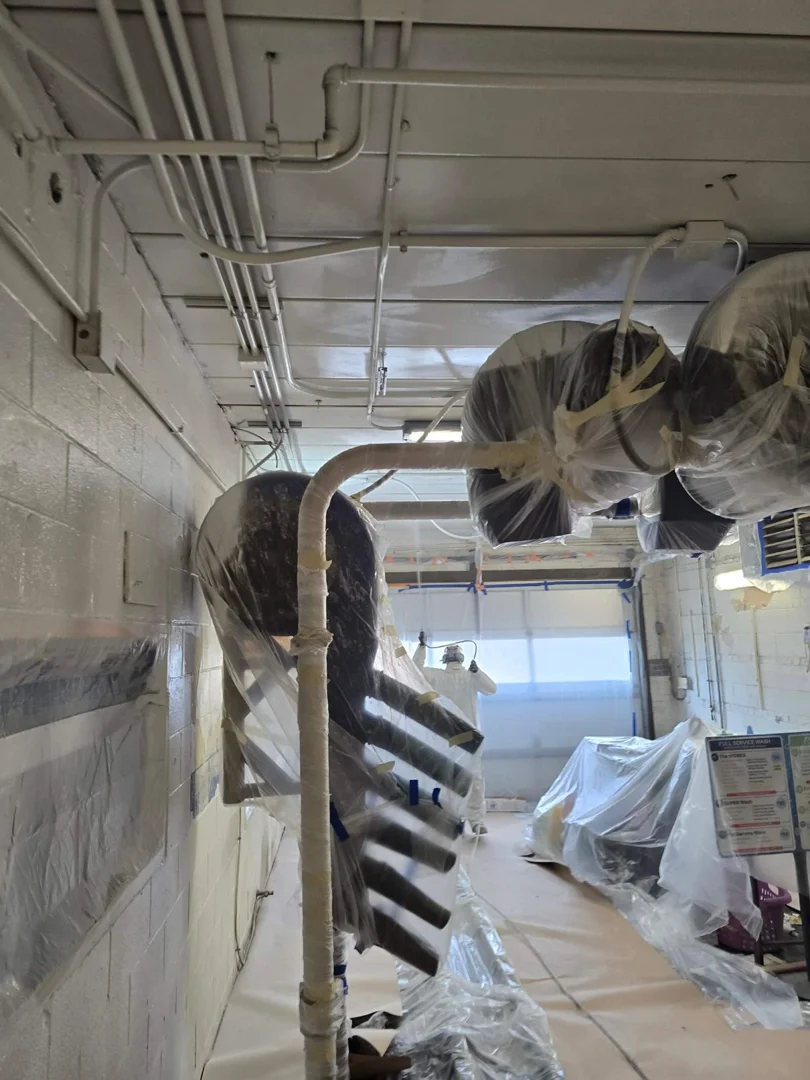
Selecting the proper base coat is vital for preventing orange oxidation streaks from bleeding through light paint colors. If you ground the metal down to a clean, bright surface, an oil-based primer with active corrosion inhibitors will provide high adhesion.
If tight rust remains in hard-to-reach crevices, choosing a dedicated rusty metal primer will penetrate the micro-porosity of the rust, drive out trapped air, and bond securely to the substrate. Spray primers designed specifically for rusted metals can reduce subsequent corrosion significantly when applied over a properly prepped surface.
How to Apply Spray Paint for a Flawless, Durable Finish
Achieving a smooth, factory-grade finish with aerosol cans comes down to spray control and patience. Rather than trying to cover the metal in a single heavy coat, the secret is building depth through multiple thin, uniform layers. This method eliminates runs, drips, and sagging on vertical edges while delivering protective outdoor metal finishes that resist chipping and weathering.
Best Application Techniques for Spray Painting Rusted Metal
Before pressing the nozzle, shake the spray can vigorously for at least two full minutes after the mixing ball begins to rattle. This thoroughly blends the heavy rust-fighting resins and pigments settled at the bottom.
Maintain these best practices throughout your project:
- Distance: Hold the spray can roughly 8 to 12 inches away from the metal surface. Holding the can too close causes pooling and runs, while holding it too far away causes the paint droplets to dry mid-air, creating a rough, powdery texture.
- Motion: Keep your wrist straight and move your arm in smooth, sweeping horizontal passes across the target. Begin spraying just off the edge of the object, sweep across it, and release the nozzle past the opposite edge.
- Overlap: Overlap each spray stroke by approximately 50 percent to guarantee consistent film thickness without light stripes.
- Coat Thickness: Apply two to three light coats instead of one heavy coat. For detailed tips on outdoor spray geometry and preventing splatter, check out our Outdoor Spray Paint Metal Tips.
Advanced options like Rust-Oleum Stops Rust Custom Spray 5-in-1 offer adjustable spray patterns to match horizontal slats, narrow spindles, or broad metal panels, providing 30% greater corrosion resistance and color retention compared to standard nozzles while covering up to 10 square feet per can.
Drying Times, Recoat Windows, and Temperature Guidelines
Environmental conditions dictate how well your paint cures. The ideal temperature range for applying spray paint and rust reformers is between 50°F and 90°F, with relative humidity below 65%. Avoid spraying in direct sunlight, which can heat the metal above its recommended limit (most standard anti-rust sprays are intended for surfaces that will not exceed 200°F) and cause the top layer of paint to flash off too quickly, trapping solvents underneath and creating solvent blisters.
Pay close attention to manufacturer recoat windows:
- Flash Off: Most fast-drying primers allow light subsequent coats within 1 to 5 minutes.
- Touch-Dry Time: Paint typically dries to the touch in 15 to 30 minutes.
- Topcoating: If applying a colored topcoat over a rust reformer, wait the recommended 24 hours to let the chemical reaction cure fully.
- Full Cure: Allow painted items to cure undisturbed for at least 24 to 48 hours before subjecting them to heavy use or outdoor moisture.
Long-Term Maintenance and Corrosion Prevention Strategies
Once your metal piece has been restored, maintaining that protective envelope will keep rust from returning for years to come.
To preserve the finish, apply these simple maintenance habits:
- Add a Clear Enamel Coat: For high-wear pieces such as patio tables or railings, spraying an extra layer of UV-resistant clear protective enamel over your colored topcoat adds defense against scratches and sun fading.
- Conduct Seasonal Washes: Rinse away dust, garden fertilizers, and winter road salt using warm water and mild car wash soap at least twice a year.
- Seal All Surfaces: Rust often starts on the underside or backside of metal furniture where moisture collects. Always ensure bottom edges, bolt holes, and welds receive the same thorough primer and topcoat coverage as front-facing panels.
- Touch Up Scratches Immediately: Keep a matching can of metal spray paint or a small touch-up bottle on hand. If lawn equipment or tools nick the paint down to bare steel, scuff the spot lightly and touch it up immediately before moisture can trigger new oxidation.
Frequently Asked Questions About Rusted Metal Refinishing
Can you spray paint directly over rust without removing it first?
You should never spray paint directly over loose, flaking, or scaling rust. Paint requires a solid, anchored surface to adhere; applying paint over loose oxidation simply coats flakes that will break away from the metal, causing premature peeling. However, if you wire-brush the loose material away so that only sound, tightly adhering rust remains, you can apply a rust converter or a dedicated rusty metal primer directly over the stabilized surface without needing to grind the piece down to bare steel.
How long should rust converter cure before applying spray paint?
Although rust converter sprays often dry to the touch in roughly 15 minutes, you should allow them to cure for a full 24 hours before applying an enamel topcoat. This waiting period allows the tannic or phosphoric acids in the converter to chemically turn the iron oxides into a stable, non-reactive black barrier. Painting too early can trap unreacted chemicals and moisture under the paint film, leading to poor adhesion and bubbling.
What is the best spray paint finish for masking metal imperfections?
A hammered or textured metal finish is the most effective choice for hiding surface pitting and irregularities left behind by deep rust. Hammered spray paints dry with a distinct dimpled pattern that breaks up light reflections, making uneven metal look intentional and decorative. If you prefer a traditional solid color, satin and matte enamel finishes conceal metal flaws far better than high-gloss paints, which tend to highlight every small pit or grind mark.
Conclusion
Restoring oxidized metal fixtures, patio sets, and iron railings does not require complex industrial equipment—just proper surface prep, the right rust-inhibiting primers, and controlled spray application. By taking the time to scrape loose scale, clean away contaminants, and apply thin, overlapping coats of quality enamel, you can turn aged, weathered metal into durable, attractive centerpieces that withstand outdoor elements.
If you have large metal projects, architectural features, or home surfaces across Lombard, Wheaton, or Elmhurst that require professional attention, our local team is ready to help. T&Z Interior And Exterior Painting was founded in 2009 by owner Tomasz Niemotko, bringing over 15 years of hands-on painting experience to homeowners and commercial property owners throughout the western Chicago suburbs.
As a licensed and insured painting contractor based at 1101 S Columbine Ave in Lombard, IL, we are proud to be BBB accredited with a 5.0 Google rating backed by over 85 customer reviews. We stand behind our residential and commercial work with a reliable 2-year warranty. Whether you need exterior painting, cabinet refinishing, or professional spray painting services, we deliver stunning, long-lasting results.
Contact us today at (224) 240-0054 or visit tandzpainting.com to request your free estimate.