
Cabinet & Furniture Refinishing in Lombard, IL
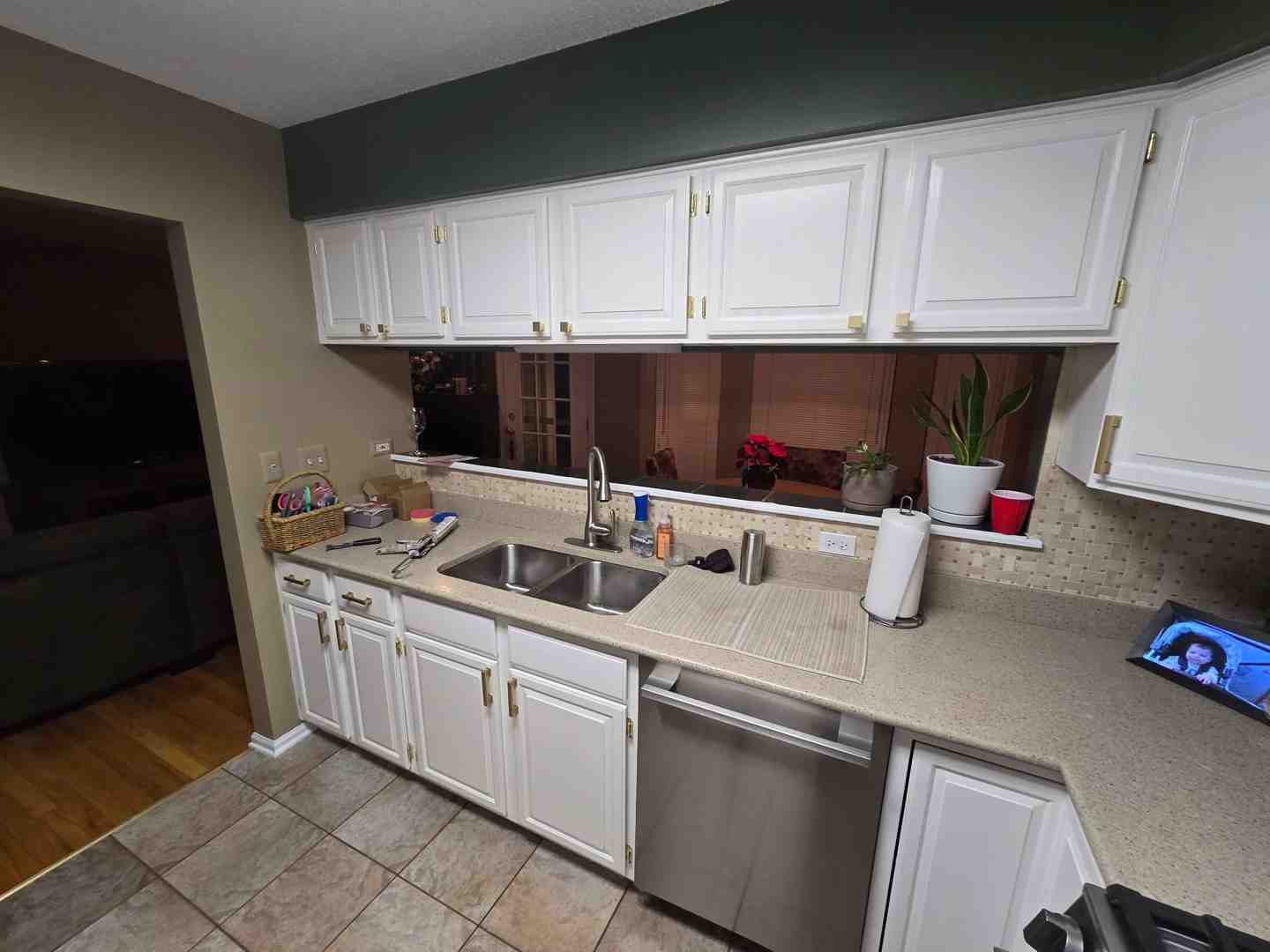
Before you replace it, refinish it. In Lombard, quality kitchen cabinets and furniture pieces that look worn, faded, or dated can be completely transformed through professional refinishing — at a fraction of the cost, in a fraction of the time, and without the waste and disruption of full replacement. T&Z Interior and Exterior Painting handles Cabinet & Furniture Refinishing in Lombard for kitchen and bathroom cabinets, built-ins, dressers, tables, chairs, dining sets, and office furniture. We strip, repair, prep, and recoat wood and painted surfaces in new stain colors, new paint colors, or restored original finishes. Call us for a free on-site assessment — refinishing scope is confirmed after surface inspection so you know exactly what the project involves before committing. We’re a licensed Painter with 15+ years of refinishing expertise, and we deliver results that last.
What Cabinet and Furniture Refinishing Is — and When It's the Right Choice for Lombard Homeowners
What refinishing actually involves:
Refinishing strips the existing finish — paint, stain, varnish, lacquer, or any combination of these that has been applied over the years — back to the bare or near-bare substrate. The surface is then repaired, prepped, primed as required, and recoated with a fresh finish system: a new stain color, a new paint color, or a restored version of the original.
Repainting applies new paint over existing paint without stripping. For walls, this is often appropriate — wall paint in sound condition can be recoated with correct prep. For cabinets and furniture, it is almost always the wrong approach. Existing cabinet and furniture finish is thicker, harder, and more build-up than wall paint. New paint applied over existing cabinet finish without stripping produces a thick, soft film that chips at edges, peels at joints, and fails at corners within one to three years. Every T&Z refinishing project strips to bare or near-bare substrate before any new finish goes on.
When refinishing is the right choice:
Refinishing is right when the piece is structurally sound and the goal is a cosmetic transformation. The cabinet boxes are firm, the drawers operate correctly, the furniture frame is stable — everything structural is working. The problem is the surface: the finish is outdated, the color is wrong, the sheen is dull, or the surface has accumulated damage that needs to be addressed. Refinishing corrects all of these.
Refinishing is also right when the existing piece has quality that replacement would lose. Solid wood kitchen cabinets from the 1980s and 1990s — the dominant construction era in Lombard’s housing stock — were frequently built to a standard of material quality and joinery that entry-level new cabinet lines from current manufacturers don’t match. Replacing these cabinets often means spending more to get less. Refinishing preserves the original construction quality while completely transforming the appearance.
When refinishing is not the right choice:
Refinishing improves surfaces, not structures. Cabinet boxes that are warped, swollen with moisture damage, or delaminating need structural repair or replacement before any surface treatment. Drawer glides that have failed need hardware replacement — refinishing the drawer front doesn’t address the glide. Furniture frames that are structurally compromised — loose joints, broken stretchers, cracked structural members — need repair or replacement. T&Z identifies all of these at the on-site assessment and advises on whether refinishing or a different approach is appropriate for each specific piece.
Why Refinishing Cabinets and Furniture in Lombard Costs Less and Wastes Less Than Replacing Them
The full scope of cabinet replacement:
Full kitchen cabinet replacement is a construction project. It involves demolishing and removing the existing cabinet boxes, hauling them out and disposing of them. It involves ordering new cabinet boxes, doors, and hardware — which takes weeks for anything beyond big-box stock. It involves installing the new boxes, leveling, shimming, and securing them to the wall. It often involves removing and reinstalling countertops, adjusting plumbing under the sink, relocating electrical outlets that were positioned for the original cabinet layout, and repairing the wall surfaces that the original cabinets covered.
During this process, the kitchen is nonfunctional. Countertops are off. Plumbing is disconnected. The renovation timeline stretches over weeks. Everything in the kitchen — dishes, food, small appliances — has to be staged somewhere else in the home.
The scope of cabinet refinishing:
Refinishing a kitchen involves removing the doors and drawer fronts from the cabinet boxes, taking them off-site or working on them in-place, and refinishing them along with the cabinet face frames and box interiors. The countertops stay. The plumbing stays. The electrical stays. The kitchen remains largely functional throughout the project. Most kitchen cabinet refinishing projects in Lombard take three to five days from start to finish, with the kitchen accessible throughout.
The quality argument:
This is the point that surprises most homeowners. The solid wood or plywood-front kitchen cabinets installed in Lombard homes during the 1980s and 1990s were built with materials and construction methods that exceed what is available in the entry-level and mid-range new cabinet market today. The wood species — oak, maple, cherry — are solid or solid-front. The joinery — dovetail drawers, mortise-and-tenon frames — is quality construction. The box depth and weight are often superior to current equivalent-price options.
Replacing these cabinets with new entry-level boxes is not an upgrade in construction quality — it’s an upgrade in appearance at a cost in material quality. Refinishing preserves the superior original construction and delivers the same appearance upgrade.
The material waste argument:
A full set of kitchen cabinets replaced rather than refinished generates significant material waste: demolished cabinet boxes, packaging from new cabinets, and often countertop sections removed and disposed of. Lombard homeowners who have made sustainability a conscious priority in renovation decisions increasingly choose refinishing as the approach that preserves functional material rather than sending it to landfill.
Kitchens in Yorkshire Woods and Summit at Yorktown homes built in the 2000s and 2010s often have MDF or plywood-construction cabinet boxes in excellent structural condition under a finish color that reads as dated — a specific warm honey or golden oak stain that was standard in that era. Refinishing these boxes preserves the newer construction quality while updating the aesthetic to current palettes, at a fraction of what replacement would cost.
What Types of Cabinets and Furniture T&Z Can Refinish in Lombard Homes
Kitchen cabinets:
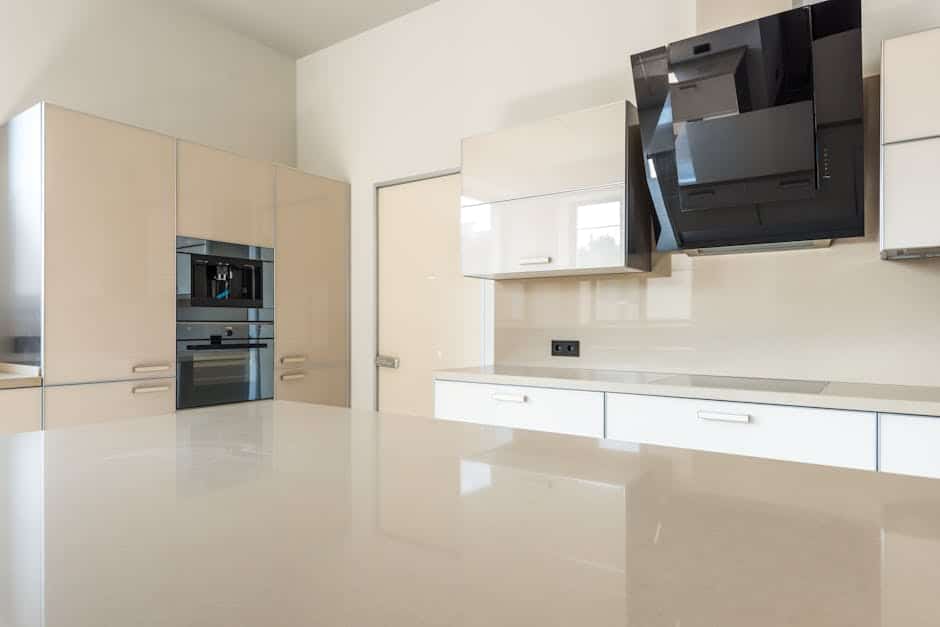
Cabinet doors and drawer fronts in solid wood, plywood-faced, and MDF construction can all be refinished with the correct prep and product system. Solid wood and plywood-faced doors strip cleanly and accept stain or paint over the correctly prepared substrate. MDF doors are paint-only — stain doesn’t penetrate MDF because it has no wood grain to absorb the pigment. MDF doors require oil-based or shellac primer on all edges before any water-based topcoat to prevent moisture absorption and edge swelling.
Cabinet face frames, box interiors, and box exteriors are refinished along with doors and drawer fronts for a complete kitchen transformation. Interior box refinishing — changing the box color from natural wood to white or a contrasting color — is increasingly requested as an upgrade that makes the full kitchen feel more finished.
Bathroom vanities:
Free-standing and built-in bathroom vanity cabinetry is refinished using moisture-resistant products appropriate for the bathroom environment. Standard cabinet enamel on bathroom vanity doors performs adequately in most conditions. For vanities in bathrooms without exhaust ventilation — common in older Lombard homes — T&Z specifies a product with higher moisture resistance to account for the chronic humidity these spaces experience.
Furniture:
Dressers, nightstands, dining tables, dining chairs, coffee tables, console tables, side tables, desks, and bookcases in solid wood, quality plywood, and stable medium-density substrates can all be refinished. The refinishing approach depends on the piece’s current finish type, the desired new finish, and the piece’s use environment.
A dining table that receives daily use and regular cleaning needs a harder, more chemical-resistant topcoat than a decorative console table that primarily holds objects. T&Z specifies topcoat hardness and chemical resistance based on how the refinished piece will actually be used.
Built-ins:
Built-in bookcases, entertainment centers, mudroom built-ins, closet cabinetry, and home office built-in systems are refinished in-place or with removable doors and drawers taken off-site. In-place refinishing requires careful masking of adjacent surfaces and controlled ventilation to manage fumes. T&Z handles in-place built-in refinishing with the same containment approach used for commercial interior painting projects — full masking of adjacent floors, walls, and furnishings before any finish is applied.
Thermofoil-wrapped surfaces:
Thermofoil is a vinyl film heat-bonded to an MDF substrate — common in kitchen cabinets from the 1990s and early 2000s. Thermofoil in good condition — fully adhered to the substrate with no delamination at edges or corners — can be refinished with a bonding primer followed by paint. Thermofoil that is delaminating — peeling at edges, lifting at corners, bubbling in the field — cannot be reliably refinished. The delaminated sections must be repaired or the doors replaced before any finish work is possible.
T&Z assesses thermofoil condition at the on-site inspection and gives an honest assessment of whether refinishing is viable for the specific doors before any project is scheduled.
Lombard homes from the 1960s and 1970s frequently have original solid wood furniture — dressers, dining sets, side tables — of a material quality rarely found in current retail furniture. These pieces refinish beautifully because the underlying wood is high-quality and stable. T&Z refinishes these pieces and restores them to a standard that matches their original construction quality, extending their functional life by decades.
How Long Cabinet and Furniture Refinishing Lasts in Lombard — and What Determines the Lifespan
Kitchen cabinet refinishing:
Kitchen cabinet refinishing with cabinet-grade enamel topcoat produces a finish that lasts seven to ten years under normal kitchen use conditions. This is comparable to the factory-applied finish lifespan on new cabinets from entry-level and mid-range manufacturers — and it’s achieved on the superior original construction of 1980s and 1990s Lombard kitchen cabinets.
“Cabinet-grade enamel” is the specific product category T&Z uses on kitchen refinishing projects. It is not standard interior paint at a higher sheen. Cabinet-grade enamel is formulated for cabinet surfaces — harder, more chemical-resistant, more washable under the cleaning products and frequency that kitchen surfaces experience. Using standard wall paint on kitchen cabinet refinishing, regardless of sheen level, produces a softer surface that marks, chips, and cleans poorly. The product specification is part of why T&Z refinishing lasts and why some other approaches don’t.
Furniture refinishing:
Furniture refinished with penetrating stain and oil-based polyurethane topcoat lasts 10 to 15 years under normal residential use. Dining tables — which receive the most daily contact and cleaning of any furniture surface — sit at the lower end of that range. Decorative case pieces with less contact and cleaning sit at the higher end.
Water-based polyurethane is now formulated to a quality level that approaches oil-based for most furniture applications. It offers faster dry time and lower odor. T&Z advises on oil-based versus water-based topcoat based on the specific piece, its use environment, and the timeline of the project.
The primary failure cause — incomplete stripping:
The single most common cause of premature cabinet and furniture refinishing failure is applying new finish over existing finish without complete stripping. It seems like a time-saving shortcut. The result is a new finish that bonds to the old finish rather than to the substrate. When the old finish moves — when it expands slightly in heat, contracts in cold, or absorbs moisture — the new finish moves with it and then separates from it. The failure appears at edges and corners first, then spreads. A refinishing job that looked excellent at completion peels within one to three years when this shortcut is taken.
T&Z strips every refinishing project to bare or near-bare substrate before any new finish product is applied. This is not optional on cabinet and furniture refinishing — it is the step that determines whether the result lasts its full expected lifespan or fails prematurely.
Care and maintenance:
T&Z provides a written care guide with every refinishing project — specific cleaning products and methods for the finish type applied. Cabinet-grade enamel cleans well with mild dish soap and a soft cloth. Abrasive cleaners, rough sponges, and bleach-based products damage the enamel film and accelerate wear. Polyurethane-topcoated furniture cleans with a lightly damp cloth — standing water left on the surface degrades the topcoat over time. These are simple maintenance practices that meaningfully extend the refinishing lifespan.
Kitchen cabinets in Westmore and Maple Knoll homes that see daily use from active families with children — high daily contact, frequent cleaning with whatever cleaning products are under the sink — are the highest-stress application for cabinet refinishing in Lombard. T&Z specifies industrial-grade cabinet enamel with the highest hardness rating available for these projects, not standard interior paint at semi-gloss.
How T&Z Matches Existing Cabinet and Furniture Finishes in Lombard Homes
Matching painted cabinet finishes:
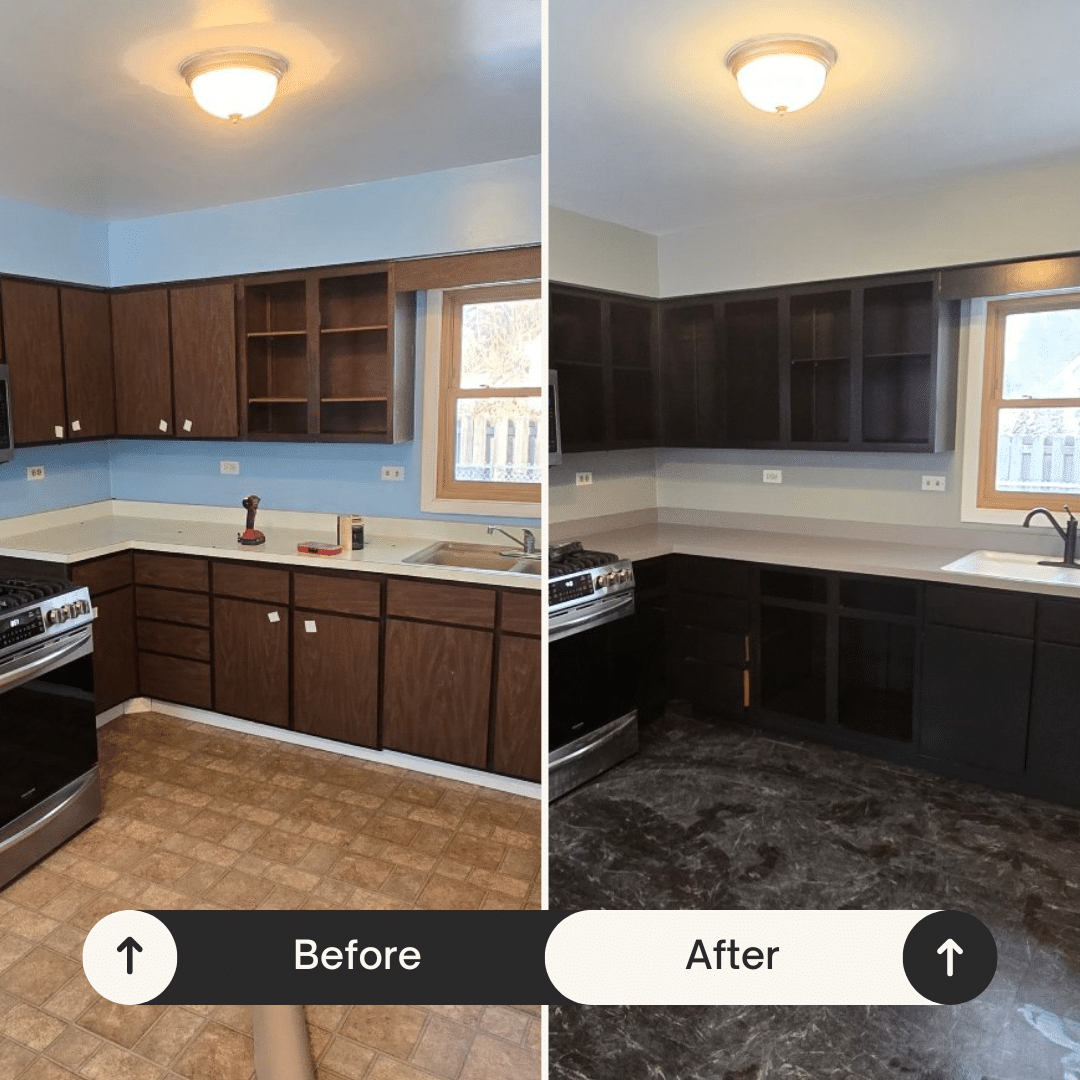
Painted cabinet finishes are matched using spectrophotometric color matching — a device that reads the exact color of the existing finish and produces a paint formula that replicates it. This process is more accurate than visual color matching at a paint store and produces matches that hold up under the same lighting conditions as the existing finish.
The match is applied over the same primer system used on the original refinishing project — or assessed and matched to the primer system already in place on the existing finish. A correctly matched color applied over a mismatched primer produces a color difference that shows in raking light. T&Z matches both color and build-up layers, not just the topcoat.
Matching stained wood finishes:
Wood stain matching is more complex than paint matching because stain color is affected by the wood species, grain density, and existing stain absorption depth — none of which are directly replicable by formula alone. T&Z applies test patches of stain formulas adjusted to match the existing color on a sample piece of the same wood species before committing to any partial refinishing project. The test patch is assessed under the room’s actual lighting conditions — stain colors shift significantly under different light temperatures — and the formula is adjusted until the match is confirmed.
Sheen matching:
Sheen level is as visible as color when two adjacent surfaces don’t match. A door refinished to semi-gloss sitting next to original doors in satin immediately reads as different regardless of how well the color matches. T&Z matches sheen level along with color on every partial refinishing project — the topcoat product and application method are selected to produce the same reflectivity level as the existing adjacent finish.
When matching isn’t the best answer:
Heavily aged or significantly faded finishes sometimes cannot be matched to a new application with acceptable accuracy. A cabinet finish that has yellowed over 20 years, or a stained wood finish that has faded unevenly from sun exposure, has shifted so far from its original color and sheen that a new application — however well matched to the aged current color — will look different from all angles.
In these cases, T&Z advises honestly: a full refinishing of the complete cabinet set produces a better result than attempting to match a section to a finish that no longer represents its original character. The partial match would require matching to the aged current state, which means the newly refinished section looks like new while everything else looks old — not the intended result.
Lombard kitchens that have been partially updated over the years — new cabinet doors added to existing boxes, a peninsula added to an original galley kitchen, a pantry cabinet purchased from a different source to extend the original run — present the most common and most complex partial-match scenarios. T&Z assesses the full cabinet set at the estimate to determine whether partial matching or full refinishing is the approach that produces a cohesive, lasting result.
Cabinet and Furniture Refinishing for Lombard Commercial Properties — Offices, Hospitality, and Retail
Office refinishing:
Reception desks, credenzas, conference room cabinetry, built-in storage walls, and kitchenette cabinetry in Lombard commercial offices are refinished in-place with minimal disruption to business operations. Most office refinishing projects can be scheduled over a weekend or during an office closure period — T&Z coordinates the schedule with the property manager and confirms the work sequence so each area is complete and cured before staff returns.
Office cabinetry refinishing uses the same cabinet-grade enamel system as residential kitchen cabinets — the use environment is similar: daily contact, regular cleaning, and the need for a durable, professional-looking finish that holds up over the full period between scheduled office refreshes.
Hospitality refinishing:
Restaurant and hospitality case goods — dining chairs, dining tables, bar cabinetry, host stand millwork, and lobby case furniture — are refinished using commercial-grade topcoats rated for the cleaning protocols and contact frequency of a hospitality environment. A dining chair finish in a Lombard restaurant sees multiple cleanings per day with commercial cleaning products. A residential furniture topcoat does not hold up to this use. T&Z specifies commercial-grade catalyzed finishes — two-component finish systems that cure to a significantly harder, more chemical-resistant surface than standard oil or water-based topcoats — for all hospitality refinishing applications.
Retail refinishing:
Display fixtures, built-in shelving, cash wrap cabinetry, and fitting room furniture in retail environments are refinished to brand color specifications where applicable. Brand color matching using the same spectrophotometric process used for residential partial matching ensures the refinished fixtures read as part of the brand environment rather than as repainted originals.
Retail refinishing is scheduled during overnight or off-hours periods to avoid customer disruption and to allow adequate ventilation and cure time before the store opens. T&Z uses low-VOC refinishing products on retail projects where same-day reoccupation is required — the space must be ready for customers before opening, not still clearing product fumes.
Commercial scheduling:
All commercial refinishing projects are scheduled to minimize business disruption. Zone-by-zone scheduling moves the project through the building one section at a time, keeping the rest of the space operational. After-hours availability is standard for any commercial project where daytime operations cannot accommodate refinishing activity.
Professional services offices along Finley Road and in Lombard’s Yorktown business corridor often have original built-in cabinetry and reception furniture from the building’s initial fit-out — pieces that were spec’d at a quality level that makes replacement expensive and wasteful. These pieces are frequently solid wood or high-quality plywood construction that refinishes to a like-new standard. T&Z refinishes these commercial built-ins and restores them to a finish quality that matches their original specification, extending their useful life significantly and avoiding the cost and disruption of full replacement.
Send Us a Message
Ready to restore what you have instead of replacing it? Contact T&Z Interior and Exterior Painting today for a free on-site assessment. We serve Lombard and all of Chicagoland — and we confirm the full refinishing scope after surface inspection so you know exactly what the project involves before committing.
FAQ
What is cabinet and furniture refinishing — and is it different from repainting?
Yes — refinishing strips the existing finish back to the substrate before applying a new complete finish system. Repainting applies new paint over existing paint without stripping. On cabinets and furniture, repainting over existing finish produces adhesion failure within one to three years because the new finish bonds to the old finish rather than to the substrate. T&Z strips every refinishing project to bare or near-bare substrate before any new product is applied.
Is it worth refinishing my Lombard kitchen cabinets instead of replacing them?
Yes, if the cabinet boxes and frames are structurally sound. Refinishing preserves superior original construction, takes days instead of weeks, keeps the kitchen functional throughout, and transforms the appearance at a fraction of replacement cost. Solid wood kitchen cabinets from Lombard’s 1980s and 1990s housing stock frequently exceed the construction quality of current entry-level replacements — refinishing makes more sense than replacing them with an inferior product.
Can T&Z refinish bathroom vanity cabinets in a Lombard home?
Yes. Bathroom vanity cabinetry is refinished using moisture-resistant products appropriate for bathroom humidity conditions. For bathrooms without adequate exhaust ventilation — common in older Lombard homes — T&Z specifies products with higher moisture resistance to account for the chronic humidity these spaces experience. Substrate condition and any existing damage are assessed at the on-site inspection before refinishing is confirmed.
How long does cabinet refinishing last in a Lombard kitchen?
Seven to ten years with cabinet-grade enamel topcoat under normal kitchen use. Lifespan depends primarily on complete stripping of existing finish before the new finish is applied — incomplete stripping is the most common cause of premature failure, with new finish peeling at edges and corners within one to three years. T&Z strips to bare or near-bare substrate on every project.
Can T&Z match the finish on my existing Lombard cabinets when refinishing only part of the set?
Yes for painted finishes using spectrophotometric color matching — the match is applied over the correct primer system for visual consistency at normal viewing distance. For stained finishes, T&Z applies test patches and adjusts the formula until the match is confirmed under the room’s actual lighting conditions. Heavily aged or significantly faded finishes may not match new applications accurately — T&Z advises whether partial matching or full-set refinishing produces the better result for the specific situation.