
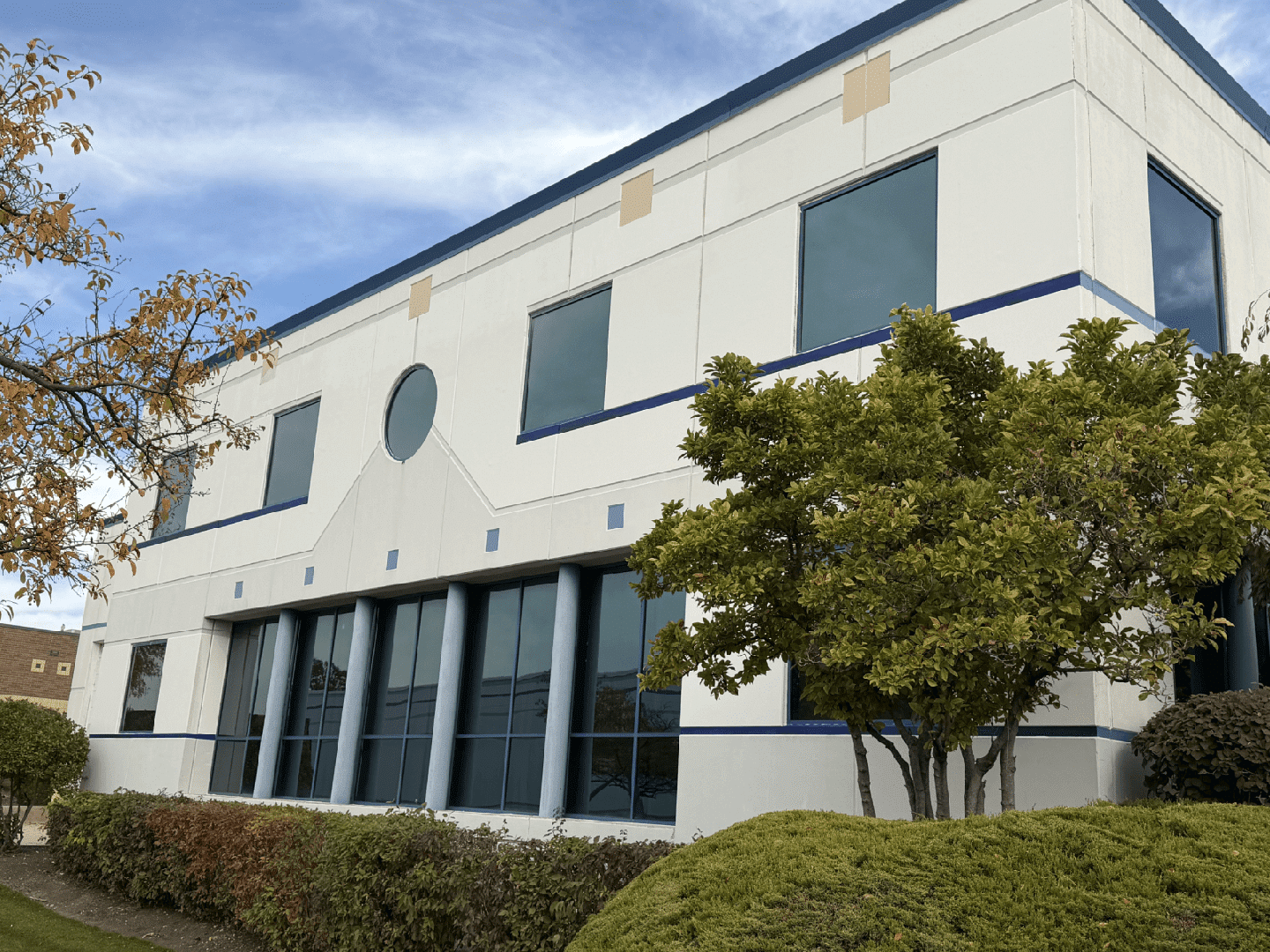
Why Commercial Painting Contracts Are the Foundation of Every Successful Project
Commercial painting contracts are legally binding agreements that define the scope, timeline, and professional responsibilities for large-scale painting projects on commercial properties.
Here’s a quick overview of what a solid commercial painting contract covers:
- Scope of work – surfaces to be painted, paint types, number of coats, and preparation methods
- Project timeline – start date, end date, milestones, and delay provisions
- Warranties – workmanship guarantees and material coverage
- Insurance – general liability and workers’ compensation certificates
- Change order process – how scope changes are documented and approved
Without a clear contract, both the client and the contractor are exposed to serious risk – from project delays to unfinished work and legal liability.
According to the Bureau of Labor Statistics, professional painting requires significant technical skill and adherence to safety standards. A single commercial project requires meticulous planning and expert execution to ensure long-lasting results. The contract is what makes that kind of project manageable and successful.
I’m Tomasz Niemotko, owner of T&Z Interior And Exterior Painting, with over 15 years of hands-on experience delivering commercial painting contracts for businesses across Lombard, Itasca, Addison, and the surrounding suburbs. In this guide, I’ll walk you through everything from technical planning to project closeout.
Essential Elements of Commercial Painting Contracts
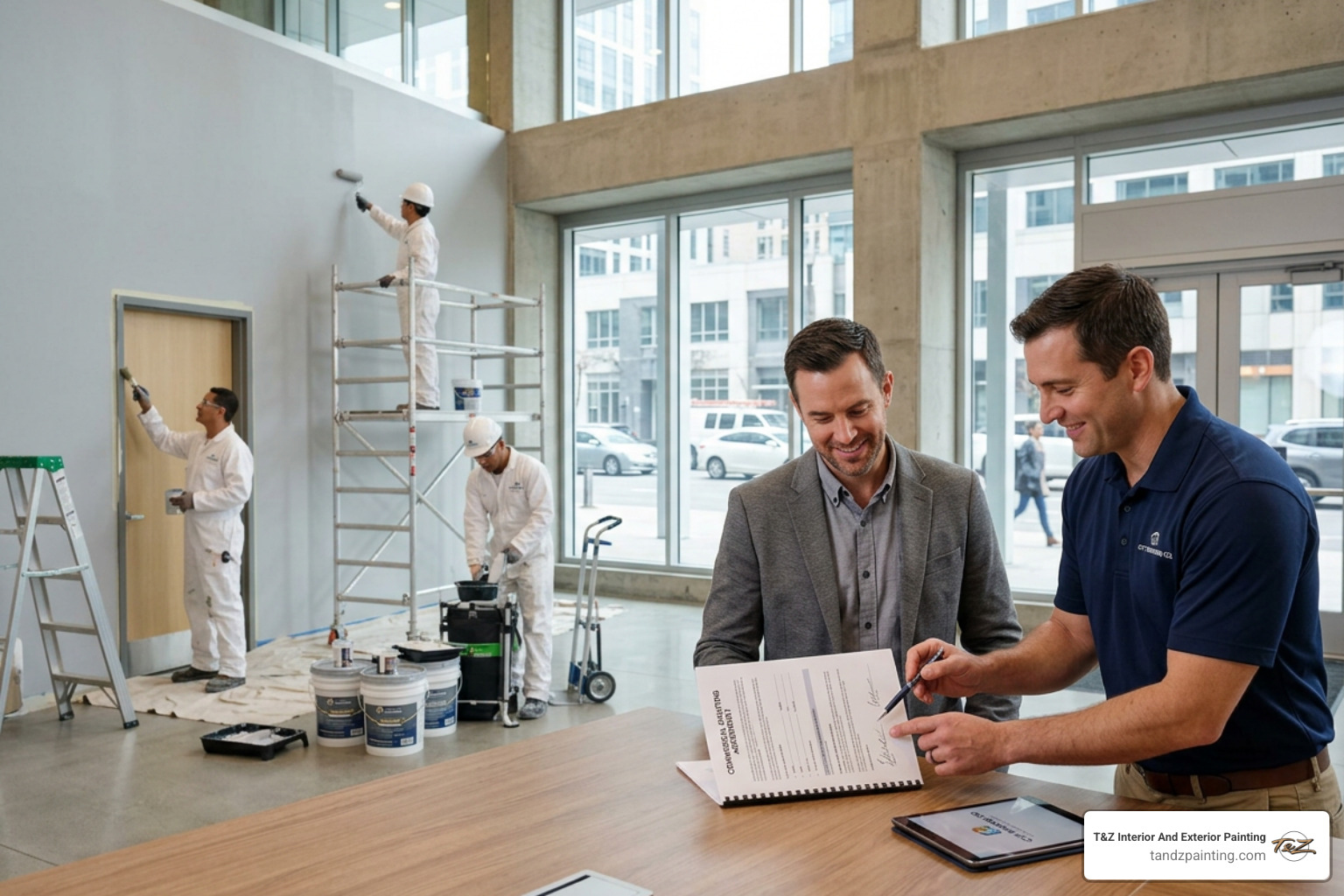
Transitioning from residential work to Commercial Painting Services requires a shift in mindset. While a residential contract might be a few pages long, a commercial agreement is often a robust legal shield. The primary difference lies in the scale and the number of stakeholders involved. In a home, you deal with the homeowner; in a commercial setting, you might answer to facility managers, general contractors, and corporate boards.
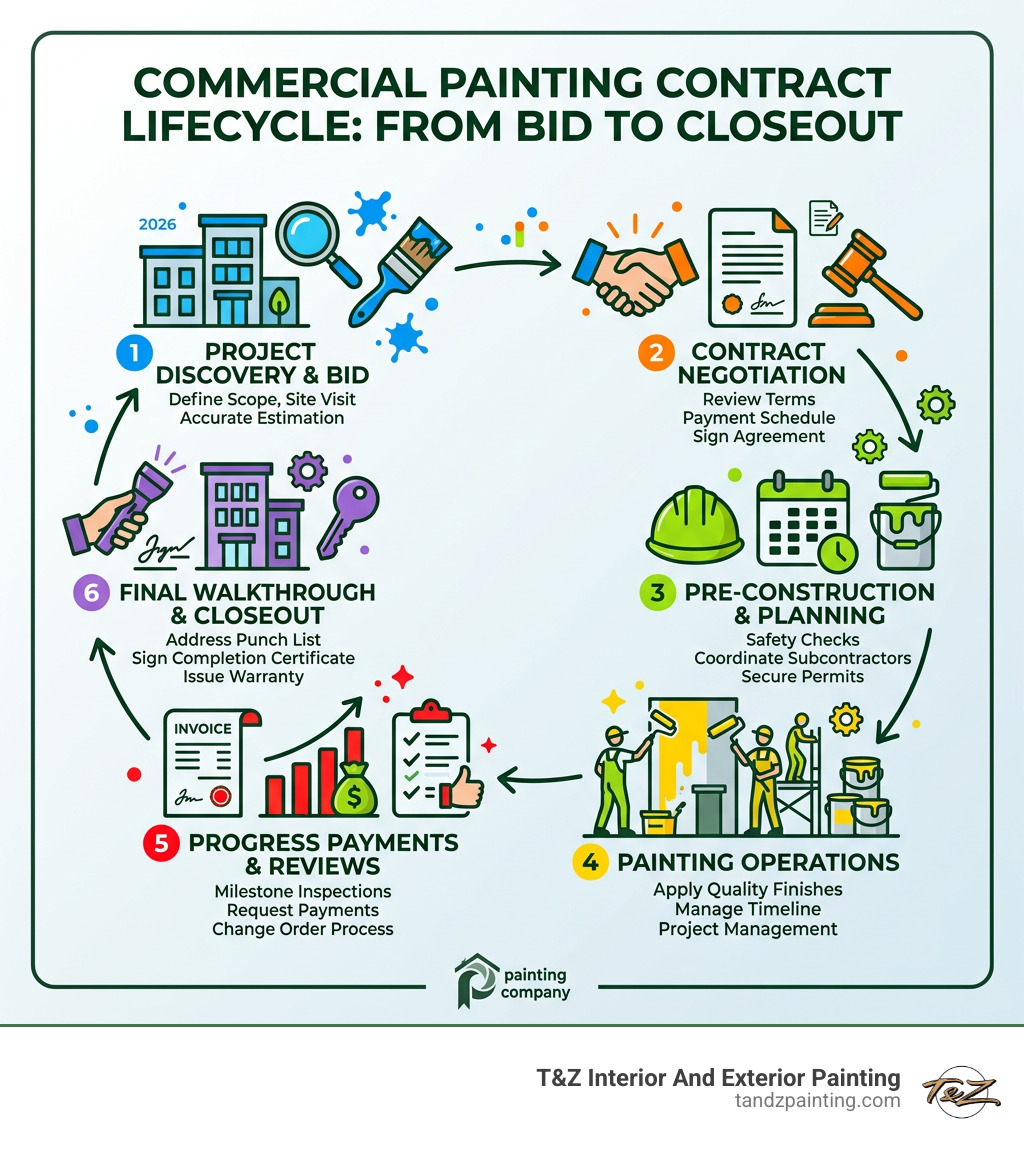
According to the Commercial Painting Industry Association, a professional contract is essentially a roadmap. It ensures everyone is looking at the same map before the first drop of paint hits the wall. Key elements include detailed project milestones—specific dates when certain phases of the job must be completed—and strict liability clauses that protect the property owner from accidents and the contractor from “scope creep.”
| Feature | Residential Contracts | Commercial Painting Contracts |
|---|---|---|
| Project Scale | Single-family homes | Large-scale facilities |
| Timeline | 3 – 7 days | 1 month – 1 year+ |
| Primary Contact | Homeowner | Facility Manager / GC |
| Insurance Needs | Standard Liability | High-limit Liability + Workers’ Comp |
Defining the Scope of Work
The “Scope of Work” is the backbone of any commercial painting contract. If it isn’t in writing, it doesn’t exist. This section must identify every single surface to be treated. We aren’t just saying “paint the walls”; we are specifying whether we are handling door frames, window mullions, ceilings, or even specialized floor coatings.
For Interior Painting, the contract should specify the brand and line of paint (such as Sherwin-Williams or Benjamin Moore), the number of coats, and the desired finish. For Exterior Painting, the requirements become even more technical, often involving specific coating requirements for masonry, metal, or wood to ensure the building survives the harsh Illinois winters.
Project Timelines and Management
In the commercial world, project management is vital. Because these projects can last months and involve buildings over 40,000 square feet, we utilize structured schedules to maintain progress. Using Contract management insights helps ensure that project milestones are clearly defined to maintain momentum. The timeline must also account for “force majeure” events, like extreme weather that halts exterior work, ensuring we aren’t penalized for things outside our control.
The Bidding and Planning Process
Bidding on a commercial job is a science. It starts with a thorough site walkthrough. You can’t just guess based on blueprints; you need to see the actual condition of the drywall or the height of the warehouse ceilings. We measure square footage meticulously, but we also look for “difficulty factors”—will we need to move heavy machinery? Is the work happening after hours?
Large-scale projects often require specialized equipment rentals, such as 40-foot scissor lifts or boom lifts. These resources must be planned for in the initial proposal. For those looking for government work, platforms like SAM.gov offer a gateway to federal bidding opportunities, though these often come with even stricter contractual requirements.
Technical Planning for Commercial Painting Contracts
To ensure project success, we use real data. We calculate material coverage based on the specific product’s spread rate (usually around 350 sq. ft. per gallon). If a 12,000 sq. ft. office needs two coats, we know we need at least 70 gallons of paint.
Labor is managed through production rates—how many square feet a pro can paint in one hour—to estimate total man-hours. According to the Bureau of Labor Statistics, the industry is physically demanding, and professional contractors focus on efficiency and safety to deliver superior results.
Strategies to Improve Project Success
Winning a bid is about being the most professional. Facility managers want to know you are reliable, on time, and won’t leave a mess. We improve our success rates by providing itemized proposals that show exactly how the project will be executed.
Building relationships with facility managers in towns like Addison or Downers Grove is vital. They often stick with the same contractor for years because they value the peace of mind. Following up within 24 to 48 hours after submitting a proposal is a simple step that shows you are serious about the project.
Executing the Project for Maximum Durability
Once the commercial painting contract is signed, the real work begins. We follow a strict 10-step process to ensure quality. This includes everything from the initial phone conversation to the final walkthrough. For large open spaces like warehouses, we often utilize Spray Painting for a fast, uniform finish. In office breakrooms or retail boutiques, we might even handle Cabinet Painting to give the space a complete refresh.
Surface priming is a non-negotiable step. It ensures the finish coat adheres properly and provides a uniform color, especially when we are covering up dark or bold previous colors.
Surface Preparation in Commercial Painting Contracts
Preparation is 90% of a quality paint job. In our Portfolio – Exterior Painting, you’ll see that we always start with power washing to remove dirt and loose debris. For our Portfolio – Interior Painting, drywall repair is the first order of business. We sand rough patches, caulk seams to prevent moisture intrusion, and use professional masking techniques to protect flooring and fixtures. If the prep is shoddy, the paint will fail, regardless of how expensive the gallon was.
Quality Control and Project Closeout
The project isn’t finished when the last wall is painted. We conduct a rigorous final walkthrough with the client to address any “punch list” items—tiny touch-ups that ensure perfection. Site cleanup is equally important; we treat the commercial property with the same respect we would a home in Glen Ellyn. Once the client signs off, the project is officially closed out, and the warranty period begins.
Risk Management and Liability Protections
Commercial work carries higher risks than residential jobs. That’s why our commercial painting contracts always include proof of general liability and workers’ compensation insurance. This protects the business owner if a ladder falls or if a painter is injured on-site. Our 5.0 Google Reviews rating reflects our commitment to safety and professional excellence on every job site.
Insurance Requirements for Commercial Projects
Most commercial clients in areas like Schaumburg or Chicago require a Certificate of Insurance (COI) before we even step foot on the property. We maintain high coverage limits to ensure total property protection. Furthermore, our teams are trained in OSHA safety standards to minimize the risk of accidents, especially when working on high-rise buildings or using heavy machinery.
Understanding Warranties in Commercial Painting Contracts
A warranty is a promise of durability. Standard workmanship warranties cover issues like peeling or flaking caused by improper application. However, it’s important to note the exclusion clauses—warranties typically don’t cover “acts of God” or damage caused by building settlement. We also offer maintenance programs to help businesses in Lombard and Elmhurst keep their properties looking fresh year-round.
Frequently Asked Questions about Commercial Painting
How do commercial contracts differ from residential ones?
Commercial projects involve much larger scales, often 40,000 square feet or more. Unlike House Painting, where the homeowner is the sole decision-maker, commercial jobs involve multiple stakeholders, stricter legal language, and often require working outside of normal business hours to avoid disruption.
What service areas does T&Z cover for commercial work?
We provide professional commercial painting services across the Chicago suburbs, including Lombard, Itasca, Addison, Glen Ellyn, Oak Brook, and surrounding towns. Our team is equipped to handle both interior and exterior projects for various commercial facilities.
Does T&Z offer specialty coatings or finishes?
Yes, we specialize in a variety of professional solutions including Spray Painting for warehouses, Cabinet Painting for office refreshes, and high-durability coatings designed to protect surfaces in high-traffic commercial environments.
Conclusion
At T&Z Interior And Exterior Painting, we believe that a successful project is built on the foundation of a clear, professional contract. With over 15 years of experience and a 5.0 Google Reviews rating serving Lombard, Wheaton, Itasca, and surrounding towns like Oak Brook and Glen Ellyn, we have the manpower and the expertise to handle even the most complex commercial jobs.
Whether you need a warehouse exterior refreshed or a high-end office interior transformed, our team delivers quality results using top-brand materials and expert craftsmanship. We are licensed, insured, and dedicated to making your business shine. Ready to start your next project? Explore our Commercial Painting Services and let us show you why we are the trusted choice for businesses across the Chicago suburbs.