
Commercial Painting Projects in Lombard, IL
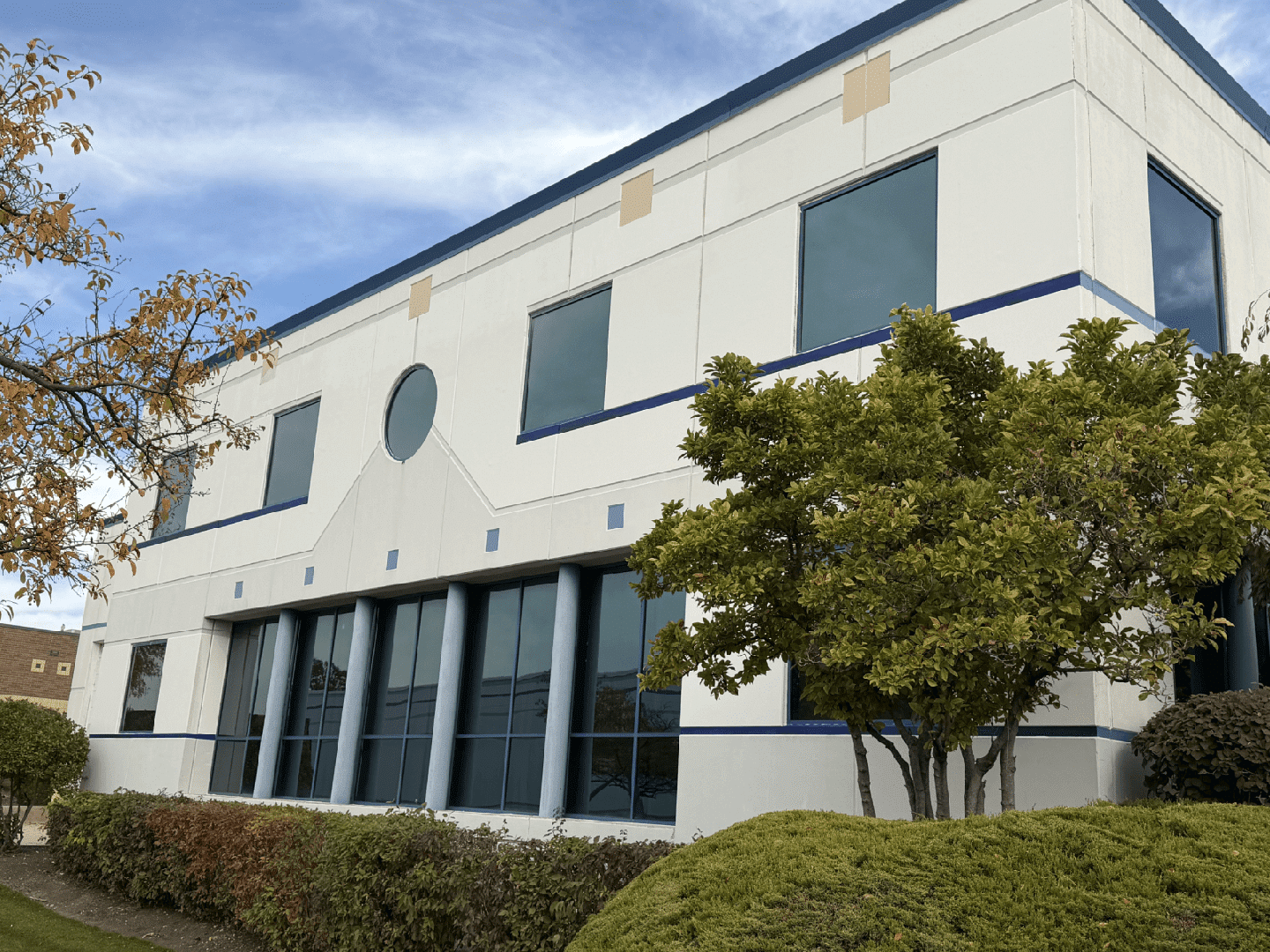
Commercial painting is not residential painting at a larger scale. It requires different products, different scheduling, different project management, and a contractor who understands that your business cannot stop operating while the work gets done. In Lombard, commercial painting projects range from single-office refreshes to full exterior repaints on retail strips, warehouses, and multi-unit commercial properties. T&Z Interior and Exterior Painting handles commercial painting for offices, retail spaces, restaurants, warehouses, HOA buildings, and commercial exteriors across Lombard and the surrounding area. Call us for a free on-site estimate and project consultation. After-hours and weekend scheduling is available for occupied commercial spaces — the work fits around your operation, not the other way around. We’re a licensed Painter with 15+ years of experience managing commercial projects from estimate through final walkthrough.
Why Commercial Painting Projects in Lombard Require a Different Approach Than Residential Work
Scale and access.
Commercial projects involve surface areas, ceiling heights, and access complexity that residential work rarely matches. A 15,000 square foot office floor, a warehouse with 24-foot ceilings, or the full exterior facade of a four-story commercial building on Finley Road — these jobs require staging, lifts, spray equipment, and project sequencing that a residential painter hasn’t developed. The physical scope changes what equipment is needed, how the job is phased, and how long each phase realistically takes.
Coatings and product requirements.
Commercial surfaces see traffic volumes, cleaning frequency, and chemical exposure that residential surfaces don’t. The paint products formulated for residential use are not designed for these conditions. Commercial-grade coatings dry faster — critical when an office needs to be reoccupied the next morning. They’re more durable under repeated washing with commercial cleaning products. They’re formulated with lower VOC levels appropriate for occupied environments where ventilation is limited. Using residential products on commercial surfaces produces a finish that marks immediately, cleans poorly, and fails significantly faster than a commercial-grade equivalent.
Scheduling constraints.
A residential paint job is scheduled around weather and homeowner availability. A commercial paint job is scheduled around tenant occupancy, business hours, lease obligations, building access protocols, and sometimes multiple stakeholders across different suites or floors. Getting this wrong doesn’t just create inconvenience — it disrupts operations, creates liability exposure, and damages the relationship with tenants or customers. T&Z plans commercial project schedules in writing at the estimate stage so every stakeholder knows exactly when each area will be affected before the first drop of paint goes on.
Project management complexity.
Commercial projects involve coordination that residential work doesn’t: property managers, building engineers, tenant representatives, other trades working in the building simultaneously, and sometimes municipal permit requirements for exterior work on commercial properties in Lombard. A contractor without commercial project management experience doesn’t know what they don’t know until something goes wrong mid-project.
Lombard’s commercial corridors — Main Street, Finley Road, and St. Charles Road — contain a mix of 1960s through 1990s strip retail, newer professional office buildings, and mixed-use properties. Each building type presents different substrate, access, and scheduling requirements. T&Z has worked across all of them.
The Most Effective Interior Painting Styles for Lombard Commercial Spaces
The standard commercial interior finish strategy:
The most effective approach for most Lombard commercial interiors divides the wall into zones based on how much contact that zone receives.
Upper walls and ceilings — flat or eggshell. These surfaces aren’t touched. Flat hides ceiling imperfections, light fixtures, HVAC diffusers, and the visual complexity of a commercial ceiling. Eggshell on upper walls provides a clean base without the reflectivity that draws attention to surface variation.
Lower walls, wainscoting, chair rail areas, and all trim — satin or semi-gloss. These surfaces get touched, scuffed, cleaned, and hit by chairs, carts, and equipment on a daily basis. Satin and semi-gloss resist marking, clean with a damp cloth, and hold up to repeated contact without degrading. Flat paint in these zones marks within weeks of a commercial repaint and cannot be cleaned without dulling the finish further.
Doors and frames — semi-gloss minimum. Commercial doors take more daily contact than any other surface in a building. Semi-gloss is the baseline; gloss enamel on high-traffic entry doors is appropriate where appearance and durability are both priorities.
Accent and feature wall treatments in commercial spaces:
A single feature wall in a reception area, conference room, or retail space in brand color or a deeper neutral anchors the space and communicates intentionality without overwhelming the environment. This is the most popular commercial interior design move across Lombard’s office and retail sector — and it costs nothing more than the paint, applied correctly over a properly prepared surface.
Application methods in commercial interiors:
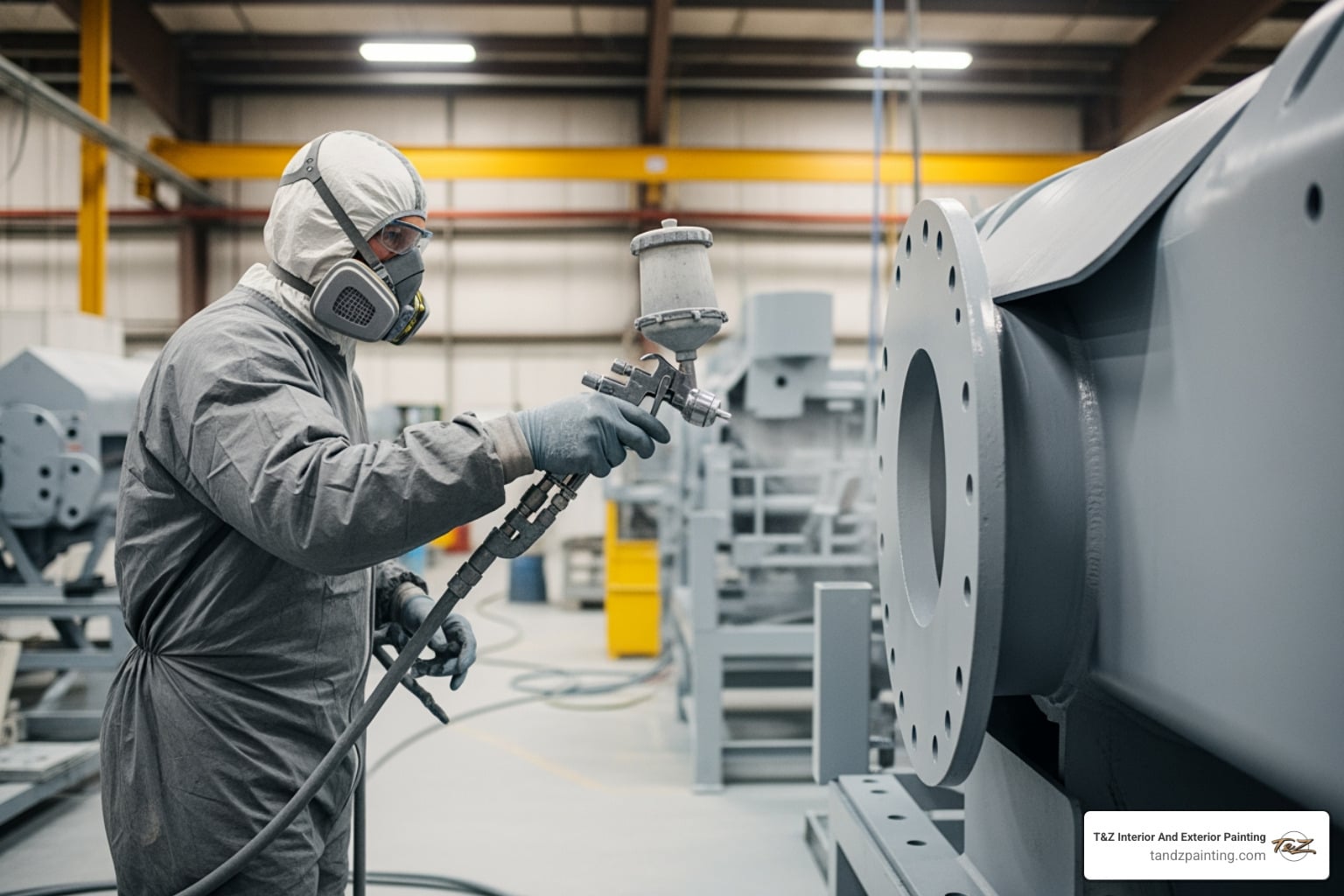
The seven relevant painting application types for commercial work are brush, roller, airless spray, HVLP spray, texture coating, epoxy, and specialty commercial coatings. T&Z selects the method appropriate for each surface — roller for large wall fields, brush for trim and detail work, spray for open ceilings and large commercial spaces, epoxy for floors and chemical-resistant surfaces. No single method is used for everything.
Retail and restaurant spaces along Lombard’s downtown commercial strips often have open ceilings with exposed ductwork, mixed substrates, and high-bay areas that present complex application challenges. T&Z advises on finish strategies that look intentional across these environments rather than treating every surface the same way.

How to Plan a Commercial Painting Project in Lombard Without Disrupting Your Business
Zone-by-zone scheduling.
The foundation of a non-disruptive commercial painting project is a clear zone plan. Rather than starting work across the full building simultaneously, T&Z works through a commercial property one zone at a time — completing each area fully before moving to the next. This keeps the majority of the building operational at all times. Tenants and staff know which areas are affected each day. No zone is left half-finished while the crew moves to another section.
For multi-floor office buildings in Lombard, zone sequencing typically moves floor by floor or suite by suite. For retail strips, it moves by storefront or bay. For warehouse and industrial properties, it moves by section based on what can be isolated from active operations.
After-hours and weekend scheduling.
T&Z schedules commercial interior work outside business hours for occupied spaces. Evening and weekend availability means most Lombard office and retail properties can be fully repainted without a single business day of disruption to operations. The crew works after closing, the paint cures overnight, and the space is ready for occupancy the following morning.
This isn’t a special accommodation — it’s the standard approach for occupied commercial properties. Painting a customer-facing retail space during business hours with foot traffic, wet paint, and paint odor in the air is avoidable with proper scheduling. T&Z doesn’t present it as an option; it’s built into the project plan.
Low-VOC product selection for occupied buildings.
The commercial coatings T&Z uses on Lombard interior projects are low-VOC formulations that dry fast and clear odor quickly. For most commercial interiors, this means the painted area is ready for reoccupation within hours of the crew finishing — not the following day or two days later. This matters practically when a zone plan requires rapid cycling through sections of an occupied building.
Lombard commercial properties with shared HVAC systems need ventilation coordination during and after painting. T&Z factors building ventilation into scheduling — making sure fresh air is moving through painted zones during and after application so VOC levels clear before tenants and staff return. This is a detail that gets missed on jobs managed without commercial experience and creates tenant complaints that fall on the property manager.
Written project timeline at estimate.
Every commercial project T&Z quotes in Lombard comes with a written project timeline that maps which areas will be affected on which days, when each zone will be ready for reoccupation, and what the full project completion date is. Property managers and business owners need this information to communicate with tenants, customers, and staff before the project starts — not as an afterthought.
What a Professional Commercial Exterior Paint Job in Lombard Involves
The full scope of a commercial exterior project:
Assessment and substrate identification. Commercial buildings in Lombard present a wider range of exterior substrates than residential properties — brick, EIFS, stucco, concrete block, metal panel, fiber cement, and wood trim often all appear on the same building. Each substrate requires different prep, primer, and coating. T&Z identifies every material type at the estimate and specifies the correct products for each before the job begins. Bringing the wrong primer for a substrate on day one of a large commercial exterior project is a costly mistake that delays the project and compromises the result.
Power washing and surface preparation. The entire facade is pressure washed and allowed to dry fully before any prep work begins. On commercial exteriors, this often means addressing years of atmospheric soiling, biological growth, and pollution accumulation — particularly on north-facing facades and surfaces under overhangs where moisture and organic material accumulate. After washing, loose or peeling paint is scraped, stucco and masonry cracks are repaired and filled, all joints at windows, doors, and transitions are caulked, and bare or failing areas are primed with the appropriate primer for the substrate.
Application by elevation. Large commercial exterior projects are phased by building elevation — one facade at a time — rather than working around the full perimeter simultaneously. This allows building access, customer and tenant entry, and deliveries to continue throughout the project. Each elevation is completed — prep, prime, and two topcoats — before the crew moves to the next facade.
Commercial-grade exterior coatings. 100% acrylic and elastomeric coatings rated for the substrate and climate are the standard on Lombard commercial exteriors. Residential exterior paint is not appropriate for commercial masonry facades, EIFS systems, or large stucco surfaces that need flexible, moisture-bridging coatings to perform through Chicagoland’s freeze-thaw cycles. The product selection is matched to the substrate, not defaulted to whatever is convenient.
Commercial buildings along St. Charles Road and Yorkshire Road in Lombard include brick, EIFS, stucco, and metal panel exteriors. T&Z identifies all substrate types at the estimate and brings the correct primers and coatings for each material on day one — no mid-project surprises about needing a different product for a section of the building.
Common Commercial Painting Mistakes in Lombard — and What Professional Contractors Do Instead
Using residential products on commercial surfaces.
This is the most common mistake made by residential painters who take commercial jobs. Residential paints are formulated for lower traffic, less frequent cleaning, and environments where dry time and VOC levels aren’t critical operational constraints. On commercial walls, residential paint marks within weeks, dulls under regular cleaning, and fails at edges and corners years before a commercial-grade equivalent would. The cost difference between the two products is a small fraction of the labor cost — there’s no legitimate reason to use residential paint on a commercial surface.
Inadequate surface prep on commercial exteriors.
Commercial exterior buildings accumulate years of atmospheric soiling, biological growth, and paint failure across large surface areas. A low-bid contractor power-washes minimally, skips crack repair on masonry, and applies paint directly over chalked or failing surfaces to save time. The result looks acceptable on completion day and begins failing at the weakest prep points within the first heating and cooling season. T&Z preps commercial exteriors to the same standard regardless of building size — every crack, every joint, every failing section addressed before primer goes on.
Painting during business hours without containment.
Painting a customer-facing commercial space during operating hours without proper containment — wet paint near customer traffic, paint odor in occupied areas, masking tape across active doorways — creates a poor impression, a safety concern, and potential liability. It’s entirely avoidable with after-hours scheduling. T&Z doesn’t propose painting occupied commercial spaces during business hours unless the scope specifically requires it and proper containment is in place.
No zone plan — starting everywhere, finishing nowhere.
A commercial painting project without a written zone plan often results in multiple areas in partial states of completion simultaneously. One section primed but not topcoated, another topcoated on one wall but not the adjacent wall, trim unfinished throughout because the crew is jumping between areas. This creates tenant and staff complaints, delays project completion, and produces inconsistent results across the building. T&Z works one zone to full completion before moving to the next.
Wrong sheen on high-contact commercial surfaces.
Flat paint on lower walls, door frames, and trim in high-traffic commercial environments — offices, corridors, reception areas, and retail spaces — is one of the clearest signs of a contractor who specified products for speed and cost rather than performance. Flat paint in these locations marks immediately and cannot be cleaned without permanent damage to the finish. Within six months of a flat-painted commercial interior, the lower wall sections in any active corridor look worse than they did before the repaint.
Lombard commercial properties with high daily foot traffic — retail, medical offices, and restaurants — see paint wear on lower wall sections within 12 to 18 months when the wrong sheen or product is used. T&Z specifies commercial-grade coatings rated for high-contact surfaces on every Lombard commercial interior as a standard practice, not an upgrade.
How Lombard Business Owners Extend the Life of a Commercial Paint Job
Inspect high-wear zones every six months.
Lower wall sections in commercial corridors, reception areas, and retail entries accumulate scuffs, marks, and chips faster than any other surface in a commercial building. A six-month inspection cycle — looking specifically at chair rail height and below, around door frames, and at corners where carts and equipment make contact — catches damage early when a spot repaint is a quick, simple fix. Left unaddressed, these areas spread into larger zones that require full-wall repainting rather than targeted touch-up.
Touch up before damage spreads.
Commercial paint touch-up is most effective when done within 60 days of damage occurring. A fresh scuff or chip on a semi-gloss commercial wall can be touched up with the original paint and a small brush in minutes. A six-month-old chip that has been hit repeatedly, cleaned over, and allowed to grow into a lifted edge requires sanding, priming, and repainting a full wall section to look right. Keep a labeled quart of each interior color on site at every commercial property — it’s the simplest maintenance tool available.
Clean commercial walls correctly.
Commercial semi-gloss and satin finishes handle regular wiping with a damp cloth and mild soap. What they don’t handle well is abrasive cleaners, rough sponges, or cleaning pads that scratch the paint film. Abraded paint film loses its sheen in the cleaned area, leaving dull patches that are visible from across the room and can’t be corrected without repainting the full wall section. Train cleaning staff on the correct cleaning approach for painted surfaces — it’s a five-minute conversation that extends the paint job by years.
Plan repaints on a realistic commercial cycle.
Different commercial environments age at different rates. Standard-traffic professional office interiors — law firms, financial offices, and professional services — typically hold their appearance for 5 to 7 years before a full interior repaint is warranted. High-traffic retail, restaurant, and medical office interiors see visible wear in high-contact zones within 3 to 4 years. Industrial and warehouse interiors vary widely based on what operations are run in the space.
Planning a realistic repaint cycle — rather than waiting until a space looks visibly deteriorated — means each project starts from a surface in better condition, requires less prep, and produces a better result. The alternative is extending the cycle until the surface is in poor condition and the next project becomes significantly more labor-intensive.
Commercial properties in Lombard’s Main Street and downtown retail corridor with high daily foot traffic show visible wear on entry areas and corridors faster than back-office spaces. T&Z offers maintenance touch-up visits between full repaints for these high-wear zones — keeping a commercial property looking sharp without waiting for a full repaint cycle.
Send Us a Message
FAQ
Can T&Z handle large commercial painting projects in Lombard, not just residential work?
Yes. T&Z handles commercial offices, retail spaces, restaurants, warehouses, and commercial building exteriors throughout Lombard and the surrounding area. Commercial project management, after-hours scheduling, and commercial-grade product selection are standard capabilities — not accommodations made for residential contractors taking commercial jobs.
Can commercial painting in Lombard be scheduled after hours to avoid disrupting business?
Yes. After-hours and weekend scheduling is available for all occupied commercial properties. Low-VOC fast-dry commercial products allow most painted areas to be reoccupied the same day or the following morning. T&Z builds after-hours scheduling into the project plan by default for occupied commercial interiors.
What are the most common commercial painting mistakes T&Z avoids on Lombard projects?
Using residential products on commercial surfaces, inadequate exterior prep on masonry and stucco, painting occupied spaces during business hours without containment, operating without a written zone plan, and specifying flat paint on high-contact commercial wall surfaces. Each of these is a standard failure point on low-bid commercial painting jobs.
What interior finish is recommended for high-traffic commercial spaces in Lombard?
Satin or semi-gloss on all lower walls, wainscoting, trim, and doors — washable, durable, and resistant to the cleaning frequency commercial surfaces require. Flat or eggshell on upper walls and ceilings where surfaces aren’t touched. Flat paint on lower commercial walls marks immediately and cannot be maintained.
How often should commercial interiors in Lombard be repainted?
Every 5 to 7 years for standard-traffic professional office environments. Every 3 to 4 years for high-traffic retail, restaurant, and medical office interiors where lower wall sections show visible wear significantly faster. Maintaining a realistic repaint cycle keeps each project starting from a surface in better condition and requiring less prep.