
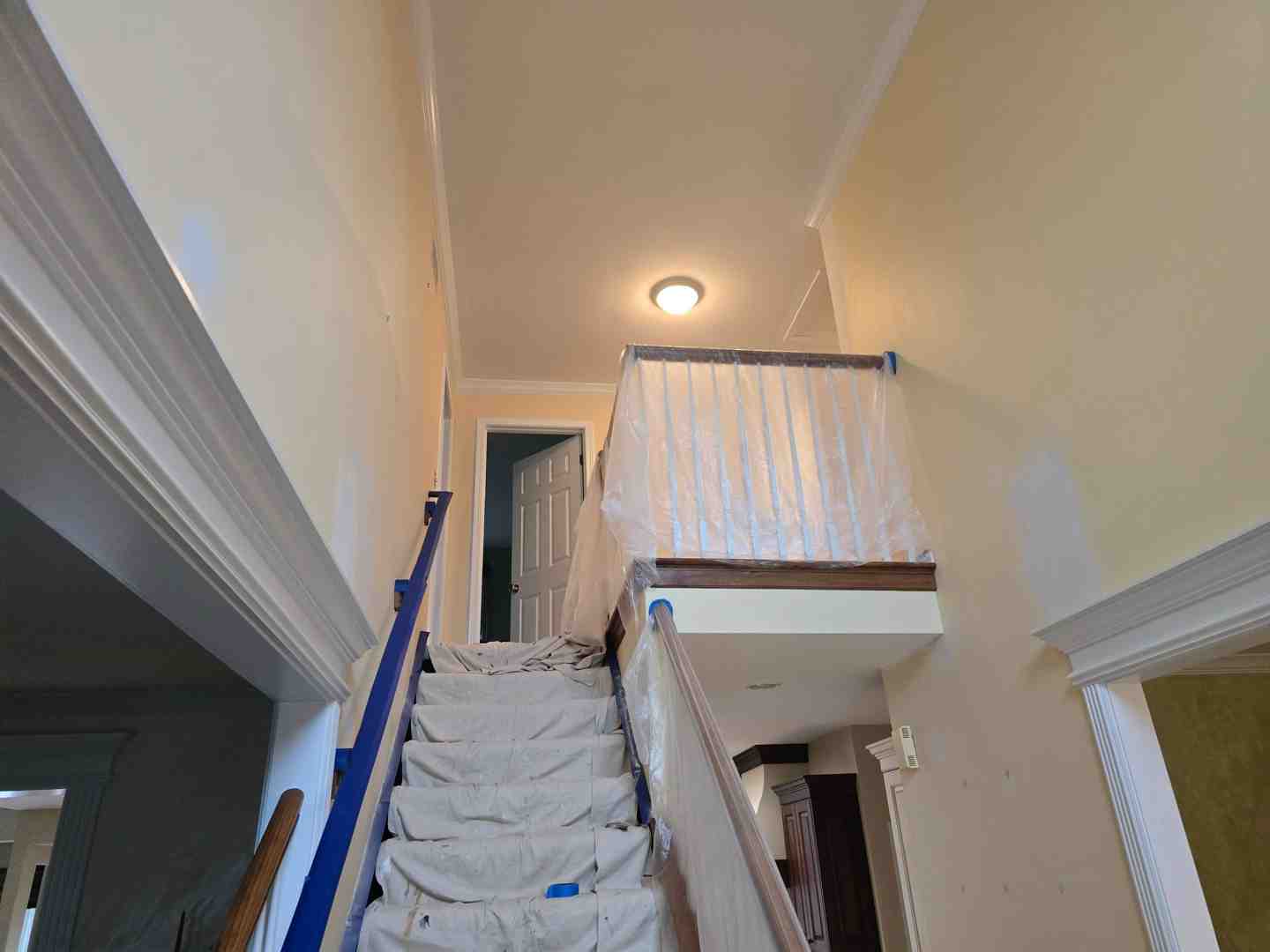
Why Eggshell Color Walls Are One of the Smartest Choices for Your Home
Eggshell color walls sit in a sweet spot that most homeowners don’t even realize exists — softer than satin, tougher than flat, and just polished enough to make any room feel pulled together.
Here’s a quick answer if that’s all you need:
What are eggshell color walls?
- A wall paint finish with a very slight sheen — similar to the surface of a chicken egg
- More durable and washable than flat or matte paint
- Available in a wide range of neutral shades with undertones of beige, yellow, gray, or pink
- Best used in living rooms, hallways, entryways, and bedrooms
- A popular all-around choice for both families and home stagers
The real magic of eggshell is how well it balances beauty and practicality. It reflects just enough light to make spaces feel open and modern, while still being easy to wipe clean — something flat paint simply can’t do.
It’s also one of the most versatile neutrals in interior design. Whether your home leans warm and earthy or cool and contemporary, there’s an eggshell shade that fits.
I’m Tomasz Niemotko, owner of T&Z Interior And Exterior Painting, and over more than 15 years of transforming homes in Lombard and the surrounding suburbs, eggshell color walls have consistently been the finish our clients are happiest with long-term. In the sections ahead, I’ll walk you through everything you need to know to choose and apply it with confidence.
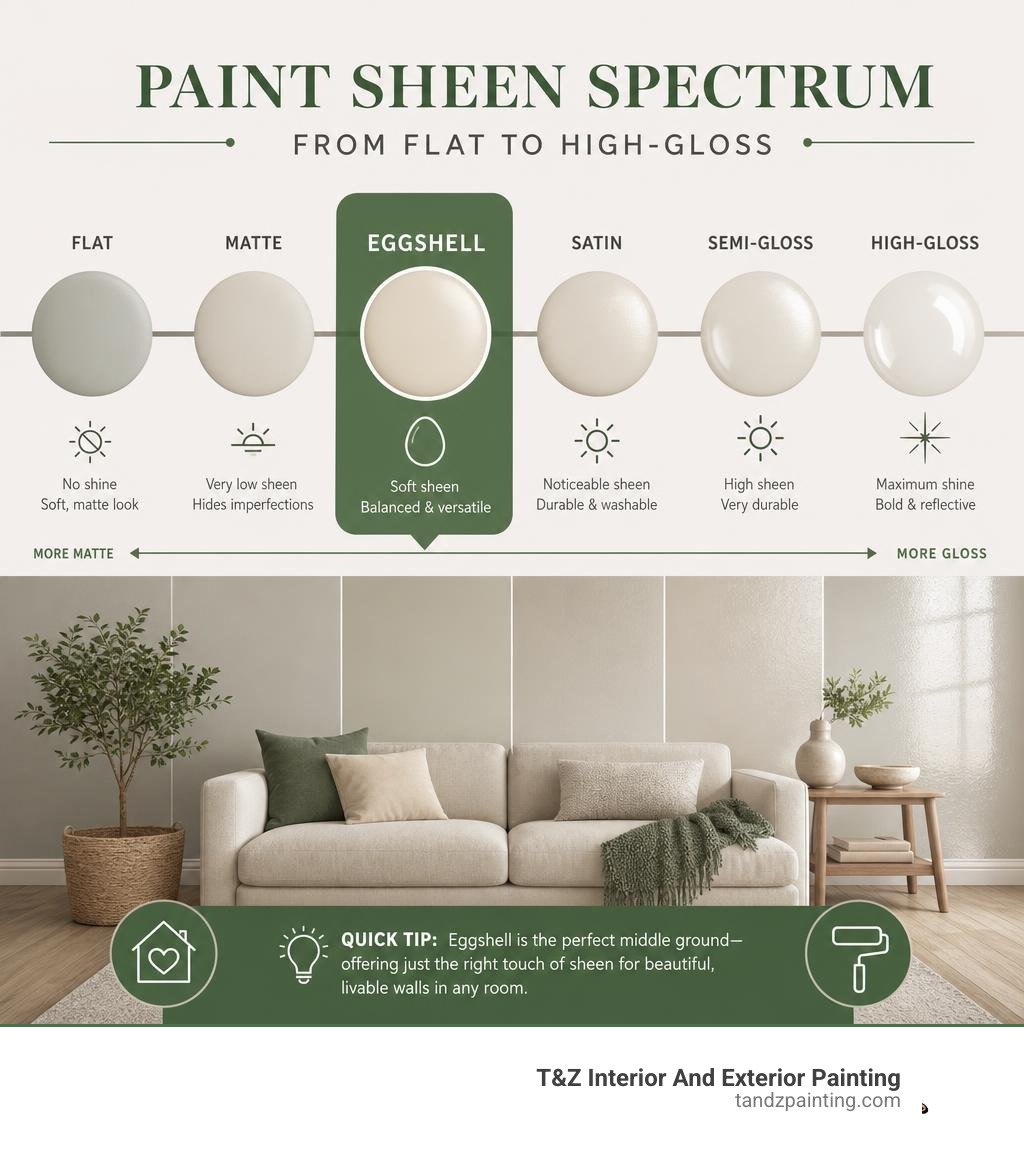
Basic eggshell color walls terms:
What is Eggshell Paint and How Does It Differ From Other Finishes?
When navigating interior design, understanding sheen is just as critical as selecting the right color. The finish you choose dictates how light bounces off your walls, how rich the color appears, and how easily you can scrub away everyday messes.
An eggshell finish sits comfortably near the lower end of the reflectivity spectrum. It has slightly more luster than a flat or matte finish, but falls short of the noticeable shine found in satin or semi-gloss. It gets its name because its low-lustre surface resembles the delicate, soft sheen of a chicken’s eggshell.
To understand where this finish fits in your home improvement plans, it helps to explore our comprehensive resource on Paint Sheens 101: The Official Guide to Choosing the Right Finish. Choosing the wrong sheen can lead to unwanted glare or walls that are nearly impossible to clean, which is why matching the paint finish to the room’s function is vital. For a broader look at all your choices, check out our guide on Everything You Need to Know About Wall Paint Finishes.
Understanding Paint Sheens: Flat vs. Eggshell Color Walls
The debate between flat (or matte) and eggshell is one of the most common discussions we have with homeowners.
Flat and matte paints absorb almost all light that hits them. This makes them outstanding at hiding minor wall imperfections, such as small dents, nail pops, or uneven drywall joints. However, because flat paint is highly porous, it acts like a sponge for dirt, oils, and scuff marks. If you try to scrub a flat wall, you often end up rubbing the paint right off, leaving a dull, patchy spot. For more on this, you can read our breakdown on Beyond Flat: Unpacking the Pros and Cons of Matte Paint.
In contrast, eggshell color walls provide a soft, low-sheen luster. This slight reflectivity gives colors more depth and richness compared to flat finishes, making it a favorite for home staging. While eggshell does require a bit more preparation and a skilled hand during application to avoid roller or brush marks, it offers vastly superior washability and wear resistance.
High-quality formulations, such as Ben® Interior Paint – Eggshell | Benjamin Moore , are specifically engineered to offer an effortless painting experience with excellent hide and scuff resistance, making them highly durable and easy to maintain over time.
Eggshell vs. Satin and Semi-Gloss
Stepping up the sheen ladder brings us to satin and semi-gloss finishes.
Satin paint has a distinct, pearl-like shine. It offers higher moisture resistance and is easier to clean than eggshell, making it a common choice for high-humidity areas like bathrooms or kitchens. However, because it reflects more light, satin is much more likely to highlight any surface flaws or application mistakes on large wall surfaces. To help you decide if a shinier finish is right for your project, take a look at To Gloss or Not to Gloss: Your No-Nonsense Guide to Choosing Paint Finishes.
Semi-gloss and high-gloss finishes are highly reflective and incredibly durable. Because of their prominent shine, they are almost never used on entire residential walls. Instead, professional painters reserve semi-gloss for trim, baseboards, crown molding, doors, and cabinetry. If you are currently remodeling your kitchen or built-ins, you can find tailored advice in our guide to Stop the Shine Stress and Pick the Perfect Cabinet Finish.
The Pros and Cons of Eggshell Color Walls

Like any home improvement choice, picking an eggshell finish comes with trade-offs. To make an informed decision for your space, consider the advantages and disadvantages of this versatile sheen.
The Advantages
- Superior Longevity: Eggshell paint wears exceptionally well. While flat paint can begin to look worn and shabby after just a few years, a professionally applied eggshell finish can easily remain in beautiful condition for a decade or more under normal household conditions.
- Easy Maintenance: Thanks to its tighter, less porous paint film, eggshell resists dirt and stains. Most everyday smudges can be easily wiped away with a damp microfiber cloth and mild soap.
- Richer Color Depth: The slight sheen of eggshell allows light to reflect gently off the surface, bringing out the subtle undertones of your chosen paint color and giving the room a more sophisticated, multi-dimensional feel.
- Cost-Effective Over Time: Though high-quality eggshell paint may carry a very slight premium per gallon over flat paint, its durability means you won’t need to repaint nearly as often, saving you time and effort in the long run.
The Disadvantages
- Highlights Flaws: Because it reflects a small amount of light, eggshell can highlight existing drywall imperfections, such as uneven patches or poor repair jobs.
- Application Challenges: Eggshell requires a steady hand and professional techniques. If applied carelessly, it can show lap marks, roller textures, or uneven sheen spots.
- Difficult to Touch Up: Unlike flat paint, which patches seamlessly, touching up a small spot on an eggshell wall can sometimes be noticeable. To get a perfect result, you often have to repaint the entire wall from corner to corner.
For a deeper dive into matching these characteristics to specific rooms in your house, see our guide on Demystifying Paint Finishes: How to Choose the Right Sheen for Every Room.
| Feature | Flat / Matte | Eggshell | Satin |
|---|---|---|---|
| Sheen Level | Very Low (0-5%) | Low (10-25%) | Medium (25-35%) |
| Cleanability | Difficult | Moderate to Easy | Easy |
| Imperfection Hiding | Excellent | Moderate | Poor |
| Best For | Ceilings, Low-Traffic Bedrooms | Living Rooms, Hallways, Entryways | Kitchens, Bathrooms, Trim |
Best Rooms and Areas for Eggshell Paint
Because eggshell strikes such an excellent balance between durability and low reflectivity, it is highly versatile. However, certain areas of the home benefit most from its unique properties.
- Living Rooms and Family Rooms: These are the heart of the home, where you want a warm, inviting atmosphere without harsh glare from windows or lamps. Eggshell provides a soft, velvety backdrop that makes these gathering spaces feel cozy yet refined. For specialized tips on these areas, read about the Best Paint Sheen for Living Room Walls: From Flat to Fabulous.
- Bedrooms: Eggshell works beautifully in master and guest bedrooms alike, reflecting just enough light to feel airy during the day while remaining soft and relaxing under warm bedside lighting at night.
- Dining Rooms: Under a chandelier or pendant light, eggshell-painted walls reflect a gentle glow that enhances the dining experience and adds a touch of elegance to formal or casual dinner parties.
Designing High-Traffic Spaces with Eggshell Color Walls
Hallways, entryways, and mudrooms are the true testing grounds for any wall paint. These transitional spaces constantly cope with backpacks scraping the walls, muddy dogs shaking off water, and hands searching for light switches in the dark.
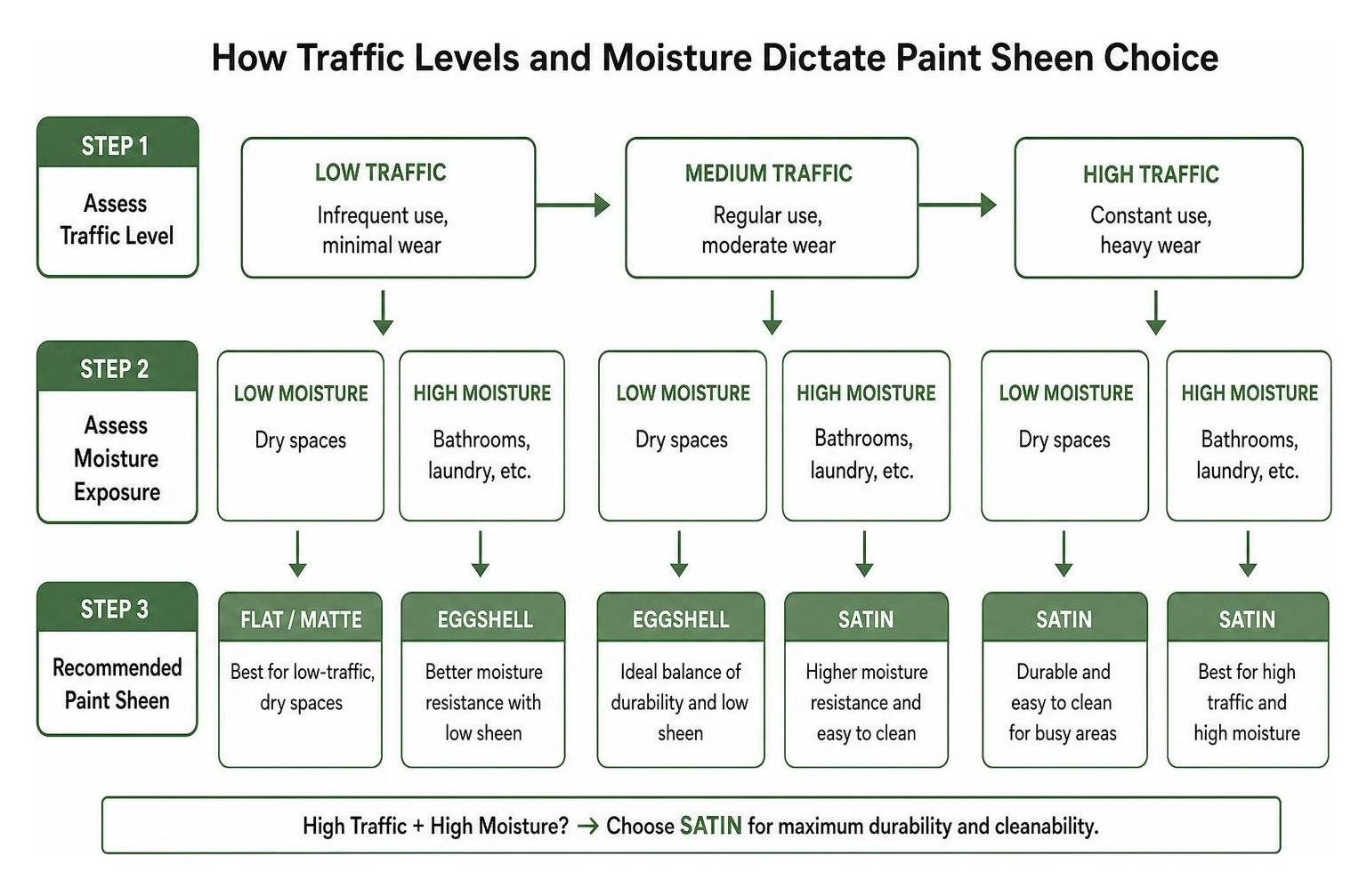
Using flat paint in these zones is a recipe for quick deterioration. Eggshell is highly recommended for high-traffic entryways and hallways because its resilient finish doesn’t show scuffs and scrapes as easily as flatter paints.
Additionally, for families with young children or pets, choosing the right paint formulation is just as important as the sheen. Opting for eco-friendly, low-VOC or zero-VOC paints—such as YesColours | Serene Neutral Eggshell Wall Paint | YesColours —ensures that your high-traffic spaces remain safe, healthy, and free from harsh chemical odors, all while providing the robust washability that active households require.
Navigating Undertones and Selecting the Perfect Eggshell Shade
One of the most exciting—and sometimes overwhelming—parts of choosing eggshell paint is selecting the exact color. “Eggshell” is not just a single off-white color; it is a massive family of neutral shades, each carrying its own distinct undertones that can completely change the mood of a room.
Undertones are the subtle colors that lie beneath the dominant paint color. They generally fall into two categories:
- Warm Undertones (Yellow, Beige, Pink, Red, Peach): These shades add warmth, comfort, and cozy energy to a room. They are ideal for north-facing spaces that receive cool, bluish natural light, helping to prevent the room from feeling cold or clinical.
- Cool Undertones (Gray, Blue, Green): These shades create a calm, serene, and modern aesthetic. They work wonderfully in south-facing rooms that are flooded with warm, golden sunlight, helping to balance out the intense heat of the natural light.
When choosing a shade, pay close attention to its Light Reflectance Value (LRV), which measures the percentage of light a color reflects. A higher LRV (closer to 100) will make a small or dark room feel much larger and brighter, while a lower LRV will create a more dramatic, intimate atmosphere.
Popular Brand Recommendations and Matches
To help you find the perfect shade for your home, we have compiled some of the most popular, designer-approved eggshell colors from leading paint manufacturers:
- Benjamin Moore Eggshell (2026-70): This is a classic, light-filled option with a very high LRV of 87.65. Described as an effervescent hue delicately colored with hints of lemon and lime, it brings a cheerful, sunny warmth to kitchens, breakfast nooks, and kids’ rooms. You can explore this specific color on Eggshell 2026-70 | Benjamin Moore or view its detailed RGB and HSL breakdown on Eggshell #F7F8DC — Benjamin Moore 2026-70 Paint Color & Brand Matches | DSGN.HOUSE .
- Frenchic’s Eggshell: For those seeking a cozy, “cocooning” neutral, Frenchic offers a gorgeous shade that sits beautifully between pink and beige. It behaves dynamically under different lighting conditions, shifting from a soft stone-gray in morning light to a warm, rosy hue in the afternoon. Read more about this trend on New Neutral: The Allure of Eggshell .
- Vista Paint’s Curated Neutrals: If you are looking for specific undertone matching, Vista Paint offers a fantastic palette. Popular options include Andover Cream (a yellow undertone to brighten dim spaces), Kiara (a red/brown undertone perfect for hiding scuffs in busy hallways), and Cyprus Spring (a cool green/blue tint that pairs beautifully with modern decor). You can browse their full collection at Eggshell Paint Colors .
Finding Your Color Locally in the Chicagoland Area
If you live in Lombard or any of our neighboring service areas, we highly recommend visiting a local paint supplier to pick up physical color swatches or sample pots. Testing colors in your actual home under your specific lighting is the only way to ensure you’ll love the final result.
Here are some trusted local suppliers where you can find these top-tier paint brands:
- Wheaton, IL: Find Benjamin Moore paints and expert advice at Paint Store, Window Treatments, & Wallpaper in Wheaton, IL – JC Licht .
- Downers Grove, IL: Grab your color samples locally at Downers Grove .
- Carol Stream, IL: Explore a vast array of durable, high-quality finishes at Carol Stream, IL #723046 – Sherwin-Williams Paint Store .
- La Grange, IL: Get professional color matching and supplies at LaGrange IL Paint Store – Benjamin Moore … .
- Lockport, IL: Find Benjamin Moore products and helpful local service at WHITMORE ACE HADWARE – LOCKPORT, IL 60441-3245 .
- Plainfield, IL: Pick up your paint and painting accessories at Plainfield, IL Benjamin Moore Paint & Supplies Store .
Conclusion
Choosing eggshell color walls is one of the most reliable ways to elevate your home’s interior. It offers a beautiful, low-glare appearance that brings out the best in your chosen colors while providing the everyday durability and washability that modern life demands. Whether you are staging your home to sell or creating a long-lasting, cozy sanctuary for your family, eggshell delivers exceptional performance year after year.
However, achieving a flawless eggshell finish requires meticulous wall preparation, a deep understanding of undertones, and precise, professional application techniques to avoid lap marks and uneven sheen.
At T&Z Interior And Exterior Painting, our experienced teams bring over 15 years of craftsmanship and attention to detail to every project. We serve homeowners across the western suburbs of Chicago—including Lombard, Addison, Elmhurst, Glenview, Wilmette, Woodridge, Schaumburg, and beyond—using only top-brand materials and delivering stunning, high-quality results backed by our 5.0 Google Reviews rating.
Ready to transform your living spaces with a flawless, professional finish? Transform your home with professional interior painting services and let us bring your vision to life.