
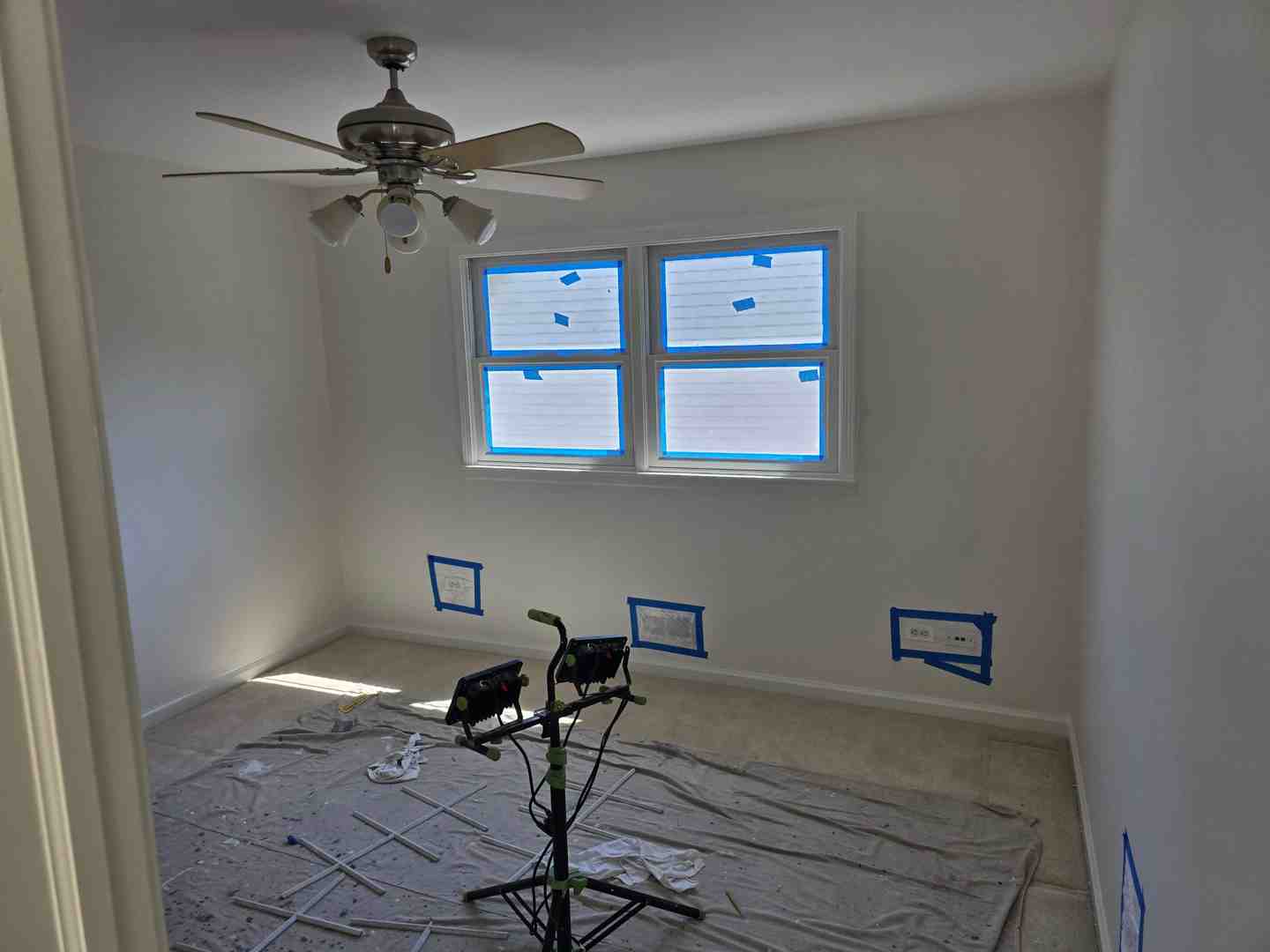
What Goes Into an Interior Painting Estimate — And Why It Matters
Getting an accurate interior painting estimate before starting a project is the key to a smooth, successful home transformation. Rather than relying on guesswork, a professional estimate outlines the exact scope of work required to achieve a flawless, long-lasting finish.
The scope of an interior project depends on several key factors:
- Room Size and Layout: From single rooms to expansive multi-story homes.
- Surface Areas: Whether the project covers walls only, or includes trim, baseboards, and ceilings.
- Surface Condition: The amount of preparation, drywall repair, and priming needed.
- Architectural Details: High ceilings, crown molding, and intricate trim work that require specialized techniques.
Most homeowners are surprised by how many variables feed into a final plan. Room size is just the starting point. Prep work, paint quality, trim details, and labor complexity all stack on top to define the overall scope of the project.
This guide walks you through exactly how to evaluate your project from scratch, so you can go into any estimate conversation informed and confident.
I’m Tomasz Niemotko, owner of T&Z Interior And Exterior Painting in Lombard, IL — with over 15 years of hands-on experience delivering professional interior painting estimates and flawless results for homeowners across the western suburbs of Chicago. I’ll share what I’ve learned from hundreds of real projects so you can approach your next paint job with clarity.
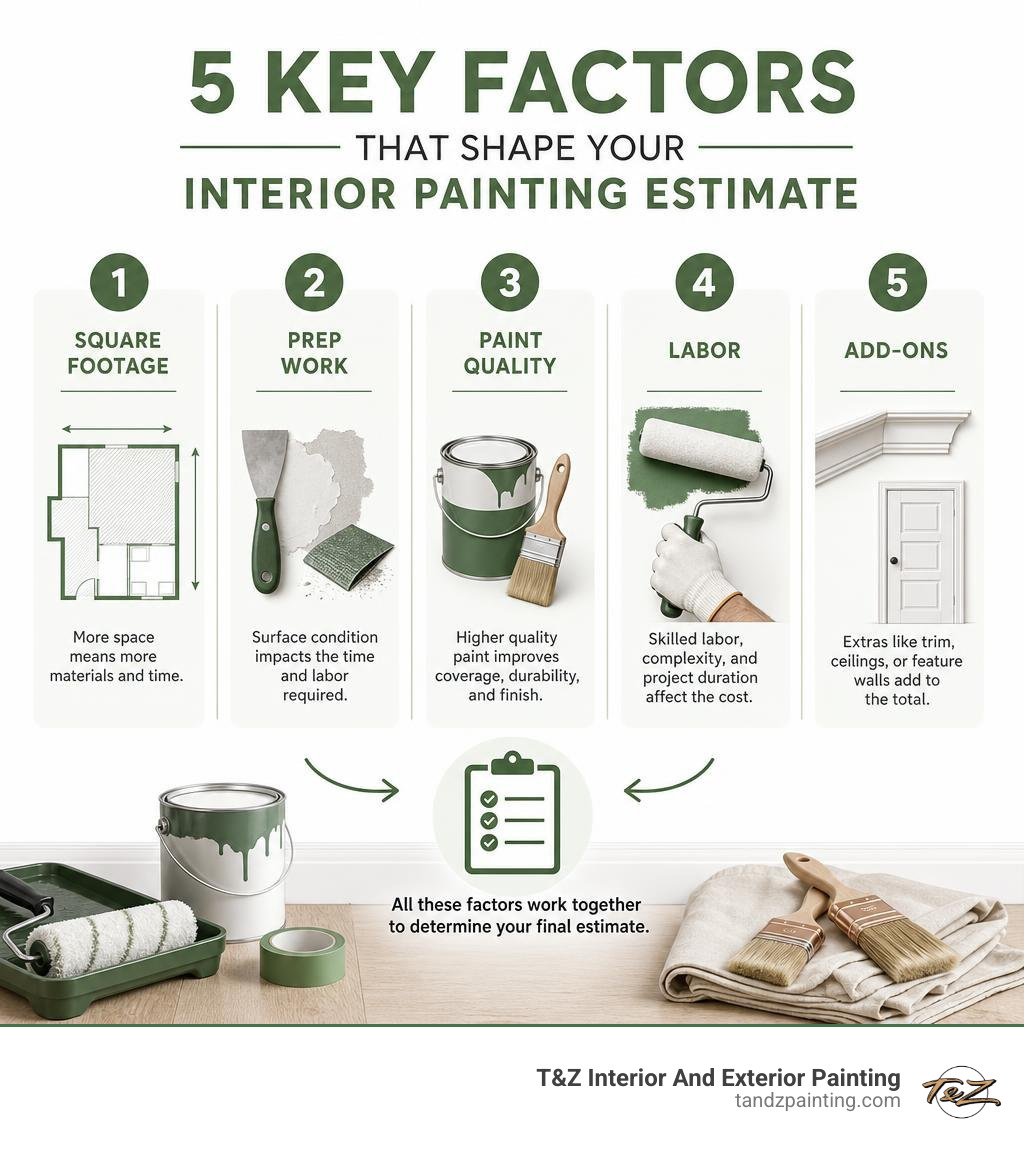
Interior painting estimate terms to know:
Key Factors That Shape an Interior Painting Estimate

When we sit down to craft a professional interior painting estimate, we look at your home through a lens of craftsmanship and structural detail. An accurate estimate is never a random guess based on a home’s basic footprint. Instead, it is a structured calculation built on several physical and technical variables.
Every home we visit in Lombard, Glen Ellyn, or Oak Brook has its own unique architectural personality. A historic home in Elmhurst presents entirely different structural demands than a modern townhouse in Downers Grove. To understand how a professional estimate takes shape, you must look at the key variables that influence the scope of work.
- Wall Surface Area: This is the actual paintable square footage of your walls, which differs significantly from the floor square footage of a room.
- Ceiling Height: Rooms with standard 8-foot ceilings require less setup time and fewer safety protocols than rooms with vaulted, cathedral, or tray ceilings.
- Surface Preparation: This is the foundation of any high-quality paint job. It includes fixing drywall dents, addressing settling cracks, sanding rough patches, and sealing stains.
- Paint Quality and Finishes: The grade of paint selected directly impacts both the material performance and the longevity of the finished product. Premium paints offer better hide, washability, and depth of color.
Understanding these factors helps you see why professional Interior Painting Services focus heavily on the initial site walk-through. It is during this inspection that we identify the structural realities of your walls and determine the exact processes required to deliver a flawless finish.
Measuring Square Footage for an Accurate Interior Painting Estimate
The most common mistake homeowners make when trying to calculate their own paint needs is relying on the floor area of a room. If you have a 12×12 bedroom, the floor is 144 square feet. However, the walls represent a much larger paintable surface.
To calculate the actual wall surface area, use this straightforward step-by-step formula:
- Determine the Perimeter: Add the lengths of all four walls together. For our 12×12 room, that is 12 + 12 + 12 + 12 = 48 linear feet.
- Multiply by Ceiling Height: Multiply the perimeter by the height of the walls. If the room has standard 9-foot ceilings, the calculation is 48 x 9 = 432 square feet of gross wall area.
- Subtract Major Openings: Deduct the areas of windows and doors to find the net paintable area. A standard door is about 21 square feet, and an average window is roughly 15 square feet. If our room has one door and two windows, we subtract 51 square feet (21 + 15 + 15).
- Final Paintable Area: 432 minus 51 leaves you with 381 square feet of wall space.
If you are planning a multi-room project, calculating these measurements carefully ensures you have a solid baseline for your planning phase.
Assessing Surface Condition and Prep Work Requirements
A beautiful coat of paint is only as good as the surface beneath it. If you apply premium paint over cracked drywall, peeling plaster, or loose joints, the final result will look disappointing and deteriorate quickly. This is why surface preparation is the most critical component of any professional interior painting estimate.
When assessing a home in communities like Addison or Wheaton, we look closely at the walls under strong lighting. We check for:
- Drywall Damage: Nail holes, anchor holes, furniture scuffs, and deep gouges must be filled with high-grade spackle or joint compound, then sanded perfectly smooth.
- Settling Cracks: Common around doorframes and window corners, these cracks require mesh tape and structural mudding to prevent them from returning.
- Stress Lines and Peeling: Older homes may have layers of unstable paint that must be scraped and sanded down to a solid base.
- Sanding and Caulking: Baseboards, crown moldings, and door casings must be lightly sanded to promote paint adhesion, and any gaps along the walls must be sealed with premium elastomeric caulk.
- Priming: Bare drywall patches, water stains, and areas with dramatic color transitions require specialized primers to ensure uniform sheen and coverage.
Skipping these essential steps is a major red flag. A detailed Interior Painting Contractor Guide will always emphasize that preparation represents a significant portion of the labor hours in a professional project. It is the secret to achieving that smooth, seamless, and durable finish that makes your home feel brand new.
Calculating Material and Labor Requirements

Once we establish the physical dimensions and surface conditions of your space, we translate those details into material and labor requirements. This phase of the estimate ensures we have exactly the right amount of product and the appropriate crew size scheduled to complete your project efficiently and to our high standards.
Whether we are working with homeowners in Wheaton or coordinating a large residential refresh in Carol Stream, the planning process behind paint coverage remains a precise craft. Calculating these needs correctly helps prevent mid-project delays and supports the proper application thickness required for maximum paint performance, as discussed in our guide on Professional Indoor Painters and the Quest for the Perfect Coat.
Estimating Paint and Primer Quantities
How much paint does a project actually require? As a general rule of thumb, one gallon of premium interior paint covers approximately 350 to 400 square feet with a single coat. However, to achieve a rich, uniform color and professional durability, a two-coat standard is always recommended.
Let’s look at how we calculate paint needs for a standard room repaint:
- The Two-Coat Standard: If your net wall area is 400 square feet, you will need enough paint for 800 square feet of coverage. This means you will need at least two gallons of paint for the walls.
- The Ceiling Factor: If we are also painting the ceiling of that same room, we calculate its square footage separately (e.g., 12 x 12 = 144 square feet). Since ceilings are often porous, we budget one gallon of specialized flat ceiling paint for two coats.
- Trim and Doors: Baseboards, casings, and doors require a durable semi-gloss or satin enamel. We typically budget one gallon of trim paint for every 3 to 4 average-sized rooms, depending on the detail of the crown molding and the number of doors.
- Paint Quality: We choose top-tier, low-VOC (volatile organic compound) formulas from leading manufacturers like Sherwin-Williams and Benjamin Moore. These products emit minimal odor, allowing your family to enjoy your freshly painted spaces without harsh chemical fumes. For additional background, the U.S. Environmental Protection Agency explains how volatile organic compounds can affect indoor air quality.
Understanding Labor Complexity in an Interior Painting Estimate
Labor is the largest variable in any professional painting project, and its complexity is determined by the physical layout of your home. A wide-open, empty room with flat walls is highly straightforward. A room with intricate architectural features, however, requires a completely different level of skill, patience, and time.
Some of the key architectural elements that increase labor complexity include:
- Vaulted and Cathedral Ceilings: Working on high ceilings requires specialized scaffolding, ladder setups, and careful safety protocols. It also takes longer to cut in clean lines where the high walls meet the ceiling.
- Intricate Trim Work: Painting detailed crown molding, wainscoting, chair rails, and built-in shelving requires a steady hand, specialized brushes, and meticulous masking.
- Multiple Color Transitions: If a design calls for accent walls or different colors on the ceiling, walls, and trim, painters must spend extra time masking edges and waiting for paint to dry before applying adjacent colors.
- Cabinet Refinishing: Transforming kitchen or bathroom cabinets is a highly technical process involving deep cleaning, grain filling, detailed sanding, and the application of specialty furniture-grade coatings.
When searching for the right team, understanding these complexities will help you evaluate the expertise required for your project. For more insights on selecting a crew that can handle these details, check out our guide on How to Choose the Best Interior Painters for Your Home.
DIY vs. Professional Painting: Evaluating the Scope
When planning an interior update, many homeowners ask themselves whether they should tackle the project over a series of weekends or hire a professional crew. While painting can seem like a straightforward weekend task, the difference in the final finish, the physical effort required, and the total time commitment can be substantial.
If you are considering a DIY approach, it is helpful to look at a realistic comparison of what goes into a self-painted room versus a professional application. This is especially true for busy families in communities like Downers Grove, Elmhurst, and La Grange who value their free time and expect flawless, long-lasting results. To help you evaluate your options, we have compiled a guide on how to Find the Best Interior House Painter for Your Next Project.
| Feature / Consideration | DIY Painting Approach | Professional T&Z Approach |
|---|---|---|
| Time Commitment | 3 to 5 weekends for a multi-room project, including shopping, prep, painting, and cleanup. | 3 to 5 days for an entire home, completed by an experienced, efficient crew. |
| Surface Preparation | Basic patching with standard spackle; often skips detailed sanding and caulking. | Meticulous drywall repair, dustless sanding, professional caulking, and precision priming. |
| Equipment & Tools | Basic hardware store brushes, rollers, plastic drop cloths, and standard ladders. | Professional-grade masking machines, heavy-duty drop cloths, precision brushes, and specialized staging. |
| Safety Protocols | Risk of falls from standard household ladders, especially on high stairwells or vaulted ceilings. | Fully licensed and insured crews trained in safety protocols for high ceilings and hard-to-reach areas. |
| Quality of Finish | Possible roller marks, uneven sheen, visible brush strokes, and imperfect lines at the ceiling. | Perfectly uniform sheen, razor-sharp paint lines, seamless transitions, and a smooth, elegant finish. |
| Warranty & Support | No recourse if the paint peels, cracks, or fails prematurely due to prep issues. | Backed by a professional warranty, a 5.0 Google Reviews reputation, and dedicated customer service. |
If you are looking at local options in the western suburbs, T&Z Interior And Exterior Painting proudly serves homeowners across Downers Grove, Carol Stream, La Grange, Lemont, Lockport, Plainfield, and surrounding communities, delivering exceptional results with every project.
Frequently Asked Questions About Interior Painting Estimates
How long does a typical professional interior painting project take?
A professional crew works significantly faster than a single DIYer. For a standard 12×12 bedroom, a two-person professional crew can typically complete all prep work, apply two coats to the walls, paint the trim, and clean up in 1 to 2 days.
For a larger multi-room project or a full-home repaint (approximately 2,000 to 2,500 square feet), a professional crew can complete the entire project in 3 to 5 days. This includes moving and protecting furniture, extensive drywall preparation, painting walls, ceilings, and trim, and conducting a final walkthrough.
What is included in a comprehensive professional painting scope?
A comprehensive, professional interior painting estimate should leave no room for guesswork. When you receive a detailed quote from a reputable contractor, it should clearly outline:
- Protection: Covering all floors with thick canvas drop cloths, wrapping furniture in clean plastic sheeting, and masking off all non-painted fixtures.
- Preparation: Filling nail holes, repairing drywall cracks, caulking trim joints, sanding surfaces, and applying primer where necessary.
- Application: Applying the agreed-upon number of coats (typically two) using specified premium paint brands and sheens.
- Cleanup: Daily cleanup of the workspace, removing all trash, vacuuming floors, and returning furniture to its original positions.
- Inspection: A final walk-through with the homeowner to ensure every detail meets our high standards.
How often should interior walls be repainted?
The lifespan of your interior paint depends heavily on the amount of traffic and moisture a room experiences:
- High-Traffic Areas (Hallways, Kitchens, Mudrooms): These walls are prone to scuffs, fingerprints, and frequent cleaning. They typically benefit from a refresh every 3 to 5 years.
- Moisture-Prone Areas (Bathrooms): Even with premium moisture-resistant paints, bathrooms experience high humidity and should be repainted every 3 to 4 years to prevent mildew and maintain a fresh seal.
- Low-Traffic Areas (Bedrooms, Dining Rooms): These spaces experience minimal wear and tear. A quality paint job in a dining room or guest bedroom can easily look beautiful for 7 to 10 years.
- Trim and Doors: Baseboards and door casings take a beating from vacuums, shoes, and hands. They often benefit from a touch-up or repaint every 3 to 5 years to keep the home looking crisp.
Conclusion
Calculating your next interior paint project does not have to be a guessing game. By understanding how wall surface area, prep work, materials, and labor complexity shape an interior painting estimate, you can plan your next home transformation with complete confidence.
At T&Z Interior And Exterior Painting, we believe that stunning results are built on a foundation of honesty, meticulous preparation, and expert craftsmanship. With over 15 years of dedicated experience serving homeowners in Lombard, Glen Ellyn, Oak Brook, Elmhurst, and the surrounding Chicago suburbs, we have built a reputation for excellence backed by a 5.0 Google Reviews rating. We are fully licensed and insured, using only top-brand materials and experienced, professional teams who treat your home with the utmost respect.
If you are ready to transform your living spaces with a flawless, durable finish, we would love to help. Explore our Interior Painting Services and let our local team bring your vision to life.