
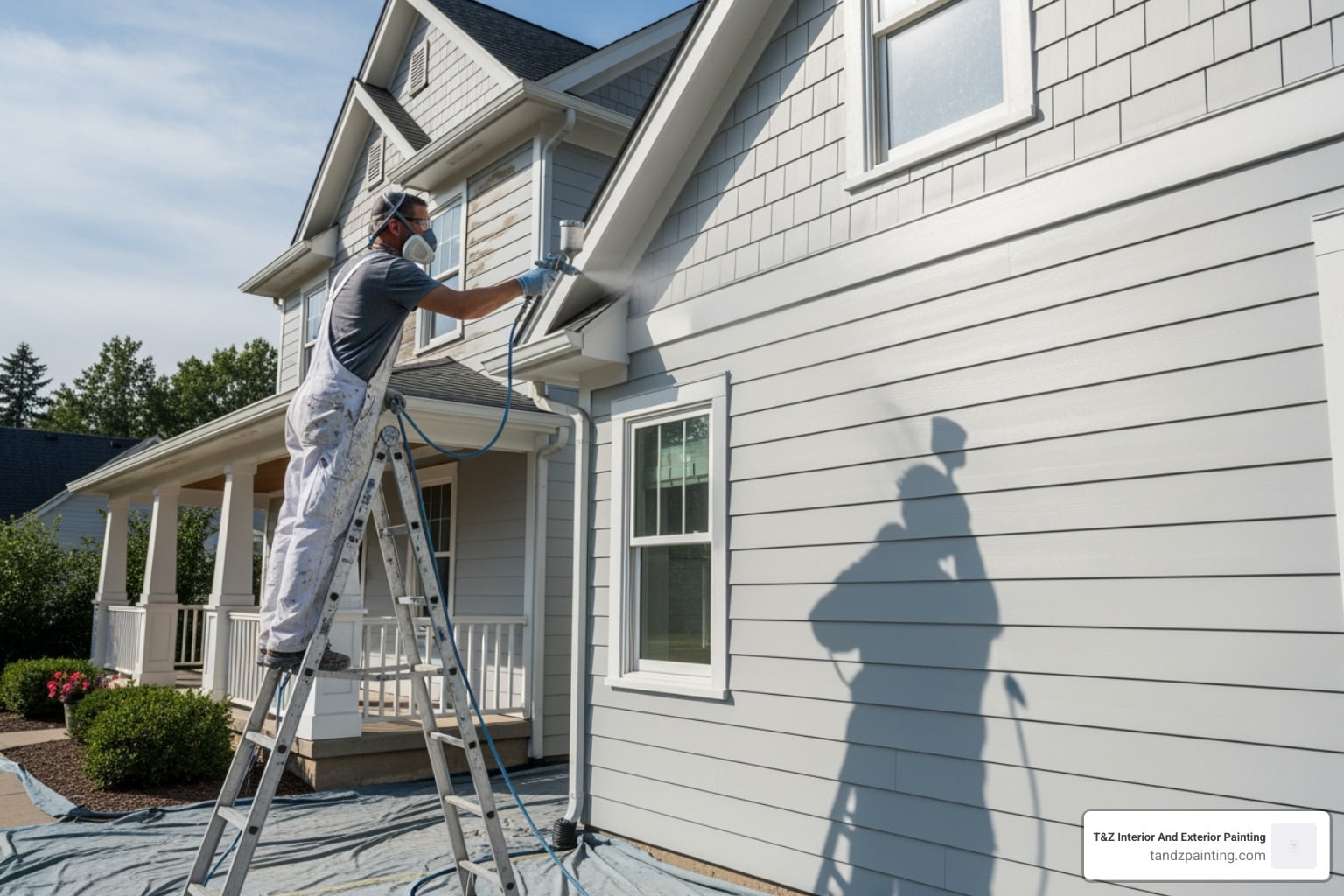
Why House Exterior Spray Painting Transforms Your Home’s Curb Appeal
House exterior spray painting is the fastest, most efficient way to give your home a professional, uniform finish that dramatically boosts curb appeal. Here’s what makes it so effective:
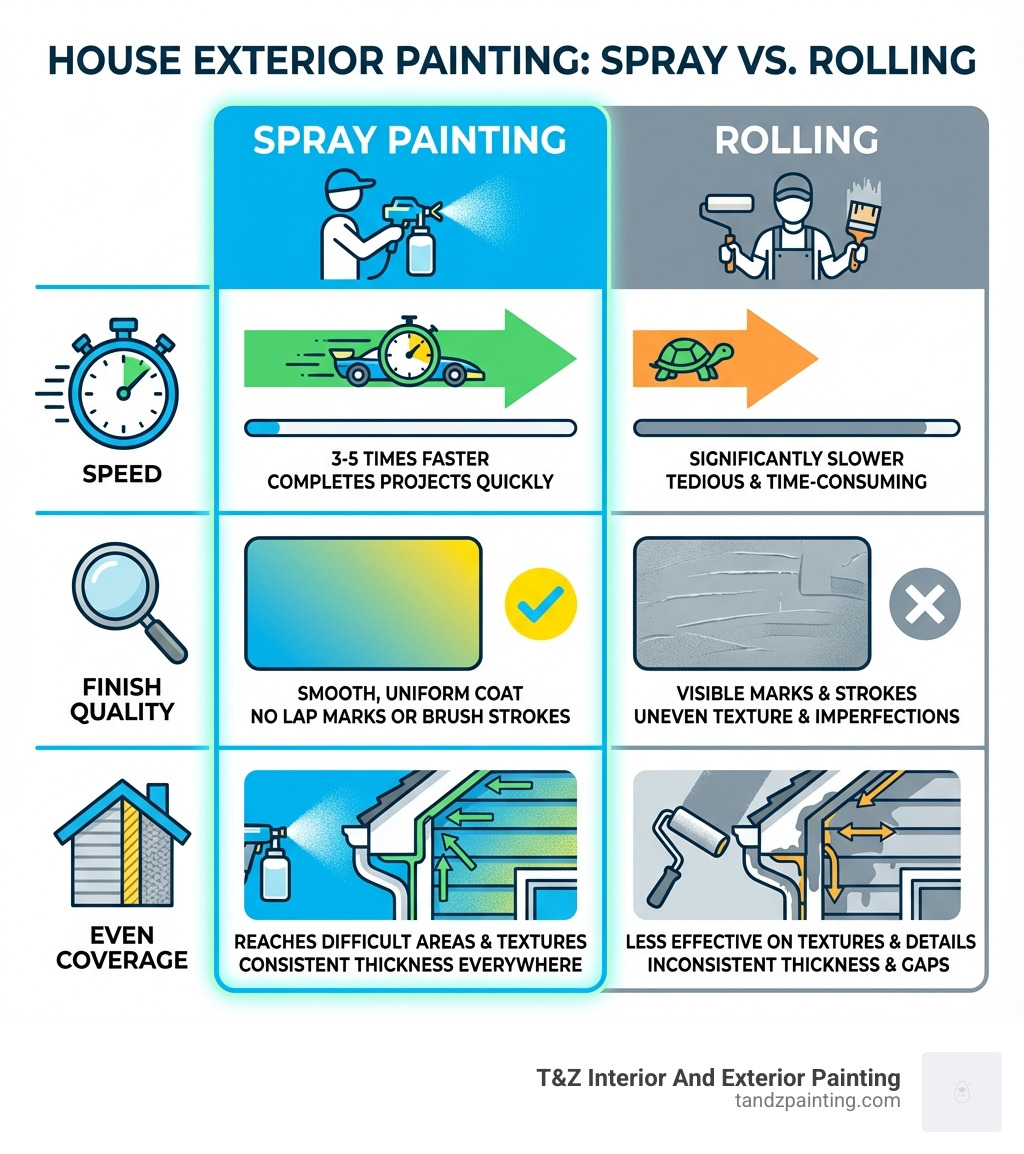
- Speed: Complete an entire house, including gutters and fence, in as little as 3 days
- Finish Quality: Achieve a smooth, even coat without brush or roller marks
- Coverage: Reach difficult areas like eaves, soffits, and detailed trim easily
- Efficiency: Save up to 8 hours of brushing for every hour spent masking
The technique involves using an airless paint sprayer to apply paint in a fine, even mist. The key is thorough preparation—power washing, scraping loose paint, repairing damaged surfaces, and meticulous masking of windows, doors, and landscaping. With the right equipment and technique, you can achieve results that rival professional painters.
The benefits are clear: spraying allows homeowners to achieve professional-level results, and when properly applied with top-quality materials, new exterior paint should last close to 15 years.
I’m Tomasz Niemotko, and for over 15 years I’ve helped homeowners in the Lombard area transform their properties through expert house exterior spray painting. My team and I have mastered the techniques that deliver durable, stunning results that bring homes to life.
House exterior spray painting further reading:
The Foundation: Essential Prep Work for a Flawless Finish
The secret to a long-lasting, beautiful house exterior spray painting job isn’t just in the paint or the sprayer; it’s in the preparation. We always say that the most crucial step for paint longevity is surface preparation. Without a solid foundation, even the highest quality paint will fail prematurely. Our meticulous preparation process ensures that the paint adheres properly, looks stunning, and protects your home for years to come.

Cleaning and Inspection
Before any paint touches your home, a thorough cleaning and inspection are non-negotiable. We begin by power washing the entire exterior to remove dirt, grime, dust, and any loose paint. This powerful cleaning method ensures we’re working with a clean canvas. For stubborn mildew, we use a mixture of 1 gallon of water, 1 cup of chlorine bleach, and a concentrated, phosphate-free cleaner like Jomax House Cleaner, working from bottom to top to avoid streaks. After cleaning, we allow the surface to dry completely for one to two days.
During this drying period, we conduct a detailed inspection. We look for any signs of rotted wood, damaged siding, or loose boards that could compromise the paint job. It’s also critical to consider the age of your home. For homes built before 1978, we always test for lead paint.
Surface Repair and Sanding
Once the surface is clean and dry, we move on to repairs. Any loose, peeling, or bubbling paint is carefully scraped away. For large areas, we might use power scrapers, but for intricate details, hand scrapers offer the precision needed. If more than half of the old paint is gone, it might be necessary to strip it all off, using tools like the PaintShaver or chemical strippers such as Multi-Strip.
After scraping, we sand all scraped edges to feather them out, creating a smooth transition between old and new surfaces. All bare wood surfaces are also sanded to ensure optimal paint adhesion. We fill minor cracks and dents with patching compound, and repair any rotted wood by scraping away the decay, treating it, and then filling with exterior-grade wood filler or epoxy like Ready Patch or materials from Advanced Repair Technology.
Priming is the next vital step. We spot prime bare wood and repaired areas with an alkyd-based primer, which penetrates the wood and provides an excellent bonding surface. If the entire house is being primed, we ensure even coverage. Finally, after the primer has dried, we apply high-quality siliconized acrylic caulk to all small joints (less than 1/4-inch wide), sealing gaps around windows, doors, and siding. However, we’re careful not to caulk horizontal clapboard edges or where window casing meets the sill, as this can trap moisture.
The Art of Masking and Protection
Masking is perhaps the most time-consuming part of house exterior spray painting, but it’s also where you “save eight hours of brushing for every hour spent masking.” Proper masking is crucial to protect everything you don’t want painted from overspray. We carefully cover windows, doors, trim, light fixtures, and any other non-paintable surfaces using painter’s tape, plastic sheeting, and masking paper. For landscaping, shrubs, and walkways, we deploy drop cloths or plastic sheeting, ensuring they are well-secured.
For precise masking, especially around windows, we use tools like Dual-Tac dispensers to create double-sided tape that secures plastic sheeting. For wider areas, a Hand-Masker M3000 Dispenser helps create wide protective swaths of tape and paper quickly. We also use 4-ft. wide painting shields to prevent overspray on challenging areas like roofs or adjacent surfaces during trim painting. Even with High Efficiency Airless (HEA) sprayers, which can reduce overspray by up to 55% compared to traditional airless sprayers, meticulous masking remains our top priority for a clean, professional finish.
Gearing Up: Tools and Materials for Your Project
The right tools and materials are essential for any successful house exterior spray painting project. Just as a chef needs quality ingredients and reliable equipment, we rely on professional-grade gear and top-tier paints to deliver the stunning results our clients expect.
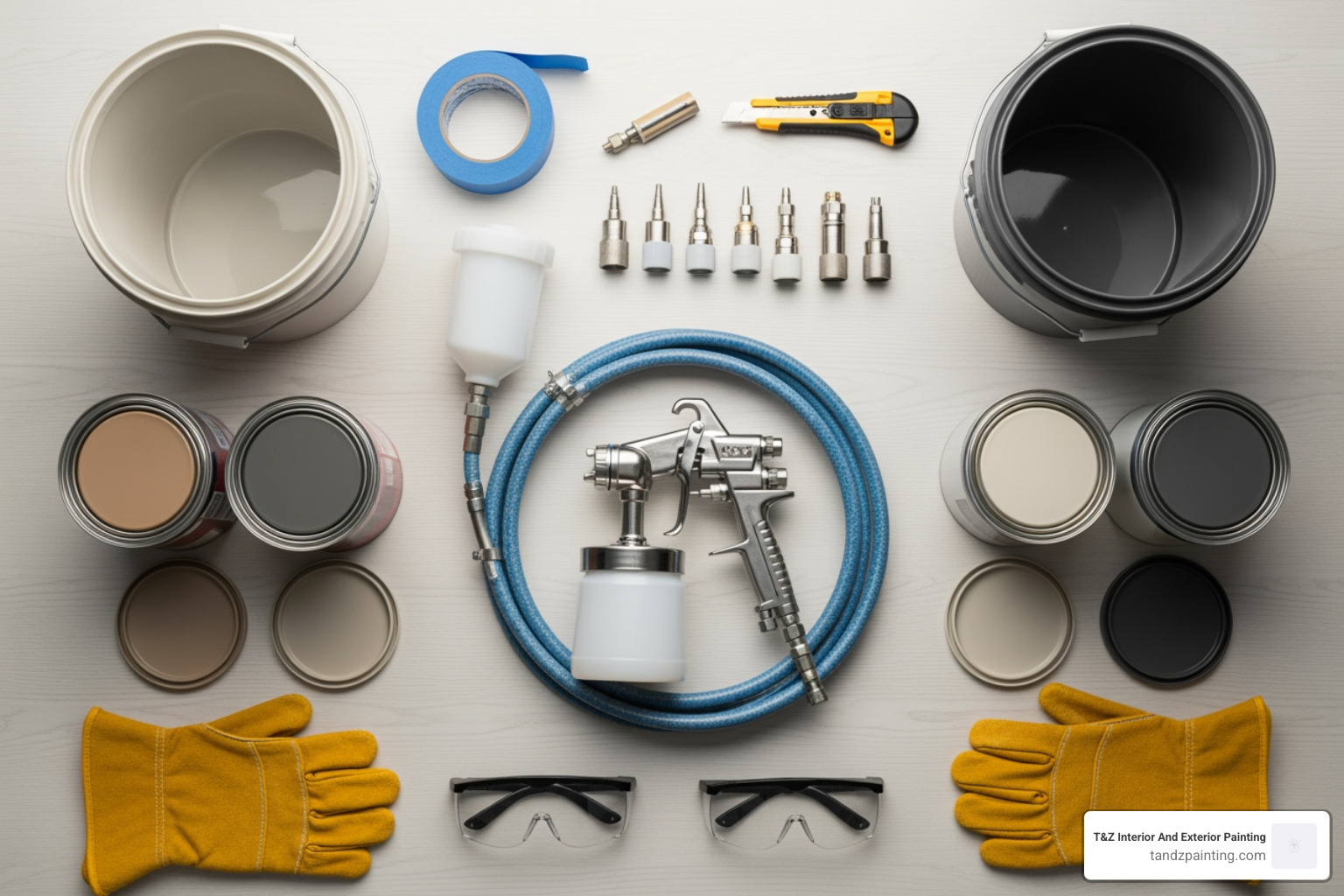
Choosing Your Sprayer and Tips
For exterior house painting, we primarily use airless sprayers. These machines are incredibly efficient, capable of finishing a project in a fraction of the time it would take with brushes and rollers. High Efficiency Airless (HEA) sprayers are a fantastic innovation, providing excellent coverage with significantly reduced overspray. While a professional setup can be an investment, we understand that for a single project, renting contractor-grade spray equipment is a viable option for DIY enthusiasts.
Selecting the correct spray tip is paramount for a professional finish. Different tips are designed for varying paint viscosities and surfaces:
- Trim Tips: For detailed work on eaves, soffits, and window trim, we often use narrower tips like a 313 or 413. A compact #213 tip is also excellent for these intricate areas, delivering a lower flow and finer pattern.
- Siding Tips: For large, flat surfaces like siding, a wider tip such as a 515 allows for faster coverage and efficient paint application.
- Tip Extensions: To safely reach high areas like eaves or the undersides of overhangs without constantly repositioning a ladder, we use tip extensions. These attachments significantly improve safety and efficiency.
Selecting the Right Paint and Primer
The quality of paint directly impacts the longevity and appearance of your house exterior spray painting project. We always recommend high-quality 100% acrylic latex paint for exteriors. Modern acrylic latex paints are superior due to their durability, flexibility (allowing them to expand and contract with temperature changes), resistance to fading and peeling, and ease of use. High-quality paints with titanium dioxide pigments and at least 45% solids by weight last longer, look better, and adhere more easily.
For primer, an alkyd-based primer is our go-to for bare wood and repaired areas, providing excellent bonding. If the entire house requires priming, a high-quality acrylic latex primer with 100% acrylic binders is ideal. We also tint our primers to a color close to the topcoat to ensure complete coverage, or sometimes use a contrasting color to easily spot any missed areas.
To calculate how much paint is needed, we typically use a paint calculator, multiplying the house perimeter by its height, subtracting door and window areas, and then dividing by the paint’s coverage (usually about 400 square feet per gallon). It’s worth noting that when using a paint sprayer, you may need 1.5 times more paint than when rolling, so we always factor that into our estimates.
Essential Safety Gear and Accessories
Safety is always our top priority. When spray painting a house exterior, we ensure our team is equipped with the following essential safety gear:
- Respirators: To protect against inhaling paint fumes and fine particles.
- Safety Goggles: To shield eyes from overspray and debris.
- Gloves: To protect hands from paint and chemicals.
- Protective Clothing: Long sleeves, pants, and appropriate footwear.
- Ladders and Scaffolding: For safe access to high areas. We always follow official ladder safety guidelines, ensuring ladders are sturdy, on level ground, and that we maintain three points of contact.
- Paint Shields: As mentioned earlier, these are invaluable for protecting adjacent surfaces from overspray.
Working safely and efficiently allows us to focus on delivering a high-quality finish without unnecessary risks.
The Ultimate Guide to House Exterior Spray Painting
With preparation complete and tools in hand, it’s time to bring the color to life. Mastering the spray technique is key to achieving that smooth, professional finish that makes house exterior spray painting so rewarding.
Mastering Your Spraying Technique
Practice makes perfect. Before we ever touch a home, we practice our spraying technique on cardboard or a scrap surface. This allows us to adjust the sprayer’s pressure and find a comfortable, consistent speed. The goal is a uniform, even coat, and this comes from maintaining a steady hand and consistent motion.
Here are our core techniques:
- Consistent Distance: We hold the spray gun approximately 12 inches away from the surface, keeping it parallel to prevent uneven coverage or excessive paint buildup.
- Steady Speed: The spray gun moves at a consistent, fluid speed. We start moving our hand before pulling the trigger and release the trigger after each pass, eliminating heavy spots at the beginning and end of each stroke.
- Overlapping Passes: To ensure full and even coverage, we overlap each spray pass by approximately 50%. This method prevents stripes or thin spots.
- Back-brushing: When applying primer or paint, especially on textured surfaces or raw wood, we often follow up immediately with a brush to work the material into the surface. This “back-brushing” technique ensures maximum adhesion and a smoother, more durable finish.
Techniques for a Professional House Exterior Spray Painting Finish
The order in which we paint different elements of a home is strategic, designed to optimize efficiency and minimize re-work.
- Painting Order: We always start at the top of the house and work our way down. This prevents drips or overspray from landing on freshly painted lower sections.
- Spraying Eaves and Soffits: These often hard-to-reach areas are tackled first. Using a narrower spray tip (like a 313 or 413) and a tip extension allows us to spray these areas safely and effectively from a ladder or scaffolding. We ensure we spray in the direction of the wood grain for trim.
- Spraying Trim: After eaves and soffits, we move to other trim elements like window frames, door frames, and fascia. Applying paint to these areas first, after meticulous masking, allows us to create crisp, clean lines between the trim and the main siding color.
- Spraying Siding: Once the trim is complete and masked off, we switch to a wider spray tip (e.g., a 515) for the siding. We work in manageable sections, pointing the spray gun slightly upward at an angle toward the bottom of each row of siding for best coverage.
- Working in Manageable Sections: We apply paint in sections, ensuring wet edges are maintained to avoid lap marks. This means working quickly and systematically across a portion of the house before moving to the next.
Troubleshooting Common House Exterior Spray Painting Problems
Even with the best preparation and technique, issues can arise. Here’s how we troubleshoot common problems:
- Fixing Runs and Drips: If we spot a run or drip, we immediately level it out with a paintbrush. It’s much easier to correct wet paint than dried imperfections.
- Correcting Uneven Coverage: If an area looks thin, we allow it to dry and apply another light, even coat, ensuring proper overlap. Consistency in distance and speed is the best preventative measure here.
- Dealing with Clogged Tips: A clogged tip will result in an inconsistent spray pattern or no spray at all. We immediately stop, clear the obstruction using the reverse function (if available on the tip), or clean the tip thoroughly. Regular cleaning of the sprayer and using paint strainers helps prevent clogs.
- Managing Overspray: Beyond meticulous masking, spraying on a calm, non-windy day is crucial. If unexpected breezes pick up, we pause or adjust our technique, sometimes using a paint shield for added protection.
The Final Touches: Cleanup and Long-Term Care
The job isn’t truly done until the cleanup is complete and we’ve ensured the longevity of our work. Proper post-project procedures are just as important as the painting itself for a truly professional outcome and a lasting finish.
Proper Sprayer and Site Cleanup
Immediately after completing the house exterior spray painting, we prioritize cleaning the equipment. This prevents paint from drying and clogging the sprayer, which can damage the equipment. We follow the manufacturer’s specific instructions for cleaning the paint sprayer, which often involves Power Flush cleaning with water-based materials or using the bucket method. For tips and filters, we soak them in an appropriate solvent (like xylene for oil-based paints) at the end of each workday and replace filters regularly, using one no coarser than 100 mesh. Worn spray tips are replaced at the first sign of an uneven fan pattern, as they waste paint and compromise finish quality.
On-site, we carefully remove all masking tape and plastic coverings once the paint has dried sufficiently to avoid marring the fresh finish. This typically means allowing the paint to dry before removing tape from trim to ensure clean lines. All drop cloths, plastic sheeting, and other protective materials are gathered and properly disposed of. Finally, any hardware, fixtures, or shutters that were removed are re-installed, bringing your home’s exterior back to its complete, refreshed look. Outdoor furniture and grills are returned to their original places.
Ensuring a Durable, Long-Lasting Paint Job
A beautiful paint job is also a durable paint job. Here’s how we ensure the longevity and durability of an exterior paint job done with a sprayer:
- Curing Time: While paint may feel dry to the touch within hours, it takes several weeks to fully cure and achieve its maximum hardness and durability. We advise homeowners to be gentle with newly painted surfaces during this period.
- Applying a Second Coat: For optimal color depth, protection, and longevity, we almost always apply two coats of paint, allowing proper drying time between applications. This extra layer significantly improves durability.
- Regular Inspections: We recommend homeowners perform annual inspections of their home’s exterior. Look for any signs of wear, minor chips, or areas that might need touch-ups. Addressing small issues promptly prevents them from becoming larger, more difficult problems to repair.
- Annual Cleaning: A gentle annual cleaning with a soft brush and mild detergent solution helps remove accumulated dirt, pollen, and environmental pollutants that can degrade paint over time. This simple step keeps your home looking fresh and extends the life of the paint.
- Paint Job Longevity: With proper preparation, high-quality materials, and expert application, a house exterior spray painting job should last for close to 15 years. This longevity not only protects your investment but also ensures your home maintains its curb appeal for well over a decade.
DIY vs. Professional: Is This Project for You?
The idea of changing your home’s exterior with a fresh coat of paint can be exciting, and house exterior spray painting offers undeniable advantages. However, it’s worth considering whether a DIY approach or hiring professionals like us is the right choice for your specific project.
The Rewards of a DIY Project
For many homeowners, tackling a DIY exterior painting project offers significant rewards:
- Sense of Accomplishment: There’s immense satisfaction in stepping back and admiring a project you’ve completed yourself, knowing you’ve personally improved your home’s appearance.
- Control over the Project Timeline: DIY allows you to work at your own pace, fitting the project around your schedule, weather permitting.
- Learning a New Skill: Exterior spray painting involves specific techniques and equipment, and mastering them can be a valuable new skill.
- Customization: A DIY approach gives you full control over paint color, quality, and application, allowing for a truly personalized result.
The Challenges to Consider
However, house exterior spray painting is not a task to be underestimated. It comes with its own set of challenges:
- Steep Learning Curve: Achieving a smooth, even finish with a sprayer takes practice. There’s a knack to maintaining consistent distance, speed, and overlap to avoid drips, streaks, or uneven coverage.
- Significant Time Commitment for Prep: As we’ve emphasized, preparation is paramount. This includes extensive cleaning, repairs, and meticulous masking, which can easily take up more time than the actual spraying. For each hour spent masking, you save eight hours of brushing, but that masking still takes time!
- Physical Demands: Working on a home’s exterior often involves ladders, scaffolding, and repetitive motions, which can be physically taxing and require careful attention to safety.
- Achieving a Professional Finish: While sprayers can deliver a superior finish, achieving that professional-grade look consistently across an entire house requires skill, patience, and attention to detail that many DIYers might struggle with initially.
- Weather Dependence: Spray painting is highly susceptible to weather conditions. Wind can cause significant overspray, while extreme temperatures or high humidity can affect paint adhesion and drying times. Avoiding spraying when it’s windy is critical.
We believe that for a truly flawless, durable, and hassle-free house exterior spray painting project, the expertise of professionals ensures a superior result. We bring years of experience, specialized equipment, and trained teams to ensure every detail is handled with precision.
Frequently Asked Questions about Exterior Spray Painting
What’s better for house exteriors: spraying or rolling?
For large, open areas of a house exterior, spraying is generally superior. Airless sprayers are significantly faster than traditional rolling or brushing, allowing us to complete projects in a fraction of the time. They provide a smoother, more uniform finish without any brush strokes or roller marks, creating a truly professional look. Spraying also excels at reaching difficult areas like textured surfaces, eaves, and intricate trim where a roller or brush would struggle. However, for very small, tight areas, or when working on a particularly windy day where overspray is a major concern, rolling or brushing might be a more controlled option. Many professionals combine both methods, spraying the main surfaces and back-brushing or rolling for touch-ups or specific details.
What kind of paint is used for exterior spray painting?
The best choice for house exterior spray painting is high-quality 100% acrylic latex paint. Modern acrylic latex paints are incredibly durable, flexible (allowing them to expand and contract with temperature changes), resistant to fading, peeling, and blistering, and they clean up easily with water. We prioritize paints with strong UV resistance and mildewcides for optimal longevity in the Illinois climate. While oil-based paints can be used for specific applications like metal railings or high-traffic wood floors, acrylic latex is generally preferred for siding and trim. It’s crucial to check the paint manufacturer’s instructions, as some paints may need to be thinned slightly with water (for latex) to achieve the correct viscosity for smooth flow through the sprayer without clogging.
How do you prevent overspray when painting a house?
Preventing overspray is paramount to a clean and professional house exterior spray painting job. The most critical step is thorough masking. We carefully use painter’s tape, plastic sheeting, and drop cloths to cover every surface you don’t want painted, including all windows, doors, light fixtures, roofs, walkways, and surrounding landscaping like shrubs and bushes. Using a Hand-Masker for large areas and specialized tape for windows ensures complete coverage. Additionally, using a paint shield, a large, portable barrier, helps protect adjacent surfaces while spraying specific areas. Finally, and perhaps most importantly, we only spray on calm, non-windy days. Wind is the biggest enemy of spray painting, carrying fine paint particles far beyond the target area. High Efficiency Airless (HEA) sprayers also significantly reduce overspray compared to traditional airless models, offering a cleaner application.
Conclusion
Changing your home with house exterior spray painting is an investment that pays dividends in curb appeal, protection, and lasting beauty. As we’ve explored, the journey from drab to fab hinges on meticulous preparation, the right tools, mastered techniques, and diligent cleanup. The precision and efficiency of modern spray equipment, combined with high-quality paints, can deliver a finish that not only looks professional but also stands the test of time—often lasting for close to 15 years.
While a DIY approach offers a sense of accomplishment, the challenges of a steep learning curve, significant time commitment for preparation, and the physical demands of the job often highlight the value of professional expertise.
At T&Z Interior And Exterior Painting, we pride ourselves on delivering quality, stunning results through experienced teams, top-brand materials, and excellent customer service right here in the Lombard area and across our service regions in Illinois. For a flawless, professional result without the DIY hassle, explore our expert spray painting services.