
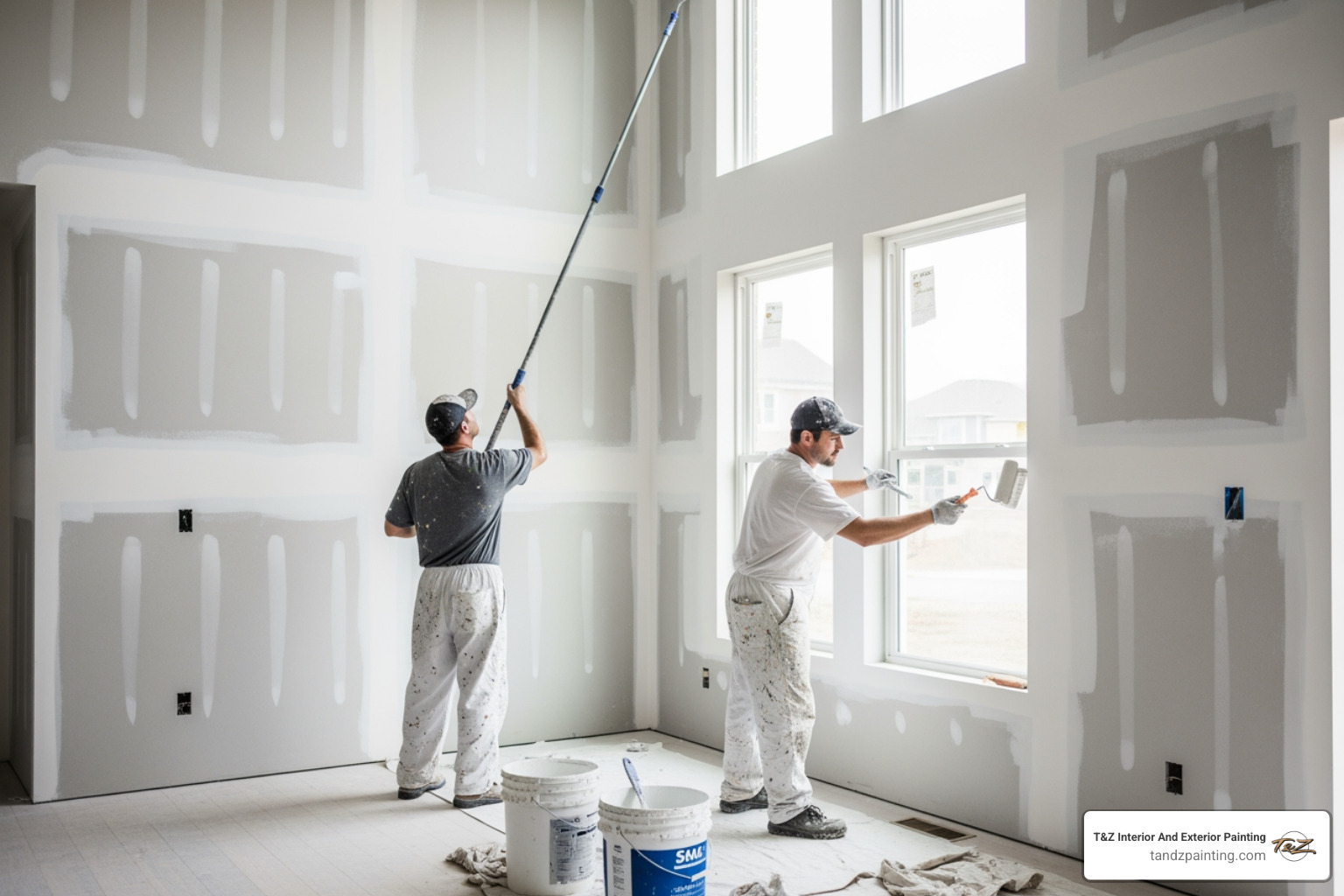
Why New Construction Painting Sets the Foundation for Your Home
New construction painting is more than just applying color to walls—it’s the critical first line of defense that protects raw building materials, ensures long-term durability, and transforms a construction site into a finished home. Unlike repainting existing spaces, painting new construction involves working with bare drywall, fresh wood, and unfinished surfaces that require specialized preparation, priming, and application techniques.
What makes new construction painting different:
- Raw, porous surfaces that need proper sealing and priming before any finish coats
- Coordination with other trades like electricians, plumbers, and flooring installers to maintain project flow
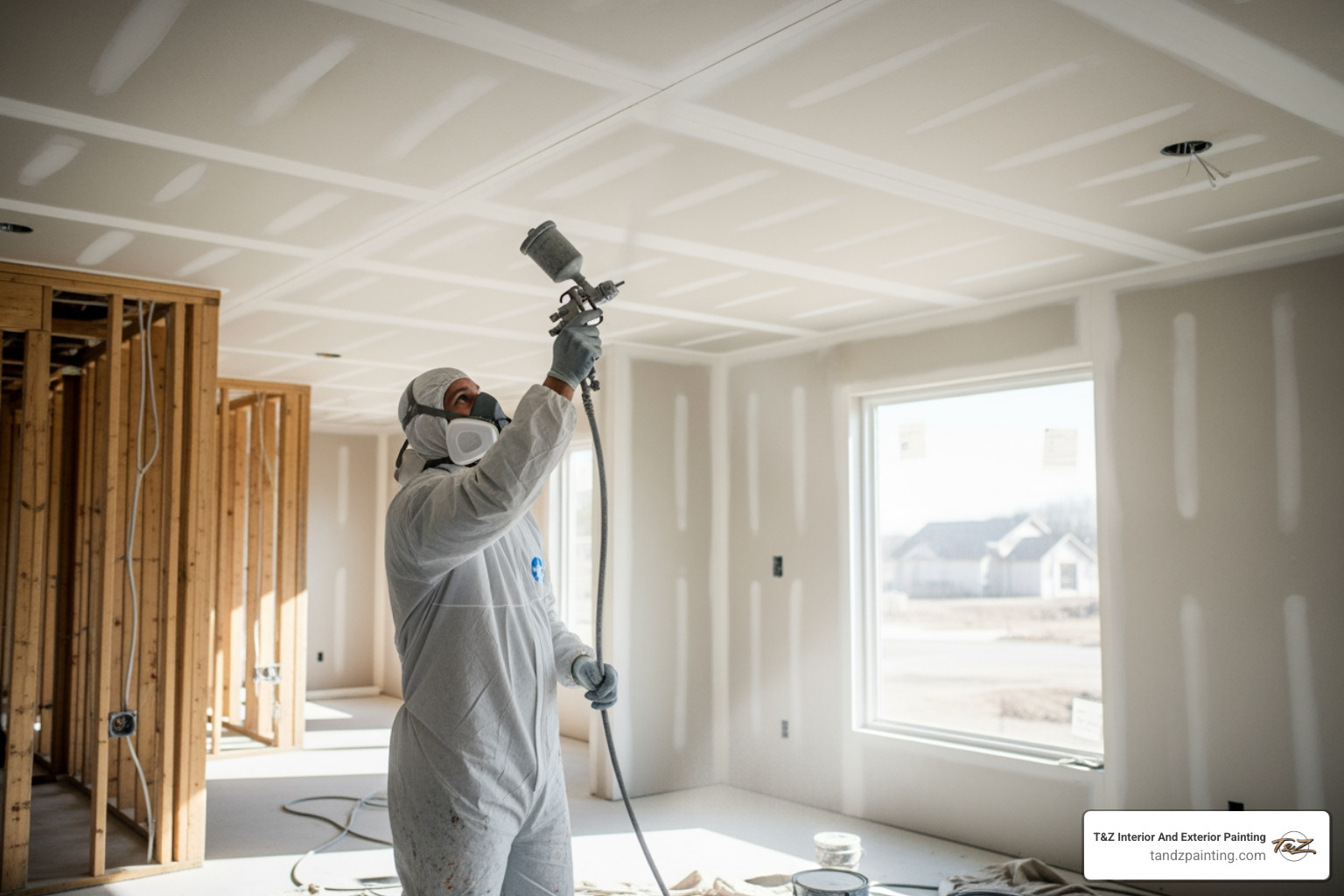
- Efficiency-focused methods such as spray application for large, open areas
- Multiple coats (primer plus two finish coats) to ensure durability and uniform coverage
- Timing is everything—painting happens in phases, typically after drywall but before final fixtures
The new construction painting market is valued at $13.2 billion, and for good reason. Proper painting protects your investment from moisture, wear, and damage from day one. Without it, you risk significant repairs down the line—issues from incorrect new construction painting can lead to extensive remediation work per project.
I’m Tomasz Niemotko, and for over 13 years, I’ve been changing new construction projects into beautiful, durable homes through expert new construction painting services. My team at T&Z Interior and Exterior Painting specializes in delivering flawless finishes that protect and improve your investment from the very first coat.

A Blank Canvas: New Construction vs. Repainting
When you’re building a new home, you’re presented with a true blank canvas, a fresh start. This is a thrilling prospect, offering total creative freedom to choose every detail. However, this also means that new construction painting is fundamentally different from repainting an existing home. While both require skill and attention, the processes, challenges, and goals diverge significantly.
For new construction painting, we’re dealing with raw, unfinished surfaces—bare drywall, fresh wood trim, and newly installed doors. These materials are porous and have never seen a drop of paint before. Our primary goal is to seal these surfaces, ensure optimal adhesion for the paint, and create a uniform, durable finish from the ground up. This involves close coordination with other trades, as we often work on active construction sites.
Repainting, on the other hand, involves working with existing painted surfaces. These spaces are typically occupied, requiring us to protect furniture and minimize disruption. The focus shifts to preparing surfaces that may have wear, moisture damage, or previous coatings. This can mean a lot more cleaning, sanding, and repairing before any new paint is applied.
Here’s a quick look at how these two types of projects compare:
| Feature | New Construction Painting | Repainting Existing Homes |
|---|---|---|
| Starting Surface | Raw, bare, unfinished materials (drywall, wood, concrete) | Existing painted surfaces, often with wear or damage |
| Prep Work Focus | Sealing porous materials, smoothing new surfaces, dust control | Cleaning, sanding existing paint, repairing damage, patching |
| Application Method | Often spray-applied for efficiency and uniform coverage | More brush and roller work for precision in occupied spaces |
| Coordination | High level with multiple trades (electricians, plumbers) | Less, focused on homeowner schedule and protecting contents |
| Scheduling | Tightly integrated into overall construction timeline | More flexible, often room-by-room, client-driven |
| Primary Goal | Establish durable, aesthetic foundation for the entire home | Refresh, update, or repair existing finishes |
Starting from Scratch
Imagine a freshly drywalled house in Lombard or Wheaton. Every wall is a pristine sheet, every piece of trim is raw wood. This is our playground for new construction painting. Our work begins by sealing these porous materials. Bare drywall, for instance, needs to be properly primed to prevent the paint from soaking in unevenly, which can lead to a splotchy finish. This “priming from the ground up” approach is crucial for ensuring that the final paint coats adhere correctly and create a smooth, uniform finish that homeowners in Lemont and Downers Grove will adore. Efficiency is key here; we often use spray application techniques to cover large, open areas quickly and evenly, setting the stage for the detailed work to follow.
Working with Existing Surfaces
When we’re repainting an older home in Carol Stream or La Grange, the challenges are different. We’re not just painting; we’re often restoring. This means meticulous cleaning and degreasing to remove years of grime, scraping away any peeling paint, and patching up damage from everyday life. Imagine carefully masking off existing furniture and protecting flooring in a family’s beloved home. Our goal here is to minimize disruption to your daily life while changing your space. This detailed prep work ensures that the new paint adheres beautifully and blends seamlessly with the existing architecture. For more information on giving your current home a fresh look, explore our Interior Painting Services.
The Professional New Construction Painting Process: A Step-by-Step Guide
The process of painting a new construction project is a carefully orchestrated dance, a phased approach that works in harmony with all other trades on site. It’s a bit like baking a cake; every ingredient and step must be perfect and in the right order to get a delicious result. We understand that even if the home is still being built, we know how to work around obstacles and construction workers, ensuring our painting process integrates seamlessly into the overall project timeline. Our experience across Plainfield, Lockport, and Chicago means we’ve perfected this sequence to deliver exceptional results.
Step 1: Essential Surface Preparation for New Construction Painting
This is arguably the most crucial step, as most paint job failures can be traced back to inadequate preparation. For new construction painting, our surfaces are fresh, but they’re not necessarily “clean” or “ready.”
First, we tackle construction dust. New walls, especially drywall, can be covered in fine dust and debris from sanding and other construction activities. We thoroughly clean these surfaces, often by sanding down rough spots and then wiping everything with a damp cloth or using specialized dust removal equipment.
For drywall, also known as Sheetrock, you’ll want to use 100% latex or acrylic latex paint when painting these walls. Before that, however, we carefully check for imperfections like nail pops or uneven seams, filling them with appropriate compounds and sanding them smooth. We also conduct moisture testing; for drywall, the moisture content should be under 12%, and for wood, it should be between 6-8%. If we’re working on concrete surfaces, we ensure they’ve cured for at least 30 days and have a pH level under 9. This attention to detail ensures a flawless canvas for the paint.
Step 2: Priming for a Flawless Foundation
Primer is not just an extra step; it’s the foundation for a long-lasting, beautiful paint job. For new construction painting, where we’re dealing with raw, porous materials, primer is absolutely essential. It seals the surface, creating an even base that promotes paint adhesion and ensures a uniform finish coat. Think of it as the glue that makes everything stick together perfectly.
For smooth drywall, we typically use a PVA (polyvinyl acetate) primer. For more textured surfaces, a high-build primer might be necessary to fill minor imperfections. When working with raw wood, such as trim or doors, we opt for an oil-based primer. If there are any knots in the wood, we use a stain-blocking primer to prevent tannins from bleeding through the finish coats. We apply thin, even coats, often spraying and then back-rolling to ensure even absorption and coverage, and allow adequate drying time—usually 24 hours—before moving on.
Step 3: Application of Finish Coats
Once the surfaces are perfectly prepped and primed, it’s time for the magic of color. Our approach to applying finish coats is strategic and efficient, especially in the larger, open spaces of new builds in Addison or Elmhurst.
We typically start with the ceilings, applying two coats of paint. This allows us to work efficiently without worrying about splatter on freshly painted walls. For large wall areas, spray application is often preferred for its speed and ability to create a smooth, uniform finish. However, for more detailed work or when multiple colors are involved, we seamlessly transition to brush and roller techniques. A coat of primer and two coats of paint are essential for new drywall to ensure proper adhesion, deep color, and maximum durability. This layering not only improves the color’s vibrancy but also contributes to the longevity of the finish.
While our focus here is interiors, our expertise extends to the exterior of new constructions as well, ensuring your entire property is protected and beautiful from the ground up. Learn more about how we protect and beautify the outside of your home with our Exterior Painting Services.
Step 4: Final Details and Touch-Ups
The final phase of new construction painting is all about precision and perfection. This is where we bring everything together, ensuring every detail is flawless. This includes the meticulous painting of trim and doors, often done with water-based acrylic paint for interior doors, trim, and baseboards, providing a durable and smooth finish. For new builds with cabinetry, we also offer specialized cabinet finishing to ensure a cohesive and high-end look throughout the home.
Once all other trades have completed their work—electricians have installed light fixtures, plumbers have put in sinks, and flooring is down—we return for a final walkthrough. This is where we address any minor damage that might have occurred during the final stages of construction, such as small scuffs or dings. We carefully complete a punch list, ensuring every corner, every edge, and every surface meets our stringent quality standards. This final inspection and touch-up process is critical to delivering a truly move-in ready, pristine home. Find the full scope of our expertise in new builds by visiting our New Construction Painting Services.
The Blueprint for Success: Materials and Coordination
In new construction painting, selecting the right materials and coordinating effectively with other trades are like having a solid blueprint for a house—they’re fundamental to the entire project’s success. We believe in using only high-quality materials to ensure a finish that not only looks stunning but also stands the test of time. Our partnerships with builders across Glenview, Wilmette, and Woodridge are built on trust and efficient communication, recognizing that every project has its unique scope and factors impacting its progress.
Recommended Primers and Paints
For new construction, the choice of primers and paints is paramount. We primarily recommend 100% latex or acrylic latex paints for walls, especially for drywall (Sheetrock), due to their durability, flexibility, and ease of application. These modern formulations are also available in low-VOC (Volatile Organic Compound) options, contributing to better indoor air quality for new homeowners, a growing concern in today’s environmentally conscious market.
When it comes to sheen, we guide our clients through the options. Flat or eggshell finishes are popular for walls as they offer a subtle sheen and are ideal for large areas, making touch-ups easier post-move-in. Satin or semi-gloss finishes are often chosen for trim, doors, and bathrooms due to their increased durability and washability. For high-moisture areas like bathrooms, we specifically recommend mold-resistant paint to provide an extra layer of protection.
To help you visualize your choices, one gallon of paint typically covers 400 square feet. This helps us estimate how much paint we’ll need for your project, ensuring we’re always prepared.
Coordinating with Other Trades
The construction site is a busy environment, a hive of activity where electricians, plumbers, HVAC teams, flooring installers, and cabinet makers are all working towards a common goal. Our role in new construction painting requires seamless coordination with every trade. We’re often one of the final trades, but our work frequently happens in phases, intertwined with others.
Imagine trying to paint a ceiling while an electrician is installing light fixtures, or applying a final coat to walls just as plumbers are fitting sinks. It’s a recipe for disaster! That’s why we carefully plan our schedule, aligning with the general contractor’s timeline. This means we might complete initial priming and base coats after drywall is up, then step back for electricians and plumbers to finish their rough-ins. We then return for subsequent coats and detailed trim work after flooring and cabinets are installed, but often before final fixtures are in place. This strategic sequencing prevents damage to our fresh paint and ensures a smooth workflow for everyone, keeping the project on track and stress-free for our commercial clients too. Learn more about our comprehensive services, including those for commercial projects, at our Commercial Painting Services page.
The Professional Advantage: Avoiding Pitfalls and Ensuring Quality
Entrusting your new construction painting to professionals like us at T&Z Interior and Exterior Painting brings a multitude of advantages that extend far beyond just a pretty color. While some homeowners might consider a DIY approach or simply rely on general contractors, the specialized skills, proper equipment, and sheer efficiency of dedicated painting experts are best. As one interior decorator warns, the builder-grade paint contractors often use is not the high-quality paint you need to lift your home. We ensure that your investment in a new build in Chicago or Schaumburg is protected with the best materials and craftsmanship.
Common Challenges in New Construction Painting
Even with the best planning, new construction sites present unique problems. We’ve seen it all, from the ever-present construction dust that threatens to contaminate fresh paint, to the inevitable nail pops and hairline settling cracks that can appear as a new home “breathes” and settles. Inconsistent surfaces, despite diligent prep, can also emerge.
Perhaps the biggest challenge is the pressure to meet tight deadlines. In the world of new construction, there’s always a temptation for rushed work, which can lead to corner-cutting—skimping on primer, applying too few coats, or inadequate sanding. These shortcuts might save a moment in the short term, but they lead to costly repairs and an unsatisfactory finish down the line. We understand these pressures but never compromise on quality, ensuring that every project receives the time and attention it deserves.
Quality Control and Inspection
Our commitment to excellence in new construction painting means that quality control isn’t just a final step; it’s an ongoing process woven into every stage of the project. We employ multi-point checklists for each phase, from surface preparation to the final coat, ensuring consistent coverage and meticulous attention to detail.
We conduct adhesion tests to confirm that primers and paints are bonding correctly to the raw surfaces. Our team performs continuous checks for uniform color, smooth textures, and crisp lines. Before project completion, we conduct a thorough final inspection, often with the client, to address any last-minute adjustments or concerns. This rigorous process, combined with our workmanship warranty, ensures that the finish we deliver is not just beautiful, but also robust and long-lasting, providing peace of mind for new homeowners in our service areas.
Frequently Asked Questions about New Build Painting
We often hear similar questions from homeowners and builders starting on new construction painting projects. Here are some of the most common ones:
When is the best time to paint during new construction?
The optimal time to schedule painting during new construction is after the drywall installation and finishing are completely done, but before the final fixtures, flooring, and cabinetry are installed. This allows our team to work efficiently on large, open surfaces without obstructions, minimizing the risk of damage to newly installed finishes. Once these other trades have completed their work, we return for any necessary final touch-ups and to ensure everything is perfect. This phased approach, common in our projects across Addison, Elmhurst, and Glenview, ensures maximum efficiency and a cleaner application.
How many coats of paint does new drywall need?
For new drywall, we always recommend a minimum of one full coat of high-quality primer, followed by two complete coats of finish paint. The primer is crucial for sealing the porous surface and ensuring proper adhesion. The two finish coats then provide deep, rich color and a durable, even finish that will stand the test of time. This three-layer system (primer + two paint coats) is essential for achieving professional-grade results that protect and beautify your new home.
Is it normal for cracks to appear in the paint after moving in?
Yes, it is quite common and almost inevitable for small hairline cracks to appear in the paint and drywall as a new home settles. This is a natural process as the foundation settles, and the wood framing and other building materials dry out and adjust to the new environment. These cracks are typically cosmetic and usually stabilize within the first year. We understand this can be concerning, but rest assured, it’s a normal part of a home’s settling process. We are always ready to address these minor issues during a follow-up or touch-up service to restore your walls to their pristine condition.
Your Vision, Built Beautifully
A flawless paint job is the final, critical step that defines your new space. It protects your investment and turns a structure into a personalized home. For a professional finish that reflects quality craftsmanship, T&Z Interior and Exterior Painting provides the expertise and attention to detail your new construction project deserves. With our commitment to quality, experienced teams, and focus on customer satisfaction, we ensure your new home in Lombard, Wheaton, Lemont, Downers Grove, Carol Stream, La Grange, Lockport, Plainfield, Addison, Elmhurst, Glenview, Wilmette, Woodridge, Chicago, or Schaumburg looks its absolute best from day one. Contact us today to discuss your interior painting project!