

Revitalize Your Home’s Curb Appeal
Painting exterior aluminum siding is a proven way to refresh your home’s look, protect it from the elements, and boost its value without the high cost of replacement. If your siding is faded, chalky, or simply the wrong color, a quality paint job can transform it for a fraction of what new siding would cost.
Quick Answer: Can You Paint Aluminum Siding?
Yes, you can absolutely paint aluminum siding. Here’s what you need to know:
- Cost: $1,000-$3,000 for professional painting vs. $10,000-$21,000 for replacement
- Duration: Paint lasts 4-10 years depending on quality and climate
- Best Paint: 100% acrylic latex exterior paint
- Prep Work: Clean thoroughly, remove chalking, prime bare metal
- Application: One coat of primer, two coats of paint
- Timeline: 2-4 hours per 100 square feet
Aluminum siding was popular from the 1940s through the 1970s, and millions of homes still have it. While durable enough to last up to 40 years, its factory paint fades and chalks over time. The good news is that aluminum takes paint exceptionally well, making it an ideal candidate for a refresh.
A new coat of paint dramatically improves curb appeal, protects the metal from weather and oxidation, and can increase your property value. Most experts recommend repainting every 5-10 years to maintain these benefits and keep your home looking its best.
Whether you’re tackling this as a weekend project or hiring a professional, understanding the process will help you get results that last.
Why Painting is a Smart Choice for Aluminum Siding
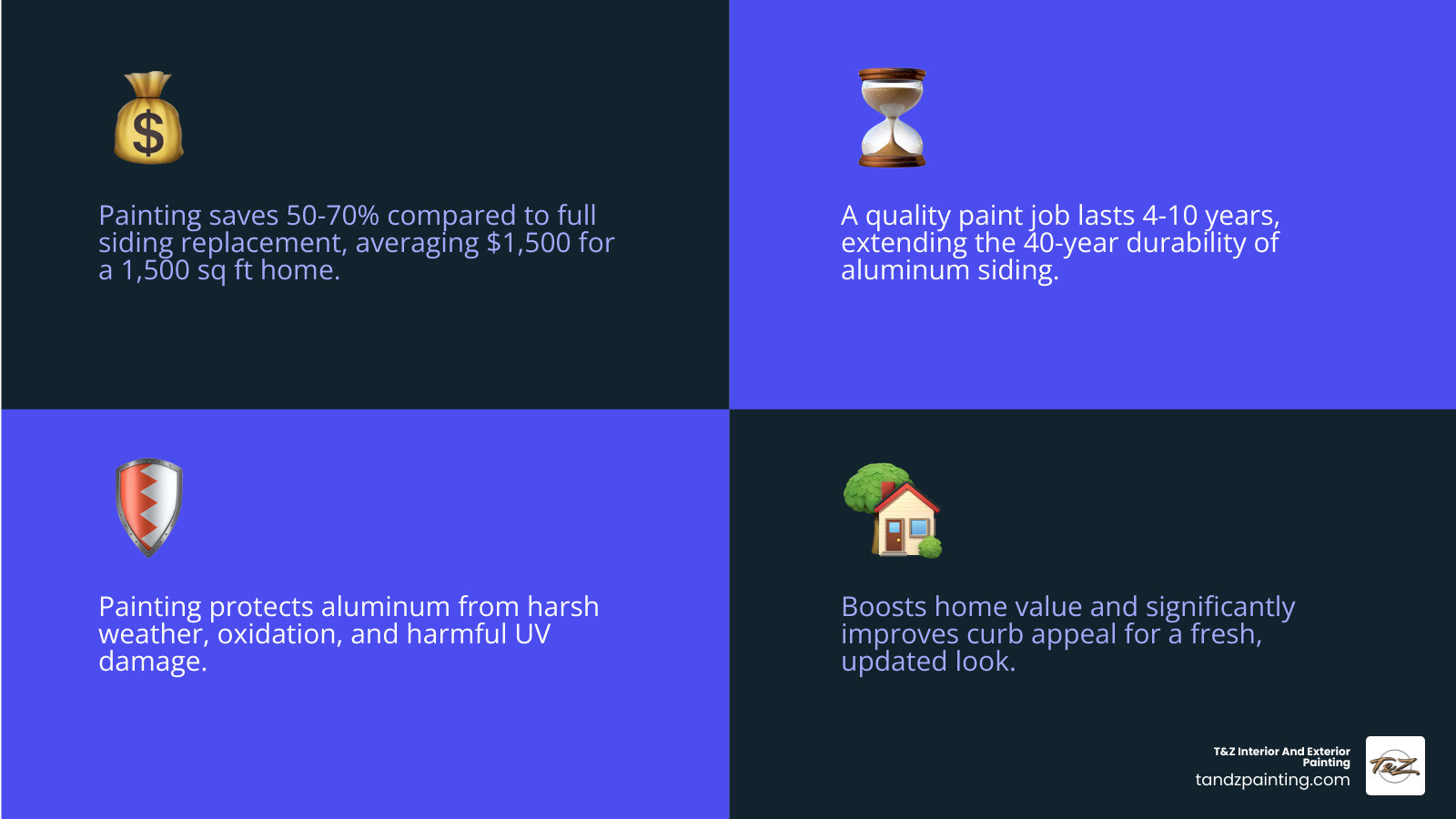
If your aluminum siding is faded, chalky, or outdated, it’s time for an update. The good news is that painting exterior aluminum siding is often the smartest, most economical way to refresh your home without breaking the bank.
Your siding takes a beating from sun, rain, and snow, and eventually, the signs of wear appear. If you run your hand across the siding and find a chalky residue, that’s oxidation—a clear sign the paint is breaking down. Faded color is another telltale sign your home needs attention. Perhaps it’s been decades since installation, and what was once vibrant now looks tired. Or maybe you’ve noticed minor dents from hail or an errant baseball. These are all perfect reasons to consider painting.
And if your home still sports that harvest gold or avocado green from the 1970s, you’re probably ready for a modern look. Painting gives you the freedom to update your home’s style without the massive expense of replacement.
That said, painting isn’t always the answer. If your siding has severe corrosion, major physical damage like large dents and holes, or structural issues, you’ll want to consider a professional assessment. In these cases, replacement might be the better long-term solution. But for most homes in Lombard, Elmhurst, and Wheaton with aluminum siding in decent structural shape, painting is the way to go.
Let’s talk numbers, because the cost difference is eye-opening:
| Feature | Painting Aluminum Siding | Full Siding Replacement |
|---|---|---|
| Average Cost | $1,000 – $3,000 (professional) | $10,345 – $19,253 (new); $11,311 – $21,050 (old replacement) |
| Cost per 100 sq ft | $5 – $10 | N/A (much higher for materials + labor) |
| Longevity | Paint lasts 4-10 years; Siding lasts up to 40 years | New siding lasts 20-50+ years depending on material |
| Benefits | Improved appearance, protection, increased home value | Major aesthetic overhaul, improved durability, higher ROI |
| Maintenance | Repaint every 4-10 years, annual cleaning | Low maintenance for new siding, but initial cost is high |
| Condition | Best for siding in relatively good structural condition | For severely damaged, corroded, or structurally unsound siding |
The math is straightforward. Most homeowners pay around $1,500 to paint 1,500 square feet of aluminum siding, compared to $10,000 to $21,000 for a full replacement. Painting exterior aluminum siding is a smart investment. You get an improved appearance, better protection from the elements, and increased home value, all while your durable aluminum siding continues to protect your home for decades. When your siding is in good structural condition, painting is simply the most cost-effective way to give your home the refresh it deserves.
Your Step-by-Step Guide to Painting Exterior Aluminum Siding
Ready to give your home a facelift? This guide will walk you through painting exterior aluminum siding for a durable, beautiful finish that will make your neighbors wonder if you installed new siding.
The secret to a paint job that lasts is all in the preparation. The time you invest upfront will pay dividends in how long your paint job holds up against harsh Chicago-area weather.
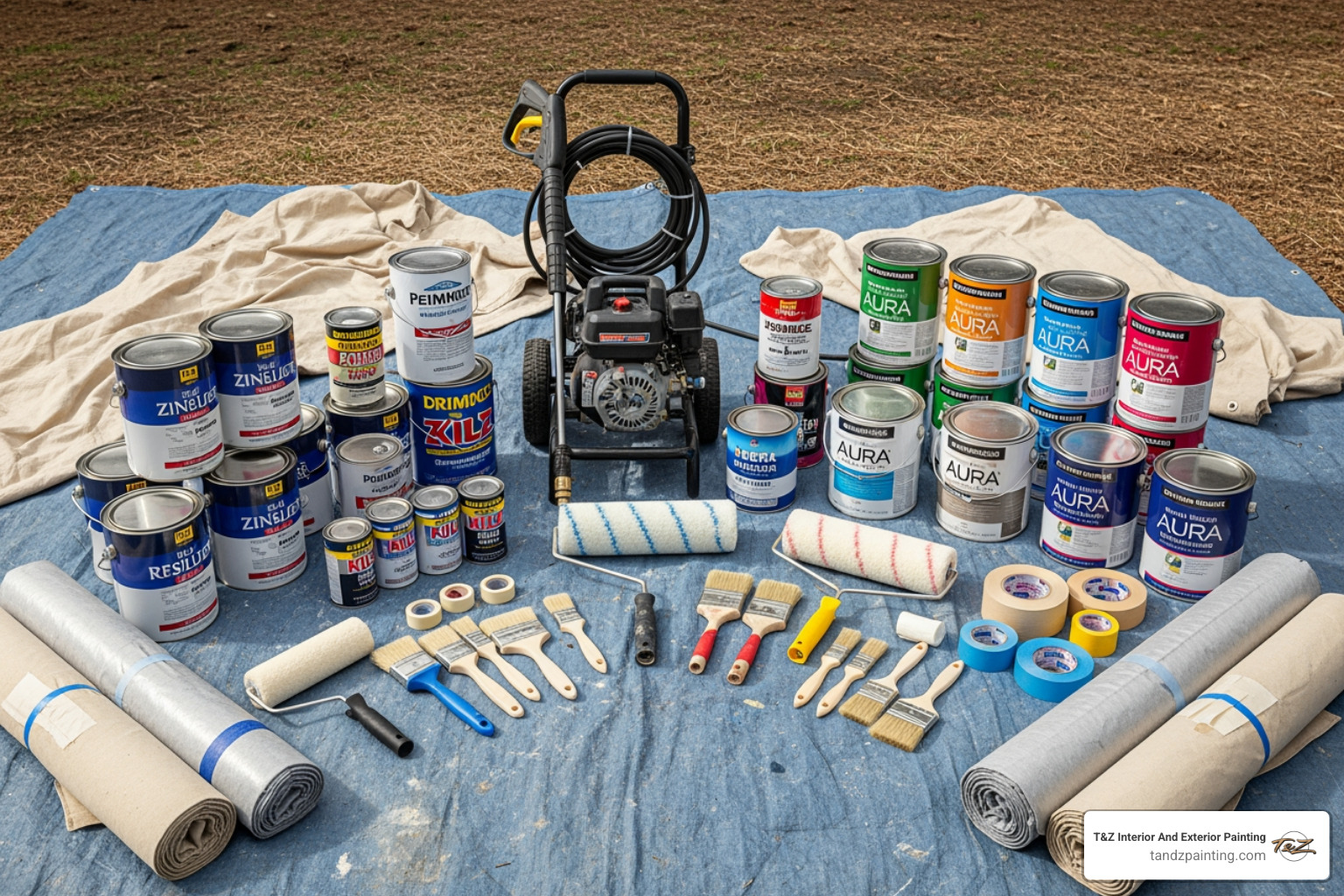
Step 1: Essential Preparation for Painting Exterior Aluminum Siding
Proper preparation is the foundation of a lasting paint job. Get it right, and your finish will look professional and last for years.
Start with a thorough inspection. Walk around your house looking for loose paint, dirt, mildew, and the powdery, chalky residue of oxidation. Check for dents or corrosion. Crucially, if your home was built before 1978, you must test for lead paint before disturbing any surfaces. If lead is present, stop and call a licensed lead abatement specialist for your family’s safety.
Now for the most critical step: cleaning. Paint needs an absolutely spotless surface to grip onto. For pressure washing, use a washer between 1,700 and 2,800 psi, but keep the actual pressure below 1,500 psi near the siding to avoid damage. Always aim the spray tip at a downward angle to prevent forcing water behind the panels.
Your cleaning solution matters. For mildew removal, a 10:1 ratio of water to bleach works well. For tougher jobs, mix one cup of chlorine bleach, one cup of TSP (Trisodium Phosphate), and one gallon of water. For lighter cleaning, a quarter cup of TSP per gallon of water is effective.
Stubborn dirt and chalky residue require scrubbing. Use an abrasive sponge or a scrub brush on an extension pole, working in sections from the bottom up. After scrubbing, rinse thoroughly until all cleaning solution is gone. Let the siding dry completely, which can take a full day or more.
Next, repair damage. Fill small holes with acrylic caulk and larger ones with a high-quality exterior filler like DAP Platinum Patch. Seal gaps around windows and doors with acrylic latex caulk. Scrape any peeling paint and sand the edges with 100-grit sandpaper for a smooth transition.
Light sanding with 400-grit sandpaper can smooth imperfections. If you’ve scraped down to bare metal, a light scuff helps the primer adhere.
Finally, prioritize safety precautions. Wear gloves, safety goggles, and a face mask. If using a ladder, ensure it’s sturdy and have a spotter. Personal Protective Equipment is essential.
Step 2: Choosing the Right Primer and Paint
Selecting the right products is key to a paint job that lasts. The best paint type for aluminum siding is 100% acrylic latex paint. It offers excellent adhesion, flexibility for temperature changes, and durability. As we tell our clients, cheap paint is an expensive mistake you’ll pay for in a few years when you have to redo the work.
Primer is necessary for any exposed bare aluminum or if the factory finish has degraded. A self-etching primer like Rust-Oleum Flat Aluminum Primer is designed to bond with bare metal and prevent oxidation. While you might skip priming if the existing paint is in good, non-chalking condition, we recommend it for the best adhesion.
For color selection, avoid extremely dark colors. They absorb more heat, causing the aluminum to expand more, which can lead to faster fading. Lighter shades perform better, especially in direct sunlight. If you need help, we offer color consultation services to find the perfect look for your home.
The recommended finish is satin or flat. High-gloss paints highlight imperfections, whereas a satin finish provides protection with a subtle, professional-looking sheen.
To calculate paint quantity, know that a gallon of quality exterior acrylic paint covers 250 to 400 square feet. Measure your siding’s total square footage, divide by the coverage rate, and add an extra gallon for touch-ups.
Step 3: The Application Process for Painting Exterior Aluminum Siding
With prep work done, it’s time to paint.

Your choice of application tools depends on your goals. Professionals prefer an airless sprayer for a smooth, factory-like finish and efficiency. For DIYers, a high-quality foam roller works well for large areas, while an angled brush is essential for cutting in around trim.
The right technique is crucial. Follow a top-down approach to prevent drips on freshly painted sections. Apply paint in the direction of the siding panels (horizontally) for a consistent look. If using a sprayer, back-brushing or back-rolling immediately after works the paint into the surface for better adhesion and longevity.
Before you start, cover windows, doors, fixtures, and shrubs with plastic sheeting and drop cloths to protect them from overspray.
For the number of coats, apply one coat of primer (if using) and let it dry per the manufacturer’s instructions (typically 4-5 hours). Then, apply two thin coats of paint. Two thin coats adhere better and last longer than one thick coat.
Drying time is critical. Wait 2-3 hours after the first coat, or until it’s completely dry and not tacky, before applying the second. Test an inconspicuous area first. Rushing this step can ruin your finish.
Best Practices for a Long-Lasting Finish
You’ve invested in painting exterior aluminum siding—now let’s make that investment last. With the right care, your freshly painted siding can look great for years.
Think of your newly painted siding like a car; a little regular maintenance goes a long way. Annual cleaning is your best friend. Once a year, give your siding a gentle wash with mild detergent and a soft brush or low-pressure hose. This simple routine removes dirt and grime that can break down the paint.
Keep an eye out for small problems. If you spot a chip or scratch, touch it up promptly. A little touch-up paint now can prevent moisture from getting underneath and causing larger issues.
Regular inspections are also smart. A quick walk around your house every few months lets you catch signs of wear or damage early, extending the life of your paint job.
With proper prep and quality materials, expect your paint job to last 4-10 years. The range depends on your local climate, sun exposure, and maintenance. Homes in harsh climates may need repainting closer to the 4-6 year mark, while those in milder conditions can stretch toward 10 years.
Based on this, plan to repaint your aluminum siding every 5-10 years to keep it looking fresh and protected. Look for signs like fading color, chalky residue, or wear and tear. For more on timing, see our guide on when is the best time to paint the exterior of your home.
Weather conditions are critical for success. The sweet spot for painting exterior aluminum siding is when temperatures are between 65 and 75 degrees Fahrenheit. Avoid painting if the temperature will drop below 50°F within 24 hours, as cold interferes with curing.
Low to moderate humidity is ideal. High humidity slows drying time and hurts adhesion, while very low humidity on a hot, windy day can make paint dry too fast.
Pick a calm day with little wind. Strong winds cause uneven drying and can blow spray paint onto cars and neighboring property.
Finally, avoid intense sunlight. Painting in direct sun can cause the paint to “flash dry,” leading to bubbles and poor adhesion. Work on shaded sides of the house or wait for overcast days for a smooth, durable finish.
Frequently Asked Questions about Painting Aluminum Siding
We get these questions all the time from homeowners in Lombard, Elmhurst, and beyond who are considering painting exterior aluminum siding. Let’s explore the most common concerns.
What happens if you paint aluminum siding without a primer?
Skipping primer is one of the biggest mistakes you can make. When you apply paint directly to bare or poorly prepped aluminum, it has nothing to grab onto. Aluminum is smooth and non-porous, so the paint just sits on top instead of bonding.
Within months, you’ll see the consequences. The paint will begin chipping and peeling, especially in areas exposed to weather. You might notice cracking as the paint film breaks down without a primer to anchor it. What should have been a 5-10 year paint job might not last a single season.
You’ll have wasted your time, effort, and money, as you’ll need to scrape off the failed paint and start over. Think of primer as the handshake between your siding and the paint; without it, they can’t form a lasting bond.
Is it better to spray or roll the paint on aluminum siding?
The best method depends on your priorities: finish quality versus DIY-friendliness.
For a gorgeous, smooth, factory-like finish, spraying is the winner. An airless sprayer provides a uniform coat with no brush or roller marks. It’s also much faster, and a sprayer gets into the grooves and textures of siding more effectively. This is why most professionals, including our team at T&Z Painting, prefer spraying for painting exterior aluminum siding.
For the DIY enthusiast, rolling has advantages. You have more control with less risk of overspray, which means less time masking windows, doors, and landscaping. Rolling also tends to apply a slightly thicker paint film, which can add durability.
The bottom line: for the absolute best finish, spraying wins. But if you’re comfortable with a roller and take your time, you can still get excellent results, especially when combining it with careful brushwork.
How do you deal with the chalky powder on old aluminum siding?
That white, powdery residue on older aluminum siding is oxidation. It’s the paint itself breaking down from years of sun and weather exposure. It’s a big deal because if you paint over chalk, your new paint will stick to the powder, not the siding. The new paint will soon start peeling off in sheets.
The solution requires elbow grease. You must clean the siding thoroughly with Trisodium Phosphate (TSP) or a strong substitute mixed with water (about one cup of TSP per gallon for heavy chalking). Apply it with a scrub brush, working in manageable sections to remove every bit of powder.
After scrubbing, rinse extensively with a pressure washer or garden hose until the water runs clear. This might take longer than you expect, but it’s essential.
Once the siding is completely dry (which can take a day or more), run your hand over it. If you don’t pick up any chalk, you’re ready to prime and paint. If you still see powder, you must clean it again. A clean surface is the foundation of a paint job that lasts.
Conclusion: A Fresh Look That Lasts
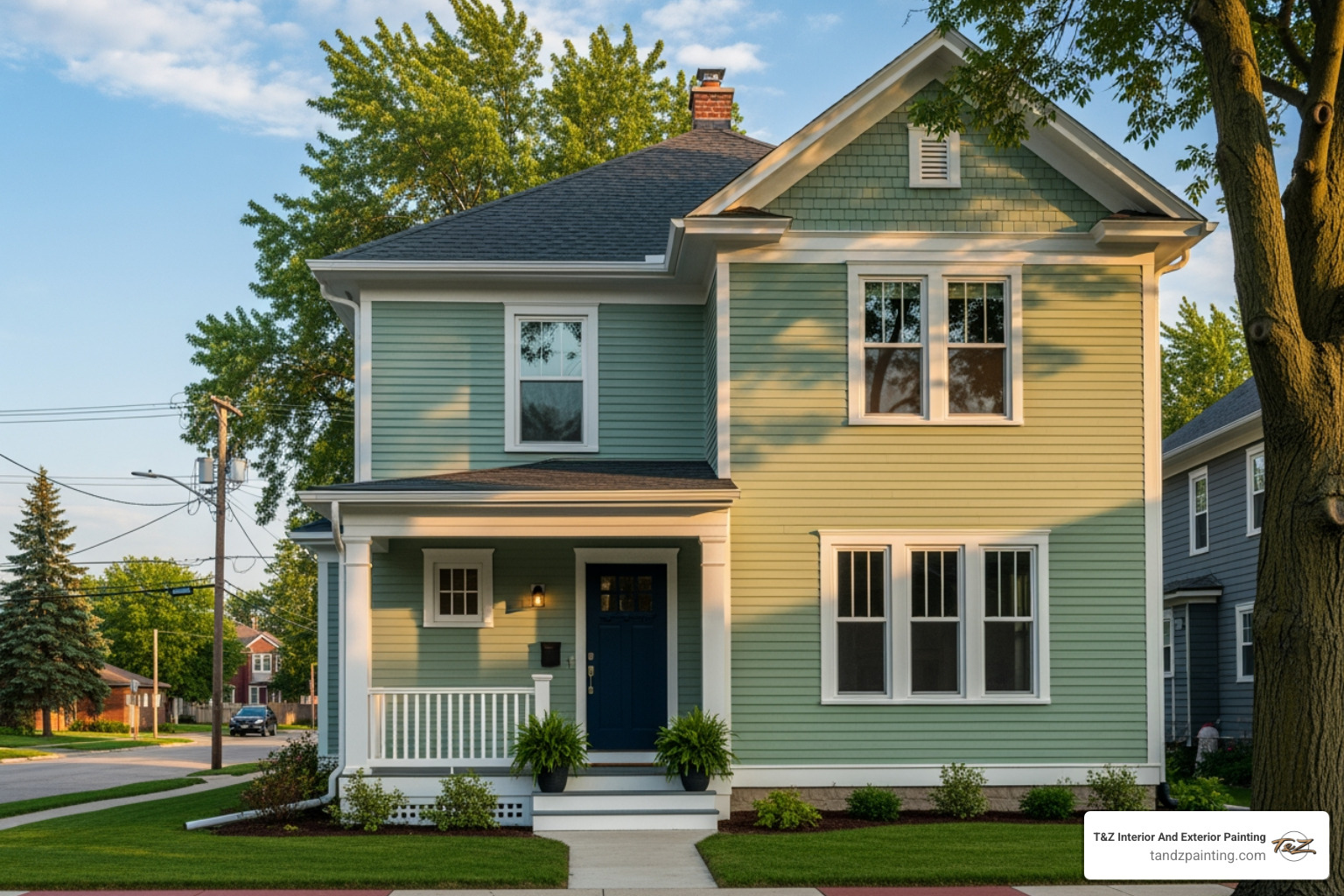
A freshly painted home is incredibly satisfying. Painting exterior aluminum siding is more than a maintenance task; it’s an investment in your home’s value and your pride of place.
Throughout this guide, we’ve walked through the keys to a successful project. Preparation is absolutely crucial. Taking the time to properly clean, repair, and prime your siding is what separates a short-term fix from a finish that endures for a decade.
Equally important is using quality materials. High-quality 100% acrylic latex paint and a self-etching primer will save you from having to redo the entire project in a couple of years.
When you consider that painting is a cost-effective upgrade compared to siding replacement—we’re talking $1,000-$3,000 versus $10,000-$21,000—the value becomes crystal clear. For homeowners in Elmhurst, Lombard, Wheaton, and throughout the Chicago suburbs, painting is an incredibly smart choice.
Of course, not everyone has the time, tools, or desire to tackle a project of this scale. If spending your weekend on a ladder doesn’t sound like fun, the best investment you can make is in professional expertise.
At T&Z Interior And Exterior Painting, we’ve helped countless homeowners transform their homes with beautiful, lasting finishes. Our experienced teams know aluminum siding inside and out, and we use top-brand materials to ensure results that make you smile every time you pull into your driveway.
For a flawless, professional finish without the hassle, explore our Exterior Painting Services. We’d love to help bring your vision to life and give your home the fresh look it deserves.