
Transform Your Home Interior with Speed and Precision
When you envision a freshly painted room, you likely picture crisp lines, flawless walls, and a vibrant, uniform color. While traditional brushes and rollers have been the go-to for decades, spray painting house interior walls offers a modern alternative that delivers a faster, smoother, and more durable finish. It’s the secret behind the glass-like surfaces you see in design magazines and high-end homes. This guide will explain the process, empowering you to achieve professional-grade results.
Whether you live in Lombard, Wheaton, Elmhurst, or downtown Chicago, updating your living room, bedrooms, or even your basement with a sleek sprayed finish can transform the entire feel of your home. Instead of simply changing color, you are upgrading the texture and overall appearance of every painted surface. When done correctly, sprayed walls, ceilings, trim, and doors create a cohesive, upscale look that pairs perfectly with modern furnishings, classic decor, and everything in between.
Quick Answer: Essential Steps for Interior Spray Painting
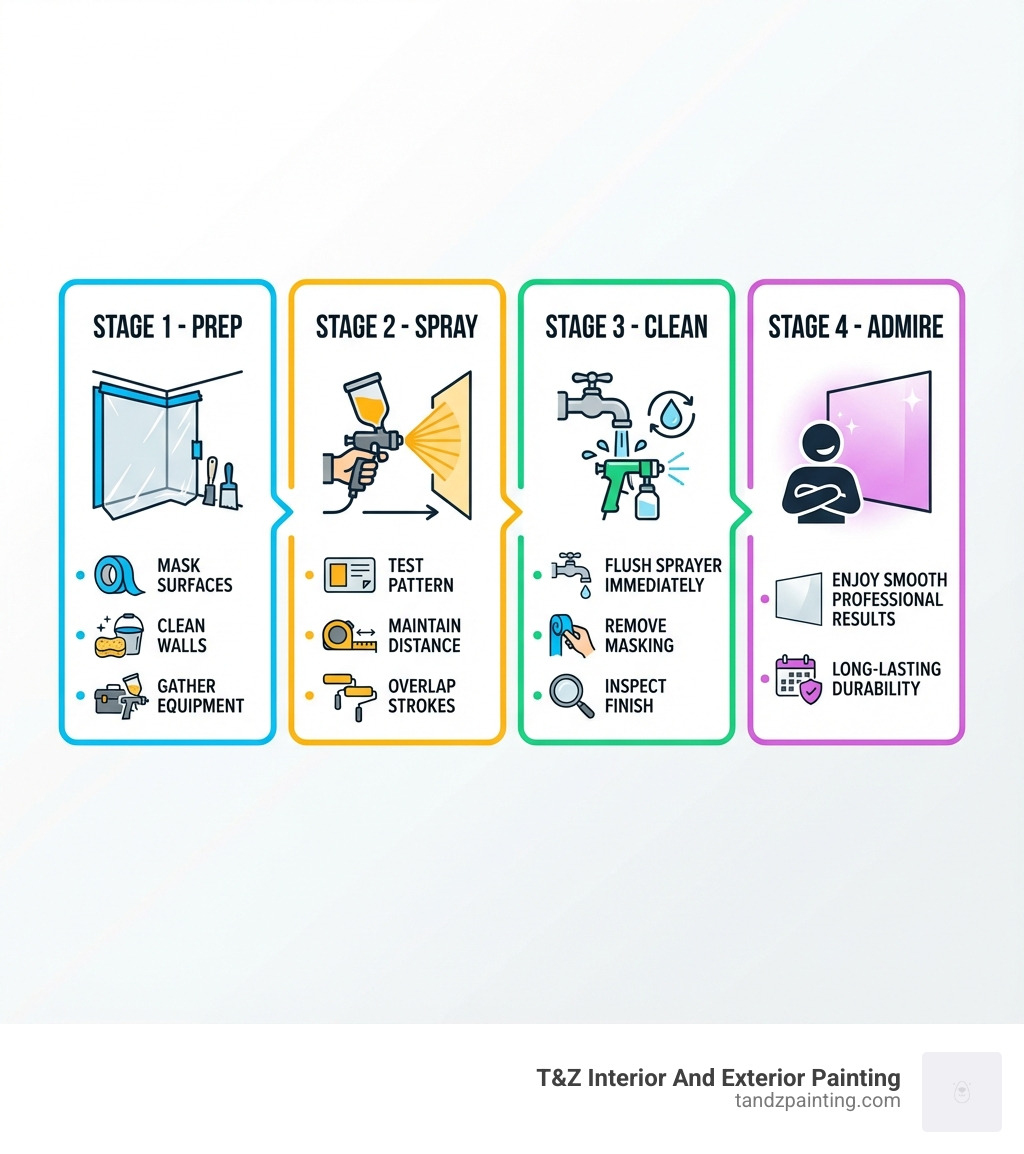
- Prep the Space: This is the most critical phase. You must clear the room of all furniture, cover floors, and carefully mask off any areas you don’t want painted, like trim, windows, and outlets. Walls should be patched, sanded, and cleaned for a perfect canvas.
- Choose Your Sprayer: The tool makes the difference. A High Volume, Low Pressure (HVLP) sprayer is ideal for detailed work like cabinets and trim, while a powerful Airless sprayer is the workhorse for large walls and ceilings.
- Master the Technique: Proper form is key to avoiding drips and unevenness. Maintain a consistent 10-12 inch distance from the wall, keep the sprayer perpendicular to the surface, and overlap each pass by 50% for seamless coverage.
- Safety First: Atomized paint particles can be harmful if inhaled. Always wear a high-quality respirator, eye protection, and coveralls. Ensure the space is well-ventilated with open windows and fans to direct airflow outside.
- Clean Thoroughly: Don’t delay cleanup. A paint sprayer must be flushed and cleaned immediately after use according to the manufacturer’s instructions to prevent clogs and ensure it’s ready for your next project.
Why spray instead of roll? The advantages are significant and go far beyond just speed. While an airless sprayer can apply two coats to an average living room in under an hour (after prep), the real magic is in the quality of the finish. Spraying atomizes the paint into a fine mist, which lands on the surface to create a continuous, even film. This process eliminates common frustrations like:
- Brush Marks: The tell-tale lines left by even the best brushes.
- Roller Stipple: The orange-peel texture left behind by rollers.
- Lap Lines: The visible seams where wet and semi-dry paint edges overlap.
The result is a thicker, more uniform coat that not only looks better but also offers improved durability. This method excels on textured surfaces like popcorn ceilings or detailed trim, where a sprayer can effortlessly reach every nook and cranny that a brush or roller would miss. In high-traffic family rooms, hallways, or rental properties, that added durability can make everyday maintenance and occasional touch-ups simpler and more predictable.
However, there’s a catch: the power of a sprayer comes with a responsibility for meticulous preparation. The fine paint mist, often called “overspray,” can travel and settle on every unprotected surface. This means thorough masking is absolutely essential—a step that cannot be rushed or skipped. You’ll also need to manage ventilation and wear personal protective equipment (PPE), as atomized paint poses respiratory risks indoors.
Another factor to consider is planning your project from start to finish. Think through which rooms you want to tackle first, where you will stage furniture, and how you will maintain access to key areas of the home while paint is drying. Many homeowners in areas like Downers Grove, La Grange, and Schaumburg choose to complete spray work one level at a time, using unused rooms or garages for temporary storage.
This guide walks you through the complete process, from choosing between HVLP and airless sprayers to mastering the perpendicular motion that prevents drips and ensures even coverage. You’ll learn the professional techniques for masking, spraying, and cleanup that transform a challenging task into a manageable weekend project.
As T&Z Interior And Exterior Painting, with years of experience in residential and commercial painting services, we’ve guided countless homeowners through successful spray painting house interior projects, helping them achieve professional results through proper preparation and technique. Whether you’re tackling a single accent wall or refreshing your entire home, understanding the fundamentals makes all the difference. And if at any point the project starts to feel overwhelming, our teams across Lombard, Wheaton, Lemont, Plainfield, and the greater Chicago area are ready to step in and deliver a polished, magazine-worthy finish.
Key spray painting house interior vocabulary:
Why Spray Paint? The Benefits and Essential Tools
When we talk about spray painting house interior projects, we’re discussing a method that significantly outpaces traditional brush and roller applications in both speed and quality. The efficiency is undeniable. For a professional team, a standard-sized room can be sprayed in as little as 10-15 minutes per coat once the prep work is complete. This incredible speed is a game-changer for homeowners, minimizing disruption to your daily life. For our clients across Illinois—from Lombard and Wheaton to Chicago and Schaumburg—this means we can transform multiple rooms or even an entire home interior in a fraction of the time it would take with conventional methods.
Beyond speed, the finish quality is where spray painting truly shines. A sprayer atomizes paint into fine particles, creating a flawless, monolithic layer of color on the wall. This process yields a much finer finish, completely free from the lumps, fuzz, brushstrokes, or roller marks that can detract from an otherwise beautiful space. The result is a smooth, factory-like appearance that is difficult to replicate. This method ensures perfectly even coverage, especially on challenging textured surfaces like stucco, brick, or popcorn ceilings, where brushes and rollers often struggle to penetrate every crevice. Furthermore, a sprayer lays down a thicker, more uniform coat of paint, which contributes to better durability and a richer, more consistent color depth. While it may seem counterintuitive, our professional experience shows that for large interior projects, the efficiency of a sprayer can sometimes lead to using less paint overall compared to rolling, as a single, well-applied coat can provide coverage that might otherwise require two or three rolled coats.
The advantages are not limited to walls and ceilings. When you are refreshing interior doors, window trim, baseboards, and built-in shelving, a sprayer can provide a beautifully consistent sheen across all surfaces. This unified finish is especially noticeable in open-concept spaces where you can see multiple rooms and surfaces at once. Many homeowners in communities like Carol Stream, Woodridge, and Glenview use spray applications to create a continuous, modern look from entryway to kitchen to living room.
Choosing Your Weapon: HVLP vs. Airless Sprayers
Selecting the right paint sprayer is crucial for a successful spray painting house interior project. The two main types for home use are High Volume Low Pressure (HVLP) and Airless sprayers. Each has distinct advantages depending on the job.
| Feature | HVLP Sprayers (e.g., Wagner FLEXiO series) | HEA/Airless Sprayers (e.g., Wagner Control Pro series) |
|---|---|---|
| Best For | Fine finishing, detailed work, small to medium projects. Ideal for cabinets, doors, trim, and furniture. | Large surface areas and high-volume projects. Perfect for interior walls, ceilings, and exterior siding. |
| Pros | – High precision and control – Less overspray, minimizing waste and masking – Produces a very smooth, fine finish – Easier for beginners to manage |
– Extremely fast and efficient – Can handle thicker, unthinned paints – Long hoses allow for great mobility – Excellent for covering large areas quickly |
| Cons | – Slower application speed than airless – Smaller paint container requires frequent refills – May require thinning the paint for optimal flow |
– Produces significant overspray, requiring extensive masking – Higher learning curve to avoid runs and drips – More powerful, can be overkill for small jobs |
If you are new to spray equipment, consider practicing with your chosen tool on scrap drywall or cardboard before starting in a finished room. This allows you to get comfortable with the weight of the gun, trigger control, and fan pattern without the pressure of working over finished flooring and furnishings. Professional crews at T&Z go through this same practice process when training new team members, because muscle memory and consistency matter as much as the equipment itself.
Selecting the Right Paint and Gathering Your Tools
Not all paints are created equal, especially for spraying. Always check the paint can or the manufacturer’s technical data sheet (TDS) online. It will specify if the paint is suitable for spraying and may recommend a particular sprayer tip size. For general guidance on paint types and finishes, the American Coatings Association is an excellent resource. High-quality interior latex paint is typically the best choice for walls and ceilings.
You will also want to think through sheen selection before you begin. Matte and eggshell finishes are popular for most living areas because they help disguise minor surface imperfections, while satin or semi-gloss finishes are often chosen for trim, doors, and kitchen or bathroom walls where washability is important. When spraying, different sheens can highlight inconsistencies in preparation, so investing a bit more time in sanding and patching before spraying glossier finishes usually pays off.
Before you begin, gather all your essential tools and materials. A well-organized workspace is a safe and efficient one.
- Masking Supplies: High-quality painter’s tape (like 3M Blue), masking paper for floors and trim, and large plastic sheeting to cover furniture and create barriers.
- Surface Prep Tools: Spackling compound for holes, a putty knife, fine-grit sandpaper, sanding sponges for corners, and a shop vacuum for dust removal.
- Personal Protective Equipment (PPE): This is non-negotiable. You will need a NIOSH-approved respirator or mask rated for paint fumes, safety goggles, gloves, and a disposable coverall or old clothing.
- Cleaning Supplies: Buckets, rags, a stiff brush for cleaning the sprayer, and any required cleaning solutions (usually water for latex paint).
- Sprayer Accessories: Extra spray tips, filters, and extension wands for ceilings or tall stairwells, along with extension cords and hose supports to keep equipment safely organized.
- Lighting and Inspection Tools: Portable work lights and a small handheld inspection light help you spot thin areas, runs, or missed sections while the paint is still wet and easy to correct.
Taking the time to assemble these items before you start will make your spray painting house interior project smoother and more predictable. It also mirrors the approach our crews use on professional jobs throughout Lemont, Lockport, Wilmette, and the surrounding suburbs: thorough preparation, the right tools, and careful technique working together to deliver a clean, refined finish.