
Why Hiring a Professional Spray Painter Makes All the Difference for Furniture and Almirah Refinishing
Hiring a professional spray painter for your furniture or almirah is one of the most effective ways to transform a tired, worn piece into something that looks factory-fresh — or even better.
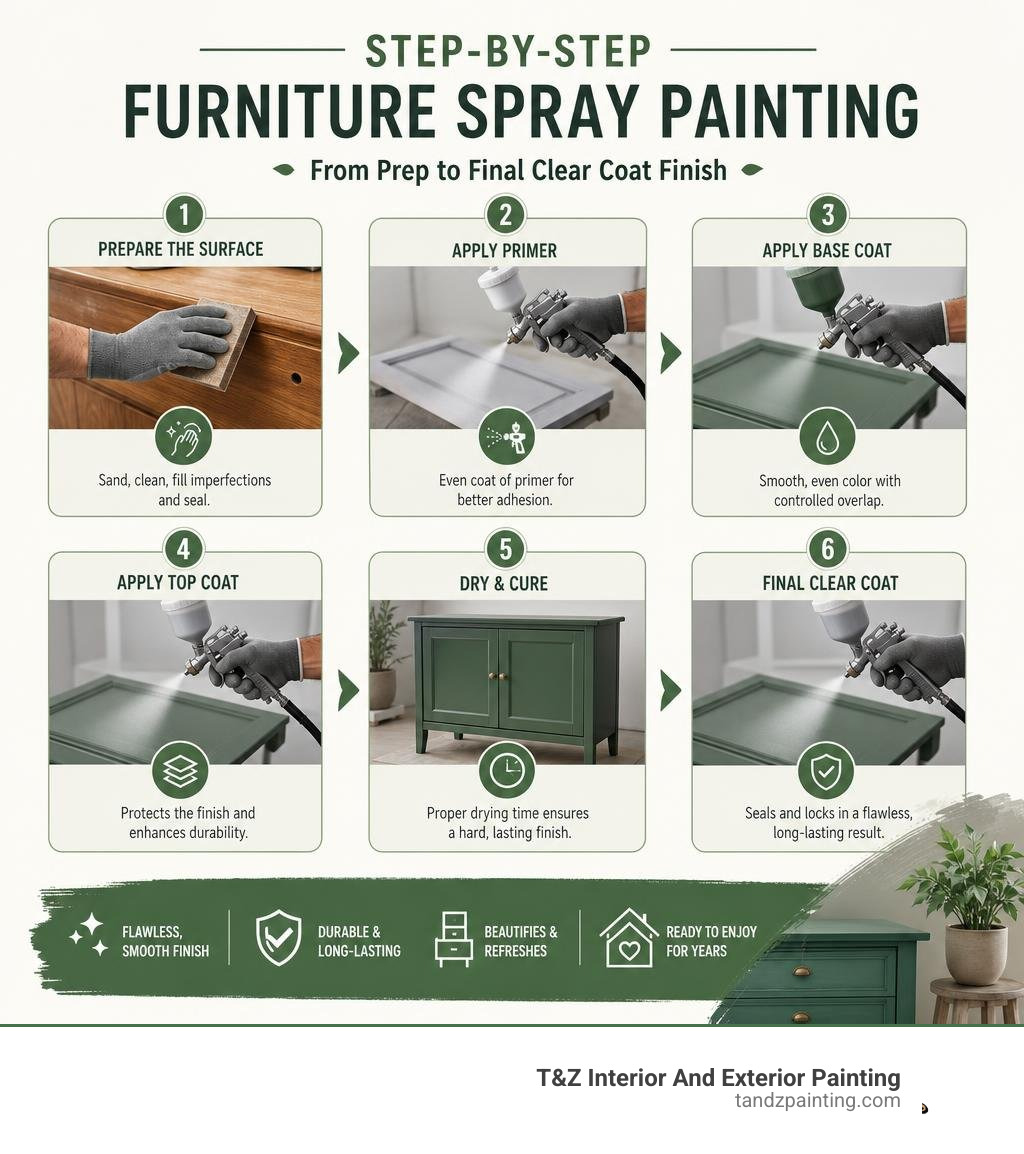
Here’s what a professional spray painter does for furniture and almirahs:
- Prepares the surface — sanding, cleaning, filling imperfections, and sealing wood grain
- Selects the right equipment — HVLP, airless, or pneumatic spray systems matched to the material
- Applies even, smooth coats — primer, base coat, and topcoat with consistent overlap and controlled pressure
- Delivers a flawless finish — no brush marks, no roller texture, just a smooth, durable result
- Cleans up properly — leaving your space neat and your furniture ready to use
The difference between a DIY spray job and a professional one is visible from across the room. Professionals control atomization, fluid delivery, and spray distance in ways that eliminate common defects like orange peel, runs, or uneven color.
Whether you have a vintage almirah that needs careful restoration or a set of modern wardrobes that need a fresh, bespoke finish, the right spray painting professional brings both the skill and the equipment to do it properly.
I’m Tomasz Niemotko, owner of T&Z Interior And Exterior Painting, and over more than 15 years of delivering professional spray painter services across Lombard and the surrounding suburbs, my team has refined almirahs, cabinetry, and furniture for hundreds of homeowners. In this guide, I’ll walk you through everything you need to know — from spray gun technologies to finish quality and safety — so you can make a confident, informed decision.
Professional spray painter basics:
The Role of a Professional Spray Painter in Furniture and Almirah Refinishing
Refinishing high-value furniture or a family heirloom almirah is not as simple as pointing a spray can and pressing the nozzle. It is a highly technical trade that requires a deep understanding of materials, chemical compatibility, and fluid mechanics. When we approach a piece of furniture, we view it as a multi-stage engineering project.
The journey to a glass-smooth finish begins long before any paint enters a spray gun. Surface preparation is the foundation of our work. Without meticulous cleaning, degreasing, and sanding, even the most expensive coatings will fail to adhere. Wood grain sealing is another critical step. Open-grain woods like oak or mahogany require specialized grain fillers and sealers to prevent the natural texture from telegraphing through the final paint film.
By applying these professional methods, we achieve high-end aesthetics that emulate the factory finishes of luxury furniture brands. For homeowners throughout the Chicago suburbs—from the historic homes in Wheaton to the modern estates in Downers Grove—this level of care ensures that refinished furniture elevates the entire room. To understand how these steps fit into a broader project, you can read our comprehensive Spray Painting Services Guide.
Why Hire a Professional Spray Painter for Bespoke Cabinetry
Bespoke cabinetry and built-in wardrobes demand a level of precision that traditional brushes or rollers simply cannot deliver. When you look at custom-built woodwork, it is the fine details—the crisp bevels, the intricate moldings, and the tight corners—that give it character. Standard painting methods often leave thick pools of paint in these crevices, muddying the sharp lines of the craftsmanship.
A professional spray painter knows how to calibrate their equipment to apply micro-thin, uniform layers. This preserves every architectural detail while building up a highly durable protective barrier. If you are considering updating your kitchen or built-in storage units, our specialized guide on Professional Cabinet Spraying details how we achieve these seamless, durable factory finishes on cabinetry.
Restoring Antique Almirahs and Wardrobes
Antique almirahs, wardrobes, and vintage cabinets carry historical and sentimental value, but they also present unique restoration challenges. Over decades, wood expands, contracts, and absorbs oils, waxes, and old varnishes. Simply painting over these aged surfaces will inevitably lead to adhesion failure, blistering, and peeling.
Restoring these pieces requires a deep understanding of heritage coatings. We must carefully strip away failing topcoats, repair structural imperfections with specialized wood epoxies, and apply stain-blocking primers to prevent old wood tannins from bleeding through.
This level of craftsmanship mirrors the standards found in high-end industrial refinishing. For instance, paint specialists like Tony O’Mahony , who has spent decades preparing and finishing VIP aircraft and luxury automotive surfaces, understand that flawless adhesion is entirely dependent on the quality of the preparation and the chemistry of the primers used. Whether we are working on a luxury transport vehicle or a cherished family almirah in Lemont, the principles of surface prep remain identical.
Advanced Spray Gun Technologies: HVLP, Airless, and Pneumatic Systems
To achieve a flawless finish on different surfaces, a professional spray painter must match the project with the appropriate spraying technology. The three primary systems used in the industry are High Volume Low Pressure (HVLP), Airless, and Pneumatic (conventional air) systems. Each operates on different principles of fluid delivery and atomization.
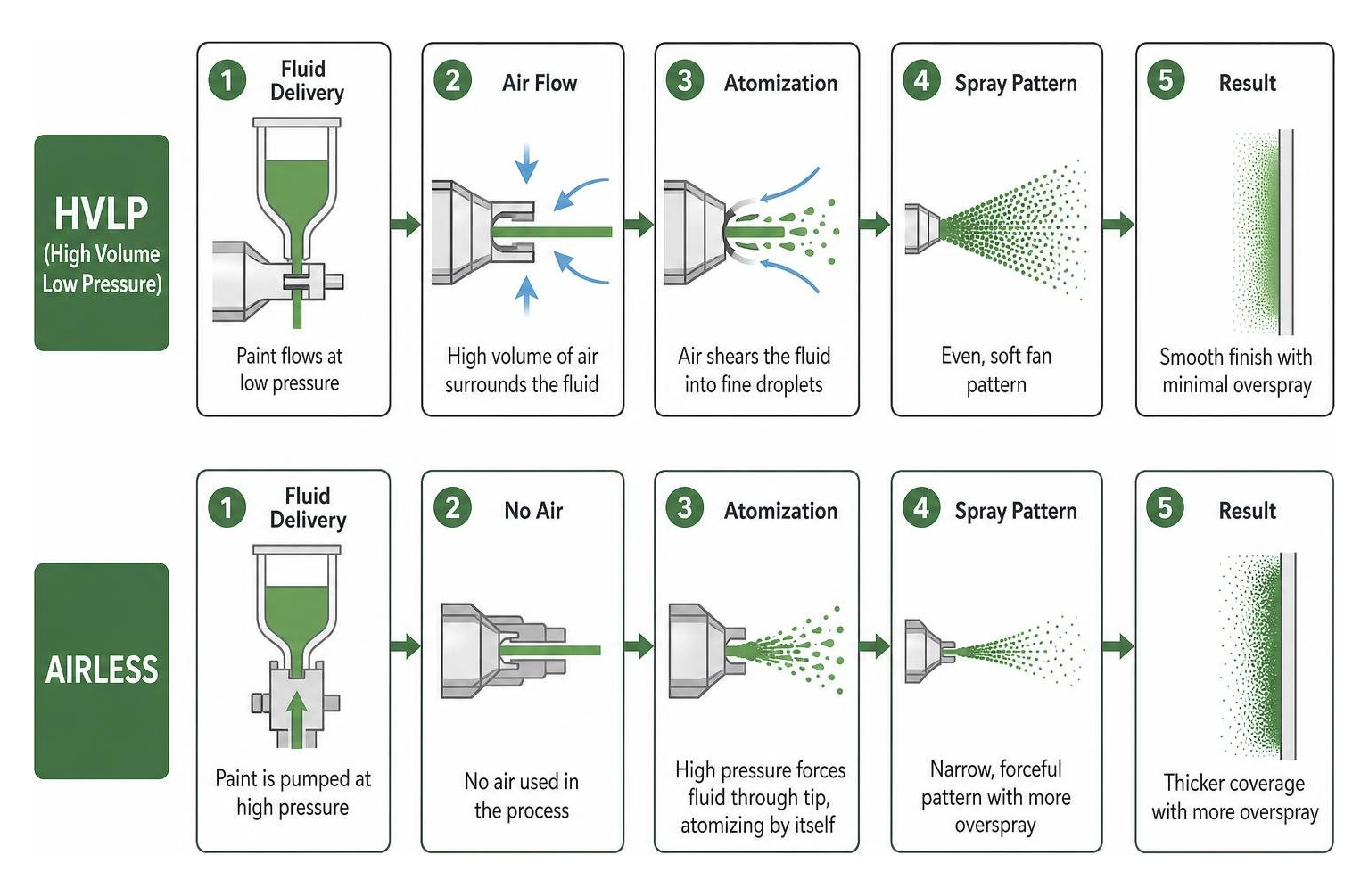
To help you understand how these systems differ, we have outlined their performance characteristics below:
| System Type | Operating Pressure | Atomization Method | Best Use Case | Finish Quality |
|---|---|---|---|---|
| HVLP (High Volume Low Pressure) | Low (typically 1–10 PSI at the air cap) | High volume of low-pressure air surrounds and atomizes the fluid stream. | Fine furniture, cabinetry, detailed trim, and intricate wood carvings. | Exceptionally smooth, mirror-like finish with minimal overspray. |
| Airless | High (typically 1,500–3,000 PSI) | Fluid is forced through a tiny orifice at extreme pressure, shear-atomizing the paint. | Large exterior walls, fences, broad interior surfaces, and metal siding. | Uniform and thick coverage; excellent for speed but less ideal for ultra-fine details. |
| Pneumatic (Conventional) | High (typically 30–60 PSI) | High-pressure compressed air mixes directly with the paint stream. | Automotive refinishing, industrial metal parts, and highly specialized clear coats. | Excellent atomization, but produces significant overspray and lower transfer efficiency. |
How a Professional Spray Painter Selects the Right Spray System
Selecting the right system is a balancing act between the scale of the project and the viscosity of the paint or lacquer. For example, when refinishing kitchen cabinets or detailed furniture, we almost always opt for HVLP systems because they allow for incredible control and produce very little overspray, ensuring the paint lands precisely where it is needed.
Conversely, large-scale architectural projects—such as painting home exteriors in Carol Stream—require the raw power and delivery speed of an airless system. If you want to see how we select and apply these systems to transform high-traffic areas of the home, explore our insights on Kitchen Spray Painters: The Secret to a Stunning Kitchen Makeover.
Digital vs. Traditional Spray Guns
The painting industry has seen remarkable technological advancements, particularly with the introduction of digital spray guns. Traditional spray guns rely entirely on manual, mechanical air adjusters and external analog gauges. While highly reliable in experienced hands, they require constant test sprays to verify that the air pressure hasn’t drifted.
Digital spray guns, such as the Anest Iwata WS-400 Series 2 Digital, feature integrated digital readouts built directly into the gun handle. This allows the painter to monitor air pressure in real-time with absolute precision. Even a minor pressure drop of 1 or 2 PSI can alter the atomization pattern, leading to subtle color shifts or texture variations.
This level of precision is crucial when applying modern waterborne basecoats or high-solid clear coats. It is the same standard of precision demanded by elite automotive refinishers like Freddie Blunden , who applies primers, pearlescent basecoats, and clear lacquers to high-performance supercars. In both luxury automotive paint booths and high-end residential furniture refinishing, digital control ensures absolute consistency from the first pass to the last.
Key Factors in Achieving a Flawless Finish: Transfer Efficiency and Precision
When evaluating the work of a professional spray painter, two metrics stand out: transfer efficiency and precision. Transfer efficiency refers to the percentage of paint leaving the spray gun that actually adheres to the target surface rather than being lost as overspray to the surrounding air.
High transfer efficiency is not just about keeping the workspace clean; it directly impacts material savings and environmental safety. HVLP and modern High-Efficiency Premium (HEP) spray guns routinely achieve transfer efficiencies of 65% to 85%, whereas older conventional pneumatic guns often hovered around 35%. By maximizing transfer efficiency, we ensure that premium, low-VOC coatings are utilized effectively on your almirah or cabinets, reducing waste and protecting the air quality in your home.
High-End vs. Budget-Friendly Equipment
In the professional refinishing market, there is a vast divide between high-end spray guns (such as those manufactured by Anest Iwata and Sagola) and budget-friendly “no-name” alternatives. While a budget gun can apply paint, it often struggles with consistent atomization.
High-end guns are engineered with incredibly precise fluid nozzles and air caps. This level of engineering ensures that every paint droplet is atomized to the exact same size, preventing common defects like “mottling” (uneven metallic distribution) or “orange peel” (a bumpy, textured finish). Furthermore, premium guns are built from high-grade forged aluminum and stainless steel, allowing them to withstand daily cleaning solvents and maintain their calibration over years of constant use.
Sourcing and Evaluating Professional Equipment
To maintain our high standards of craftsmanship, we source our equipment through specialized professional distributor networks. We evaluate spray guns based on their performance with modern, eco-friendly waterborne coatings and high-durability polyurethanes.
This rigorous evaluation process is shared by leading refinishers worldwide. Experienced professionals like Aaron Archer , who works with ultra-luxury automotive brands, and Alex Jackson , who specializes in custom show-quality finishes, rely on factory-approved, high-performance equipment to guarantee mirror-like results. Similarly, industrial spray painters like Bradley Cooper , who handles heavy-duty coatings for marine and transit systems, know that equipment reliability is the key to a durable, protective finish. We bring this exact same professional-grade equipment and mindset to every residential furniture and almirah project we undertake.
Essential Equipment Setup, Maintenance, and Safety Protocols
Achieving a flawless finish on an almirah or wardrobe requires a highly controlled environment. The best spray gun in the world will produce a poor finish if the air supply is contaminated with moisture, oil, or dust.
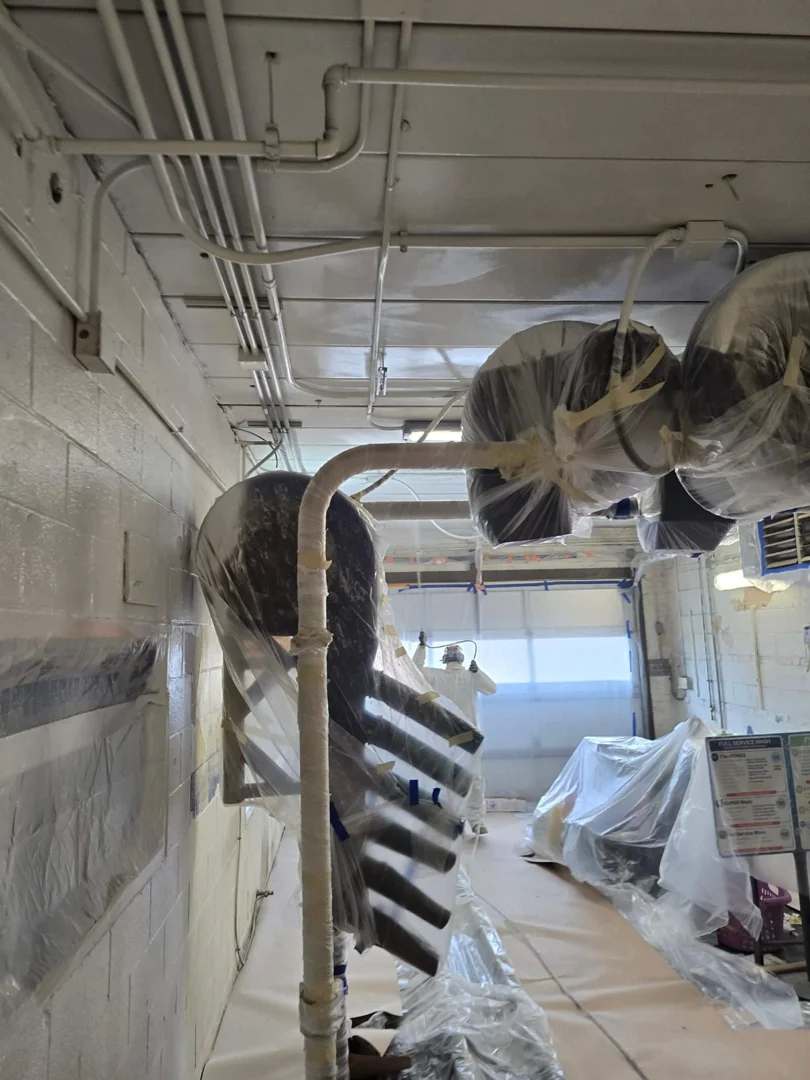
A professional setup requires several essential components:
- Multi-Stage Air Filtration: Removes 99.99% of moisture, oil, and debris particles down to 0.01 microns.
- Desiccant Dryers: Extracts water vapor from the compressed air line to prevent paint bubbling or blushing.
- Anti-Static Air Hoses: Prevents static electricity from building up on the spray gun, which can attract airborne dust particles directly to the wet paint.
Cleaning and Maintenance Best Practices
The performance of professional spray equipment is entirely dependent on meticulous maintenance. After every spray session, our team performs a rigorous teardown and cleaning process. This involves flushing the fluid passages with clean solvents, removing the needle and air cap, and cleaning them with specialized non-abrasive brushes.
Neglecting this maintenance leads to dried paint buildup inside the nozzle, resulting in distorted spray patterns, spitting, and inconsistent atomization. If you are interested in how local experts maintain their equipment to keep it running at peak performance, you can read more about Sprayer Maintenance More: Discover Local Paint Spraying Experts.
Safety and Environmental Considerations
Spray painting involves chemical solvents and atomized paint particles, making safety and environmental protection our top priorities. When we spray paint on-site—whether in La Grange or Lockport—we take extensive measures to protect your home and our team:
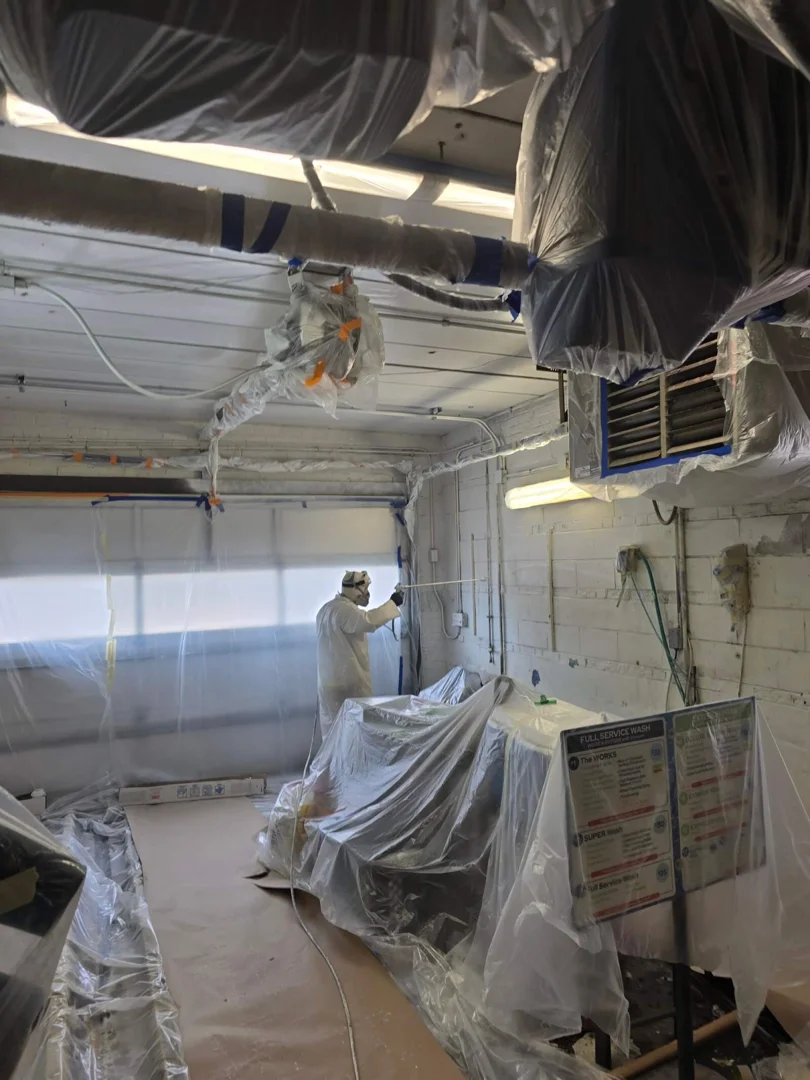
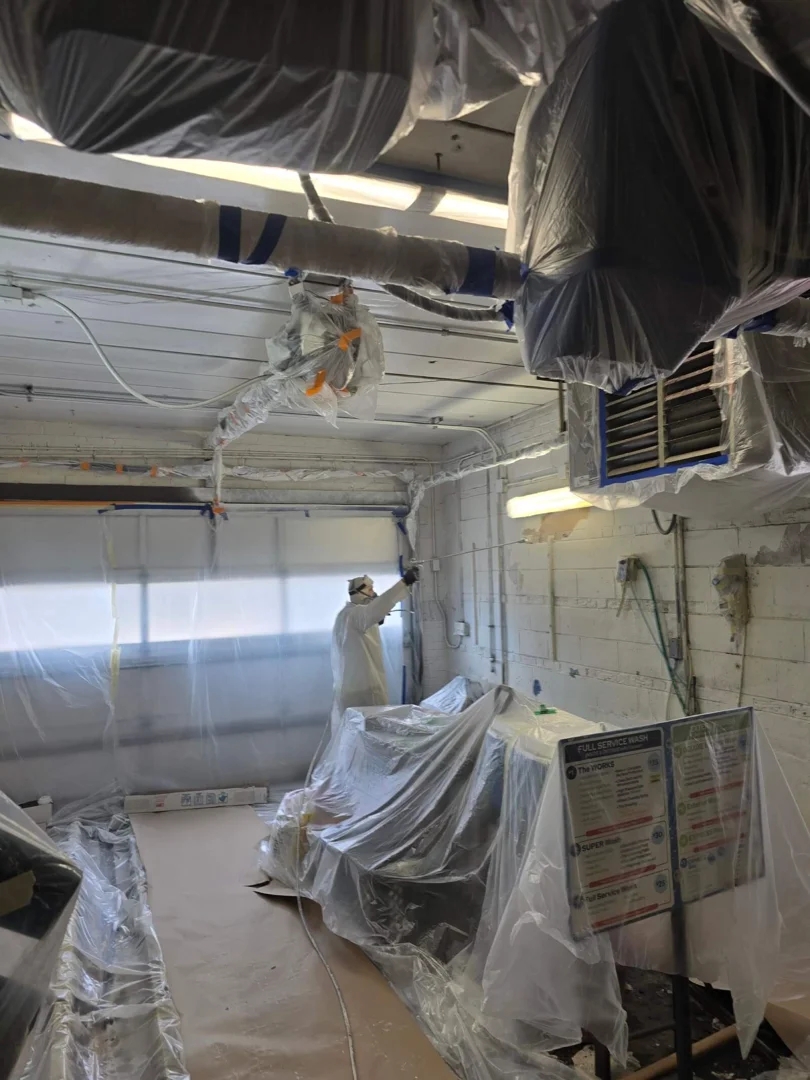
- Containment Zones: We build temporary plastic containment booths equipped with negative-air fans and exhaust filters to capture overspray and fumes.
- Personal Protective Equipment (PPE): Our painters wear full-body anti-static spray suits and dual-cartridge respirators or supplied-air hoods.
- Low-VOC Coatings: We prioritize the use of high-performance, waterborne lacquers and low-VOC paints to minimize chemical odors and environmental impact.
Frequently Asked Questions about Furniture Spray Painting
What is the difference between HVLP and Airless sprayers for furniture?
HVLP (High Volume Low Pressure) sprayers are designed for precision and detail work. They use a high volume of air at low pressure to gently atomize the paint, resulting in a highly controlled spray pattern with minimal overspray—perfect for fine furniture and cabinetry. Airless sprayers use extreme hydraulic pressure to pump paint through a small nozzle tip. They are excellent for covering large flat surfaces quickly (like fences or exterior siding) but lack the fine control needed for detailed furniture.
How do professionals prevent paint runs and orange peel?
Professionals prevent runs and orange peel by carefully controlling paint viscosity, adjusting the spray gun’s air-to-fluid ratio, and maintaining a consistent distance and speed. “Orange peel” occurs when the paint is too thick or the air pressure is too low, preventing the paint from flowing out smoothly. Paint runs happen when the gun is held too close, moved too slowly, or if the paint is thinned excessively.
Can metal almirahs be spray painted professionally?
Yes, metal almirahs can be beautifully and durably spray painted. The key is proper preparation, which includes removing any rust, sanding the surface to create a profile for adhesion, and applying a specialized rust-inhibiting metal primer. Once primed, we apply high-durability polyurethane or epoxy-based topcoats that cure to a hard, impact-resistant finish.
Conclusion
Refinishing your furniture or almirah is an investment in your home’s style and character. While DIY options exist, achieving a smooth, durable, factory-quality finish requires the specialized equipment, controlled environment, and seasoned technique that only a professional spray painter can provide.
At T&Z Interior And Exterior Painting, based in Lombard, IL, we have spent more than 15 years perfecting our craft. We serve homeowners across the entire Chicagoland area—including Plainfield, Addison, Elmhurst, Glenview, Wilmette, Woodridge, Chicago, and Schaumburg. Our fully licensed and insured team is committed to delivering stunning, long-lasting results using top-brand materials and exceptional customer service, backed by our 5.0 Google Reviews rating.
If you are ready to give your furniture, cabinets, or almirahs a breathtaking transformation, explore our professional Services/Spray Painting and contact us today to discuss your next project!