
Wall & Ceiling Painting in Lombard, Illinois

If your walls look dull or your ceilings show stains and cracks, it’s time for a fresh coat. In Lombard, homes deal with hard winters, humid summers, and older drywall that needs real attention before paint ever touches it. T&Z Interior and Exterior Painting handles wall and ceiling painting for bedrooms, living rooms, kitchens, offices, and commercial spaces across Lombard and the surrounding area. Call us for a free on-site estimate — most jobs are scheduled within a week. We’re a licensed Painter with 15+ years of experience, and we stand behind every finished surface we deliver.
What Your Lombard Home's Walls and Ceilings Are Telling You Before You Paint
- Peeling or bubbling paint — usually means moisture got in, or old paint wasn't primed properly
- Yellow or brown ceiling rings — a past or active roof leak; needs stain-blocking primer before painting
- Nail pops or drywall ridges — common in Lombard homes after winter; requires patching and sanding before repainting
- Chalky or powdery wall surfaces — old paint breaking down; new paint won't stick without a bonding primer first
- Glossy walls from previous paint — need sanding or a deglosser so the new coat adheres
A good painter diagnoses before quoting. T&Z inspects every surface at the estimate so nothing surprises you mid-project.
How to Choose the Right Ceiling Color and Wall Finish for Your Lombard Home
- Flat/matte — hides surface flaws well; best for ceilings and low-traffic bedrooms
- Eggshell — slight sheen; wipes clean; best for living rooms and hallways
- Satin — more durable; good for kitchens, bathrooms, kids' rooms
- Semi-gloss — high durability; standard for trim, doors, and cabinets
- Glossy walls from previous paint — need sanding or a deglosser so the new coat adheres
T&Z includes a color and finish consultation with every estimate. You don’t need to figure this out alone before we arrive.

The Surface Prep Steps That Make Wall and Ceiling Paint Last Longer
- Clear and protect — move small items, cover floors and furniture with drop cloths, mask trim and switch plates
- Wash surfaces — remove grease, dust, and grime; kitchens especially need a degreaser before anything else
- Patch and repair — fill nail holes, cracks, and dents with joint compound; let dry fully
- Sand smooth — sand patched areas flush; lightly scuff glossy surfaces so primer bonds
- Caulk gaps — seal where walls meet trim, around windows, and at ceiling lines
- Prime — use a stain-blocking primer on water stains or bare drywall; use bonding primer over glossy or slick surfaces
- Final inspection — check in raking light (light at a sharp angle) to catch any bumps or missed spots before rolling
Homes in Yorkshire Woods and Summit at Yorktown subdivisions often have two-story open foyers and great rooms with tall walls. These require extra staging, longer roller extensions, and more prep time — something a homeowner with a stepladder can’t safely replicate.
The Correct Order to Paint a Room — Walls, Ceilings, and Trim Done Right
- Ceiling first — drips and roller spatter fall down; you'll clean it up when you do the walls
- Walls second — cut in at the ceiling line, then roll; work top to bottom
- Trim and doors last — by this point walls and ceilings are dry; tape off and paint trim clean
Each coat needs dry time before the next surface gets touched. Rushing this is another leading cause of peeling.
The four main types of painting used in residential interiors are brush, roller, spray, and pad. For walls and ceilings, rolling is standard. Spray is used on cabinets, doors, and large open surfaces where a brush-free finish matters. T&Z uses the right method for each surface — not just the fastest one.
For Lombard commercial spaces and offices, we schedule painting after business hours. Correct sequencing keeps the work contained to one area at a time so your team can keep operating.
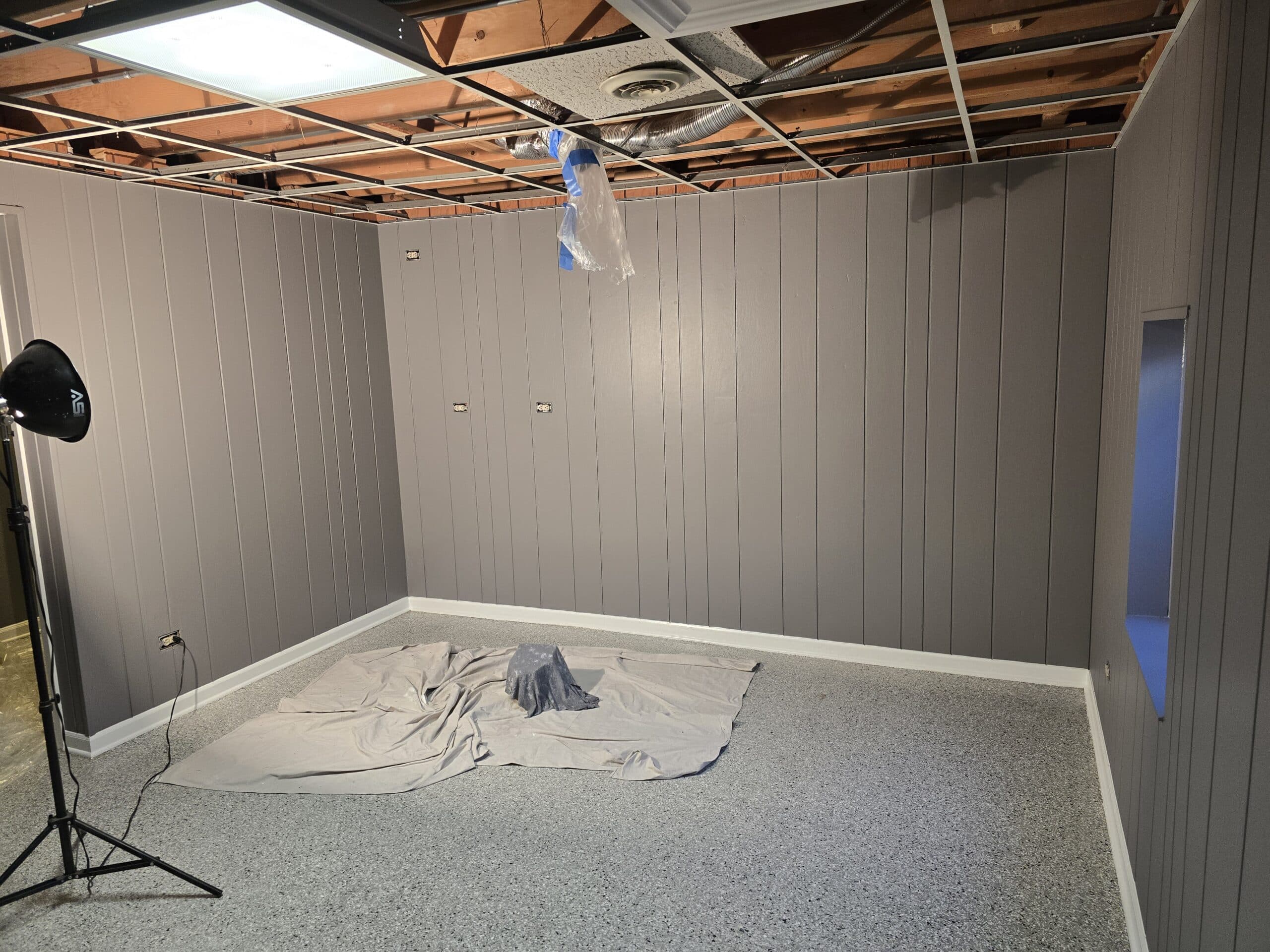
The Best Time of Year to Paint Walls and Ceilings in Lombard
- Spring and fall are the busiest booking seasons in Lombard. Homeowners want fresh interiors after winter or before the holidays. If you want a specific date, book 2–3 weeks ahead during these windows.
- Winter (November through March) is actually the best time to get faster scheduling. Most Lombard homeowners aren't thinking about painting in February — which means shorter wait times and more flexibility on project dates.
- Summer works well too, but open windows and fans are needed to move air when painting. Low-VOC paints minimize odor in any season.
One thing to avoid: painting when indoor humidity is very high, like right after a basement flood or during a stretch of days where windows have been open in humid July heat. High humidity slows dry time and can cause paint to sag or not bond properly to the surface.
Common Ceiling Painting Mistakes Lombard Homeowners Should Avoid
- Using wall paint on the ceiling. Ceiling paint is formulated differently. It's thicker, drips less, and dries to a flat finish that hides texture and imperfections. Wall paint on a ceiling often looks streaky and picks up too much sheen.
- Skipping primer over stains. Rolling standard paint over a water stain does not hide it. The stain bleeds through — sometimes immediately, sometimes after a few days. A stain-blocking primer (oil-based or shellac) seals it permanently before topcoat.
- Rolling too fast. Fast rolling traps air bubbles and leaves a stippled, uneven texture. Slow, overlapping strokes with a quality roller cover produce a smooth, consistent finish.
- Not cutting in first. Some people roll the field of the ceiling then try to cut in at the edges. That leaves a visible line where the cut-in brush meets the rolled surface. Always cut in first, then roll while the cut-in edge is still wet — this blends the two together.
- Using old or hoarded paint. Hoarding paint means storing leftover paint cans for years and then using them on a new project. Old paint separates, develops lumps, loses its binder, and produces uneven color and poor adhesion. If the lid has a rubbery skin or the paint smells sour, it's past its useful life.
- Ignoring popcorn or skip-trowel texture. These textures — common in 1970s through 1990s Lombard homes — need special roller nap (¾ inch or thicker) and careful technique. Rolling too hard flattens the texture. Rolling too light leaves bare spots.
A licensed painter avoids every one of these by default. It’s not extra effort — it’s just the right process.
Send Us a Message
FAQ
Can you paint over old paint in a Lombard home without stripping it?
Yes — if the existing paint is clean, dry, and not peeling. Light sanding and a bonding primer are required first. Loose or flaking paint must be scraped before anything new goes over it.
How often should ceilings be repainted?
Every 5–10 years for most Lombard homes. Repaint sooner if you see water stains, yellowing from age or smoke, or if the texture looks flat and worn.
What ceiling color do most people choose?
Bright white is still the most popular choice. Soft off-whites and warm greige tones are growing, especially in open-plan Lombard homes where the ceiling connects multiple rooms.
How long does wall and ceiling painting take?
A single room typically takes one day. A full interior — multiple rooms, ceilings, and trim — usually runs 2–5 days depending on prep needs and surface condition.
Do I need to move furniture before the painters arrive?
Move small items and breakables. The T&Z team moves and covers larger furniture and protects all floors as part of the job.
Do you paint commercial spaces in Lombard?
Yes. T&Z handles offices, retail spaces, and commercial buildings throughout Lombard. After-hours scheduling is available to keep disruption to a minimum.