

Why Painting Your Home’s Exterior Matters
Wall paint outside the house is more than a cosmetic upgrade—it’s your home’s first line of defense against the elements and the key to making a lasting impression. A fresh coat of paint is about protection, longevity, and curb appeal.
Quick Answer: What You Need to Know
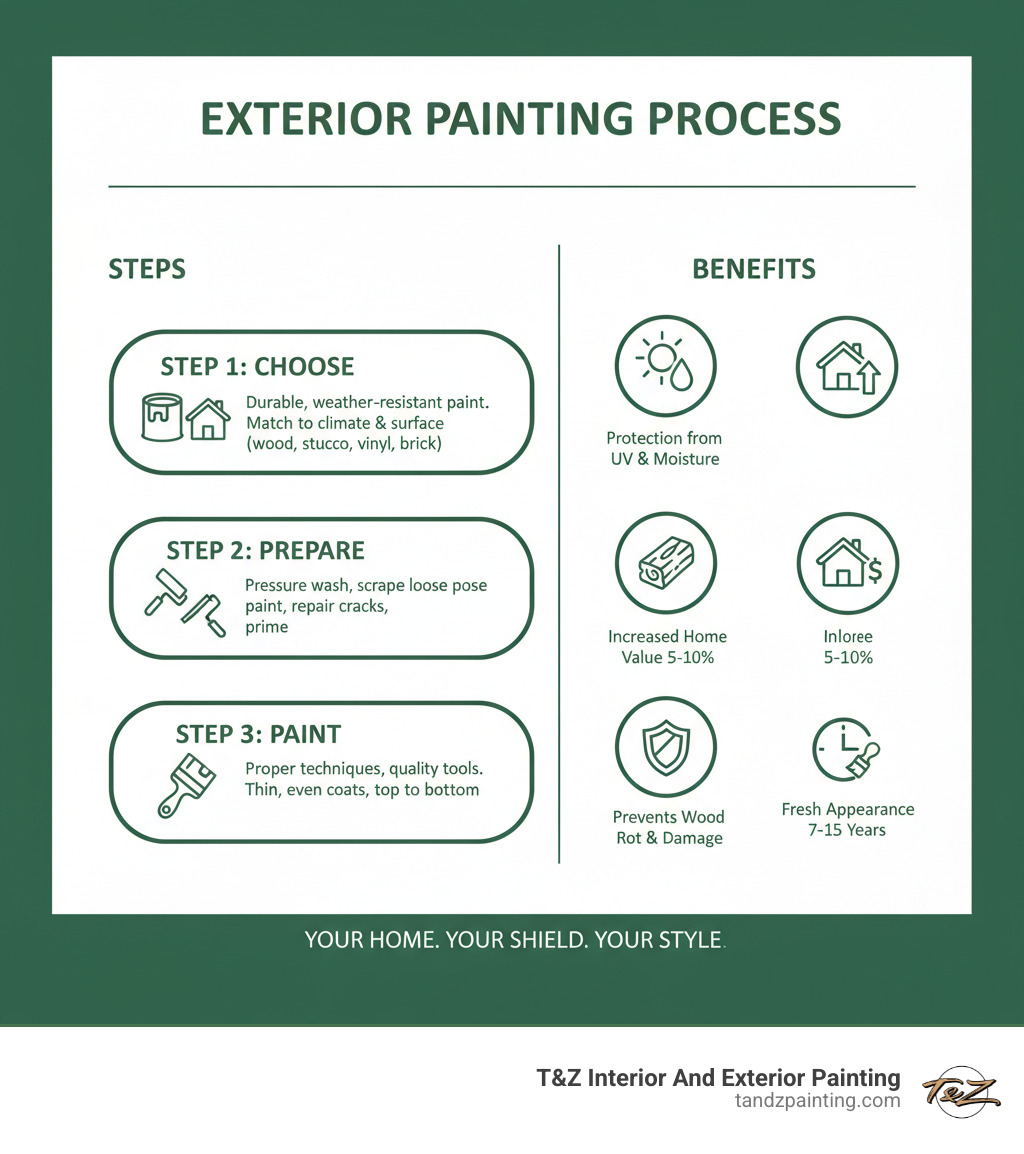
- Protection: Exterior paint shields your home from UV damage, moisture, and temperature swings.
- Value: A new paint job can increase resale value by 5-10%.
- Lifespan: Quality paint lasts 7-15 years, depending on the climate and paint type.
- Main Types: Latex, acrylic, elastomeric, and oil-based paints suit different surfaces.
- Cost: Professional painting typically costs $2,000-$6,000, while DIY is less.
Whether you’re refreshing weathered siding or boosting market appeal, painting your exterior is one of the most impactful improvements you can make. This guide walks you through every step, from choosing weather-resistant paint and selecting colors to preparing surfaces and applying paint like a professional.
Choosing the Perfect Wall Paint Outside the House
Selecting the right wall paint outside the house is crucial for your home’s appearance and protection. The perfect exterior paint must be durable enough for Chicagoland weather, from hot summers to freezing winters.
Key Factors for Choosing Exterior Paint
Choosing the right paint involves balancing several key factors. Durability and weather resistance are paramount; the paint must shield your home from rain, wind, and temperature swings by resisting chipping and peeling. The type of surface (wood, stucco, vinyl) dictates the necessary paint properties for proper adhesion. UV resistance and color retention are crucial for preventing fading and sun damage. Finally, consider maintenance requirements, as premium paints may cost more upfront but last longer, saving money over time. You can learn more about how we approach surface-specific painting on our services page.
What are the different types of wall paint outside the house?
Understanding the main types of wall paint outside the house helps you make an informed choice.
- Latex Paints (Water-Based): The most common choice, latex paints are durable, user-friendly, dry quickly, and have low VOCs. They work well on most surfaces, including wood and stucco.
- Acrylic Paints: A premium form of latex, 100% acrylic paints offer superior adhesion, flexibility, and color retention. They are ideal for extreme weather conditions like those in the Chicagoland area.
- Elastomeric Paints: These highly flexible, waterproof coatings are perfect for stucco and masonry. They can stretch to bridge hairline cracks, preventing water infiltration.
- Oil-Based Paints (Alkyd): Less common for walls but excellent for trim, doors, and metal surfaces, oil-based paints create a very hard, durable finish. They have higher VOCs and require mineral spirits for cleanup.
For a deeper dive into these options, check out The Ultimate Guide to Types of Exterior Wall Paints.
| Paint Type | Durability | Flexibility | Cost | Best Use Cases |
|---|---|---|---|---|
| Latex | Good | Good | Low | General siding, stucco, wood |
| Acrylic | Excellent | Excellent | Medium | Extreme weather, high-performance needs |
| Elastomeric | Superior | Superior | High | Stucco, masonry, crack-prone surfaces, waterproofing |
| Oil-Based | Excellent | Low | Medium | Metal, trim, wood (where a hard finish is desired) |
How to choose the right wall paint outside the house for your climate
The Chicago area’s four-season climate is tough on paint. Hot, humid summers demand paints with excellent UV resistance to prevent fading and blistering, making acrylics a strong choice. Cold winters require flexible paints, like elastomeric coatings, that can expand and contract without cracking. Year-round humidity and rain make mold and mildew resistance essential; look for paints with built-in mildewcides to prevent fungal growth, especially on north-facing walls. The timing of your project is also key. For best results, paint in mild, dry weather. For detailed guidance, read our article on When Is The Best Time To Paint The Exterior Of Your Home?
Selecting the Best Finishes and Colors
Picking finishes and colors is where your home’s personality comes to life. Here’s a quick guide.
Understanding Paint Finishes
- Flat/Matte: Hides imperfections well, making it great for large wall areas. It’s less durable and harder to clean.
- Satin: Offers a subtle sheen with good durability and is easy to clean. It’s a versatile choice for siding and trim.
- Semi-Gloss: Provides a noticeable shine and excellent durability, perfect for trim, doors, and windows that need to stand out.
- High-Gloss: The most reflective and durable finish, ideal for creating dramatic focal points like a front door. It highlights any surface flaws.
Choosing Colors That Work
Your home’s architectural style and permanent features (roof, brick) should guide your color choices. Current color trends favor timeless neutrals and bold, dark shades, but you should choose colors you love. Our guide to Outside House Painting Colour Combinations offers more inspiration.
For a smaller home, light colors like whites and soft pastels can make it appear larger. A monochromatic scheme also creates a clean, expansive look. Your front door is a great place for a pop of color to add personality.
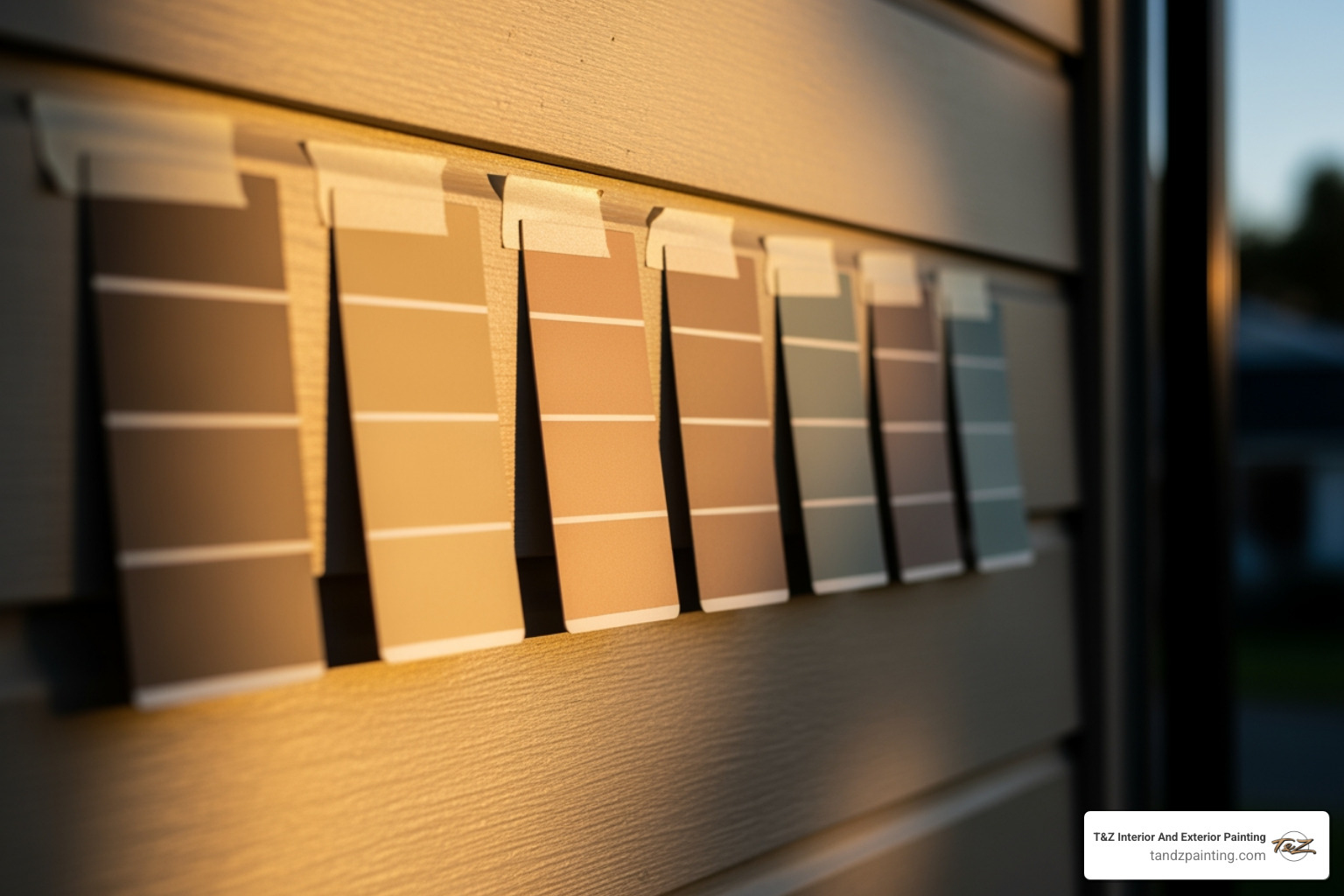
Important: Always test colors before committing. Paint large sample boards and observe them against your house at different times of day. As this video shows, how lighting conditions affect color is dramatic—colors always appear lighter in direct sun.
Preparing Exterior Walls for a Flawless Finish
Proper preparation is the most critical step for a long-lasting paint job. Rushing or skipping prep is the primary reason DIY projects fail. A solid foundation ensures your new wall paint outside the house adheres properly and looks professional for years.
Step 1: Thorough Cleaning
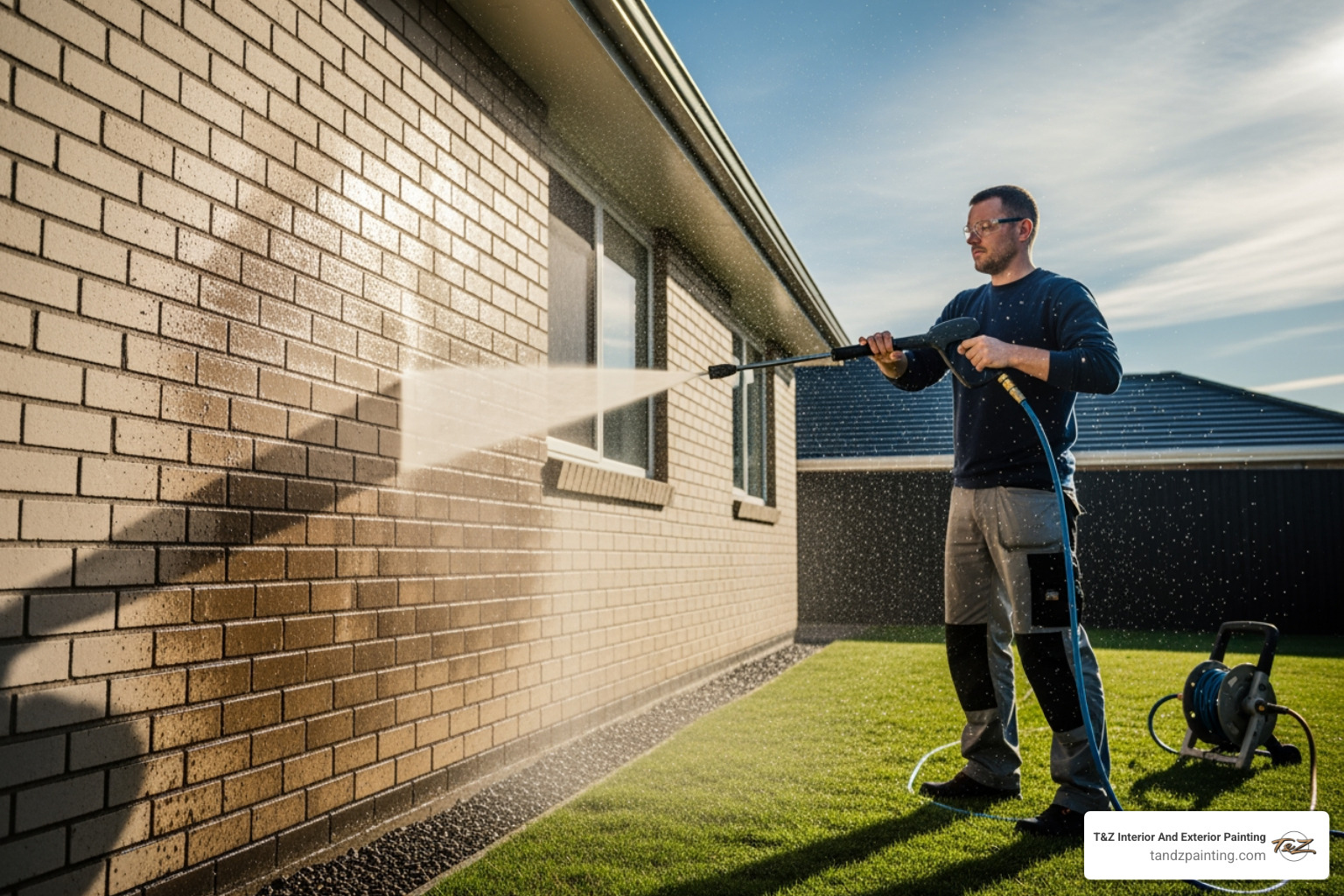
Your walls must be spotless before painting. Pressure washing is the most effective way to remove dirt, grime, and loose paint flakes. For stubborn spots or delicate surfaces, scrubbing with a stiff brush is necessary. In our humid climate, treating mildew is crucial. We apply a fungicide wash to kill any growth, ensuring it won’t reappear under the new paint.
Step 2: Repairing Surface Imperfections
Once clean and dry, inspect for and repair any damage. Scrape and sand all flaking paint to create a smooth, stable surface. Fill cracks and holes in siding or masonry with an appropriate exterior-grade filler. Finally, apply new caulk around windows, doors, and trim to seal gaps and prevent moisture intrusion, which is a major cause of paint failure. For more details on these techniques, see this guide on How to paint exterior walls.
Step 3: Priming for Success
Priming is an essential step that many DIYers skip. Primer creates a uniform surface, improves adhesion, blocks stains, and increases the durability of your topcoat. You should always prime new or bare surfaces, repaired areas, and when making a drastic color change. Different surfaces require specific primers (e.g., masonry, wood, metal). Using the right primer ensures a professional, long-lasting finish. You can View our prep work in action to see how meticulous preparation makes a difference.
The Ultimate Guide to Painting Exterior Walls
With your walls prepped, it’s time to apply the wall paint outside the house. Following professional techniques ensures a smooth, durable finish that will protect and beautify your home for years.
Essential Tools and Safety
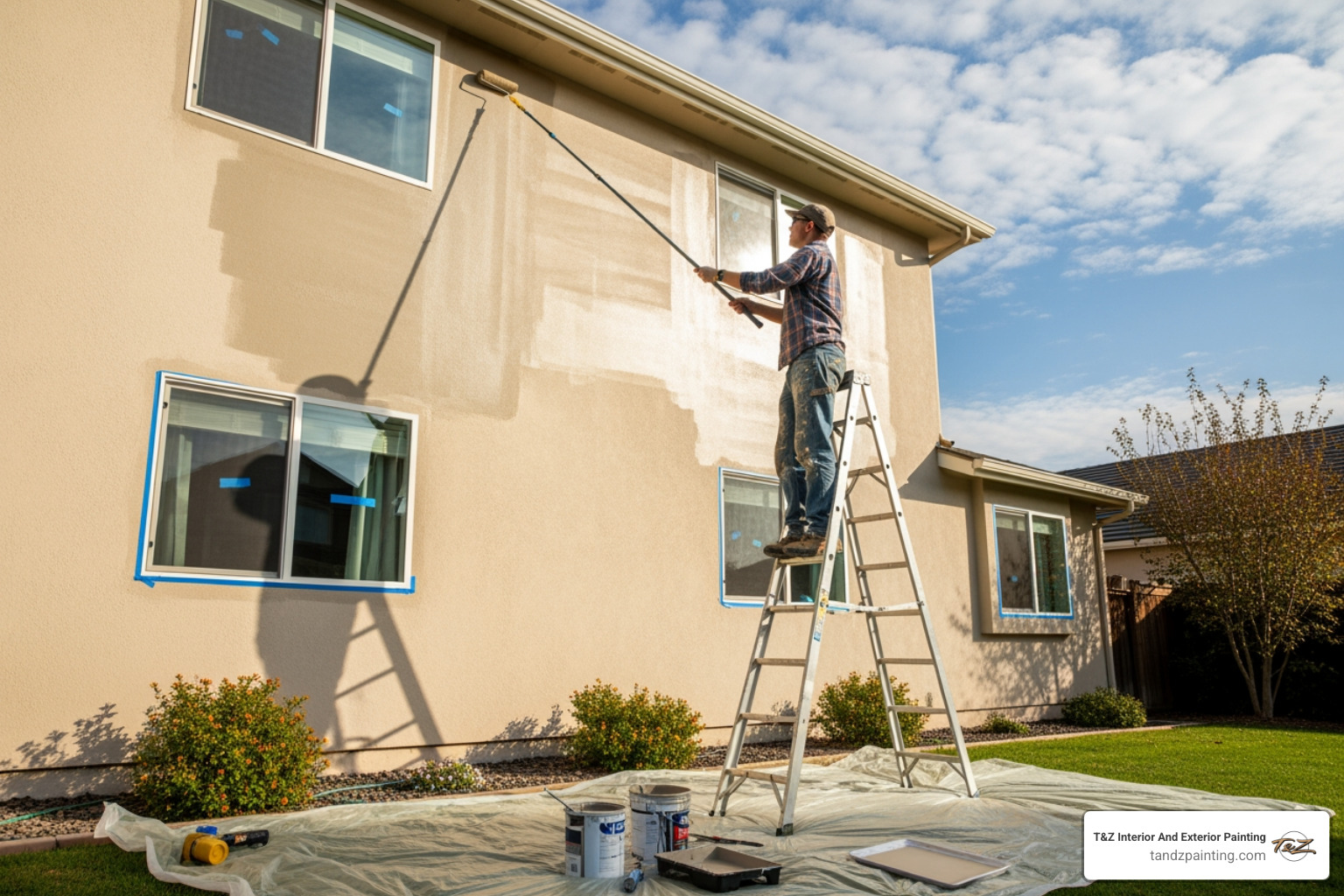
Quality tools and a focus on safety are non-negotiable. Always use stable ladders or scaffolding for high areas and wear safety goggles.
- Brushes: For cutting in around edges, windows, and doors.
- Rollers: For covering large, flat surfaces quickly.
- Paint sprayer: Optional, but great for large or heavily textured areas.
- Painter’s tape: For creating crisp, clean lines.
- Drop cloths: To protect landscaping and walkways.
Painting Techniques for a Professional Look
A systematic approach is key to a stunning finish. Check the weather and aim for mild temperatures (50-85°F) with low humidity and no rain. Start at the top of the house and work your way down to avoid drips on freshly painted areas. “Cut in” around edges and trim with a brush before rolling the large surfaces. Always apply two thin coats rather than one thick one for better adhesion and a smoother look. Finally, respect the drying time between coats as specified by the manufacturer—rushing this step can ruin the finish. This video offers more Tips for painting your home’s exterior.
Painting Different Exterior Surfaces
Different materials require specific approaches for the best results.
- Wood Siding: Prime bare wood, then use a high-quality acrylic latex paint that can flex with the wood.
- Stucco: Use elastomeric or masonry paint to bridge hairline cracks and provide excellent waterproofing.
- Vinyl Siding: Paint with a 100% acrylic latex paint formulated for vinyl. Avoid colors significantly darker than the original to prevent warping.
- Brick: Use a breathable masonry paint that allows moisture to escape, preventing damage.
- Metal Trim: Apply a specialized metal primer followed by a durable acrylic or oil-based topcoat to prevent rust.
To see how these techniques transform a home, See our finished projects.
Frequently Asked Questions about Exterior Painting
How can I test exterior paint colors before committing?
Choosing a color for your wall paint outside the house can be stressful. To test colors effectively, buy sample pots and paint large swatches on poster boards (at least 2×2 feet). Don’t paint directly on your house. Move these sample boards to different walls and observe them throughout the day—in bright sun, shade, and at dusk. Colors appear much lighter outdoors. Always check the samples next to permanent fixtures like your roof and any brick or stone to ensure a harmonious look.
What are the best exterior paint colors for small houses?
To make a small house feel larger, light and airy colors are your best friend. Whites, off-whites, soft grays, and pale pastels reflect light and create a sense of openness. A monochromatic scheme, using subtle variations of one color for the body and trim, also helps create a seamless, larger appearance. While trendy, dark or busy color schemes can make a small home feel boxier, so use them with caution. You can still add personality with a bright front door.
Should shutter colors match the front door color?
There’s no single right answer—it’s a matter of personal style. Matching the shutter and front door color creates a balanced, cohesive look, unifying the home’s accents. Alternatively, you can make the front door a standalone focal point by painting it a unique, bold color while keeping the shutters more subdued (e.g., matching the trim or a darker shade of the main house color). A classic combination like a white house with black shutters and a red door is timeless. Test your combinations with sample boards to see what you like best on your home.
Conclusion: Transform Your Home with a Fresh Coat of Paint
A fresh coat of wall paint outside the house is one of the most powerful improvements you can make. It’s not just about aesthetics; it’s about protecting your investment. Quality paint shields your home from UV damage, moisture, and weather, preventing costly issues like wood rot and cracking. A well-executed paint job can boost your home’s value by 5-10% and last for over a decade.
While a DIY project can be rewarding, achieving a professional, long-lasting finish requires significant time, skill, and the right equipment. It involves meticulous prep work, proper application techniques, and working safely at heights.
That’s where T&Z Painting comes in. Our experienced teams in the Lombard, Wheaton, and greater Chicago area deliver stunning results without the stress. We use top-brand materials and proven techniques to ensure your home looks its best and is protected for years to come. Ready to transform your home? Get a free estimate for your exterior painting project today.