
Waterproofing & Surface Preparation in Lombard, IL
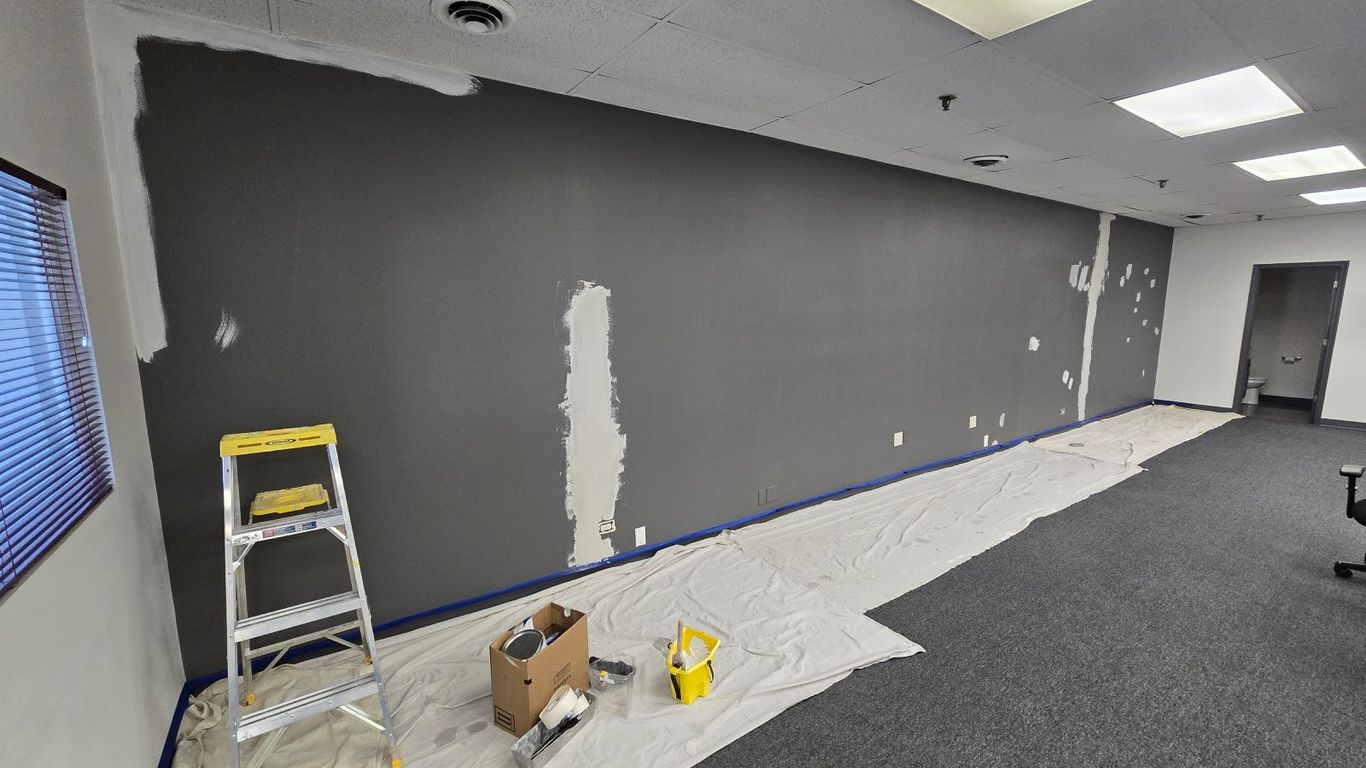
Paint doesn’t fail because of the paint. It fails because of what was — or wasn’t — done before the paint went on. In Lombard, moisture intrusion, freeze-thaw cycles, and aging substrates make waterproofing and surface preparation the most critical phase of any exterior painting project. T&Z Interior and Exterior Painting handles Waterproofing & Surface Preparation in Lombard for exterior masonry, stucco, brick, wood siding, and interior surfaces before every painting project. Call us for a free on-site assessment. Prep scope is confirmed at the estimate before any work is scheduled — no surprises mid-project. We’re a licensed Painter with 15+ years of experience, and we do the prep work correctly because it’s what determines whether the paint job lasts three years or ten.
How to Tell If Your Lombard Home Needs Waterproofing Before the Next Paint Job
The signs that moisture is the underlying problem:
Efflorescence. White, chalky, or crystalline mineral deposits on brick, stucco, or concrete block surfaces are the clearest visible sign of moisture moving through the wall. Efflorescence is the residue left behind when water carries dissolved salts through the masonry and deposits them on the surface as it evaporates. It means water is entering the wall, moving through it, and exiting at the face. Paint applied over efflorescence without addressing the water source fails quickly — the moisture continues moving and lifts the paint film from below.
Peeling paint that starts from behind. Standard paint failure from age or UV exposure peels from the surface outward — the top of the film cracks and curls. Moisture-driven failure looks different. The paint lifts from the substrate first, starting at the bond line between paint and wall rather than at the surface. Bubbles form under the film, the film separates, and sheets of paint pull away from the wall. This pattern indicates moisture is trapped between the substrate and the paint — either because the surface was wet when painted, or because water is entering through the wall and accumulating under the existing coat.
Interior water stains near exterior walls. If water staining appears on interior walls adjacent to exterior surfaces — especially below windows, around door frames, or at exterior corners — water has already moved through the wall and entered the living space. This is not a paint problem. It’s a waterproofing problem that painting will not solve and that will make worse if paint seals moisture into the wall structure.
Open mortar joints and failed caulk. On brick homes, mortar joints that are crumbling, hollow, or recessed below the brick face allow water to enter directly. At window and door frames, failed caulk — visible as gaps, cracks, or separating lines between trim and siding — is one of the most common water entry points on older Lombard homes. Both of these conditions allow water into the wall assembly that paint alone cannot stop.
Soft or spalled masonry. Brick or concrete block that feels soft to pressure, shows surface scaling, or has chunks of surface material missing has been damaged by freeze-thaw moisture cycling. Water has entered the masonry, frozen, expanded, and broken down the surface structure. This material needs to be addressed before waterproof coating can be applied effectively.
Lombard’s 20-plus freeze-thaw cycles per winter are harder on masonry and painted surfaces than most homeowners realize. Water that enters a crack or joint in October freezes in January, expands, opens the gap further, and allows more water entry the following spring. Each cycle widens the damage. Catching moisture entry points before repainting is more important in Lombard than in markets where temperatures don’t cycle through freezing repeatedly every winter.
T&Z assesses moisture and substrate condition at the estimate. Waterproofing scope is confirmed before any paint is quoted — because the prep required determines the project scope, and the project scope determines everything else.
Why Waterproofing Before Exterior Painting Protects Lombard Homes From the Inside Out
What exterior paint does and doesn’t do:
Exterior paint provides a protective film over a surface. It resists surface water — rain running down a painted wall beads up and runs off rather than soaking directly in. It provides UV protection that slows the degradation of the substrate beneath it. It blocks air-carried moisture to a degree.
What paint does not do: it does not seal cracks. It does not bridge substrate movement. It does not stop moisture vapor that is already in the wall from moving outward. And it does not hold to a surface that is actively absorbing and releasing moisture — because the expansion and contraction of that moisture movement breaks the bond between the paint film and the wall.
What waterproofing does:
Waterproofing treatments applied before painting address the substrate rather than the surface. On masonry and stucco, elastomeric waterproof coatings are thick, flexible products that fill hairline cracks — including cracks too small to be visible to the eye — and create a continuous, flexible moisture barrier across the full surface. When the substrate expands in summer heat and contracts in winter cold, the elastomeric coating moves with it rather than cracking along the substrate movement lines. Standard paint does not have this flexibility.
On concrete block and older brick, penetrating water repellents seal the pores of the masonry from within — reducing the rate of moisture absorption without trapping vapor that needs to escape from the wall. These products work below the surface rather than on top of it.
On wood siding, water-repellent primer seals the end grain and face grain before topcoat. Wood absorbs moisture most aggressively at cut ends — the exposed end grain at siding cuts, trim ends, and window frame corners. Unprimed wood end grain in Lombard’s wet spring season absorbs moisture, swells slightly, and lifts paint from behind before the topcoat has finished its first season. Water-repellent primer applied to these surfaces before topcoat breaks that cycle.
The practical result:
A painted surface over correctly applied waterproofing lasts significantly longer than the same paint over an untreated substrate. The paint bonds to a dry, sealed, stable surface. Moisture that previously moved through the wall and accumulated under the paint film is now blocked at the substrate level before it reaches the paint. The freeze-thaw cycling that cracked and lifted previous paint jobs can’t reach the paint because the waterproofing layer is between the moisture source and the coating.
Brick and stucco homes in Westmore and Maple Knoll — many built in the 1950s through 1970s with mortar and caulk that has degraded over decades — illustrate this directly. Two houses side by side, both repainted at the same time: one with waterproofing prep, one without. The one without needs repainting again in three to four years. The one with correct waterproofing holds for eight to ten. The difference is entirely in what happened before the first topcoat.
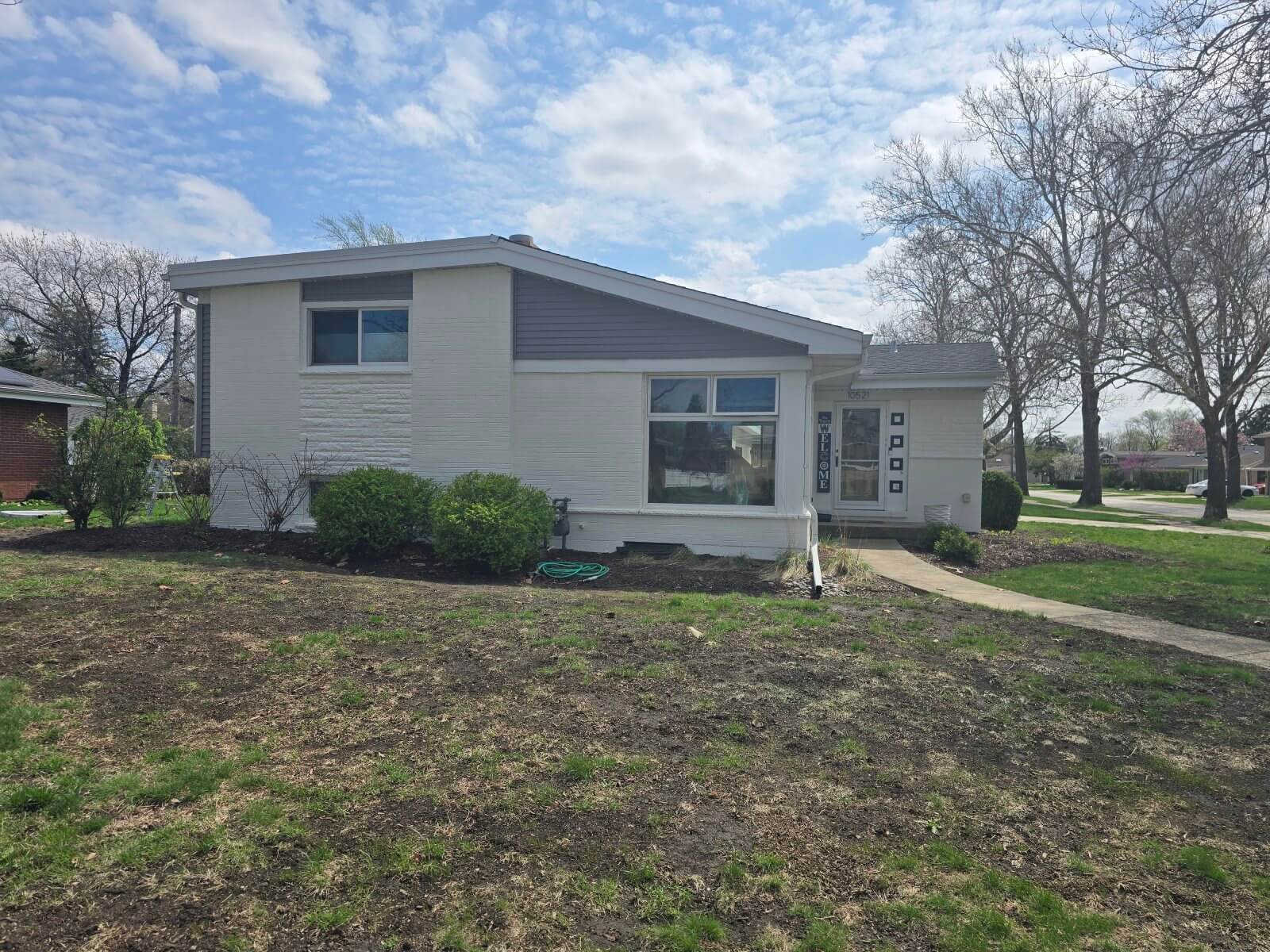
Everything Included in Professional Surface Preparation Before Painting a Lombard Home
Step 1 — Inspection:
Every surface is assessed before any work begins. Moisture damage, failing paint, cracks, efflorescence, substrate condition, previous coating types, and any areas of active water entry are identified and documented. The prep scope is determined by what the inspection finds — not by what a standard formula assumes. On older Lombard homes with mixed substrates, the inspection often reveals prep requirements that weren’t apparent from the street.
Step 2 — Cleaning:
Exterior surfaces are pressure washed — the full facade, not just the obviously dirty sections. Dirt, mold, algae, chalk, and any loose or degraded paint must be removed before prep work begins. Painting over contaminated surfaces, even with primer, produces a coating that bonds to the contamination rather than to the substrate. On interior surfaces, walls are cleaned with TSP or a commercial degreaser. Kitchen walls and surfaces near fireplaces get specific attention — cooking grease and smoke residue are not visible at normal inspection distance but prevent paint adhesion at the molecular level.
Step 3 — Full dry time:
After pressure washing, exterior surfaces must dry completely before any prep or paint proceeds. In Lombard, this means 24 to 48 hours minimum — longer after significant rain or in cool temperatures that slow evaporation. T&Z checks surface moisture with a meter before scheduling the prep phase. A surface that tests wet is not ready for primer regardless of how dry it looks. This step is routinely skipped by painters racing to the next phase — and the adhesion failure it causes appears within the first season.
Step 4 — Repair:
Every crack, hole, and joint failure identified in the inspection is repaired before primer. On exterior masonry: cracks in stucco filled with elastomeric patching compound, open or recessed mortar joints repointed, window and door perimeter caulk replaced with high-quality paintable exterior caulk. On wood: holes and dents filled with exterior wood filler, split or splintered boards addressed, nail and screw penetrations filled. On interior drywall: holes patched, tape joint separations re-taped and skim-coated, corner damage repaired.
Step 5 — Sanding:
Glossy existing paint surfaces are scuff-sanded to break the sheen so primer and topcoat can bond. Patched and repaired areas are sanded flush with the surrounding surface — a patch that stands proud of the wall reads as a visible bump under paint. Bare wood is sanded to open the grain. On interior surfaces being switched from high-sheen to lower-sheen finishes, full surface sanding is required to avoid adhesion issues at the sheen interface.
Step 6 — Priming:
Every bare wood section, every repaired masonry area, every stain-affected surface, and every section where the previous coating was removed gets the correct product-specific primer. Bare drywall gets drywall primer. Bare masonry gets masonry primer. Water stains and smoke-affected surfaces get stain-blocking oil-based or shellac primer. Tannin-bleeding wood gets oil-based primer. There is no single primer that serves all substrates — T&Z specifies by surface type on every project.
Step 7 — Final inspection:
Every surface is inspected in raking light — light held at a sharp angle to the wall surface — before any topcoat is applied. Raking light reveals every bump, missed patch, and surface irregularity that direct light hides. If anything is found, it’s corrected before the first topcoat goes on. No topcoat is applied over a surface that hasn’t passed this check.
Lombard’s spring moisture season means exterior surfaces stay damp well into May. T&Z checks surface moisture with a calibrated meter before scheduling prep and paint phases on every exterior project. Paint applied over a surface that tests above the acceptable moisture threshold fails regardless of the primer or topcoat product quality — the moisture has nowhere to go except back through the paint film.
How Proper Surface Preparation Extends the Life of Paint on Lombard Homes
Paint longevity by prep quality:
A paint job applied over inadequate prep fails at the prep failure points — and those points multiply over time as moisture, UV, and thermal cycling work on the weakest areas of the coating. The failures spread from poorly prepped sections into adjacent well-prepped ones as paint edges lift and water enters at the failure boundary.
The numbers are consistent across project types:
Exterior wood siding: Correctly prepped — cleaned, repaired, sanded, and primed — lasts 7 to 10 years in Lombard’s climate. Inadequately prepped — washed and painted without repair, sanding, or primer — typically fails in 3 to 5 years, often less in sections where moisture is present.
Exterior masonry (brick, stucco, concrete block): Correctly prepped with masonry primer and elastomeric waterproof coating lasts 10 to 15 years. Applied without waterproofing and without masonry-specific primer over chalked or weathered surfaces fails in 4 to 6 years and often sooner where freeze-thaw damage is active.
Interior surfaces: Correctly prepped interior paint lasts 7 to 10 years in standard-traffic rooms. Paint applied over glossy surfaces without sanding, over water stains without stain-blocking primer, or over contaminated walls without cleaning peels, chips, and shows stain bleed-through within the first year or two.
What the investment in prep returns:
Every dollar spent on correct prep extends paint life. A project that costs more because the prep is done correctly and completely produces a paint job that doesn’t need redoing for twice as long as the lower-bid alternative. Over two painting cycles, the property owner who invested in correct prep the first time has paid less total than the one who saved money on prep and repainted early.
Prep quality is the largest single determinant of paint longevity — more than paint brand, more than coat count, and more than application method. No product compensates for inadequate prep. This is not a disclaimer — it’s a statement of how paint adhesion actually works at the chemical and physical level.
Homeowners in Yorkshire Woods and Summit at Yorktown with large two-story exteriors face significant prep costs if moisture damage has been allowed to develop over several deferred repaint cycles. T&Z identifies all substrate issues at the estimate so the full prep scope is known and confirmed before the project starts — not discovered mid-job when the crew strips failing paint and finds water damage that changes the project scope and timeline.
When Interior Surfaces in Lombard Homes Need Preparation Before Painting
Glossy existing paint:
Paint does not bond reliably to high-sheen existing paint without preparation. The chemical bond that makes paint adhere to a substrate requires a surface with some texture and mechanical grip — a perfectly smooth, glossy paint film provides neither. New paint applied directly to glossy walls peels at contact edges, chips at corners, and separates from the surface under cleaning within months.
The preparation required: light sanding with fine-grit paper to break the gloss across the full surface, or a liquid deglosser applied with a cloth. Either approach creates the surface texture the new paint needs to bond. On sound glossy surfaces in good condition, this is a fast step. On multi-coat high-gloss surfaces where the existing paint has been repeatedly applied without sanding, more aggressive sanding is required.
Water-stained ceilings and walls:
Water stains on interior surfaces are one of the most common prep failures in residential painting. The stain appears to be sealed under a fresh coat of paint — and then it comes back. Sometimes within days. Sometimes after a few weeks.
The reason is chemistry. Water stains contain tannins, minerals, and organic compounds that are water-soluble and migrate through water-based paint as the topcoat cures. A standard primer coat does not seal them. Oil-based or shellac-based stain-blocking primer creates a barrier that these compounds cannot penetrate. It’s the only product that permanently seals water stains — and it must be applied and fully cured before any finish coat.
If the source of the water stain is still active, primer will not help. An active leak must be repaired before any painting is attempted. Painting over an active moisture source produces a paint failure that is faster and more damaging than not painting at all.
Smoke and grease contamination:
Kitchen walls, ceilings above cooking areas, and any surface near a fireplace accumulate grease and smoke residue over years of use. This contamination is often not visible in normal light — it reads as a slightly yellowish or dull surface that seems like it just needs painting. Paint applied over grease and smoke residue bonds to the contamination rather than to the wall. As the contamination softens and shifts under temperature changes and cleaning, it takes the paint film with it.
The preparation required: TSP cleaning — trisodium phosphate — applied to all affected surfaces, rinsed fully, and allowed to dry before primer. On heavily contaminated surfaces, two TSP cleaning passes before primer. Stain-blocking primer over any area with visible discoloration. This sequence produces a surface the finish coat can actually bond to.
New drywall — the critical interior case:
New drywall in a remodeled or newly constructed room in a Lombard home has two surface types within inches of each other: the paper face of the drywall board and the joint compound covering tape seams and fastener dimples. These two materials absorb paint at completely different rates. Without a drywall-specific primer applied uniformly across the full surface before topcoat, the finish coat produces flashing — patches of different sheen visible across the wall in any raking light. This is a permanent condition that no additional topcoat corrects. The only fix is stripping back to bare drywall, priming correctly, and starting over.
Mildew-affected surfaces:
Mildew on interior walls looks like dirt. It often appears as irregular dark spots or a general graying of the surface, particularly in bathrooms, basements, and any space with chronic moisture or inadequate ventilation. Painting over active mildew seals it under the paint film temporarily — and it grows back through, usually within one humid season.
The preparation required: treat the affected surface with a mildew-killing cleaner, allow full contact time, rinse and dry, and apply a mildew-resistant primer before topcoat. In Lombard homes with basement moisture issues or bathrooms without functional exhaust ventilation, mildew-resistant primer is standard on all lower-level and high-humidity surfaces.
Waterproofing and Surface Preparation for Lombard Commercial Properties — What the Scope Involves
Commercial exterior waterproofing and prep:
Large commercial facades — brick, EIFS, stucco, and concrete block — accumulate moisture entry points at expansion joints, window perimeters, masonry cracks, and failed sealants. On a commercial building, these entry points are distributed across thousands of square feet of exterior surface and are often not visible from the ground. T&Z walks the full facade at the commercial estimate, identifies every area of water entry or substrate damage, and documents the complete prep scope before quoting the paint phase.
Commercial exterior prep includes: power washing the full facade with commercial-grade equipment, crack injection on structural masonry cracks, elastomeric waterproof coating on stucco and concrete block surfaces, replacement of all failed expansion joint sealant and window perimeter caulk, and masonry primer on all bare or repaired areas before topcoat.
Large commercial facades are prepped and coated by elevation — one face of the building at a time — so that building access, tenant entry, and deliveries continue throughout the project. Each elevation is completed through waterproofing and topcoat before the crew moves to the next facade.
Commercial interior prep:
Office and retail interiors require the same prep steps as residential interiors, scaled to commercial surface areas. Large open-plan office floors with new drywall need full-surface drywall primer before any finish coat. Commercial kitchen walls need TSP cleaning and stain-blocking primer. Utility corridors and basement-level commercial spaces with mildew need treatment and mildew-resistant primer.
On commercial projects, prep scope is confirmed in writing at the estimate. Property managers receive a full breakdown of which surfaces require which prep steps, what products are specified for each substrate, and what the prep timeline is relative to the paint phase. No commercial project proceeds without the property manager confirming the full prep scope in advance.
Commercial buildings along St. Charles Road and Main Street in Lombard frequently have aging brick or EIFS exteriors with open mortar joints, failed expansion caulk, and multiple layers of paint over original substrates. T&Z identifies all moisture entry points at the estimate and includes the full waterproofing scope in the prep phase — not as a separate line item discovered after painting begins.
Send Us a Message
FAQ
How do I know if my Lombard home needs waterproofing before repainting?
Look for efflorescence — white mineral deposits on brick or stucco, peeling paint that lifts from behind the film rather than cracking from the surface, interior water stains near exterior walls, and open or crumbling mortar joints. Any of these signs indicates moisture is moving through the wall and must be addressed with waterproofing before paint goes on.
What does surface preparation include before painting a Lombard home exterior?
Seven steps: inspection, pressure washing, full dry time confirmed with a moisture meter, crack and joint repair, caulking, sanding of glossy or patched surfaces, and product-specific priming of all bare and stain-affected areas. All seven steps are completed before any topcoat is applied — no topcoat goes on a surface that hasn’t passed a raking-light inspection.
Does interior painting in a Lombard home need surface preparation?
Yes. Glossy surfaces require sanding or deglosser. Water stains require stain-blocking oil-based or shellac primer. New drywall requires drywall primer before finish coat — without it, flashing appears across the surface permanently. Mildew-affected surfaces need treatment and mildew-resistant primer. Smoke and grease contamination requires TSP cleaning before any primer.
How much does proper surface preparation extend the life of a paint job in Lombard?
Significantly. Correctly prepped exterior wood siding lasts 7 to 10 years versus 3 to 5 without prep. Masonry with elastomeric primer lasts 10 to 15 years versus 4 to 6 without waterproofing. Prep quality is the largest single factor in paint longevity — more than paint brand, coat count, or application method.
Does T&Z handle waterproofing and surface prep for commercial buildings in Lombard?
Yes. T&Z handles commercial exterior waterproofing and prep for masonry, stucco, EIFS, and brick facades, as well as interior prep for large commercial spaces including drywall priming, TSP cleaning, and mildew treatment. Full prep scope is confirmed in writing at the commercial estimate before any work begins.