
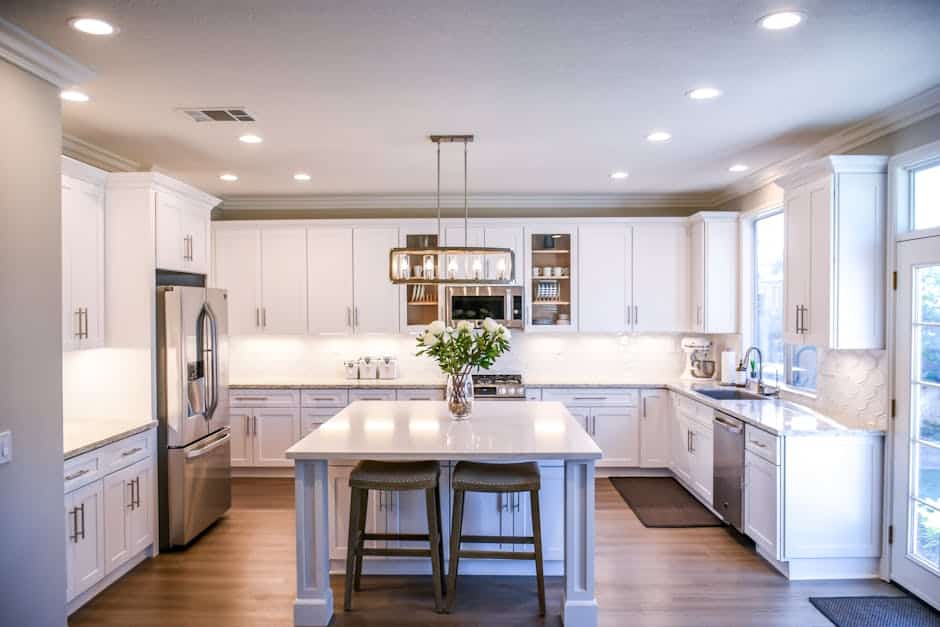
Why the Right Brush is the Secret to Professional-Looking Cabinets
The best paint brush for cabinets makes the difference between a DIY project you’re proud of and one that screams “amateur hour.” If you’re wondering which brush to choose, here’s the quick answer:
Top Cabinet Brush Recommendations:
- Purdy 2″ Angled Nylox Glide – Best overall for smooth finishes and cutting in edges
- Wooster Silver Tip Flat Sash – Ideal for large, flat cabinet doors and drawer fronts
- Corona Tynex/Orel Ontario 2″ Angled – Premium choice for water-based paints and detailed work
- Purdy White Dove 1/4″ Mini Roller – Perfect partner for brushes on flat surfaces
Choosing the right brush can feel overwhelming, but it’s the key to avoiding streaky, unprofessional results. The truth is simple: cabinet painting is unforgiving. Unlike walls, where texture can hide imperfections, cabinets showcase every brush stroke and drip. That’s why professional painters are so particular about their brush selection.
Your brush choice impacts three critical outcomes:
- Finish quality – Soft, dense bristles create smooth, factory-like results.
- Efficiency – The right size and shape cuts your painting time significantly.
- Durability – Quality brushes last through multiple projects when properly maintained.
While most homeowners reach for the cheapest brush, spending a little more on the right tool saves hours of sanding and delivers the professional finish you’re after. The good news is you don’t need a dozen different brushes. Most cabinet projects require just 2-3 carefully chosen tools: an angled sash brush for edges, a flat brush for larger surfaces, and optionally a mini roller for the smoothest finish on doors.
Decoding the Brush: Key Features for a Perfect Cabinet Finish
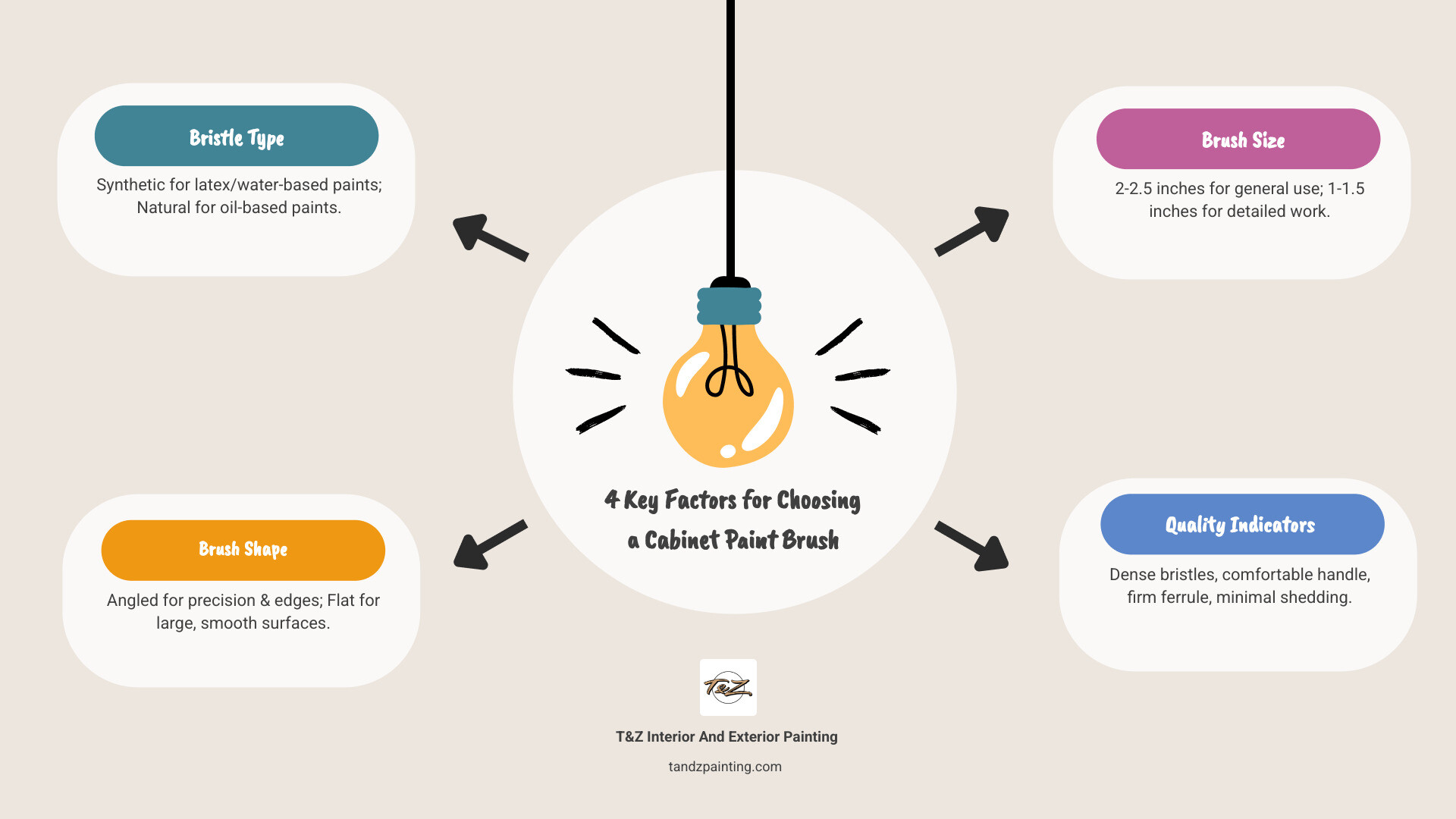
When painting cabinets in Lombard or Elmhurst, we know our tools are as important as the paint. Understanding a brush’s anatomy is key to a professional finish. A high-quality brush holds more paint, releases it smoothly, and won’t shed bristles. This prevents frustrating brush strokes and ensures a much more satisfying result.
Bristle Material: Synthetic vs. Natural
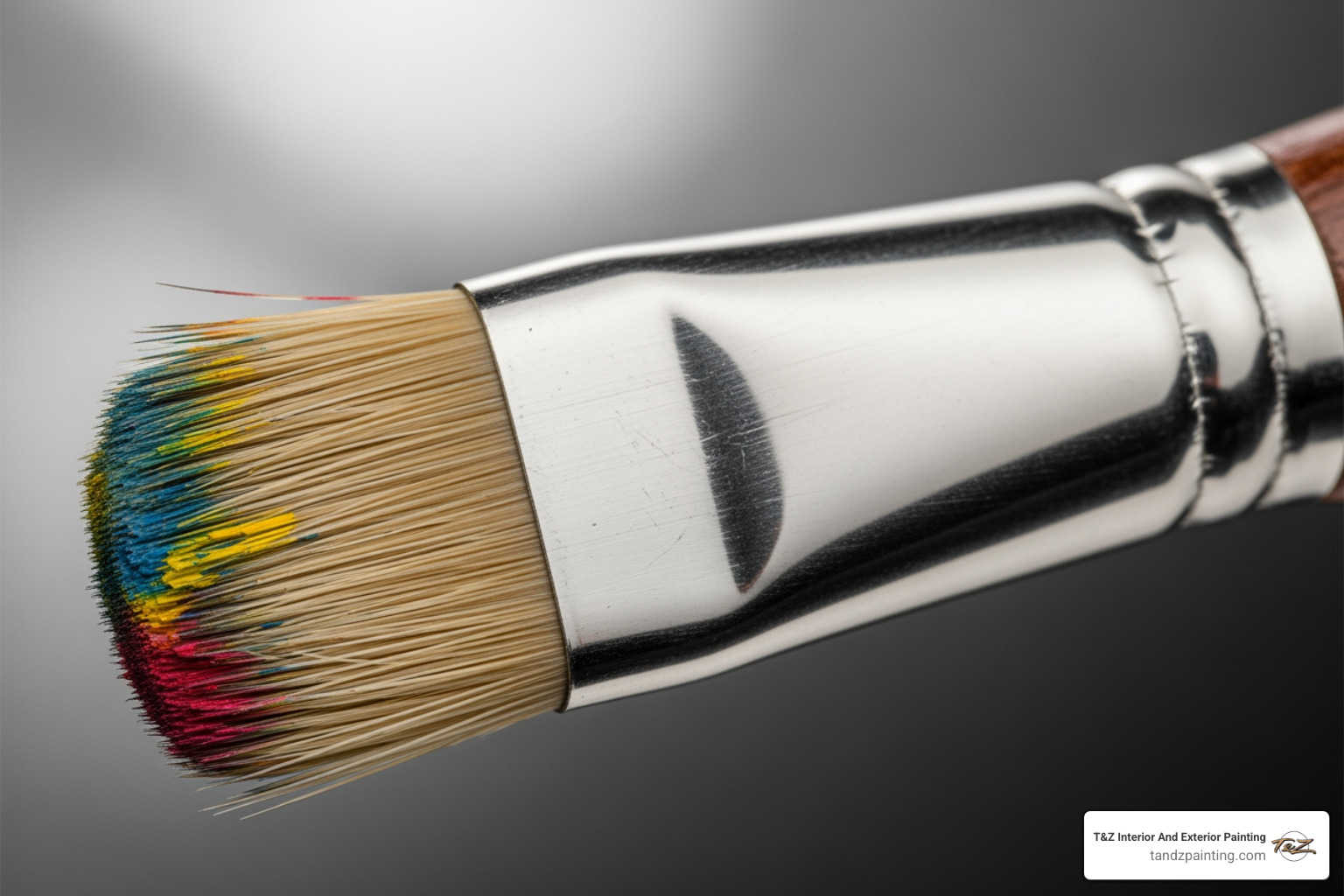
The most crucial decision when selecting the best paint brush for cabinets is the bristle material, which depends on your paint type.
-
Synthetic Bristles: Made from nylon or polyester, these are our go-to for latex (water-based) paints. They don’t absorb water, so they maintain their stiffness and shape, allowing for excellent paint pick-up and a smooth finish. They are also durable and easy to clean.
-
Natural Bristles: Derived from animal hair (hog or boar), these are for oil-based paints and varnishes. They hold oil-based paint exceptionally well, delivering a glass-like finish. However, they become limp and streaky with water-based paints.
-
Foam Brushes: While cost-effective, foam brushes can provide a very smooth finish but often apply thin coats, requiring more work. They are less durable and not ideal for large projects. For best results, choose denser foam.
-
Hybrid Brushes: These combine natural and synthetic fibers, offering a balance of paint holding capacity and smooth application for versatile use.
Here’s a quick comparison to help guide your choice:
| Bristle Type | Recommended Paint Type | Pros for Cabinets | Cons for Cabinets |
|---|---|---|---|
| Synthetic | Latex, Water-based Enamel, Acrylic | Maintains stiffness, excellent paint pick-up, smooth finish, easy to clean, durable | Not ideal for thick oil-based paints, can sometimes feel too stiff initially |
| Natural | Oil-based, Varnish, Shellac | Excellent paint holding, smooth finish with oil-based, good for traditionalists | Becomes limp with water-based paints, harder to clean, can leave brush strokes with latex |
| Foam | All types (thin coats) | Very smooth finish, cost-effective, leaves minimal marks with proper technique | Less durable, thin coverage often requires more coats, less efficient for large areas |
Why Quality Matters
Don’t grab the cheapest brush. For cabinet painting, quality is a necessity. A cheap brush can ruin a meticulous project.
A high-quality brush offers:
- Optimal Firmness & Flexibility: The best brushes balance firmness for even distribution with flexibility for control, holding their shape for a consistent application.
- Superior Paint Flow: A good brush loads with paint without dripping and releases it evenly. This means fewer trips to the paint can and a smoother finish with less re-brushing.
- Durability and Longevity: Quality brushes are built to last. They don’t shed bristles and withstand rigorous cleaning, making them reusable for multiple projects.
- Ergonomics and Comfort: A comfortable, well-balanced handle reduces hand fatigue, allowing you to maintain control and precision throughout the time-consuming task of painting cabinets.
Investing in a quality brush ($10-$25) is a wise decision. It saves time, reduces frustration, and contributes to a professional result. For larger projects, consider our Interior Painting Services, which prioritize quality tools and craftsmanship.
The Best Paint Brush for Cabinets: Top Shapes and Sizes for Every Surface
Choosing the right bristle type is only half the battle; the shape and size of your brush are where the magic happens. Cabinets have wide panels, narrow rails, detailed molding, and tight corners. Using a single brush for all these surfaces is frustrating and messy. For most projects, a 2 to 2.5-inch brush handles the majority of the work, but having a couple of specialized tools will lift your finish from good to professional.
The Angled Sash Brush: Your Go-To for Precision
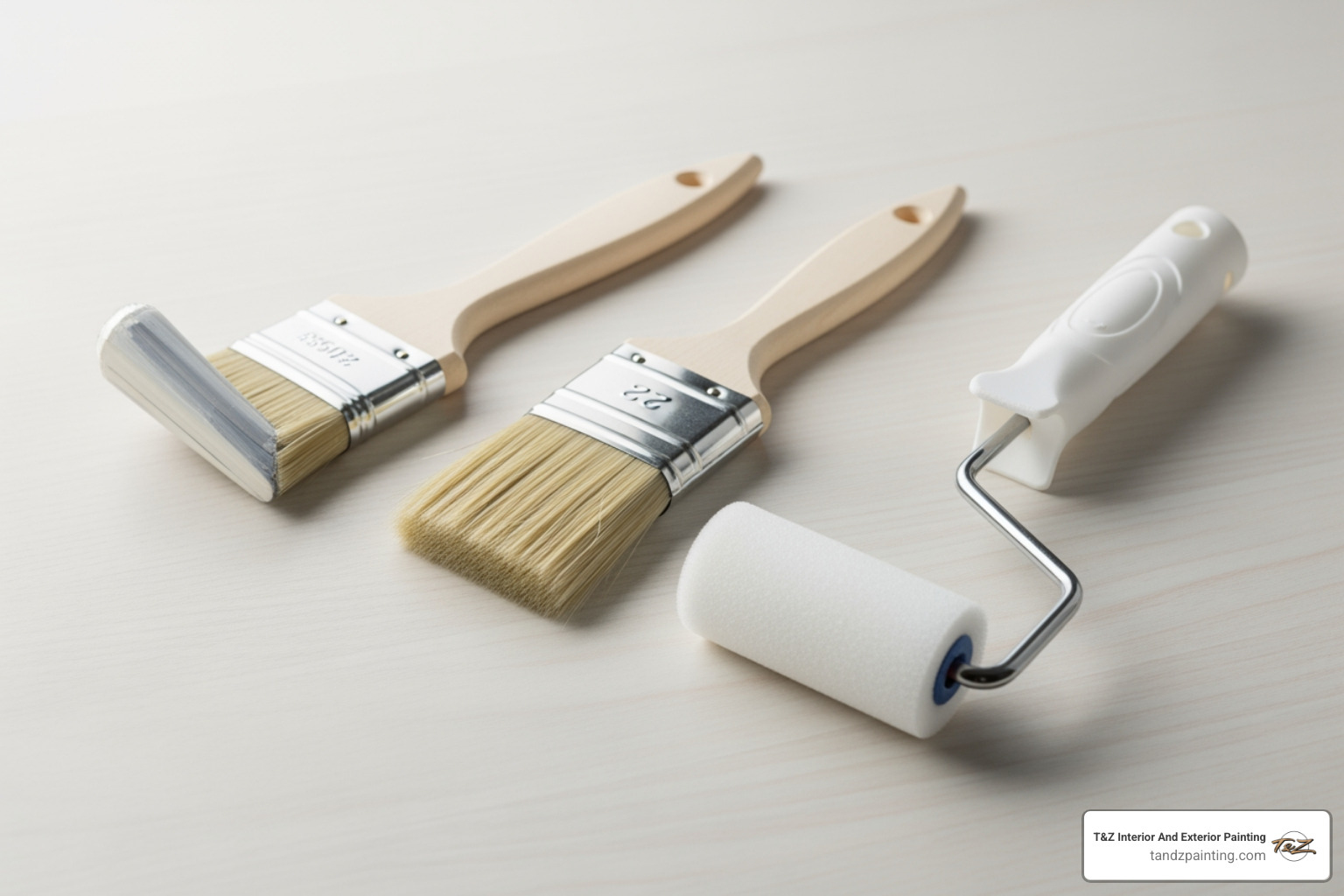
If we could only recommend one brush, this would be it. The angled sash brush is a professional’s secret weapon. The angled tip provides incredible control for cutting in around edges, navigating tight corners, and tackling detailed trim. It allows you to see exactly where the bristles land, ensuring clean lines.
A 2 to 2.5-inch angled sash brush is the sweet spot for most cabinet work. It’s maneuverable yet holds plenty of paint. For intricate molding, a 1 to 1.5-inch version is helpful. Look for soft, synthetic bristles that glide smoothly and minimize brush marks. The Purdy 2″ Angled Nylox Glide Paint Brush is a perfect example, designed for the ultra-smooth finish cabinets demand.
The Flat Brush: For Flawless Doors and Panels
While an angled brush handles details, a quality flat brush quickly covers large areas without sacrificing smoothness. It excels on large, flat surfaces like cabinet door panels and drawer fronts. The straight edge delivers consistent, even coverage, helping you maintain a uniform finish.
A 2 to 3-inch flat brush works well for most applications. Brushes with tapered filaments help maintain shape and provide a smoother release of paint. A flat brush is essential for efficiency and professional results, especially when painting multiple cabinet doors.
Wondering if painting your cabinets is worth the effort? Our guide on Can You Paint Kitchen Cabinets? breaks down the benefits.
The Mini Roller: A Brush’s Best Partner
The secret to a factory-like finish often involves a mini roller. Combining brushes and rollers is a hybrid approach that delivers sprayer-quality results without the mess. Use brushes for edges and details, then switch to a mini roller for large, flat door panels and drawer fronts.
Mini rollers apply paint quickly and evenly. To minimize texture, use a 1/4-inch nap micro-fiber or velour roller cover. The Purdy White Dove 1/4″ Nap Mini Roller Cover is highly recommended for smooth finishes. Foam rollers are another option for an ultra-smooth surface, though they may require extra coats.
For an exceptional finish, try “tipping off.” After rolling a section, immediately use light, even strokes from a dry brush to smooth out any roller texture. A high-quality Purdy Revolution Jumbo Mini Roller Frame paired with the right cover is a great investment. This combination can lift your finish to a professional grade, as seen in our Cabinet Painting Naperville portfolio.
From Brush to Brilliance: Pro Techniques for a Stroke-Free Finish
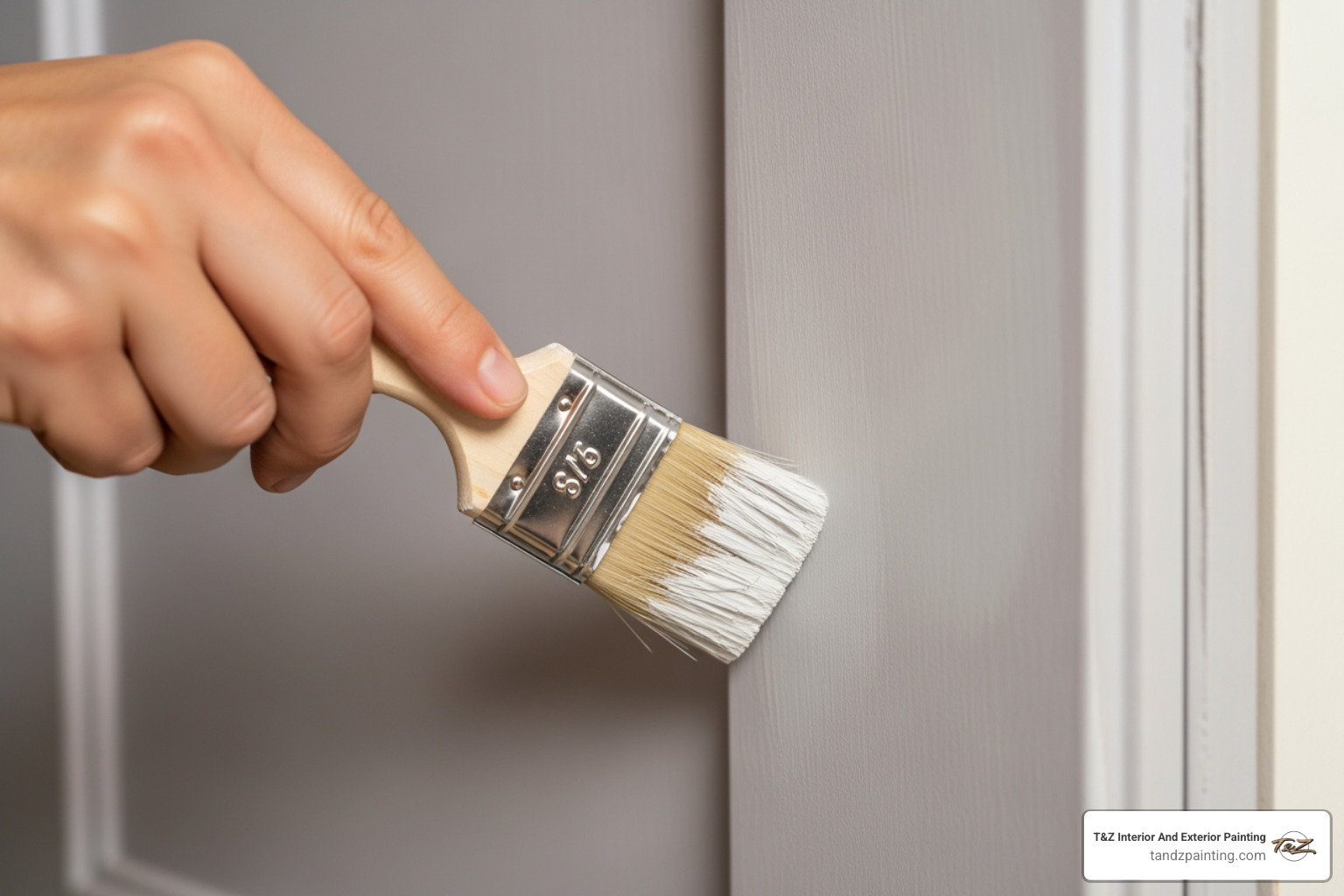
Owning the best paint brush for cabinets isn’t enough; proper technique is what prevents brush marks and drips. Professional results come from a methodical process that combines smart preparation with skilled application. These are the steps our T&Z team follows to deliver a flawless, stroke-free finish.
Prepping for Perfection
Proper surface prep is the foundation of a lasting finish. No premium brush or paint can fix a poorly prepared surface.
- Clean Thoroughly: Use a TSP cleaner (Trisodium Phosphate) to scrub away years of grease and grime that prevent paint adhesion. Rinse with clean water and let dry completely.
- Lightly Sand: Gently scuff all surfaces with 220-grit sandpaper. You’re not removing the old finish, just creating a “tooth” for the primer to grip, which is critical for glossy surfaces.
- Remove Dust: Use a tack cloth to wipe away all sanding dust. Any remaining particles will create a gritty texture in your final coat.
- Use a Quality Primer: Never skip primer. A high-quality bonding primer like Sherwin-Williams Extreme Bond Primer is essential. It blocks stains, seals the surface, and ensures your topcoat adheres permanently.
Application Techniques for a Smooth Finish
With your cabinets prepped, it’s time to apply paint like a pro.
- Load the Brush Correctly: Dip only the bottom third of the bristles into the paint. Tap off the excess inside the can instead of wiping it on the rim to keep paint out of the ferrule (the metal band).
- Maintain a Wet Edge: Overlap each new stroke with the previous wet one to avoid lap marks. Work in manageable sections to keep the edge from drying.
- Follow the Wood Grain: Always brush in the same direction as the wood grain. This helps hide brush strokes and creates a more natural look.
- Apply Thin Coats: Avoid the temptation to apply one thick coat. Two or three thin, even coats will produce a smoother, more durable finish without drips or sags.
- Use a Paint Extender: If paint is drying too quickly, add a paint extender (or conditioner). This slows drying time, allowing the paint to self-level and smooth out brush marks.
- Respect Dry Times: Follow the manufacturer’s instructions for dry time between coats (usually 2-4 hours). Paint needs several days to fully cure and harden before it can withstand daily use.
For more on this topic, see our guide: Kitchen Cabinet Painting: Is It a Good Idea?.
Essential supplies for your cabinet painting project:
- TSP cleaner and clean rags
- 220-grit sandpaper
- Tack cloth
- High-quality primer (Sherwin-Williams Extreme Bond Primer recommended)
- Cabinet-specific paint (Sherwin-Williams Emerald Urethane Trim Enamel or similar)
- 2-2.5 inch angled sash brush with synthetic bristles
- 2-3 inch flat brush with synthetic bristles
- Mini roller with 1/4″ nap cover (Purdy White Dove is excellent)
- Paint pail or tray
- Paint extender (optional but helpful)
- Painter’s tape for protecting areas
- Drop cloths to protect floors and counters
- Screwdriver for removing hardware
Following these steps will dramatically improve your results. If it sounds like more work than you bargained for, our team is here to deliver stunning cabinet changes without the stress.
Frequently Asked Questions about Cabinet Paint Brushes
Homeowners planning cabinet projects often ask the same questions about choosing and using the best paint brush for cabinets. Here are answers to the most common ones.
What is the best paint brush for cabinets if I’m a beginner?
For a beginner, we recommend a high-quality 2-inch angled sash brush with soft, synthetic bristles. This single brush is versatile and forgiving. The angled tip gives you excellent control for cutting in edges and corners, but it’s also capable of handling smaller flat areas. The soft bristles help minimize brush marks, giving you a smoother finish as you learn. It’s a great all-in-one choice for your first cabinet project.
Are expensive paint brushes really worth it for a DIY project?
Yes, absolutely. A premium brush ($15-$25) is a worthwhile investment. It’s fundamentally different from a cheap one: it holds more paint and releases it evenly, which is the secret to minimizing brush marks. Quality brushes also don’t shed bristles, saving you the frustration of picking them out of your wet paint. With proper cleaning, a good brush can be used for years, making it a cost-effective choice that saves time and delivers a professional-looking result.
How do I clean my brushes to make them last?
Proper cleaning right after painting will make your brushes last for years. The method depends on the paint type.
-
For latex or water-based paints: Immediately rinse the brush under warm running water. Use mild dish soap and your fingers to work the paint out of the bristles. Continue rinsing until the water runs completely clear.
-
For oil-based paints: First, work the brush in a container with mineral spirits or the recommended solvent to dissolve the paint. Then, wash the brush with warm water and mild soap until clean.
After washing, use a brush comb to remove any remaining residue and reshape the bristles. Hang the brush to dry with the bristles down or lay it flat. Never leave brushes standing in water or solvent, as this will ruin them.
Conclusion: Your Next Step to Beautifully Painted Cabinets
You now know that the best paint brush for cabinets is about choosing the right tool for each surface and using it with proper technique. A quality synthetic angled brush, combined with thorough preparation and thin coats, can transform your cabinets. A professional-looking finish is completely within your reach as a DIYer.
However, we also know that cabinet painting is time-consuming, detailed work. A full kitchen project can easily consume several weekends with cleaning, sanding, priming, and painting multiple coats. If you’re in the Chicago area and want the stunning results without the hassle, we understand.
Our experienced team at T&Z Painting has refined cabinet painting into an art form. We combine top-brand materials with meticulous craftsmanship to deliver durable, beautiful results without you lifting a brush. We handle every detail, from prep to the final flawless coat, so you can enjoy your transformed kitchen or bathroom without the stress. Whether you’re ready to start your DIY journey or prefer to leave it to the pros, we’re here to help. Explore our professional Cabinet Painting Services to bring your vision to life with a guaranteed flawless result.