
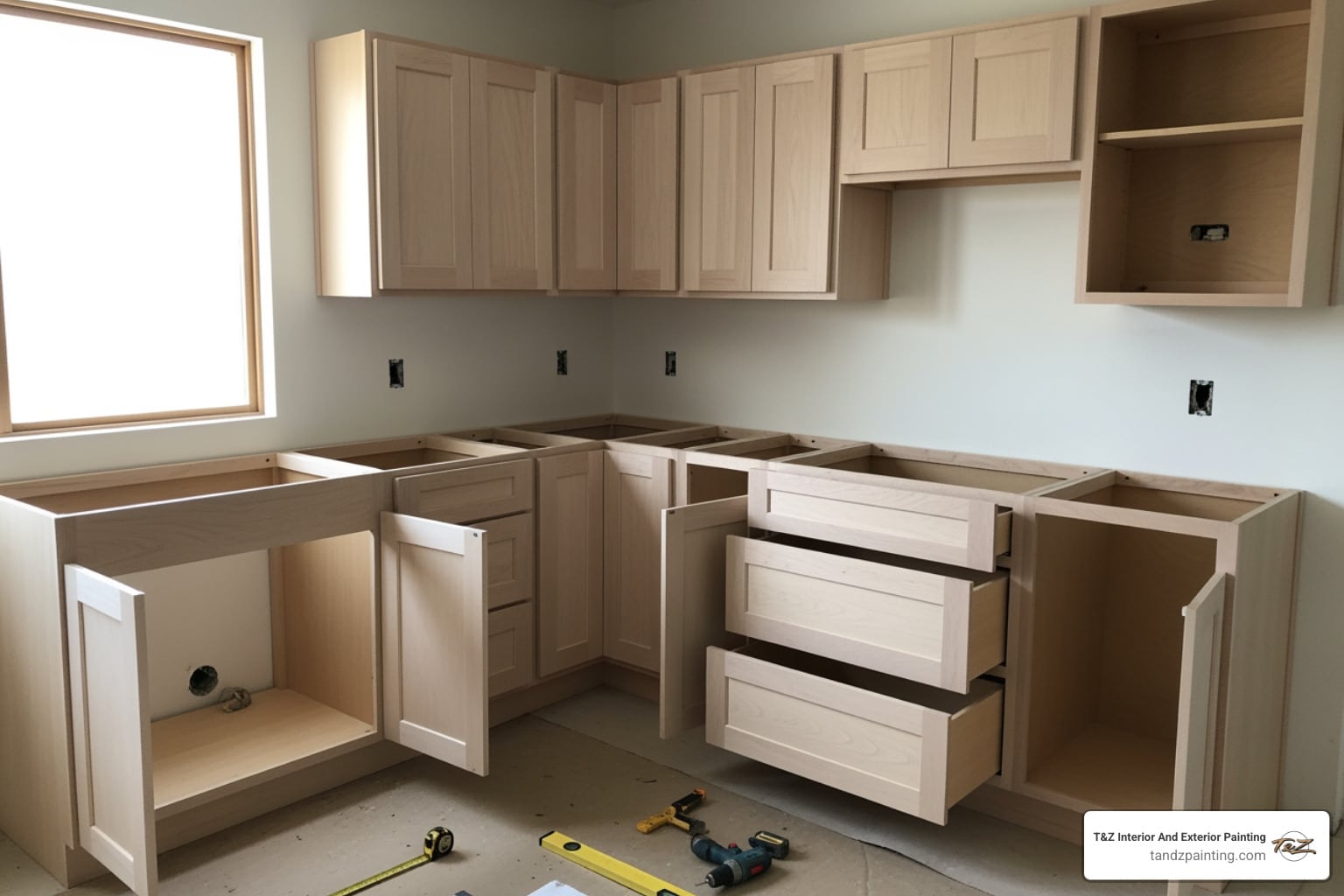
The Timeless Appeal of Unfinished Cabinets
Bare wood cabinets are unfinished kitchen cabinets that arrive without any stain, paint, or protective finish. They offer a blank canvas for homeowners who want complete control over their kitchen’s final look. Here’s what you need to know:
Where to Buy Bare Wood Cabinets:
- Local cabinet makers – Custom options with hands-on inspection
- Big-box home improvement stores (Lowe’s, Home Depot) – Ready-to-assemble and fully assembled options
- Online specialty retailers – Wide selection, great value, and delivery to your door
- RTA (Ready-to-Assemble) suppliers – Budget-conscious unfinished options
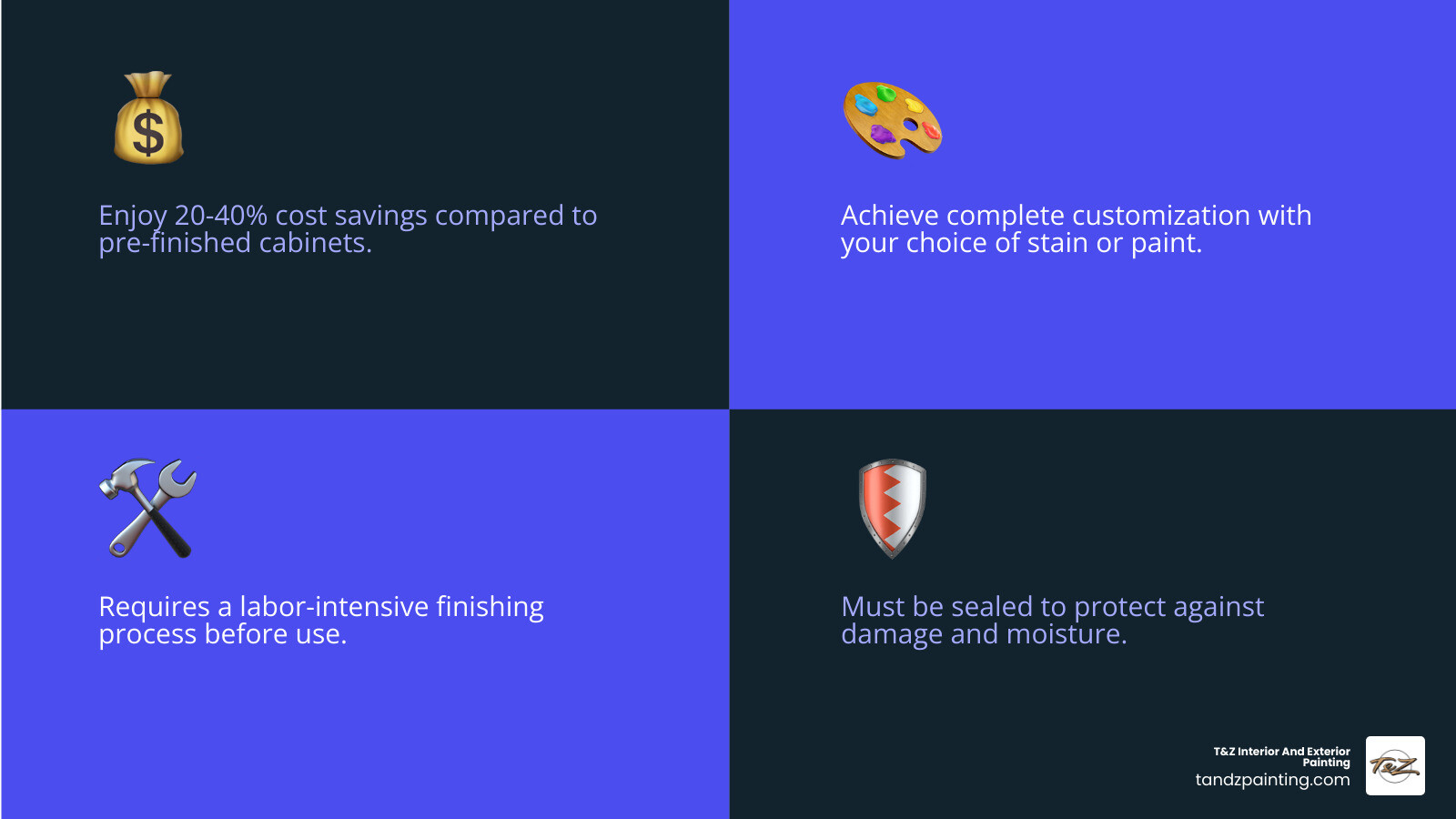
Key Benefits:
- Excellent value compared to pre-finished cabinets
- Complete customization with your choice of stain or paint
- Natural wood beauty and warmth
- Ability to match existing finishes perfectly
Bare wood cabinets offer something pre-finished options can’t: complete creative freedom. Whether you’re drawn to the rich grain of walnut or the clean lines of maple, unfinished cabinets let you achieve the exact look you envision. The natural appeal of wood brings warmth and character to any kitchen, adapting to your style, from Scandinavian minimalism to cozy farmhouse charm. You control the color, sheen, and protective coating.
But there’s a tradeoff. Unfinished cabinets require preparation, finishing, and sealing before installation. This means extra time and effort, and the wood is vulnerable to moisture and damage until properly sealed.
I’m Tomasz Niemotko, and through over 13 years of cabinet painting and refinishing work at T&Z Interior And Exterior Painting, I’ve helped countless homeowners transform bare wood cabinets into stunning kitchen centerpieces. Understanding the right preparation and finishing techniques for bare wood cabinets makes all the difference between a DIY disaster and a professional-quality result.
In this guide, we’ll walk through everything you need to make an informed decision about sourcing and finishing your unfinished cabinets.
Know your bare wood cabinets terms:
Choosing Your Canvas: A Guide to Wood Species
Choosing bare wood cabinets means selecting the perfect “canvas” for your kitchen. The wood species is a foundational decision, impacting durability, color, and how it accepts stain or paint. Each wood has a unique grain, hardness, and color that contributes to your kitchen’s final aesthetic.
Some woods have prominent grains that shine with a transparent finish, while others have a smooth surface ideal for painting. Understanding these differences is key to achieving your desired look.

Popular Wood Species for Bare Wood Cabinets
When selecting bare wood cabinets, you’ll encounter several popular wood types:
- Oak: A classic choice known for its prominent, open grain that creates a timeless, rustic look. It’s a durable wood that accepts stains beautifully, allowing its texture to stand out. Oak cabinets are a popular choice for their strength and longevity.
- Maple: Characterized by a smooth, fine grain, maple is excellent for both painted and stained finishes. It offers a clean, contemporary feel and is a very durable and accessible option.
- Cherry: Admired for its rich, warm reddish-brown tones that deepen over time. It has a fine, smooth grain, making it a luxurious choice for traditional or neat designs.
- Walnut: For a bold, sophisticated statement, walnut features deep, rich brown hues and distinctive grain patterns. It’s a strong, durable wood whose natural beauty requires minimal staining. Walnut cabinetry is a beautiful and timeless option.
- Hickory: Known for its striking color variation, from creamy white to dark brown, hickory offers a dramatic, rustic appeal. It’s one of the toughest hardwoods, making it incredibly durable and wear-resistant for busy kitchens.
- Birch: Birch has a fine, even grain that finishes well. It’s a versatile wood that can be stained to mimic other hardwoods or painted for a crisp look. Its wide availability makes it a popular choice.
| Wood Type | Grain Pattern | Hardness (Janka Scale) | Best Finish Type | Common Style |
|---|---|---|---|---|
| Oak | Prominent, open | Medium-Hard | Stains, Natural | Traditional, Rustic |
| Maple | Fine, subtle | Hard | Paint, Light Stains | Modern, Contemporary |
| Cherry | Smooth, fine | Medium | Natural, Light Stains | Neat, Traditional |
| Walnut | Bold, swirling | Hard | Natural, Dark Stains | Sophisticated, Modern |
| Hickory | Distinctive, varied | Very Hard | Natural, Stains | Rustic, Farmhouse |
| Birch | Fine, even | Medium-Hard | Paint, Stains | Versatile |
Considerations for Different Wood Grains
The wood’s grain pattern is a crucial factor in how your chosen finish will appear.
- Prominent Grain (Oak, Hickory): These woods have a pronounced grain that is highlighted by stain, adding depth and character. If you plan to paint, you may need a grain filler for a perfectly smooth surface.
- Subtle Grain (Maple, Birch): These woods feature a finer, uniform grain, making them an ideal smooth base for painted finishes. When stained, their subtle grain allows the color to be the focus, offering a sleek appearance.
The choice of wood for your Natural Wood Kitchen Cabinets: Types + Ideas depends on your aesthetic preferences, durability needs, and how you envision the final look. We can help guide you through these choices.
The Ultimate Guide to Finishing Bare Wood Cabinets
Once you’ve selected your bare wood cabinets, the next step is finishing them. This protects the wood, improves its beauty, and ensures longevity. Until finished, bare wood is susceptible to moisture, stains, and wear. A quality finish acts as a shield, making your cabinets durable and easy to maintain.
This is where our expertise at T&Z Interior And Exterior Painting truly shines. Whether you DIY or entrust us with the task, understanding the process is key. We offer comprehensive Services: Cabinet Painting to ensure your cabinets look stunning and last a lifetime.
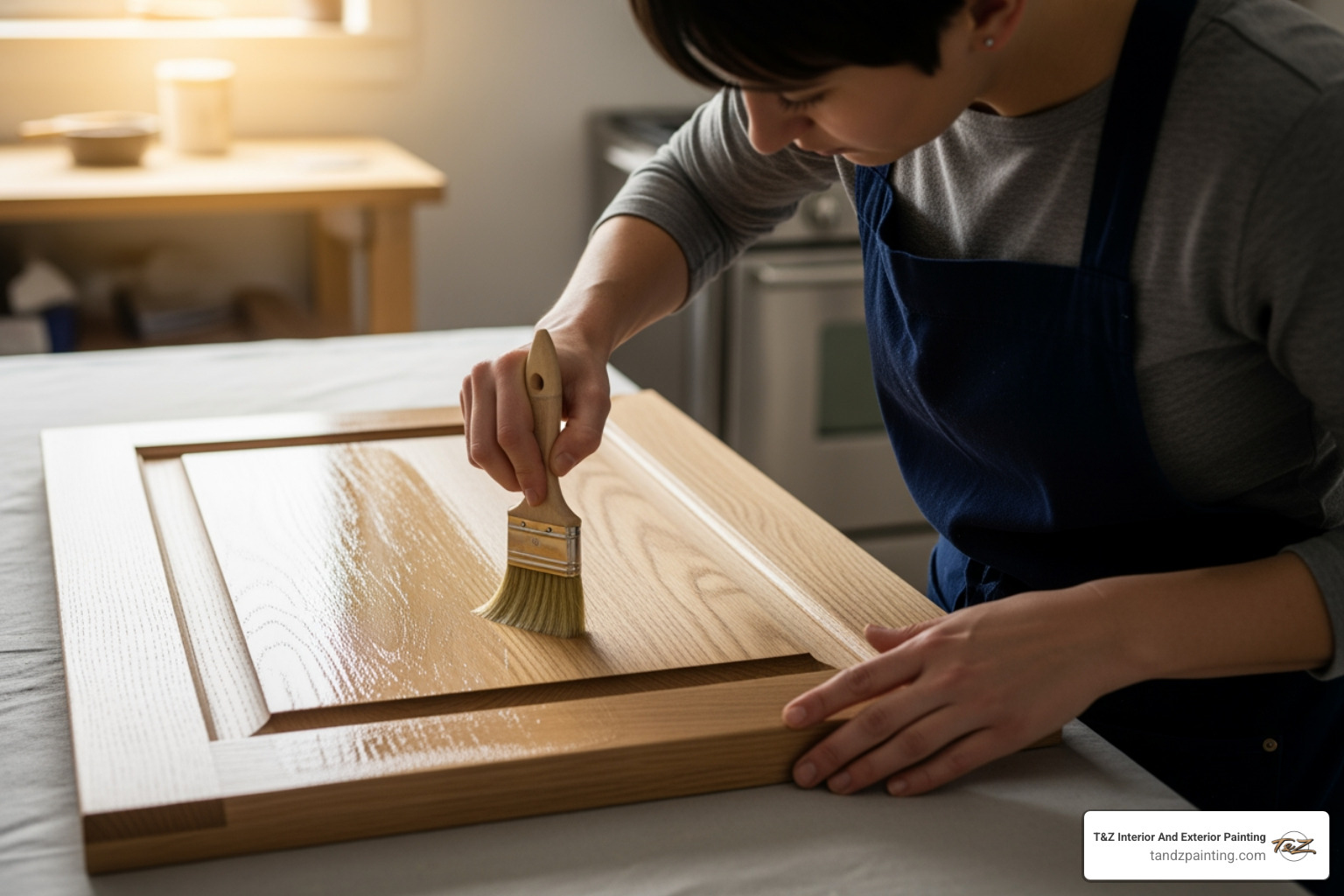
Essential Steps for Surface Preparation
Proper preparation is the secret to a flawless finish. Skipping these steps can lead to uneven color and poor adhesion.
- Sanding Process: Start with medium-grit sandpaper (120-grit) and move to finer grits (150-220 grit) for a silky-smooth surface. Always sand with the wood grain to avoid swirl marks. This ensures optimal finish adhesion.
- Using Wood Conditioner: For woods prone to blotching (like pine or cherry), a pre-stain conditioner helps the stain penetrate evenly for uniform color.
- Tack Cloth Cleaning: After sanding, wipe down cabinets with a tack cloth to remove all dust particles. Dust is the enemy of a smooth finish.
- Clean Workspace: A dustless environment is paramount. Airborne dust can settle on your wet finish, creating imperfections. Ensure your workspace is clean and well-ventilated. For more tips, see our guide on How to Prepare a House for Painting.
Finishing Techniques: Stain, Paint, or Natural?
The beauty of bare wood cabinets is the variety of finishing options.
- Staining: This improves the natural wood grain. Options include water-based, gel, and dye stains, each offering different looks and benefits for even color and vibrancy.
- Painting: For a modern or bold look, painting is ideal. Hybrid enamel paints offer durability, while milk or chalk paint can create unique, matte finishes. A smooth surface is key for a great paint job. Our article Can You Paint Kitchen Cabinets? has more insights.
- Natural Finishes: To celebrate the raw beauty of the wood, natural oil or wax finishes penetrate the wood, offering protection while showcasing its true character.
- Protective Topcoats: A topcoat is essential. Polyurethane is a durable choice, while conversion varnish offers professional-grade protection against moisture, ideal for kitchens.
DIY vs. Professional Finishing
Deciding whether to finish your bare wood cabinets yourself or hire professionals is a big consideration.
- DIY: Finishing cabinets yourself can be rewarding and gives you complete control. However, it’s a labor-intensive process that can take 1-2 weeks, including drying time.
- Professional: For complex techniques, spray application, or to save time, professional finishing is invaluable. Our team at T&Z Interior And Exterior Painting has the experience and equipment to achieve a factory-smooth, durable finish in 3-5 days. We control for temperature and humidity, which is critical for a lasting result.
We can help you steer the process, especially if you’re in Lombard, Wheaton, Elmhurst, or any of our service areas in Illinois, to achieve a stunning result for your Kitchen Cabinet Painting: Is It A Good Idea?.
Designing with Natural Wood: Styles and Hardware
Bare wood cabinets are incredibly versatile, integrating into nearly any design style. Their organic appeal brings a unique warmth and texture. The key is choosing the right wood, finish, and hardware to complement your aesthetic.
- Modern & Scandinavian: Light-colored woods like maple or birch with a clear finish are perfect for a sleek, minimalist look. Pair them with flat-panel doors and simple hardware.
- Farmhouse & Traditional: Oak, cherry, or hickory with a warm stain creates a cozy, inviting feel. Shaker-style doors are a timeless choice.
- Industrial: Dark-stained or distressed wood cabinets blend beautifully with the metal accents and exposed elements of industrial design.
- Mid-Century Modern: Walnut cabinetry, with its rich tones and distinctive grain, is a hallmark of this style. Pair it with clean lines and understated hardware.
- Contemporary Traditional: Rich wood stains can bridge contemporary efficiency with traditional warmth for a sophisticated space.
For more creative ideas, explore 7 Ways to Give Wood Kitchen Cabinets Personality Without Paint.
How Hardware Transforms Bare Wood Cabinets
Hardware is the jewelry for your cabinets and can dramatically alter their appearance. The right choice lifts the style of your bare wood cabinets.
- Hardware Selection: Match hardware to your style. Sleek bar pulls suit contemporary designs, while cup pulls work with rustic aesthetics. Knobs offer classic functionality.
- Knobs vs. Pulls: Knobs are traditional and subtle, while long pulls create a modern, streamlined feel. Some designs even feature integrated pulls carved into the wood.
- Finishes: Matte black offers a bold contrast, brushed brass adds warmth, chrome provides a modern gleam, and bronze complements rustic styles.
Trending Finishing Combinations
Bare wood cabinets are perfect for experimenting with current trends.
- Two-Tone Kitchens: Use different finishes for upper and lower cabinets, or for an island versus the perimeter, to create visual interest and depth.
- Painted Island with Wood Perimeter: A painted island creates a focal point while the surrounding wood cabinets provide warmth.
- Mixing Materials: Integrate elements like glass-front doors or pair wood with unique countertops like concrete or marble for a dynamic look.
These combinations allow for a highly personalized kitchen that helps your bare wood cabinets truly shine.
Sourcing and Inspecting Your Unfinished Cabinets
Acquiring your bare wood cabinets is the next step. Knowing where to look and what to inspect upon arrival is paramount to a successful project.
Where to Find Bare Wood Cabinets
- Local Cabinet Makers: For custom designs and hands-on inspection, local makers in areas like Lombard, Wheaton, or Elmhurst are an excellent choice, often providing higher quality construction.
- Big-Box Home Improvement Stores: Retailers like Lowe’s or Home Depot offer a range of ready-to-assemble (RTA) and fully assembled unfinished cabinets. These are a convenient and budget-conscious choice, though selection can vary.
- Online Specialty Retailers: Online suppliers offer a wide selection of wood species and door styles, often delivering directly to your door.
- RTA (Ready-to-Assemble) Suppliers: Shipped flat-packed for assembly, RTA cabinets are a great option for renovations and are popular for their value and customizable nature.
When sourcing, prioritize solid wood construction with quality joinery (like dovetail joints) for structural integrity.
Frequently Asked Questions about Bare Wood Cabinets
How do you maintain finished bare wood cabinets for longevity?
Proper maintenance is key to preserving your finished bare wood cabinets. Once sealed, they are quite resilient.
- Gentle Cleaning: Regularly wipe cabinets with a soft, damp cloth and a mild, pH-neutral wood cleaner for tougher spots. Avoid abrasive cleaners or harsh chemicals that can damage the finish.
- Avoid Harsh Chemicals: Steer clear of ammonia-based cleaners or silicone polishes, which can strip the finish or leave a residue.
- Reapply Protective Coats: Depending on the finish, you may need to reapply a protective coat every few years to refresh it. This is less frequent for durable finishes like polyurethane.
- Wipe Spills Promptly: Immediately wipe up any water, food, or grease spills. Lingering moisture can penetrate the finish and damage the wood.
Are solid wood cabinets a durable choice for kitchens?
Absolutely. Solid wood cabinets are exceptionally durable, offering strength and longevity that surpasses many other materials.
- Durability and Longevity: Solid wood withstands daily kitchen use and can last up to 50 years with proper care. It’s a long-term investment that can be refinished multiple times.
- Strength and Resistance: When properly sealed, solid wood resists humidity without warping. It is inherently stronger than MDF or particleboard, holding up better over time and resisting sagging or damage.
Choosing solid bare wood cabinets means investing in a foundation that is built to last.
How long does a cabinet finishing project typically take?
The timeline for finishing bare wood cabinets depends on your approach and the complexity of the finish.
- Project Planning: Proper planning is crucial. Factor in time for choosing materials, gathering supplies, and preparing your workspace.
- DIY Timeline (1-2 weeks): A DIY project typically takes 1 to 2 weeks. This accounts for cleaning, sanding, applying multiple coats of stain or paint, and topcoats, with adequate drying time between each step.
- Professional Timeline (3-5 days): A professional team like T&Z Interior And Exterior Painting can often complete the job in 3 to 5 days. Our experience, equipment, and controlled environment ensure efficiency and quality.
- Drying and Curing Times: Remember to differentiate between drying time (dry to the touch) and curing time (maximum hardness). A full cure can take several weeks, during which the cabinets should be treated gently.
Conclusion: Bringing Your Custom Kitchen Vision to Life
Choosing bare wood cabinets empowers your creative vision, offering unparalleled customization in wood species, finish, and hardware. From the rustic charm of oak to the sleek elegance of walnut, bare wood provides a durable and timeless foundation for any design.
The journey from raw wood to a finished masterpiece involves careful preparation, thoughtful application, and a protective topcoat. While a DIY approach offers personal satisfaction, professional finishing guarantees a factory-smooth, long-lasting result, saving you time and ensuring perfection.
At T&Z Interior And Exterior Painting, we understand the transformative power of a beautifully finished kitchen. Whether you’re planning a renovation in Lombard, a refresh in Wheaton, or an update in Elmhurst, our expert team is ready to help you achieve the stunning kitchen you’ve always dreamed of. Don’t let the thought of finishing deter you from the endless possibilities of bare wood cabinets.
Let us help you bring your custom kitchen vision to life with a flawless, professional finish. For expert guidance and stunning results, Get a professional finish for your cabinets with T&Z Interior And Exterior Painting.