
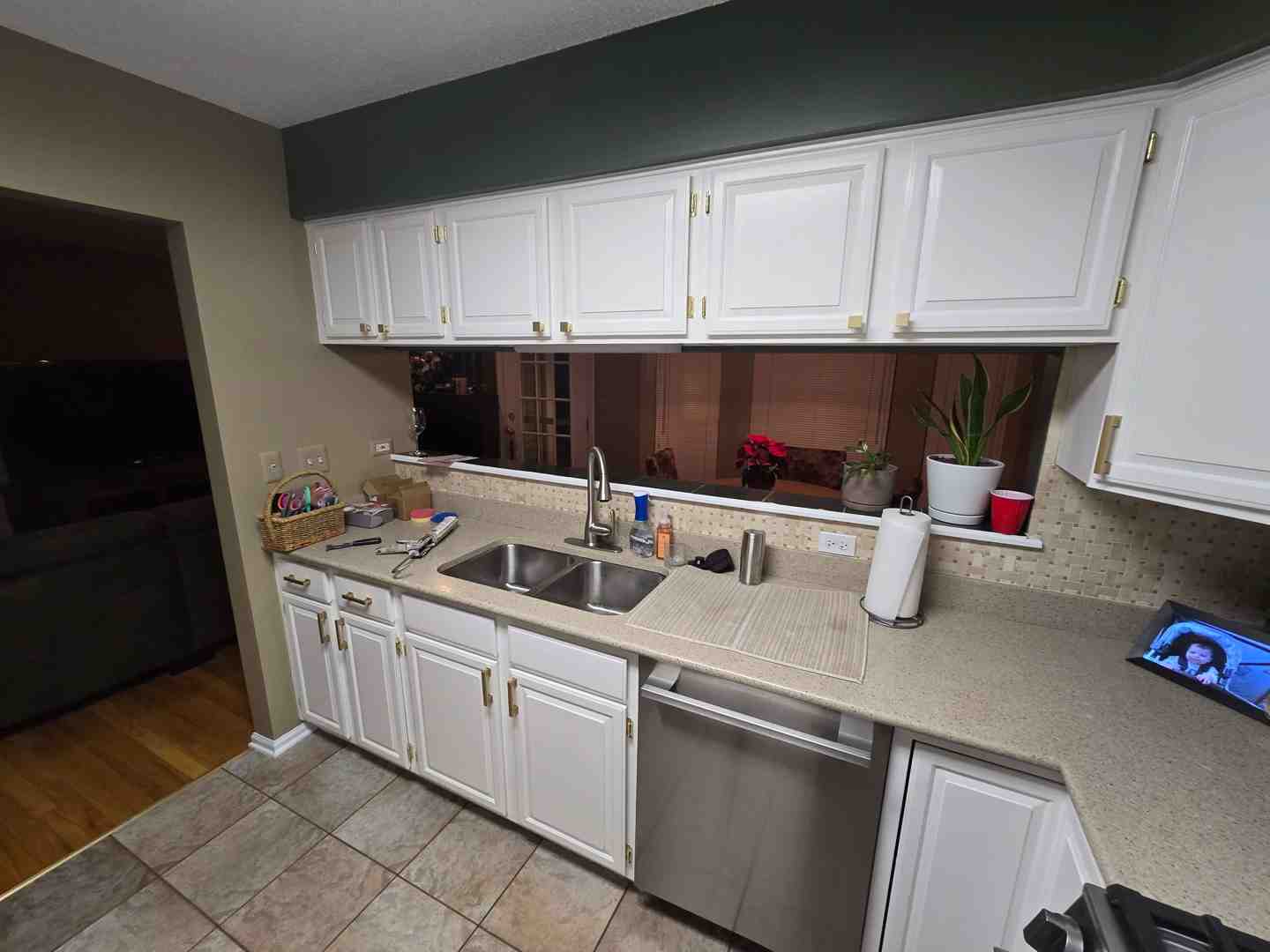
Why Choosing the Right Wood Matters for Your Cabinet Painting Project
The best wood for painted cabinets comes down to a few top choices. Maple offers the smoothest, most durable finish and is considered the gold standard. Poplar provides excellent paint adhesion and is a great value. Birch delivers a good balance of durability and a smooth finish. For the absolute smoothest surface with zero grain, MDF (Medium-Density Fiberboard) is unbeatable, though it’s less durable than solid wood.
Quick Comparison:
| Wood Type | Best For | Key Advantage | Consideration |
|---|---|---|---|
| Maple (Hard/Soft) | Premium kitchens | Smoothest solid wood, minimal prep | Premium material |
| Poplar | Value-conscious projects | Great paint adhesion, accessible | Softer, can dent |
| Birch | Mid-range durability | Good strength, smooth surface | Grain may show slightly |
| MDF | Flawless painted finish | Perfectly smooth, no grain | Not as strong, moisture-sensitive |
If you’re planning to paint your kitchen cabinets, you’ve realized that not all wood is created equal. While any wood is paintable, choosing paint-grade wood is the difference between a factory-smooth finish and one that shows every grain line and imperfection.
The problem is that most homeowners don’t know which woods take paint well and which require hours of extra prep work—or never look quite right.
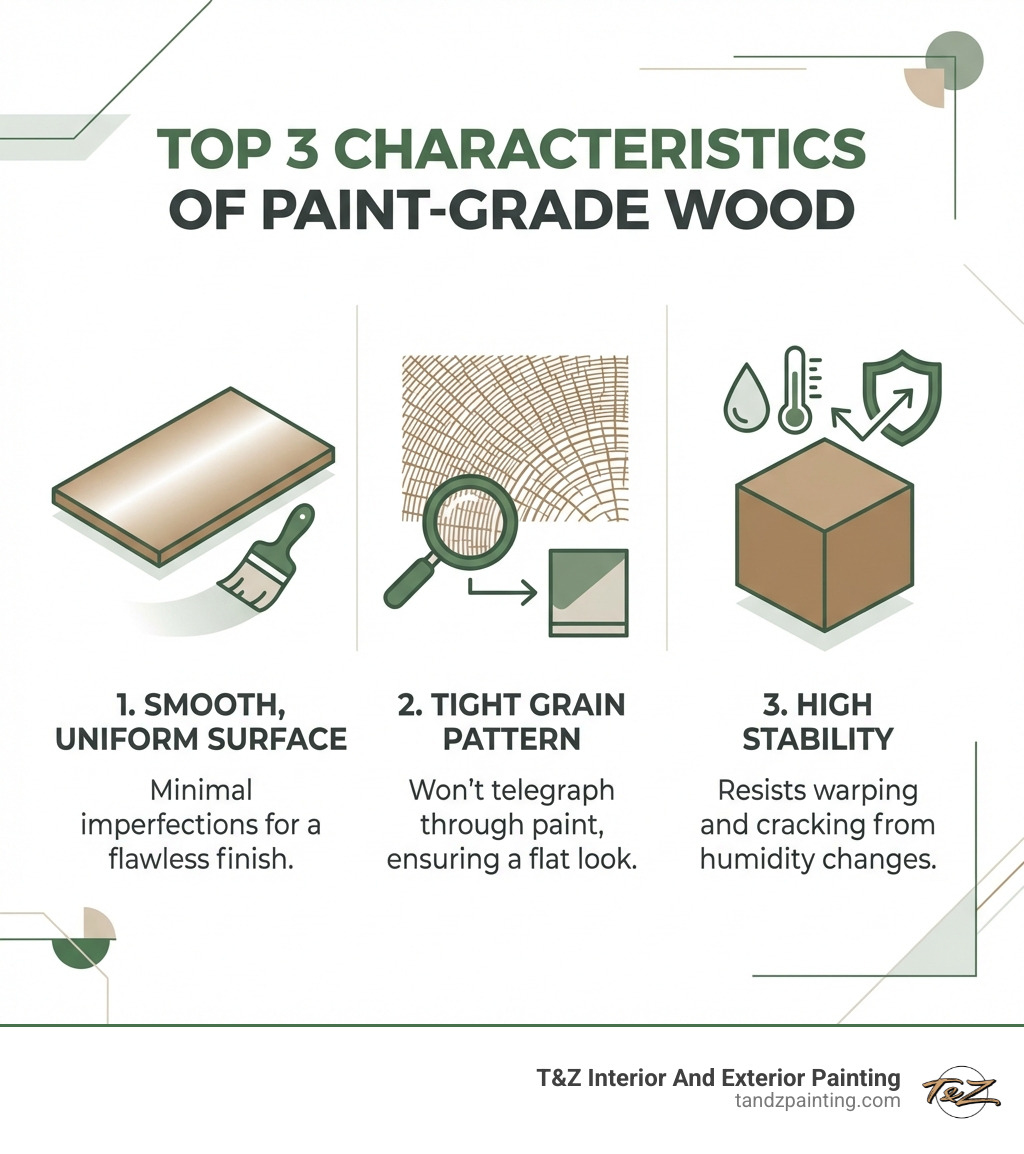
Paint-grade wood is chosen for its ability to accept paint smoothly and durably. These woods share three key traits: a smooth, uniform surface; a tight, minimal grain pattern that won’t show through paint; and excellent stability that resists warping or cracking.
Some woods, like Oak, have deep grain that creates a textured look unless you spend significant time filling it. Others, like soft Poplar, paint beautifully but dent easily in busy kitchens. Understanding these differences helps you choose the right material for your specific needs—whether it’s a busy family kitchen or a bathroom vanity where moisture resistance is key.
I’m Tomasz Niemotko, and with over 13 years of cabinet painting experience in Lombard and surrounding areas, I’ve worked with every type of paint-grade wood. I’ve seen which materials deliver lasting, beautiful results. This guide shares what I’ve learned about choosing the best wood for painted cabinets so you can make an informed decision.
Best wood for painted cabinets terms at a glance:
- Cabinet Painting
- Best Paint Brush for Cabinets
- Why Semi-Gloss Cabinets Might Be Your Kitchen’s Best Friend
What Makes a Wood “Paint-Grade”?
“Paint-grade” wood refers to species and engineered materials chosen for their ability to produce a flawless, long-lasting painted finish. Ideal characteristics include a smooth texture, minimal grain, excellent stability, and durability for daily use.
Understanding the difference between hardwood and softwood is a good starting point. Hardwoods come from deciduous trees and are typically denser and harder than softwoods from coniferous trees. For painted cabinets, this density is crucial as it prevents excessive paint absorption, leading to a smoother finish.
Wood’s stability is also a critical consideration. As a natural material, wood expands and contracts with changes in humidity and temperature. This movement can be a painted cabinet’s worst enemy, causing the less flexible paint to develop hairline cracks at joints. Selecting a stable wood is paramount for maintaining the integrity of your painted finish over time.
The Importance of a Smooth, Tight Grain
A wood’s grain pattern is the alignment of its fibers, which determines its texture. As Wood Magazine explains, a uniform grain pattern is ideal for paint-grade wood because it creates a level surface.
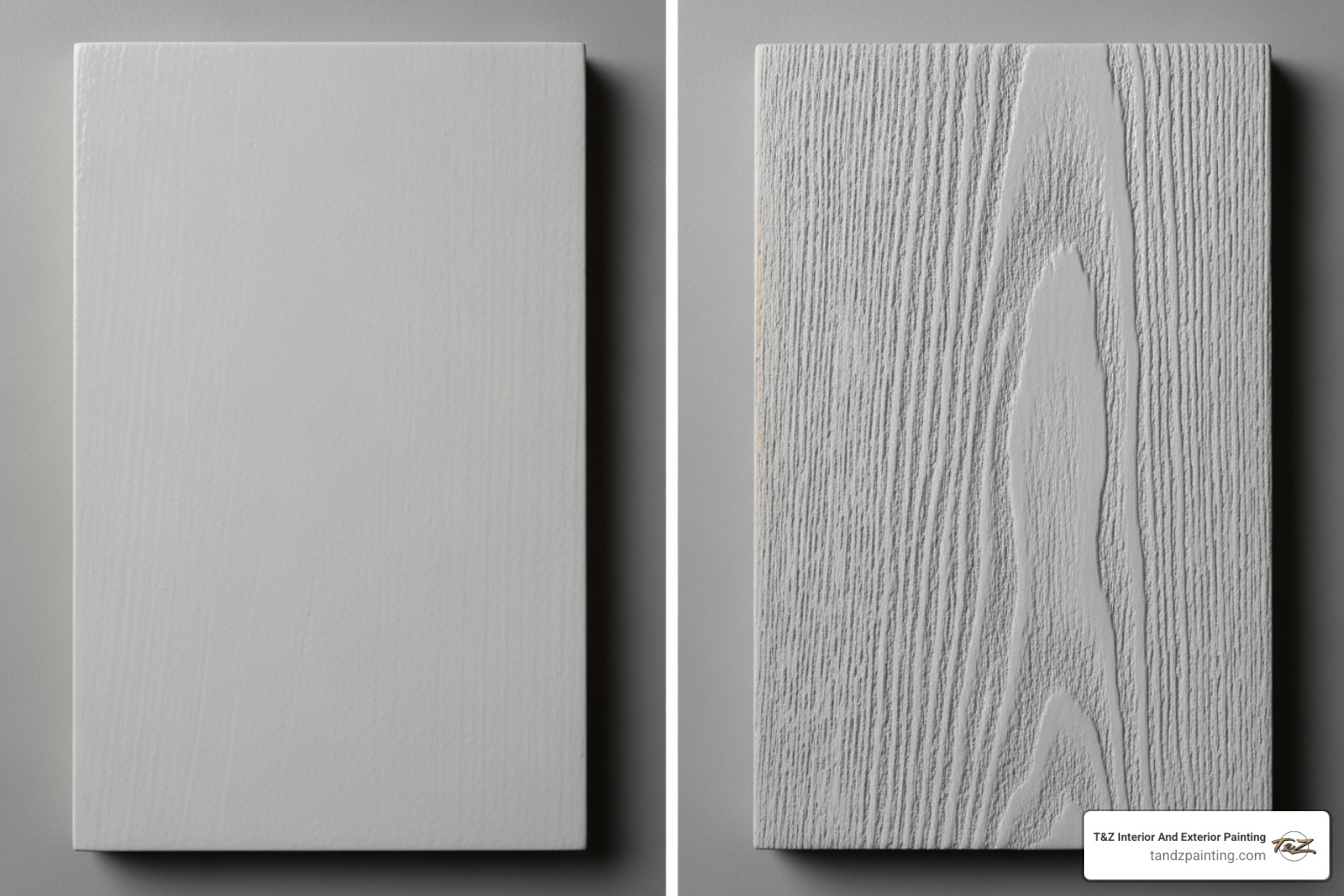
For painted cabinets, a smooth, tight, or “closed” grain is highly desirable. Woods like maple, birch, and poplar have small, unnoticeable pores, allowing for an even paint application without the grain’s texture showing through. The result is a sleek, modern finish. These woods require less prep, as their natural surface is already conducive to painting.
Conversely, woods with an “open” grain, like oak or hickory, have larger pores. If painted without significant prep, these pores create a noticeable “orange peel” texture as the grain “telegraphs” through the paint. While some homeowners like this rustic look, most prefer a smooth surface. Achieving this on open-grain woods requires extra steps like applying grain fillers or multiple thick coats of primer, adding time and effort to the process.
Why Density and Hardness Matter
A wood’s density and hardness significantly impact the durability of painted cabinets. The Janka hardness scale measures a wood’s resistance to denting and wear. Higher density and hardness mean greater resistance to daily impacts.
For cabinets in high-traffic kitchens, durability is paramount. Imagine a busy kitchen in Lombard, IL, with frequent use. Softer woods are more prone to dents and scratches. When a softer wood dents, the paint is likely to crack or chip at the point of impact. Harder woods like maple or oak better withstand these daily abuses, preserving the painted finish longer.
This is why we often recommend harder woods for kitchens and other heavily used areas. While a softer wood like poplar might be fine for a guest bathroom vanity in Wheaton, IL, a robust hardwood is a much better choice for the main kitchen cabinets in a busy family home in Plainfield, IL. The goal is to choose a wood that will look stunning once painted and maintain its beauty and integrity for years.
The Best Wood for Painted Cabinets: Top Contenders
Choosing the best wood for painted cabinets involves balancing aesthetics, durability, and stability. While many woods can be painted, some truly excel, making the process smoother and the result more enduring. Our experience painting cabinets across Elmhurst, Glenview, and other Chicagoland areas has shown us which materials consistently deliver superior results.
Here’s a comparison of the top contenders we recommend:
| Wood Type | Grain | Hardness (Janka Score) | Stability | Finish Quality | Pros | Cons |
|---|---|---|---|---|---|---|
| Maple (Hard/Soft) | Fine, uniform | 1450 (Hard), 950 (Soft) | Excellent | Very Smooth | Durable, smooth, minimal prep, stable | Premium material, can be hard to work |
| Poplar | Fine, uniform | 540 | Good | Smooth | Great value, takes paint well, easy to work | Softer, prone to dents, less stable than maple |
| Birch | Simple, straight | 1260 | Good | Smooth | Durable, good paint surface | Grain may show slightly, can be a premium option |
| MDF | None | N/A (Engineered) | Excellent | Perfectly Smooth | No grain, very stable, accessible | Not as strong, susceptible to water damage |
Maple (Hard & Soft): The Premium Choice
Maple, in both its hard and soft varieties, is a top choice for the best wood for painted cabinets. Hard maple is incredibly dense and durable, making it highly resistant to dents and dings in busy kitchens like those in Downers Grove, IL. Soft maple, while slightly less hard, is still an excellent choice. Both share a remarkably smooth surface and a fine, uniform grain, allowing for a flawless paint application with minimal prep.
Maple’s light, consistent color also means less risk of tannin bleed-through, ensuring your paint color stays true. Its stability minimizes expansion and contraction, reducing the risk of stress cracks in the paint. When we paint maple cabinets, we know we’re starting with a canvas that will yield a stunning, long-lasting finish, like in our Cabinet Painting in Naperville project.
Poplar: The Versatile & Value-Friendly Option
For a versatile and effective option, poplar is a top recommendation. It’s a “soft hardwood” with a fine, uniform texture that takes paint exceptionally well. It’s easy to sand and machine, making it a favorite for cabinet doors and face frames.
However, poplar’s main drawback is its relative softness. With a lower Janka rating, it’s more susceptible to dents, especially in high-traffic areas. This means it might not hold up as well as harder woods in a busy family kitchen in Carol Stream, IL. Poplar’s natural greenish hue may also require an extra coat of primer for a true-to-color finish. Despite this, its accessibility and ease of painting make it a popular choice.
Birch: The Durable Mid-Range Contender
Birch is another excellent choice for painted cabinets, offering great durability. It has a simple, straight grain that is fine and tight, making it an ideal surface for paint. Birch is harder than poplar, offering better resistance to dents and scratches. It also has good density, contributing to the substantial feel of cabinet doors.
While birch takes paint very well, its fine pores can sometimes “telegraph” through the paint if not properly primed, creating a subtle texture. With proper prep, this is often mitigated, resulting in a beautiful, smooth surface. Birch is a durable and visually appealing option for many cabinet painting projects in areas like La Grange, IL.
MDF vs. Solid Wood: What’s the Best Wood for Painted Cabinets?
This is a common question: should you choose solid wood or an engineered material like Medium-Density Fiberboard (MDF)? Each has distinct advantages.
MDF is an engineered product with a perfectly smooth, uniform surface free of grain or knots. This makes it an unparalleled canvas for paint, offering the smoothest possible finish.
One of MDF’s greatest strengths is its stability. It doesn’t expand and contract with humidity changes like solid wood, making it highly resistant to warping and cracking. This makes it ideal for cabinet door panels.
However, MDF is not as strong as solid wood and is more susceptible to dents. Crucially, it is highly vulnerable to water damage and can swell and disintegrate if not properly sealed, a concern for kitchens and bathrooms.
Solid wood offers superior strength and durability. It can withstand more impact and generally has a longer lifespan. However, its natural movement means there’s always a risk of paint cracking at the joints over time.
For many clients in Woodridge, IL, and Schaumburg, IL, the ideal solution is a combination: solid wood frames for strength with MDF panels for a perfectly smooth, stable painted surface. This hybrid approach often provides the best wood for painted cabinets by leveraging the strengths of both materials.
Woods to Approach with Caution
While nearly any wood can be painted, some species demand significantly more effort to achieve a smooth, professional finish. Understanding these challenging woods can save headaches and set realistic expectations. Sometimes, you might decide the extra prep isn’t worth it or choose to accept the wood’s natural texture. If you’re wondering Is painting your existing cabinets a good idea?, assessing the wood type is a critical first step.
Oak (Red & White): Taming the Prominent Grain
Oak is a classic cabinet wood known for its strength and durability. However, its prominent, deep, and open grain pattern presents a challenge for painting.
If you paint oak without proper prep, the grain will create a textured, “orange peel” effect. While some accept this for a rustic style, achieving a smooth finish requires significant extra steps.
To tame oak’s grain, we recommend specialized grain fillers applied and sanded smooth before priming. This fills the pores and creates a level surface. Alternatively, multiple coats of a thick, oil-based primer, sanded between coats, can help fill the grain. This time-consuming process is essential for a smooth finish.
Other Woods to Consider (Alder, Beech, Pine)
Other woods can be painted but come with their own considerations:
Alder: This softer hardwood has an even grain but tends to absorb primer at a high rate, meaning you may need more coats.
Beech: Beech has a fine, straight grain and can be painted successfully. However, like birch, it may require extra prep to prevent the grain from showing. Its natural reddish or yellowish hue might also require extra primer to mask completely.
Pine: As a softwood, pine is known for its knots and prominent grain. It’s generally not recommended for high-quality painted cabinets. Knots can bleed resin through the paint, causing stains, and its prominent grain creates an uneven texture. If painting pine, a shellac-based or stain-blocking primer is crucial to seal the knots. Its softness also makes it prone to dents.
These woods require a more intensive preparation process than smoother hardwoods or MDF to achieve a professional and durable finish.
From Bare Wood to Flawless Finish: Essential Prep Steps
Regardless of the best wood for painted cabinets you choose, the secret to a stunning, long-lasting finish lies in the preparation. A professional finish isn’t just about the paint; it’s about the canvas you create. This is where our expertise at T&Z Painting shines, ensuring every cabinet in Chicago, Addison, or Lockport, IL, receives meticulous care.
Cleaning, Sanding, and Priming
These three steps are the foundation of any successful cabinet painting project:
Cleaning and Degreasing: Kitchen cabinets accumulate grease and grime. Before any work begins, it’s crucial to thoroughly clean and degrease all surfaces. We use professional-grade degreasers to ensure every nook is spotless. Lingering contaminants will prevent primer and paint from adhering properly.
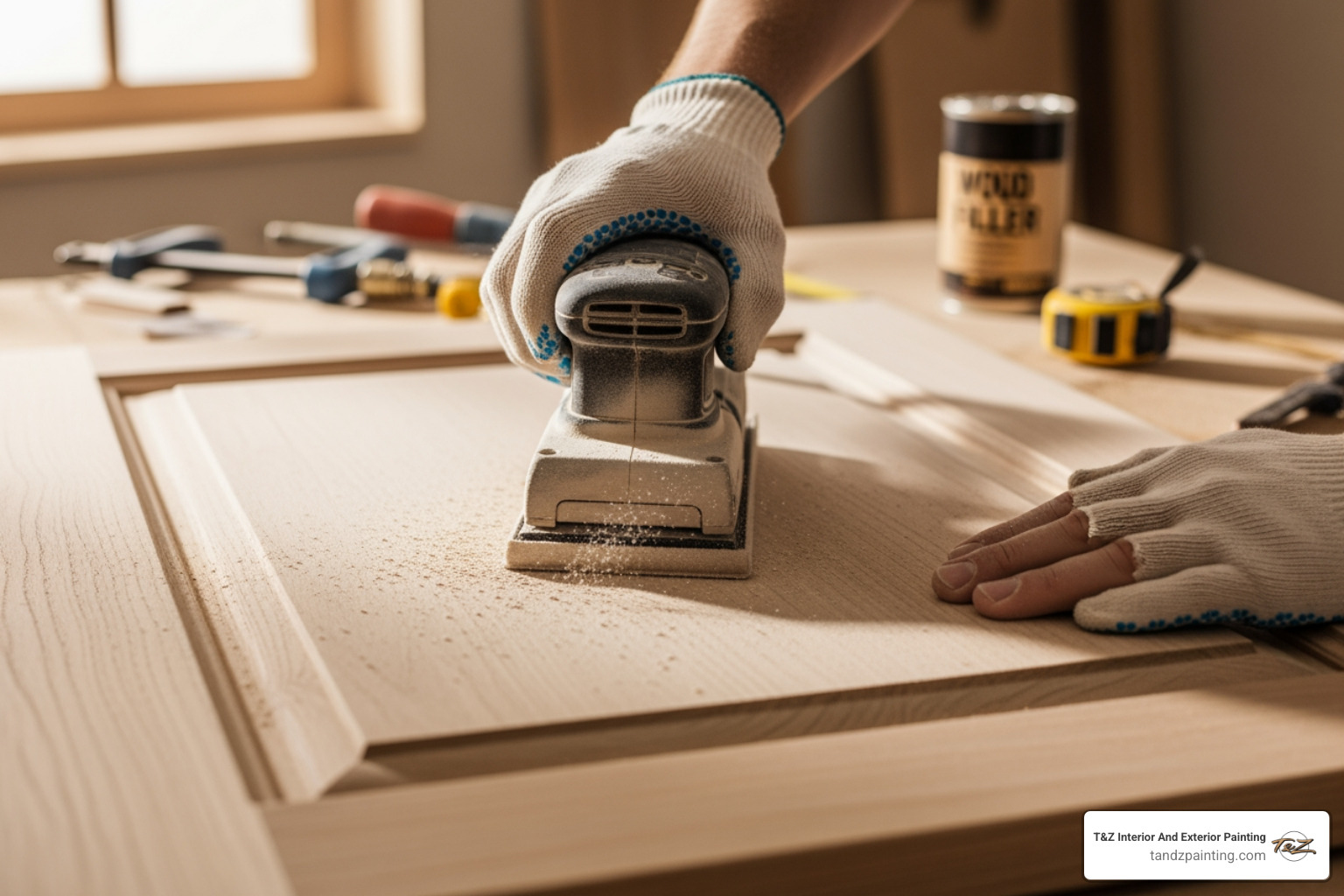
Filling Imperfections: Once clean, we inspect for any holes, cracks, or dents. These are filled with a high-quality wood filler to create a perfectly smooth surface. For open-grain woods like oak, this is when grain fillers are applied. After drying, the filler is sanded smooth.
Sanding: Sanding smooths imperfections and creates a “tooth” for the primer to grip, ensuring excellent adhesion. We typically start with a medium-fine grit sandpaper (120-150 grit), sanding with the grain. For a professional finish, we also break all sharp edges to prevent chipping.
Priming: This step is non-negotiable. A high-quality primer is essential for several reasons:
- Adhesion: It provides an ideal surface for paint to bond to, preventing peeling.
- True Color: It creates a uniform base, ensuring your chosen paint color appears true and vibrant.
- Stain Blocking: For woods with high tannin content (like oak) or knots (like pine), a stain-blocking primer is vital to prevent bleed-through.
- Grain Filling: For open-grain woods, multiple coats of a thick primer, sanded between coats, can help fill the grain.
After the first primer coat dries, we lightly sand with a finer grit sandpaper (220 grit) to smooth any raised wood fibers. This meticulous approach ensures the paint lays down flawlessly for a durable, beautiful finish.
Frequently Asked Questions about Paint-Grade Cabinet Wood
What is the best wood for painted cabinets to avoid cracks?
MDF is the most stable material and is highly resistant to cracking because it doesn’t expand and contract like solid wood. For solid woods, stable, kiln-dried hardwoods like Maple are the best choice to minimize movement that leads to hairline cracks at the joints.
Can you paint any wood, or are some not recommended?
While almost any wood can be painted, woods with very open, deep grains like Oak or Hickory, or resinous woods like Pine, are not ideal. They require extensive prep work like filling grain or sealing knots to achieve a smooth, durable finish, which is why they are often not recommended for a simple paint job.
How does humidity affect painted wood cabinets?
Humidity causes natural wood to expand (in high humidity) and contract (in low humidity). This movement can stress the paint, which is not as flexible, causing hairline cracks to appear over time, especially at the joints where different pieces of wood meet.
Your Partner for a Perfect Painted Finish
Choosing the best wood for painted cabinets is a critical first step. The right wood simplifies painting, improves durability, and ensures a beautiful, long-lasting finish. Whether you opt for the smoothness of MDF, the durability of maple, or the versatility of poplar, understanding your material is key.
However, professional application is just as crucial as wood selection. Even the finest paint-grade wood can have a mediocre result if the prep is rushed or the technique is subpar. This is where the expertise of T&Z Painting makes all the difference. Our experienced teams, serving communities from Lombard to Wilmette, are masters of the meticulous preparation and precise application that turn cabinet dreams into reality.
We use top-brand materials and proven techniques, including advanced spraying, to ensure a factory-smooth and durable result. We understand how different woods react to primers and paints, ensuring each cabinet receives the customized treatment it needs for optimal adhesion and longevity.
Don’t let the complexities of wood choice or painting deter you. With T&Z Painting, you have a partner dedicated to delivering quality, stunning results through experienced teams, top-brand materials, and excellent customer service.
Learn more about our professional Cabinet Painting services and let us help you transform your space with a perfect painted finish.