
The Finish Decision That Makes or Breaks Your Kitchen Cabinets
Semi gloss vs satin for cabinets is one of the most common decisions homeowners face when refreshing their kitchen — and the wrong choice can mean fingerprints you can’t hide, a shine that feels off, or a finish that wears out too fast.
Here’s the quick answer:
| Satin | Semi-Gloss | |
|---|---|---|
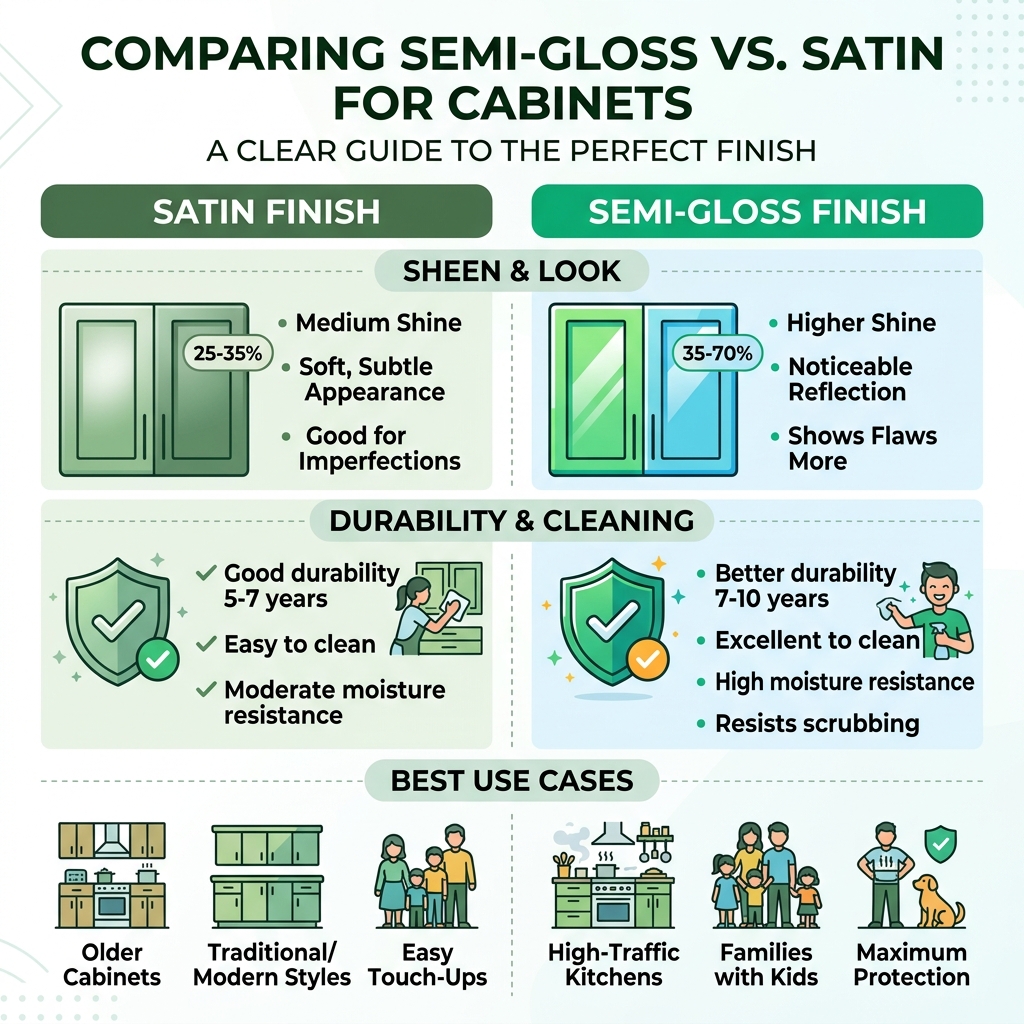
| Sheen Level | Medium (25-35% shine) | Higher (35-70% shine) |
| Hides Imperfections | Yes — better | No — shows flaws more |
| Durability | Good (5-7 years) | Better (7-10 years) |
| Ease of Cleaning | Good | Excellent |
| Moisture Resistance | Moderate | High |
| Best For | Older cabinets, traditional/modern styles | High-traffic kitchens, families with kids |
| Touch-Up Ease | Easy — blends well | Harder — sheen variation shows |
The short version: Choose satin if your cabinets have minor flaws, you prefer a softer look, or you want easier touch-ups. Choose semi-gloss if you cook often, have kids or pets, or need maximum durability and easy cleaning.
But the right choice also depends on your lighting, your cabinet color, and how your kitchen actually gets used day to day. That’s where most homeowners get stuck — and where getting it wrong leads to a redo.
One homeowner described standing in the paint aisle completely lost, unsure which finish would actually hold up. It’s a frustratingly common experience. The difference between satin and semi-gloss looks small on a paint chip but feels significant once it’s on your cabinets.
I’m Tomasz Niemotko, owner of T&Z Interior And Exterior Painting, with over 15 years of experience in cabinet painting and refinishing across Lombard and the surrounding suburbs — giving me hands-on insight into exactly where the semi gloss vs satin for cabinets debate plays out in real kitchens. Let’s break it down clearly so you can make the right call with confidence.
Understanding the Main Difference: Semi Gloss vs Satin for Cabinets
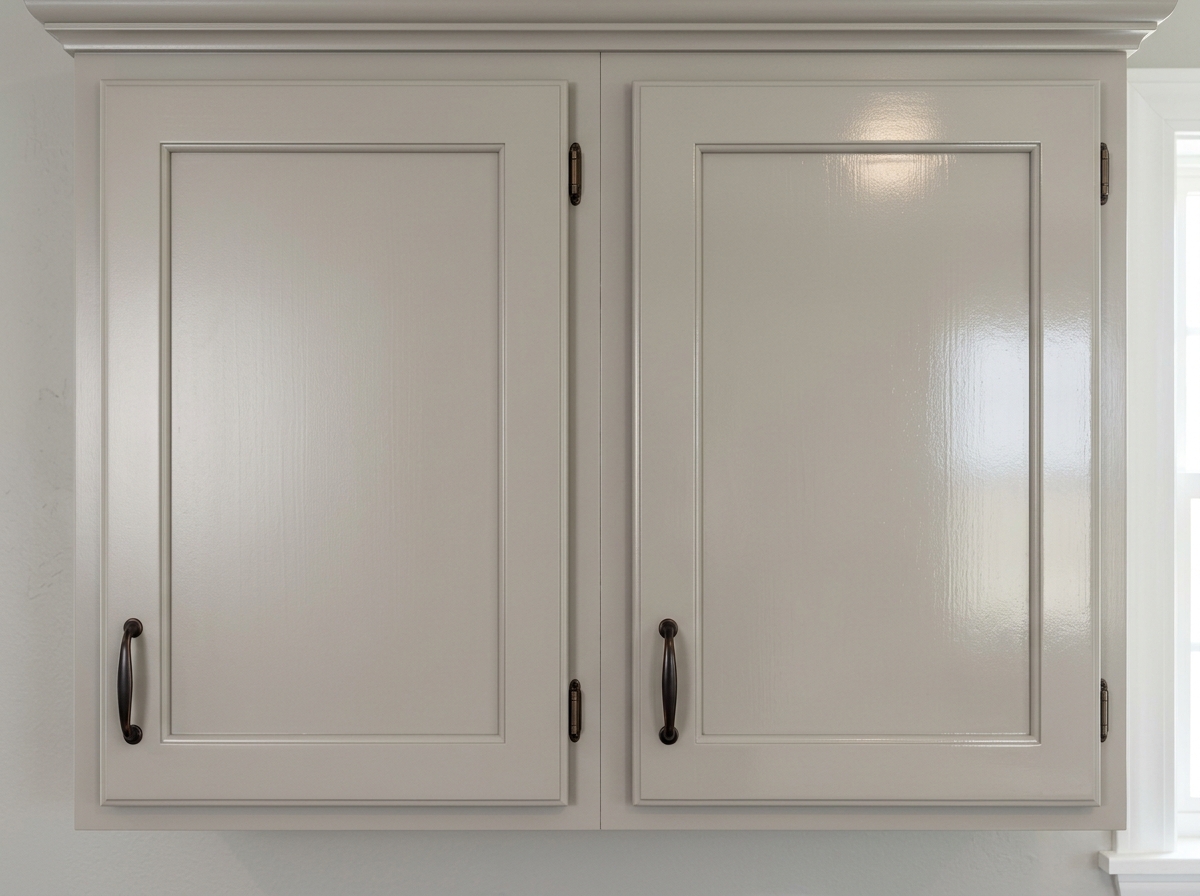
When we talk about the difference between semi gloss vs satin for cabinets, we are primarily talking about “sheen.” Sheen is a measure of how much light reflects off the surface of the paint. Think of it as a scale: on one end, you have flat or matte (which absorbs light), and on the other, you have high gloss (which acts like a mirror). A cabinet paint’s sheen affects both how the finish looks and how it performs over time, especially in busy kitchens where durability and cleanability matter.
The Visual Impact of Satin vs Semi-Gloss for Cabinets
Satin is often described as having a “pearl-like” or “velvety” appearance. It sits in the middle of the spectrum, offering a soft glow rather than a sharp reflection. It provides enough luster to look clean and finished without being distracting.
Semi-gloss, on the other hand, has a much more noticeable “shine.” It contains a higher ratio of resin to pigment, creating a harder, smoother, and more reflective film. When light hits a semi-gloss cabinet, you’ll see a distinct highlight. This can make a kitchen feel bright and energetic, but it also means the surface is more visually active. If you are looking for a professional transformation, our cabinet painting services ensure that whichever sheen you choose is applied with a factory-like smoothness.
How Sheen Affects Color Perception
The sheen you choose will actually change how your paint color looks on the surface. Higher sheens like semi-gloss tend to make colors appear more saturated and dark hues appear deeper. For example, a navy blue in semi-gloss will look rich and vibrant because the light bouncing off the surface emphasizes the pigment.
Satin tends to soften colors. If you’ve chosen a muted pastel or a creamy off-white, a satin finish will preserve that softness. In contrast, a higher-reflectivity finish might make a soft white look more clinical under bright LED kitchen lights. If you want a general overview of how paint sheen works across different finishes, this paint sheen guide from Benjamin Moore is a useful reference.
Satin Finish: The Versatile Choice for Modern and Traditional Styles
Satin has become the “Goldilocks” of cabinet finishes in many Chicagoland homes, from Elmhurst to Glenview. It’s not too shiny, not too flat—it’s just right for homeowners who want a sophisticated, understated look.
Pros and Cons of Satin on Kitchen Cabinets
Pros:
- Hides Imperfections: Because it diffuses light rather than reflecting it directly, satin is incredibly forgiving.
- Fingerprint Resistant: It doesn’t show oily smudges or “fingerprints” as easily as shinier finishes.
- Versatile Aesthetic: It looks just as good on a sleek modern slab door as it does on a traditional raised-panel door.
- Easier Touch-ups: If a door gets a small scratch, a satin touch-up blends into the existing finish much more seamlessly.
Cons:
- Slightly Less Durable: While still tough, it doesn’t have the “armor-like” hardness of semi-gloss.
- Cleaning Effort: You can certainly wipe it down, but heavy grease might require a bit more elbow grease compared to a slicker surface.
Why Satin Hides Flaws Better
If your cabinets are older or have seen some “life,” satin is your best friend. Wood is a natural product; it has grain, tiny dents, and sometimes visible brush marks if it was previously hand-painted. A high-shine finish acts like a spotlight on these flaws. Satin, however, scatters the light, making those minor surface irregularities disappear. If you’re wondering if your current cabinets are even worth the effort, check out our guide on kitchen cabinet painting: is it a good idea? to see how we handle surface prep for the best results.
Semi-Gloss Finish: The Durable Champion for High-Traffic Kitchens
If your kitchen is the “command center” of a busy household in Naperville or Schaumburg, durability might be your number one priority. This is where semi-gloss truly shines—literally.
Pros and Cons of Semi-Gloss vs Satin for Cabinets
Pros:
- Maximum Durability: The higher resin content creates a non-porous, hard shell that stands up to the “daily abuse” of steam, oil, and flying spaghetti sauce.
- Easiest to Clean: Dirt and grease don’t “stick” to semi-gloss as easily. Usually, a quick wipe with a damp microfiber cloth is all you need.
- Moisture Resistance: It creates a better barrier against the humidity of a boiling pot of pasta.
Cons:
- Shows Everything: Every nick, dent, or poorly sanded patch will be visible.
- “Orange Peel” Risk: If applied by an amateur with a roller, semi-gloss can develop a bumpy texture known as orange peel, which is very obvious in high-sheen finishes.
Performance in High-Traffic Households
For families with young children or pets, semi-gloss is often the pragmatic winner. Kids tend to touch cabinets with sticky hands, and pets might scuff the lower base cabinets. Semi-gloss can handle frequent scrubbing with mild soap without the finish becoming dull or “burnished.” If you’re still on the fence about whether your specific cabinet material can handle this type of upgrade, read more about can you paint kitchen cabinets? on our blog.
Practical Factors: Lighting, Colors, and Lifestyle
Choosing between semi gloss vs satin for cabinets isn’t just about looking at two samples in a showroom. You have to look at your specific kitchen environment.
Matching Sheen to Your Kitchen Lighting
Lighting is the “secret ingredient” in paint selection.
- Lots of Natural Light: If you have large windows, a semi-gloss finish might create a distracting glare at certain times of the day. Satin is often better here because it softens the sunlight.
- Windowless or Dark Kitchens: If your kitchen feels a bit like a cave, semi-gloss can be a lifesaver. It acts as a light booster, bouncing the available light around the room to make the space feel larger and brighter.
Best Color Pairings for Semi-Gloss vs Satin for Cabinets
- White and Off-White: These look great in both, but semi-gloss gives white cabinets a “crisp, contemporary” feel, while satin gives them a “classic, farmhouse” warmth.
- Dark Colors (Navy, Charcoal, Black): Semi-gloss is fantastic for dark colors as it adds depth and prevents the cabinets from looking like “black holes” in the room.
- Bold Colors: If you’re going for a “pop” of emerald green or red, semi-gloss makes that color stand out as a focal point.
Professional Application and Maintenance for Long-Lasting Results
At T&Z Interior And Exterior Painting, we’ve seen that the quality of application is just as important as the sheen itself. A semi-gloss finish applied with a brush by a DIYer will almost always show brush marks. That’s why we use professional spray equipment to ensure a level, factory-like finish regardless of the sheen.
Lifespan and Maintenance Tips
A professionally painted cabinet set using high-quality materials should last between 7 and 10 years. To keep them looking new:
- Use Microfiber: Avoid abrasive sponges that can scratch the sheen.
- Mild Soap Only: Harsh chemicals can break down the paint film over time. For more on proper surface care, you can review Benjamin Moore’s cleaning recommendations.
- Dry Immediately: Never leave water sitting on the edges of cabinet doors.
- Curing Time: Paint feels dry to the touch quickly, but it takes 30 days to fully “cure” to its maximum hardness. Be gentle during that first month!
Expert Touch-Ups and Repainting
If life happens and you get a deep scratch, satin is much easier to fix. You can often dab a bit of paint on the spot and it will blend right in. With semi-gloss, the “new” paint often has a slightly different luster than the “old” cured paint, which can leave a visible patch. This is why we always recommend keeping a small, airtight container of your original paint for future use.
Frequently Asked Questions about Cabinet Finishes
Can you mix satin and semi-gloss finishes in the same kitchen?
Absolutely! A popular design trend is to use semi-gloss on the lower cabinets (where the most “mess” happens) and a satin finish on the upper cabinets. This gives you the durability where you need it and a softer, eye-level aesthetic. You can also use a different sheen on a kitchen island to make it stand out as a piece of furniture.
Which finish is better for hiding brush marks and scratches?
Satin is the clear winner here. Its ability to scatter light means that the “valleys” of a brush mark or the “edges” of a scratch don’t catch the light. If you are painting over wood with a heavy grain, like oak, satin will help minimize the appearance of that grain texture.
How does the finish impact home resale value?
In the current market, both satin and semi-gloss are considered “safe” and desirable. However, the trend in high-end homes across areas like Oak Brook and Hinsdale has been leaning toward satin or “dull” finishes because they look more like custom furniture and less like “painted wood.” The most important factor for resale isn’t the sheen—it’s the quality of the finish. A smooth, drip-free professional job adds value; a messy DIY job can actually detract from it.
Conclusion
Deciding between semi gloss vs satin for cabinets doesn’t have to be a source of stress. If you want a sleek, easy-to-clean kitchen that stands up to heavy use, semi-gloss is your champion. If you prefer a soft, furniture-like look that hides the “character marks” of an older home, satin is the way to go.
At T&Z Interior And Exterior Painting, we bring over 15 years of experience to every project in Lombard, Wheaton, and the surrounding Chicago suburbs. We don’t just “slap on a coat of paint”—we meticulously prep, sand, and spray to ensure your cabinets look stunning for years to come. Whether you’re looking for a bold modern change or a classic refresh, we have the expertise to get it done right. Ready to transform your kitchen? Explore our professional cabinet painting services and let us help you pick the perfect finish for your home.