
Is Satin Paint a Good Choice for Your Kitchen Walls?
Satin paint for kitchen walls is one of the most popular finish choices among homeowners — and for good reason. Here’s a quick summary to help you decide if it’s right for your kitchen:
- Best for: Kitchens with moderate to high activity, families with kids or pets, or anyone who needs walls they can wipe down easily
- Sheen level: Mid-range — more reflective than eggshell, less shiny than semi-gloss
- Key benefits: Durable, moisture-resistant, easy to clean, and mildew-resistant
- Main drawback: Reflects enough light to highlight wall imperfections more than lower-sheen finishes
- Verdict: Yes — satin is widely recommended by painting professionals and interior designers as one of the top two finishes for kitchen walls (alongside eggshell)
Kitchens are one of the hardest-working rooms in any home. They deal with steam, grease, splashes, and constant foot traffic. Choosing the wrong paint finish means you’ll be scrubbing — or repainting — far sooner than you’d like.
That’s why the finish matters just as much as the color.
Satin sits in the sweet spot on the sheen spectrum. It’s durable enough to handle kitchen conditions, smooth enough to wipe clean, and subtle enough to look elegant without turning your walls into a mirror. But it’s not perfect for every kitchen — and knowing the trade-offs can save you from a costly mistake.
This guide walks you through everything: the pros, the cons, how it compares to other finishes, and how to apply and maintain it correctly.
My name is Tomasz Niemotko, owner of T&Z Interior And Exterior Painting, and over more than 13 years of professional interior painting work across Lombard and the surrounding suburbs, I’ve applied satin paint for kitchen walls in countless homes — giving me a clear, hands-on understanding of where it excels and where it falls short. In the sections below, I’ll share what I’ve learned so you can make the most informed decision for your kitchen.
Satin paint for kitchen walls terms to know:
Understanding Paint Sheens: Where Does Satin Fit?
To understand how satin paint behaves on your kitchen walls, it helps to look at how paint is made. Every can of paint is a mixture of pigments (which provide the color), binders or resins (which hold the pigments together and form the paint film), and solvents (which keep the paint liquid until it dries).
The ratio of these ingredients determines the paint’s sheen. Glossier paints contain a higher proportion of binders and resins relative to pigment, creating a tight, hard, and highly reflective surface when fully cured. Flat or matte paints, on the other hand, have more pigment and less binder, which leaves the dried surface microscopically rough, scattering light instead of reflecting it.
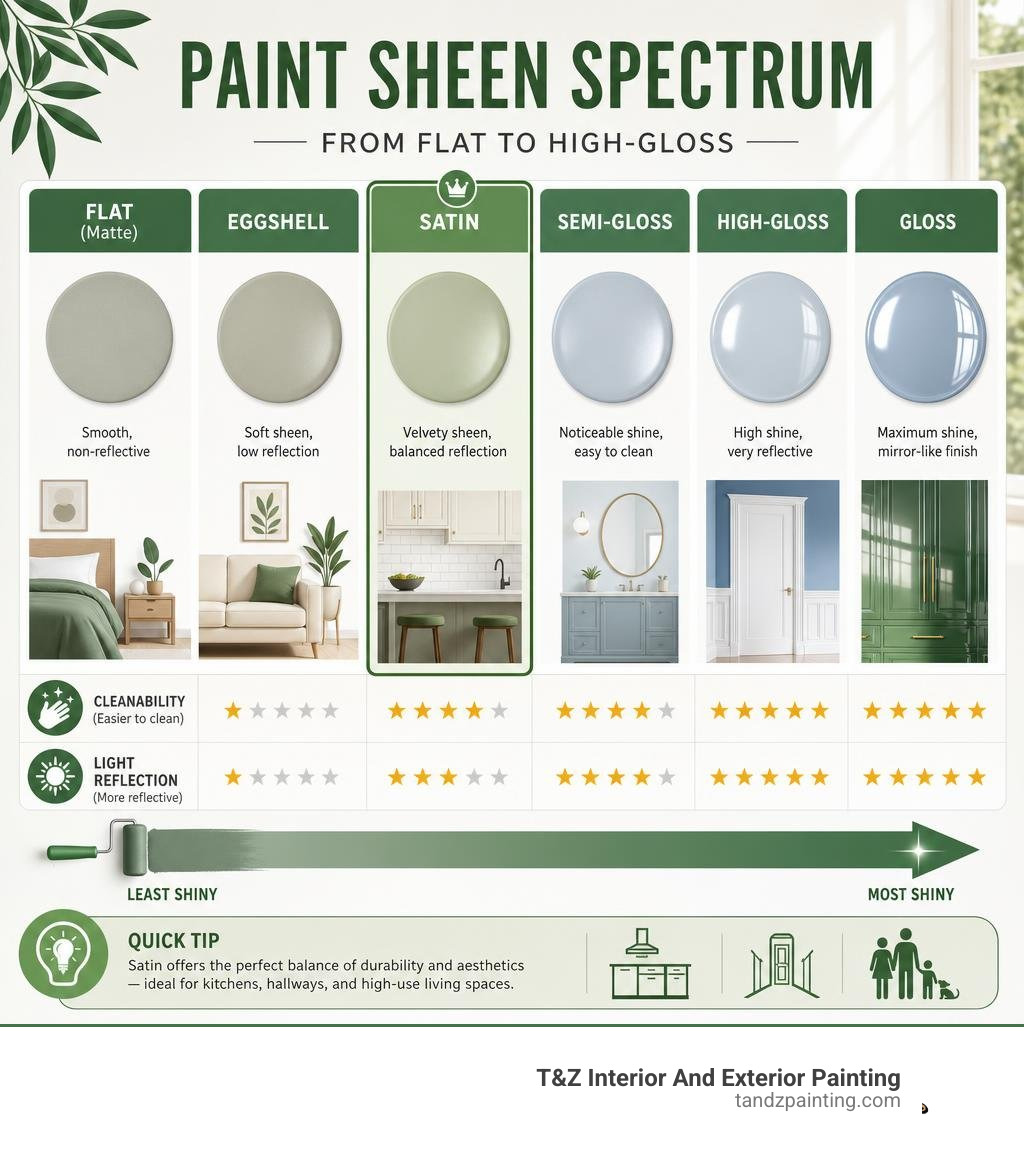
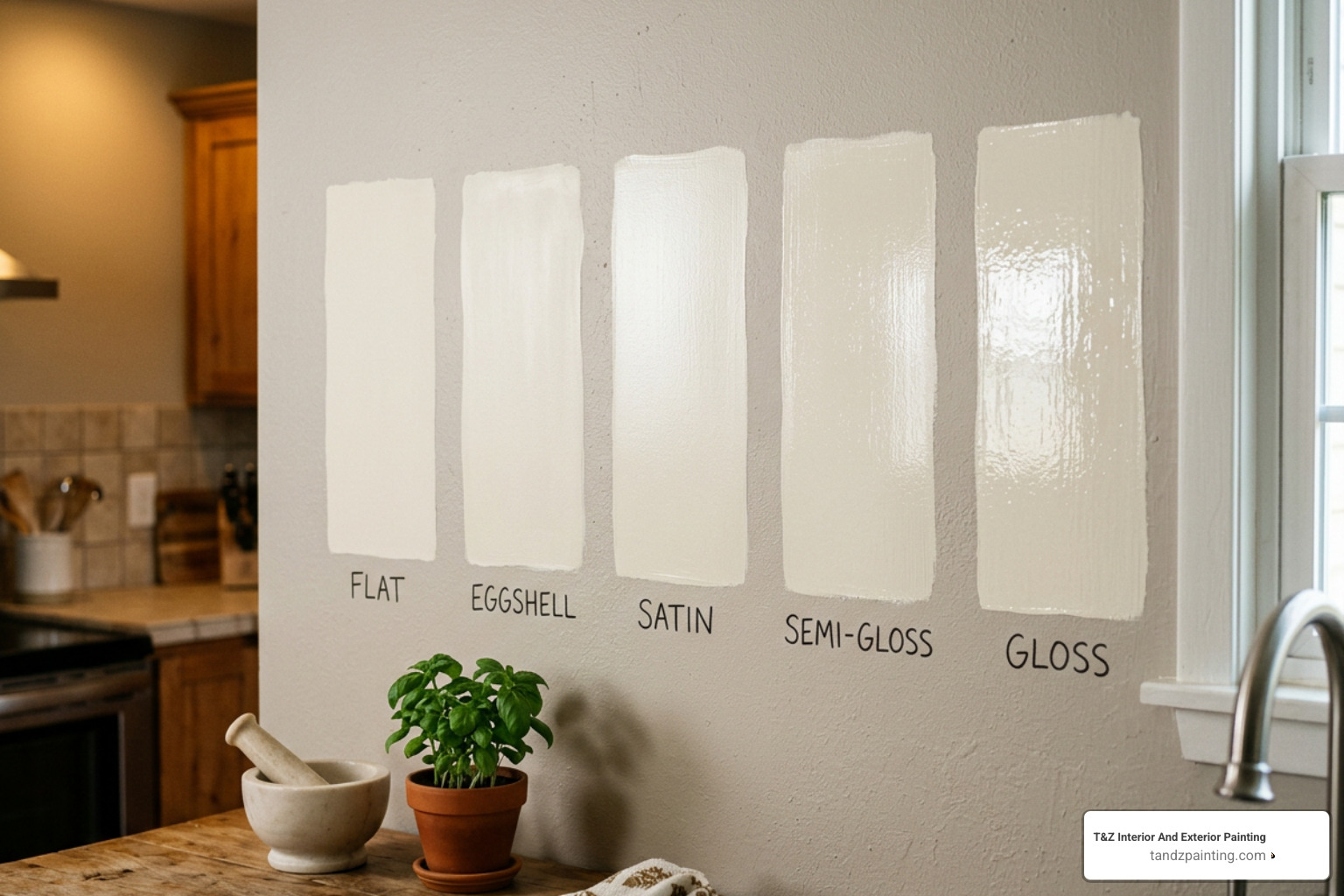
Satin sits right in the middle of this chemical spectrum. It offers a soft, pearl-like luster that is often described as having a velvety glow. It reflects enough light to look rich and dimensional, yet it avoids the harsh, plastic-like glare of semi-gloss or high-gloss finishes.
When you look at a room painted in satin under different lighting conditions, you will notice a subtle warmth. In a bright kitchen with plenty of natural light, a satin finish provides a soft illumination without creating distracting hot spots of glare on the wall surfaces.
Understanding this balance is crucial when planning your home’s overall aesthetic. For a deeper dive into how sheens behave across various spaces, check out our comprehensive guide on Paint Sheens 101: The Official Guide to Choosing the Right Finish.
Comparing Satin to Matte, Eggshell, and Gloss
To make the right choice, it is helpful to see exactly how satin compares to the other four standard paint sheens. Each level of gloss serves a specific purpose, balancing the visual appearance of the room with the practical demands of daily life.
| Paint Sheen | Reflectivity Level | Washability & Scrubbability | Best Use Cases |
|---|---|---|---|
| Flat / Matte | Very Low (0-5% sheen) | Low (can easily burnish or wear away) | Ceilings, low-traffic bedrooms, hiding wall flaws |
| Eggshell | Low-Medium (10-25% sheen) | Moderate (good for wiping, bad for heavy scrubbing) | Living rooms, adult bedrooms, hallways |
| Satin | Medium (25-40% sheen) | High (stands up to repeated scrubbing) | Kitchens, bathrooms, active family spaces |
| Semi-Gloss | Medium-High (40-70% sheen) | Very High (highly moisture and stain-resistant) | Kitchen cabinets, trim, baseboards, doors |
| High Gloss | High (70%+ sheen) | Maximum (mirror-like, exceptionally durable) | High-impact accent furniture, specialty trim |
As you can see, satin is the first sheen on the scale that offers the high level of washability required to handle kitchen grease and food splatters. While matte and eggshell absorb light beautifully, they are prone to “burnishing” — a term painters use to describe the shiny spots that appear when you scrub a flat paint too hard.
Conversely, semi-gloss and high-gloss are incredibly durable but can look too clinical or reflective when applied across large wall expanses. For an in-depth breakdown of how to choose the right balance of reflectivity and performance, read about flat-gloss-or-satin-paint-how-do-you-choose.
Additionally, if you are torn between a subtle glow and a full-on shine, our guide on To Gloss or Not to Gloss: Your No-Nonsense Guide to Choosing Paint Finishes can help clarify your options, while our overview of Everything You Need to Know About Wall Paint Finishes offers a great foundation for any painting project.
How Sheen Affects Color and Wall Imperfections
One of the most surprising things for homeowners is learning that the sheen you choose directly impacts how a color looks on your walls. Because satin paint for kitchen walls reflects more light than eggshell or matte, it can make a paint color feel a touch lighter or even slightly cooler. In a bright, south-facing kitchen, a warm beige or off-white in a satin finish might look crisp and luminous, while the exact same color in a flat finish would look deeper and softer.
However, this light reflection comes with a catch. When light hits a wall painted in a shiny finish, it bounces off at an angle. If the wall is perfectly smooth, the light bounces evenly. But if the wall has dents, drywall patches, nail pops, or uneven textures, the light will bounce off those imperfections in different directions. This creates shadows and highlights that make every single flaw stand out.
If your kitchen walls have seen decades of wear, plaster patches, or settled drywall joints, applying a satin paint without thorough prep can highlight those imperfections. This is why professional surface preparation — including skim coating, sanding, and priming — is absolutely essential when working with mid-to-high sheens. To learn more about managing light reflection on your walls, read our expert tips on Stop the Shine: How to Pick the Best Paint Finish for Kitchen Walls.
Why Choose Satin Paint for Kitchen Walls?
Now that we know where satin fits in the sheen lineup, let’s explore why it is so highly recommended for the heart of the home.

A kitchen is not just a place to cook; it is a high-traffic social hub. Between boiling pots of pasta releasing steam, sizzling pans of oil, and children running through with sticky hands, kitchen walls must withstand a unique set of environmental stressors. Satin paint is formulated to handle exactly these challenges, providing a durable barrier that protects your drywall while keeping your home looking beautiful. If you are planning a refresh, check out our dedicated page on Kitchen Wall Painting to see how we approach these demanding spaces.
Performance in High-Moisture and High-Traffic Environments
The two biggest enemies of kitchen paint are moisture and friction. When you boil water or wash dishes, humidity levels in the kitchen spike. In lower-sheen paints, this moisture can penetrate the paint film, leading to peeling, bubbling, or the growth of mold and mildew.
Satin paint is designed with a tighter binder-to-pigment structure that seals the surface against moisture. Many high-quality satin paints, such as PPG KITCHEN & BATH™ Interior Latex, contain specialized antimicrobial additives. These preservatives inhibit the growth of mold and mildew on the paint film, ensuring your walls stay clean and sanitary even in damp conditions.
In addition to moisture resistance, satin paint offers exceptional scrubbability. When spaghetti sauce splatters behind the stove or muddy dog paws swipe against a low wall, you need to be able to clean the surface without worrying about rubbing the paint off. Satin finishes can withstand repeated washings with mild soap and water, allowing you to maintain a spotless kitchen without wearing down the paint layer.
Recommended Surfaces: Walls, Cabinets, and Trim
While satin is an outstanding choice for kitchen walls, its versatility makes it useful for other surfaces in the room as well.
- Walls: Satin provides the perfect balance of durability and soft aesthetic appeal for the main wall surfaces.
- Cabinets: While semi-gloss is a traditional choice, many modern homeowners prefer satin for cabinets. It delivers a rich, furniture-like look without the intense glare of high-gloss finishes.
- Trim and Woodwork: Satin works beautifully on baseboards, window casings, and door frames, especially if you want a cohesive look that matches your walls but offers slightly more durability than eggshell.
For premium performance on walls, ceilings, and trim in moisture-prone areas, products like Kitchen & Bath Interior Paint – Satin | Benjamin Moore are specifically engineered to provide a beautiful, long-lasting finish.
If you are considering updating your cabinetry as well as your walls, professional cabinet painting can completely transform your space. Homeowners in the western suburbs can trust professional cabinet painting and refinishing services to achieve a flawless, factory-like finish.
The Pros and Cons of Satin Paint for Kitchen Walls
To help you make your final decision, let’s break down the advantages and disadvantages of using a satin finish on your kitchen walls.
Pros of Using Satin Paint for Kitchen Walls
- Outstanding Durability: Satin is built to last. It handles the daily bumps, scuffs, and scrapes of a busy kitchen without wearing down.
- Easy to Clean: Most everyday kitchen stains — grease, food splatters, coffee drips — can be wiped away with a damp cloth and mild soap.
- Mildew and Moisture Resistance: The tight paint film prevents steam and humidity from penetrating the drywall, reducing the risk of mold growth.
- Elegant Aesthetic: It provides a soft, pearl-like glow that adds depth and sophistication to your kitchen colors, making the space feel bright and welcoming.
- Versatility: It can be used across walls, trim, and cabinets, allowing for a clean, cohesive design.
Cons of Satin Paint on Kitchen Walls
- Highlights Imperfections: Because it reflects light, any dents, uneven drywall patches, or rough textures on your walls will be more visible.
- Difficult to Touch Up: If you scratch a satin-painted wall, simply dabbing a bit of leftover paint on the spot can result in a visible patch. The new paint will often have a slightly different sheen level than the cured paint around it, meaning you may have to repaint the entire wall section from corner to corner for a seamless look.
- Visible Brush and Roller Marks: If applied incorrectly, satin paint can easily show roller overlap lines or brush marks. Achieving a smooth, uniform coat requires proper technique and high-quality tools.
Best Practices for Application and Maintenance
If you decide that satin is the right choice for your kitchen, proper application is key to getting the beautiful, durable results you want.
Because satin paint is less forgiving than flat or eggshell, taking the time to prepare your surfaces and use the correct techniques will make all the difference in the final look.
How to Apply and Maintain Satin Paint for Kitchen Walls
1. Thorough Surface Prep and Degreasing
Before you even open a can of paint, you must clean your kitchen walls. Kitchen walls accumulate a thin, often invisible layer of grease and cooking oil over time. Paint cannot adhere to grease. Use a high-quality degreaser or sugar soap to scrub down the walls, then rinse them thoroughly with clean water and let them dry completely.
2. Repair and Sanding
Since satin highlights flaws, patch any small holes, dents, or scratches with spackling compound. Once dry, sand the patches completely smooth. For the best results, lightly sand the entire wall with fine-grit sandpaper to create a uniform texture that helps the paint bond.
3. Priming
Using a primer is highly recommended, especially over patched areas or when making a dramatic color change. A primer seals the drywall and ensures the satin topcoat dries to a perfectly consistent sheen.
4. Roller and Brush Selection
Use a high-quality, shed-resistant professional roller cover with a short to medium pile (such as a 3/8-inch nap mohair or microfiber roller). This helps you apply the paint evenly without leaving heavy texture or lint behind. For trim and corners, use a professional nylon/polyester blend brush.
5. Application Technique
Maintain a “wet edge” while rolling to avoid overlap marks. Roll in vertical, overlapping passes, and do not press too hard on the roller, which can cause ridges of paint. If you are painting cabinets, using an electric sprayer (diluting the paint slightly if recommended by the manufacturer) can help you achieve a perfectly smooth, brush-free finish.
6. Respect Curing Times
Satin paint typically dries to the touch in 1 to 2 hours and can be recoated after 4 hours. However, drying is not the same as curing. It takes about 14 days for most latex and waterborne paints to fully cure to their maximum hardness. Avoid scrubbing, wetting, or placing heavy objects against the walls during this two-week curing period.
If you want a flawless, worry-free application, hiring professional painters is often the best route. Homeowners in the Chicago area can find trusted local help through resources like:
- Interior Painting Elmhurst: Complete Guide
- Professional painting services in Lemont, Downers Grove, La Grange, and Lockport, IL.
Top Professional Product Recommendations
When it comes to painting a high-use area like a kitchen, investing in premium-quality paint pays off in the long run. Professional-grade paints offer better coverage, smoother leveling, and superior long-term durability. Here are a few top-tier products known for their outstanding satin finishes:
- Benjamin Moore ADVANCE® Waterborne Alkyd: If you are painting cabinets, doors, or trim, Advance® Interior Paint – Satin Gallon Mayonnaise OC-85 | Benjamin Moore is a gold standard. It is a hybrid waterborne alkyd paint that mimics the smooth leveling and hard, furniture-quality finish of traditional oil-based paints, but cleans up easily with soap and water and has low VOC levels.
- Rust-Oleum Satin Kitchen Cupboard Paint: For quick cabinet updates, Rust-Oleum Satin Kitchen Cupboard Paint | Dunelm is a highly durable, water-based formula that resists everyday kitchen stains and splashes without requiring a separate primer or topcoat on most wood and laminate surfaces.
- Lakeland Paints Satin Gloss: If you are highly sensitive to paint fumes or looking for an eco-friendly option, SATIN GLOSS PAINT (INT) for wood (& ferrous metals- ask advice), washable. is a certified zero-VOC, organic paint that provides a beautiful, durable finish without releasing harmful vapors into your home.
- Rust-Oleum Pink Champagne Satin Finish: For those looking to add a unique pop of color to their kitchen cabinetry, Pink Champagne Kitchen Cupboard Paint – Satin Pink Finish offers a sophisticated, washable finish with a Class 1 Scrub Rating, proving that you don’t have to sacrifice durability for style.
Frequently Asked Questions About Kitchen Paint Finishes
To help you finalize your kitchen painting plans, here are answers to some of the most common questions we hear from homeowners.
Is satin paint better than eggshell for kitchens?
“Better” depends entirely on your kitchen’s activity level and the condition of your walls. Satin is more durable and easier to scrub than eggshell, making it the superior choice for high-traffic kitchens, busy families, or walls directly behind prep areas and sinks.
However, if your kitchen is moderately quiet, you do not have young children, and your drywall has a lot of minor bumps or imperfections, eggshell might be the better choice. Eggshell still offers decent washability while doing a much better job of camouflaging wall flaws.
Can you use satin paint on both walls and cabinets?
Yes, you can! Using satin on both walls and cabinets is a great way to create a soft, cohesive look. However, to add visual interest and depth to your kitchen design, many interior designers recommend using a slight contrast in sheens. For example, you might paint your kitchen walls in an eggshell or satin finish, and paint your cabinets in a slightly shinier semi-gloss. This subtle variation makes the room feel more dynamic and professionally designed.
How do you clean satin-painted kitchen walls without damaging the finish?
To keep your satin walls looking fresh, always start with the gentlest cleaning method possible.
- Wipe away dust with a dry microfiber cloth.
- For stains or grease, mix a few drops of mild dish soap in a bucket of warm water.
- Dip a soft sponge or microfiber cloth into the soapy water, wring it out so it is damp (not dripping wet), and gently wipe the wall in a circular motion.
- Avoid using abrasive scrubbing pads, harsh chemical cleaners, or heavy baking soda pastes, as these can scratch the paint film and leave permanent dull spots on your satin finish.
- Remember to let newly painted walls cure for a full 14 days before attempting to wash them.
Conclusion
Choosing the right paint finish for your kitchen walls is a balance of beauty and brawn. Satin paint for kitchen walls provides a fantastic solution, offering the high-performance durability, moisture resistance, and scrubbability needed to handle daily kitchen life, all while delivering a soft, elegant glow that brings your paint colors to life. While it requires careful wall preparation and proper application to avoid highlighting imperfections, the long-lasting, easy-to-clean results are well worth the effort.
At T&Z Interior And Exterior Painting, we have spent over 15 years helping homeowners across Lombard, Elmhurst, Wheaton, Glenview, and the surrounding Chicago suburbs transform their living spaces. Our experienced, licensed, and insured teams use top-brand materials and meticulous preparation to deliver stunning, professional results that stand the test of time.
If you are ready to update your kitchen walls, cabinets, or trim with a flawless finish, we are here to help. Explore our Services: Interior Painting page to see how we can bring your vision to life, or check out The Ultimate Guide to Choosing the Best Interior Painters for Your Home for more expert tips on planning your next successful home improvement project. Ready to get started? Contact us today to schedule your professional color consultation!