
Why Choosing the Right Paint Sheen for Interior Trim Makes a Bigger Difference Than You Think
The best sheen for interior trim is semi-gloss for most homes — it’s durable, easy to wipe clean, and gives baseboards, door casings, and moldings a crisp, polished look. If you prefer a softer finish, satin is the next best choice.
Quick answer:
| Surface | Best Sheen | Second Choice |
|---|---|---|
| Baseboards | Semi-gloss | Satin |
| Door casing & frames | Semi-gloss | Satin |
| Interior doors | Semi-gloss | Satin |
| Crown molding | Semi-gloss | Satin |
| Decorative trim (modern style) | Satin | Semi-gloss |
Most people spend a lot of time picking the perfect paint color. But sheen? That’s often an afterthought — and it shouldn’t be.
The sheen you choose for your trim affects three things that matter a lot in real life:
- How the trim looks — dull and flat, or bright and architectural
- How easy it is to clean — fingerprints, scuffs, and shoe marks wipe off much easier on higher-sheen surfaces
- How long the finish lasts — higher sheens hold up better in high-contact areas like doors and baseboards
Think about it: baseboards get kicked, doors get grabbed hundreds of times a week, and window casings collect dust and handprints. The sheen you choose is essentially the trim’s armor against daily life.
Choosing the wrong sheen — say, a flat or matte finish on busy millwork — means you’ll be repainting sooner than you’d like. Getting it right means a finish that looks great and holds up for years.
I’m Tomasz Niemotko, owner of T&Z Interior And Exterior Painting, with over 13 years of professional painting experience helping homeowners across Lombard and surrounding suburbs achieve the best sheen for interior trim on every project. In this guide, I’ll walk you through exactly what sheen works best, when to break the rules, and how to get a flawless result.
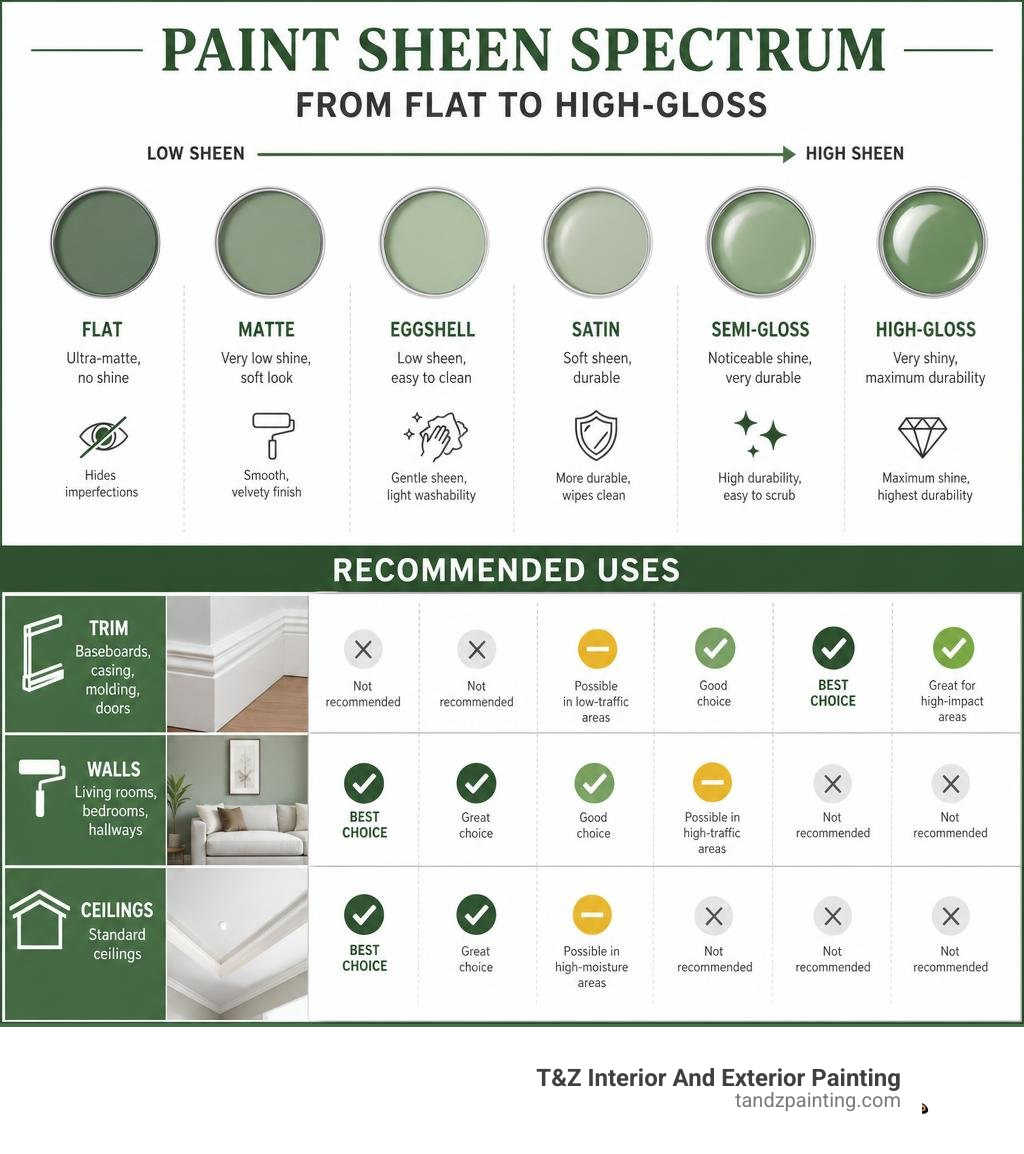
Quick best sheen for interior trim terms:
Understanding Paint Sheen and Why It Matters for Millwork
To choose the right look for your home, it helps to understand what paint sheen actually is. In plain terms, paint sheen (or finish) refers to how much light reflects off a painted surface once it is completely dry.
This reflection isn’t just a visual trick; it is determined by the ratio of binders and resins to pigments in the paint formula. Glossier paints contain a higher concentration of enamel and binders. These binders cure into a tight, hard, non-porous surface that acts like a protective seal over the wood.

In the paint industry, gloss and sheen are actually measured scientifically using a light deflection instrument called a gloss meter. According to the technical sheen and gloss guide, these measurements are taken at specific angles:
- Gloss is measured by bouncing a beam of light off the surface at a 60-degree angle.
- Sheen is measured at a much shallower 85-degree angle.
The light reflected back is rated on a scale of 0 (completely flat with no light reflection) to 100 (mirror-like high gloss). For example, a standard semi-gloss paint typically has a 60-degree reflectance value of 30 to 45 units, while satin sits lower on the scale.
Understanding this science helps explain why different finishes behave the way they do. When light hits a flat or matte paint, the microscopic texture of the paint scatters the light rays in every direction, hiding any surface blemishes beneath it. When light hits a higher-sheen paint like semi-gloss, the smooth, hard surface bounces the light rays straight back at you. This creates a bright, reflective highlight that emphasizes the beautiful curves of your crown molding, but it will also highlight any nail holes, dents, or sanding scratches if the wood wasn’t prepared perfectly.
For a deeper dive into how these levels look on your walls, check out our paint sheens 101 guide to see how the whole spectrum coordinates.
The Best Sheen for Interior Trim: Semi-Gloss vs. Satin
When it comes to painting interior trim, baseboards, window casings, and doors, the choice almost always comes down to a battle between two sheens: semi-gloss and satin. While both are excellent, durable finishes, they create very different design aesthetics and require different levels of surface preparation.
For a complete breakdown of what to look for when choosing trim-specific paints, read our stop scuffing around trim paint guide.
Why Semi-Gloss is the Best Sheen for Interior Trim in Traditional Homes
For decades, semi-gloss has been the reigning champion and undisputed industry standard for interior trim. There are several reasons why this classic finish remains the go-to choice for traditional, colonial, and transitional homes:
- High-Contrast Architectural Definition: Semi-gloss reflects enough light to create a sharp contrast against flatter wall finishes like eggshell or matte. This reflection beautifully highlights the shadows and profiles of elaborate millwork, making your baseboards and crown molding “pop.”
- Superior Washability: Because semi-gloss cures to a hard, slick enamel shell, dirt, grease, and sticky fingerprints cannot penetrate the surface. A simple wipe-down with a damp microfiber cloth and mild soap is usually all it takes to keep your trim looking brand new.
- Excellent Moisture Resistance: Areas like bathrooms, kitchens, and laundry rooms are constantly subjected to steam, high humidity, and direct water splashes. Semi-gloss provides a highly water-resistant barrier that prevents moisture from seeping into wood or MDF trim, protecting it from warping or rotting.
- Exceptional Durability: Baseboards are constantly bumped by vacuums, kicked by shoes, and scuffed by pets. Semi-gloss is specially formulated to resist these daily impacts without chipping, peeling, or wearing away.
If you are planning to refresh your doorways, our guide on door trim painting covers how to get a brushstroke-free semi-gloss finish on these high-touch areas.
When to Choose Satin as the Best Sheen for Interior Trim
While semi-gloss is the traditional choice, satin has surged in popularity among modern interior designers and homeowners in Chicago’s western suburbs, from Downers Grove to Schaumburg. Satin offers a low-to-moderate sheen that resembles the soft, elegant glow of a pearl.
Here is when you should choose satin over semi-gloss:
- Modern and Contemporary Aesthetics: Modern organic, minimalist, and Scandinavian design styles favor clean lines and understated elegance. The bright reflection of semi-gloss can sometimes feel too harsh or distracting in these spaces. Satin provides a subtle, sophisticated finish that lets the wood trim blend quietly into the background.
- Hiding Surface Imperfections: Older homes in historic areas like La Grange or Elmhurst often have original wood trim with decades of character — meaning plenty of minor dents, scratches, and grain texture. Because satin reflects less light, it is incredibly forgiving. It masks these minor surface blemishes and helps hide subtle brush marks left behind during application.
- A Softer, Unified Look: If you are painting your walls and trim the exact same color (a popular design trend known as “color drenching”), using a satin finish on the trim alongside matte walls creates a beautifully soft, luxurious transition that feels warm and inviting.
Comparing Trim Paint Finishes: Durability, Cleanability, and Aesthetics
To help you decide which finish is right for your home, let’s look at how semi-gloss and satin compare side-by-side across the three most important categories: durability, cleanability, and overall appearance.

When choosing, it is helpful to look at a direct comparison:
| Feature | Semi-Gloss Sheen | Satin Sheen |
|---|---|---|
| Light Reflectance | High (Bright, crisp reflection) | Low-to-Medium (Soft, pearly glow) |
| Durability | Excellent (Highly resistant to scuffs and impacts) | Very Good (Resilient, but slightly softer than semi-gloss) |
| Cleanability | Outstanding (Slick surface wipes clean effortlessly) | Good (Easy to clean, but aggressive scrubbing can burnish low sheens) |
| Imperfection Hiding | Poor (Highlights scratches, dents, and poor prep) | Good (Forgiving of minor surface flaws and brush marks) |
| Best Design Styles | Traditional, Colonial, Craftsman, Transitional | Modern, Contemporary, Modern Organic, Minimalist |
For a broader look at how these choices impact your entire house, the homeowner’s guide to paint sheens offers an excellent perspective on balancing style and utility.
Durability: Both finishes hold up beautifully to everyday wear, but semi-gloss has a slight edge. The higher concentration of binders in semi-gloss paint results in a harder cured film. If you have young children or active pets who love to run toy cars along the baseboards, semi-gloss is the more resilient choice.
Cleanability: Semi-gloss is the easier of the two to wipe down. Because the surface is so smooth, dirt and oils from hands can’t find a foothold. Satin is also highly washable, but you must be careful not to scrub it too aggressively with abrasive sponges, as heavy friction can “burnish” the paint — polishing a low-sheen area into an unwanted shiny spot.
Aesthetics: This comes down to personal taste and the architectural style of your home. Semi-gloss provides a classic, crisp, and clean border around your rooms. Satin offers a velvety, high-end furniture-like finish that feels incredibly smooth to the touch and looks sophisticated under both natural and artificial lighting.
Professional Application Techniques and Surface Preparation
Achieving a flawless, smooth finish with higher-sheen paints requires meticulous preparation and professional application techniques. Because semi-gloss and satin reflect light, any shortcuts taken during the prep phase will be highly visible once the paint dries.
At T&Z Interior And Exterior Painting, we follow a strict multi-step process to ensure a beautiful, long-lasting finish on every trim project:
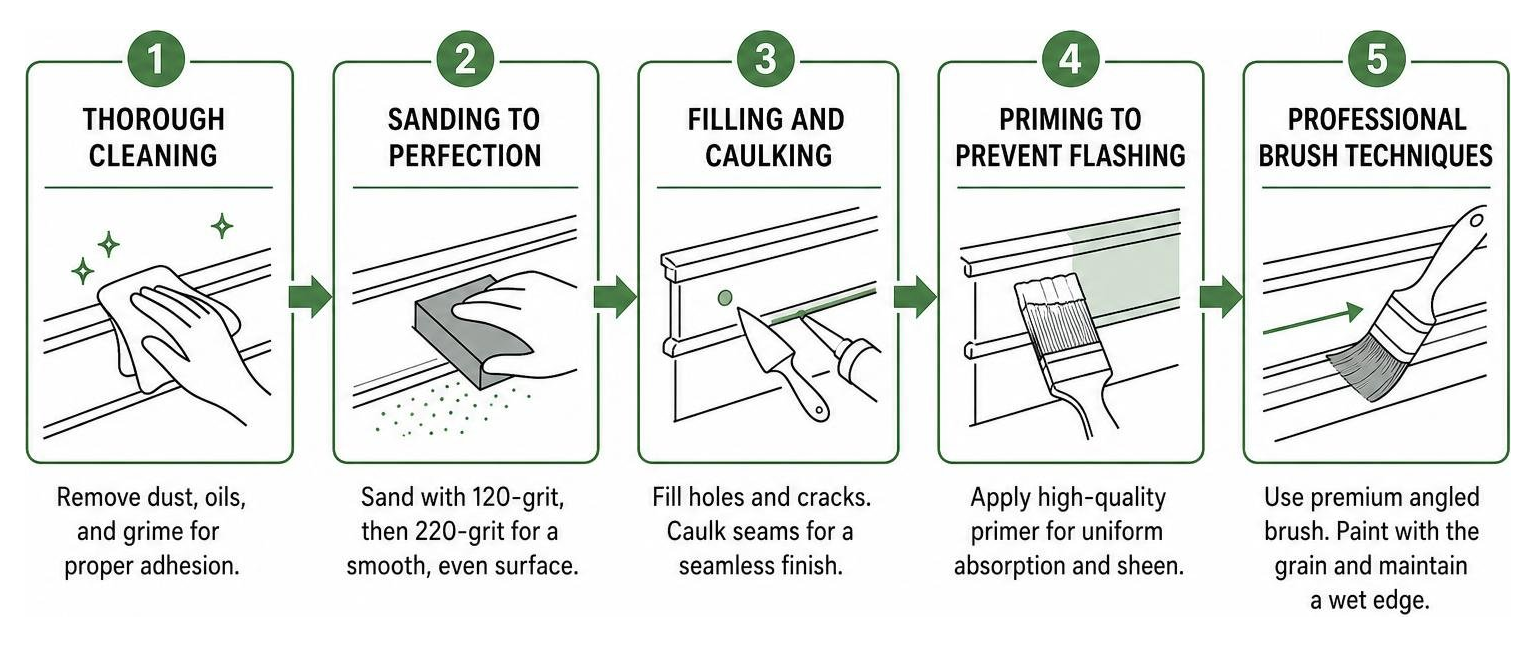
- Thorough Cleaning: Trim accumulates a surprising amount of dust, pet hair, and oils from hands. We clean the wood thoroughly using a mild detergent or a TSP (trisodium phosphate) solution to strip away grease and grime, ensuring the new paint can bond perfectly.
- Sanding to Perfection: We sand bare wood or existing painted trim first with 120-grit sandpaper to level out old paint drips and imperfections. We then follow up with a fine 220-grit sandpaper to create a perfectly smooth, polished base. Sanding also “scuffs” old shiny finishes, giving the new coat of paint the necessary grip.
- Filling and Caulking: We fill all nail holes, cracks, and wood joints with high-quality wood filler, sanding them flush once dry. We then run a clean bead of paintable acrylic caulk along the seams where the trim meets the wall to eliminate dark gaps and shadows.
- Priming to Prevent Flashing: Applying a high-quality primer is essential, especially over bare wood, MDF, or patched areas. Without primer, the porous wood or filler will absorb the paint differently than the rest of the trim, resulting in an uneven, blotchy sheen known as “flashing.”
- Professional Brush Techniques: When we apply the paint, we use premium, professional-grade 2 to 2.5-inch angled synthetic sash brushes. We always brush in the direction of the wood grain, maintaining a “wet edge” by painting adjacent sections before they begin to dry. This prevents visible overlap marks and guarantees a smooth, uniform finish.
If you are taking on a project that includes high-reaching details, our guide on crown molding painting provides excellent tips on handling these tricky overhead features.
Frequently Asked Questions About Trim Paint Sheens
Should trim sheen match or contrast with wall sheen?
Traditionally, trim sheen should contrast with the wall sheen to create visual separation and architectural interest. The classic combination is eggshell or matte on the walls paired with semi-gloss on the trim. This contrast highlights the borders of the room and makes the space feel structured and polished.
However, if you are opting for a modern “color drenched” look — where the walls, baseboards, and doors are painted the exact same color — you can use a single color but vary the sheens (such as matte walls with satin trim). This creates a highly sophisticated, subtle depth without introducing different paint colors.
What is the difference between drying time and curing time for trim paint?
This is one of the most common misconceptions in home painting.
- Drying time refers to the initial evaporation of water or solvents from the paint film. For high-quality water-based trim paints, the surface is usually dry to the touch within 1 to 2 hours, and ready for a second coat in 2 to 4 hours.
- Curing time is the chemical hardening process where the paint resins fully cross-link and bond to form their final, ultra-durable protective shield.
While the paint may feel dry to the touch quickly, it can take up to 30 days for a higher-sheen paint to fully cure. During this 30-day window, you should avoid heavy contact, scrubbing, or placing heavy objects on painted window sills and shelves to prevent chipping or sticking.
Can you use high-gloss or flat sheens on interior trim?
Yes, but they are specialty choices that come with trade-offs:
- High-Gloss: This finish reflects light like a mirror (80+ units on the gloss scale). It creates a highly dramatic, ultra-luxurious look that is beautiful on historic front doors or detailed mantelpieces. However, it requires flawless, professional-grade surface preparation, as it will highlight every single microscopic blemish, dust speck, or brush mark.
- Flat/Matte: We strongly advise against using flat paint on trim. Flat paint is highly porous, has zero resistance to moisture, and absorbs dirt and oils. If you try to scrub a scuff mark off flat trim, you will likely rub the paint right off, leaving a dull, worn patch.
Conclusion
Choosing the best sheen for interior trim is a balance of style, durability, and practical maintenance. While semi-gloss remains the timeless, bright champion for traditional homes, satin offers a gorgeous, modern, pearl-like alternative that is highly forgiving of older wood imperfections.
At T&Z Interior And Exterior Painting, we have spent over 15 years helping homeowners across Lombard, Elmhurst, Downers Grove, Wheaton, and the surrounding Chicago suburbs transform their living spaces. We combine our deep expertise with top-tier materials and a commitment to customer service to deliver stunning, long-lasting results.
Whether you want to refresh your baseboards, update your interior doors, or completely repaint your home’s interior, our experienced, licensed, and insured teams are ready to help. Discover how we can elevate your home with our professional interior painting services and bring your vision to life.