
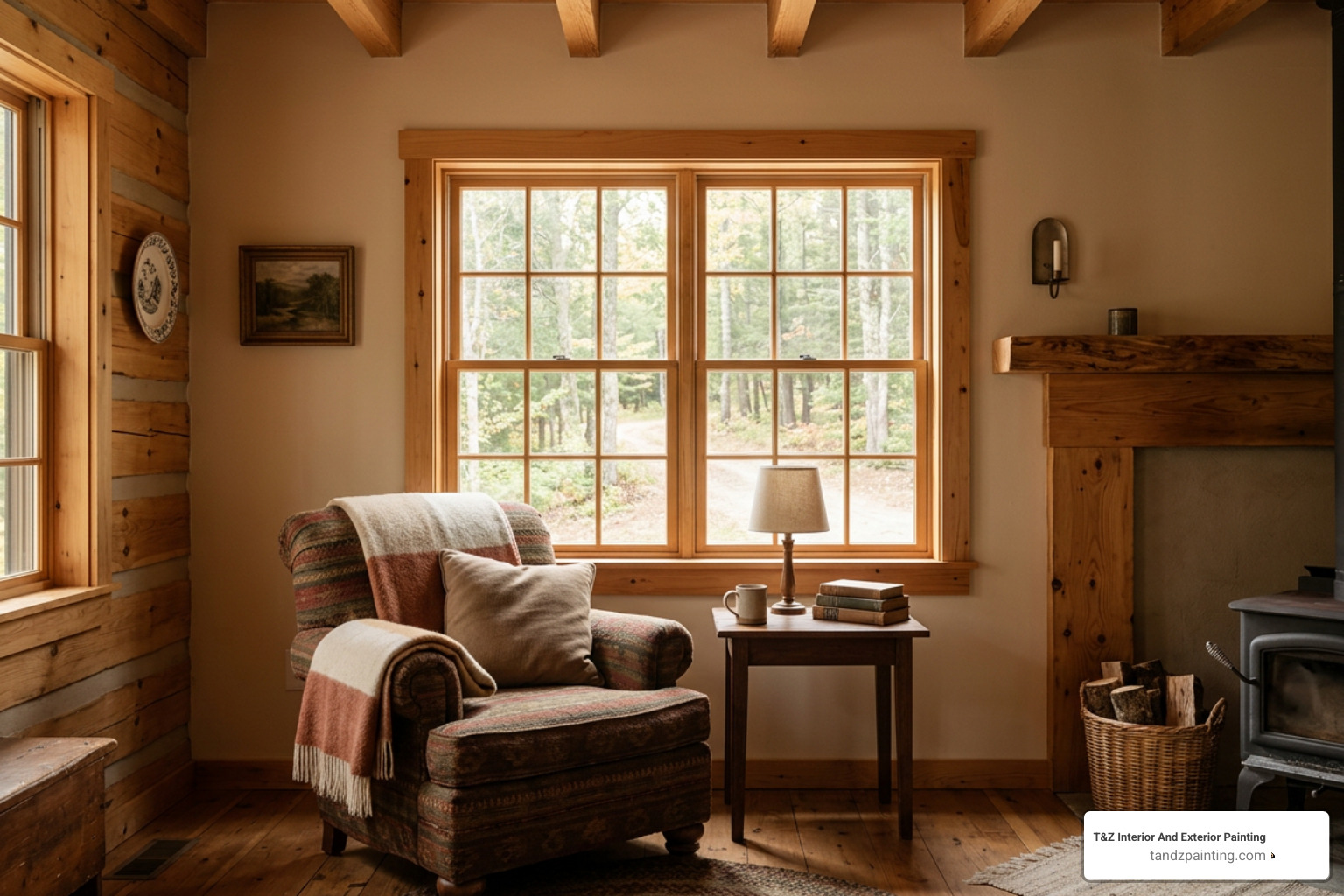
Why Paint Color Can Make or Break a Small Cabin Interior
Choosing the right small cabin interior paint colors is one of the most impactful decisions you can make when designing or refreshing a cozy rustic space. Get it right, and a 350 square foot cabin can feel open, warm, and intentional. Get it wrong, and even a beautiful log cabin can feel dark, cramped, or visually chaotic.
Quick answer — the best paint colors for a small cabin interior:
| Color Family | Best For | Example Shades |
|---|---|---|
| Warm neutrals | All-purpose walls, flow between rooms | Greige, soft taupe, creamy white |
| Muted greens | Balancing orange pine wood tones | Sherwin-Williams Evergreen Fog (SW 9130), Rosemary (SW 6187) |
| Soft blue-greens | Cooling down warm wood, bedrooms | Dusty sage, pale aqua-gray |
| Off-whites | Small spaces, ceilings, trim | Farrow & Ball Slipper Satin, Benjamin Moore White Dove |
| Smoky charcoal | Accent walls, focal features only | Used sparingly against lighter walls |
A few things make small cabins especially tricky compared to a standard home. Natural wood surfaces — pine, cedar, knotty logs — already carry strong orange, red, or brown undertones. Paint colors that look calm on a swatch can shift dramatically once they’re surrounded by all that warm wood. On top of that, research shows that color saturation appears 15 to 25% more intense in spaces under 400 square feet, because you’re simply standing much closer to the walls than you would be in a larger room.
The good news? A few well-chosen colors and some smart application strategies can make a small cabin feel spacious and cozy — not a trade-off between the two.
I’m Tomasz Niemotko, owner of T&Z Interior And Exterior Painting, and over more than 15 years of transforming residential interiors across Lombard and the surrounding suburbs, I’ve seen how the right small cabin interior paint colors can completely change how a space feels. In the sections below, I’ll walk you through everything from reading wood undertones to choosing the right finish for each surface.
Small cabin interior paint colors terms simplified:
- small cabin exterior paint colors
- painting ideas for small house
- exterior paint colors for small cottage
The Science of Space: Light Reflectance Value (LRV) and Small Cabin Interior Paint Colors
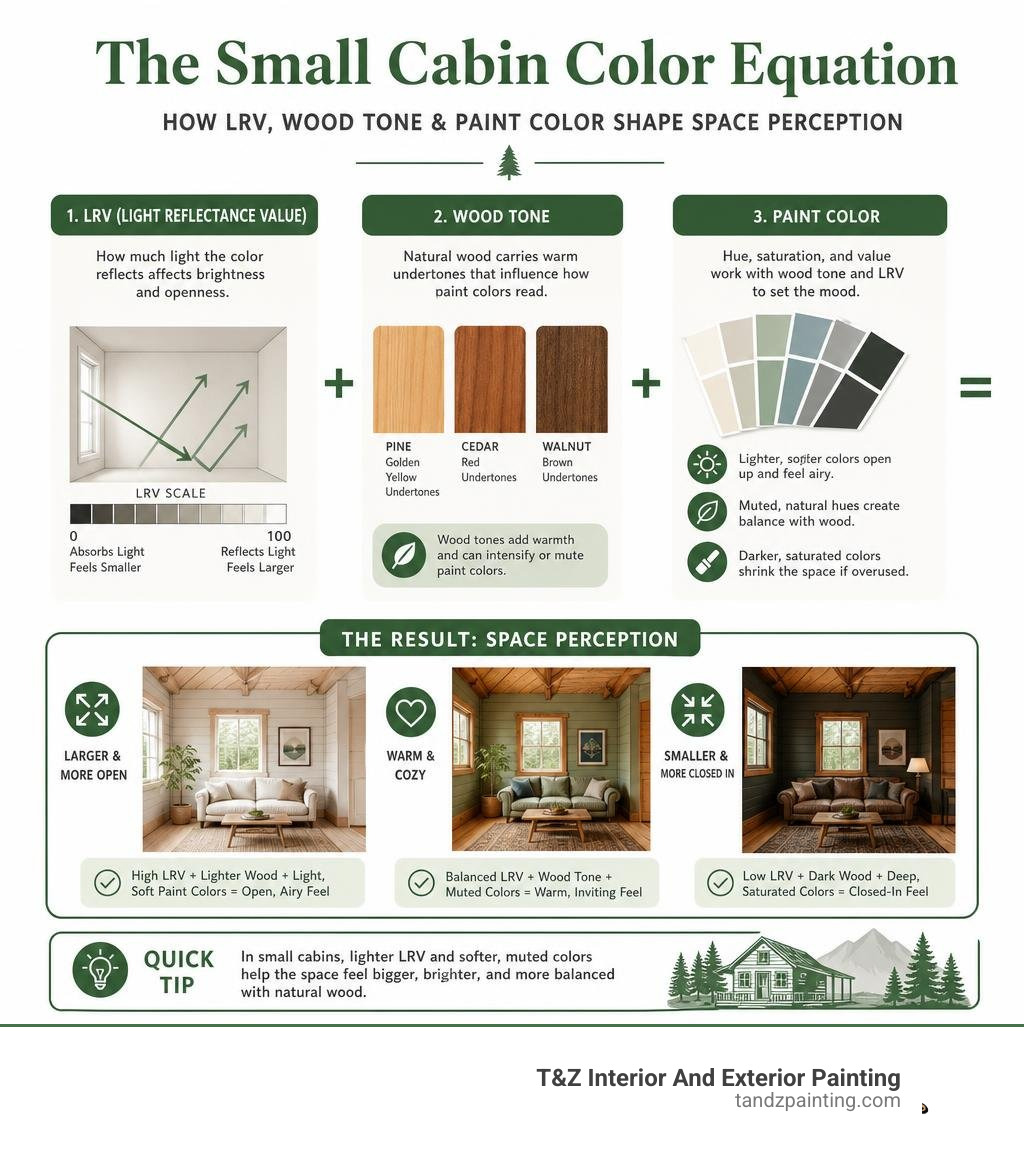
When we paint a small home or cabin in areas like Wheaton or Downers Grove, we look at more than just the name of a color on a paint card. We look at its Light Reflectance Value (LRV).
LRV is an industry-standard scale from 0 (absolute black, absorbing all light) to 100 (pure white, reflecting all light). Understanding this metric is essential for small cabins, which often suffer from limited natural light due to heavy tree canopies or small rustic windows.
According to real-world design data, colors with an LRV between 55 and 75 consistently make tiny houses and compact cabins feel more spacious without losing their sense of warmth. If you go too high (an LRV of 85 or above), the paint can look stark, clinical, and wash out under bright lights. If you go too low, the walls can feel like they are closing in on you. For a comprehensive look at how color choices impact compact properties, explore our guide on 10 Painting Ideas for Small Houses.
The physical layout of a small cabin also changes how we perceive paint. In a cabin under 400 square feet, you typically see 60% to 80% of your total wall surface from any single standing position. Because of this high visibility and close physical proximity (usually standing just 3 to 6 feet from a wall), your eyes will amplify any hidden undertones in the paint.
A light gray with a sneaky blue undertone will look incredibly blue when painted across an entire cabin living room. This proximity effect is why testing paint in your actual lighting conditions is so vital. To dive deeper into the physical mechanics of small-space color theory, read the detailed analysis on Tiny House Color Selection: How the Right Paint Makes 350 Sq Ft Feel Spacious – Tiny House & Small Apartment Living.
Harmonizing Paint with Natural Wood Tones
A common mistake is trying to fight the wood in your cabin. When you paint walls a cool, icy gray next to warm knotty pine, you don’t neutralize the wood—you actually make the pine look aggressively orange by contrast.
To achieve a balanced look, we must work with the color wheel. Green sits opposite red and orange on the color wheel, making green shades the ultimate natural balancer for warm woods. Introducing the right contrast helps the wood “breathe” instead of overwhelming the room.

Best Small Cabin Interior Paint Colors for Honey Pine
Honey pine and knotty pine are famous for their strong yellow and orange undertones. To ground these tones and keep your cabin from glowing like a pumpkin, we recommend using warm neutrals, muted greens, or soft blue-greens.
Muted greens with black undertones are highly versatile. They bridge the gap between the rustic indoor wood and the natural outdoor landscape. Two exceptional choices from Sherwin-Williams are:
- Evergreen Fog (SW 9130): A gorgeous, soft green-gray that acts as a modern neutral.
- Rosemary (SW 6187): A deeper, richer dark sage green that works beautifully on cabin kitchen cabinets or built-ins.
If you prefer a lighter look, look for soft warm whites or cream tones that carry a hint of yellow or green in their base. For more professional palette inspiration, check out Cozy Cabin-Style Paint Colors | Benjamin Moore.
Complementing Dark Cedar and Brown Logs
Dark cedar, redwood, or deep brown logs absorb a massive amount of light. If your small cabin features these heavy, dark wood elements, your paint choices need to focus on bringing light back into the space.
Instead of stark, clinical whites, look for warm, rich off-whites and soft stone grays. These shades provide contrast against the dark logs without creating a jarring, high-contrast visual break.
- Farrow & Ball Slipper Satin: A wonderfully chalky, warm off-white that softens the transition between painted drywall and dark wood trim.
- Warm Greiges: Muted greige shades (a blend of gray and beige) bring a sophisticated, clean look that highlights the natural texture of dark cedar.
To see how warm neutrals can elevate a space without looking flat, take a look at our expert tips on Neutral House Paint Ideas That Are Anything But Boring.
Strategic Color Placement and Zoning in Open-Plan Cabins
Small cabins often feature open-concept layouts where the kitchen, dining, and living areas share a single room. Without walls to separate these zones, the space can quickly feel cluttered. We can use paint to create visual boundaries and guide the eye naturally through the cabin.
Creating Depth with Small Cabin Interior Paint Colors on Accent Walls
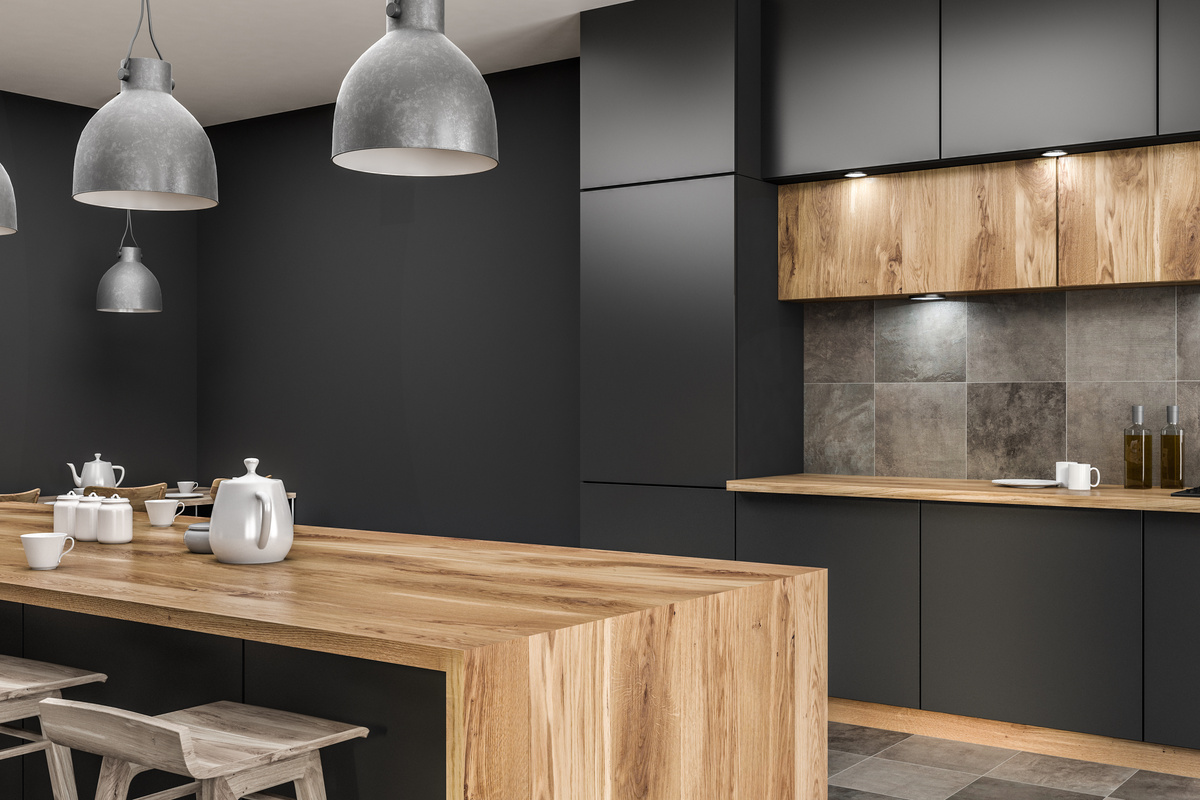
In a compact room, an accent wall can actually make the space feel deeper if you use the right tone. The key is to avoid high-contrast, bright colors that jump out at you. Instead, opt for muted, receding earth tones like slate gray, deep terracotta, or forest green.
When you paint an accent wall—such as the wall behind a bed loft or a stone fireplace—in a deeper, muted shade, that wall appears to recede, adding perceived depth to the room. For more tips on transforming compact spaces with elegant shades, read the design guide on Top Cabin Paint Colors and Tips: How to Transform Small Spaces with Warm, Bold, and Elegant Shades.
Color Zoning and the 60-30-10 Rule
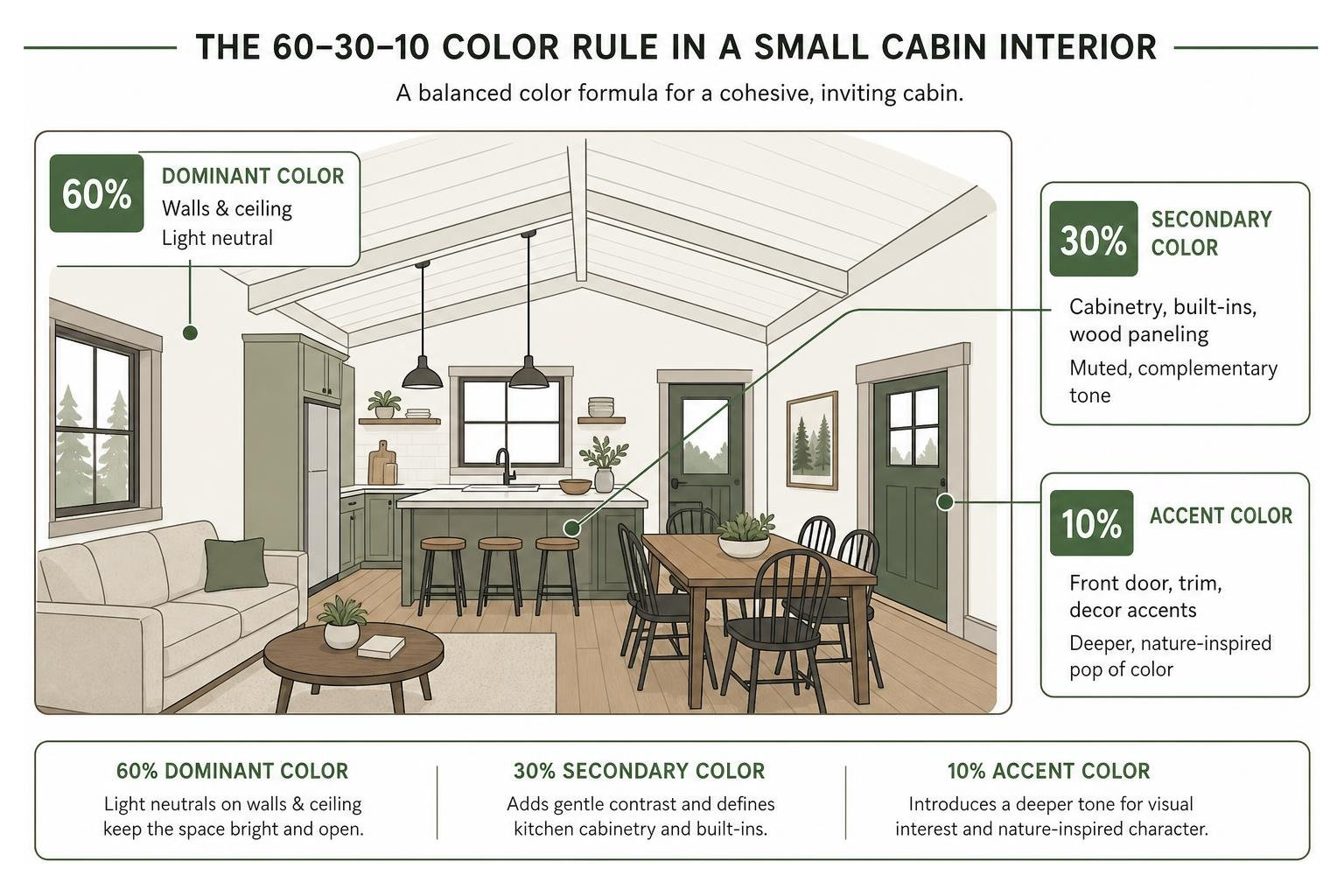
To maintain a cohesive visual flow, we recommend using the classic 60-30-10 design rule:
- 60% Dominant Color: This is your main wall color, usually a light neutral with an LRV of 55 to 75 to keep the cabin bright and airy.
- 30% Secondary Color: This color is applied to cabinetry, built-ins, or painted wood paneling. It should provide a gentle contrast to your main walls.
- 10% Accent Color: A bolder, nature-inspired tone used on a front door, window trims, or small decorative elements.
By keeping the trim and ceiling in the same color family as your main walls (or just a shade lighter), you eliminate hard visual breaks. This trick draws the eye upward, making low cabin ceilings feel significantly taller.
Selecting the Right Paint Finishes for Cabin Walls
Choosing the right paint sheen is just as important as choosing the color. The sheen affects how light bounces around the room and how easy the surfaces are to clean.
For small cabins, we recommend a strategic mix of finishes:
- Matte/Flat: Best for ceilings. It absorbs light gently and hides minor structural imperfections or settling lines common in log cabins.
- Eggshell: The absolute sweet spot for cabin walls. It offers a soft, velvety reflection that disperses light beautifully without highlighting wall flaws, and it stands up well to occasional cleaning.
- Satin/Semi-Gloss: Ideal for trim, doors, and cabinets. It provides a durable, easy-to-clean barrier and offers a subtle sheen contrast against eggshell walls.
| Surface | Recommended Sheen | Why It Works |
|---|---|---|
| Ceilings | Flat / Matte | Absorbs light, hides imperfections, prevents glare |
| Main Walls | Eggshell | Balances soft light reflection with ease of cleaning |
| Trim & Doors | Satin | Durable, highlights architectural lines |
| Cabinets | Satin or Semi-Gloss | Resists grease, moisture, and frequent touching |
In areas prone to moisture or high traffic, like a compact cabin kitchen, choosing a finish with a bit of a glow can make a massive difference. For a deeper look at sheens in small culinary spaces, check out our article on Why Your Tiny Kitchen Needs a Glossy Glow Up.
Professional Techniques to Modernize a Rustic Cabin
Updating a classic wood cabin doesn’t mean you have to strip away its historic character. Modern rustic design is all about balance—preserving the organic textures of the wood while introducing clean, painted surfaces to brighten the home.
Achieving a flawless paint finish on cabin wood requires meticulous professional preparation:
- Thorough Cleaning: Cabin walls accumulate years of dust, wood oils, and fireplace soot. We wash all surfaces with specialized cleaners to ensure proper paint adhesion.
- Sanding: Lightly scuff-sanding the wood opens up the grain and removes old, glossy sealants.
- Stain-Blocking Primer: This is the most crucial step. Wood knots contain natural oils and tannins that will bleed through standard latex paint, turning white walls a patchy yellow over time. We apply a premium, shellac- or oil-based stain-blocking primer to lock those tannins in.
- Eco-Friendly, Low-VOC Paints: Because small cabins have limited air volume and ventilation, we always recommend using high-quality low-VOC or zero-VOC paints to keep your indoor air clean and odor-free.
- Lighting Coordination: To keep your new paint looking fresh, pair your walls with high-CRI (Color Rendering Index) LED lighting of 90 or above. This prevents your beautiful warm whites or muted greens from looking muddy or yellow in the evenings.
For a real-world look at how professional color choices can transform a rustic home, explore the case study on Log Cabin Interior Paint Colors Create A Cozy Atmosphere In Your Home – Coronatodays and see how specific palettes can be customized for unique features like kitchen rangehoods in norsu Cabin’s Paint Colors Cheatsheet (+ our DIY hack for your Rangehood).
Frequently Asked Questions about Cabin Painting
What paint colors should be avoided in a small cabin interior?
We recommend avoiding highly saturated, primary colors like bright yellow, vibrant blue, and fire-engine red on large wall surfaces. Because color saturation is amplified in small spaces, these tones will quickly overpower the room and clash with the natural wood grain. Additionally, steer clear of stark, cold, blue-toned whites, which can make a rustic wood cabin feel cold, sterile, and uninviting.
How do you prevent a small cabin from feeling like a dark cave?
To maximize brightness, choose wall paint with an LRV between 55 and 75, such as a warm greige or a soft cream. Keep your ceilings flat and paint them a soft white to draw the eye upward. Finally, use satin-finish trim to bounce natural light from windows deeper into the room.
Can you use dark paint colors in a small cabin?
Yes, but they should be used strategically. Instead of painting all four walls in a dark shade, use rich colors like charcoal, deep forest green, or a robust olive brown on accent walls, built-in shelving, or kitchen cabinets. This creates a sense of depth and architectural interest without shrinking the room. For a beautiful example of a rich, earthy olive brown, take a look at Cabin – Up Paint.
Conclusion
Finding the perfect balance of small cabin interior paint colors takes a blend of color science, structural prep, and a deep understanding of how light interacts with natural wood. Whether you want to brighten up a dark cedar loft or complement the warm, golden tones of knotty pine, the right paint palette will make your cabin feel like a spacious, welcoming retreat.
At T&Z Interior And Exterior Painting, we bring over 15 years of professional painting experience to homeowners in Lombard, IL, and surrounding communities like Addison, Elmhurst, Glenview, and Wilmette. Our licensed and insured team is dedicated to delivering flawless craftsmanship, clean service, and stunning results that protect and beautify your home.
If you’re ready to transform your small home or cabin interior, contact us today to discuss your vision. To learn more about the unique structural and design hurdles of painting compact properties, read our detailed guide on Small House Painting Challenges.