
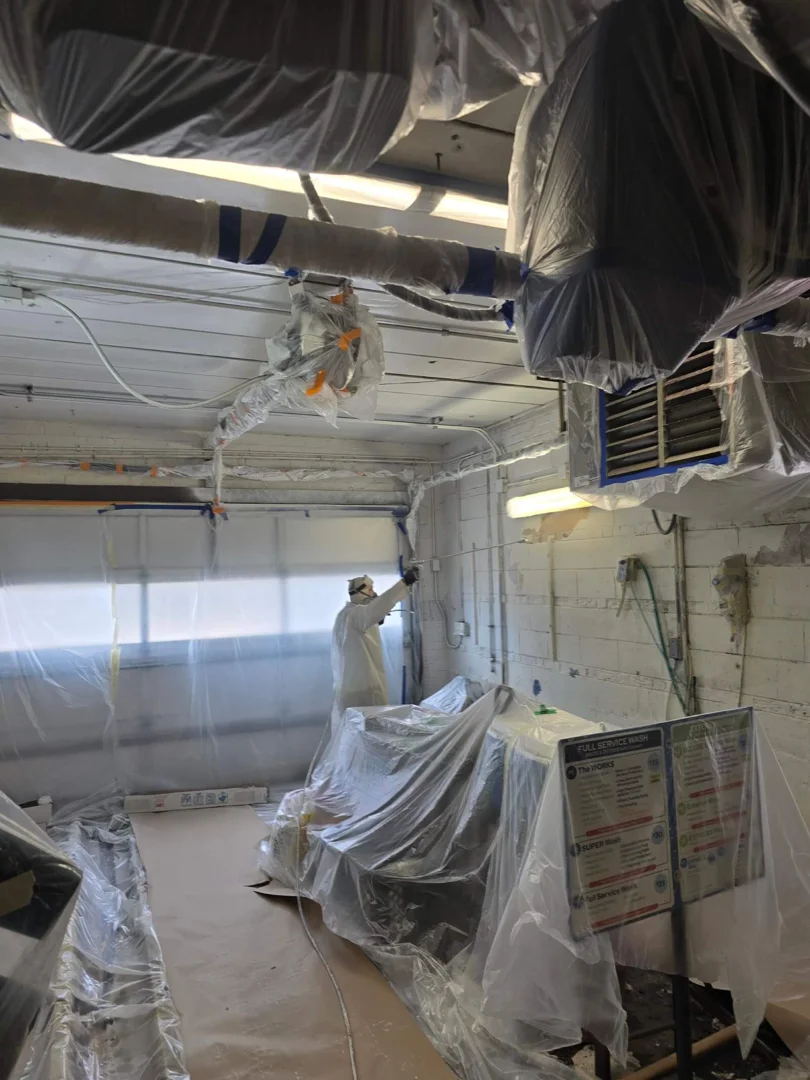
Types of Spray Painting Services and Industry Applications
When selecting a spray painting company, it helps to understand the scope of services available across residential, commercial, and industrial settings. Spray application technology is remarkably versatile, capable of atomizing paints, lacquers, urethanes, and specialized protective coatings to suit a wide range of surfaces. Whether updating home interiors or protecting structural elements, professional spraying delivers a uniform coating thickness that traditional rollers and brushes cannot replicate.
Different environments demand specific application tools and coating chemistries. A professional spray painting company tailors its approach based on the target substrate, exposure conditions, and finish requirements. For a deeper breakdown of heavy-duty applications, explore our guide on Industrial Spray Painting Solutions.
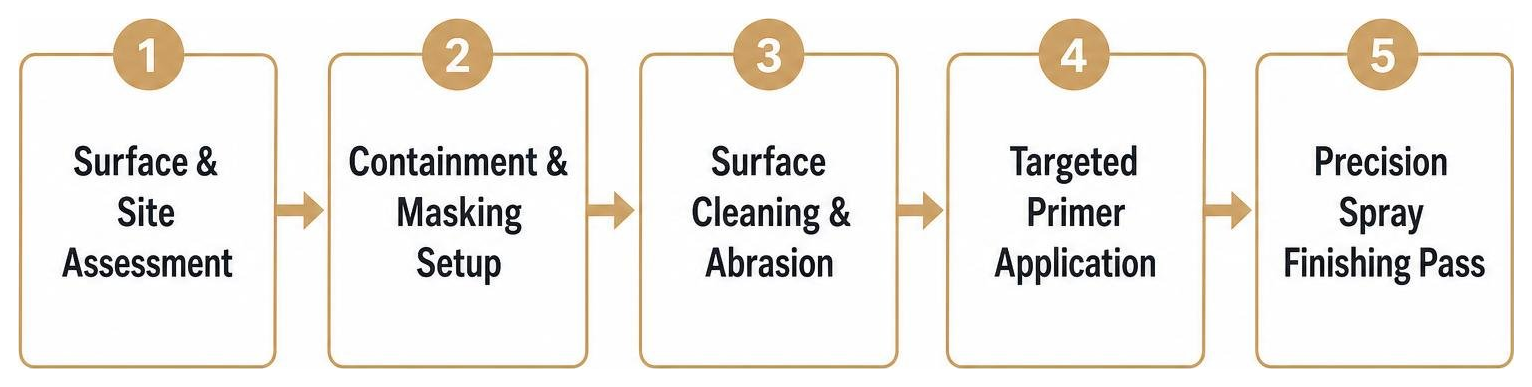
Residential and Commercial Spraying
In residential homes and commercial buildings across Lombard, Elmhurst, and Glen Ellyn, spray painting provides an elegant, smooth finish on fine woodwork and broad architectural surfaces alike.
In residential settings, cabinet spraying is one of the most effective ways to completely refresh a home’s interior. Kitchen and bathroom cabinets receive heavy daily handling, making brush strokes and roller stipples visually distracting. Through precise spray application, existing wooden cabinets receive an ultra-smooth finish that recreates the look of brand-new factory millwork. To explore how this process revitalizes kitchen spaces, read our guide on how to Transform Kitchen Cabinets. Beyond cabinetry, residential spraying excels on interior doors, trim, crown molding, paneled walls, and exterior siding such as aluminum or wood cladding.
Commercial environments require durable coatings capable of standing up to frequent public interaction, cleaning chemicals, and high traffic. Commercial spray painting allows for rapid coverage across large open areas, such as retail ceilings, office interiors, exterior facades, and architectural steel. Choosing a team experienced in Commercial Spray Painting Services ensures that commercial properties maintain a clean appearance with minimal disturbance to daily business operations.
Industrial and Specialty Coating Applications
Industrial and high-exposure structural applications require specialized coating systems engineered for maximum durability, corrosion resistance, and surface protection. Industries ranging from construction and infrastructure to power generation and manufacturing depend on high-performance spray coatings to preserve vital steel components and concrete structures.
Key specialized spray applications include:
- Corrosion Control Coatings: Multilayer epoxy and polyurethane systems that shield metal components against moisture, salts, and airborne chemicals.
- High-Access and Structural Steel Finishes: Specialized coating techniques designed for complex architectural steel frameworks, exposed roof trusses, and overhead structures.
- Fire-Retardant and Intumescent Coatings: Advanced spray-applied coatings that expand when exposed to heat, providing crucial fire protection for load-bearing structural elements.
- High-Durability Elastomeric Sealants: Flexible exterior coatings applied via airless spray equipment to bridge masonry cracks and prevent water infiltration on commercial structures.
By partnering with an experienced spray painting company, property owners ensure that specialized coatings are selected and applied according to strict technical guidelines, extending the operating life of key assets.
Key Factors in Selecting a Professional Spray Painting Company
Choosing the right contractor requires evaluating technical knowledge, equipment, safety standards, and project management capabilities. Because spray painting relies on controlled atomization, minor mistakes in technique or atmospheric controls can lead to surface runs, sagging, or overspray drift.
Professional contractors utilize distinct spray technologies designed for specific surface types and finish expectations:
| Spray Technology | Primary Uses | Major Advantages | Material Compatibility |
|---|---|---|---|
| Airless Spraying | Exterior siding, commercial walls, large interior surfaces | High production speed, thick coating builds, excellent penetration | Heavy latex, elastomeric coatings, acrylic masonry paints |
| HVLP (High Volume Low Pressure) | Kitchen cabinets, fine woodwork, interior doors, trim | Exceptional transfer efficiency, minimal overspray, ultra-smooth finish | Fine enamels, lacquers, waterborne urethanes, stains |
| Air-Assisted Airless | Custom cabinetry, commercial millwork, furniture | Combines HVLP finish quality with airless speed | Medium-to-high solids coatings, conversion varnishes |
What Credentials Should a Qualified Spray Painting Company Possess?
When reviewing a spray painting company, technical credentials and safety compliance are critical considerations. Applying specialized finishes involves working with pressurized spray equipment, solvent-borne or high-solids paints, and detailed masking operations.
Essential qualifications to verify include:
- Licensing and Full Insurance Coverage: Ensure the contractor holds current state and local licenses alongside comprehensive general liability and worker’s compensation insurance to safeguard your property.
- Industry Certifications: Certification from recognized industry organizations demonstrates adherence to formal surface preparation standards, environmental compliance, and surface testing procedures.
- Surface Preparation Knowledge: Verify that the contractor adheres to established surface preparation guidelines, ensuring substrates are correctly degreased, abraded, and primed before spray application.
- Rigorous Safety Training: Professional technicians should be fully trained in personal protective equipment (PPE) protocols, including NIOSH-approved respirator usage, environmental containment, and proper jobsite ventilation.
Evaluating a Spray Painting Company Portfolio and Reviews
A reliable painting contractor should readily display a portfolio of completed projects demonstrating smooth, uniform finishes across a variety of substrates. Look for clear close-up images of cabinet doors, detailed trim joinery, and broad exterior wall surfaces.
Reviewing past customer feedback provides clear insight into a company’s professionalism and attention to detail. Search for consistency in online customer reviews, paying close attention to comments regarding jobsite cleanliness, communication, and overall craft precision. A company that maintains a 5.0 Google Reviews rating reflects a steady commitment to customer satisfaction, clean work practices, and reliable project timelines across local communities such as Lombard, Downers Grove, and Addison.
DIY Spray Painting vs Professional Execution

Many property owners wonder whether tackle a spray painting project as a DIY task or hire a professional spray painting company. While handheld DIY sprayers are widely available at local home improvement stores, achieving a durable, flawless finish requires significantly more than simply pulling a trigger.
Professional spray painting requires an in-depth understanding of paint viscosity, spray tip sizing, pressure setting adjustments, atmospheric moisture control, and precise masking techniques. For a detailed breakdown of equipment setup and spraying techniques, consult our comprehensive Spray Painting Services Guide.
Common challenges associated with DIY spray painting include:
- Uncontrolled Overspray: Paint mist easily drifts onto neighboring walls, flooring, glass, landscaping, and adjacent properties if containment zones are not properly engineered.
- Inconsistent Film Thickness: Improper gun distance, incorrect speed, or wrong tip selection frequently leads to surface runs, sagging, orange-peel textures, or thin coverage spotty areas.
- Equipment Clogging and Splattering: Failure to strain materials correctly or calibrate pressure settings leads to tip clogs that spatter wet paint across finished surfaces.
- Complex Equipment and Setup Requirements: Acquiring commercial-grade sprayers, proper tip assortments, specialized masking materials, plastic sheeting, and safety gear requires substantial technical preparation before spraying can even begin.
Surface Preparation and Safety Standards
The secret to a long-lasting, factory-smooth spray finish lies almost entirely in surface preparation. Spray-applied paint exaggerates surface flaws rather than hiding them; a minor scratch or gouge will remain visible under a fresh coat of sprayed paint if not corrected beforehand.
Professional preparation follow a structured protocol:
- Deep Cleaning and Degreasing: Surfaces are scrubbed to eliminate oils, grease, dirt, and chemical residues that prevent paint adhesion.
- Mechanical Sanding and Abrasion: Substrates are thoroughly sanded to level high spots, feathertape existing edges, and create an ideal mechanical profile for primer bonding.
- Flaw Repair and Filling: Wood grain, dented trim, nail holes, and minor substrate cracks are filled with high-grade compounds and sanded smooth.
- Complete Containment and Masking: Unpainted areas are sealed using premium painter’s tape, heavy drop cloths, and plastic sheeting. Dust-free sanding containment helps isolate the workspace.
- Targeted Priming: Specialty bonding or stain-blocking primers are applied to seal the substrate, block tannin bleed, and promote uniform topcoat adhesion.
Safety protocols are equally vital. Professional painters utilize active airflow ventilation fans and wear full personal protective equipment—including sealed eyewear and NIOSH-approved respirators—to ensure complete air safety during interior spray operations.
Longevity and Surface Protection Benefits
Professional spray painting delivers exceptional long-term value by extending the overall lifespan of building surfaces, cabinetry, and structural elements. Because spray equipment applies a consistent, seamless coat of paint across complex contours, geometric profiles, and hard-to-reach recessed areas, the resulting finish effectively seals the substrate against moisture, UV degradation, and everyday wear.
Reputable contractors evaluate each project based on surface area, substrate complexity, prep work requirements, and appropriate coating systems. Investing in professional application eliminates early coating failures, peeling, and premature repainting, preserving property appearance and maintaining structural integrity over the long run.
Frequently Asked Questions
What is the primary difference between airless and HVLP sprayers?
Airless sprayers atomize paint by forcing fluid through a specialized spray tip under high hydraulic pressure (often 1,500 to 3,000 PSI). This allows airless systems to rapidly apply high volumes of heavy paints to large exterior walls, ceilings, and siding. HVLP (High Volume Low Pressure) sprayers use a steady volume of low-pressure air to atomize lighter paints, delivering unmatched control, reduced overspray, and a super-smooth finish ideal for fine woodworking, trim, and kitchen cabinets.
How long does a professional spray-painted finish last?
When high-grade materials are applied over properly prepared, primed surfaces by a skilled professional, a spray-painted finish routinely lasts 10 to 15 years or more on interior cabinets and trim. Exterior spray finishes typically last 8 to 12 years depending on climate exposure, direct sunlight, moisture levels, and the durability of the selected topcoat system.
How do spray painting companies manage overspray on job sites?
Professional spray painting crews manage overspray using strict jobsite containment strategies. Interior spaces are completely sealed off from adjacent rooms using plastic dust walls and ZipWall barriers, paired with negative-air ventilation systems. Unpainted surfaces, windows, flooring, and fixtures are fully covered with heavy masking paper, film, and drop cloths. Exterior projects utilize wind screens and precise spray gun tip geometry to control paint drift.
Conclusion
Selecting the right spray painting company makes all the difference when upgrading your home or commercial property. By combining careful surface preparation, proper containment practices, and advanced spray application tools, professional painters deliver a flawless, factory-like finish that brush and roller applications simply cannot achieve.
At T&Z Interior And Exterior Painting, we take pride in delivering top-tier craftsmanship, dependable project communication, and exceptional long-term results. Backed by more than 15 years of industry experience, full licensing and insurance, and a 5.0 Google Reviews rating, our team serves homeowners and commercial clients throughout Lombard, Itasca, Addison, Glen Ellyn, Oak Brook, and surrounding communities.
Whether you are looking to revitalize your kitchen cabinets, refresh interior woodwork, or update your property’s exterior, our experienced technicians are ready to bring your vision to life. Explore our dedicated Professional Spray Painting Services today to schedule your consultation and experience the difference true craftsmanship brings to your home.