
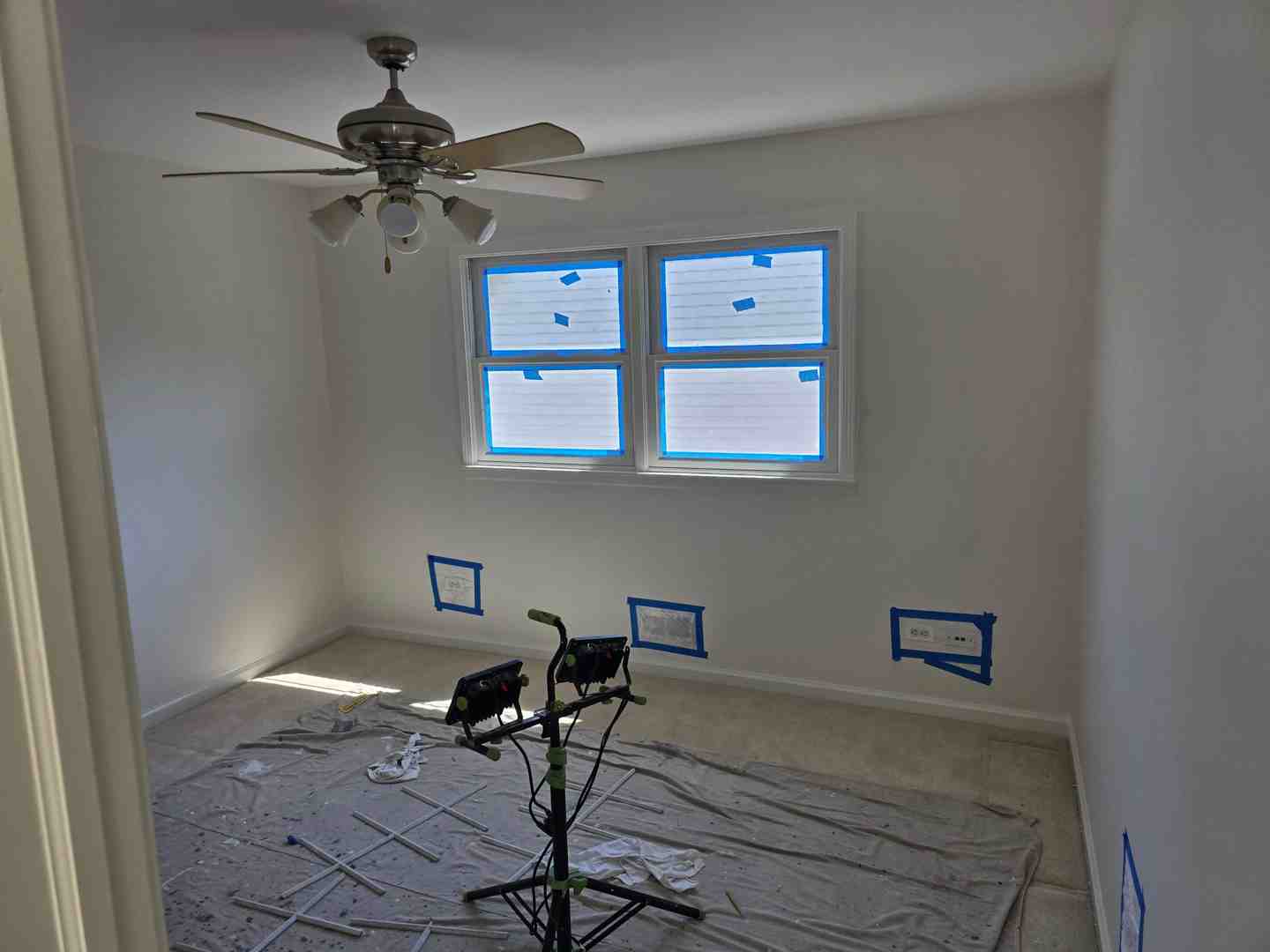
Is Painting Your Ceiling and Walls the Same Color a Good Idea?
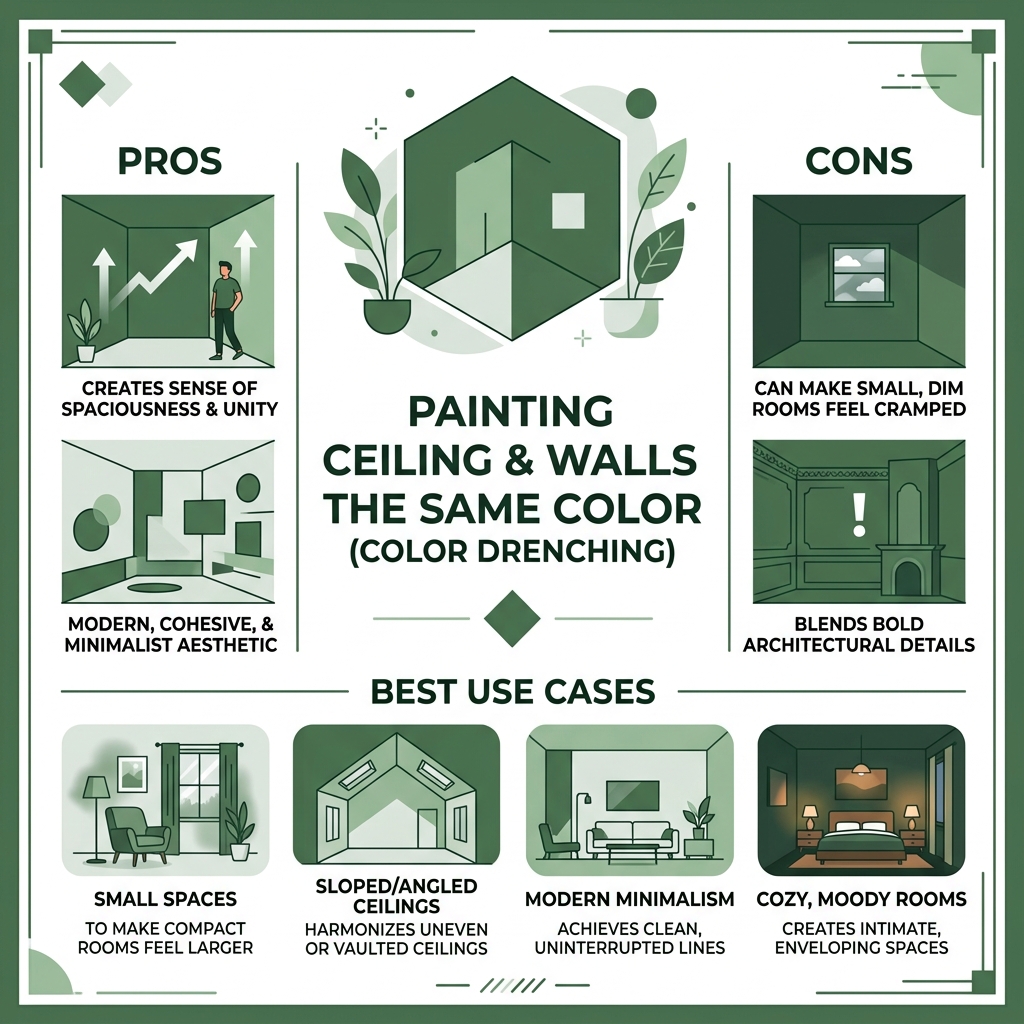
Painting your ceiling and walls the same color — also called color drenching — is one of the most effective ways to transform a room. Here’s the short answer:
Yes, it works well when:
- You want a room to feel larger, taller, or more cohesive
- The room has angled, vaulted, or sloped ceilings
- You’re going for a modern, minimalist, or moody aesthetic
- The space is small and benefits from blurred visual boundaries
Use caution when:
- The room already has limited natural light and you’re choosing a dark color
- You have bold architectural details you want to highlight with contrast
- The space is very large and an all-over bold color could feel overwhelming
The idea is simple: when walls and ceiling share the same color, the eye stops seeing where one ends and the other begins. The room feels intentional, seamless, and surprisingly spacious — even in compact spaces.
This isn’t a new trick. Interior designers have used it for years. But it’s gained serious momentum as homeowners look for ways to make their spaces feel more elevated without a full renovation.
I’m Tomasz Niemotko, owner of T&Z Interior And Exterior Painting, with over 15 years of hands-on experience helping homeowners across Lombard and the surrounding area achieve stunning interior results — including the increasingly popular choice to paint ceiling and walls same color. In this guide, I’ll walk you through everything you need to know to get it right.
The Advantages of Choosing to Paint Ceiling and Walls Same Color
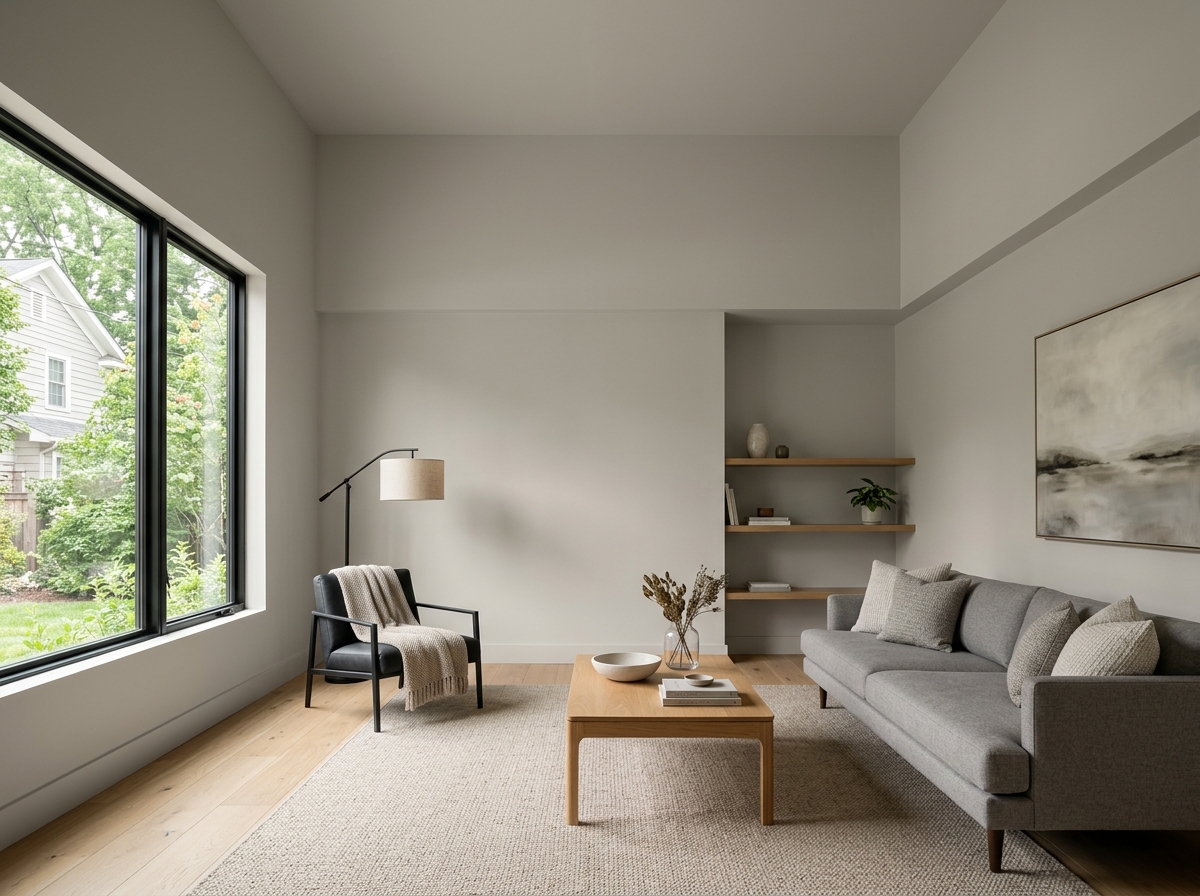
When we talk to homeowners in Wheaton or Downers Grove about their interior design goals, the word “cohesive” comes up constantly. One of the most powerful tools in our professional arsenal to achieve that look is the monochromatic paint scheme. By choosing to paint ceiling and walls same color, you are essentially treating the room as a single, unified canvas rather than a series of disconnected planes.
The primary advantage is the creation of a powerful spatial illusion. In a traditional room, a white ceiling acts like a “lid.” It creates a sharp horizontal line where the wall ends, which can sometimes make a room feel shorter or more “boxed in.” When we remove that line of contrast, the transition becomes invisible. This technique, often referred to as “color drenching,” allows the eye to travel upward without interruption, effectively making the walls feel like they extend forever.
Should You Paint Your Ceiling and Walls the Same Color? It’s a question that leads many to discover the beauty of modern minimalism. This approach is perfect for those who want a clean, sophisticated aesthetic. Beyond the looks, it also simplifies the decision-making process. You don’t have to worry about whether your “ceiling white” has a cool blue undertone that clashes with your “warm beige” walls.
Furthermore, for our clients looking for more info about interior painting services, we often highlight how this method streamlines the actual painting process. While it requires expert precision to ensure the finish is flawless, it eliminates the need for complex taping at the ceiling line, resulting in a more integrated, high-end feel.
Why You Should Paint Ceiling and Walls Same Color in Small Spaces
In smaller rooms—think powder rooms, home offices in Carol Stream, or cozy nurseries—the impact of a uniform color is even more dramatic. Small spaces often suffer from “visual clutter.” When you have different colors for the walls, trim, and ceiling, the room is visually “chopped up,” which makes it feel even more cramped.
By choosing to paint ceiling and walls same color, you blur those boundaries. This creates a “cocoon” effect that feels intentional and cozy rather than small and restrictive. In these compact environments, we often recommend using mid-to-light tones to maximize the sense of openness. Our team at T&Z Interior And Exterior Painting specializes in Wall Ceiling Painting techniques that ensure these small spaces look polished and professional, turning a tiny room into a design highlight of the home.
Enhancing Unique Architecture with Uniform Color
Do you have a home in La Grange with a beautiful vaulted living room or a Cape Cod-style house in Lockport with sloped attic ceilings? If so, you know that these architectural features can be a blessing and a curse. While they add character, they also create awkward angles and “shadow lines” that can look disjointed if painted with contrasting colors.
Color Drenching: Why You Should Paint Your Walls And Ceiling The Same Color is the ultimate solution for structural cohesion. When a sloped ceiling is painted the same shade as the wall it meets, the “break” in the architecture disappears. Instead of a series of distracting triangles and slopes, you get a smooth, flowing surface. This is particularly effective for dormer windows or rooms with complex soffits. Instead of highlighting the “busyness” of the ceiling, the uniform color allows the architecture to feel like a deliberate, sculptural element of the room.
Key Considerations for Room Size and Lighting
Before you grab a roller and start drenching your room in “Midnight Blue,” it’s important to understand how light and space interact. At T&Z, we’ve seen how the same gallon of paint can look completely different on a ceiling in a sun-drenched sunroom in Elmhurst versus a basement in Addison.
One of the most important technical terms we use is Light Reflectance Value (LRV). This is a scale from 0 to 100 that measures how much light a color reflects. A high LRV (like a soft white or light gray) reflects more light, making a room feel airy. A low LRV (like navy or forest green) absorbs light, creating depth and mood.
When you paint ceiling and walls same color, the ceiling will often appear slightly darker than the walls because it doesn’t receive direct light from windows or lamps in the same way. This is why some homeowners choose to have us “cut” the ceiling paint with 50% white — it keeps the same undertone but compensates for the natural shadows of the “fifth wall.”
Natural light is your best friend here. If your room faces north, the light is often cooler and dimmer, which can make dark monochromatic schemes feel a bit heavy. South-facing rooms in Plainfield, however, can handle bold, dark colors beautifully because the warm, abundant sunlight keeps the space from feeling like a cave. If you’re working with a professional Interior Designer, they will likely suggest testing large swatches on both the wall and the ceiling to see how the color shifts throughout the day.
Selecting the Right Sheen to Paint Ceiling and Walls Same Color
Choosing the color is only half the battle; the sheen (or finish) determines how that color behaves. In a traditional setup, ceilings are almost always painted in a “Flat” or “Matte” finish. Why? Because ceilings are notorious for having imperfections—bumps, drywall seams, or texture—and flat paint hides those flaws by absorbing light.
However, when you paint ceiling and walls same color, you have some creative options. Many of our clients prefer to keep the ceiling flat while using an “Eggshell” or “Satin” finish on the walls. This creates a very subtle textural contrast that adds dimension without breaking the color unity.
If you want a truly high-end, dramatic look—perhaps for a dining room in Glenview—you might even consider a “Satin” or “Semi-gloss” on the ceiling. This reflects light back down into the room, creating a glow. Just be warned: shiny finishes on a ceiling require impeccable drywall preparation, as every tiny bump will be highlighted. Consulting with an Interior Decorator can help you decide which finish combo matches your home’s style.
The Impact of Color Choice on Room Ambiance
The “vibe” of your room is heavily dictated by the color you choose for your drenching project:
- Neutral Tones (Whites, Creams, Light Grays): These are the safest and most popular choices. They create a “cloud-like” feel that is incredibly serene. This is perfect for bedrooms or living rooms where you want a bright, open atmosphere.
- Bold Hues (Jewel Tones, Deep Blues): This is where the drama happens. Painting a room top-to-bottom in a deep teal or charcoal creates a sophisticated, “enveloping” feel. It’s a bold move that works exceptionally well in libraries, media rooms, or “moody” primary suites.
- Warm vs. Cool Undertones: A “cool” white can feel crisp and modern, while a “warm” white feels cozy and traditional. When the color is everywhere, these undertones become much more apparent, so testing is non-negotiable!
Professional Techniques for a Flawless Finish
Achieving a professional-grade monochromatic look isn’t as simple as just using one bucket of paint for everything. At T&Z Interior And Exterior Painting, we follow a rigorous process to ensure the final result is stunning and durable.
First and foremost is surface preparation. Because a single color draws the eye across every surface, any nicks in the drywall or gaps in the crown molding will stand out. We take the time to patch, sand, and prime every inch. The Pros and Cons of Painting Ceilings the Same Color as Walls often come down to the quality of the prep work. If the prep is rushed, the “pro” of a seamless look quickly becomes a “con” when you see every imperfection.
Priming is especially important when you’re making a big color change or dealing with different textures (like a smooth wall and a popcorn ceiling). Primer ensures the paint adheres properly and that the color is consistent across different materials.
When it comes to the order of application, we always start with the ceiling. Gravity is a thing, and even the best painters might have a tiny bit of “splatter” or “drip.” By painting the ceiling first, we can easily clean up any edges when we move to the walls. Our “cutting-in” technique involves using high-quality angled brushes to create a sharp, clean line at the corners, even though the color is the same. This ensures the “v-shape” of the corner is defined by the way light hits it, not by a messy paint line.
Handling Trim and Architectural Details
One of the biggest questions we get is: “What do I do with the trim?” You have two main paths:
- Full Color Drenching: This involves painting the walls, ceiling, crown molding, baseboards, and even the doors the exact same color. This is the ultimate modern look. It makes the room feel massive and incredibly high-design. To add interest, we often suggest using a different sheen for the trim—like a “Semi-gloss”—to make it pop subtly against the flatter walls.
- Contrasting Trim: If you have beautiful, historic crown molding in a home in Wilmette, you might want to keep it white or a contrasting wood tone. This “frames” the color and provides a classic, traditional break between the walls and the ceiling.
Whatever you choose, the goal is seamless integration. If you’re painting the ceiling and walls the same color but leaving the crown molding white, that molding becomes a very strong focal point. Make sure it’s a feature you want to highlight!
Avoiding Common Monochromatic Painting Mistakes
We’ve been called in to “fix” many DIY projects in the Chicago suburbs, and these are the most common errors we see:
- Clashing Undertones: Buying a “white” for the walls and a different “white” for the ceiling. Even if they look similar on the swatch, once they are on large surfaces, one might look yellow and the other blue. Always use the exact same color mix.
- Neglecting Prep: As mentioned, a uniform color is a spotlight for bad drywall. Don’t skip the sanding!
- Poor Lighting Assessment: Choosing a dark color for a room with one tiny window. Without adequate artificial lighting (lamps, recessed lights), the room will feel like a basement.
- Incorrect Sheen Selection: Using a high-gloss paint on a ceiling with lots of bumps. It will look like a topographical map of the moon. Stick to matte or flat for most ceilings.
Frequently Asked Questions about Color Drenching
Does painting the ceiling and walls the same color make a room look smaller?
Actually, it’s usually the opposite! By removing the “horizon line” where the wall meets the ceiling, your brain has a harder time perceiving the boundaries of the room. This “blurs” the edges and can make a small room in Woodridge feel much more expansive and open. It only feels smaller if you choose an extremely dark color in a room with zero lighting.
Should I use the exact same paint product for both the walls and the ceiling?
While you want the color to be identical, the product might differ. Wall paint is designed to be scrubbable and durable, while specialized ceiling paint is often thicker to prevent drips and flatter to hide flaws. We recommend having your local paint shop mix your chosen wall color into a ceiling-specific base for the top surface and a high-quality wall base for the rest.
How do I choose between a light or dark uniform color scheme?
Think about the “job” of the room. Is it a home office where you need to feel energized and focused? A light, airy neutral might be best. Is it a cozy den or a primary bedroom where you want to feel relaxed and tucked in? A darker, moodier hue can create that perfect “big hug” feeling. Also, consider your furniture—dark walls make light-colored furniture (like a cream sofa) really stand out.
Conclusion
Painting your ceiling and walls the same color is more than just a trend; it’s a sophisticated design choice that can solve architectural “problems” and bring a sense of luxury to any home. Whether you’re in Lombard, Schaumburg, or Chicago, this technique offers a way to modernize your space and create a truly harmonious environment.
At T&Z Interior And Exterior Painting, we pride ourselves on our expert craftsmanship and attention to detail. We don’t just “slap on a coat of paint.” We understand the science of light, the importance of meticulous prep, and the nuances of different finishes. Using only top-brand materials and our 15+ years of experience, we ensure that your color drenching project looks as good in person as it does in your imagination.
Ready to see what a professional touch can do for your home? From more info about house painting services to specialized cabinet refinishing, we are here to help. Transform your home with professional wall and ceiling painting and experience the T&Z difference—where quality meets stunning results. Give us a call today, and let’s start planning your room’s transformation!