
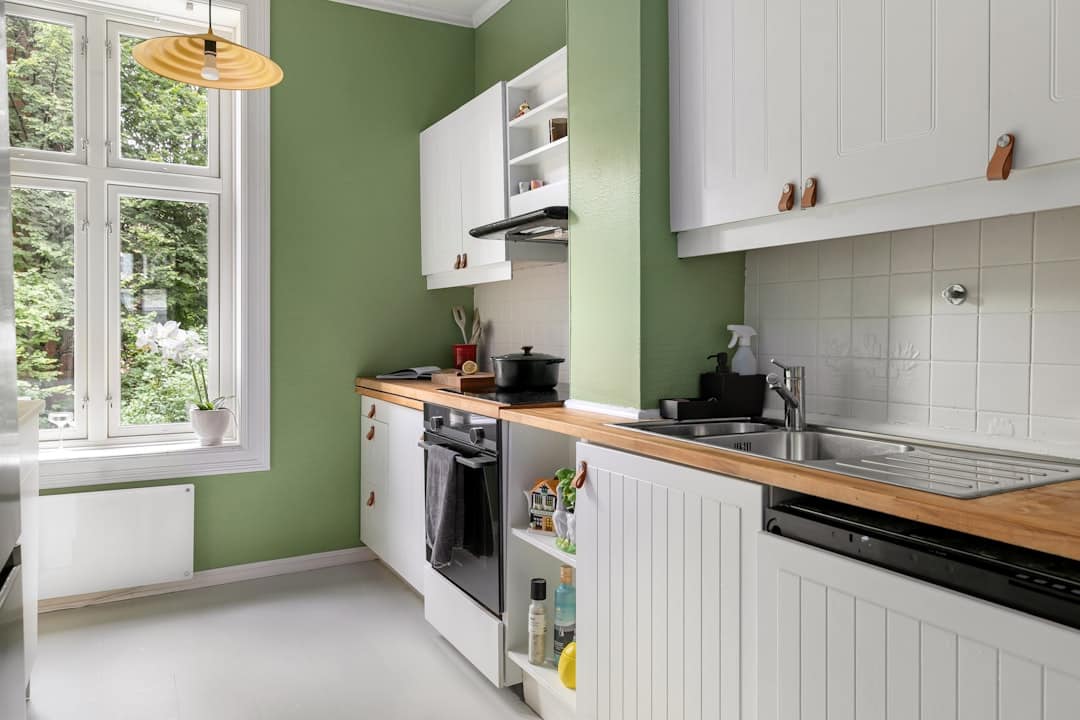
Why Your Kitchen Deserves a Fresh Coat of Paint
Kitchen wall painting is one of the most cost-effective ways to transform the heart of your home. A fresh coat of paint can brighten a dated space, create a cozy gathering area, and make your kitchen feel brand new without a full renovation. It injects personality and style while protecting your walls from the moisture, grease, and daily wear that kitchens endure.
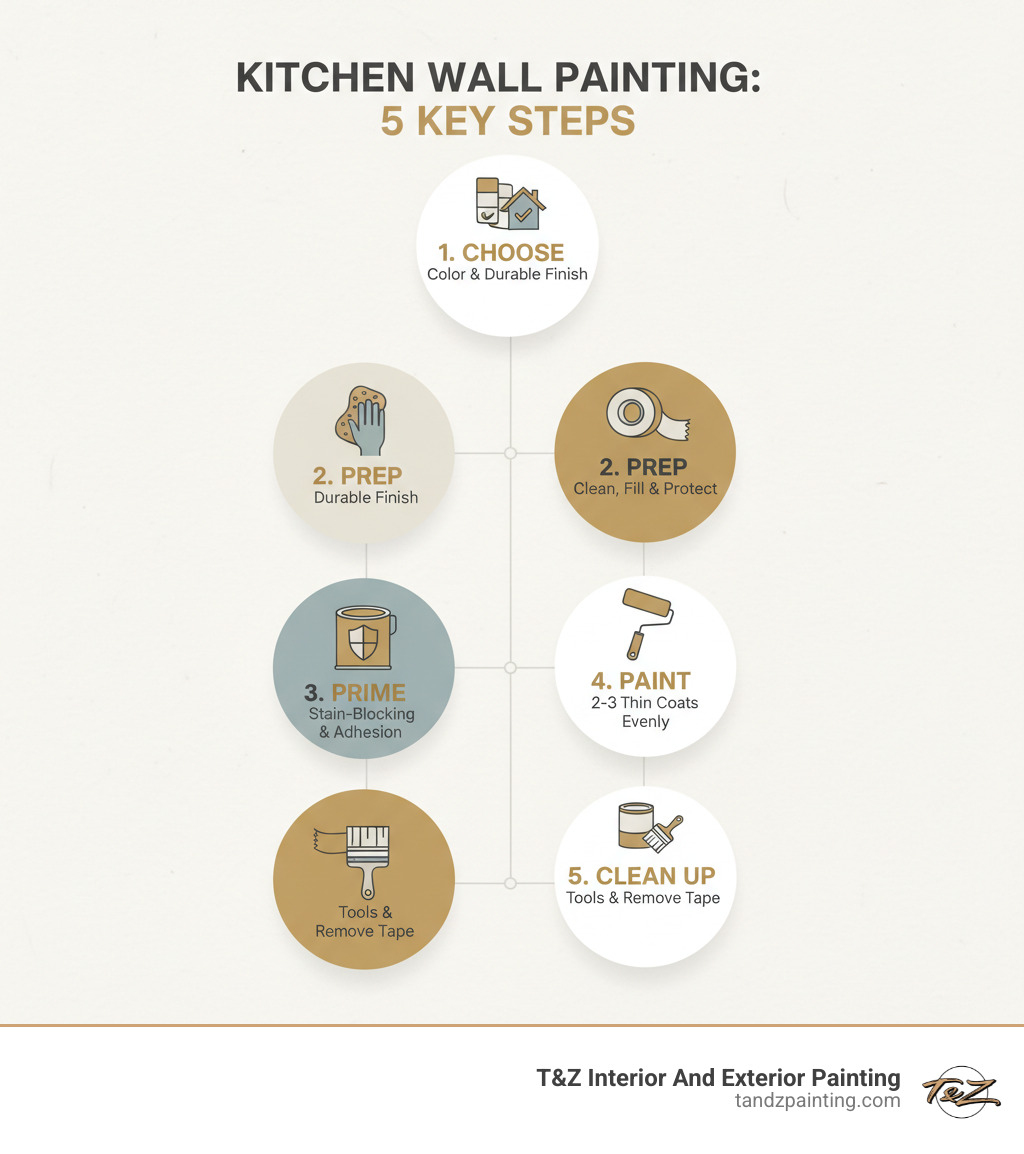
Quick Answer: How to Paint Kitchen Walls Successfully
- Choose a durable, washable paint in a color that complements your cabinets and countertops.
- Prep by cleaning, degreasing, filling holes, and protecting surfaces with tape and drop cloths.
- Prime with a stain-blocking primer for better adhesion and moisture resistance.
- Paint with quality brushes and rollers, applying 2-3 thin coats for even coverage.
- Clean up carefully and allow proper drying time before removing tape.
This guide walks you through everything you need for a successful kitchen wall painting project. You’ll learn how to choose the perfect colors and finishes, prepare your walls like a pro, explore creative techniques, and decide whether to DIY or call in professionals. Whether you prefer warm beiges, crisp whites, or bold navy blues, the right approach will help you achieve durable, beautiful results.
Choosing the Perfect Paint: Color and Finish
Selecting the right paint for your kitchen involves more than just picking a color. You need a finish that can handle daily cooking chaos while making your space feel beautiful. Let’s explore how to find the perfect combination.
What are the most popular paint colors for kitchens?
When it comes to kitchen wall painting, popular colors create spaces that feel inviting, clean, and energizing.
- Warm Tones: Cozy beiges, soft creams, and earthy tones like muted greens or terracotta create a welcoming atmosphere. They pair beautifully with modern farmhouse or rustic aesthetics.
- Cool Tones: Deep neutrals like navy blue or charcoal offer sophistication and calm. Blues and teals are kitchen favorites for their relaxing properties and modern or coastal vibe.
- Neutral Palettes: Timeless whites, off-whites, and grays offer incredible versatility. They can make even the smallest kitchen feel open and airy, providing a sophisticated backdrop for any cabinet or countertop style.
- Bold Accent Colors: While neutrals often cover the main walls, a splash of vibrant color on an accent wall creates a powerful focal point. Some research suggests warm colors like yellows and reds can stimulate appetite, making them a natural choice for dining areas. Learn more about how color influences appetite.
Trending styles include rustic modern looks with textured finishes, retro pastels, and earthy tones that ground contemporary spaces. The key is to choose colors that resonate with your personal style.
What are the best types of paint finishes for kitchen walls?
Your kitchen faces daily assaults from steam, grease, and frequent cleaning, so your paint finish must be hardworking. Durability and washability are essential. You need a finish that lets you wipe away splatters without damaging the surface. Moisture and stain resistance are equally important to prevent bubbling, peeling, mildew, and stains from setting in.
Here’s how common paint finishes stack up for kitchen wall painting:
| Finish | Durability | Sheen Level | Cleanability | Best For Kitchen Walls? | Notes |
|---|---|---|---|---|---|
| Satin | Medium | Medium-glossy | Very Good | Yes, an excellent choice. | Smooth, easy to clean, and durable. Less prone to showing imperfections than semi-gloss. |
| Semi-Gloss | High | High-glossy | Excellent | Yes, especially for trim. | Very durable and washable. Its high sheen can highlight wall imperfections, so prep is key. |
| Eggshell | Medium-Low | Low-sheen | Good | Acceptable, but not ideal. | More durable than matte, but may not hold up to frequent scrubbing in high-traffic areas. |
| Matte | Low | No sheen | Poor | Not recommended. | Its porous nature is difficult to clean and susceptible to stains and moisture damage. |
For most kitchens, we recommend satin or semi-gloss finishes. Satin offers excellent durability with a subtle sheen, while semi-gloss provides maximum washability, making it perfect for high-splash zones. Avoid matte finishes, as they are a magnet for stains and moisture.
How to choose a paint color that complements your kitchen cabinets and countertops?
Creating a harmonious kitchen palette requires that your wall color works with your existing cabinets and countertops. Here’s a quick guide:
- Identify Undertones: Look at the subtle undertones in your cabinets and countertops. Are they warm (yellow/red-based) or cool (blue/green-based)? Pair warm with warm and cool with cool to avoid clashing.
- Match Wood Cabinets: Light woods like maple work well with light blues, greens, or creamy whites. Medium woods like oak pair nicely with deeper greens or warm grays. Dark woods like espresso need light, bright colors (whites, light grays) to create contrast and prevent the room from feeling too dark.
- Complement Stone Countertops: For granite, pull a subtle color from its flecks for your wall paint. With uniform quartz, you have more freedom to introduce a contrasting color. For marble, cool grays, muted blues, or crisp whites improve its natural sophistication.
- Test, Test, Test: Never commit to a color based on a small paint chip. Buy sample pots and paint large swatches on different walls. Observe them throughout the day as the natural and artificial light changes. This crucial step saves you from costly mistakes.
Choosing the right color is personal. If you’re planning a refresh and need expert guidance, explore more info about our interior painting services to see how we can help bring your vision to life.
Your Step-by-Step Guide to Prepping for Kitchen Wall Painting
The secret to a professional-looking kitchen wall painting job isn’t the painting itself—it’s the prep work. A properly prepared surface ensures your new paint will last for years instead of peeling in months. With a little patience, you can prep your walls like a pro.
How do I prepare my kitchen walls for painting?
Kitchen walls accumulate a thin film of grease, moisture, and grime that must be removed before painting. Paint will not adhere to dirty or greasy surfaces.
- Clean and Degrease: This is the most critical step. Wash all walls with a TSP substitute (Trisodium Phosphate substitute) mixed with warm water. This solution effectively cuts through cooking grease. Pay extra attention to areas around the stove and sink. Rinse the walls thoroughly with clean water and let them dry for at least 24 hours.
- Fill Holes and Cracks: Paint highlights imperfections, so use spackle or joint compound to fill every nail hole, dent, and crack. Slightly overfill each spot to account for shrinkage.
- Sand for a Smooth Surface: Once the spackle is dry, use fine-grit sandpaper (180-220 grit) to sand the patched areas until they are flush with the wall. A light scuff-sanding of the entire wall helps the new paint adhere better, especially over glossy surfaces. Wipe away all dust with a damp cloth.
- Protect Surfaces: Move small appliances out of the kitchen. Cover large appliances, countertops, and cabinets with plastic sheeting. Use canvas drop cloths to protect your floors—they are absorbent and less slippery than plastic.
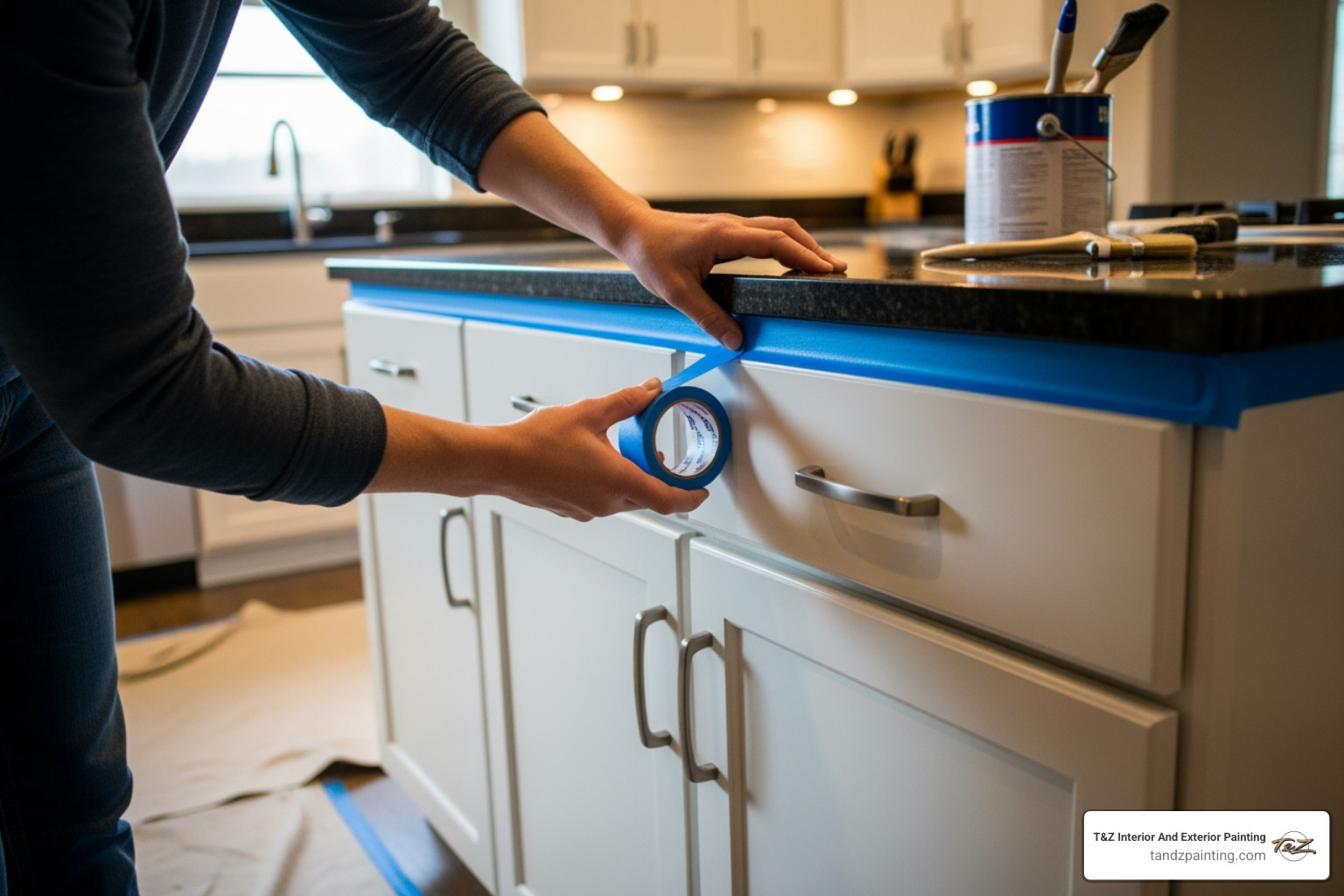
- Tape Edges for Clean Lines: Apply high-quality painter’s tape along the ceiling, baseboards, and trim, and where walls meet cabinets or backsplashes. Press the tape edge down firmly to create a tight seal and prevent paint from bleeding underneath. This is the key to achieving crisp, professional lines.
Why is priming essential in the kitchen?
Skipping primer in a kitchen is a mistake. The kitchen is a uniquely challenging environment with high humidity and grease. A quality stain-blocking primer is your insurance policy. It seals in stubborn stains, prevents them from bleeding through your new color, and ensures a uniform finish. Primer’s main superpower is adhesion; it creates a surface for the topcoat to grip, preventing peeling and flaking, especially over patched areas. It also provides a neutral base, allowing your chosen paint color to look exactly as intended. Finally, many primers add a layer of moisture resistance, which helps prevent mildew and extends the life of your paint job.
What tools and materials will I need?
Having the right supplies on hand makes the kitchen wall painting process much smoother. Here’s your checklist:
- Prep: Degreaser (TSP substitute), sponges, spackle, putty knife, fine-grit sandpaper.
- Protection: High-quality painter’s tape, canvas drop cloths, plastic sheeting.
- Painting: Stain-blocking primer, your chosen paint (satin or semi-gloss recommended), an angled brush for cutting in, a roller frame and covers (3/8″ nap for smooth walls), and a paint tray.
- Other: An extension pole for your roller, a sturdy ladder or step stool, and cleaning supplies (buckets, rags, soap).
If this prep work sounds like more than you want to handle, our team can deliver stunning results without the stress. Check out more info about our interior painting services to see how we can help.
Creative Kitchen Wall Painting Ideas and Techniques
Once you’ve mastered the basics of kitchen wall painting, consider moving beyond a single, solid color to inject unique personality into your space. Creative paint techniques can transform your kitchen from functional to genuinely inspiring.
What are some creative kitchen wall painting ideas beyond solid colors?
Think of your walls as a blank canvas. Here are a few ideas to add visual excitement:
- Accent Walls: The easiest way to make a statement. Paint one wall—perhaps behind the stove or in a breakfast nook—in a bold, contrasting color to create a focal point.
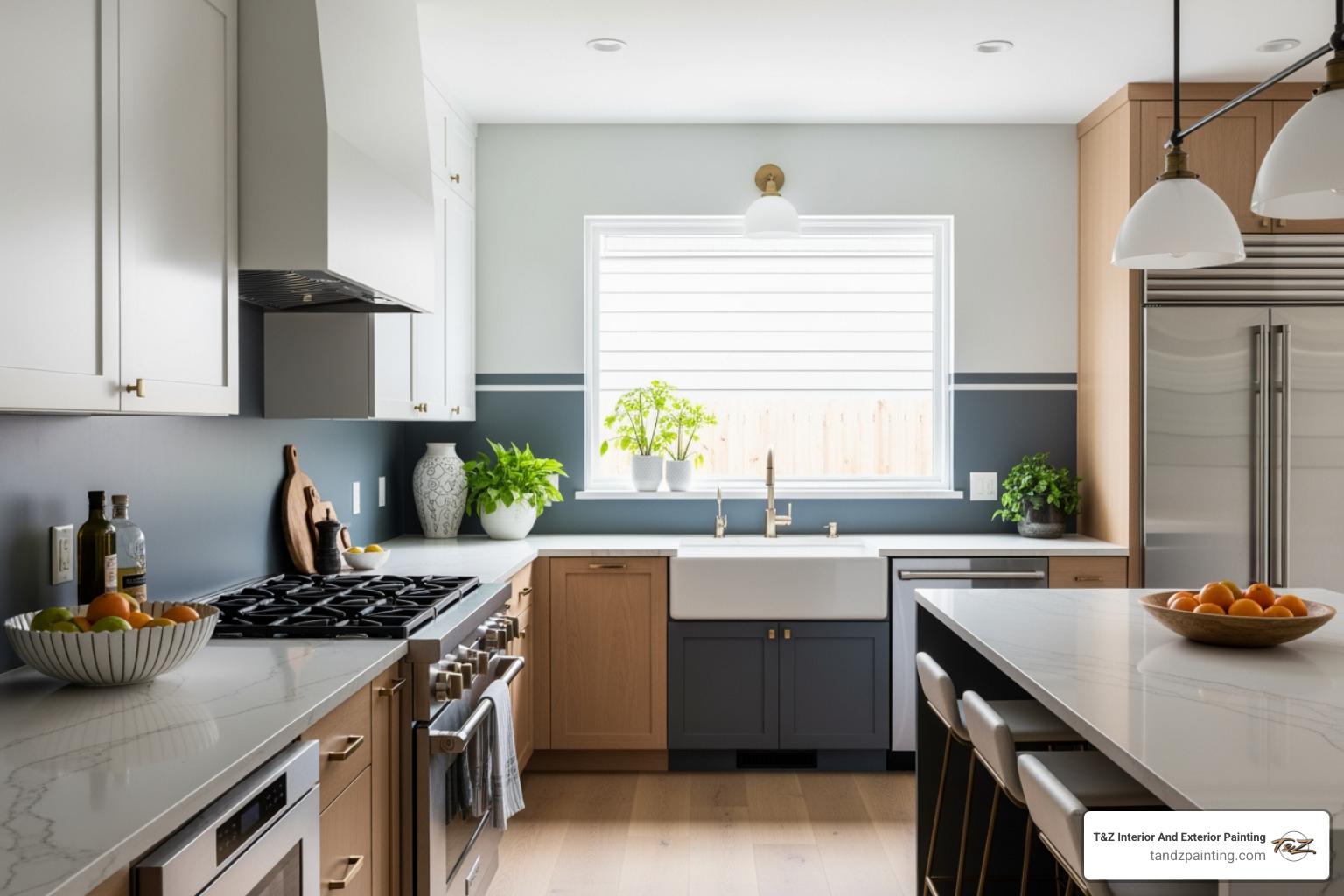
- Two-Tone Walls: A classic, dynamic look. Paint the upper and lower portions of your walls in different colors, often separated by a chair rail or a crisp line. A lighter shade on top can make ceilings feel higher.
- Stenciling: Add intricate designs without the commitment of wallpaper. From modern geometric shapes to classic floral motifs, stencils allow for personalized flair.
- Geometric Patterns: Painted stripes, chevrons, or abstract blocks of color create a striking, modern look that can guide the eye through your space.
- Chalkboard Paint: Transform a section of wall into a functional surface for grocery lists, menus, or kids’ art. It’s both practical and playful.
- Faux Finishes: Techniques like sponging, rag rolling, or creating the look of brick or concrete can add incredible texture and depth for a rustic or industrial feel.
How can I use paint to make a small kitchen feel larger?
Paint is a secret weapon for creating the illusion of space in a compact kitchen. Follow these principles:
- Use Light and Bright Colors: Whites, off-whites, light grays, and soft pastels are your best friends. They reflect light, making the space feel more open and airy.
- Try a Monochromatic Scheme: Using variations of the same color on walls, trim, and even cabinets creates a seamless flow that makes the space feel more continuous and expansive.
- Paint the Ceiling: Painting the ceiling the same light color as the walls (or a shade lighter) blurs the boundary between them, making walls appear taller.
- Choose a Higher Sheen: Finishes like satin or semi-gloss have reflective qualities that bounce light around the room, contributing to a brighter, more spacious feeling.
How can I incorporate decorative painting into my kitchen design?
Decorative painting turns ordinary walls into artistic conversation pieces.
- Hand-Painted Murals: For a truly one-of-a-kind statement, a mural can create an unparalleled focal point, whether it’s a scenic landscape or an abstract design.
- Decorative Borders: Instead of wallpaper, use stencils or hand-paint a simple motif or stripe along the upper portion of your walls to add detail without overwhelming the room.
- Highlight Architectural Details: Use a contrasting color to turn a recessed niche into a feature, or outline crown molding for added definition and a touch of craftsmanship.
Coordinating your wall refresh with your cabinets creates a cohesive, professionally designed feel. We offer expert cabinet painting services to complete your kitchen’s change.
Frequently Asked Questions about Kitchen Wall Painting
Here are quick answers to the questions we hear most often from homeowners planning a kitchen refresh.
What are the benefits of using durable, washable paint in a kitchen?
Kitchens are high-traffic, high-mess areas. Durable, washable paint is essential for kitchen wall painting because it offers:
- Easy Cleanup: Formulated to let you wipe away food splatters, grease, and scuffs with a damp cloth without damaging the finish or color.
- Stain Resistance: Quality kitchen paints feature technology that blocks stains from soaking into the surface, keeping walls looking clean.
- Moisture Resistance: It withstands humidity from cooking and dishwashing, which helps prevent peeling, bubbling, and mildew growth.
- Longevity: Investing in the right paint means your kitchen will look freshly painted for years, saving you time and money on touch-ups and repainting.
Should I paint my kitchen cabinets at the same time?
Yes, painting your cabinets and walls together is an excellent idea. It creates a cohesive, professionally planned design where colors and finishes are perfectly harmonized. Combining the projects is also more efficient and cost-effective, minimizing disruption to your home. The result is a complete change that makes your kitchen feel brand new without the cost of a full remodel.
We’ve covered this topic in detail to help homeowners decide. Learn more about Can You Paint Kitchen Cabinets? and if Kitchen Cabinet Painting is it a good idea? for your home.
What are some trending kitchen wall painting styles?
Paint is central to current kitchen design trends. Here are some popular styles for kitchen wall painting:
- Modern Farmhouse: Crisp white or light gray walls create a clean backdrop for rustic wood and industrial accents.
- Minimalist: Neutral palettes of bright whites, soft grays, and off-whites create a calm, uncluttered, and serene feeling.
- Industrial: Cool grays, charcoal, and faux concrete finishes complement raw materials like brick and metal.
- Bold and Colorful: While neutrals dominate, accent walls in deep navy blues, vibrant greens, or even glossy plum are trending for adding personality.
- Earthy Tones: Warm beiges, soft greens, and muted blues are gaining traction for creating a calming, grounded environment.
- Two-Tone: This popular trend involves pairing different colors on upper and lower cabinets or using a distinct wall color that complements the cabinetry for added visual interest.
Conclusion
Imagine your kitchen transformed. A fresh coat of paint does more than just cover old walls—it redefines the entire atmosphere of the heart of your home. As we’ve covered, the right kitchen wall painting project can make a cramped space feel airy, update a dated room, and create a durable, beautiful backdrop for family life.
There’s great satisfaction in a DIY project. However, achieving a flawless, long-lasting finish in a kitchen—with its unique challenges of grease, moisture, and high traffic—requires expertise, proper tools, and quality materials. A professional job ensures your investment looks stunning for years to come.
If you’re in Lombard, Wheaton, Lemont, Downers Grove, Carol Stream, La Grange, Lockport, Plainfield, Addison, Elmhurst, Glenview, Wilmette, Woodridge, or Chicago, the experienced team at T&Z Interior And Exterior Painting is ready to help. We use top-brand materials and proven techniques to deliver results that last.
Ready to transform your kitchen without the stress? Contact us for your professional house painting project today. Let’s create a kitchen that makes you smile every time you walk into it.