
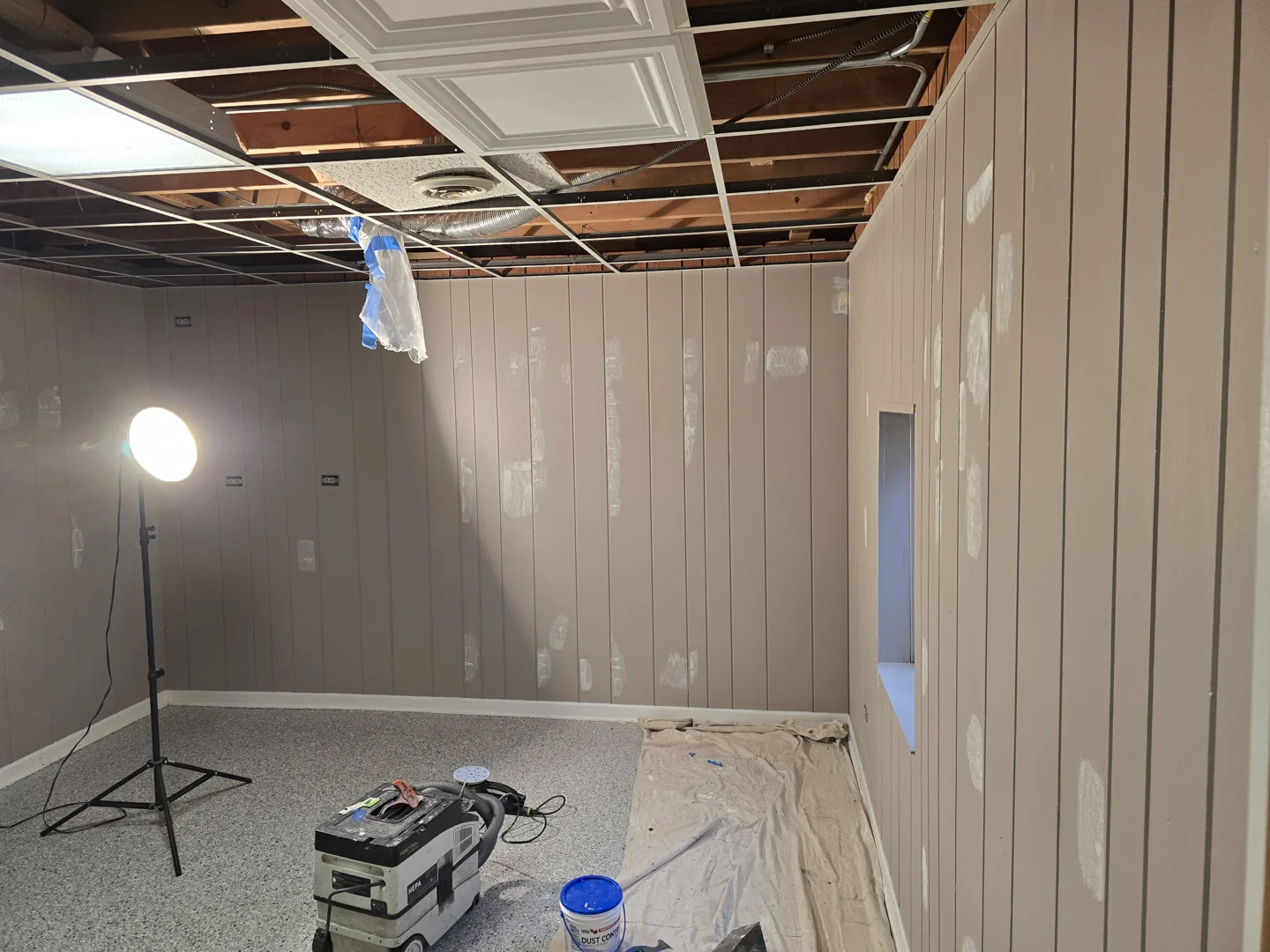
Why Low Sheen Interior Paint Is Ideal for Wall Imperfections
When light hits a wall surface, it reacts based on the coating’s luster level. High-gloss and semi-gloss paints reflect light direct back into the room like a mirror. While this creates a radiant finish, it comes with a severe aesthetic trade-off: every minor wall blemish, taped drywall seam, patch job, and subtle surface bulge is amplified under direct or ambient lighting.
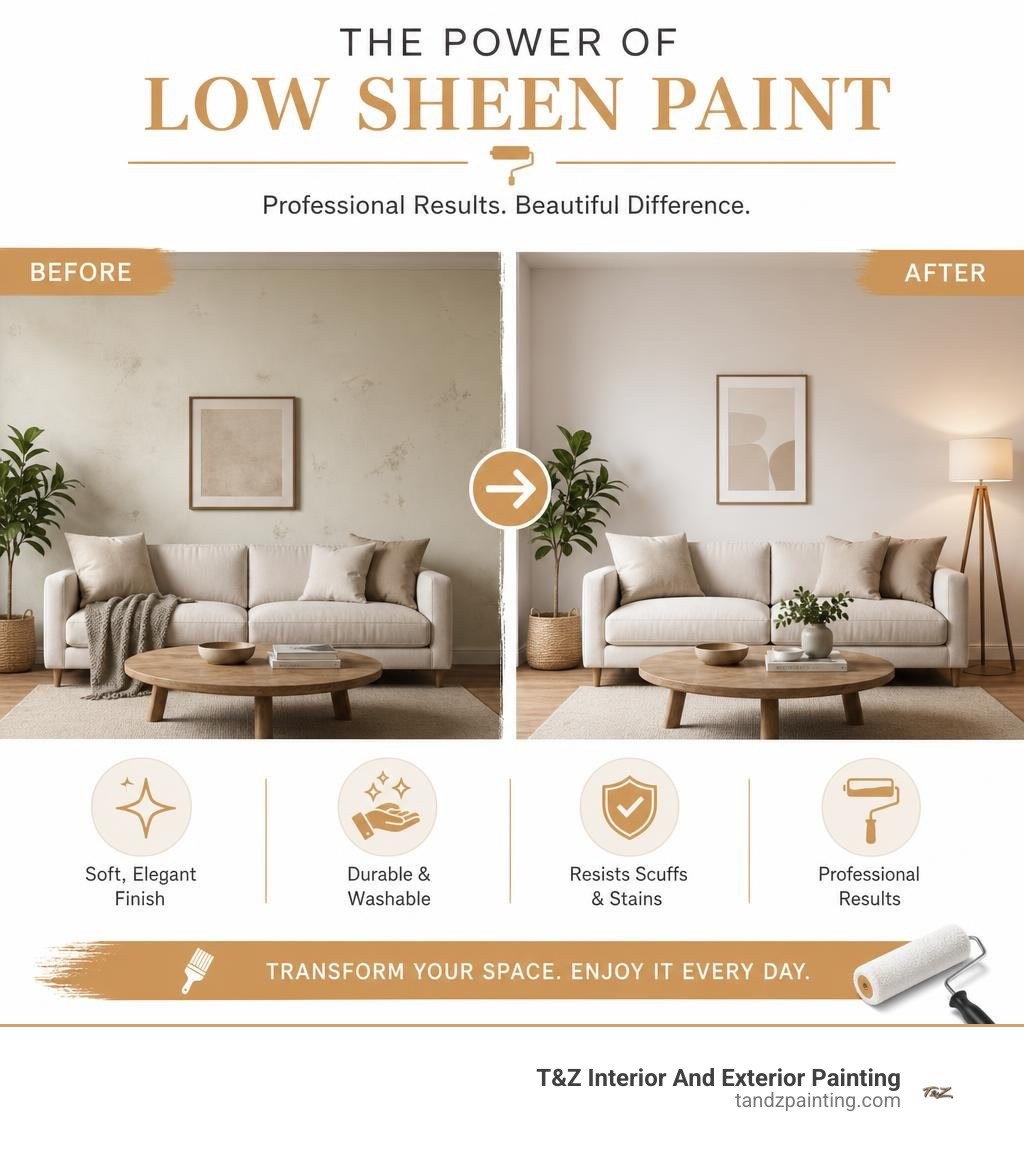
Low sheen interior paint solves this fundamental challenge by utilizing a low-luster formulation that gently diffuses light. By spreading reflected light in multiple directions rather than bouncing it directly into your eyes, low sheen coatings minimize the contrast between smooth wall areas and minor surface defects.
This visual softening effect makes low sheen paints uniquely suited for older homes throughout Chicago suburbs like Lombard, Downers Grove, and Elmhurst, where natural settling over time has left drywall or plaster with subtle irregularities.
In addition to visual concealment, modern low sheen wall coatings incorporate balanced acrylic resins. Historically, hiding imperfections meant accepting delicate flat paints that could not be washed without leaving dull spots or water rings. Today’s advanced formulations offer robust scrubbability and scuff resistance while keeping surface glare to an absolute minimum. Many premium products, such as zero-VOC interior low sheen lines, allow homeowners to enjoy pristine indoor air quality and LEED-compliant environmental safety alongside superior visual concealment.
How Low Sheen Differs From Flat and High-Gloss Paint
Understanding the distinction between finishes boils down to light reflectance and surface resin concentration:
- Flat Paint: Contains the highest proportion of pigment to binder, resulting in an ultra-matt finish that absorbs nearly all incoming light. It is unequaled at hiding massive wall flaws, but its lack of resin makes it prone to burnishing—where rubbing or wiping the surface leaves shiny, polished marks.
- High-Gloss & Semi-Gloss Paint: Formulated with high resin levels to create a hard, highly reflective barrier. While exceptionally easy to wash, its glass-like reflection highlights every single drywall tape edge, joint compound ridge, and dent.
- Low Sheen Paint: Hits the sweet spot between these two extremes. It contains just enough protective resin to offer scuff resistance and washability, while keeping light reflection minimal enough to obscure surface flaws.
When evaluating different interior paint finishes, low sheen provides the warmth and forgiveness of flat paint with the practical resilience modern households require.
Key Benefits of Low Luster Finishes
Choosing a low luster coating for your home’s interior offers several technical and aesthetic benefits:
- Concealment of Surface Flaws: Diminishes the appearance of drywall patches, nail pops, and uneven wall texture without requiring extensive structural resurfacing.
- Stain Release & Washability: High-quality low-sheen formulas feature specialized stain release technology that allows everyday marks, dust, and fingerprints to be removed with a simple damp cloth.
- Burnishing Resistance: Unlike flat finishes, premium low-sheen formulations resist polishing when bumped or wiped during regular routine cleaning.
- Seamless Touch-Ups: Because low sheen coatings diffuse light, localized touch-ups blend far better into existing wall surfaces than high-gloss or satin finishes, which often show noticeable patch haloing. Products like Regal® Select Waterborne Interior Paint – Eggshell Quart Eggshell 2026-70 | Benjamin Moore highlight how advanced acrylic resins deliver effortless flow and leveling for a pristine touch-up capability.
Comparing Paint Finishes: Finding the Perfect Sheen
Selecting the right sheen involves balancing room lighting, wall condition, and expected foot traffic. Every room presents a unique combination of natural daylight and artificial lighting that dictates how paint sheens perform visually.
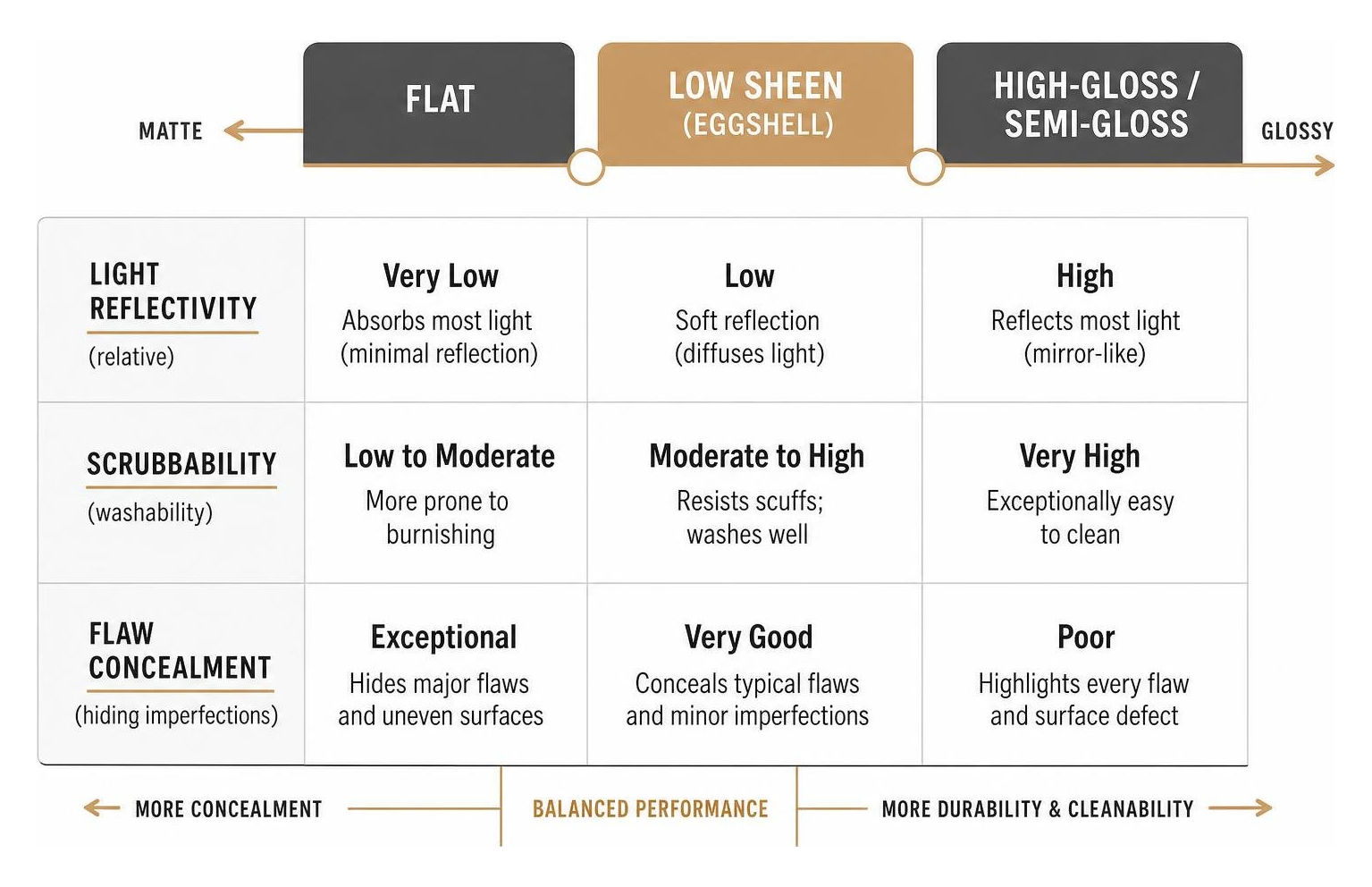
Below is a quick reference guide breaking down how low sheen compares to other standard interior wall finishes:
| Paint Finish | Light Reflectance Value (LRV) Impact | Washability & Scrubbability | Imperfection Concealment | Best Suited Areas |
|---|---|---|---|---|
| Flat | Minimal reflection (0–3%) | Low to Moderate | Exceptional | Ceilings, adult bedrooms, low-traffic areas |
| Matte | Very low luster (3–10%) | Moderate to High | Excellent | Bedrooms, formal dining rooms, low-use walls |
| Low Sheen / Eggshell | Subtle glow (10–25%) | High | Very Good | Living rooms, family rooms, hallways, entryways |
| Satin | Medium pearl-like luster (25–35%) | Very High | Fair | Kitchens, bathrooms, laundry rooms, trim |
| Semi-Gloss | Radiance & high reflection (35–60%) | Superior | Poor | Cabinets, doors, window sills, crown molding |
Low Sheen Interior Paint vs. Flat and Matte Finishes
While flat and matte coatings sit closest to low sheen on the reflection scale, key operational differences exist between them. Flat finish absorbs light completely, making it the ultimate tool for hiding ceiling seams or severe drywall damage. However, flat paint can absorb oils from hands and tends to burnish quickly when scrubbed.
Matte finishes offer a slight step up in durability while maintaining a velvety luster. To explore these subtle non-reflective lusters in detail, read our deep dive on Beyond Flat: Unpacking the Pros and Cons of Matte Paint.
In contrast, low sheen interior paint adds just enough protective body to withstand routine cleaning in active households—making it far more functional than flat paint for main living spaces while maintaining nearly the same level of flaw concealment.
Low Sheen vs. Eggshell and Satin Enamel
In many paint brand lineups, low sheen and eggshell are used almost interchangeably, representing soft, low-gloss finishes reminiscent of an egg’s smooth shell. Both provide a silky, subtle sheen that brings warmth and color depth to interior spaces without generating glaring reflections.
Satin enamel, on the other hand, sits noticeably higher on the gloss spectrum. Satin delivers a distinct pearl-like sheen that repels moisture effectively, making it excellent for high-humidity areas. However, satin’s higher sheen level will reveal taped joints and wall bumps much more readily than a true low sheen product. Premium options like BEHR ULTRA® Interior Eggshell Enamel Paint & Primer | Behr offer scuff-resistant protection with quick dry times, drying to the touch in 1 hour and permitting recoating within 2 hours.
Recommended Rooms and Applications for Low Sheen Paint
Because low sheen interior paint strikes a perfect balance between visual softness and cleanability, it is extremely versatile across residential and commercial interiors.
High-Traffic Living Areas and Hallways
Hallways, family rooms, stairwells, and entryways experience constant activity. Children dropping backpacks, pets brushing against corners, and frequent footsteps make these walls prime targets for scuffs and dirt.
Using a low sheen finish in these spaces ensures that walls can handle regular wiping while hiding the subtle dings and dents that high-traffic zones accumulate over time. Modern low sheen formulas incorporating stain-barrier technologies allow scuffs to be removed with mild soap and water without dulling or altering the finish coat.
Using Low Sheen in Bedrooms and Dining Rooms
In spaces meant for relaxing or entertaining—like primary bedrooms, guest suites, and formal dining rooms—harsh wall reflections can ruin the cozy ambiance. Low sheen paints absorb room lighting softly, enhancing rich paint pigments and adding visual depth to accent walls.
Whether your home features soft morning daylight in Wilmette or warm artificial lighting in a Wheaton living space, low sheen finishes maintain a uniform, sophisticated look under all lighting conditions. For localized layout ideas, explore our full guide on the Best Paint Sheen for Living Room Walls: From Flat to Fabulous.
Beyond residential walls, low-sheen products are frequently specified for low-abuse walls and ceilings in commercial offices, institutional facilities, and multi-family residential communities throughout Schaumburg and Chicago due to their balance of cleanability and flawless visual coverage.
Surface Preparation and Professional Application Guidelines
Even the finest low sheen interior paint requires proper surface preparation to perform as engineered. Skimping on surface preparation can lead to uneven sheen absorption (flashing), visible lap marks, or premature peeling.
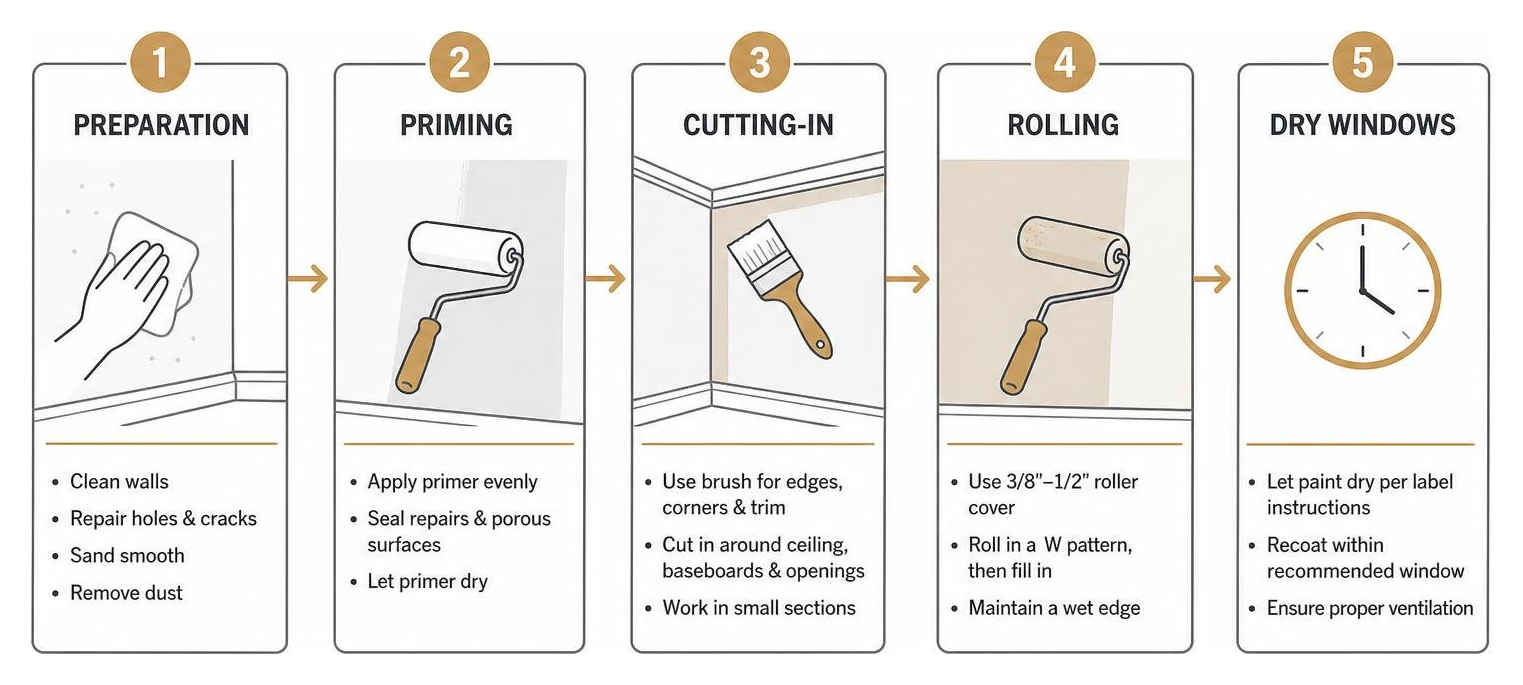
Essential Wall Repair and Priming Steps
Achieving a flawless low-sheen finish begins long before opening the paint can:
- Cleaning & Degreasing: Wipe down walls to remove dust, cobwebs, grease, and hand oils. In kitchens or entryways, clean with a mild detergent solution and allow the surface to dry completely.
- Patching & Sanding: Fill nail holes, cracks, and gouges with high-quality spackle or joint compound. Once dry, sand the patches smooth using 120- to 150-grit sandpaper. Feather the edges into the surrounding wall so the repair feels completely flush.
- Dulling Glossy Surfaces: If painting over an existing high-gloss or semi-gloss finish, scuff-sand the wall lightly to dull the surface shine, ensuring proper mechanical adhesion for the new low-sheen topcoat.
- Priming Patches & Raw Substrates: Apply an appropriate acrylic stain-blocking primer over raw drywall, fresh plaster, repaired patches, or tannin-heavy woods. Priming seals porous repairs so they don’t absorb the topcoat at a different rate, which causes noticeable shiny or dull spots (flashing).
Application Techniques for Low Sheen Interior Paint
To ensure an even coat without lap marks or roller stipple, follow these professional application standards:
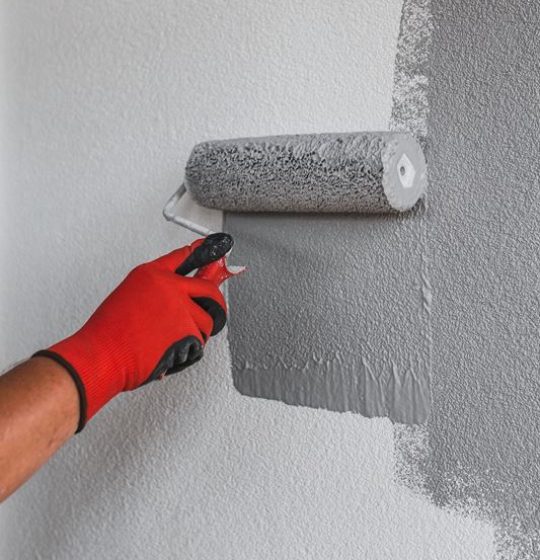
- Select the Right Tools: Use a high-quality nylon/polyester synthetic brush for cutting in around trim and ceilings. For smooth to semi-smooth drywall, use a premium 3/8-inch to 1/2-inch microfiber or woven roller cover that holds paint evenly and minimizes spatter.
- Maintain a Wet Edge: Always roll from unpainted areas back into freshly applied, wet paint. Never let a cut-in border dry completely before rolling the main wall section, as this creates visible boundary lines (halo effect).
- Observe Temperature & Dry Windows: Apply paint when ambient and wall temperatures are between 50°F and 90°F. Most premium acrylic low sheen paints dry to the touch in 30 to 60 minutes and are ready for a second coat in 1 to 2 hours under standard humidity levels.
- Apply Two Full Topcoats: For optimal hide, full color depth, and maximum scrubbability, apply two uniform topcoats rather than one heavy coat.
Working with experienced professionals ensures that every coat achieves perfect leveling and uniform luster. Read more on how professional craftsmanship yields superior finishes in our article on Professional Indoor Painters and the Quest for the Perfect Coat.
Frequently Asked Questions About Low Sheen Interior Paint
Can low sheen paint be washed and cleaned easily?
Yes, modern low sheen interior paint formulations feature durable acrylic resins engineered for washability. However, you should allow the paint film to complete its full curing process—typically 3 to 4 weeks—before attempting any vigorous cleaning. Once cured, wipe walls gently using a soft sponge or microfiber cloth with a mild, non-abrasive liquid detergent solution. Avoid harsh abrasive pads or chemical cleaners that could abrade the paint surface.
Is low sheen interior paint suitable for bathrooms and kitchens?
Low sheen paint can be used in powder rooms or larger kitchens with good ventilation. However, for full bathrooms with high moisture levels, enclosed steam showers, or direct splash zones around sinks, high-moisture specialty coatings, satin enamels, or semi-gloss finishes are generally recommended. Satin and semi-gloss paints provide a tighter resin barrier that resists standing moisture, steam condensation, and mildew growth more effectively.
How many coats of low sheen paint are needed for full coverage?
For most interior painting projects, applying two coats of low-sheen paint over a properly prepared or primed wall yields the best results. While premium paint-and-primer formulas can achieve high coverage in a single coat over similar existing colors, a two-coat application guarantees complete opacity, optimal stain resistance, uniform sheen reflection, and long-term film durability.
Transform Your Home with Professional Interior Painting Services
Selecting the ideal sheen is only half the formula for a breathtaking home transformation—flawless application is what brings it all together. At T&Z Interior And Exterior Painting, we bring over 15 years of professional painting experience to homeowners and business owners across Lombard, Addison, Glen Ellyn, Downers Grove, Itasca, Oak Brook, and the surrounding Chicago communities.
Our licensed and insured interior painting teams take immense pride in delivering crisp lines, smooth surface preparation, and long-lasting durability using top-tier materials from industry-leading manufacturers. With a 5.0 Google Reviews rating, we treat your property with the utmost respect, maintaining clean job sites and ensuring zero hassle from start to finish.
Whether you’re updating a single hallway, transforming a open-concept family room, or refreshing your entire interior, our expert team is here to help you choose the ideal finishes and bring your vision to life.
Ready to eliminate wall glare and hide surface imperfections for good? Contact T&Z Interior And Exterior Painting today to discuss your project or schedule a consultation with our experienced team through our Expert Interior Painting Services page!