
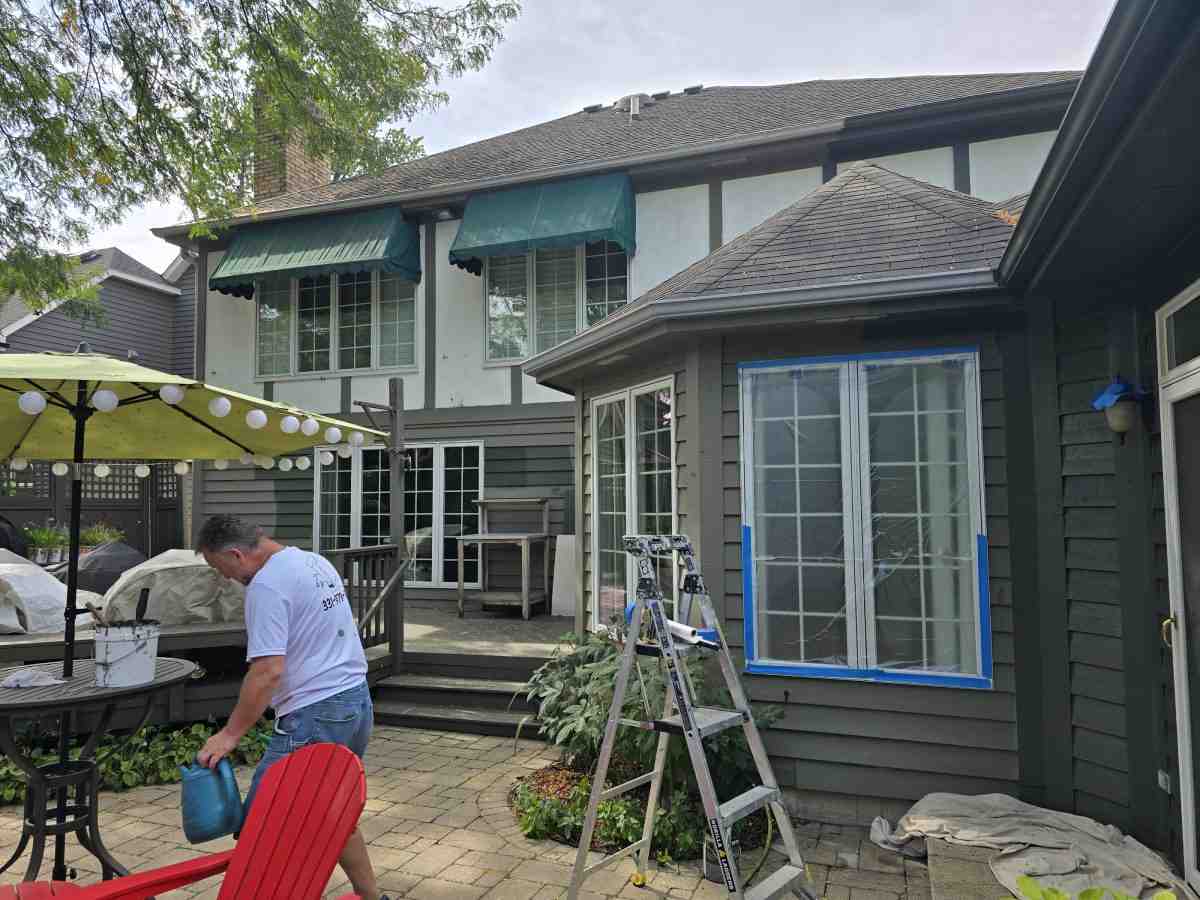
What Goes Into Residential Painting Estimates — And Why It Matters for Your Home’s Exterior
Residential painting estimates are more than just a number on a page — they reflect the true scope of what it takes to protect and beautify your home’s exterior.
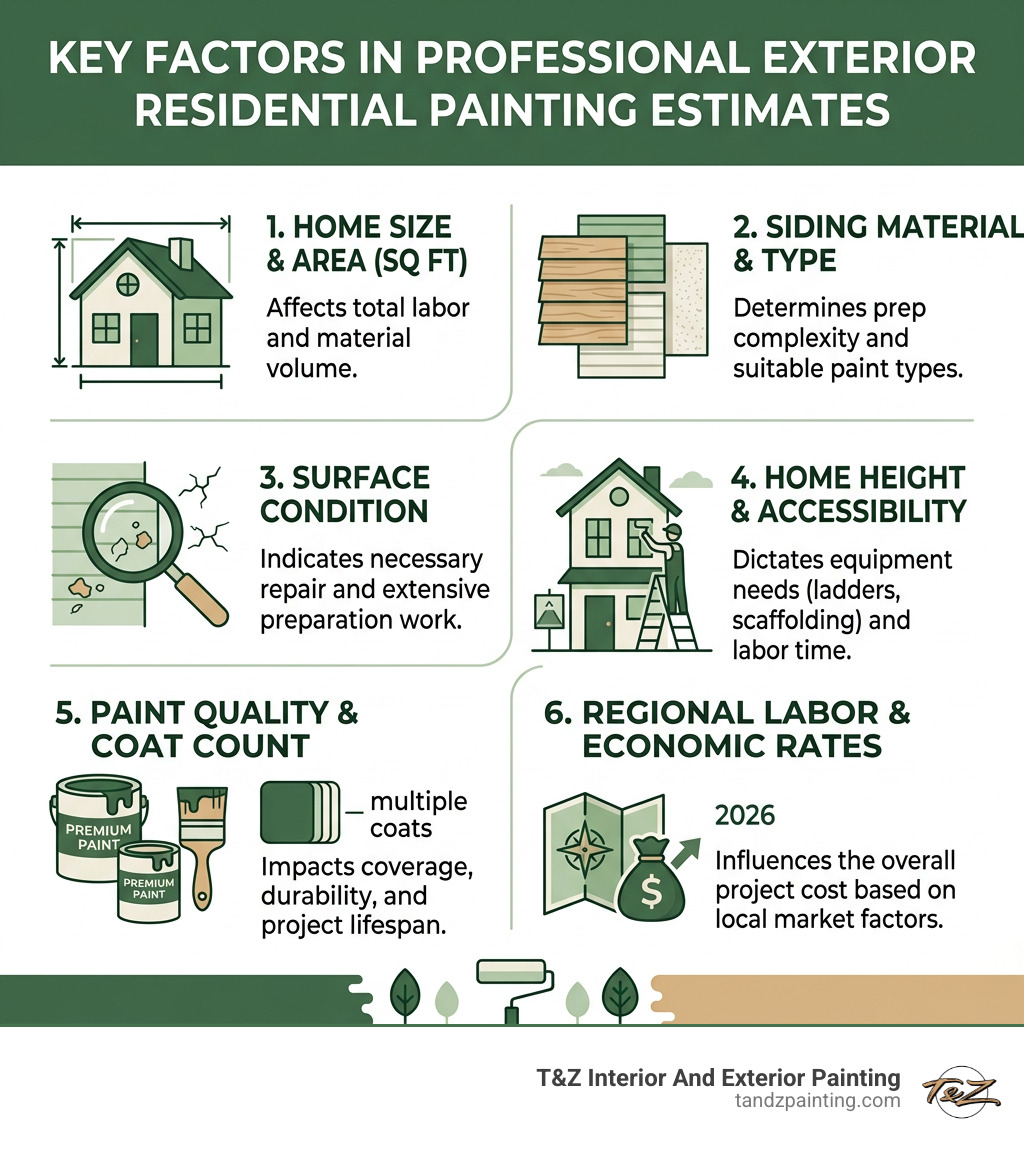
Before diving in, here’s a quick snapshot of what shapes a professional exterior painting estimate:
| Factor | What It Affects |
|---|---|
| Home size (sq ft) | Total labor and material volume |
| Siding material | Prep complexity and paint type needed |
| Surface condition | Amount of repair and prep work required |
| Home height and architecture | Equipment needs and labor time |
| Paint quality | Coverage, durability, and coat count |
| Region and labor rates | Overall project cost |
Getting the right estimate means understanding each of these pieces — not just the final dollar figure.
A fresh coat of paint does two things at once: it makes your home look great and shields it from weather, moisture, and wear. But the difference between a lasting result and a peeling disappointment almost always comes down to how well the project was scoped from the start.
That’s exactly what a thorough, professional estimate is designed to capture.
I’m Tomasz Niemotko, owner of T&Z Interior and Exterior Painting in Lombard, IL, and with over 15 years of hands-on experience delivering professional residential painting estimates and completed projects across the Chicago suburbs, I’ve seen how the right planning sets every job up for long-term success. In the sections below, I’ll walk you through exactly what goes into a quality exterior painting estimate — so you know what to look for and what questions to ask.
Know your residential painting estimates terms:
Key Factors in Professional Residential Painting Estimates
When we arrive at a home in Wheaton or Downers Grove to provide an assessment, we aren’t just looking at the color of the walls. We are conducting a technical evaluation of the structure. A professional estimate is a roadmap that accounts for every hour of labor and every gallon of material required to achieve a flawless finish.

Total Square Footage and Home Height
The most obvious factor is the size of the “canvas.” However, square footage alone doesn’t tell the whole story. A 2,000-square-foot ranch home in Carol Stream presents a very different challenge than a 2,000-square-foot two-story Colonial in La Grange. Height increases the need for specialized equipment, such as extension ladders, scaffolding, or even boom lifts. It also slows down the pace of work, as painters must prioritize safety and precision while working high above the ground.
Siding Material and Architectural Complexity
Different substrates require different approaches. Painting smooth cedar siding is a world away from painting porous brick or textured stucco. Each material has a specific absorption rate and requires a unique primer to ensure the topcoat adheres properly.
Furthermore, the architectural “character” of your home—think ornate Victorian trim, deep eaves, or intricate window casings—adds significant time to the project. These details require steady hands and small brushes, which naturally extends the labor hours compared to wide-open, flat surfaces. For more details on how we approach these challenges, you can explore our exterior painting services.
Business Realities: Overhead and Logistics
According to data from the National Association of Home Builders, overhead costs for trades typically average around 10% of a project budget. When you receive a professional estimate from a reputable company like ours, that number includes the “behind-the-scenes” essentials: liability insurance to protect your property, worker’s compensation, high-quality equipment maintenance, and the administrative support that ensures your project stays on schedule.
How Surface Condition Impacts Residential Painting Estimates
If there is one thing we emphasize to every homeowner from Elmhurst to Schaumburg, it is this: the finish is only as good as the preparation. When we evaluate a home’s exterior, we look closely at the “substrate health.”
- Wood Rot and Damage: We check for soft spots in window sills, door frames, and fascia boards. Painting over rotted wood is like putting a bandage on a broken bone—it doesn’t fix the problem and will lead to early paint failure.
- Previous Paint Layers: If a home has several layers of old, failing paint, those layers must be addressed. We look for “alligatoring” or peeling that indicates the bond between the old paint and the house is breaking.
- Power Washing Requirements: Every exterior project must begin with a clean surface. Removing dirt, mildew, and oxidation ensures the new paint can actually “bite” into the surface.
- Scraping and Sanding: This is where the heavy lifting happens. We meticulously scrape away loose flakes and sand the edges of the remaining paint to create a smooth transition. This labor-intensive phase is a major component of any accurate residential painting estimates because it dictates how long the new paint job will last.
Why Expertise Matters for Residential Painting Estimates
It can be tempting to focus solely on the bottom line, but a professional estimate is also a reflection of the contractor’s credibility. Choosing an experienced team means you are investing in peace of mind.
Professional house painting involves more than just swinging a brush. It requires:
- Licensed and Insured Status: This protects you from liability should an accident occur on your property.
- Safety Equipment: Using the right harnesses and stable ladder systems is non-negotiable for professional crews.
- Project Management: An experienced contractor manages the timeline, the weather window, and the crew to ensure the job doesn’t drag on for weeks.
The Role of Material Quality and Prep Work
In professional painting, the materials used are just as important as the skill of the painter. We don’t cut corners by using “contractor-grade” paints that lose their luster in two seasons. Instead, we rely on industry leaders like Sherwin-Williams and Benjamin Moore.
High-quality paints contain more solids (pigments and binders) and fewer solvents. This means that once the paint dries, more of the protective “film” remains on your siding. Products detailed in Sherwin-Williams Product Data highlight superior UV resistance and flexibility, which is crucial for the Chicago climate where temperatures swing from freezing winters to humid summers.
The Prep Checklist
A comprehensive estimate will often detail the specific prep steps involved. This includes:
- Caulking: Sealing gaps around windows, doors, and trim to prevent moisture intrusion.
- Sanding: Ensuring the surface is receptive to the new coating.
- Masking: Protecting your landscaping, windows, and walkways from overspray or drips.
If you are curious about the steps you can take to help the process along, check out our guide on how to prepare a house for painting.
Professional vs. DIY: Evaluating the Long-Term Investment
Many homeowners consider the DIY route to save on labor costs. While the “sweat equity” approach works for some small interior projects, exterior painting is a massive undertaking.
The Hidden Costs of DIY
When you tackle the job yourself, you aren’t just buying paint. You have to account for:
- Equipment Procurement: Buying or renting high-quality ladders, power washers, and sprayers.
- Time Commitment: What a professional crew can finish in four days might take a homeowner four weekends.
- Skill-Level Results: Achieving those crisp, straight lines between the siding and the trim takes years of practice.
As noted by BuildingAdvisor.com on trade overhead, professional contractors distribute their equipment and overhead costs across many jobs, making their specialized tools more “cost-effective” than a homeowner buying a ladder they might only use once every five years.
| Feature | Professional Service | DIY Attempt |
|---|---|---|
| Durability | 7–12 years (with proper prep) | 3–5 years (common) |
| Warranty | Included by reputable firms | None |
| Safety | Trained in ladder/height safety | High risk for untrained individuals |
| Finish Quality | Uniform, no brush marks | Visible laps and drips |
Specialized Services That Enhance Home Value
A professional painting company offers more than just wall-to-wall color. We provide specialized services that can dramatically increase your property’s market value and aesthetic appeal.
- Cabinet Refinishing: Transforming a kitchen without the cost of a full remodel.
- Textured Finishes and Specialty Coatings: Adding depth and character to interior spaces.
- Deck Staining: Protecting your outdoor living spaces from the elements.
Whether you are looking for interior painting or want to know when is the best time to paint the exterior of your home, we provide the expertise needed to navigate the specific climate challenges of the Chicago suburbs.
Frequently Asked Questions about Residential Painting Estimates
What is included in a professional exterior painting estimate?
A thorough estimate should include a detailed breakdown of labor, material costs (including the specific paint brand and line), the number of coats to be applied, and a clear description of the preparation work (scraping, sanding, caulking). It should also specify what is not included, such as major structural repairs or lead paint abatement if applicable.
How does the architectural style of my home affect the project scope?
Style dictates the “difficulty level.” A minimalist modern home with large flat panels is faster to paint than a Tudor with extensive decorative half-timbering. More surfaces, more corners, and more color transitions lead to a more detailed and labor-intensive project scope.
Why is surface preparation a critical component of a quality estimate?
Without prep, even the most expensive paint in the world will fail. Preparation ensures the substrate is sound, clean, and dry. If an estimate seems unusually low, it is often because the contractor plans to skip the vital steps of sanding, priming, or caulking, which will result in the paint peeling within a year or two.
Conclusion
At T&Z Interior and Exterior Painting, we believe that a home is a person’s most valuable asset. For over 15 years, we have been helping homeowners in Lombard, IL, and surrounding areas like Itasca, Addison, and Glen Ellyn protect that asset with expert craftsmanship. We are fully licensed and insured, maintaining a 5.0 Google Reviews rating by treating every home as if it were our own.
Our team is dedicated to providing transparent, accurate residential painting estimates that reflect the quality and care your home deserves. From the initial consultation to the final walkthrough, we focus on the details that ensure a stunning, long-lasting result.
Ready to transform your home’s curb appeal? Schedule your professional exterior painting consultation with us today and experience the T&Z difference.