
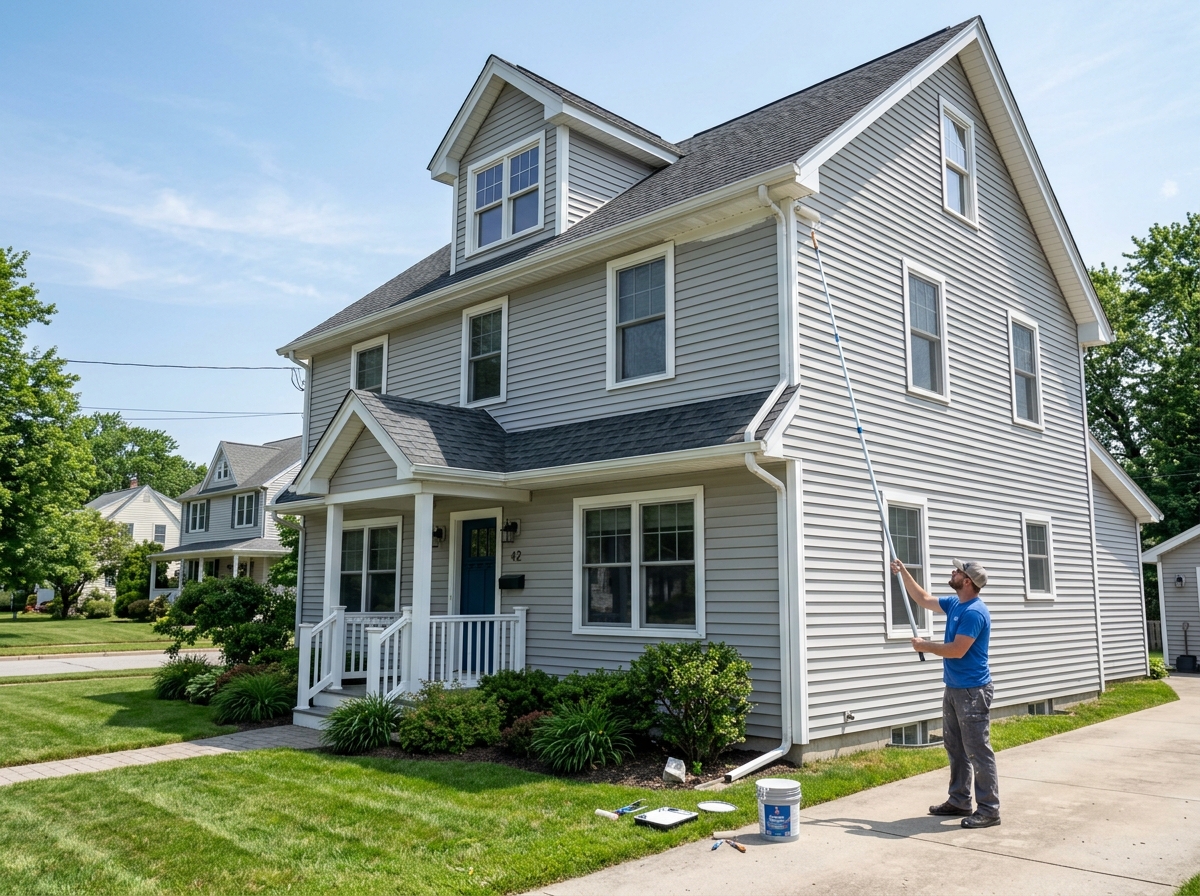
Why Painting 2-Story Eaves Without a Ladder Is Harder Than It Looks
How to paint eaves without a ladder is one of the most common — and most frustrating — questions homeowners face when tackling exterior maintenance on a two-story home.
Here’s the short answer:
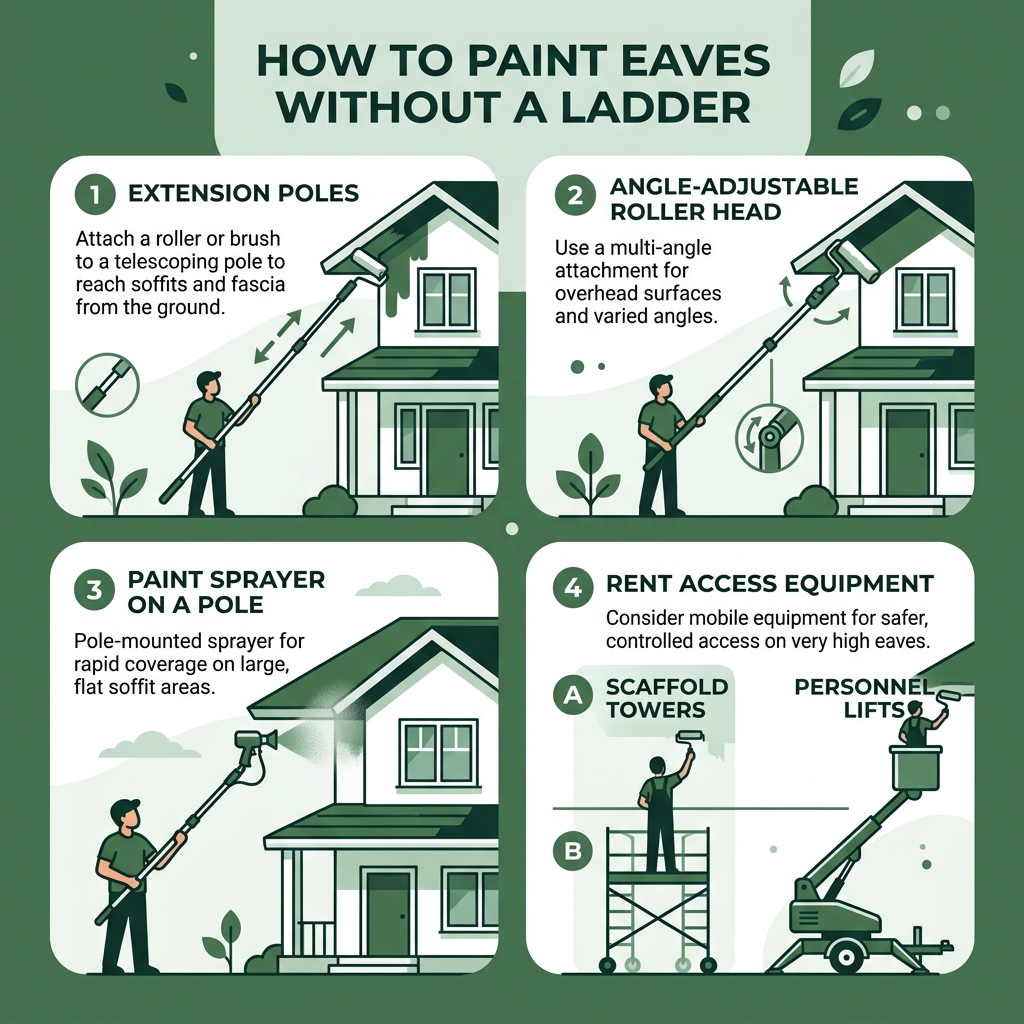
To paint eaves without a ladder, use these ground-based methods:
- Telescoping extension pole – Attach a roller or brush to a pole reaching up to 16-20 feet to paint soffits and fascia from the ground
- Angle-adjustable roller head – Use a multi-angle attachment to reach overhead surfaces without climbing
- Paint sprayer on a pole – For large flat soffit areas, a pole-mounted sprayer covers more ground faster
- Work from the roof – If your home has a flat or low-pitch roof, kneel at the edge and roll the fascia facing outward
- Rent access equipment – For eaves above 20 feet, consider a towable personnel lift (~$200/day) or a mobile scaffold tower for safer, more controlled access
Eaves — the overhanging edges of your roof that include the soffit (the underside) and fascia (the vertical board facing outward) — take a beating from sun, rain, and wind year-round. When their paint starts peeling or fading, it doesn’t just hurt your home’s curb appeal. It exposes bare wood to moisture, which leads to rot and costly repairs down the road.
The challenge? On a two-story home, eaves can sit 20 to 30 feet off the ground. That’s high enough to make even experienced DIYers nervous — and for good reason. The vast majority of ladder falls result from misuse, not equipment failure. Getting the job done safely, without constantly repositioning a ladder or risking a fall, takes the right tools and the right technique.
I’m Tomasz Niemotko, owner of T&Z Interior and Exterior Painting, with over 15 years of experience painting exteriors across Lombard and the surrounding suburbs — including plenty of two-story homes where knowing how to paint eaves without a ladder made all the difference between a safe, efficient job and an unnecessary risk. In the sections below, I’ll walk you through everything you need to know to get a clean, professional result from the ground up.
Essential Tools for How to Paint Eaves Without a Ladder
When we talk about painting at height from the safety of the grass, your equipment becomes your hands. You can’t just “reach a little further” when you’re standing on the ground, so high-quality, specialized tools are non-negotiable.
The Reach: Telescopic Poles and Attachments
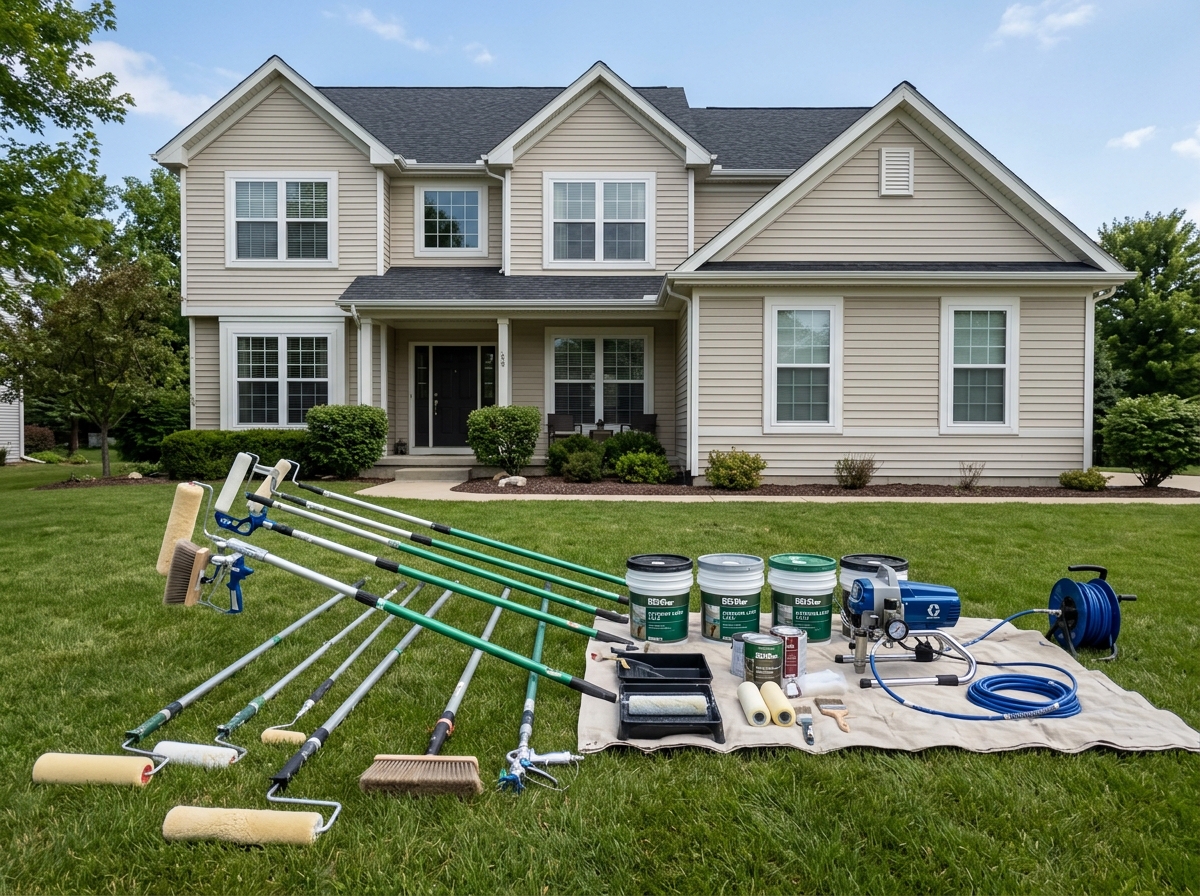
The hero of this story is the Telescopic extension pole. For a standard two-story home in Wheaton or Glen Ellyn, you’ll want a pole that extends at least 16 to 20 feet. Lightweight fiberglass or aluminum poles are best to prevent arm fatigue.
However, a straight pole only gets you so far. To actually “cut in” where the eave meets the wall, you need attachment kits or multi-angle swivel heads. These allow you to lock your brush or roller at a 45- or 90-degree angle, which is essential for painting the horizontal soffit while standing several feet away from the house.
The Applicators: Brushes and Rollers
You can’t just tape a standard brush to a stick and hope for the best. We recommend a Paintbrush with a threaded handle that screws directly onto the pole for maximum stability. For the flat stretches of the soffit, a Paint roller with a 1/2-inch or 3/4-inch nap works wonders. We often prefer lambswool covers because they hold a massive amount of paint, reducing the number of times you have to lower the pole to reload.
The Support System
- Paint Buckets and Grids: Forget the tray. When you’re using a 20-foot pole, a 5-gallon bucket with a metal grid is much more stable and harder to knock over.
- Drop Cloths: Painting overhead means gravity is working against you. Expect “paint rain.” Use heavy-duty canvas drop cloths to protect your landscaping and walkways.
- Painters’ Tape: Even from the ground, Painters’ tape is vital for protecting the shingles or the siding where the eave meets the house.
Preparing Your Eaves for a Professional Finish
Ask any pro in Lombard, and they’ll tell you: a paint job is only as good as the prep work. If you paint over dirt, spider webs, or flaking old paint, your new coat will peel off within a year.
Surface Cleaning and Inspection
Before opening a single can of paint, you must clean the area. Dust, pollen, and those pesky Midwest cobwebs love to hide in the shadows of your eaves. Using a long-reach cobweb brush or a low-pressure garden hose attachment is the first step in How to Prepare a House for Painting.
If you see black spots, it’s likely mold or mildew. We suggest a simple bleach solution (3 parts water to 1 part bleach) applied with a sprayer and rinsed off. This ensures the surface is sterile and ready for Exterior Painting.
Scraping and Repairing
If your existing paint is flaking, it has to go. You can find “pole scrapers” designed to thread onto your extension pole. This is a bit of a workout, but necessary. Once scraped, a light sanding with a pole-mounted sanding head helps the new primer “bite” into the wood.
If you find soft wood or holes, those need to be filled with an exterior-grade wood filler. For homes built before 1978 in older parts of Elmhurst or Chicago, be extremely cautious about lead paint. Always consult the Sherwin Williams safety data sheets for guidance on handling older coatings safely.
Ground-Based Prep: How to Paint Eaves Without a Ladder Safely
Working from the ground means you need to protect your eyes and lungs from falling debris. When scraping or sanding overhead, always wear:
- Safety goggles (sealed ones are better to keep dust out).
- A dust mask or respirator.
- A wide-brimmed hat (or a painter’s cap) to keep paint out of your hair.
For more specialized tips on managing these heights, check out our guide on How to Paint High Places Without a Ladder Safely & Smartly.
Choosing the Right Paint for Soffits and Fascia
Eaves don’t get direct sunlight, but they do trap moisture. We always recommend a high-quality acrylic latex paint. It remains flexible, allowing the wood to expand and contract with the Illinois seasons without cracking.
For the finish, a “Satin” or “Low-Lustre” gloss is usually best. It provides enough moisture resistance to prevent rot but isn’t so shiny that it highlights every imperfection in the wood. If you’re working with unique materials, such as those found in Stucco Painting Exterior Finishes, make sure your primer is compatible with the substrate.
Step-by-Step Ground-Based Painting Techniques
Now for the fun part: actually putting paint on the house. The goal is to move methodically to avoid drips and missed spots.
1. Cutting In
Start with the “edges.” Use your angled brush on the extension pole to paint the line where the soffit meets the house siding and where the fascia meets the roofline. This requires a steady hand and a “locked-in” body position.
2. Rolling the Soffit
Once the edges are cut in, switch to your roller. Work in 3-to-4-foot sections. The key here is to maintain a wet edge—this means you should always overlap your last stroke while the paint is still wet to prevent “lap marks” (those ugly dark lines where paint overlaps).
3. Top-to-Bottom Flow
Always paint the highest point first and work your way down. If you’re painting the eaves, any drips will fall onto the siding below. If you’ve already painted the siding, you’ve just created a lot of extra work for yourself!
4. Drip Management
Keep a damp rag on a separate pole or a small “touch-up” brush handy. If a drip runs down the siding, you want to catch it immediately. If you’re considering Spray Painting for your eaves, overspray is a major risk. You’ll need to mask off the roof and the siding extensively using a hand masker.
Mastering the Extension Pole: How to Paint Eaves Without a Ladder
Using a 20-foot pole is less about arm strength and more about leverage.
- Body Movement: Instead of moving just your arms, move your whole body. Step back and forward to control the stroke length.
- Angle Adjustment: Keep the pole at about a 45-degree angle to the wall. If you stand too close (directly under the eave), you’ll get covered in paint. If you stand too far back, the pole becomes too heavy to control.
- Steady Pressure: Don’t press too hard. Let the nap of the roller do the work. Excessive pressure leads to “splatter,” which is exactly what we’re trying to avoid.
Overcoming Obstacles and Uneven Ground
In many Chicago suburbs, houses are built on berms or have elaborate landscaping right against the foundation.
- Berm Navigation: if the ground is sloped, stand with one foot higher than the other to maintain balance. Never try to “over-reach” while on uneven ground.
- Landscaping: Use “ladder mitts” or soft covers on your pole if you have to rest it against a gutter, but generally, try to work around bushes by using a longer pole reach.
- Spotter Assistance: If you’re working near power lines or busy sidewalks, have a friend act as a spotter to ensure your pole doesn’t hit anything it shouldn’t.
Frequently Asked Questions about Eave Painting
Can extension poles reach 20-30 feet for high eaves?
Technically, yes. You can buy poles that extend to 30 feet. However, at that length, the pole becomes incredibly “whippy” and heavy. Controlling a brush for fine detail at 30 feet is nearly impossible for most DIYers. If your eaves are truly 30 feet up (typical of a 3-story home or a house with a walk-out basement), the stability of a pole is often insufficient for a professional-looking finish.
What is the best time of year for exterior painting?
In the Lombard and Chicago area, we look for “The Goldilocks Window.” You want temperatures between 50°F and 85°F with low humidity. If it’s too hot, the paint dries too fast and leaves lap marks. If it’s too cold, the paint won’t bond correctly. You can read more about timing in our guide: When is the Best Time to Paint the Exterior of Your Home.
When should I hire a professional instead of using a pole?
While how to paint eaves without a ladder is a great skill, there are times when it’s better to call us at T&Z.
- Complex Architecture: If you have ornate crown molding or multiple layers of trim, a pole won’t give you the precision you need.
- Extensive Wood Rot: If the eaves are crumbling, they need carpentry, not just paint.
- Safety Concerns: If you have a high-traffic area, power lines, or extremely uneven ground, the risk of a 20-foot pole hitting something is high.
- Time Constraints: What takes a DIYer a full weekend, our experienced teams can often finish in a few hours with professional-grade lifts. For a full transformation, see our House Painting services.
Conclusion: Quality Results from the Ground Up
At T&Z Interior and Exterior Painting, we believe that every part of your home deserves expert attention — especially the hard-to-reach areas like your eaves. While it is entirely possible to learn how to paint eaves without a ladder, achieving that crisp, “factory-new” look requires patience, the right gear, and a bit of elbow grease.
We’ve spent over 15 years serving homeowners in Lombard, Addison, Elmhurst, and across the Chicago suburbs. Our 5.0 Google rating is a testament to our attention to detail and our commitment to using top-brand materials. Whether we’re using high-reach poles or professional boom lifts, our goal is always the same: to protect your property and boost your curb appeal with results that last for years.
If the thought of wrestling with a 20-foot pole in the Illinois wind feels a bit overwhelming, we’re here to help. Our licensed and insured teams have the experience to handle even the most challenging two-story exteriors safely and efficiently.
Ready to give your home the protection it deserves? More info about exterior painting services is just a click away. Let us take the “height” out of your next painting project!