
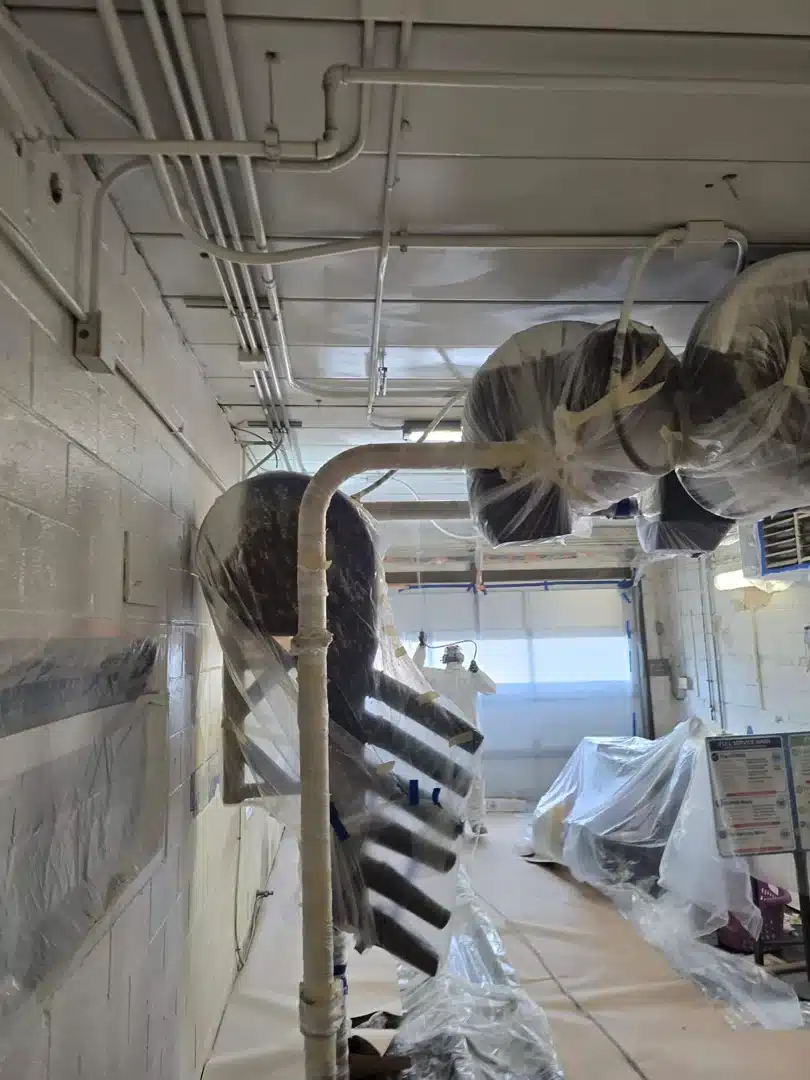
Spray Painting Metal Furniture Starts With Proper Prep
For durable results when spray painting metal furniture, remove loose rust and peeling paint, clean and dry the surface, use the right primer for exposed metal, then apply two to three thin coats of exterior-rated metal paint. Keep the can moving 8 to 12 inches from the surface and paint on a dry, mild day to prevent drips, patchy coverage, and early peeling.
The paint itself matters, but preparation decides how long the finish lasts. A rust-inhibiting primer and exterior enamel can help a well-prepped patio set resist wear for roughly 3 to 5 years. Skip the cleaning, sanding, or rust treatment, and failure can appear much sooner.
Tomasz Niemotko is a painting professional with more than 15 years of experience serving homeowners in Lombard and nearby communities. Through T&Z Interior And Exterior Painting, he brings the same careful surface preparation and finish-focused approach used in spray painting metal furniture to exterior, interior, and cabinet painting projects.
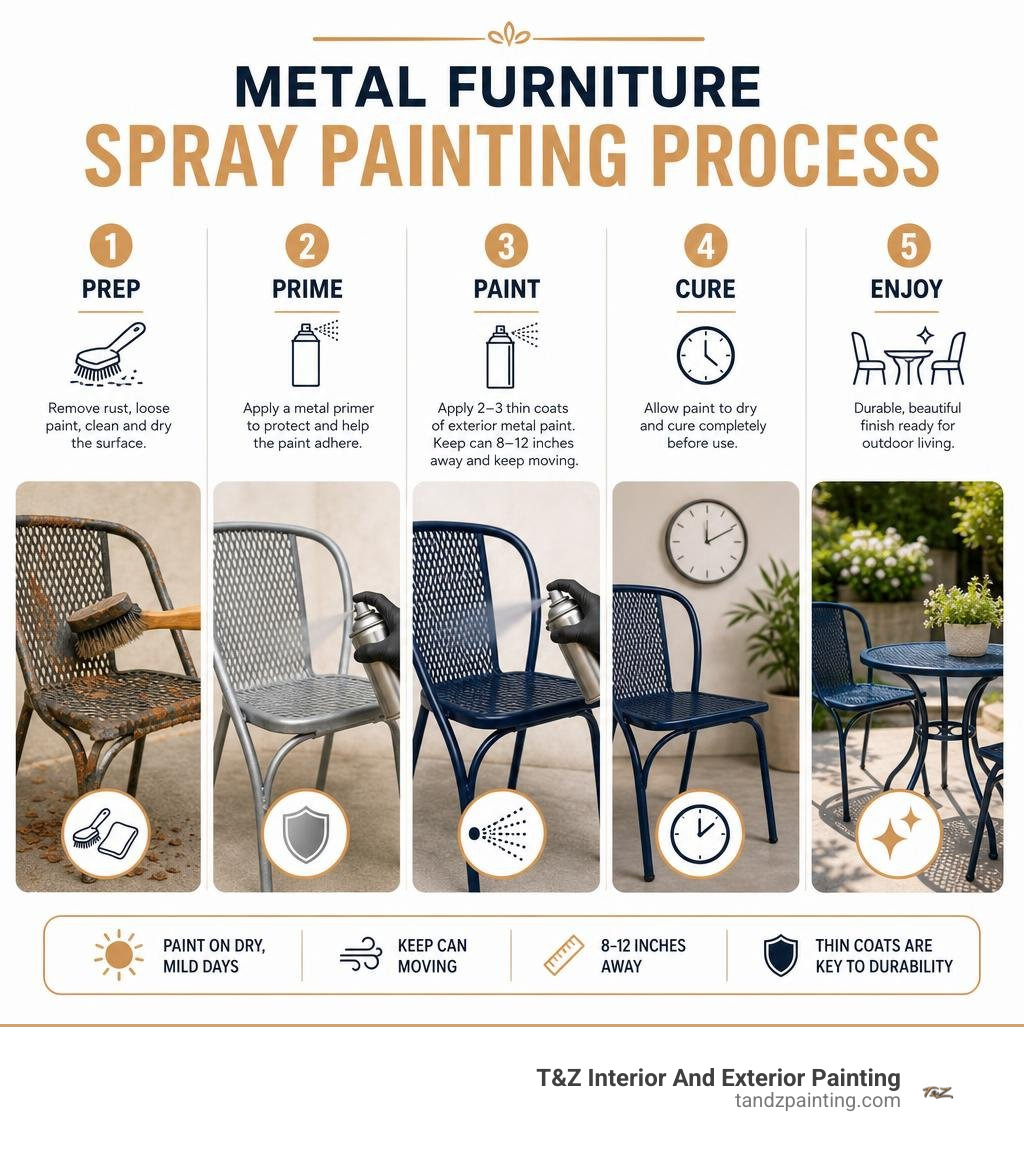
Easy spray painting metal furniture word list:
Essential Preparation: Cleaning and Rust Treatment Before Painting
A flawless, factory-smooth coating begins long before pressing the nozzle. Metal is an unforgiving, non-porous substrate. Unlike wood, which absorbs paint deep into its fibers, metal relies purely on mechanical bonding and chemical adhesion. Any residual grease, loose mill scale, or flaking rust left behind acts as a barrier, causing fresh paint to lift and peel.
To guarantee durable adhesion and prevent future corrosion, gather the proper tools and safety gear:
- Wire brush and coarse wire wheel attachments
- 120-grit and 220-grit aluminum oxide sandpaper
- TSP substitute or heavy-duty degreaser
- Lint-free microfiber cloths
- 90%+ isopropyl alcohol
- Painter’s tape and heavy drop cloths
- N95 or P100 particulate respirator, eye protection, and nitrile gloves
Identifying Metal Types and Mechanical Rust Removal
Before picking up an abrasive tool, determine the type of metal you are refinishing. Ferrous metals, such as wrought iron and carbon steel, contain iron and will attract a simple refrigerator magnet. These surfaces are prone to deep orange oxidation. Non-ferrous metals like aluminum do not hold a magnet; they form a microscopic, chalky white oxide film that causes standard paints to flake off in sheets if not prepped correctly.
For ferrous pieces showing surface corrosion, begin by aggressively scraping away all bubbling paint and loose scale using a stiff wire brush. Follow this by hand-sanding the entire surface using 120-grit sandpaper to level rough edges and establish a paint-ready profile. When working with raw or pitted iron, applying a dedicated rusty metal primer chemically seals microscopic oxidation, preventing corrosion from expanding beneath your topcoat.
Degreasing and Surface Etching for Maximum Adhesion
Once loose rust and failing coatings are removed, clean the piece thoroughly. Invisible contaminants like sunscreen residue, body oils, airborne pollutants, and sap prevent coatings from wetting out and adhering properly.
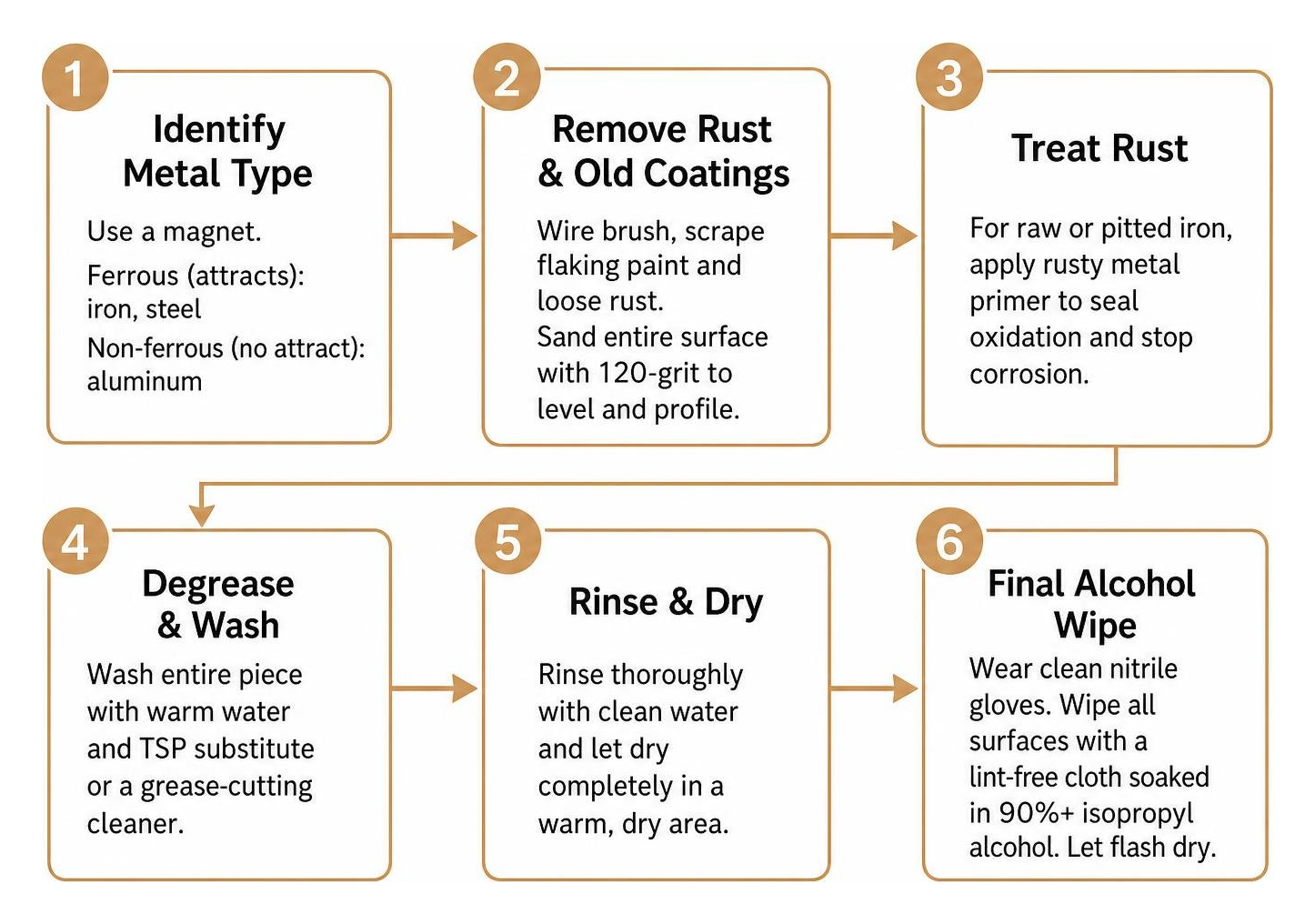
- Wash the entire frame using a solution of warm water and TSP substitute or a dedicated grease-cutting cleaner.
- Rinse the piece with clean water and let it dry completely in a warm, dry area.
- Put on clean nitrile gloves to keep skin oils off the metal, and wipe down every spindle, joint, and weld with a lint-free cloth soaked in 90%+ isopropyl alcohol.
This final alcohol wipe removes microscopic sanding dust and flashes off rapidly, leaving a clean, bone-dry surface ready for priming.
Step-by-Step Guide to Spray Painting Metal Furniture Like a Pro
Applying paint to metal requires balancing film thickness, flash-off periods, and drying intervals. Spraying too heavily causes unsightly runs, sags, and trapped solvents, while spraying from too far away results in a rough, dusty texture known as dry spray.
| Coating Type | Best Use Case | Touch Dry Time | Full Recoat Window | Durability Profile |
|---|---|---|---|---|
| Oil-Based Enamel | Wrought iron, steel, heavy outdoor exposure | 2 to 4 hours | Within 1 hour or after 48 hours | Exceptional weather, rust, and chip resistance |
| Water-Based Acrylic | Covered patio sets, quick color updates | 15 to 30 minutes | Within 2 hours | Good color retention, moderate chip resistance |
| Specialty Lacquer | Decorative accents, modern high-gloss finishes | 5 to 10 minutes | Ready to recoat in 20 minutes | High hardness, moderate weather resistance |
Choosing the Right Paint and Primer for Spray Painting Metal Furniture
Select a coating chemistry designed for exterior exposure. Oil-based alkyd enamels deliver superior rust resistance and weather protection on heavy wrought iron and steel garden pieces. Direct-to-metal (DTM) paints and high-performance formulations like Fusion All-In-One® Metallic offer strong bonding properties across various surfaces.
However, when restoring bare aluminum, galvanized metal, or heavily sanded iron, always apply a dedicated base coat. A high-grade self-etching primer chemically bites into slick, non-ferrous surfaces, establishing the strong foundation required for a long-lasting finish.
Applying Primer and Base Coats for Seamless Coverage
Proper staging makes spraying easier and prevents missed spots. Elevate chairs and tables on sawhorses or drop-cloth-covered risers so you can work comfortably at eye level.
Always begin by turning the furniture upside down. Coat the bottom rails, foot pads, and inner joints first. Shake the aerosol can vigorously for at least one full minute after the mixing ball rattles freely. Maintain a steady distance of 8 to 12 inches from the piece.
Depress the nozzle just before reaching the edge of the furniture, sweep across the surface in a fluid, level stroke, and release the trigger just past the opposite edge. Overlap each pass by roughly 33% to 50%. After letting the underside flash dry for 10 to 15 minutes, flip the piece upright and apply two to three light, even coats across the visible surfaces, allowing each layer to become tacky before adding the next.
Adding Clear Topcoats and Managing Proper Cure Times
To extend the lifespan of high-contact areas like armrests and seat edges, consider applying two light layers of an exterior-rated clear enamel topcoat. This protective layer shields the color coat from abrasions and UV fading while enhancing depth on finishes like Seymour Spruce Metallic Spray Paint–Gold (12 oz).
Curing is a chemical hardening process distinct from basic drying:
- 10 to 20 Minutes: Dry to the touch.
- 1 to 2 Hours: Safe to move carefully if needed.
- 24 Hours: Dry enough for light transport or reattaching foot caps.
- 48 Hours: Hardened enough for standard seating and regular handling.
- 5 to 7 Days: Fully cured to maximum chemical hardness; safe for heavy outdoor rain exposure.
Mastering Weather, Application Techniques, and Avoiding Drips
Environmental conditions directly affect atomization, flow-out, and curing. Achieving a clean finish requires spraying within appropriate weather windows and using proper gun or can mechanics.
Ideal Temperature and Humidity Windows for Outdoor Projects
For outdoor refinishing, check the forecast before starting:
- Temperature: Maintain an ambient temperature range between 50°F and 90°F (10°C to 32°C).
- Relative Humidity: Keep humidity levels below 85% (ideally under 65%). High humidity traps moisture in the evaporating solvent, creating a cloudy, milky haze known as blushing.
- Sunlight: Never spray metal sitting in direct, blazing sunlight. Hot metal causes paint solvents to flash off instantly mid-air, leading to bubbling, pinholing, and orange-peel textures. Choose a shaded, well-ventilated breezeway or paint during mild morning hours.
For comprehensive seasonal advice on environmental factors, reviewing outdoor spray paint metal tips will help you avoid common outdoor finishing mistakes.
Proven Spray Sweeping Techniques to Prevent Runs and Pooling
Runs and drips happen when an applicator pauses over one spot or holds the spray tip too close to the surface. If you need specialized guidance on equipment mechanics, consulting an experienced metal spray painter can provide valuable insight into spray fan calibration and pressure control.
Keep these practical rules in mind:
- Warm the Cans: If working on a cool morning, place aerosol cans in a bucket of warm (not boiling) tap water for 10 minutes to lower paint viscosity and ensure ultra-fine atomization.
- Keep Your Arm Moving: Never pull the trigger while the can is stationary. Start your motion before depressing the nozzle and keep a consistent walking pace around the piece.
- Correcting Drips: If a run develops, resist the urge to wipe it with a rag while wet, which creates a sticky mess. Let the area dry completely for 24 hours, sand the defect smooth using 320-grit wet/dry sandpaper, wipe away the dust, and mist on a light blending coat.
Frequently Asked Questions About Refinishing Metal Furniture
Can I Spray Paint Over Rust on Metal Patio Chairs?
You cannot spray paint directly over loose, flaking, or stratified rust. Painting over loose scale traps moisture and air underneath, causing the new coating to bubble and peel within months. You must mechanically remove all loose debris with a wire brush or sanding disc until you reach sound, bare metal. Light, structural surface rust can then be treated with a dedicated rust converter or sealed with a rust-inhibiting metal primer before topcoating.
Do I Always Need a Primer Before Spray Painting Metal Furniture?
While all-in-one paint-and-primer products work well for quick color refreshes on sound, previously coated metal, a dedicated primer is necessary when dealing with bare steel, raw aluminum, galvanized surfaces, or areas where rust was removed. Primer provides the essential chemical bridge between slick metal and exterior topcoats, ensuring long-lasting durability.
How Long Does Spray Paint Take to Fully Cure on Metal?
While most modern aerosol enamels dry to the touch within 15 to 30 minutes and can be gently handled after an hour, true chemical curing takes significantly longer. Metal coatings require 24 to 48 hours before bearing weight, and up to a full 7 days to reach complete chemical hardness and weather resistance.
Conclusion
Refinishing outdoor furniture with quality coatings protects your investment from moisture, sun exposure, and seasonal weathering. With the right surface preparation, proper primers, and steady application technique, you can give worn metal pieces a clean, durable finish that lasts for years.
At T&Z Interior And Exterior Painting, we bring that same commitment to craftsmanship, surface prep, and quality materials to every residential and commercial project. With over 15 years of experience, our licensed and insured team delivers exceptional results backed by a 5.0 Google Reviews rating. Whether you are updating a home interior, refreshing exterior siding, or seeking professional spray painting services, we proudly serve homeowners and businesses across Lombard, Itasca, Addison, Glen Ellyn, Oak Brook, and surrounding communities.