
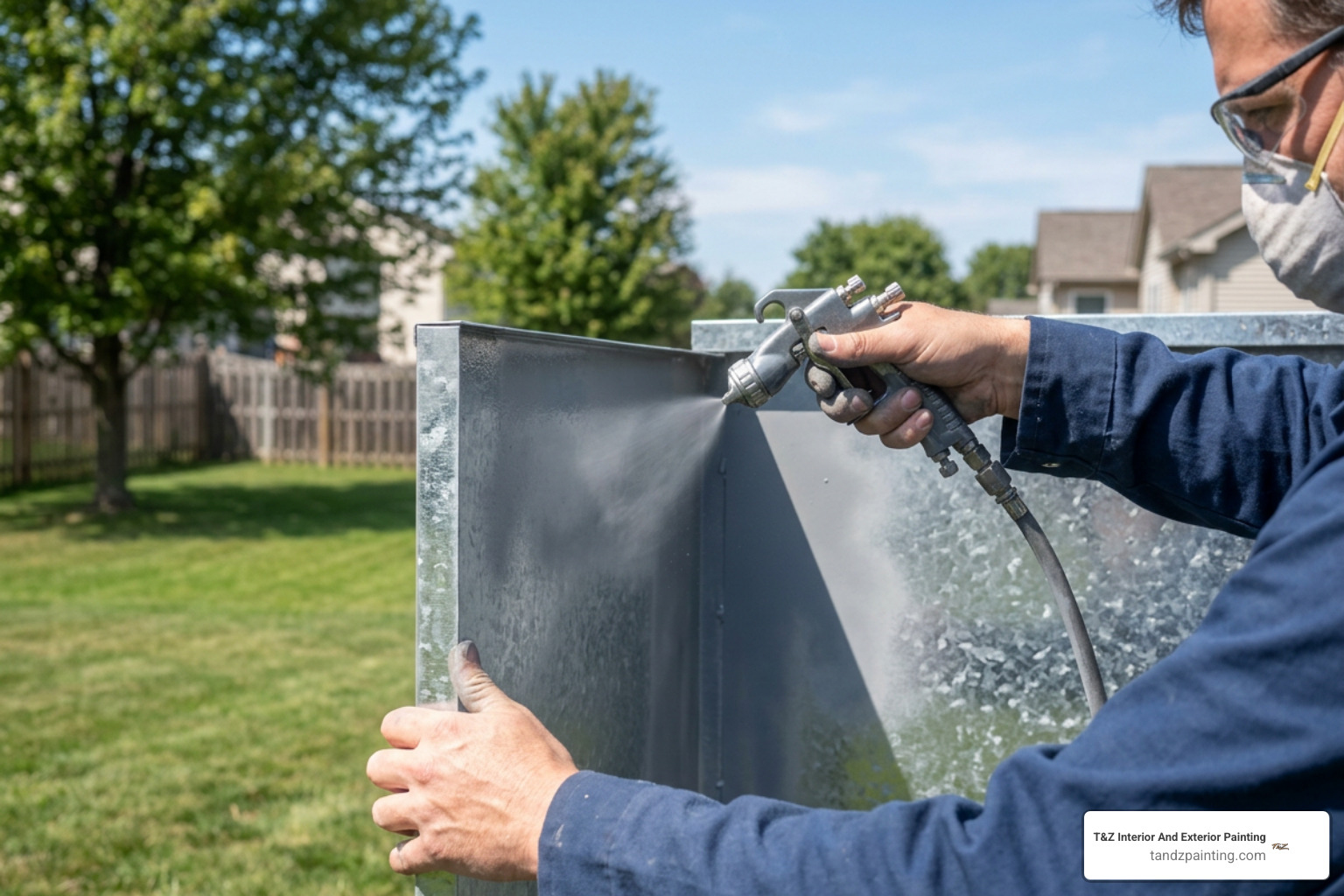
Why Spray Painting Galvanized Metal Requires Specialized Surface Prep
To successfully prepare and spray paint galvanized metal, you must thoroughly degrease the surface, lightly abrade or etch the slick zinc to create mechanical adhesion, apply a dedicated water-based acrylic or epoxy bonding primer, and finish with compatible acrylic or polyurethane topcoats. Skipping these critical preparation steps leads to rapid peeling and coating failure.
Galvanized steel is widely used in residential construction and architectural metalwork because of its outstanding corrosion resistance. The steel is coated in a layer of molten zinc through hot-dip or electro-galvanizing. This zinc acts as a sacrificial barrier: even if the surface is scratched, the zinc corrodes before the underlying steel can rust.
However, that protective zinc layer poses two distinct challenges for anyone looking to apply a decorative or protective paint coat.
First, fresh galvanized steel is extremely smooth and non-porous. Conventional paints require microscopic texture (a “mechanical profile”) to grip the substrate. Without that texture, the paint simply rests on top like water on glass, leaving it vulnerable to chipping, flaking, and blistering.
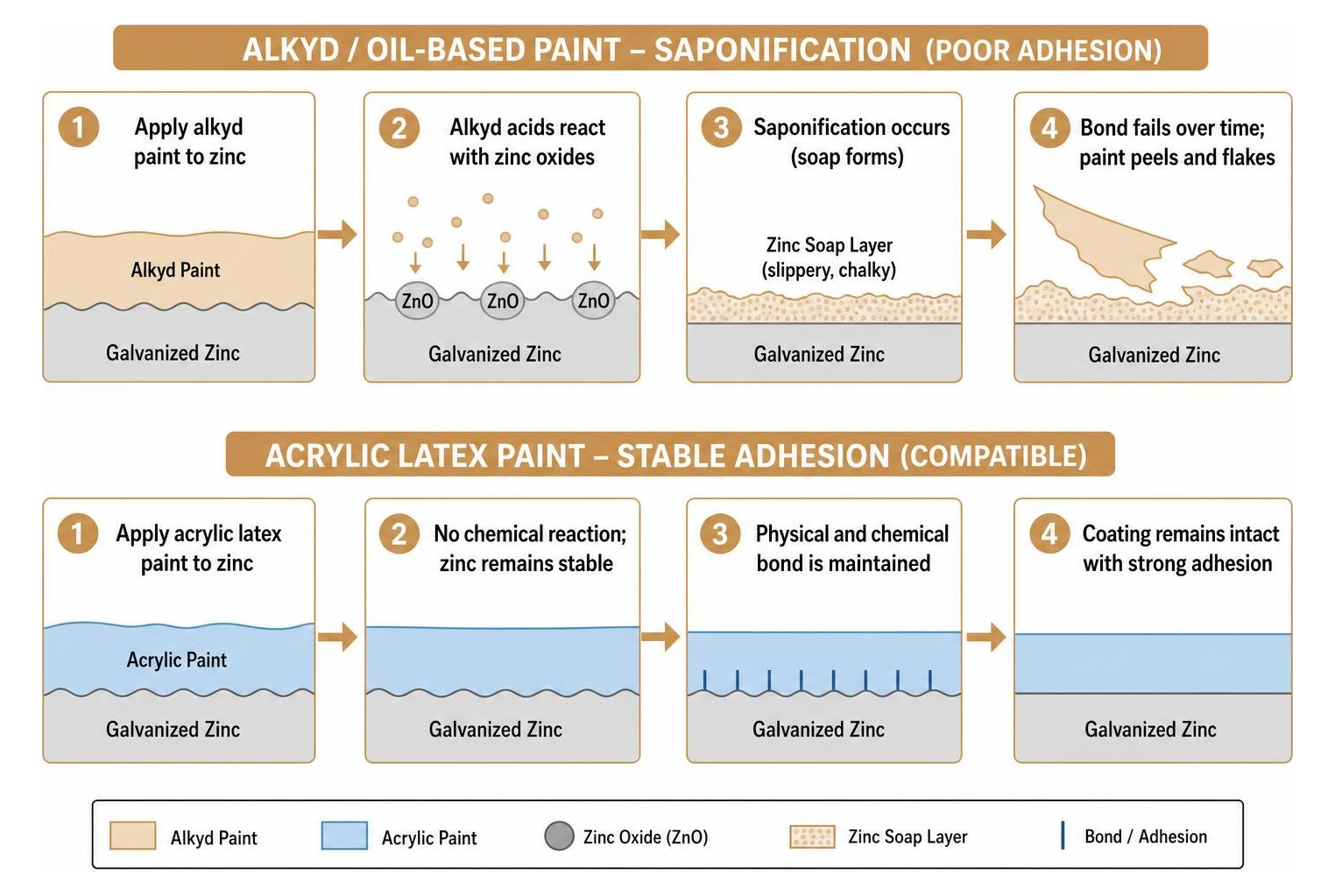
Second, and more importantly, is the chemical incompatibility between zinc and standard oil-based paints. When standard alkyd or oil-based paints are applied directly to zinc, the natural acids in the alkyd resin react with the basic zinc oxides. This chemical reaction is called saponification—literally the formation of soap. Over several weeks or months, a slippery, chalky layer of zinc soap develops beneath the paint film. The bond fails entirely, and the paint sheets off in large ribbons.
Understanding how different paint formulations interact with zinc coatings helps prevent costly coating failures.
| Paint Formulation | Chemical Reaction with Zinc Coating | Adhesion Quality | Long-Term Durability |
|---|---|---|---|
| Standard Alkyd / Oil-Based | Causes saponification (forms a slippery soap layer at the interface) | Extremely Poor | High rate of peeling and delamination |
| Water-Based Acrylic Latex | Non-reactive; maintains a stable physical and chemical bond | Excellent (when surface is cleaned) | High flexibility and UV resistance |
| Two-Component Epoxy | Inert bonding mechanism; chemically cross-links over zinc | Superior | Exceptional chemical and moisture resistance |
| Aliphatic Polyurethane | Non-reactive; ideal as an exterior finish over compatible primers | Excellent | Superior gloss retention and weatherability |
According to the American Galvanizers Association (AGA), acrylics, aliphatic polyurethanes, epoxy-polyamide systems, and vinyls are chemically compatible with zinc coatings, while alkyds and oil-based enamels must be avoided on bare galvanized metal. For detailed engineering specifications, consult this technical guide on painting over galvanized metal to see how different binders behave over zinc.
5 Essential Steps to Prepare and Spray Paint Galvanized Metal
Achieving a flawless, factory-grade finish on zinc-coated metal requires a systematic workflow. If you want to prep metal for spray painting properly, follow these five essential steps to ensure lasting beauty and protection.
Step 1: Cleaning and Degreasing the Zinc Layer
Brand-new galvanized steel usually arrives from the mill coated in a thin protective layer of processing oils, mill chemicals, or quenching compounds. If left in place, these residues prevent primers from making contact with the zinc surface.
- Apply a Degreaser: Use a water-based cleaner, mineral spirits, or a specialized metal prep wash to dissolve grease, road grime, and factory oils. Avoid using petroleum-based solvents that leave behind oily films.
- Scrub Thoroughly: Work the cleaner into all joints, welds, and crevices using a lint-free rag or a non-metallic abrasive pad.
- Rinse with Clean Water: Thoroughly flush the metal with fresh water to remove any chemical residue or lifted oils.
- Dry Completely: Allow the metal to dry completely before taking any further steps. Moisture trapped under subsequent coats will cause blistering.
Step 2: Etching or Weathering the Surface
Once the metal is squeaky clean, you need to create a profile for your primer to adhere to. Galvanized metal progresses through distinct atmospheric aging stages:
- Fresh (0–48 hours): Pure, smooth zinc.
- Partially Weathered (2 days to 1–2 years): Forms zinc oxides and zinc hydroxides (often appearing as powdery white rust).
- Fully Weathered (8+ months outdoors, 2+ years indoors): Develops a tough, stable zinc carbonate patina that provides an ideal painting surface.
If your metal is new and lacks this natural zinc carbonate patina, you must create a profile manually:
- Mechanical Abrasion: Lightly scuff the entire surface using 220- to 320-grit sandpaper or a medium-grade Scotch-Brite pad. You only want to dull the sheen and create microscopic scratches—do not grind or sand aggressively, as you do not want to remove the protective zinc layer.
- Chemical Etching: Alternatively, you can apply a mild acidic wash, such as white vinegar or a phosphoric-acid-based metal prep solution. The mild acid micro-etches the zinc, turning the shiny finish into an open, paint-receptive surface. Rinse thoroughly after etching and allow to dry.
Step 3: Priming for Spray Painting Galvanized Metal
Never apply standard paint directly onto bare zinc without an intermediate bonding layer unless you are using a dedicated direct-to-metal (DTM) formula. A high-grade primer bridges the microscopic profile of the zinc and forms a tough foundation for the topcoat.
When choosing a product, several metal primers reviewed in the industry stand out for zinc-coated surfaces:
- Zinsser Bulls Eye 1-2-3: A water-based acrylic interior/exterior bonding primer rated 4.3 out of 5 stars across hundreds of user reviews, engineered to stick tightly to slick metal surfaces.
- Two-Component Epoxy Primers: The gold standard for industrial applications, offering 5 to 10 years of robust service life even in demanding outdoor environments.
- Specialized Aerosol Metal Primers: Direct-to-metal acrylic aerosol primers provide uniform atomization for detailed railings and hardware.
Apply a single, even coat of primer, keeping the aerosol can moving continuously. Always check the manufacturer’s technical data sheet for the specified recoat window before moving to your color coat.
Step 4: Selecting the Right Paint Formulation
Your topcoat must complement your primer and stand up to local environmental conditions. In regions like DuPage County, exterior metals must endure humid summer heat followed by freezing winter snow.
- Acrylic Latex Enamels: Water-based acrylic spray paints (such as Krylon H2O Latex or commercial-grade DTM acrylics) do not contain the reactive oils found in alkyd paints. They remain flexible over seasonal temperature swings, resisting cracking and chalking.
- Aliphatic Polyurethanes: Ideal for exterior architectural accents, iron gates, and light fixtures where exceptional gloss retention and UV stability are required.
- High-Solids Galvanizing Aerosols: Products like KBS Top Coater Galvanized Aerosol provide single-component convenience with complete UV stability, covering up to 30 sq. ft. per 12-oz can.
For long-term exterior durability, review these outdoor spray paint metal tips to select finishes engineered to handle moisture, direct sun, and temperature cycling.
Step 5: Best Techniques for Spray Painting Galvanized Metal
The application technique is just as crucial as surface preparation. Rushing through the spray application often leads to runs, drips, and orange peel texture.
- Check Environmental Conditions: Spray paint when ambient temperatures are between 50°F and 85°F and relative humidity is below 70%. High humidity slows solvent evaporation, while extreme heat causes the paint droplets to dry before reaching the metal.
- Maintain Proper Distance: Hold the aerosol can or spray gun 8 to 12 inches away from the surface.
- Use Overlapping Passes: Keep your wrist straight and move in smooth, horizontal strokes, overlapping each pass by roughly 50%.
- Apply Multiple Thin Coats: Two or three thin coats will cure harder, resist sagging, and deliver a more uniform finish than a single heavy coat. Allow 10 to 15 minutes of flash-off time between coats.
- Allow a Full Cure: While fast-drying acrylic sprays feel dry to the touch in 15 to 30 minutes, they require approximately 7 days to cure to their maximum chemical hardness. Avoid heavy handling or mechanical stress during this window.
For technical application parameters, refer to the technical specifications for galvanizing sprays.
How to Handle Weathered, Rusted, and Aging Galvanized Surfaces
Older galvanized structures—such as outdoor railings, metal shed roofs, and vintage gutters—often show signs of wear. Over time, atmospheric exposure depletes the zinc, eventually exposing the raw steel underneath to moisture and oxygen.
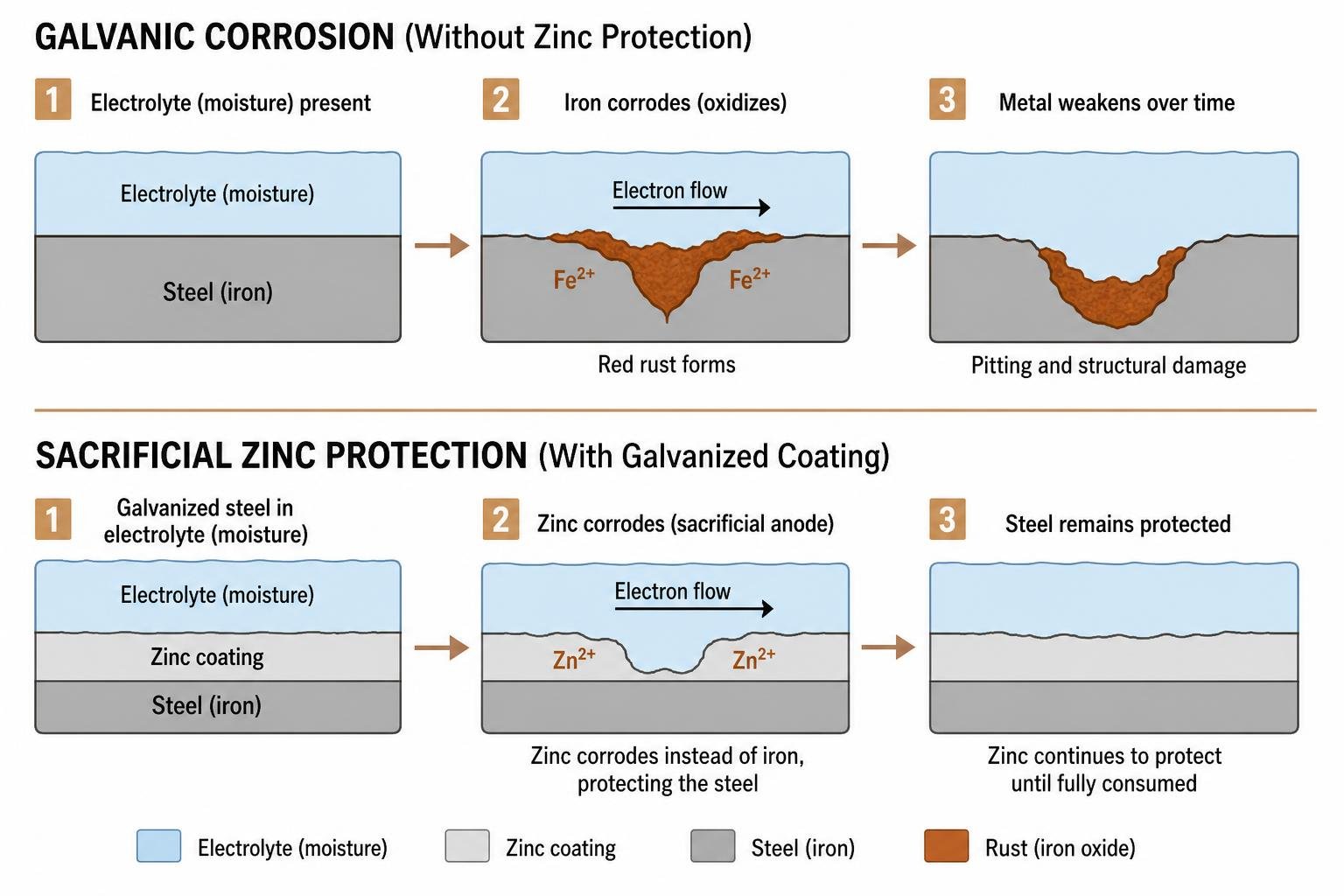
When inspecting aging galvanized metal, you will encounter two types of oxidation:
- White Rust (Zinc Corrosion): A white, powdery deposit that forms when zinc is exposed to moisture without adequate air circulation. Light white rust can be removed with a stiff nylon brush and a mild detergent solution.
- Red Rust (Iron Corrosion): Indicates that the protective zinc layer has completely weathered away in that spot, and the base steel is oxidizing.
To restore compromised metal, use a targeted repair workflow:
- Mechanical Cleaning: Use a wire brush or 120-grit emery cloth to remove all loose rust, scale, and degraded paint. Feather the edges around the damaged spot to create a smooth transition.
- Apply Cold Galvanizing Compound: Spot-treat the bare and rusted areas using a zinc-rich spray, such as Rust-Oleum Professional Galvanizing Compound (which covers ~40 sq. ft. per 20-oz can) or Seymour Shiny Galv Spray Coating. These compounds contain between 80% and 93% pure metallic zinc in the dry film, restoring sacrificial cathodic protection.
- Rust-Inhibiting Primer: If deep pitting remains, rely on a specialized rusty metal primer protection system to seal residual oxidation before applying your decorative topcoat.
Frequently Asked Questions About Spraying Galvanized Metal
Can you spray paint directly over galvanized steel without primer?
You can only spray paint directly over galvanized steel without a dedicated primer if you use a direct-to-metal (DTM) water-based acrylic paint specifically formulated to adhere to zinc. Standard spray paints will not stick reliably. Without a specialized primer or a proven DTM coating, paint will eventually delaminate from the non-porous surface.
Why does regular spray paint peel off galvanized surfaces?
Regular spray paint peels off galvanized steel due to saponification. Standard solvent-based aerosols contain alkyd resins made with fatty acids. When these acids touch the zinc on galvanized metal, they undergo a chemical reaction that creates a layer of zinc soap. This soap breaks the mechanical and chemical bond, causing the topcoat to blister and peel away in sheets.
How long does a spray paint finish last on galvanized metal?
With proper degreasing, mechanical scuffing, an acrylic or epoxy bonding primer, and two high-grade topcoats, a spray paint finish on galvanized metal will reliably last 5 to 10 years in moderate residential environments. Longevity depends on sun exposure, seasonal moisture, and regular cleaning maintenance.
Conclusion
Transforming galvanized railings, architectural details, and outdoor fixtures requires careful surface preparation and compatible paint chemistry. By thoroughly degreasing the zinc, lightly abrading the surface, using a dedicated bonding primer, and applying quality acrylic or epoxy finishes, you can achieve a smooth finish that resists chipping and weathering for years to come.
When homeowners in Lombard, Itasca, Addison, Glen Ellyn, and Oak Brook want flawless results without the hassle, they rely on T&Z Interior And Exterior Painting. With over 15 years of professional experience, full licensing and insurance, and a 5.0 Google Reviews rating, our experienced painting crews deliver reliable craftsmanship and lasting durability on every residential and commercial project.
Explore our T&Z Interior And Exterior Painting professional spray painting services to see how our team can enhance and protect your property’s metalwork today.