
Office & Retail Painting in Lombard, IL
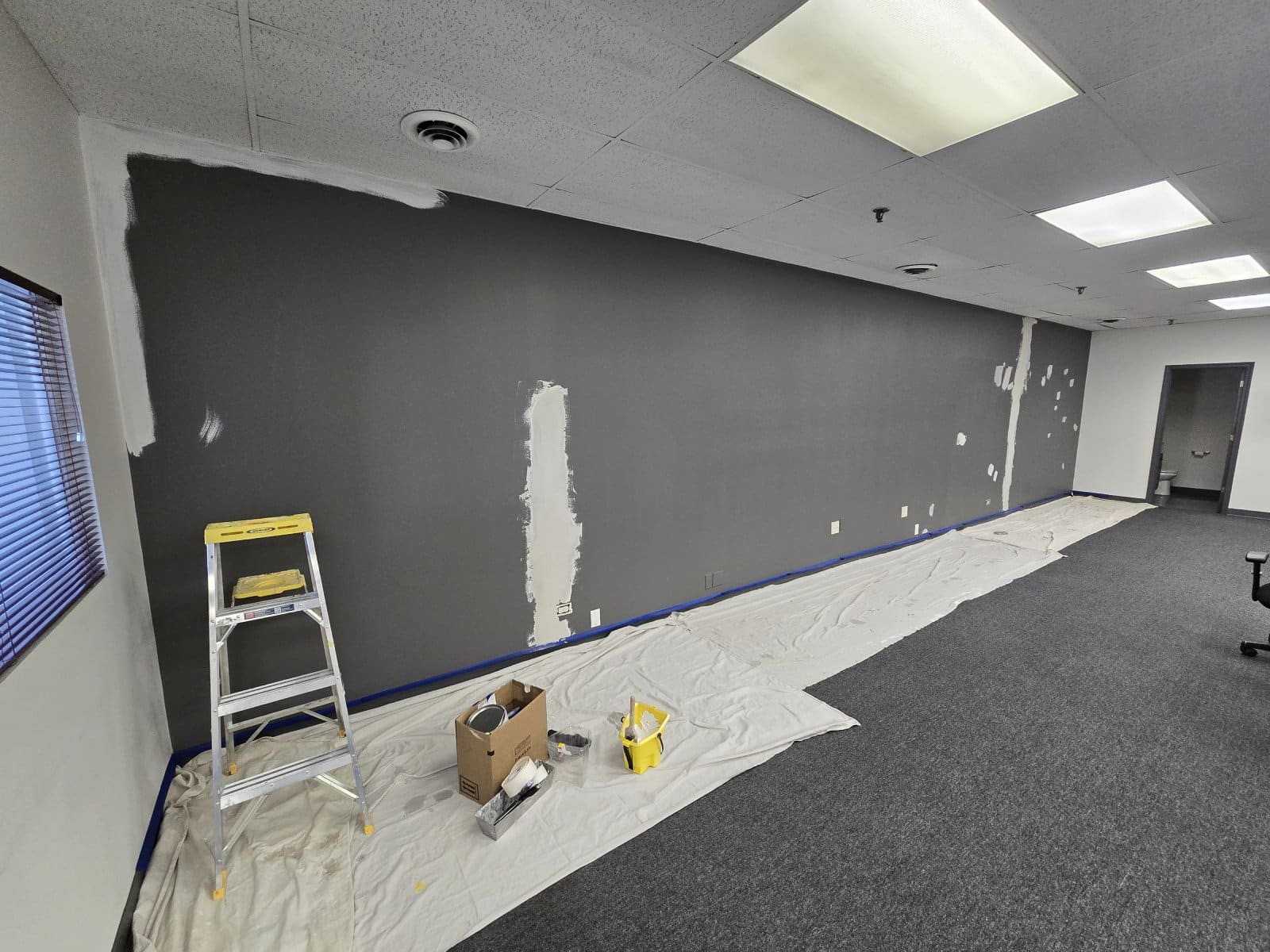
Your office or retail space competes on appearance before it competes on anything else. A worn lobby, scuffed lower walls, or an outdated color scheme communicates neglect before a customer, client, or employee says a word. In Lombard, offices and retail spaces operate in competitive corridors where appearance directly influences whether people walk in, stay, and come back. T&Z Interior and Exterior Painting handles Office & Retail Painting in Lombard for lobbies, conference rooms, open-plan offices, retail floors, storefronts, and full commercial interiors. Call us for a free on-site estimate and project consultation. After-hours and weekend scheduling is standard for occupied spaces — your business keeps running while the work gets done. We’re a licensed Painter with 15+ years of commercial experience, and we bring brand color matching, commercial-grade coatings, and scheduling that fits your operation.
What Worn, Scuffed, or Outdated Paint in a Lombard Office or Retail Space Is Telling You
What customers and clients read from your interior:
Scuffed walls at shoulder height in a corridor communicate that the building isn’t maintained. Faded paint in a reception area communicates that the business doesn’t invest in its environment. Outdated color schemes — the builder beige and hunter green of the 1990s, the golden yellow accent walls of the early 2000s — communicate that nobody has made a deliberate interior decision in years.
None of this is a fair reflection of the business. But it’s the impression customers form in the first seconds of walking in, before any service interaction begins.
The specific signs that a commercial repaint is overdue:
Paint on lower walls — below the chair rail line and at door edges — shows wear first. In offices, this means the corridors and entry areas. In retail, this means the checkout area, fitting room entries, and any high-traffic path through the store. Inspect at these points first. If lower walls show visible scuffing, fading, or paint breakdown, the rest of the space is close behind.
Flat paint in any commercial interior is a sign of a previous paint job done to a residential standard. Flat paint on commercial walls marks immediately under regular cleaning and cannot be maintained. When it starts looking worn, it looks worn everywhere simultaneously.
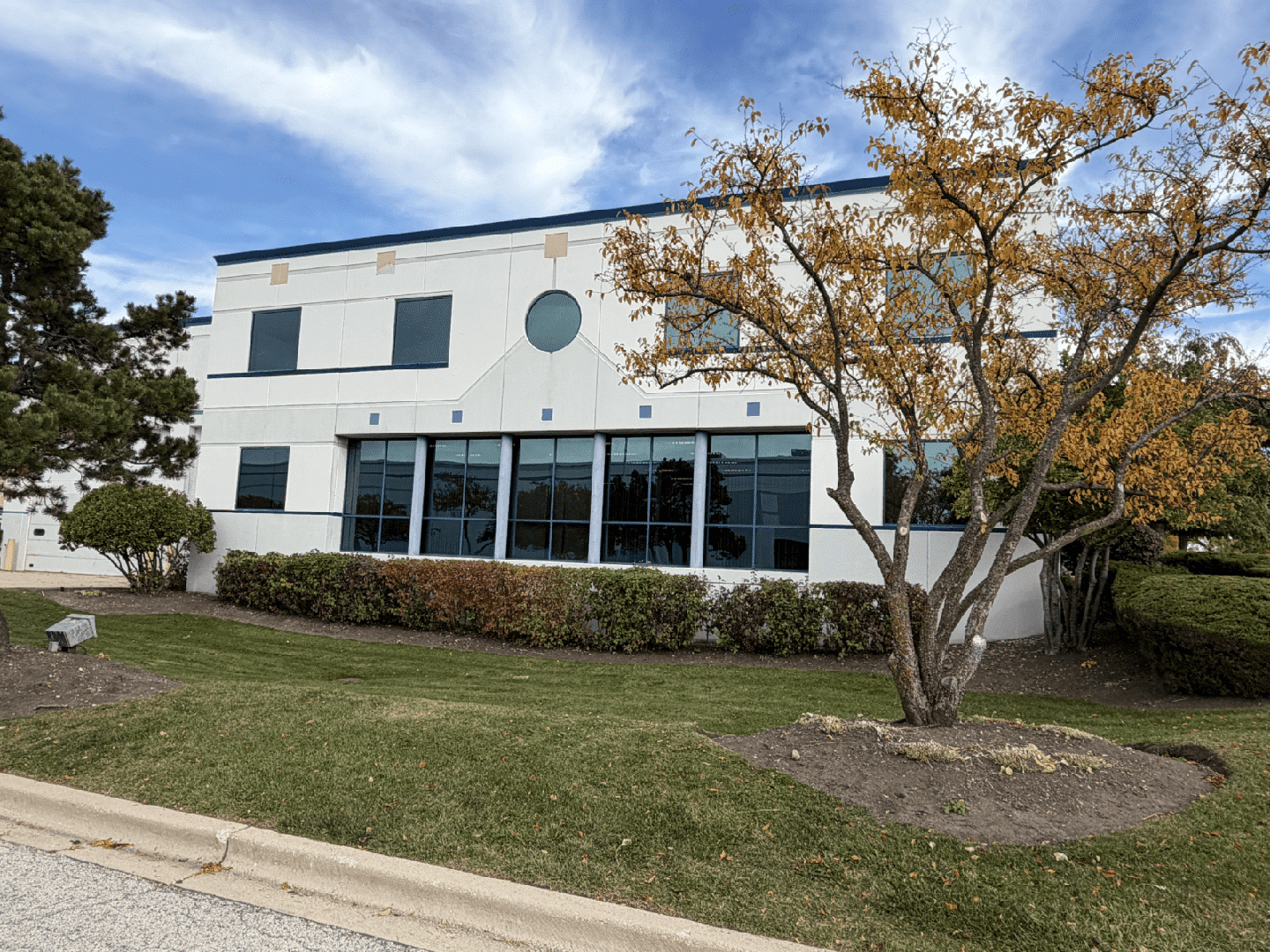
Faded exterior storefronts and building entries are the most public version of this problem. On Lombard’s Main Street and Finley Road commercial corridors, a faded or peeling storefront exterior is visible to every pedestrian and driver who passes.
T&Z assesses surface condition at the estimate and identifies all prep work before quoting. Every crack, every peeling section, every surface that needs specific primer — all of it documented before the project starts so there are no surprises mid-job.
How Retail Businesses in Lombard Use Paint to Reinforce Brand Identity and Customer Experience
Brand color matching:
T&Z matches exact brand colors from any reference format — Pantone numbers, hex codes, RGB values, or existing paint codes from previous locations. For franchise operators and multi-location retailers, this means the Lombard location looks exactly like every other location in the brand. Color consistency across locations is a brand standard requirement for most franchise systems, and it requires a painter who can hit the specification, not approximate it.
For independent retailers developing their own interior color scheme, T&Z advises on color choices that reinforce the brand positioning — whether that’s the calm, minimal palette of a wellness brand, the high-energy contrast of a fitness or entertainment concept, or the warm, approachable tones of a food and beverage space.
High-traffic surface coatings for retail:
Retail floors take more daily abuse than almost any other commercial surface. The checkout area, the entry path, the fitting room corridor — these surfaces experience thousands of contacts per day. Standard interior paint in these zones fails quickly. Commercial-grade satin and semi-gloss coatings rated for high-contact surfaces hold up to the cleaning frequency, foot traffic, and cart and equipment contact that retail interiors experience.
Lower walls in retail spaces — the 36 to 48 inches from the floor that gets the most contact — should be specified with the most durable coating in the finish schedule. This is not the area for standard wall paint regardless of sheen.
Accent and feature treatments:
Brand-consistent accent walls, color blocking at zone transitions, and decorative treatments that reinforce the in-store experience can all be achieved with paint alone — no additional construction required. A painted feature wall at the back of a retail space draws customers deeper into the store. A color-blocked fitting room interior creates a branded moment at a high-dwell location. A painted ceiling treatment in a restaurant creates atmosphere that neutral walls alone don’t produce.
Wallcovering coordination:
For retail fit-outs that include both paint and wallcovering installation, T&Z coordinates the paint phase with wallcovering installation. Surfaces are prepped to the correct standard for both — painted areas completed and cured before wallcovering installation begins in adjacent zones.
Retail spaces in Lombard’s downtown and Westmore commercial strips operate in competitive foot-traffic environments where brand presentation influences whether a passerby stops and enters. T&Z advises on exterior storefront color as part of the retail painting consultation — the outside of the store is the first brand impression before anyone reaches the door.
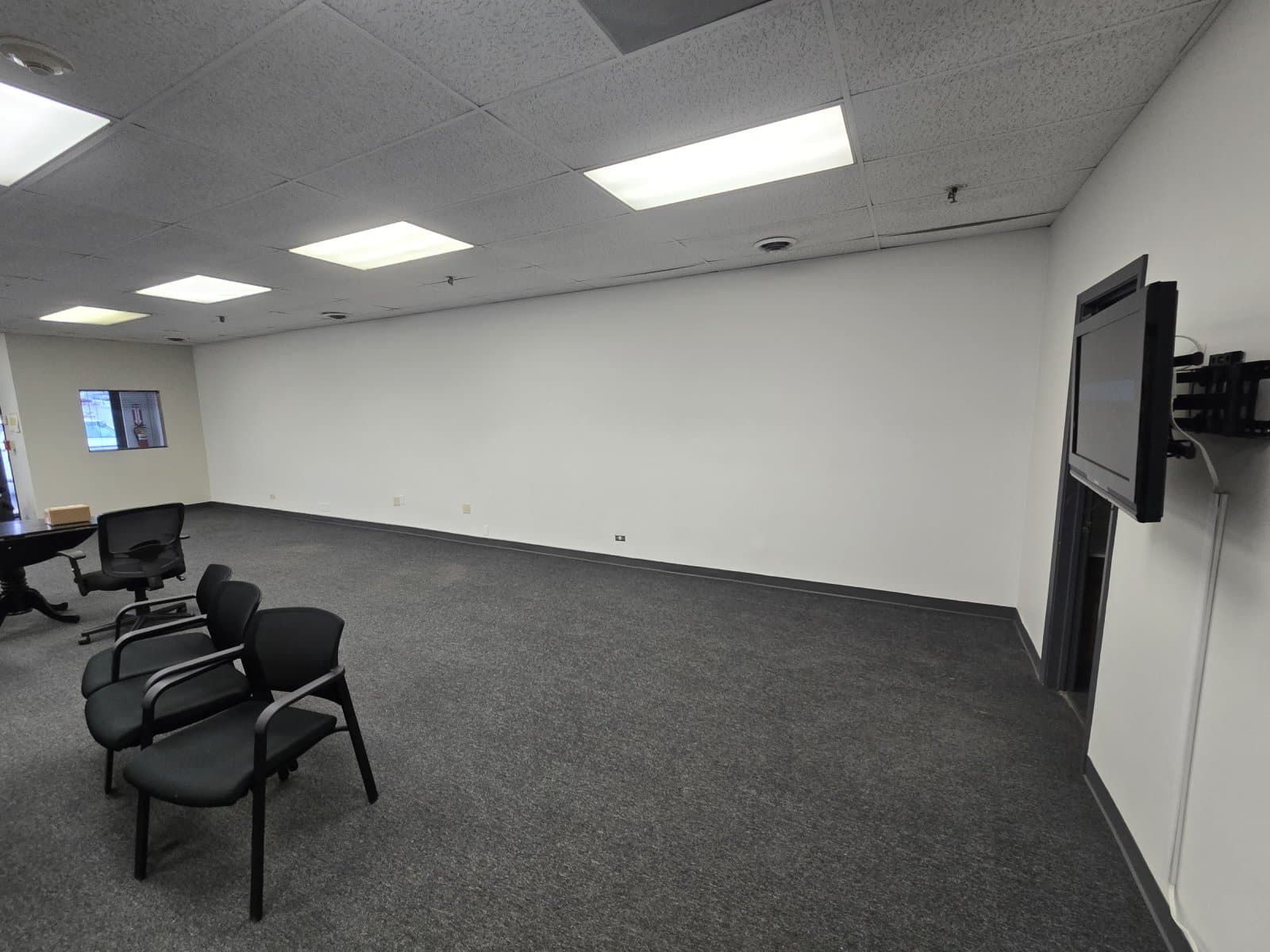
How Office Paint Colors Affect Productivity and Atmosphere in Lombard Workplaces
Lobby and reception:
The lobby is the brand impression space. Warm neutrals, brand accent colors, and finishes that photograph well all serve the same goal — communicating that the business is established, professional, and invested in its environment. The lobby color should be the most deliberate choice in the office. It’s where clients form their first impression, and it sets the expectation for everything that follows.
For professional services firms in Lombard’s Finley Road and Yorktown office corridors, the lobby palette is also a talent impression — candidates and new hires walk through it before they see anything else.
Conference rooms:
Conference rooms are where sustained attention is required. Cooler neutrals — soft blue-grays, muted greens, and desaturated teals — support focus and reduce visual fatigue during long meetings. These colors keep the room from competing with what’s on the screen or whiteboard. Warm colors in conference rooms increase energy and engagement but accelerate mental fatigue in long sessions — appropriate for short-duration collaboration spaces but not for all-day meeting rooms.
Open-plan work areas:
Open-plan offices have large, continuous wall surfaces that are seen by every employee for hours every day. The wrong color — too saturated, too warm, too cool — affects the entire workspace experience. Warm off-whites and light neutrals that maximize light reflection keep the space feeling open and reduce the visual heaviness of large, undivided areas. They also age better than trend-driven colors and don’t read as dated after five years.
Private offices and breakrooms:
These spaces benefit from slightly warmer, more personal tones that contrast with the neutral open-plan palette. A breakroom that feels distinct from the work area — warmer, more residential in its color temperature — signals that it’s actually a place to decompress. Private offices can carry more personality in their color because the scale is smaller and the occupant has ownership of the space.
Lombard professional office buildings from the 1980s and 1990s — common throughout the Finley Road and Main Street office corridors — often have low ceilings and limited natural light. Color selection that maximizes light reflection is more critical in these buildings than in newer construction with higher ceilings and more glass. Saturated colors that read well in a bright, open modern office read as heavy and dark in a low-ceiling 1990s commercial space. T&Z advises on palette choices specific to the building’s light conditions and ceiling height at the estimate.
The Surface Prep and Coating Standards That Make Office and Retail Paint Jobs Last in Lombard
Drywall repair and prep:
All holes, cracks, and surface damage are patched, sanded flush, and primed before any finish coat. In commercial spaces, this means the full corridor wall, not just the obvious damage. Visible repairs under paint — slightly raised patches, sheen variation over compound — are a prep failure. They appear because the repair wasn’t sanded flush and uniformly primed before topcoat.
Metal surfaces:
Office and retail spaces have significant metal surface area — door frames, kick plates, metal base angles, column wraps, and storefront frames. Standard interior latex paint on metal fails at edges and corners within months. Metal surfaces require a rust-inhibiting primer and a direct-to-metal (DTM) topcoat formulated to bond to and flex with metal. This is a product specification issue, not a technique issue — the wrong product fails regardless of application quality.
Wood surfaces:
Doors, door casings, wood base, and wood trim in commercial spaces require sanding, priming, and enamel topcoat — semi-gloss or gloss on all contact surfaces. The same durability argument that applies to metal applies here: the wrong product fails early. Flat paint on commercial wood trim marks within weeks.
Concrete block and masonry interiors:
Older Lombard commercial buildings frequently have concrete block interior walls — in utility corridors, storage areas, and sometimes in main commercial spaces. Concrete block is highly alkaline and porous. Standard interior paint applied without masonry primer fails because the alkalinity breaks down the paint binder and the porosity absorbs paint unevenly. Masonry primer neutralizes the alkalinity and seals the surface before topcoat. Elastomeric coatings on block walls provide moisture resistance and unify the rough surface texture.
Substrate-specific specification:
T&Z identifies every surface material at the estimate for every Lombard office and retail project — drywall, metal, wood, masonry, or concrete — and specifies the correct primer and topcoat for each. No single product applied to every surface regardless of material. This is the standard that makes commercial paint jobs last at commercial durability levels rather than residential ones.
Commercial buildings along St. Charles Road and Yorkshire Road in Lombard often have concrete block interior walls, steel door frames, and mixed substrates within the same space. T&Z brings the correct primer and topcoat for each material on day one — no mid-project product changes because the specification wasn’t done at the estimate.
How T&Z Paints Lombard Offices and Retail Spaces Without Disrupting Customers or Staff
After-hours scheduling as the standard approach:
T&Z works evenings and weekends for all occupied Lombard office and retail spaces. This is not a special accommodation available at a premium — it’s the standard approach for commercial interiors where daytime operations cannot be disrupted. The crew arrives after closing, paints through the night or weekend, and the space is ready for normal business the following morning.
For a typical Lombard retail space, this means the store closes on Friday evening looking worn and opens Monday morning with a fresh interior. No days of closure. No customers navigating around scaffolding and wet paint. No staff working in a space that smells of fresh paint.
Zone-by-zone project sequencing:
Larger office floors and retail spaces are painted zone by zone rather than all at once. One section is completed — masked, painted, and cured — before the crew moves to the next. This keeps the majority of the space accessible and operational throughout the project. Tenants and staff know which specific area is affected each day because T&Z provides a written zone schedule at the project start.
For multi-floor office buildings, zone sequencing typically moves floor by floor. A floor can be vacated in the evening, painted overnight, and reoccupied the next morning while the crew moves to the next floor.
Low-VOC product selection:
The commercial coatings T&Z uses on Lombard interior projects are low-VOC formulations that dry fast and clear odor quickly. For most office and retail spaces, painted areas are ready for reoccupation within hours of the crew finishing. The following morning, there is no detectable paint odor in the space. This matters practically when zone sequencing requires rapid cycling through sections of an occupied building — and it matters for employee comfort, customer experience, and building air quality compliance.
Written project timeline before the project starts:
Every office and retail painting project T&Z quotes in Lombard comes with a written timeline — which areas are affected on which days, when each zone is ready for reoccupation, and what the full completion date is. Property managers, business owners, and tenants all receive this information before the project starts. Nobody finds out a zone is being painted that day by walking in and finding the crew.
Lombard retail spaces that operate six or seven days a week — and medical or professional offices with daily patient and client appointments — cannot accept daytime painting disruption. For these businesses, after-hours scheduling isn’t an accommodation — it’s the only workable approach, and T&Z builds it into the project plan from the first estimate conversation.
Epoxy Floor Coatings and High-Traffic Surface Protection for Lombard Retail and Office Spaces
What epoxy floor coatings are and how they work:
Epoxy floor coatings are two-component systems — an epoxy resin and a hardener — that bond chemically to the concrete substrate and cure into a hard, seamless, non-porous surface. Unlike paint, which sits on top of concrete, epoxy penetrates and bonds to the concrete profile. The result is a coating that resists impact, abrasion, chemical exposure, and the sustained foot traffic of commercial environments.
This bond is only achieved on properly prepared concrete. Epoxy applied to a concrete floor that hasn’t been mechanically ground or acid-etched bonds to the surface layer of the concrete rather than to the concrete itself. The surface layer, loosely adhered to the substrate, releases under load — and the epoxy coating delaminates in sheets. This failure mode is why concrete surface preparation before epoxy application is non-negotiable. T&Z includes mechanical prep or acid etching as part of every epoxy floor coating project — it’s not an optional add-on.
Where epoxy floor coatings make sense in Lombard:
Retail spaces with concrete slab floors — particularly in strip centers and standalone retail buildings built in the 1970s through 1990s throughout Lombard — are the most common application. The existing concrete is often discolored, stained, and showing aggregate through the surface. Epoxy transforms this surface into a clean, professional floor that holds up to retail foot traffic and cleans easily.
Office common areas, corridors, and utility spaces where carpet is being removed benefit from epoxy as a cost-effective, long-lasting alternative to new flooring installation. An epoxy-coated concrete corridor in an office building is easier to maintain, more durable, and more water-resistant than carpet in the same location.
Light industrial and warehouse spaces in Lombard’s commercial park areas use epoxy for the durability and chemical resistance it provides under equipment, pallet jacks, and the cleaning protocols these environments require.
Finish options:
Solid color epoxy produces a clean, uniform floor in any color — matched to brand standards for retail or selected for contrast and visibility in industrial settings. Broadcast flake systems add texture and visual interest — flakes of colored vinyl broadcast into the wet epoxy base create a terrazzo-like appearance with the added benefit of slip resistance. Metallic epoxy systems produce a high-gloss, reflective finish with natural variation that reads as a premium flooring material.
Maintenance:
Epoxy floors are significantly easier to maintain than carpet or tile in high-traffic commercial environments. Sweep regularly to remove grit that can abrade the surface over time. Mop with a pH-neutral cleaner — avoid oil-based cleaners that leave a residue the next recoat can’t bond to. Under normal retail and office conditions, a properly applied epoxy floor coating lasts 5 to 10 years before recoating is needed.
Retail and light industrial spaces in Lombard’s Westmore area and commercial parks frequently have original concrete floors from 1970s through 1990s construction. These surfaces often show decades of staining, tire marks, and surface breakdown. Epoxy coating seals, unifies, and dramatically improves the appearance of aged concrete — producing a floor that looks intentional rather than inherited.
Send Us a Message
FAQ
Can T&Z match our brand colors exactly for our Lombard retail location?
Yes. T&Z matches exact brand colors from Pantone references, hex codes, RGB values, or existing paint codes from previous locations. Franchise operators and multi-location retailers can specify any corporate color standard and the Lombard location will match it precisely.
Can office and retail painting in Lombard be done after hours so we don't have to close?
Yes. After-hours and weekend scheduling is standard for all occupied Lombard commercial spaces — not a premium option. Low-VOC fast-dry commercial products allow most painted areas to be reoccupied by morning with no detectable paint odor. T&Z builds after-hours scheduling into the project plan at the estimate stage.
What paint finish is recommended for high-traffic retail walls in Lombard?
Satin or semi-gloss on lower walls, wainscoting, trim, and all contact surfaces — washable, durable, and resistant to the cleaning frequency retail surfaces require. Flat only on ceilings and upper walls that aren’t touched. Flat paint on commercial lower walls marks immediately and cannot be maintained without damaging the finish.
Does T&Z handle epoxy floor coatings for Lombard retail and office spaces?
Yes. T&Z applies epoxy floor coatings to concrete floors in retail, office, and light industrial spaces throughout Lombard. Proper surface prep — mechanical grinding or acid etching — is included before every epoxy application. Solid color, broadcast flake, and metallic finish systems are all available.
How long does a professional office or retail paint job last in Lombard?
Four to seven years for standard office interiors with correct commercial-grade products and sheen selection. Three to four years for high-traffic retail where lower wall sections show wear faster. Maintenance touch-up between full repaints — targeting the highest-wear zones — extends the full repaint cycle significantly and keeps the space looking professional throughout.