
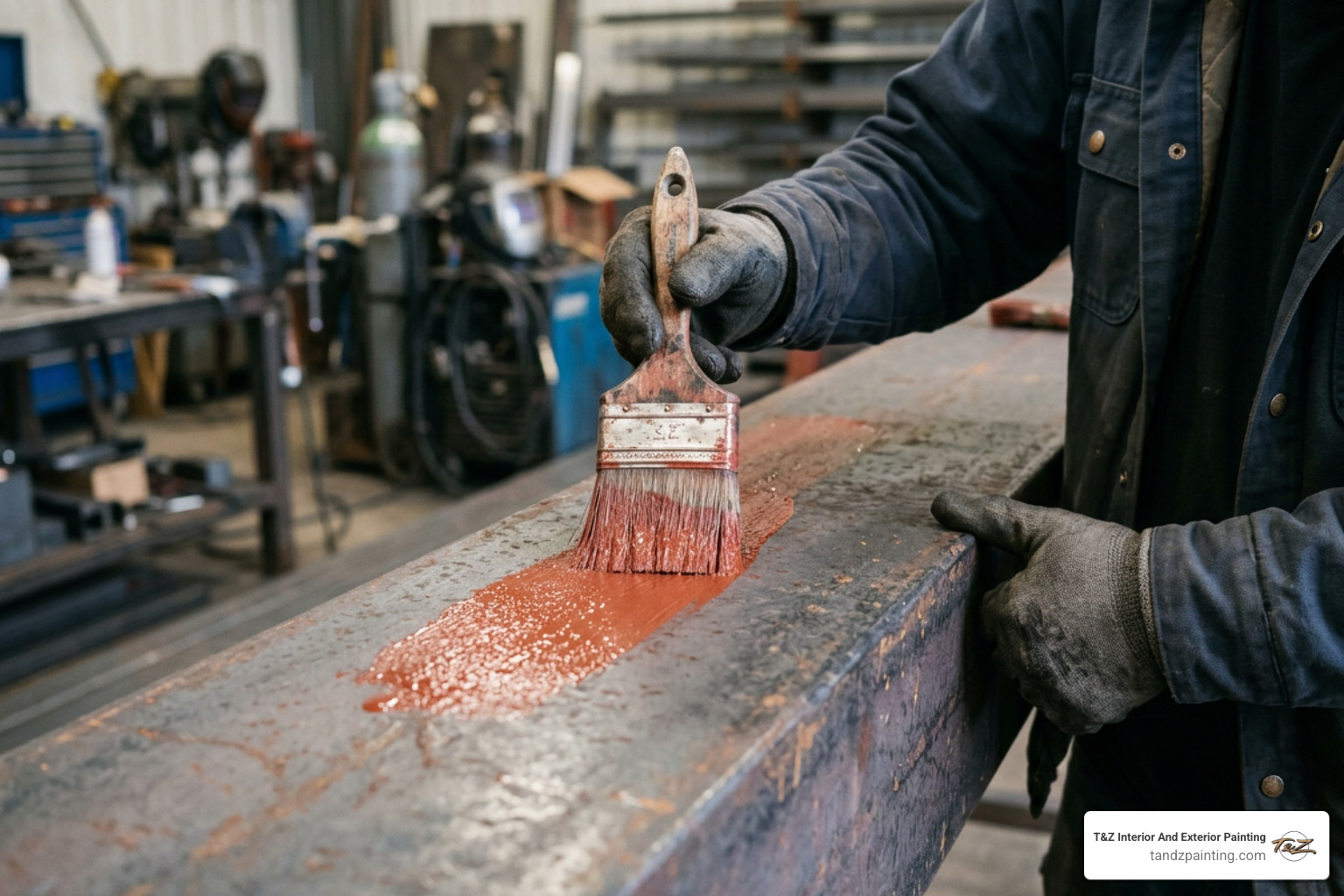
Why Skipping Metal Primer Is a Mistake You’ll Regret
Metal primer is a preparatory coating applied directly to bare or rusted metal before painting — and it’s one of the most important steps in any metal painting project.
Here’s a quick summary of what you need to know:
| Question | Quick Answer |
|---|---|
| What does it do? | Bonds paint to metal, prevents rust, improves durability |
| Do I always need it? | Yes — especially on bare, rusted, or previously unpainted metal |
| Best for ferrous metals (steel/iron)? | Oil-based or rust-inhibitive primer |
| Best for aluminum/galvanized? | Acrylic (water-based) primer |
| Typical dry time? | 15 min to touch, 1–24 hours before recoating (varies by product) |
| Does it need a topcoat? | Usually yes, unless labeled as a DTM finish coat |
Paint alone won’t stick to bare metal for long. Without a proper primer, you get peeling, blistering, and rust — often within a single season. A quality metal primer creates a chemically bonded foundation that gives topcoats something to grip. It also acts as a barrier against moisture, which is the main cause of rust on iron and steel.
The numbers back this up. Properly applied primers can extend the life of a metal surface by 10 to 15 years and improve topcoat adhesion by up to 50%. That’s not a small difference — that’s the gap between a paint job that lasts and one that fails.
This guide reviews the top metal primers on the market, breaks down which ones work best for different metals and conditions, and walks you through how to apply them correctly.
I’m Tomasz Niemotko, owner of T&Z Interior And Exterior Painting in Lombard, IL — and over more than 15 years of professional painting work on residential and commercial metal surfaces, choosing the right metal primer has been one of the most consistent factors separating lasting results from early failures. Whether we’re priming wrought-iron railings, metal doors, or commercial steel structures across the Chicago suburbs, the prep always comes first.
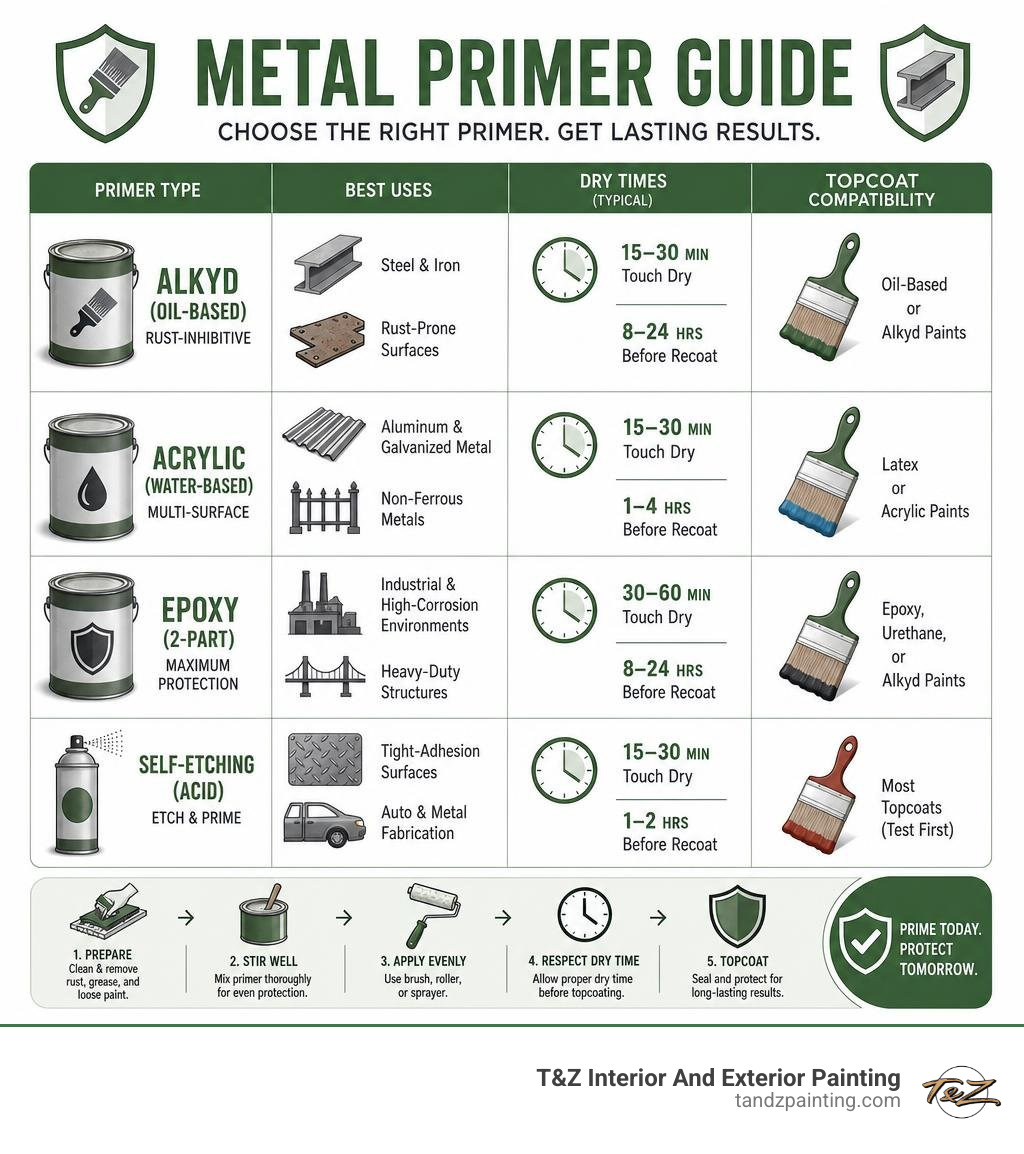
Metal primer glossary:
Understanding the Role of Metal Primer in Surface Protection
To understand why a specialty metal primer is non-negotiable, we have to look at the unique physics of metal surfaces. Unlike porous drywall or wood, metal is dense, smooth, and highly prone to oxidation. When oxygen and moisture meet untreated iron or steel, they trigger a chemical reaction that creates iron oxide—better known as rust. Once rust takes root, it expands, physically pushing the paint film away from the surface and causing it to blister, crack, and peel.
High-quality metal primers are engineered with rust-inhibitive pigments, such as zinc phosphate or iron oxide, which actively disrupt this chemical oxidation process. According to industry statistics, utilizing a high-performance primer can reduce ongoing maintenance costs by up to 30% by preventing corrosion before it starts. This is particularly crucial in the Chicago region, where our humid summers and harsh, salt-laden winters expose exterior metalwork to constant environmental stress.
Furthermore, primer acts as a vital bonding agent. Standard topcoats are formulated for color, sheen, and weather resistance, not necessarily for aggressive adhesion to slick metallic substrates. The primer acts as a double-sided tape, chemically anchoring itself to the metal while providing a perfectly textured, uniform surface for the topcoat to grip.
Skipping this step is the primary cause of paint failure on metal. For those interested in the scientific mechanics of corrosion control and technical film build metrics, reviewing a professional reference like the Zinsser Technical Data Sheet provides deep insights into how these barriers function under stress. If you are planning a larger restoration project, checking out Your Guide to Metal Spray Painting Finding Quality Services in Your Area can help you align your surface prep with professional-grade finishing standards.
Key Types of Primers for Metal Surfaces
There is no “one-size-fits-all” solution when it comes to priming metal. Selecting the wrong chemical formulation can lead to adhesion failure or, in some cases, can actually accelerate corrosion.
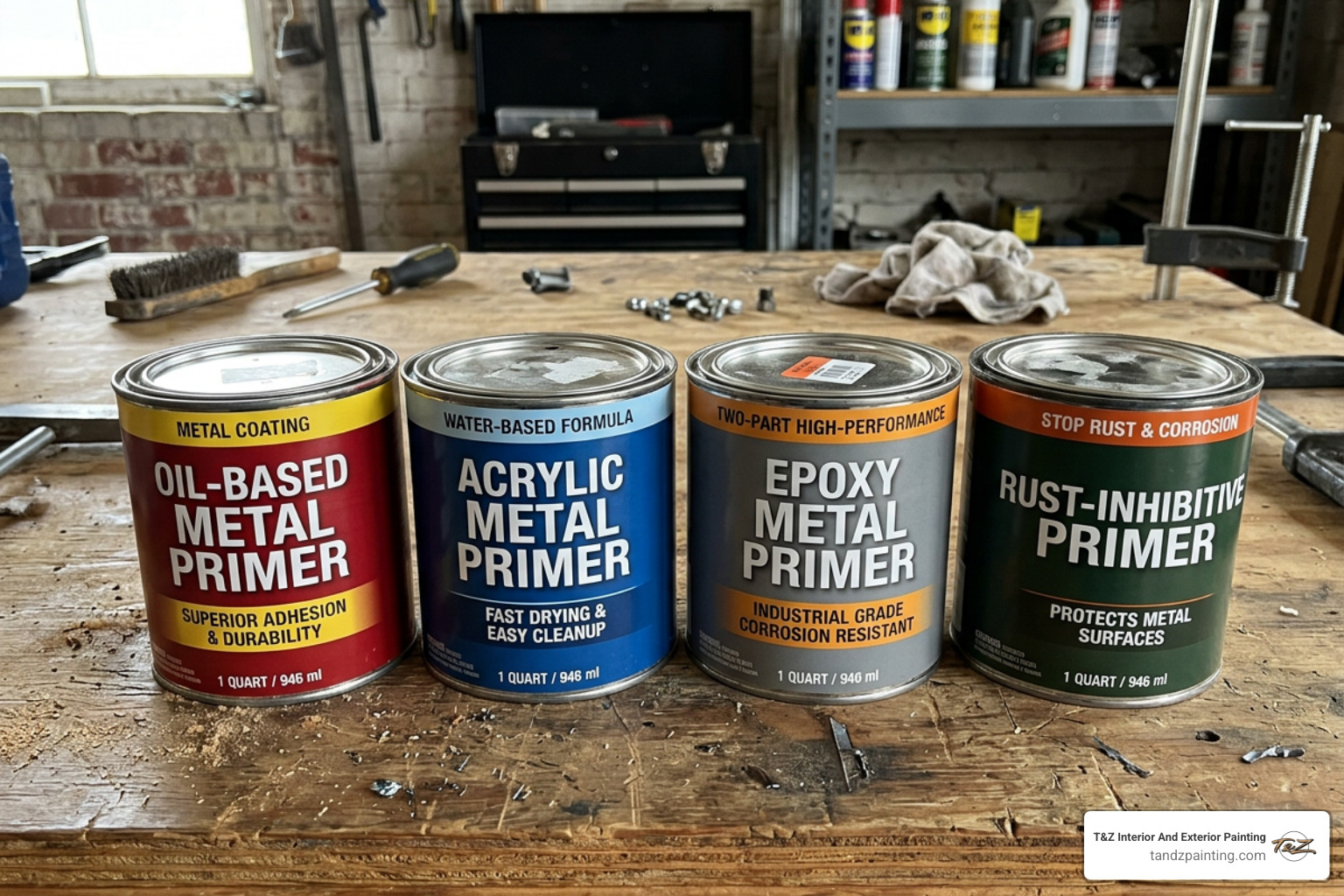
Here is a breakdown of the four primary categories of metal primers:
- Oil-Based (Alkyd) Primers: These are the traditional workhorses for ferrous metals (iron and steel). They penetrate deeply into the surface profile, provide outstanding moisture barriers, and offer exceptional durability. However, they have higher VOC levels, require mineral spirits for cleanup, and dry much slower than water-based alternatives.
- Acrylic (Water-Based) Primers: Modern acrylic metal primers have made massive leaps in technology. They are low-VOC, clean up easily with soap and water, and dry incredibly fast (often ready for a topcoat in just one hour). They are highly flexible, allowing them to expand and contract with temperature swings, and they offer up to 400 square feet of coverage per gallon.
- Epoxy Primers: Typically formulated as two-component systems (a base and an activator), epoxy primers provide unmatched chemical resistance, hardness, and waterproofing. They are commonly specified for heavy industrial settings, commercial metal roof systems, or marine environments. They require precise mixing and have a limited “pot life” once mixed.
- Rust-Inhibitive Primers: These specialized primers are formulated to be applied directly over sound, tightly bound rust. They penetrate the oxidized layer to seal out moisture and oxygen, neutralizing the rust and preventing it from spreading further.
| Primer Type | Clean Up Solvent | Key Benefit | Best Substrates | Dry-to-Touch Time |
|---|---|---|---|---|
| Oil-Based (Alkyd) | Mineral Spirits | Extreme durability, deep penetration | Steel, Wrought Iron, Structural Metal | 4 to 6 Hours |
| Acrylic (Water-Based) | Soap & Water | Fast dry time, low VOC, high flexibility | Aluminum, Galvanized Steel, Copper | 30 to 60 Minutes |
| Epoxy (Two-Pack) | Specialty Thinner | Maximum chemical & water resistance | Heavy Industrial Steel, Roofing Systems | 3 to 6 Hours |
| Rust-Inhibitive | Varies (usually Alkyd) | Can be applied over sound rust | Lightly to heavily rusted iron/steel | 1 to 4 Hours |
Choosing the Right Metal Primer for Ferrous vs. Non-Ferrous Metals
The most critical decision in your primer selection is determining whether your metal is ferrous or non-ferrous.
- Ferrous Metals: These contain iron, which makes them magnetic and highly susceptible to rust. Examples include structural steel, cast iron, and wrought-iron fences or railings. Ferrous metals require oil-based alkyd primers or specialized rust-inhibitive coatings that seal out moisture and chemically block iron oxide formation.
- Non-Ferrous Metals: These do not contain iron and do not rust (though they can tarnish or oxidize). Examples include aluminum, copper, brass, and galvanized steel (which is steel coated in a protective layer of zinc).
The Zinc Reaction Warning: You must never apply a standard oil-based alkyd primer directly to galvanized steel. The alkyd binders will react chemically with the zinc coating in a process called saponification, creating a soapy film beneath the surface. Within a few months, the paint will begin peeling off in large sheets. Instead, non-ferrous metals require a high-quality acrylic primer or a specialized zinc-phosphate formulation. For a detailed breakdown of chemical compatibility across various metal substrates, the Dulux Metalshield All Surface Primer Guide offers excellent professional guidance on matching your primer to the exact metal alloy you are treating.
Top Commercial and Industrial Formulations Reviewed
To help you navigate the aisles of your local paint supplier or home center, let’s review some of the leading metal primers trusted by professionals and DIYers alike:
- Behr Interior & Exterior Metal Primer: This water-based, 100% acrylic primer is an incredibly versatile option for residential projects. It is engineered for both ferrous and non-ferrous metals, including steel, aluminum, copper, and galvanized steel. It can be applied over clean or sound rusty metal, dries to a non-reflective finish that ensures an even topcoat sheen, and is ready for paint in just one hour. For detailed application instructions, check out the official Behr Metal Primer Product Details.
- Krylon Industrial Universal Metal Primer: Designed for heavy-duty commercial and industrial maintenance, this high-build formula is exceptional for protecting sandblasted steel. It can serve as a highly effective barrier coat over conventional coatings and is suitable for both interior and exterior steel surfaces. To review its full technical parameters, refer to the Krylon Universal Primer Specifications.
- Zinsser Metal Primer: A high-performance, modified alkyd resin primer designed for heavily rusted and clean metal surfaces (not for galvanized steel). It provides outstanding corrosion control, eliminates the need for multiple finish coats, and comes in both low-VOC and standard formulations. It requires a 24-hour cure time before recoating, making it a slower but exceptionally durable option.
- Sikalastic Metal Primer N: A premium, two-component, solvent-based epoxy primer specifically formulated for metal substrates in commercial roofing and balcony waterproofing systems. It requires a 4:1 mixing ratio by volume, cures quickly to allow overcoating in as little as 3 hours at higher temperatures, and provides an impenetrable shield against water and chemical exposure.
Professional Surface Preparation and Application Techniques
Ask any professional painter, and they will tell you the same thing: 90% of all paint failures are caused by poor surface preparation. This is doubly true for metal. You can buy the most expensive, high-tech primer on the market, but if you apply it over dirt, grease, or loose rust, it will fail.
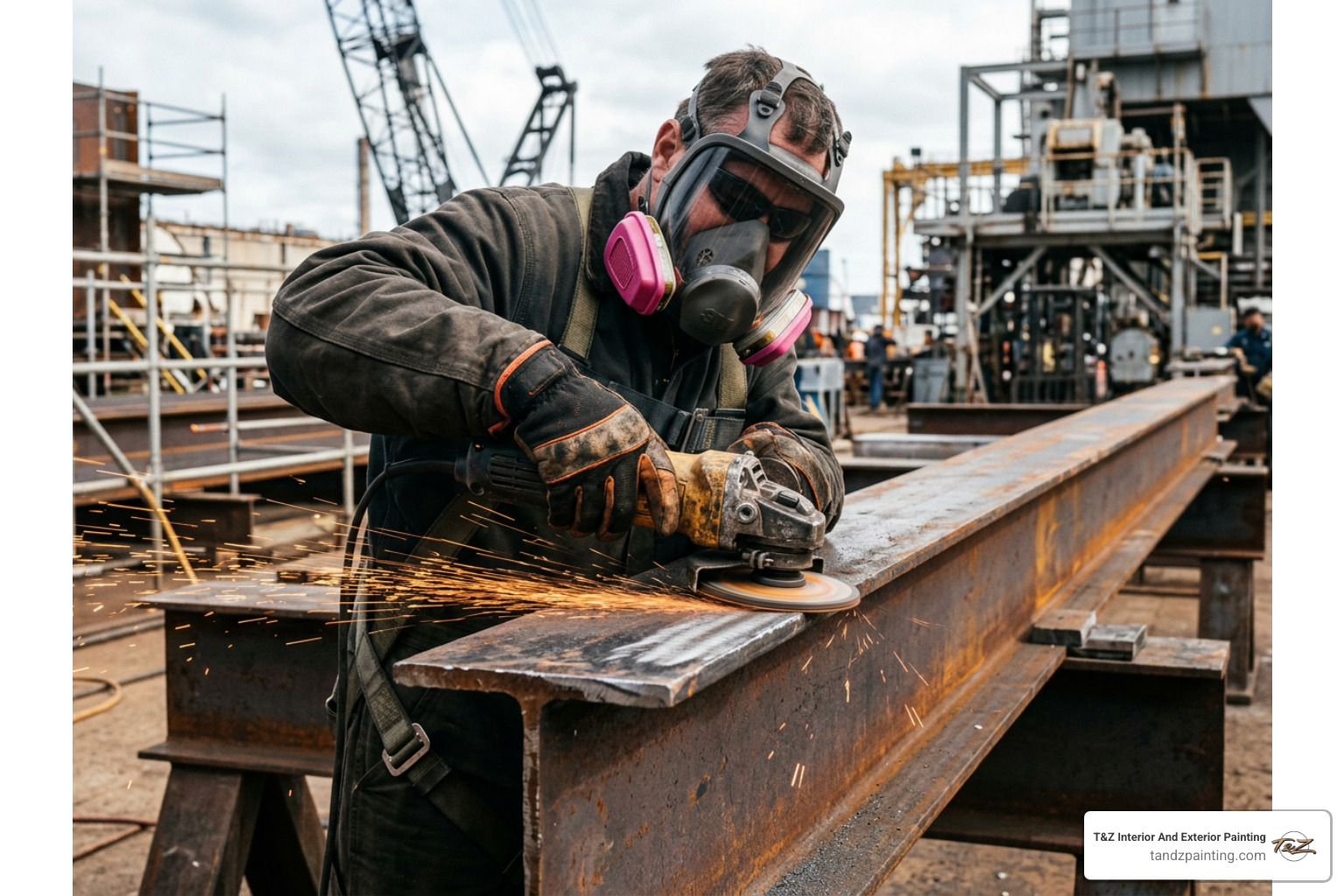
To prepare your metal surfaces like a seasoned pro, follow these steps:
- Degrease and Clean: Metal surfaces are often coated in manufacturing oils, grease, or simple road grime. Wash the entire surface with a heavy-duty commercial detergent or solvent (such as acetone or mineral spirits) and rinse thoroughly with clean water.
- Remove Loose Rust and Peeling Paint: Use a wire brush, scraper, emery cloth, or sandpaper to aggressively remove all loose rust, scale, and deteriorating paint. For heavily rusted industrial steel, mechanical methods like power-tool cleaning or sandblasting (to Sa 2 1/2 or SSPC 10 standards) may be required.
- Sand the Surface: Even clean metal benefits from a light sanding. Scuff-sanding glossy surfaces or smooth aluminum with 220-grit sandpaper creates microscopic scratches (known as a “profile”) that dramatically improve mechanical adhesion.
- Wipe Down: Clean away all sanding dust and residue with a tack cloth or a solvent-dampened rag. The surface must be completely dry, clean, and free of dust before you open your primer can.
If you are dealing with exterior surfaces or structures that face moisture challenges, reading up on Waterproofing Surface Preparation will give you a solid foundation in managing moisture barriers before applying your coatings.
How to Apply Metal Primer for Maximum Adhesion
Once your prep work is complete, you need to apply the primer immediately to prevent “flash rusting”—a phenomenon where bare, freshly cleaned steel begins to oxidize from humidity in the air within hours.
- Brush and Roller Application: When using a brush, opt for a high-quality, natural-bristle brush for oil-based primers, or a synthetic nylon/polyester brush for acrylic primers. Apply the primer in smooth, even strokes, making sure to work it deeply into crevices, welds, and around nailheads or rivets. If rolling, use a short 1/4″ to 3/8″ nap lint-free roller cover to avoid texture buildup.
- Spray Application: Spraying is the preferred method for complex metal shapes like wrought-iron fences, shutters, or structural trusses. When using spray equipment, maintain a consistent distance of 10 to 12 inches from the surface, applying multiple light coats in a sweeping motion rather than one heavy, sagging coat. If you want to refine your spraying technique, read our professional Guide to spraying metal for practical tips on avoiding runs, drips, and uneven coverage.
Always check the manufacturer’s specified wet film thickness (WFT) and dry film thickness (DFT) guidelines. For example, professional alkyd primers often recommend a dry film thickness of 2.5 to 3.0 mils per coat to ensure complete corrosion protection.
Frequently Asked Questions about Metal Priming
Can metal primer be used as a standalone finish?
In almost all cases, no. Standard metal primers are formulated to be highly porous, which gives topcoats a rough surface to grip. Because they are porous, they do not have the necessary UV stabilizers, weather resistance, or scratch resistance to withstand long-term exposure on their own. If left uncoated, a primer will eventually degrade under sunlight and allow moisture to penetrate to the underlying metal.
The only exception is a product specifically labeled as a DTM (Direct-To-Metal) Finish, which combines the rust-inhibiting qualities of a primer with the weatherproofing properties of a topcoat. For interior decorative items, protecting the primer with a proper finish coat is just as important. You can learn more about finishing interior metal by reading our guide on Tips for painting metal shelves.
How long does metal primer take to dry before recoating?
Drying times vary wildly based on the chemical formulation of the primer and the environmental conditions during application.
- Fast-Drying Acrylics & Aerosols: Many modern acrylic metal primers are dust-dry in 15 minutes, dry to the touch in 30 minutes, and ready for a topcoat in 1 to 2 hours.
- Traditional Alkyd/Oil-Based Primers: These typically take 4 to 6 hours to dry to the touch and require a full 24 hours to cure before you can safely apply a topcoat.
- Epoxies: Two-component epoxies often have a strict overcoating window (for example, between 6 and 36 hours at 70°F). If you miss this window, you must lightly sand the primer to create a profile before the topcoat will adhere.
Environmental Factors: Always pay attention to temperature and humidity. Ideal application temperatures range between 50°F and 90°F, with relative humidity below 60% to 85%. High humidity and cold temperatures will significantly extend drying times. Applying paint over wet or uncured primer will trap solvents, leading to premature paint failure. For a deeper look at technical drying curves and cure times across different product lines, refer to this guide on Technical Information on Metal Primer.
What is the best primer for rusted metal surfaces?
If you are dealing with a surface that already has rust, you have two options depending on the severity of the corrosion:
- For Sound, Lightly Rusted Metal: If the rust is tightly bound to the metal and cannot be scraped away, you can use a high-quality rust-inhibitive primer (such as Rust-Oleum Rusty Metal Primer or Behr Metal Primer). These formulas penetrate the rust layer, seal out oxygen, and chemically stabilize the surface.
- For Heavily Rusted, Flaking Metal: You must physically remove all loose, flaking rust using a wire brush, sanding, or grinding until you reach “sound” metal. Once the loose rust is gone, apply a heavy-duty, zinc-rich primer or a rust converter that transforms iron oxide into a stable, paintable polymer barrier.
For homeowners in the western suburbs looking for durable local solutions, we have put together a guide on Durable spray paints for Lombard metalwork that details the best products for stopping rust in our local climate.
Conclusion
At the end of the day, skipping the primer on a metal painting project is a shortcut that always ends up costing more time and effort in the long run. Taking the time to properly clean, sand, and apply the correct metal primer ensures that your hard work is protected by a finish that will look beautiful and resist rust for years to come.
At T&Z Interior And Exterior Painting, we believe in doing things right the first time. For over 15 years, our experienced teams have been delivering professional craftsmanship, attention to detail, and beautiful, long-lasting results for homeowners and businesses throughout Lombard, Wheaton, Lemont, Downers Grove, Carol Stream, La Grange, Lockport, Plainfield, and the surrounding Chicago suburbs. We use only top-brand materials and proven techniques to ensure your residential or commercial painting projects stand up to the test of time.
If you have a metal painting project coming up and want the peace of mind that comes with licensed, insured, and highly rated professional execution, we are here to help. Schedule professional spray painting services with T&Z Interior And Exterior Painting today, and let us transform and protect your property.