
Why Rusty Metal Primer Is the First Line of Defense Against Rust Damage
If you’ve spotted orange patches spreading across a gate, railing, or metal fence, rusty metal primer is the product you need before reaching for any topcoat.
Quick answer — what to know before you buy:
- What it does: Bonds directly to rust, seals out moisture, and creates a surface that topcoats can grip
- Best for: Heavily rusted iron and steel surfaces (not galvanized metal)
- Top product: Rust-Oleum Stops Rust Rusty Metal Primer (brush-on quart or 12 oz spray)
- How to apply: Wire brush loose rust, apply 2 light coats, wait 24 hours before topcoating
- Key specs: Covers 80–110 sq ft per quart, dries to touch in 1–3 hours, VOC 424 g/L
Rust doesn’t just look bad — it eats through metal over time, weakening structural integrity and destroying curb appeal. A standard paint or enamel won’t stop it. You need a primer specifically formulated to penetrate existing rust, not just cover it.
That’s the whole job of a rusty metal primer: stop the damage at the source, then give your topcoat something solid to hold onto.
I’m Tomasz Niemotko, owner of T&Z Interior And Exterior Painting, and over 13+ years of professional work on exterior metal surfaces in Lombard and the surrounding suburbs, I’ve seen how skipping a quality rusty metal primer leads to peeling, blistering, and rust returning within a single season. In this guide, I’ll walk you through exactly which products work, when to use them, and how to apply them right.
Rusty metal primer terms explained:
What is Rusty Metal Primer and How Does It Work?

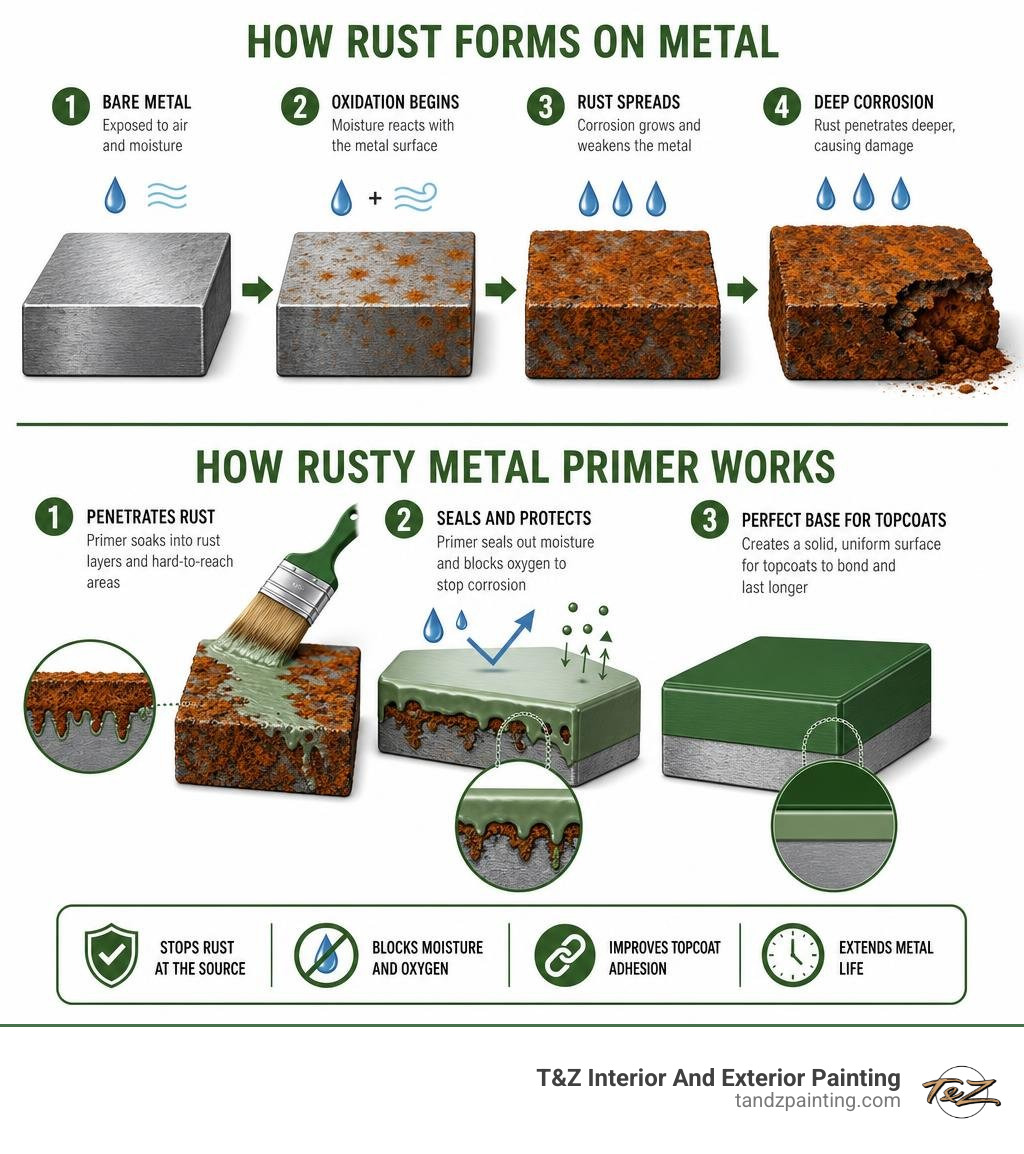
To understand why rusty metal primer is so effective, you have to understand what happens when metal oxidizes. When iron or steel is exposed to oxygen and moisture, it undergoes a chemical reaction that creates iron oxide—better known as rust. This rust is porous, flaky, and constantly expanding. If you paint directly over it with standard paint, the moisture trapped inside the rust will continue to react, causing the paint to bubble, crack, and peel away.
A high-quality rusty metal primer works through a process called rust encapsulation and chemical bonding. Instead of sitting on top of the rust, the primer is designed to penetrate deep into the porous rust layers all the way to the bare, uncorroded metal beneath.
Many leading oil-based rusty metal primers, such as the classic Rust-Oleum Stops Rust formula, utilize a unique fish-oil alkyd resin base. This specialized oil has a incredibly low surface tension, allowing it to drive out trapped air and corrosive moisture that other primers leave behind. As it penetrates, it bonds tightly to the remaining rust, sealing it completely.
Once cured, the primer forms an impermeable moisture barrier. This blocks new oxygen and water from reaching the metal, effectively halting the oxidation process in its tracks. Additionally, the primer dries to a flat, slightly textured finish. This creates the perfect “tooth” for topcoat enamels to bite into, ensuring your final layer of paint adheres beautifully without chipping or peeling.
To explore how this fits into a broader painting plan, check out our detailed guide on Dont Skip the Prep: Top Metal Primers Reviewed.
Choosing the Right Primer for Your Metal Surfaces
Not all metal primers are created equal. Using the wrong primer on your metal surfaces can lead to early coating failure. To make things simple, we have broken down how different primers compare:
| Primer Type | Best Substrate / Condition | Key Features | Key Benefits |
|---|---|---|---|
| Rusty Metal Primer | Heavily rusted iron, steel, and ferrous metals | Fish-oil alkyd base, deep penetration, high solids | Encapsulates rust, drives out moisture, halts active corrosion |
| Clean Metal Primer | Bare, sandblasted, or lightly rusted steel and iron | Fast-drying, smooth alkyd or acrylic base | High adhesion on smooth surfaces, prevents flash rusting |
| Epoxy Primer | Industrial steel, automotive panels, high-moisture areas | Two-part chemical cure, extreme chemical resistance | Ultimate durability, water-tight seal, chemical resistance |
| Acrylic / Latex Primer | Galvanized metal, aluminum, copper | Water-based, zero zinc reaction, flexible | Excellent adhesion on non-ferrous metals, low odor |
When to Use a Rusty Metal Primer
You should reach for a rusty metal primer when you are dealing with heavily rusted, weathered, or older ferrous metals (metals containing iron, such as steel and cast iron). If you are restoring an old wrought-iron fence in Wheaton, structural steel beams in a Chicago warehouse, or a rusted garden gate in Downers Grove, this is your go-to product.
It is specifically designed for surfaces where you cannot realistically remove 100% of the rust down to shiny bare metal. The primer thrives on tight, sound rust. However, it should not be used on clean, unrusted metal, nor should it ever be applied to non-ferrous metals like aluminum or galvanized steel. For technical specifications on how these formulas behave under extreme conditions, you can refer to the Professional Rusty Metal Primer Technical Data.
For alternative options that provide excellent protection, products like the Rust Tough® Brush-On Primer | Krylon® offer robust rust prevention. If you are working on vehicle frames or auto restoration, the Automotive Rusty Metal Primer | Krylon® Spray Paint is a fast-drying lacquer-based alternative designed to prepare surfaces for automotive topcoats.
Key Features of a High-Quality Rusty Metal Primer
When selecting a primer, there are several technical specifications and performance indicators to keep in mind:
- Rust Prevention: High-quality rusty metal primers provide more than twice the rust protection of using protective enamels alone.
- Coverage Rates: A standard brush-on quart of Rust-Oleum Rusty Metal Primer covers approximately 80 to 110 square feet depending on surface porosity. For larger commercial projects, products like Rust-Oleum® Professional Rusty Metal Primer – Flat Rusty, 1 gal. or the 1 gal. High Performance Flat Rusty Metal Oil-Based Rust Preventive Primer cover up to 580 square feet per gallon at a 1-mil dry film thickness (DFT).
- Spray Convenience: For smaller, intricate items like metal patio chairs or light fixtures, a spray can like the Rust-Oleum Stops Rust 12 oz. Flat Rusty Metal Primer Spray 7769830 or Rust-Oleum STOPS RUST® SPRAY PAINT AND RUST … provides 10 to 12 square feet of coverage at a recommended DFT of 1.5 to 2.5 mils.
- VOC Content: Standard oil-based rusty metal primers typically have a VOC content of 424 g/L. However, if you are working in areas with strict environmental regulations, you can find low-VOC variations like the Professional Rusty Metal Primer 100 VOC Product Page , which complies with local Chicago and collar-county environmental standards.
- Shelf Life: Unopened cans of these primers have an impressive shelf life of up to 5 years, making them great to keep on hand for future touch-ups.
To learn more about choosing durable coatings that withstand our harsh Illinois winters, read our article on Dont Let It Rust: Top Durable Spray Paints for Lombard Metalwork.
Professional Surface Preparation and Application Techniques

Even the best rusty metal primer will fail if you skip the preparation phase. At T&Z Interior And Exterior Painting, we follow a strict preparation protocol to ensure our clients’ metal surfaces remain rust-free for years to come.
- Safety First: If you are scraping or sanding older painted metal, be aware that it may contain lead. Always wear a NIOSH-approved respirator, safety glasses, and protective gloves. Work in a well-ventilated outdoor area whenever possible.
- Remove Loose Rust and Scale: The primer is designed to bond to sound rust, not loose, flaking debris. Use a stiff wire brush, hand scraper, or sandpaper to remove all loose rust, scale, and peeling paint. For large commercial structures, professional abrasive blasting or power grinding is highly recommended to achieve a stable substrate.
- Clean and Degrease: Wash the surface thoroughly with soap and water to remove dirt, salt residue, and grime. If there are oil or grease deposits, clean them off using mineral spirits or a commercial degreaser. Rinse the surface completely and let it dry.
- Scuff Existing Paint: If there are areas of intact old paint adjacent to the rust, lightly sand them with medium-grit sandpaper to create a dull profile. This helps the new primer feather smoothly over the old paint edges.
For a deeper dive into professional metal preparation, check out our guide on How to Spray Paint Metal with These 7 Quick Changes.
Spraying vs. Brushing and Rolling
How you apply your primer depends on the size and shape of your project:
- Brushing and Rolling: This is the preferred method for highly detailed ironwork, railings, and smaller residential projects. A high-quality natural bristle brush or a short-nap roller allows you to work the primer deep into the pits and recesses of the rusted metal. The slow-drying nature of oil-based primers means they self-level beautifully, leaving behind very few brush marks.
- Spraying: For large, flat areas like metal siding, warehouse doors, or structural steel, spraying is incredibly efficient. When using professional spray equipment, the primer must be thinned properly to prevent clogging.
- Thinning Ratios: Depending on the temperature and your specific spray gun, you should thin the primer at a 3:1 or 4:1 ratio (primer to thinner).
- Thinning Agents: Use xylene or naphtha for a standard spray application. If you need the paint to flash off and dry faster, acetone is an excellent choice. Always refer to the manufacturer’s guidelines, such as the 212836 technical sheet, for precise thinning instructions.
For professional-grade spray applications, utilizing a dedicated Metal Spray Painter ensures an even, durable, and clean finish across large surfaces.
Drying, Recoating, and Topcoating Guidelines
Patience is key when working with oil-based rusty metal primers. Because these formulas contain penetrating oils designed to sink deep into the rust, they take longer to cure than standard water-based paints.
- Drying Times (at 77°F and 50% Relative Humidity):
- Dry to Touch: 1 to 3 hours (spray versions can dry to the touch in as little as 10 to 15 minutes).
- Dry to Handle: 3 to 6 hours.
- Recoat / Topcoat Window: You can typically apply a second coat or your topcoat once the primer is fully dry, which is usually 24 hours.
- Important Spray Recoat Window: If you are using aerosol spray cans, you must apply your topcoat or second coat within 1 hour of the first coat, or wait at least 48 hours to allow the solvents to fully escape. Failing to follow this window can cause the paint to wrinkle or lift.
- Environmental Conditions: Only apply primer when air and surface temperatures are between 50°F and 90°F, and the relative humidity is below 85%. Applying paint in cold or highly humid conditions will drastically extend drying times and can compromise the protective barrier.
Frequently Asked Questions About Rust Prevention
Can you paint directly over rust without a primer?
No. Applying standard paint directly over rust is a recipe for immediate paint failure. Standard paints do not have the chemical ability to penetrate rust or drive out moisture. The moisture and oxygen trapped beneath the paint film will continue to corrode the metal. Within a few months, the rust will push through, causing the paint to blister, crack, and peel away, leaving your metal structure vulnerable to severe structural damage.
How long does rusty metal primer take to dry before topcoating?
For brush-on applications, you should wait a full 24 hours before applying your topcoat. This ensures all the solvents have off-gassed and the primer has cured into a hard, protective shell. If you are applying a heavy, solvent-based industrial enamel, some professional painters prefer to let the primer dry for 2 to 3 days to guarantee there is no solvent trapping, which can soften the finish.
Is rusty metal primer suitable for galvanized steel?
No, rusty metal primer should never be used on galvanized steel. Galvanized steel is coated with a layer of zinc to prevent rust. The alkyd resins in oil-based primers react chemically with zinc in a process called saponification. This reaction creates a soapy film between the metal and the primer, leading to complete adhesion failure where the paint simply peels off in sheets. For galvanized surfaces, always use a high-quality acrylic/latex primer.
To learn more about painting non-ferrous exterior metals, see our article on Painting Exterior Aluminum Siding.
Conclusion
Dealing with rusted metal can feel like a losing battle, but with the right rusty metal primer and proper preparation, you can restore your metalwork and protect it for years to come. Whether you are refreshing a classic wrought-iron fence around your home or protecting heavy structural steel on a commercial property, taking the time to prime correctly makes all the difference.
At T&Z Interior And Exterior Painting, we have spent over 15 years helping homeowners and business owners across Lombard, Wheaton, Glen Ellyn, Elmhurst, and the surrounding Chicago suburbs protect their investments. Our experienced, licensed, and insured teams use only top-brand materials to deliver stunning, durable results that stand up to the Midwest weather.
If you have a metal painting project that requires professional craftsmanship and industrial-strength protection, let us handle the hard work for you. Visit our Professional Spray Painting Services page to schedule a detailed consultation and request your personalized project plan today!