
Why High Quality Exterior House Paint Is the Most Important Home Investment You’ll Make
High quality exterior house paint is the single best defense your home has against weather, moisture, UV damage, and time. The right paint doesn’t just look good — it protects your siding, prevents costly repairs, and keeps your home’s value strong for years.
Here are the top-rated exterior paints worth considering:
| Paint | Best For | Key Strength |
|---|---|---|
| Sherwin-Williams Emerald | All-around performance | Rain refresh technology, lifetime warranty |
| Benjamin Moore Regal Select | Professional-grade durability | Alkyd-fortified acrylic, self-priming |
| PPG Permanizer | Fade and dirt resistance | Outperformed rivals in 3-year real-world test |
| Behr Premium Plus | Budget-conscious quality | Consumer Reports top-rated, lifetime limited warranty |
| Sherwin-Williams SuperPaint | Vinyl siding | VinylSafe technology, low-temp application |
According to Consumer Reports, top-performing exterior paints resist cracking, fading, dirt, and mildew for nine years or more. Some premium masonry formulas push that even further — up to 25 years.
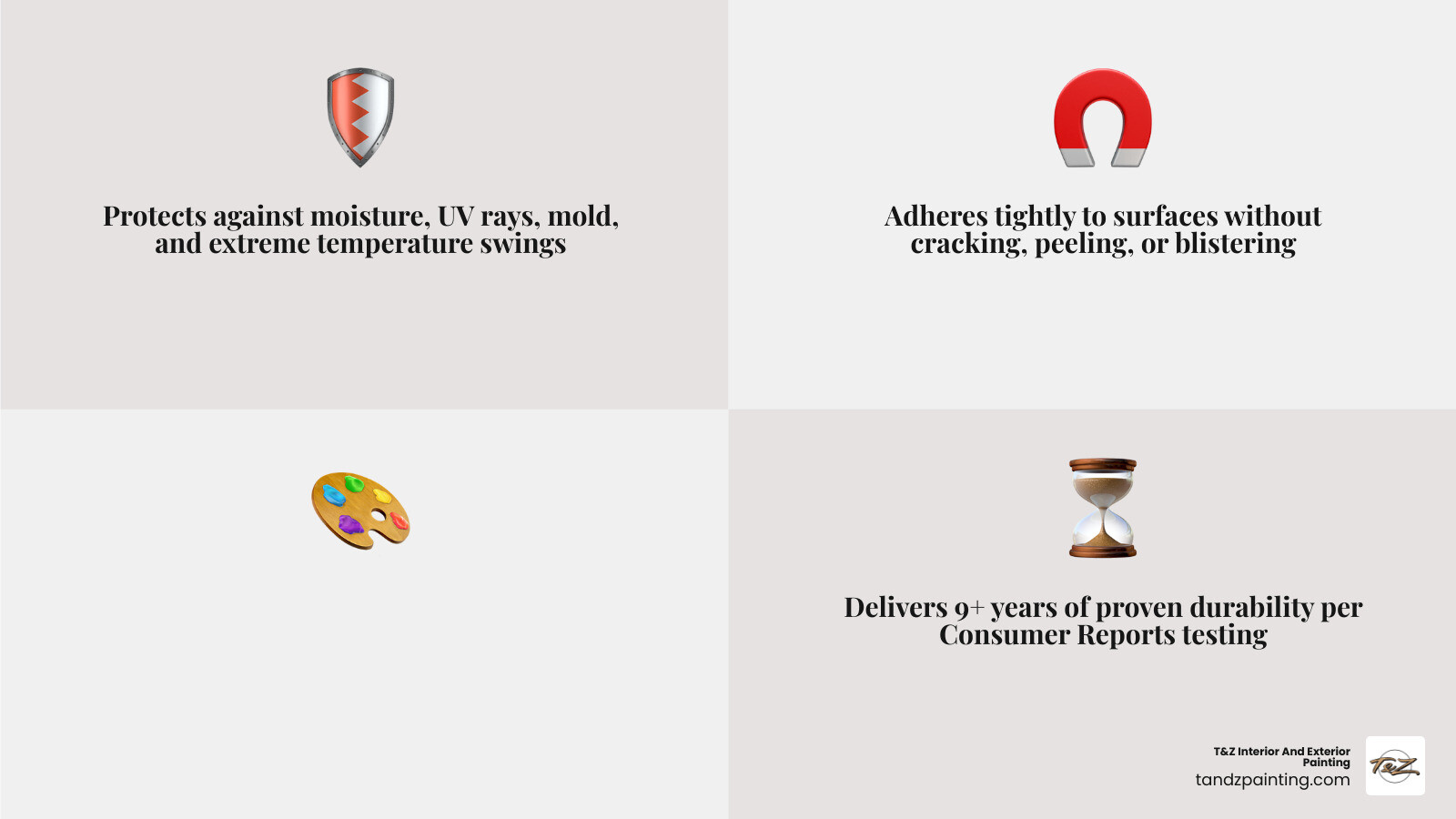
Good exterior paint does three things well:
- Protects against moisture, UV rays, mold, and temperature swings
- Adheres tightly to surfaces without cracking or peeling
- Holds color season after season without fading
I’m Tomasz Niemotko, founder of T&Z Interior and Exterior Painting, with over 15 years of hands-on experience helping homeowners choose and apply high quality exterior house paint for lasting results. In this guide, I’ll walk you through exactly what to look for — and which products consistently deliver.
Essential high quality exterior house paint terms:
Key Factors for Choosing High Quality Exterior House Paint
Choosing the right paint isn’t just about picking a pretty color from a swatch. When we talk about high quality exterior house paint, we are looking at the chemistry inside the can. Most paints are composed of four main ingredients: pigments, binders (resins), solvents (liquids), and additives. In premium paints, the ratio of these ingredients shifts toward higher performance.
Resin Quality and Pigment Density
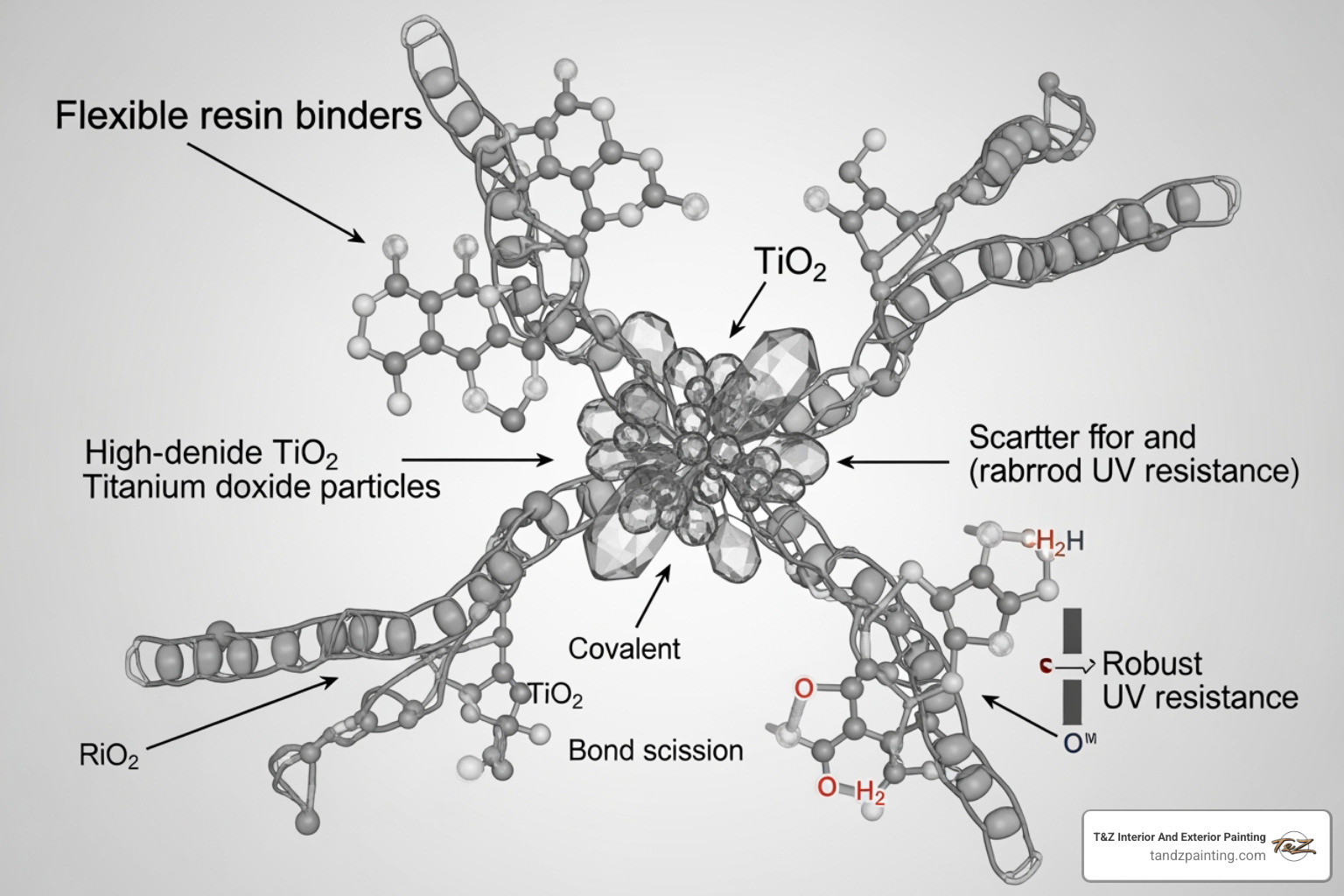
The resin is the “glue” that holds the pigment to your house. High-quality resins, typically 100% acrylic, are flexible. This is vital because your home actually “breathes” and moves. Wood expands when it’s humid and contracts when it’s dry. If the resin is too stiff, the paint will crack.
Pigment density determines how well the paint covers the previous color (its “hide”) and how well it stands up to the punishing Chicagoland sun. Premium paints use more high-quality pigments, like titanium dioxide, which provide better UV resistance and deeper, longer-lasting color. This is a core component of our Exterior Painting Services, where we prioritize products that won’t require a repaint in just a few short years.
Protection Against the Elements
A high quality exterior house paint must be a multitasker. It needs:
- Mildewcides: These additives prevent mold and algae from growing on your siding, which is especially important in the humid summer months in areas like Glenview or Wilmette.
- UV Resistance: To prevent the “chalking” effect where paint turns into a dusty powder after sun exposure.
- Adhesion: The ability to stick to challenging surfaces, including old masonry or chalky previous coats.
Flexibility and Breathability
In our local climate, we deal with “freeze-thaw” cycles. Water gets into small cracks, freezes, expands, and then thaws. If your paint isn’t flexible, those tiny cracks become giant peels. Furthermore, masonry surfaces like brick or stucco need “breathable” paint. This allows moisture trapped inside the walls to escape as vapor rather than getting stuck behind the paint film and causing bubbles.
| Feature | 100% Acrylic Latex | Oil-Based (Alkyd) |
|---|---|---|
| Flexibility | High (expands/contracts) | Low (becomes brittle) |
| Breathability | Excellent | Poor |
| Color Retention | Superior | Prone to yellowing |
| Cleanup | Soap and Water | Mineral Spirits |
| Best Use | Siding, Masonry, Wood | High-touch Trim, Metal |
Top-Rated Products for Every Surface
Not every “premium” paint is right for every project. Depending on whether you are painting a cedar-sided home in Wheaton or a brick bungalow in Chicago, your needs will change.
Premium Acrylics for Maximum Durability
When durability is the primary goal, several heavy hitters lead the pack:
- Sherwin-Williams Emerald: This is often considered the gold standard. It features “Rain Refresh” technology, which is essentially self-cleaning; dirt washes away when it rains. It also offers a Lifetime Limited Warranty.
- Benjamin Moore Regal Select: A favorite among professionals, Regal® Select Exterior Paint – Soft Gloss | Benjamin Moore uses an alkyd-fortified acrylic formula. This gives you the easy cleanup of water-based paint with the legendary “flow and leveling” of old-school oil paints.
- PPG Permanizer: In a notable three-year real-world experiment, this product actually outperformed many more expensive rivals in terms of sheen retention and resisting dirt. It is a formidable choice for homeowners who want a “set it and forget it” finish.
- Behr Premium Plus: Frequently a top pick by Consumer Reports, this 100% acrylic formula offers excellent hide and a mildew-resistant finish at a very competitive performance level.
If you want to see these products in action, browse our Exterior Painting Portfolio to see the finish quality we achieve.
Specialized Solutions for Trim and Siding
Sometimes the substrate dictates the paint.
Vinyl Siding: You cannot just put any dark color on vinyl. Darker paints absorb heat, which can cause vinyl to warp or buckle. Products like SuperPaint Exterior Latex Paint – Regional | Sherwin-Williams utilize VinylSafe technology, allowing you to choose from a wider range of colors without risking structural damage to your siding.
Challenging Surfaces: For surfaces that are a bit “battered,” high-build properties are essential. These paints are thicker and can bridge small cracks or hide imperfections in wood or masonry. We often use these for our Exterior Painting Elmhurst IL Portfolio projects where older homes require a bit more “filling” power from the coating.
Matching Your Paint to Regional Climate and Architecture
In the Chicagoland area—from the suburban streets of Naperville to the urban density of Chicago—our homes face a unique set of challenges.
Freeze-Thaw Cycles and Humidity
Our region experiences dramatic temperature swings. A high quality exterior house paint must be able to withstand a -10°F winter night and a 95°F humid summer day. This is why we emphasize the importance of When is the Best Time to Paint the Exterior of Your Home. Typically, the window between April and October provides the stable temperatures needed for the paint to cure properly.
Hydrophobic Technology
For masonry and brick, we look for hydrophobic technology. This makes the surface water-repellent, meaning rain beads up and rolls off rather than soaking into the brick. This prevents the “spalling” (chipping) of bricks that often happens after a wet winter.
Neighborhood Aesthetics
Choosing a color isn’t just a personal choice; it’s a community one. Whether you are looking for Outside House Painting Color Combinations that match the historic charm of La Grange or the modern vibes of Schaumburg, you must consider:
- Fixed Elements: The color of your roof, stone accents, and driveway.
- Natural Light: Colors look significantly brighter and “cooler” (bluer) outdoors than they do under your kitchen lights.
- Neighborhood Harmony: You want to stand out for your home’s beauty, not because it clashes with every other house on the block.
Professional Tips for Testing and Application
Even the most expensive, high quality exterior house paint will fail if it’s applied incorrectly. Preparation is 90% of a professional paint job.
How to Sample High Quality Exterior House Paint
Never pick a color based on a 1-inch square in a brochure.
- Foam Boards: Instead of painting directly on your house (which can leave visible edges later), paint large pieces of white foam board.
- Natural Light Shifts: Move these boards to different sides of the house (North, South, East, West) at different times of the day. A color that looks like a perfect “greige” at 10 AM might look like a muddy purple at 4 PM.
- Peel & Stick Samples: If you want to skip the mess of brushes, Test Before You Commit – Peel & Stick Color Samples are a fantastic way to visualize the final result.
Our House Painters Near Glenview always recommend living with a sample for at least 48 hours before giving the green light.
Preparation and Application Best Practices
If you are wondering How to Prepare a House for Painting, it starts with a clean surface.
- Power Washing: Remove dirt, chalk, and mildew.
- Scraping and Sanding: You cannot paint over peeling paint; the new coat will just pull the old one off.
- Temperature Thresholds: Most modern acrylics can be applied down to 35°F, but they need several hours of daylight above that temperature to “set.” If the temperature drops too quickly after application, the resin won’t form a proper bond.
- Multi-Coat Benefits: A Detailed Experiment showed that applying two coats instead of one significantly reduces color fading, especially in vibrant blues and reds.
Frequently Asked Questions about Exterior Paint
Which paint finish is best for different exterior surfaces?
- Flat/Matte: Best for hiding imperfections on older siding or masonry. It doesn’t reflect light, so it masks bumps and bruises. However, it’s harder to clean.
- Satin/Low Lustre: The “sweet spot” for most homes. It has a slight sheen that resists dirt and is easy to wash, but it isn’t so shiny that it looks plastic.
- Semi-Gloss/Gloss: Best reserved for trim, shutters, and front doors. The higher the sheen, the more durable the finish—perfect for areas that get touched or bumped frequently.
How long should a premium exterior paint last?
While many brands offer “Lifetime Warranties,” these often come with fine print regarding “vertical surfaces only” or “excluding fading.” Realistically, a high quality exterior house paint applied by a professional should look great for 7 to 10 years. Specialized masonry paints, like those using hydrophobic resins, can last up to 25 years.
What is the minimum temperature for exterior painting?
Historically, you couldn’t paint below 50°F. However, advanced acrylic resins in products like Sherwin-Williams SuperPaint or Benjamin Moore Regal Select allow for application down to 35°F. This extends our painting season in Illinois, allowing us to work later into the fall. Just remember that the surface temperature must also be 35°F, not just the air!
Conclusion
At T&Z Interior and Exterior Painting, we believe that your home is your most valuable asset. Using high quality exterior house paint isn’t just about aesthetics; it’s about peace of mind. Whether you’re in Lombard, Addison, or Elmhurst, our experienced teams are dedicated to delivering stunning results through professional craftsmanship and top-tier materials.
Don’t let your walls down by settling for “good enough” paint. Investing in premium products today saves you from the headache of peeling, fading, and wood rot tomorrow. Ready to transform your home? Explore our full range of House Painting Services and let us help you protect your investment for a lifetime.