
Why the Right Color Combination for Wall and Ceiling Changes Everything
Choosing the right color combination for wall and ceiling is one of the most impactful decisions you can make when refreshing a room. Yet it’s also one of the most overlooked. Most homeowners pick a wall color they love — then default to plain white on the ceiling without a second thought.
Here’s the thing: that ceiling makes up roughly one-third of every surface you see in a room. Designers call it the “fifth wall” for good reason.
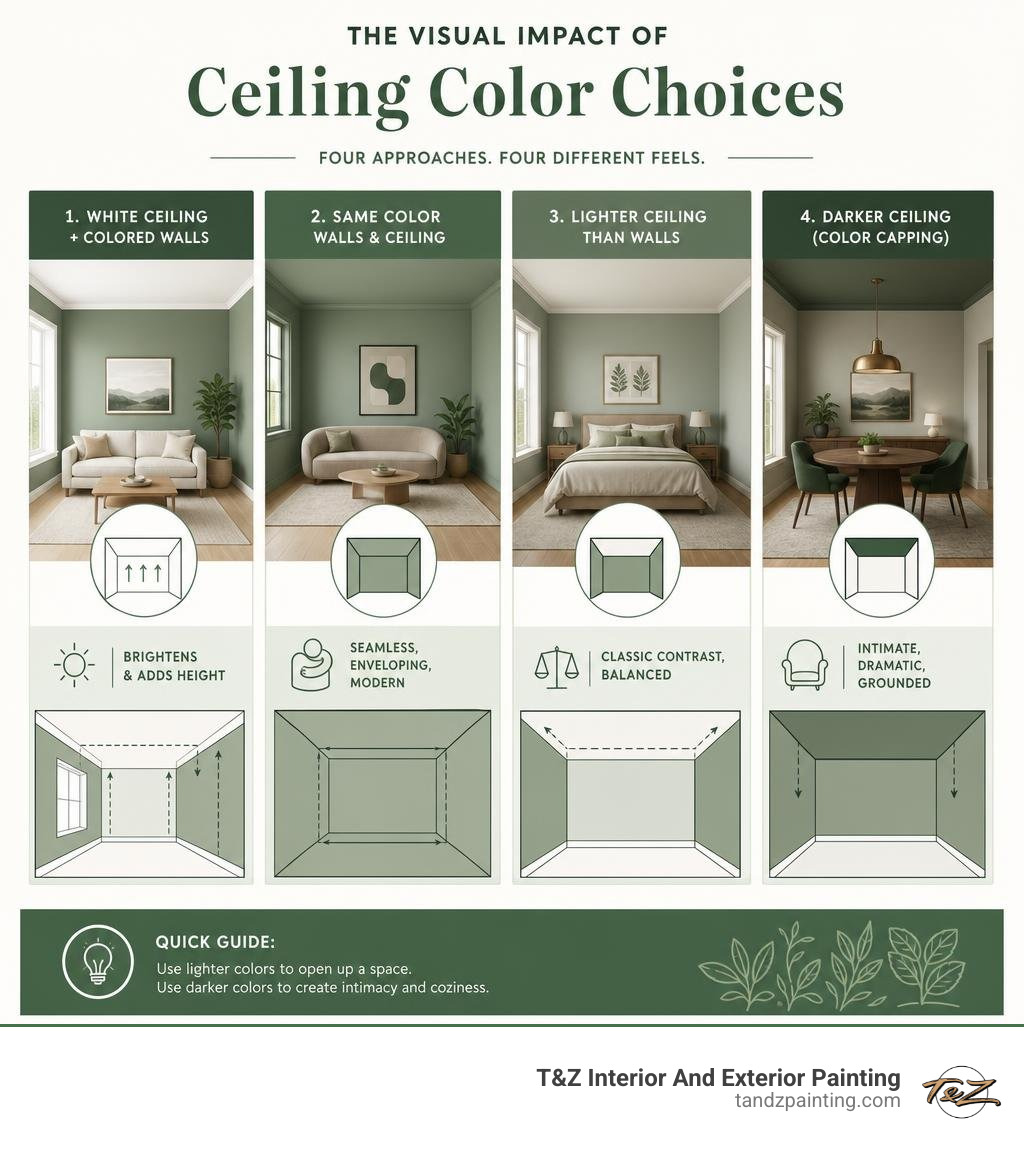
Quick answer: the most effective wall and ceiling color combinations are:
| Approach | Best For | Effect |
|---|---|---|
| White ceiling + colored walls | Most rooms, especially small spaces | Brightens, adds height |
| Same color on walls and ceiling | Cozy rooms, bold palettes, low ceilings | Seamless, enveloping, modern |
| Lighter ceiling than walls | Traditional and transitional styles | Classic contrast, balanced |
| Ceiling 2 tones darker than walls (color capping) | Bedrooms, dining rooms, libraries | Intimate, dramatic, grounded |
The right choice depends on your room’s size, ceiling height, natural light, and the mood you want to create. Get it right and the room feels complete. Get it wrong and even expensive furniture won’t save it.
That said, there’s no single “correct” answer — and that’s what makes this topic both exciting and a little intimidating.
I’m Tomasz Niemotko from T&Z Interior And Exterior Painting, and over 13+ years of transforming homes across Lombard and the surrounding suburbs, I’ve helped hundreds of homeowners navigate exactly this kind of color combination for wall and ceiling decision. In this guide, I’ll share what actually works — backed by real-world experience and the latest design thinking for 2026.
Handy color combination for wall and ceiling terms:
The Science of the Fifth Wall: How Room Dynamics Affect Your Color Choices
Before you run to the local paint store in Plainfield, IL or Lombard, IL to buy swatches, you need to understand that paint colors do not exist in a vacuum. A color scheme that looks breathtaking in a high-end design magazine can feel flat, cold, or downright claustrophobic in your actual home if you don’t account for room dynamics.
When choosing a color combination for wall and ceiling, you must look at three critical factors: room size, natural light, and light reflectance. These physical elements dictate how paint pigments behave when applied to drywall. To build a palette that flows naturally from floor to ceiling, check out our comprehensive guide on Interior Color Schemes: How to Pair Paint Colors .
Evaluating Natural Light and Light Reflectance Value (LRV)
The direction of your windows is the single biggest external factor influencing your paint colors.
- North-facing rooms receive cool, slightly bluish light. If you pair cool gray walls with a stark white ceiling here, the room can feel clinical and chilly.
- South-facing rooms are bathed in warm, golden light all day, which makes warm neutrals glow but can wash out very light pastels.
This is where Light Reflectance Value (LRV) comes into play. LRV is a scale from 0 (absolute black, absorbing all light) to 100 (pure white, reflecting all light). For a balanced and bright feel, industry guidelines from ASHRAE and major manufacturers like Benjamin Moore recommend that ceiling surfaces reflect at least 80% of light back into the room.
If you are using a deep, moody wall color with an LRV of 15, pairing it with a pure white ceiling (LRV of 85+) creates an intense, high-contrast line where the walls meet the ceiling. In low-light rooms, this can make the ceiling feel like a heavy lid. To soften this effect, professional designers often tint the ceiling paint with a small percentage of the wall color to lower its LRV slightly, ensuring a smoother transition.
How Ceiling Height Dictates Your Color Combination for Wall and Ceiling
Ceiling height fundamentally changes how we perceive room volume. If your home in Glen Ellyn or Wheaton has standard 8-foot ceilings, your primary goal is likely to make the room feel taller and more open.
- Low Ceilings (under 9 feet): The safest, most effective approach is to paint the ceiling white or a very pale neutral that is significantly lighter than the walls. This draws the eye upward and creates an airy, open feel.
- High Ceilings (9 to 12+ feet): High ceilings are beautiful, but they can sometimes make a room feel cold, drafty, or out of proportion. In these spaces, you can afford to be adventurous. Painting a high ceiling a warm, mid-tone color or even a dark, dramatic shade brings the ceiling down visually, making the entire volume of the room feel cozy, balanced, and intentionally designed.
To explore how these dimensional shifts affect your home’s layout, take a look at The Ultimate Guide to the Best Paint Combination for House Interiors.
Classic vs. Modern: Choosing the Right Color Combination for Wall and Ceiling
Once you understand your room’s physical layout, you can decide on your stylistic approach. There are three primary design methodologies when coordinating your walls and ceilings:
| Approach | Contrast Level | Visual Effect | Best Architectural Style |
|---|---|---|---|
| Monochromatic (Same Color) | None | Blurs boundaries, cozy, modern | Minimalist, Contemporary, Small Spaces |
| Contrasting (Lighter Ceiling) | Moderate to High | Traditional, raises the ceiling, classic | Colonial, Craftsman, Transitional |
| Color Capping (Darker Ceiling) | Moderate to High | Grounding, intimate, dramatic | Modern, Eclectic, Victorian |
The Monochromatic Approach: Painting Ceilings and Walls the Same Color
Painting the ceiling and walls the exact same color — a technique known in modern design circles as “color drenching” — is one of the fastest-growing trends in 2026.
When there is no high-contrast line separating the horizontal and vertical planes, the human eye struggles to find the boundaries of the room. This makes small rooms feel surprisingly expansive and large rooms feel beautifully integrated.
However, color drenching isn’t just for light neutrals. Using a rich, deep hue like navy blue or forest green across all five walls creates a luxurious, cocoon-like environment. For a deep dive into the practicalities of this style, see The Ultimate Guide to Painting Your Ceiling and Walls the Same Color and weigh the pros and cons in our detailed analysis: The Pros and Cons of Painting Ceilings the Same Color as Walls.
The Contrasting Approach: Lighter Ceilings vs. Darker Walls
This is the timeless classic. White ceilings remain the most popular choice for 80% of homeowners because they reliably make rooms feel larger, brighter, and clean.
When you pair a soft white or cream ceiling with colored walls, you create a natural, comforting hierarchy. This traditional contrast mimics the natural world — where the “ground” (flooring and walls) is darker and more saturated, and the “sky” (ceiling) is light and open.
If you want to move away from stark white but still want contrast, you can try some of the curated palettes featured in 7 Stunning Wall and Ceiling Color Combinations to Try – The Painted Hinge. For example, pairing warm beige walls with a soft, pale blue ceiling brings a subtle hint of the outdoors inside, creating a tranquil, refreshing atmosphere.
The 2026 Color Capping Trend: Going Two Tones Darker
If you want to make a bold design statement, the “color capping” trend is the way to do it. This technique involves painting your ceiling two shades darker than your wall color, using tones from the exact same color family.
Rather than making a room feel claustrophobic, color capping creates a stunning “envelope effect.” It works beautifully in dining rooms, home libraries, and bedrooms where you want to foster an atmosphere of warmth, intimacy, and sophisticated comfort.
If you’re curious about how to pull off this high-end look without making your room feel like a cave, read the Color Capping Guide: Why Painting Your Ceiling 2 Tones Darker is the 2026 Trend You Need – Eclectic Niche – Exquisite Furniture & Homeware.
Selecting a Room-Specific Color Combination for Wall and Ceiling
Different rooms serve different purposes, meaning your color strategy should change as you move through your home.

Cozy Bedrooms and Intimate Master Suites
Your bedroom should be a sanctuary. In these spaces, high contrast is often the enemy of relaxation.
Instead of a high-contrast white ceiling that draws your eye upward the moment you lie down, consider a low-contrast or monochromatic palette. Soft, muted tones like sage green, dusty rose, or warm taupe work beautifully when carried onto the ceiling.
- The Warm Palette: Try pairing a soft terracotta wall with a ceiling painted in a creamy, warm white to keep the space feeling cozy yet bright.
- The Cool Palette: Try soft slate blue walls paired with a ceiling painted in a light, misty gray.
For more bedroom inspiration, read Two’s Company: Stunning 2 Color Combinations for Your Bedroom Walls and get professional tips on planning your next main suite upgrade in How to Choose Colors for Your Master Bedroom Painting Project.
Bright and Welcoming Living Rooms
Living rooms are social hubs. They need to feel open, inviting, and dynamic. If your living room features an open-concept layout, a white or soft off-white ceiling is often the best choice because it helps maintain a sense of continuous flow and maximizes the distribution of natural light.
However, if you have architectural features like crown molding, tray ceilings, or exposed wooden beams, you have a perfect opportunity to add subtle color. Painting the interior tray of a ceiling a soft gray or a warm beige while keeping the surrounding trim crisp white adds architectural depth without overwhelming the room.
For more ideas on transforming your main living space, explore our Fresh Living Room Painting Ideas for a Modern Home.
Coordinating with Trim, Flooring, and Architectural Features
Your walls and ceiling don’t exist in isolation; they must coordinate with your flooring, cabinetry, and trim.
- Wood Trim and Warm Floors: If your home features natural oak, cherry, or walnut trim, steer clear of cool-toned, blue-based whites on your ceiling. These will clash with the natural warmth of the wood. Instead, opt for warm, creamy whites or soft beiges that share the same yellow or red undertones.
- Modern Painted Trim: For a clean, contemporary look, many homeowners paint their trim, baseboards, and ceilings the exact same shade of white, using a slightly higher sheen on the trim to create a subtle textural contrast.
To see how neutrals can be used creatively to tie these architectural elements together, check out our guide on Neutral House Paint Ideas That Are Anything But Boring.
Professional Execution: Paint Finishes and Application Best Practices
Even the most beautiful color combination for wall and ceiling will fall flat if the execution is poor or the wrong paint finishes are used. Painting a ceiling is physically demanding and technically challenging, requiring meticulous preparation to achieve flawless results.
Selecting the Right Paint Sheen for Walls and Ceilings
Paint sheen refers to how much light reflects off the dried paint surface. Selecting the right sheen is crucial for hiding imperfections and ensuring durability.
- Ceilings: With very few exceptions, ceilings should always be painted in an ultra-flat or matte finish. Flat paint absorbs light rather than reflecting it, which helps conceal minor drywall imperfections, tape joints, and roller marks. Because ceilings are rarely touched, they do not require the scrubbability of higher-sheen paints.
- Walls: For most interior walls, an eggshell or satin finish is the industry standard. These finishes offer a soft, subtle glow, are easy to wipe clean, and provide excellent durability for high-traffic areas like hallways, living rooms, and kids’ bedrooms.
To understand how sheens impact the final look of your project, read Paint Sheens 101: The Official Guide to Choosing the Right Finish and Everything You Need to Know About Wall Paint Finishes.
Step-by-Step Preparation and Painting Order
When we tackle an interior painting project at T&Z Painting, we follow a strict, time-tested sequence to ensure clean lines and a beautiful finish:
- Protect the Space: Remove all furniture from the room or move it to the center and cover it with clean plastic sheeting. Protect the floors with heavy-duty canvas drop cloths.
- Prep the Surfaces: Dust and wash the walls and ceilings to remove grease, cobwebs, and dirt. Patch any drywall cracks or nail holes, sand them smooth, and apply a high-quality primer.
- Paint the Ceiling First: Always paint the ceiling before the walls. This way, any accidental paint splatters or drips will land on unpainted walls and can easily be rolled over later.
- Cut in and Roll the Walls: Once the ceiling is dry, apply painter’s tape along the top edge of the walls. Cut in the corners and edges with a brush, then use a roller to apply two coats of premium wall paint for rich, uniform coverage.
Frequently Asked Questions about Wall and Ceiling Paint
Should ceilings always be painted white?
While white is the most popular choice because it maximizes light reflection and design flexibility, ceilings do not always have to be white. Soft pastels, light grays, warm beiges, and even moody dark tones can be incredibly effective depending on the room’s size, height, and desired mood.
Does painting the ceiling the same color as the walls make a room look smaller?
Not necessarily! In fact, painting the ceiling the same color as the walls (especially in light neutrals or soft, muted tones) can make a room feel up to 20% larger by removing the visual boundary line where the wall meets the ceiling.
Should I paint the ceiling or the walls first?
You should always paint the ceiling first. This prevents ceiling paint splatters from ruining your newly painted walls. Any minor drips or splatters that land on the walls during the ceiling phase will simply be covered up when you paint the walls next.
Conclusion
Finding the perfect color combination for wall and ceiling is all about balancing your personal style with the unique physical characteristics of your home. Whether you opt for a classic, high-contrast white ceiling, a modern monochromatic color-drenched look, or a cozy, dramatic color-capped space, the key to a stunning result lies in meticulous preparation and professional execution.
Most interior walls need fresh paint every 5 to 7 years. Making a thoughtful, high-quality color choice is a long-term investment in your home’s comfort, beauty, and value.
At T&Z Interior And Exterior Painting, we have spent over 15 years helping homeowners throughout Lombard, IL, Wheaton, Addison, Glen Ellyn, Oak Brook, and the surrounding Chicago suburbs bring their design visions to life. Backed by our 5.0 Google Reviews rating, our licensed and insured team uses only top-brand materials and expert craftsmanship to deliver flawless, long-lasting results.
Ready to transform your home with a professional touch? Contact us today to learn more about our premium T&Z Interior And Exterior Painting services and let our experienced team make your next painting project completely stress-free.