
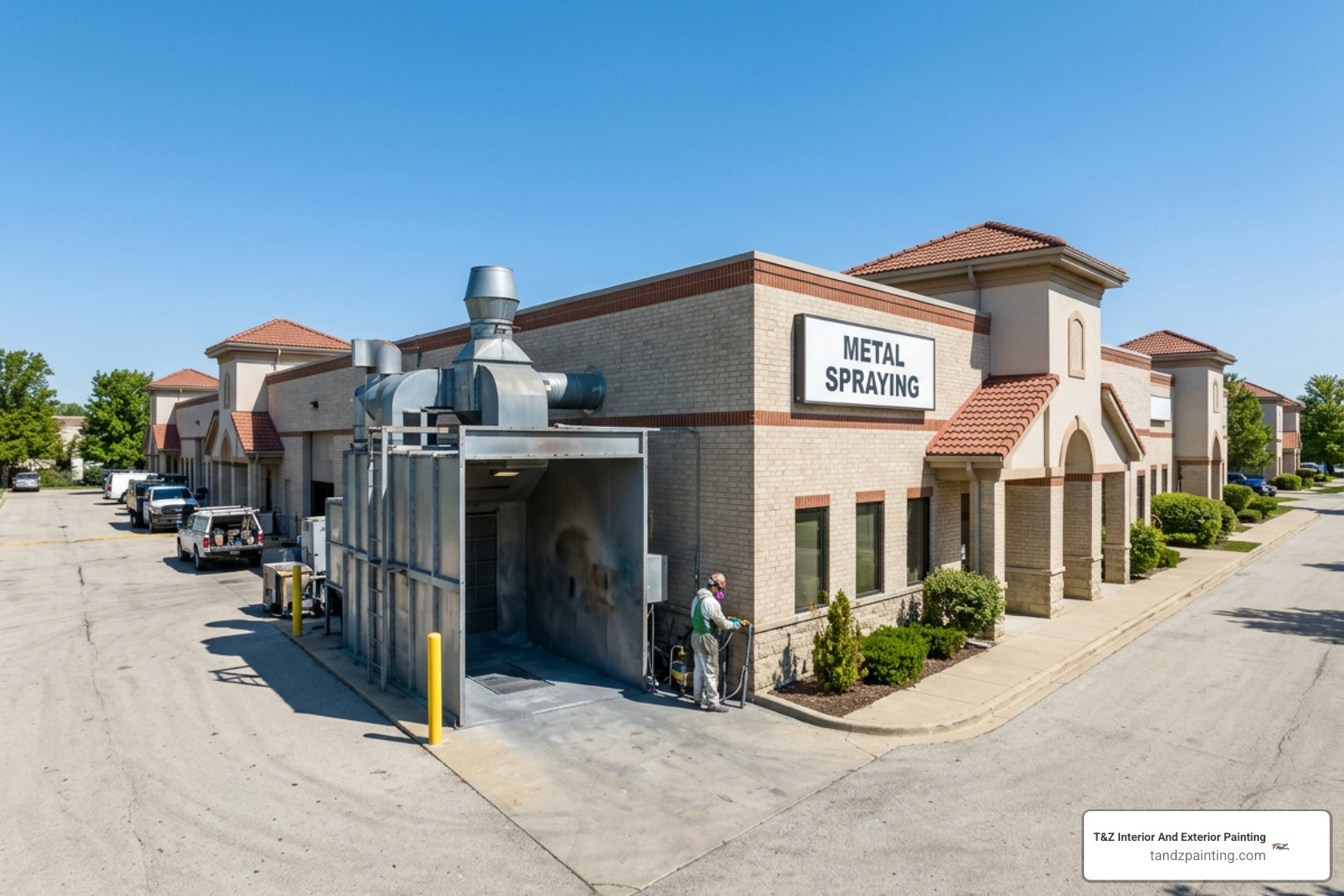
Types of Services Offered by Commercial Metal Sprayers Near Lombard
Commercial metal finishing isn’t a one-size-fits-all trade. Depending on your substrate, structural needs, and exposure environment, local facilities across Lombard, Addison, and Schaumburg offer distinct spraying technologies designed for maximum longevity and aesthetic appeal. Professional application techniques ensure that heavy machinery, architectural metalwork, and industrial components maintain their structural integrity even under demanding operational conditions.
When evaluating commercial metal sprayers near Lombard, you will encounter several primary application methods tailored to specific material requirements and project scales:
- Electrostatic Spray Painting: This process uses a static electrical charge to attract atomized fluid or powder directly to a grounded metal substrate. It creates a seamless “wrap-around” effect that ensures uniform coverage on hard-to-reach edges, lattice structures, tubular frames, and intricate metal geometry while substantially reducing waste.
- Conventional Liquid Spraying: High-volume liquid application utilizing multi-component epoxies, acrylic enamels, or aliphatic polyurethanes. This remains the premier choice for heavy machinery, structural steel fabrications, and field-applied coatings where thermal oven curing isn’t feasible or practical.
- HVLP (High Volume Low Pressure) Systems: Specially engineered to dramatically reduce overspray and material loss while delivering a smooth, high-grade cosmetic finish on architectural metal trim, custom cabinetry accents, and delicate commercial components.
- Airless Spraying Equipment: Utilizes hydraulic pressure rather than compressed air to push high-viscosity industrial primers and protective coatings rapidly onto large commercial surfaces like steel beams, storage tanks, building facades, and structural frames.
By selecting professional commercial spray painting services, businesses ensure their valuable equipment, property fixtures, and structural fabrications withstand severe daily wear, moisture exposure, and industrial chemicals over the long term.
Liquid Spray Coating vs. Powder Coating for Metal Surfaces
Choosing between liquid spray application and dry powder coating depends heavily on part geometry, material thickness, temperature sensitivity, surface exposure, and where the finished metal will be installed.

Both finishing styles provide exceptional surface defense, but they differ significantly in application equipment, environmental considerations, and thermal curing requirements:
| Feature | Liquid Spray Coating | Powder Coating Finish |
|---|---|---|
| Application Style | HVLP, Airless, Electrostatic Liquid | Electrostatic Dry Resin Spray |
| Curing Method | Ambient Air Dry or Heated Booth (140°F–199°F) | High-Temp Thermal Bake (350°F–400°F) |
| Maximum Part Size | Unlimited (Field & Large Booth Capabilities) | Limited by Batch Oven Dimensions |
| Solvent Systems | Uses Solvents / Controlled volatile organic compounds (VOCs) | Zero Solvents / Low Environmental Impact |
| Substrate Flexibility | Ideal for Heat-Sensitive Alloys & Assemblies | Restricted to Metals Withstanding High Heat |
Choosing Commercial Metal Sprayers Near Lombard for Liquid Finishing
Liquid spray painting excels when working with heavy machinery, hydraulic assemblies, building exterior elements, or field installations where high bake heat could damage internal rubber seals, electrical wiring, or glass components. By working with a skilled metal spray painter, you gain access to customized multi-coat coating systems—such as zinc-rich epoxy primers paired with aliphatic polyurethane topcoats—that deliver robust defense against environmental deterioration and harsh weather.
Liquid application also allows for fast production turnarounds, localized touch-ups, and field maintenance without requiring massive thermal bake ovens. Investing in liquid spraying provides strong protection against moisture, aggressive chemicals, and mechanical impact for heavy industrial equipment. For more details on these operational advantages, read about why your business needs high performance metal spraying.
Powder Coating Capabilities and Equipment Curing
For standalone shop components, bracketry, hardware, and mass-produced metal fabrications, powder coating offers remarkable scratch, impact, and chip resistance. During this dry finishing process, electrically charged resin particles adhere tightly to the grounded metal object before entering a high-temperature batch oven. Regional commercial facilities feature batch ovens up to 25 feet long, 8 feet wide, and 8 feet high, accommodating heavy fabrications weighing up to 9,000 lbs for full cross-linking and complete thermal curing.
Surface Preparation, Curing Facilities, and Specialty Coatings
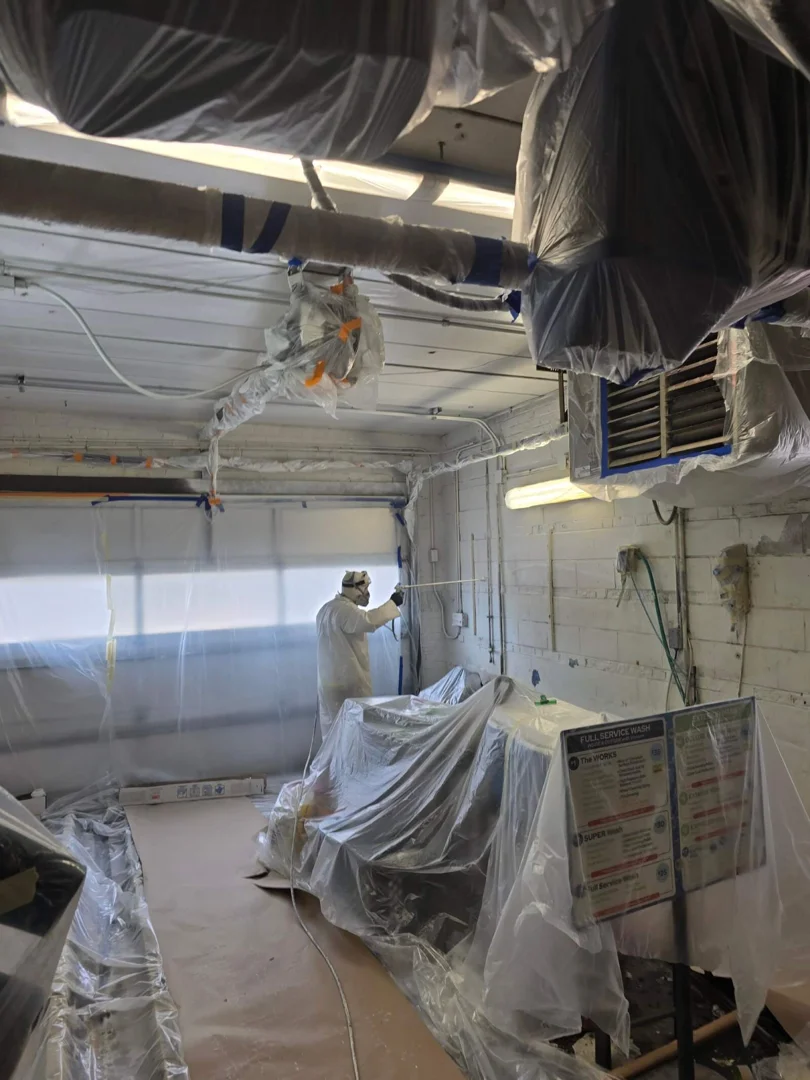
A high-performance protective coating is only as reliable as the surface preparation beneath it. Applying even the most advanced paint over mill scale, oil, moisture, or rust virtually guarantees premature adhesion failure, blistering, and peeling.
Specialized Coatings Used by Commercial Metal Sprayers Near Lombard
Commercial facilities near Lombard utilize specialized industrial coatings engineered to counter specific physical, chemical, and atmospheric stresses:
- PPG Industrial Paint Systems: High-performance epoxy and urethane chemical formulations providing outstanding chemical resistance, UV stability, and color retention for heavy machinery and manufacturing equipment.
- STEEL-IT® Coatings: Incorporate micro-particles of 316L stainless steel leafing pigment within polyurethane or epoxy resin, delivering extreme abrasion resistance and ultimate chemical protection for exposed industrial surfaces.
- Raptor Liner™: A durable, polyurethane elastomer coating providing high impact absorption, sound dampening, and slip-resistant texturing for heavy-duty metal surfaces and utility equipment.
- GatorHyde: High-build elastomer protective coatings engineered to seal and shield metal, structural steel, concrete, and fiberglass against severe chemical degradation and heavy physical abuse.
Surface Prep Techniques and High-Temp Curing Booths
Before spraying begins, raw metal substrates must undergo thorough, standardized surface preparation protocols:
- Degreasing & Solvent Washing: Completely eliminates cutting fluids, stamping lubricants, synthetic oils, and shop contaminants.
- Abrasive Blasting / Scuffing: Removes surface mill scale, welding slag, flash rust, and previous paint layers while establishing an optimal mechanical anchor profile on the metal surface.
- Phosphate Washing: Provides chemical conditioning that offers temporary inline rust inhibition and enhances long-term molecular coating adhesion.
- Precision Surface Masking: Protects sensitive machined tolerances, fine female threads, bearing seats, and mating surfaces from paint contamination.
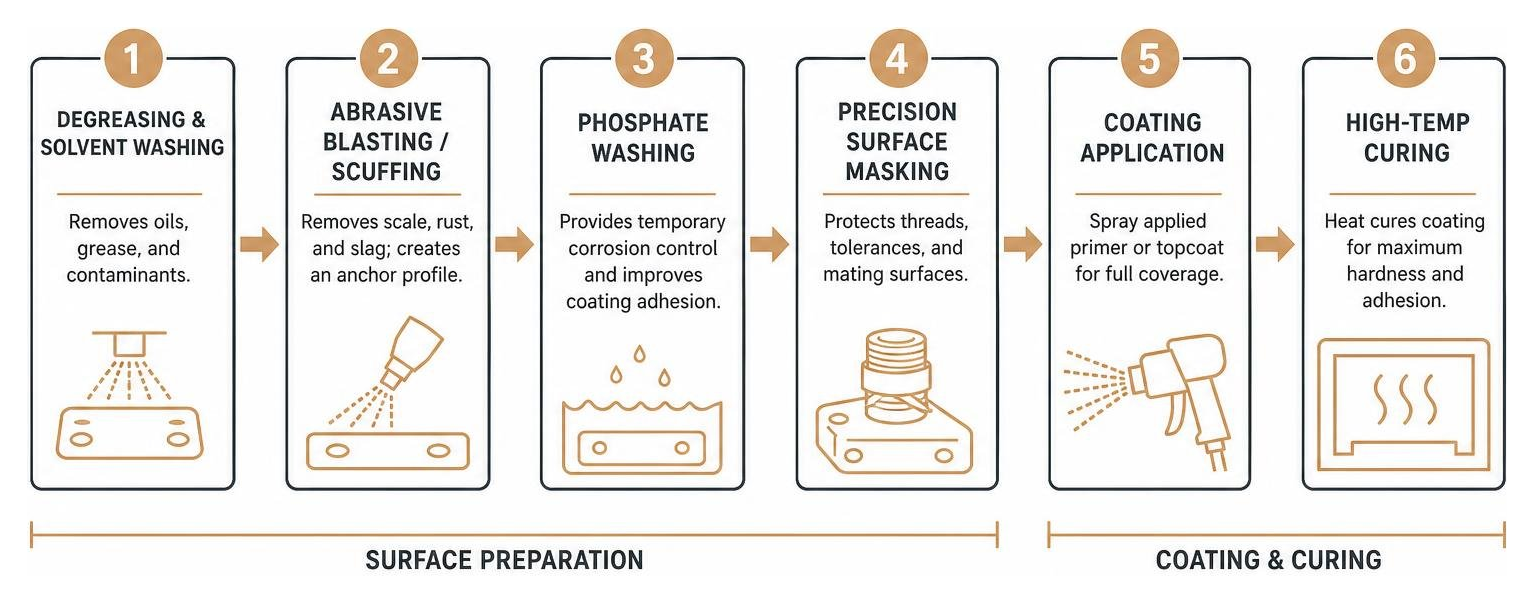
Once prepped and sprayed, coating curing takes place in highly controlled environments. Local industrial spray booths feature massive heating capacities—ranging from 1.5 million BTU forced-air furnaces up to 150°F and 199°F bake cycles. These heated environments ensure rapid chemical cross-linking, resulting in maximum film density, hardness, and coating longevity. Learn more about choosing the proper base coat in our detailed guide on how not to skip the prep with top metal primers.
Industries Served, Quality Standards, and Handling Logistics
Commercial spray painting operations in the Chicagoland area support a wide spectrum of essential industries across Lombard, Elmhurst, Addison, Schaumburg, Downers Grove, Wheaton, and Chicago:
- Aerospace & Defense: Precision structural components and assemblies requiring strict ISO 9001 quality management compliance and high-spec surface protection against severe atmospheric corrosion.
- Heavy Construction & Transportation: Boom arms, excavator buckets, vehicle chassis frames, truck access ladders, trailer frames, and large structural weldments designed for rugged outdoor environments.
- Commercial Manufacturing & Food Processing: Stainless-steel production racks, conveyor frames, safety machinery guards, and architectural fixtures requiring easy-to-clean, non-porous protective finishes.
- Commercial Real Estate & Property Maintenance: Exterior metal cladding, canopy steelwork, decorative railing systems, commercial entry doors, and structural beams needing long-term weatherproofing.
Moving oversized or high-density metal components requires robust material handling infrastructure. Premier spray facilities near Lombard utilize heavy overhead bridge cranes, industrial forklifts, and dedicated transport trailers to move massive assemblies safely through washing, prep, spray, bake, and inspection stages. Many regional service providers offer coordinated pickup and delivery within a 100-mile radius, greatly simplifying logistics for manufacturing facilities throughout DuPage and Cook counties. For nearby industrial painting options, explore our resource on finding top spray painters in Addison.
Frequently Asked Questions About Commercial Metal Painting
What types of metals can be professionally spray coated near Lombard?
Commercial metal sprayers regularly process carbon steel, structural iron, aluminum alloys, stainless steel, cast iron, and galvanized metals. Each substrate requires specific surface preparation methods and custom primer formulations—such as specialized wash primers for aluminum or high-solids zinc-rich epoxies for carbon steel—to ensure maximum adhesion and long-term corrosion resistance.
What size and weight capacities do local commercial spray booths accommodate?
Local commercial spraying facilities feature heavy-duty paint booths equipped with large double entry doors up to 18 feet wide by 18 feet high, booth enclosed lengths extending up to 30 feet or more, and specialized thermal batch ovens capable of handling single structural parts and assemblies weighing up to 9,000 lbs.
What surface preparation is required before metal spray painting?
Proper surface preparation begins with complete solvent degreasing to strip machine oils, coolants, and grease, followed by abrasive sandblasting, shot blasting, or mechanical scuffing to establish an anchor profile. Precision surface masking is then carefully applied over threaded holes, bearing journals, and non-paintable mating surfaces before applying rust-inhibitive primers.
Conclusion
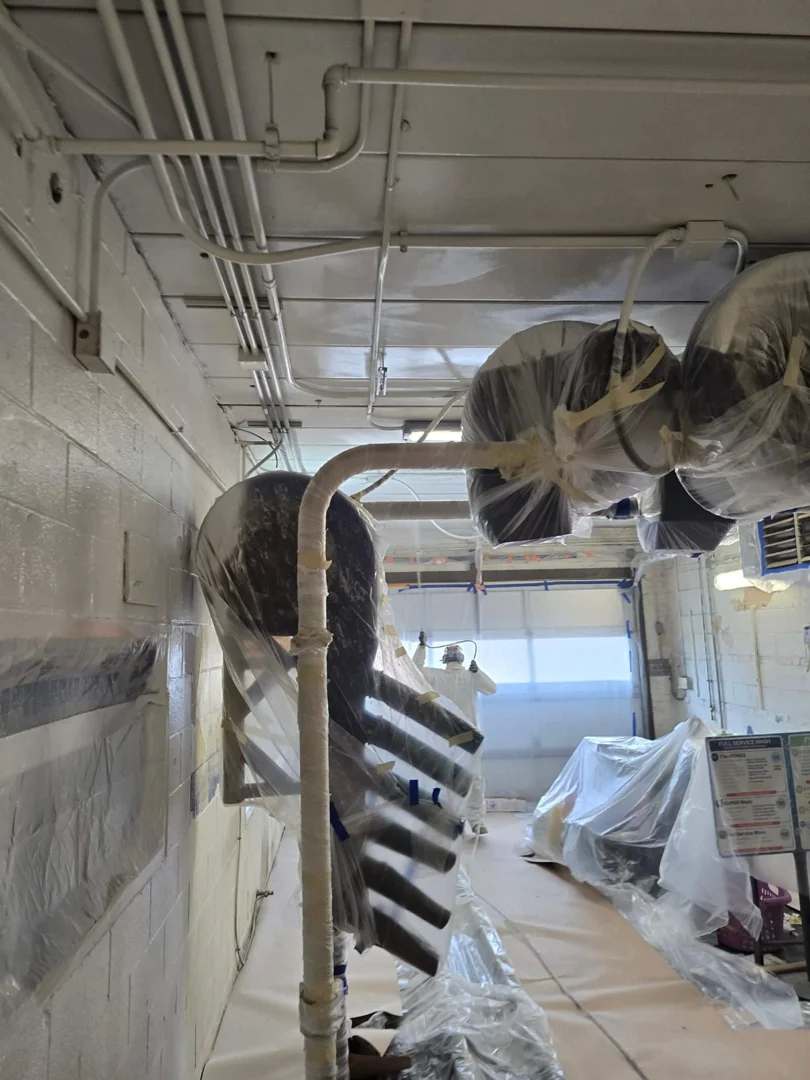
When your commercial facility, architectural metalwork, or manufacturing machinery requires long-lasting protective finishes, working with trusted local painting experts makes all the difference. At T&Z Interior And Exterior Painting, we bring over 15 years of industry-proven experience, full licensing and insurance coverage, and a flawless 5.0 Google Reviews rating to every project we perform across Lombard, Addison, Schaumburg, Lemont, Downers Grove, Wheaton, and the broader Chicagoland area.
Whether you need to refresh exterior commercial building metal accents, protect structural machinery, refinish architectural fixtures, or complete high-performance surface painting, our relentless focus on skilled craftsmanship, exhaustive surface prep, and premium-grade materials delivers flawless, durable results. Contact our knowledgeable team today to learn more about our comprehensive line of commercial spray painting services tailored specifically to your facility’s operational demands.