
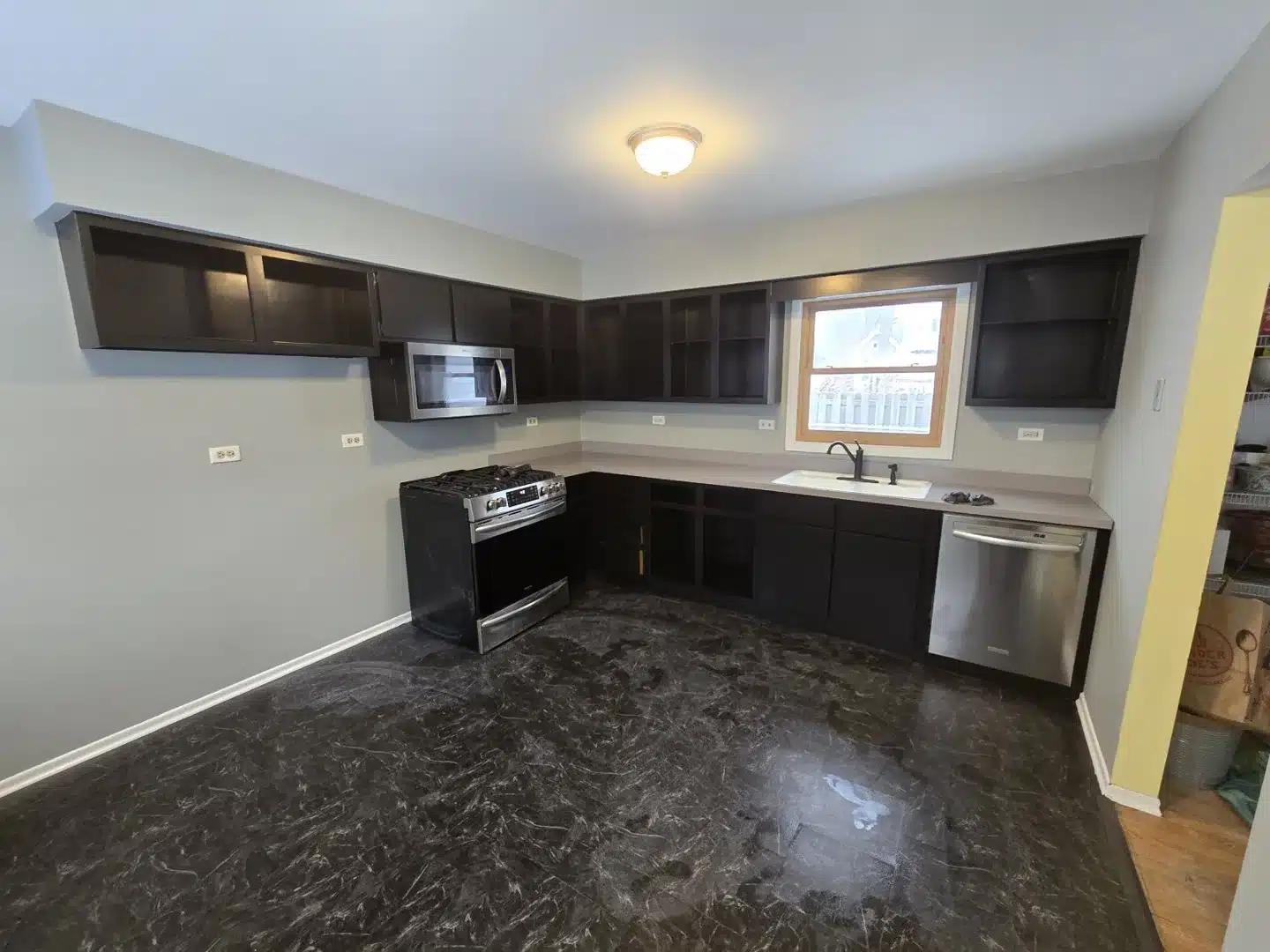
Is It Worth It to Refinish Kitchen Cabinets? Here’s What You Need to Know
Refinishing kitchen cabinets is one of the most effective ways to transform your kitchen without tearing everything out and starting over. If your cabinet boxes are structurally sound but the finish looks dated, worn, or just plain tired, refinishing can make them look factory-fresh again — and a professional result can last 8 to 15 years with normal use.
Here’s a quick answer to the most common questions:
| Question | Quick Answer |
|---|---|
| What is cabinet refinishing? | Stripping or sanding the existing finish and applying a new stain, paint, or clear coat |
| How is it different from repainting? | Refinishing removes the old finish entirely; repainting applies new paint over an intact existing finish |
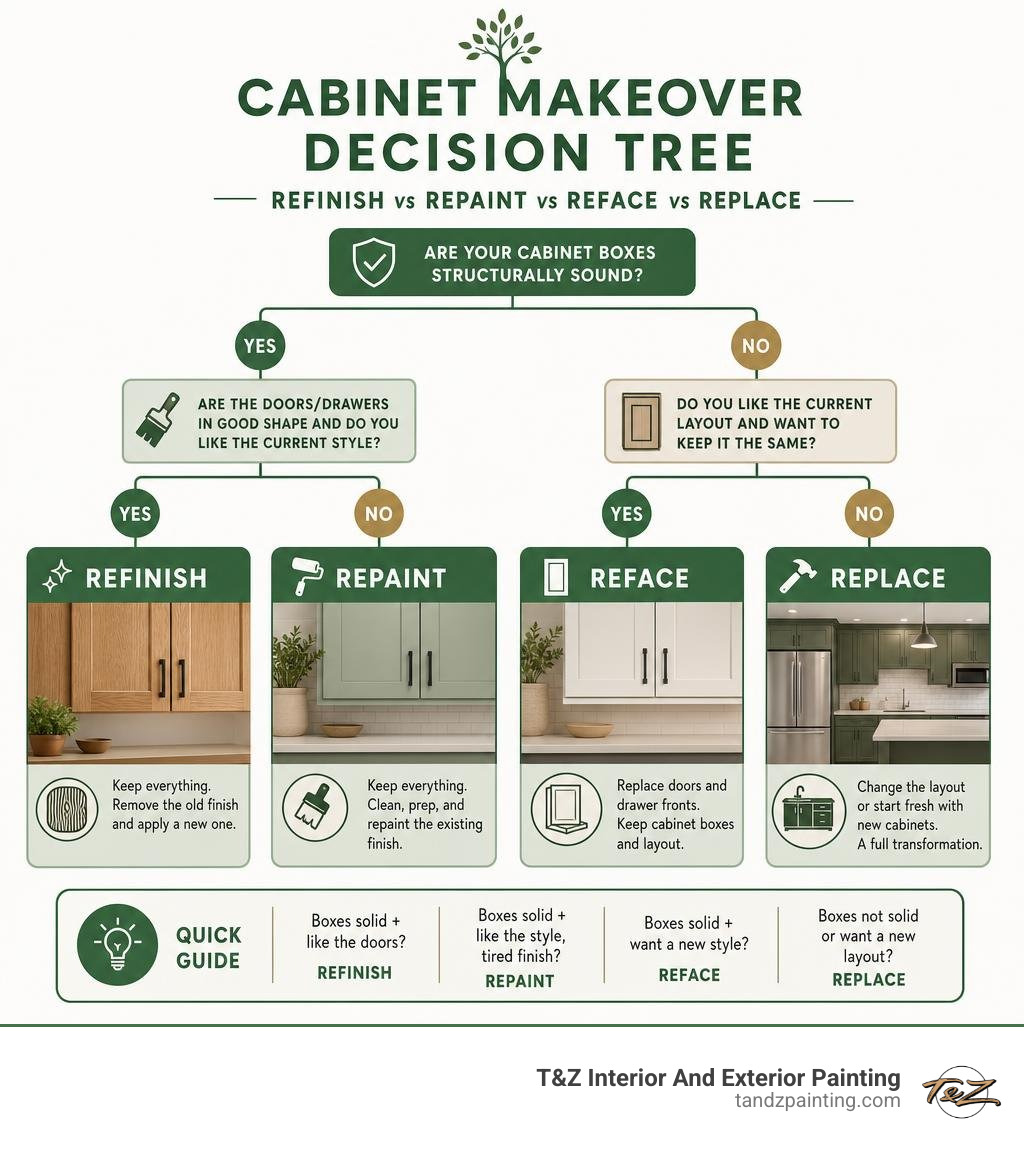
| How is it different from refacing? | Refacing replaces door and drawer fronts; refinishing keeps everything and changes only the finish |
| How long does it take? | Typically 3 to 5 days for a professional; 1 to 2 weekends for DIY, plus 7 to 14 days to fully cure |
| How long does it last? | 8 to 15 years when properly prepped and professionally applied |
| Is it worth it? | Almost always yes — especially when cabinet boxes are solid and the layout works for you |
The biggest factor in whether a refinishing project succeeds or fails isn’t the paint color or the brand of primer. It’s the preparation. Grease, moisture, wrong primers, and rushing the cure time are the real reasons finishes peel — and they’re all avoidable with the right process.
This guide walks you through everything: how to choose between refinishing and repainting, what professional preparation actually involves, which primers and paints work for wood, MDF, and laminate, and how to avoid the most common mistakes that send homeowners back to square one.
I’m Tomasz Niemotko, owner of T&Z Interior And Exterior Painting in Lombard, IL — and over more than 15 years of professional cabinet work, I’ve helped hundreds of homeowners across the Chicago suburbs refinish kitchen cabinets that now look better than the day they were installed. In the sections below, I’ll share exactly what that process looks like and how to get it right the first time.
Important Refinish kitchen cabinets terms:
Understanding Your Options: Cabinet Refinishing vs. Cabinet Repainting
When you decide your kitchen needs a new look, you will hear several terms thrown around: refinishing, repainting, and refacing. While they might sound similar, they involve completely different levels of labor, materials, and final aesthetics.

To help you decide which path fits your kitchen, let’s break down the two most popular options:
- Cabinet Repainting: This is a surface-level process. If your cabinets have an existing painted or stained finish that is structurally sound, clean, and free of peeling, we can apply a new color directly over it. We clean, scuff-sand to create a mechanical bond, apply a high-adhesion primer, and then spray the topcoats. If you are wondering, is painting kitchen cabinets a good idea?, the answer is a resounding yes—provided the underlying layer is stable.
- Cabinet Refinishing: This is a more intensive restoration process. It involves stripping or heavily sanding the existing finish down to the bare substrate (whether that is solid wood or wood veneer) to apply a brand-new stain, clear coat, or solid coating. We use this method when the old finish is failing, cracking, or peeling, or when a homeowner wants to transition from a dark wood stain to a lighter, natural wood grain.
To see how these options stack up side-by-side, consider the following comparison:
| Feature | Cabinet Repainting | Cabinet Refinishing |
|---|---|---|
| Primary Goal | Change color with a solid opaque finish | Restore or change wood stain, or resolve failing old finishes |
| Substrate Exposure | Keeps existing finish intact as a base | Strips or sands down to bare wood/veneer |
| Best For | Sound cabinets needing a modern color update | Worn, peeling cabinets or preserving wood grain |
| Texture Outcome | Smooth, factory-like solid color | Highlighted natural grain or perfectly smooth wood |
If you want to explore how these methods can be customized for your home, you can learn more about professional cabinet painting services to see which approach matches your design vision.
When Your Cabinets are Candidates for Professional Refinishing
Not every set of cabinets is a good candidate for refinishing. Before investing your time or hiring a team, you need to evaluate the structural integrity of your kitchen.
First, look at the cabinet boxes. Are they made of solid wood, high-quality plywood, or dense MDF? If the boxes are sturdy, square, and firmly anchored to the walls, they are excellent candidates. However, if the shelving is sagging, the sides are warped, or the structural joints are pulling apart, refinishing is simply putting a beautiful bandage on a structural problem.
Second, consider your kitchen layout. If you hate the layout of your kitchen—for example, if the sink is too far from the stove or you lack prep space—refinishing will not solve your functional issues. In that case, a full layout remodel is the better choice.
Finally, inspect your cabinets for water damage and mold. Kitchens are high-moisture environments. Look closely at the cabinets directly beneath the sink and adjacent to the dishwasher. If the wood has swelled, delaminated, or shows signs of black mold, those specific sections must be repaired or replaced. Minor surface water stains can easily be sanded out during refinishing, but deep structural rot cannot.
If you are unsure whether your cabinetry is ready for a transformation, you can find the best kitchen cabinet painter near you to get an honest, professional assessment of your kitchen’s structural health.
The Professional Step-by-Step Guide to Refinishing Cabinets
Achieving a durable, factory-smooth finish requires a systematic approach. True craftsmanship relies on patience and attention to detail.

Below is the exact step-by-step process we use at T&Z Interior And Exterior Painting to ensure your cabinets look stunning and withstand the daily wear and tear of a busy kitchen. If you want to dive deeper into our overall methodology, you can read our complete guide to cabinet painting or get expert cabinet finishing advice from our experienced team.
How to Clean, Degrease, and Prep the Wood
The kitchen is a battlefield of grease, cooking oils, steam, and sticky fingers. If you try to apply primer or paint over these contaminants, the finish will bubble and peel off in sheets.
- Disassemble and Label Everything: Begin by removing all cabinet doors and drawer fronts. Do not lose track of where they go! We recommend writing a number on a small piece of painter’s tape and sticking it inside the hinge cup of the door, then placing a matching numbered tape inside the corresponding cabinet opening. Bag all hinges and screws separately.
- Deep Clean and Degrease: Scrub every square inch of the cabinet frames, doors, and drawers with a high-strength degreaser like a TSP (trisodium phosphate) substitute. Focus heavily on areas around the stove, range hood, and trash pull-outs. Rinse the surfaces repeatedly with clean water until no residue remains.
- Repair Surface Imperfections: Fill any dents, deep scratches, or outdated hardware holes with a high-quality wood filler or polyester-based putty. Once dry, sand the patched areas flush.
- Scuff Sanding: Use 120-grit sandpaper to break the slick sheen of the old finish, then follow up with 220-grit sandpaper to create a smooth, paint-ready surface. If you are working with delicate wood veneers, you can learn how to refinish wood cabinets and paint veneer without burning through the thin wood layer.
- Remove Dust: Vacuum all surfaces with a brush attachment, then wipe them down thoroughly with a tack cloth to capture every microscopic dust particle.
Choosing the Right Primer and Paint for Wood, MDF, or Laminate
Different cabinet materials require different chemical formulations to ensure a permanent bond.
- Solid Wood (like Oak, Maple, or Cherry): Open-grain woods like oak require a grain filler if you want a completely smooth, modern look. For priming wood, a shellac-based primer or a high-quality oil-based primer is essential to block natural tannins from bleeding through your topcoat.
- MDF (Medium-Density Fiberboard): MDF is highly absorbent. Never use water-based primers directly on raw MDF, as the wood fibers will swell and ruin the surface. Instead, use a solvent-based primer to seal the edges and faces.
- Laminate and Thermofoil: These non-porous synthetic materials have zero natural grip. You must use a specialized, high-adhesion bonding primer designed specifically to grip plastic and laminate surfaces.
For a comprehensive breakdown of your options, check out everything you need to know about kitchen cabinet primers and read the ultimate guide to wood paint for kitchen cupboards. For DIYers looking for a dependable retail option, you can also learn how to prep with KILZ Restoration Primer to block tough stains and odors.
How to Refinish Kitchen Cabinets with a Flawless Spray Finish
While a brush and roller can yield a decent finish in the hands of a patient DIYer, nothing matches the flawless, factory-smooth look of a professional spray application.
To achieve this, we use High-Volume Low-Pressure (HVLP) sprayers. This equipment atomizes the paint to deliver a fine, uniform mist without leaving brush marks or roller textures.
When spraying on-site, we build a temporary containment zone using plastic sheeting and commercial zip-doors to isolate the kitchen. We seal off all walls, ceilings, appliances, and floors to prevent overspray. We also install heavy-duty exhaust fans to pull fumes and paint particles out of your home.
During application, the spray gun must be held at a consistent distance of roughly 8 inches from the surface, moving in smooth, overlapping passes. Applying multiple thin coats—rather than one thick coat—is the secret to preventing drips and ensuring a highly durable, hardened shell. To understand why this professional technique makes such a massive difference in your home, you can discover the benefits of professional cabinet spraying.
Why Cabinet Finishes Fail: Common Mistakes to Avoid
When cabinet finishes fail, they do so spectacularly—usually by chipping around the handles or peeling off in large flakes near the sink. This is almost never a failure of the paint itself; rather, it is a failure of the application process.
Here are the most common mistakes that cause cabinet finishes to fail:
- Skipping the Degreasing Step: Simply sanding over kitchen grease just grinds the oils deeper into the wood grain, preventing the primer from bonding.
- Using Standard Wall Paint: Wall paint is designed to be flexible and breathable. Cabinets require specialized, hard-curing urethanes, alkyds, or 2K wood coatings that can withstand physical impacts, hand oils, and moisture.
- Ignoring Seasonal Wood Expansion: Wood expands and contracts with changes in humidity. If you apply a thick, brittle paint over floating-panel cabinet doors during a humid summer, the wood will shrink in the dry winter, exposing unpainted lines or cracking the paint film at the joints.
- Rushing the Cure Time: There is a massive difference between paint feeling “dry to the touch” and being “fully cured.” While alkyd or waterborne enamels might feel dry in a few hours, they can take up to 14 days to reach their maximum chemical hardness. Hanging doors or installing hardware too early will bruise and ruin the fresh finish.
If you want to see what a properly executed, long-lasting finish looks like in real life, see our cabinet painting portfolio in Elmhurst IL.
Designing Your Dream Kitchen: Colors, Sheens, and Hardware
Once the technical prep work is planned, you get to focus on the fun part: designing an aesthetic that matches your personal style and enhances your home’s value. Modern kitchen design trends offer incredible flexibility, allowing you to blend classic comfort with clean, contemporary lines.
If you want to explore palette choices that stand the test of time, start by choosing cabinet color ideas that will never go out of style.
Selecting the Perfect Color and Sheen for Your Space
The paint sheen you choose plays a vital role in both the durability and the visual depth of your cabinets:
- Semi-Gloss: This is the traditional favorite. It offers excellent light reflection, making small kitchens feel larger, and provides a highly scrubbable surface that is incredibly easy to wipe clean. To understand why this is a classic choice, read about why semi-gloss paint is the secret sauce for your kitchen cabinets and explore get that perfect sheen with our favorite semi-gloss cabinet paints.
- Satin: Satin provides a softer, more modern, and understated look. It hides surface imperfections and fingerprints much better than semi-gloss while still offering great durability.
- Matte: While highly popular in ultra-modern designer kitchens, flat or matte finishes are traditionally harder to keep clean in high-use cooking zones unless you use specialized, high-end cabinet coatings.
- High-Gloss: For a sleek, contemporary, reflective look, high-gloss is stunning but requires immaculate prep work, as it will highlight even the tiniest surface flaw. Learn how to get a high-gloss kitchen cabinet look without the stress.
Upgrading Hardware to Complete the Refinish Kitchen Cabinets Project
No cabinet makeover is complete without updating the hardware. Replacing old, tarnished hinges and pulls with modern satin brass, matte black, or brushed nickel hardware can instantly modernize your kitchen.
To ensure perfect alignment, always use a hardware template or jig when drilling new holes. We also highly recommend upgrading to premium soft-close hinges and drawer slides. Not only do they feel luxurious, but they also prevent doors from slamming, which significantly extends the life of your new paint finish. Finally, don’t forget to add small felt door dampers to the inside corners of your doors to protect the fresh finish from direct wood-on-wood contact.
For inspiration on how hardware and color come together in local homes, see our cabinet painting portfolio in Naperville.
Frequently Asked Questions About Cabinet Makeovers
How long does the cabinet refinishing process take to dry and cure?
While a professional team can typically complete the on-site application in 3 to 5 days, the drying and curing process requires patience.
There is a big difference between drying and curing. Modern waterborne alkyd and urethane paints will dry to the touch in 2 to 4 hours, allowing us to safely handle and transport the doors. However, the finish will not reach its full chemical hardness (curing) for 7 to 14 days. During this curing window, you should treat your cabinets gently, avoiding harsh scrubbing or heavy impacts.
What is the expected lifespan of a professionally refinished cabinet?
A professionally refinished cabinet finish typically lasts 8 to 15 years with normal kitchen use.
This longevity depends on the quality of the preparation, the professional-grade coatings used, and how well they are maintained. To maximize their lifespan, wipe up water spills around the sink immediately, clean grease splatters promptly with mild soap and water, and avoid using harsh abrasive sponges or chemical cleaners. To learn more about what to expect, you can learn about cabinet makeovers from local pros you can trust.
Can you refinish laminate or thermofoil cabinets?
Yes, but the process requires specialized materials. Because laminate and thermofoil are completely non-porous synthetic materials, standard wood primers cannot bond to them.
We must use a dedicated high-adhesion bonding primer to establish a chemical grip on the surface. Additionally, if the thermofoil is peeling, bubbling, or cracking due to heat exposure near the oven, the damaged vinyl layer must be completely removed or replaced before any painting or refinishing can begin.
Conclusion
When it comes to updating your kitchen, you do not need to settle for the mess, stress, and long timelines of a full cabinet replacement. If your cabinet frames are sturdy and you love your kitchen’s current layout, professional cabinet refinishing or repainting offers a beautiful, durable transformation.
At T&Z Interior And Exterior Painting, we bring over 15 years of dedicated craftsmanship, fully licensed and insured crews, and a 5.0 Google Reviews rating to every home we service. From our home base in Lombard, IL, we proudly transform kitchens across the surrounding communities, including Glen Ellyn, Oak Brook, Addison, Wheaton, and Itasca.
If you are ready to fall in love with your kitchen all over again, contact us today. We can help you transform your home with our professional house painting services and bring your dream kitchen to life!