
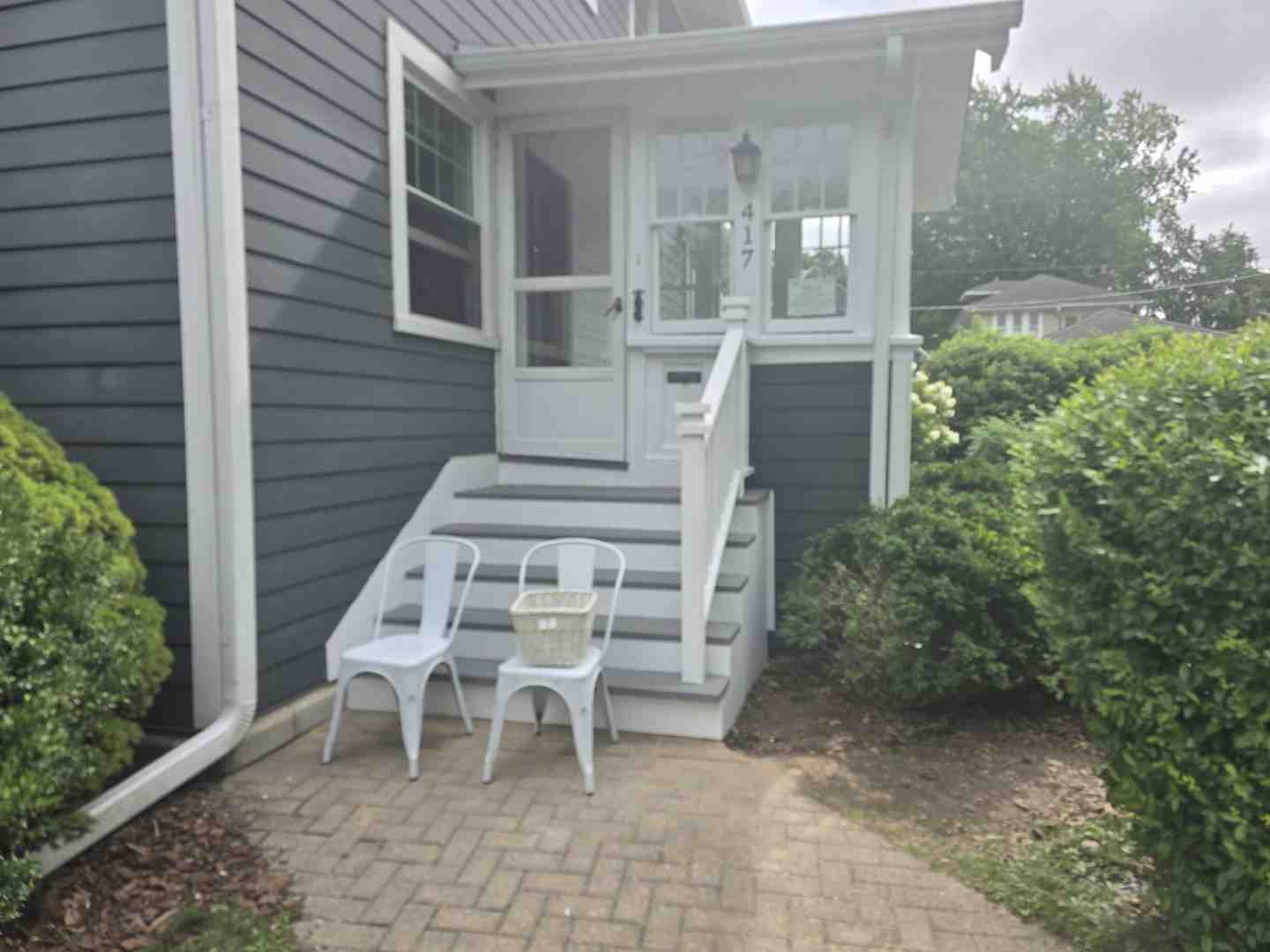
Where Exterior Gloss Paint Works Best
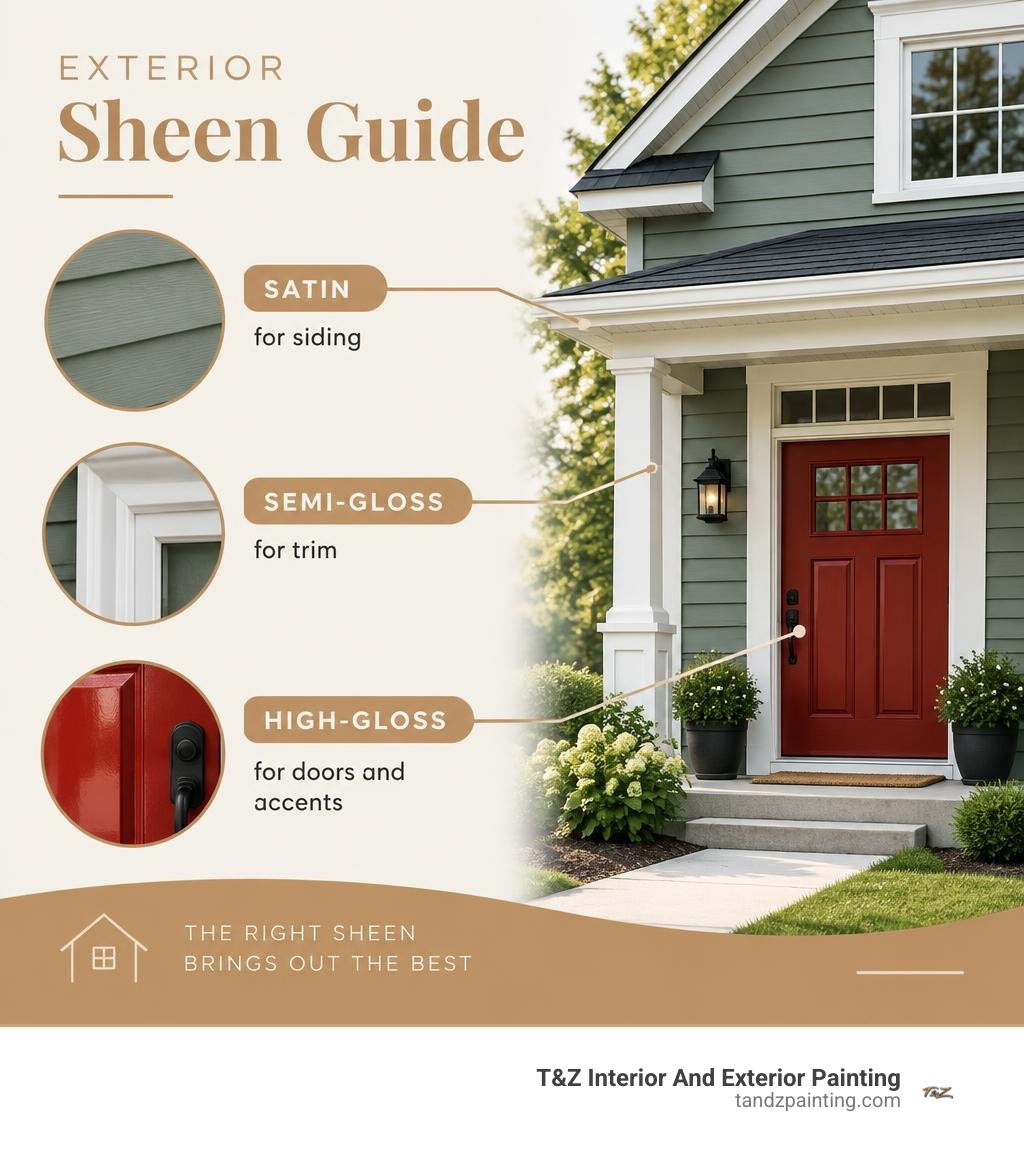
Choose exterior gloss paint for doors, trim, and other details you want to stand out. High-gloss is easy to clean, but it also shows dents and uneven surfaces. For broad siding walls, satin is often a better choice; semi-gloss offers a middle ground for trim with a softer shine. Whatever sheen you choose, use paint rated for exterior use and prepare the surface well.
I’m Tomasz Niemotko of T&Z Interior And Exterior Painting. For more than 13 years, I’ve worked on residential and commercial painting projects in Lombard and nearby towns, including exterior gloss paint for home details.
Exterior gloss paint terms at a glance:
Understanding Exterior Sheens and Where Gloss Performs Best
Selecting the right sheen for your home facade requires balancing visual appeal with physical durability. The sheen level of a paint is determined by its ratio of resin binders to pigments. Higher sheen levels contain higher concentrations of resin, resulting in a tight, non-porous film that naturally repels water, resists dirt pickup, and reflects a high percentage of ambient light.

When developing a cohesive exterior palette, high-gloss and semi-gloss finishes serve as powerful design tools. They draw the eye directly to key architectural features such as front entry doors, window sashes, decorative moldings, shutters, and porch railings. Because these areas experience frequent hand contact, foot traffic, or direct exposure to driving rain, the impermeable barrier created by a gloss finish prevents moisture from penetrating the underlying wood or masonry. To explore how sheen levels interact across your home, consult our paint sheens 101 guide to choosing the right finish.
Pros and Cons of Exterior Gloss Paint for Trim and Siding
Before coating large exterior sections, homeowners should weigh the functional benefits against the aesthetic trade-offs.
- Exceptional Durability and Moisture Resistance: The high resin content forms a glass-like shell that sheds rainwater and resists the growth of mold and mildew in shaded exterior corners.
- Superior Washability: Dirt, pollen, and mud splatters can be rinsed away with a garden hose and mild detergent without degrading the underlying paint film.
- Enhanced Color Depth and Curb Appeal: Gloss finishes intensify pigment saturation, making deep blacks, bold reds, and rich navy blues look vibrant under natural sunlight.
- Surface Imperfection Magnification: Because gloss reflects direct light, any rough grain, improper sanding, nail indentations, or warped siding boards will be highlighted clearly.
- Demanding Surface Preparation: Gloss paints require meticulous priming, leveling, and scuff-sanding to achieve a smooth, mirror-like appearance.
For a deeper dive into evaluating your architectural substrates, review our guide on when to gloss exterior surfaces.
When to Choose Semi-Gloss vs. High-Gloss
While both finishes fall on the upper end of the reflectivity scale, semi-gloss and high-gloss serve distinct roles on a home’s exterior:
- Semi-Gloss (35% to 70% Sheen): Semi-gloss strikes an optimal balance between stain resistance and aesthetic softness. It provides enough shine to highlight architectural lines on fascia boards, soffits, garage doors, and exterior door casings without drawing attention to minor substrate imperfections. Formulations such as BEHR ULTRA Exterior Semi-Gloss Enamel offer excellent dirt pick-up resistance and durability for high-wear exterior surfaces.
- High-Gloss (70% to 90%+ Sheen): High-gloss delivers maximum light reflection and a polished, mirror-like finish. It is best reserved for focal elements such as grand front entry doors, decorative metal railings, and historic shutters where a dramatic visual statement is desired.
To find the ideal sheen for your specific moldings and millwork, see our guide on what sheen is best for trim paint.
Choosing the Right Exterior Gloss Paint: Water-Based vs. Oil-Based Formulations
Modern paint manufacturing offers three primary resin vehicles for exterior gloss applications: 100% acrylic latex, hybrid waterborne alkyds, and traditional solvent-based alkyds.
| Feature / Metric | 100% Acrylic Latex Gloss | Waterborne Alkyd Enamel | Traditional Oil-Based Alkyd |
|---|---|---|---|
| Resin Type | 100% Acrylic Polymer | Emulsified Alkyd Resin | Solvent-Borne Alkyd Resin |
| Dry to Touch | 1 to 2 hours | 4 to 6 hours | 4 to 6 hours |
| Recoat Window | 2 to 4 hours | 16 hours | 24 hours |
| VOC Content | Ultra-Low (< 50 g/L) | Low (< 50 g/L) | High (Often > 250 g/L) |
| Flexibility | High (Thermal expansion) | Moderate to High | Low (Becomes brittle over time) |
| Yellowing Resistance | Excellent (Non-yellowing) | High | Poor (Prone to ambering in shade) |
| Cleanup Solvent | Warm water and soap | Warm water and soap | Mineral spirits / Paint thinner |
Acrylic Latex and Waterborne Alkyds
Water-based acrylic paints are the industry standard for broad exterior residential surfaces. Acrylic polymers maintain molecular flexibility over their lifespan, allowing the paint film to expand and contract with the wood or siding through extreme seasonal temperature swings. Additionally, acrylic formulations are non-yellowing, resistant to UV degradation, and meet strict environmental and indoor-air VOC regulations.
Waterborne alkyds, such as Advance High Gloss Enamel, bridge the gap between water and oil chemistries. They emulsify alkyd resins within a water carrier, delivering the superior leveling, open time, and cured hardness of traditional oil paint while cleaning up easily with standard soap and water.
Traditional Oil-Based (Alkyd) Enamels
Solvent-based alkyd paints cure through chemical oxidation rather than simple water evaporation. This process produces an exceptionally hard, abrasion-resistant surface with outstanding natural self-leveling properties that eliminate brush marks. Oil-based enamels excel on exterior cast iron railings, metal gates, and weathered, tannin-rich wood trim. However, traditional alkyds become brittle over years of sun exposure, require mineral spirits for tool cleanup, and face increasing regulatory restrictions due to elevated volatile organic compounds (VOCs).
For projects requiring specialized coating chemistries on commercial or residential trims, selecting high quality paints guarantees maximum adhesion and color retention.
Step-by-Step Application, Coverage, and Drying Dynamics
Achieving a showroom finish on exterior features requires careful planning of material coverage, application tools, and curing windows.
Standard exterior gloss enamels provide a spread rate of 250 to 400 square feet per gallon, depending on surface porosity, texture, and application method. Rough-sawn lumber or porous masonry will consume significantly more paint than smooth, pre-primed composite millwork.
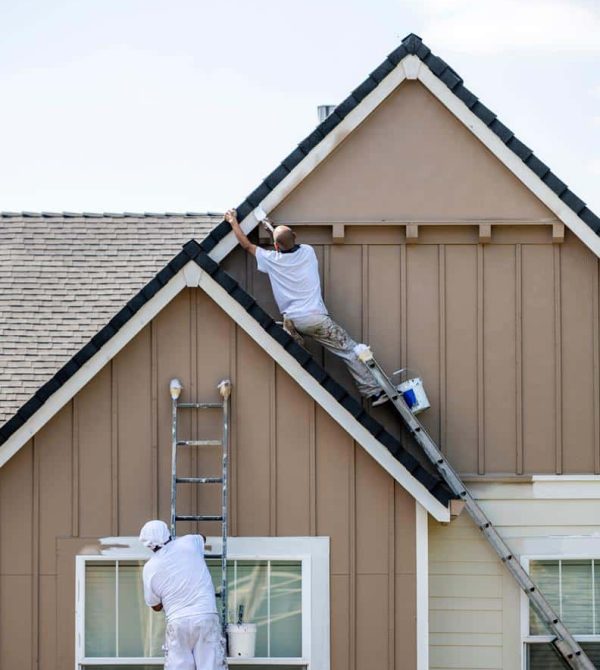
When applying high-sheen coatings, tool selection is paramount:
- Brushes: Use synthetic nylon/polyester blend brushes for water-based acrylics and waterborne alkyds; reserve natural China bristle brushes for solvent-based alkyd enamels.
- Rollers: For flat doors or panels, select a high-density foam roller or a short 1/4-inch to 3/8-inch microfiber nap to avoid creating an orange-peel texture.
- Sprayers: Professional airless sprayers equipped with fine-finish tips (such as .013 to .015 inches at 1,500 to 2,000 PSI) produce a flawless, factory-smooth layer free of hand tool marks.
For homeowners seeking flawless execution without the stress of specialized equipment, our expert exterior painting services ensure professional craftsmanship on every architectural detail.
Surface Preparation Steps for Long-Lasting Exterior Gloss Paint
Because a high-sheen finish reflects every underlying dent, gouge, or ridge, comprehensive surface preparation is essential.
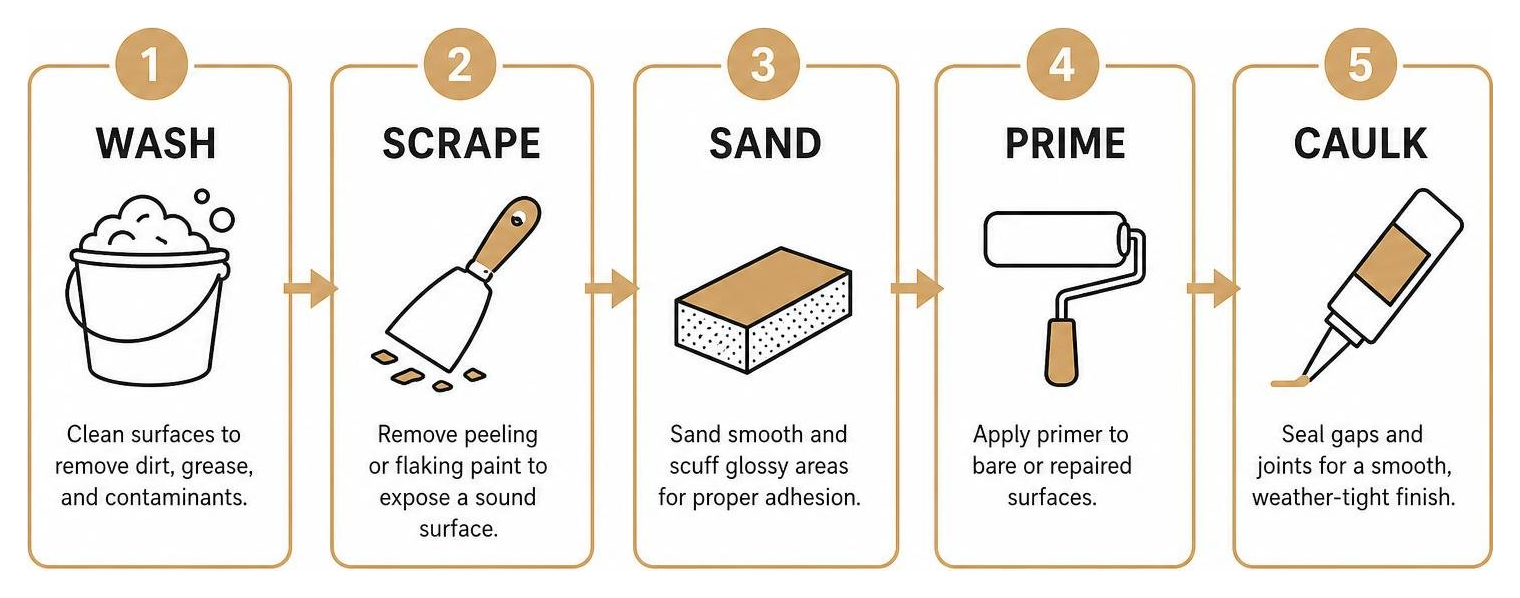
- Decontamination and Washing: Wash all surfaces using an exterior cleaner or low-pressure power wash to eliminate grease, road film, chalking, and airborne pollutants.
- Mildew Eradication: Treat any biological growth with a dedicated mildewcide solution; painting over active mildew causes premature adhesion failure.
- Mechanical Scraping and Sanding: Scrape away all peeling, flaking, or bubbled paint down to a sound substrate. Feather all transition edges smooth using 80-grit followed by 120-grit sandpaper.
- De-Glossing Existing Coatings: Scuff-sand existing intact glossy finishes using 150-to-220-grit abrasives to create a microscopic profile (mechanical tooth) that ensures intermediate coat bonding.
- Targeted Priming: Apply a high-grade exterior primer over bare wood, exposed metal, or repaired patches. Tannin-rich woods (like cedar or redwood) require a stain-blocking primer to prevent extractive bleeding.
- Sealing and Caulking: Fill all open joints, seams, and nail holes with a premium exterior elastomeric acrylic caulk after priming to prevent water infiltration behind the trim.
To review an in-depth breakdown of substrate remediation, read our comprehensive guide on how to prepare a house exterior for painting.
Application Methods, Dry Times, and Cure Windows
Understanding the difference between “dry time” and “cure time” protects your fresh gloss paint from accidental damage:
- Dry to Touch (1 to 4 Hours): The paint surface has evaporated enough carrier liquid that it can be lightly handled without transferring color.
- Recoat Window (2 to 16 Hours): The intermediate stage where a second coat can be safely applied without lifting or wrinkling the initial film. Acrylics can often be recoated in 2 hours, whereas waterborne alkyds require 16 hours.
- Full Cure (14 to 30 Days): The physical and chemical cross-linking process where the paint film achieves its maximum pencil hardness, scrub resistance, and water repellency. Avoid aggressive washing during this critical curing phase.
Environmental conditions heavily dictate drying dynamics. The ideal application window is between 50°F and 90°F with relative humidity between 40% and 70%. Never apply exterior gloss coatings in direct, blistering midday sun (which causes flash-drying and lap marks) or when rain, heavy fog, or dew is expected within 12 hours. For seasonal planning advice, consult our resource on the best month and weather conditions to paint.
Longevity, Environmental Factors, and Long-Term Maintenance
When applied over properly prepared surfaces using premium materials, exterior gloss paint systems offer an impressive service life of 6 to 10 years before requiring recoating. The resin-dense film stands up against wind-driven rain, atmospheric moisture, and extreme UV exposure far better than flat or matte alternatives.
To maximize the lifespan of your exterior gloss finishes, establish a routine maintenance schedule:
- Annual Low-Pressure Rinsing: Once a year, rinse trim, entry doors, and shutters with a standard garden hose to remove accumulated dust, salt, and organic matter.
- Gentle Hand Washing: For stubborn grime, wash the surface using a soft microfiber cloth or sponge paired with a pH-neutral mild dish soap. Never use abrasive scouring pads, harsh wire brushes, or high-pressure power washer tips held close to gloss paint, as these can micro-scratch the finish and dull its reflective shine.
- Vegetation Management: Trim back shrubs, tree branches, and climbing vines at least 12 to 18 inches away from painted trim to maintain airflow and prevent physical abrasion.
- Safe Solvent and Paint Disposal: When working with alkyd paints and thinners, never pour solvent residues down household drains or municipal storm sewers. Allow leftover water-based paint to dry out completely with paint hardener before disposal, and transport solvent-laden rags and mineral spirits to an authorized local household hazardous waste collection facility.
For additional insight into protecting your structural substrates from moisture damage, review our guide on waterproofing surface preparation.
Frequently Asked Questions about Exterior Gloss Finishes
Can you use exterior gloss paint on entire siding walls?
While technically possible, applying high-gloss paint to entire siding walls (such as cedar lap, vinyl, or fiber cement) is rarely recommended. Siding spans large surface areas where natural substrate undulations, framing imperfections, and thermal expansion joints exist. High-gloss finishes reflect light uniformly, turning minor texture variations into glaring visual flaws. For exterior walls, satin, low-luster, or flat finishes provide a refined appearance while hiding substrate irregularities.
How do you clean and maintain exterior gloss painted surfaces without dulling the shine?
To protect the reflective sheen of your exterior gloss enamel, avoid abrasive cleaners, ammonia-based chemicals, and stiff-bristle brushes. Instead, mix a few drops of mild household dish soap into a bucket of warm water. Apply the solution with a soft sponge or microfiber wash mitt, gently wiping away grime and atmospheric dirt. Rinse thoroughly with clean water from a garden hose on a low-pressure spray setting.
Do you need a special primer before applying exterior gloss enamel?
Yes, applying a dedicated primer is critical when working with gloss finishes. Gloss paints require an exceptionally uniform, non-porous base to prevent uneven sheen banding (flashing). When painting over bare wood, an exterior stain-blocking primer seals natural tannins. When transitioning over existing high-gloss surfaces or old oil-based paint, an exterior bonding primer ensures the new coating adheres securely without chipping or peeling.
Elevate Your Home Exterior with T&Z Painting
Enhancing your home with durable, light-reflective exterior gloss paint brings unmatched curb appeal and lasting weather protection to your front doors, shutters, window trims, and architectural accents. At T&Z Interior And Exterior Painting, we take immense pride in delivering expert craftsmanship, meticulous surface preparation, and pristine finishes on every project.
With over 15 years of industry experience, our fully licensed and insured team serves homeowners across Lombard, Itasca, Addison, Glen Ellyn, Oak Brook, and surrounding communities. Whether you are looking to refresh faded exterior millwork or complete a comprehensive whole-home transformation, our 5.0 Google Reviews rating reflects our unwavering commitment to clean, reliable, and detail-oriented service. Explore professional interior and exterior painting solutions with our specialists today and bring lasting elegance to your property.