
What Experienced Exterior Painters Evaluate in 2026
A successful exterior painting project starts with a clear understanding of the home, the surfaces, and the preparation required for a durable finish. Professional painting contractors evaluate total paintable surface area, siding material, architectural height, substrate condition, and the level of surface preparation needed before application begins.
The key distinction lies in evaluating the paintable surface. While your home’s interior footprint provides a baseline for understanding general size, professional painters assess vertical wall elevations, gables, dormers, eaves, fascia, and architectural trim that require specialized ladder work or staging. Homes with peeling paint, weathered siding, or multi-story access require experienced crews and rigorous preparation.
Most of the quality in an exterior painting project comes from skilled craftsmanship and meticulous surface preparation rather than paint application alone. Pressure washing, scraping, sanding, caulking, minor repairs, spot priming, and masking landscape features directly determine the durability and longevity of the finish.
I am Tomasz Niemotko of T&Z Interior And Exterior Painting. With more than 15 years serving homeowners in Lombard, Itasca, Addison, Glen Ellyn, Oak Brook, and surrounding towns, I have seen that the best exterior results start with an in-person assessment, a thorough preparation plan, and a transparent scope of work.
Helpful resources from T&Z:
- exterior painting service complete guide
- exterior painting project planning
- choosing exterior home painting services
Project Scope: How Professionals Evaluate Exterior Painting Work
Professional exterior painting scopes are built around the total paintable surface area and the structural condition of the substrate. When contractors assess a home, they look at paintable wall area rather than just interior floor plans.
Exterior square footage factors in vertical wall heights, peaks, gables, dormers, fascia boards, soffits, and window trims, minus non-painted openings. Professional standards also account for trade experience, workers’ compensation, commercial liability insurance, and the equipment needed to complete the project safely and consistently.
Homeowners researching what painters charge for exterior painting should understand how surface condition affects the work plan. Our resource on exterior painting project planning explains why surface preparation is the primary factor that determines the complexity of an exterior painting project.
| Preparation Level | Surface Condition | Typical Scope of Work Included |
|---|---|---|
| Tier 1: Basic Repaint | Sound, well-maintained substrate | Gentle pressure washing, minimal scraping of light flaking, single or two-coat color match application on stable surfaces. |
| Tier 2: Standard Prep | Moderate weathering and light peeling | Full power wash, thorough scraping of loose paint, mechanical edge feathering/sanding, joint caulking, spot priming bare spots, two topcoats. |
| Tier 3: Extensive Restoration | Severe peeling, cracking, or bare wood | Intensive scraping down to sound substrate, widespread sanding, full specialty primer, extensive caulking, wood stabilization, multi-coat application. |
How Home Size and Stories Affect the Exterior Painting Scope
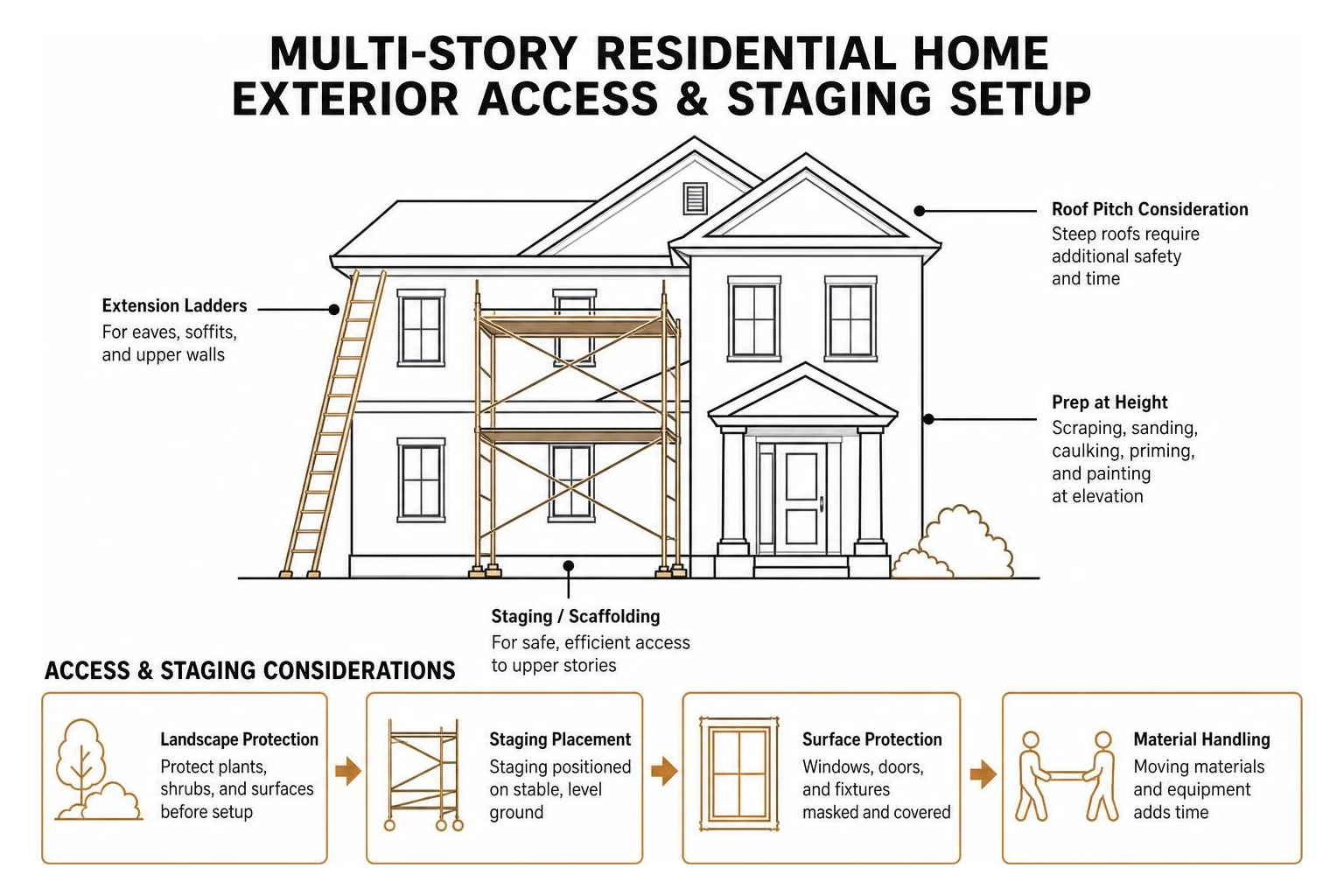
Single-story ranch homes typically require less staging and fewer ladder transitions, allowing crews to work efficiently at ground level. In contrast, multi-story residences require specialized staging, extension ladders, and safety practices to navigate peaks, dormers, and steep rooflines safely.
The difference in assessing multi-story properties comes down to access complexity. Moving heavy staging across landscaped beds, working around steep roof pitches, and carrying out scraping and sanding at elevation takes significantly more coordination than working at ground level. Contractors account for height and access equipment to ensure complete safety and precision above ground level.
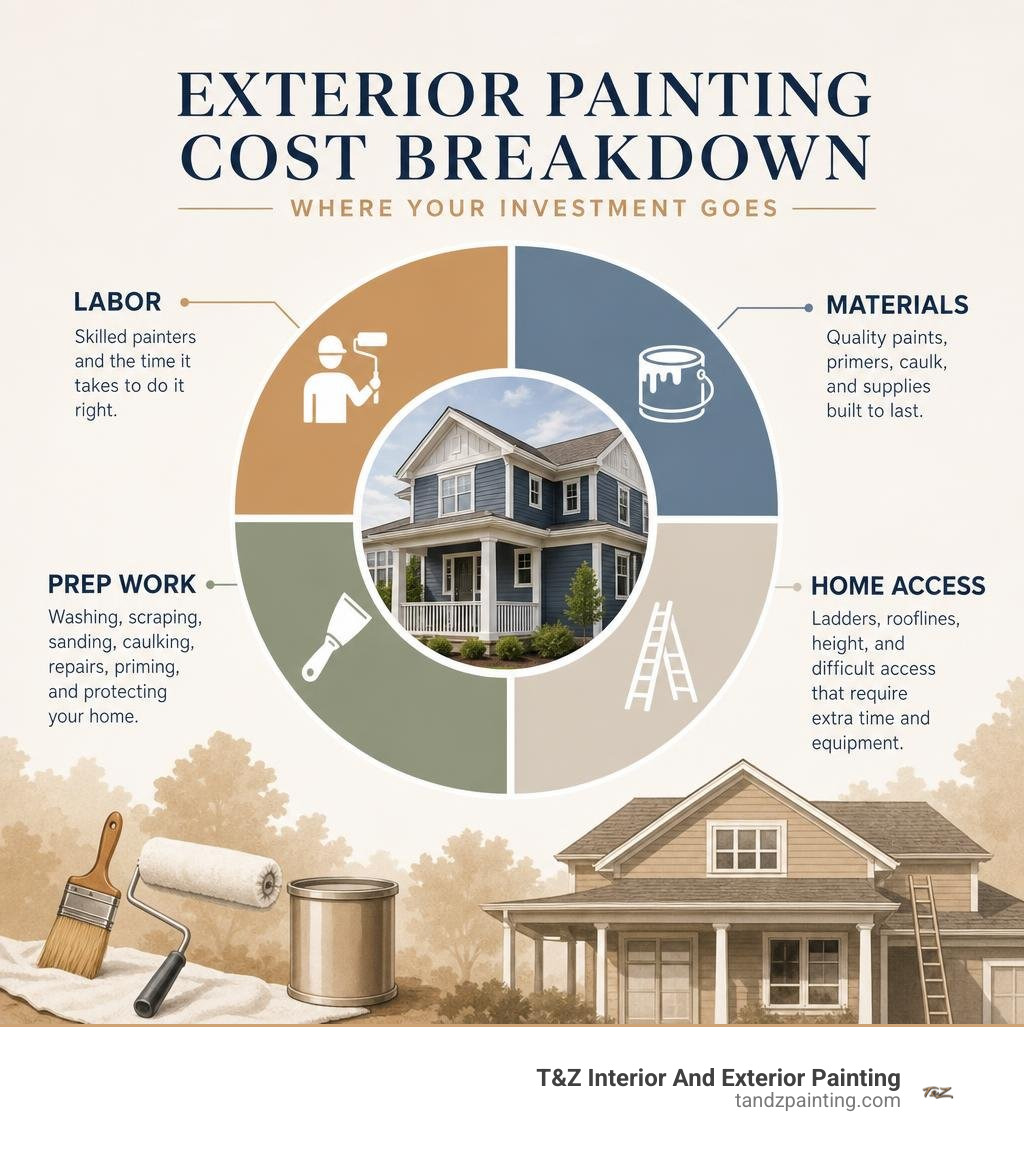
Labor, Materials, and Professional Standards
Homeowners are often surprised by how many professional steps are included in a complete exterior painting project:
- Skilled Labor: Covers on-site crew time dedicated to pressure washing, detailed hand scraping, orbital sanding, masking windows, applying exterior-grade caulking, priming bare substrate, and applying the finish coats.
- Paint and Specialty Materials: Encompasses premium 100% acrylic latex or elastomeric topcoats, bonding primers, specialty masonry sealers, elastomeric caulks, masking film, drop cloths, and tape.
- Contractor Overhead and Protection: Covers professional spray rigs, staging systems, comprehensive liability and workers’ comp insurance policies, vehicle fleet maintenance, and warranty support.
Because skilled craftsmanship represents the foundation of an exterior project, differences between contractors usually reflect differences in planned preparation, crew training, equipment, and workmanship standards.
Key Factors That Shape Exterior Painting Project Scope
No two homes present identical project requirements. Complex architectural features like ornate trim moldings, multi-pane window grids, decorative corbels, wrap-around porches, and high gables slow application speeds and require more detailed handwork than simple, flat elevations.

How Siding Types Affect Exterior Painting Requirements
Different siding substrates absorb paint and weather in distinct ways, directly influencing material choices and labor time:
- Wood Siding: Cedar shake, clapboard, and pine require substantial hand preparation. Weathered wood needs thorough scraping, sanding to feather hard edges, and an oil- or acrylic-based stain-blocking primer to help prevent tannin bleed.
- Brick Painting: Exterior masonry is porous and requires deep cleaning, mortar inspection, and a specialized breathable masonry primer followed by elastomeric or mineral paint systems to allow internal moisture vapor to escape.
- Stucco Surfaces: Textured stucco demands higher paint volume due to its rough profile. It often requires elastomeric masonry coatings to bridge hairline cracks and seal out wind-driven rain.
- Vinyl and Aluminum Siding: Vinyl requires deep cleaning to remove chalky oxidation. Paints must be formulated with vinyl-safe color technology to help prevent panel warping under direct sunlight.
- Fiber Cement: Factory-primed fiber cement provides a stable, uniform surface, requiring standard cleaning, caulking of butt joints, and premium exterior acrylic latex.
The Critical Role of Prep Work and Surface Condition
Surface preparation represents the single most important phase of any exterior paint job. Paint cannot bond properly to weathered, chalking, or decaying surfaces.
- Power Washing: Removes airborne pollutants, mildew, chalking, and dirt to create a clean surface for paint adhesion.
- Scraping and Mechanical Sanding: Eliminates failing paint layers and feathers hard paint ridges smooth so they do not show through the final finish.
- Sealing and Caulking: High-grade elastomeric caulking seals expansion joints, window casings, door frames, and corner boards to block water infiltration.
- Spot Priming: Seals exposed, bare wood and porous masonry surfaces to establish a uniform foundation for topcoats.
Our guide on preparing a house for painting outlines these exact structural steps.
Regional Climate and Local Workmanship Needs
Local climate conditions significantly affect exterior painting requirements. In the Chicago suburbs, exterior coatings must stand up to humid summers, cold winters, wind-driven rain, and repeated freeze-thaw cycles.
Climate also determines material requirements and ideal application schedules:
- In regions with severe freeze-thaw cycles and humid summers, coatings must provide high elasticity and exceptional moisture resistance to withstand thermal expansion and contraction without cracking.
- High-UV exposures require paints with advanced UV-resistant pigments to reduce premature chalking and fading on exposed south- and west-facing elevations.
- Selecting the right weather window is critical; our resource on the best time to paint your home exterior explains why stable temperatures between 50 F and 85 F support proper curing.
Professional Painting vs. DIY: Weighing Quality and Safety
When planning an exterior painting project, homeowners often evaluate handling the work independently versus hiring a licensed professional crew:
- DIY Scope: Requires purchasing exterior paint, primers, caulking, masking products, pressure washing equipment, brushes, rollers, extension ladders, and safety harnesses.
- Professional Services: Includes commercial-grade materials, specialized spray rigs, heavy-duty staging systems, rigorous safety protocols, experienced trade painters, and comprehensive workmanship warranty protection.
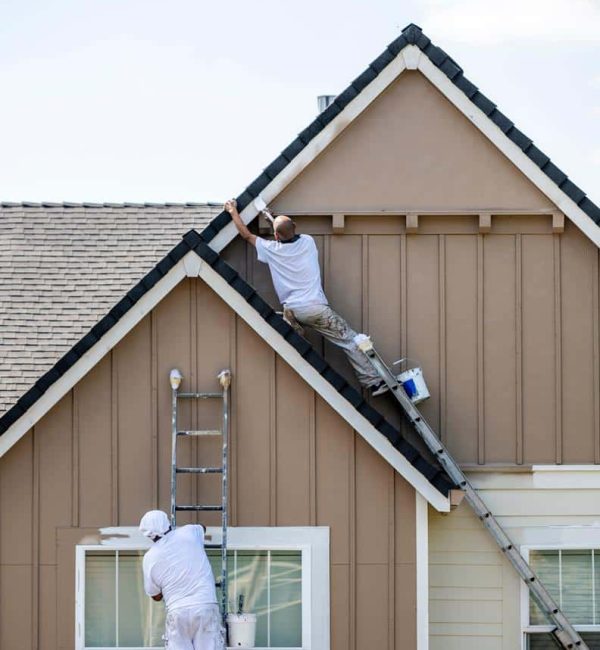
Beyond equipment acquisition, safety and time commitments are critical factors. Handling exterior painting on a multi-story home independently can require weeks of dedicated evenings and weekends on tall ladders. By contrast, an experienced professional crew equipped with commercial airless sprayers and scaffolding can complete the project efficiently while achieving a uniform, enduring finish.
For more details on professional project standards, explore our exterior painting service complete guide.
How to Evaluate Contractor Scopes and Project Quality
Securing exceptional results requires comparing contractors on an equal, transparent footing. Reviewing more than one written scope allows homeowners to examine preparation standards, product specifications, safety practices, and workmanship expectations before a project begins.
Review our straightforward approach to clear exterior painting project scopes and use the checklist below to verify every professional plan:
- Precise Surface Measurements: Clear notation of paintable square footage or detailed architectural elevations rather than vague descriptions.
- Itemized Surface Preparation: Specific line items outlining pressure washing, scraping intensity, sanding methods, primer types, and caulking coverage.
- Material Specifications: Exact paint manufacturer, product line such as premium 100% acrylic, sheen level, and stated number of coats.
- Rot Repair Scope: Explicit protocols for repairing or replacing weathered trim and damaged siding discovered during preparation.
- Cleanliness and Property Protection: Dedicated measures for protecting landscaping, lighting fixtures, concrete flatwork, and roofing.
- Structured Project Schedule: A clear schedule tied directly to project phases, such as preparation, priming, finish application, cleanup, and final walkthrough.
- Licensing and Insurance: Current certificates for general liability and workers’ compensation coverage, along with a written workmanship warranty.
Frequently Asked Questions About Exterior House Painting
How often should you repaint your home exterior?
Most homes need repainting every 6 to 12 years. The exact timeline depends on your siding material, the quality of previous surface preparation, paint grades used, and your home’s exposure to sun and moisture. Siding on south- and west-facing walls often shows chalking, hairline cracking, or peeling first, signaling that the protective paint film is failing and needs maintenance before substrate damage occurs.
How long does a professional exterior paint job take?
A professional team of 3 to 4 painters typically completes an average-sized residential exterior in 3 to 7 working days. Project duration depends on overall square footage, architectural complexity, the extent of scraping and caulking required, and local weather conditions. Adequate drying intervals between primer and topcoats are essential to achieve proper film curing and long-term durability.
What should be reviewed before exterior painting begins?
Before work begins, review the written scope of work, surface preparation steps, primer and paint specifications, property protection plan, project schedule, insurance documentation, and workmanship warranty. A final walkthrough should confirm that prep work, application, cleanup, and touchups meet the agreed project standards.
Conclusion
Planning an exterior house painting project requires looking beyond simple square footage to account for surface condition, architectural detail, and the craftsmanship invested in surface preparation. Quality preparation and premium coatings protect your home against the elements, enhance curb appeal, and preserve property value for years to come.
At T&Z Interior And Exterior Painting, our professional team brings more than 15 years of dedicated residential and commercial painting experience to every project. We maintain an uncompromised 5.0 Google Reviews rating and operate as fully licensed and insured painting contractors. We proudly deliver beautiful results to homeowners throughout Lombard, Itasca, Addison, Glen Ellyn, Oak Brook, and the surrounding Chicago suburban communities.
When you are ready to protect and enhance your home, request a detailed exterior painting service consultation with our experienced team to receive a comprehensive written project plan tailored to your home.