
Why Homeowners Are Choosing to Repaint Vinyl Siding — And What You Need to Know First
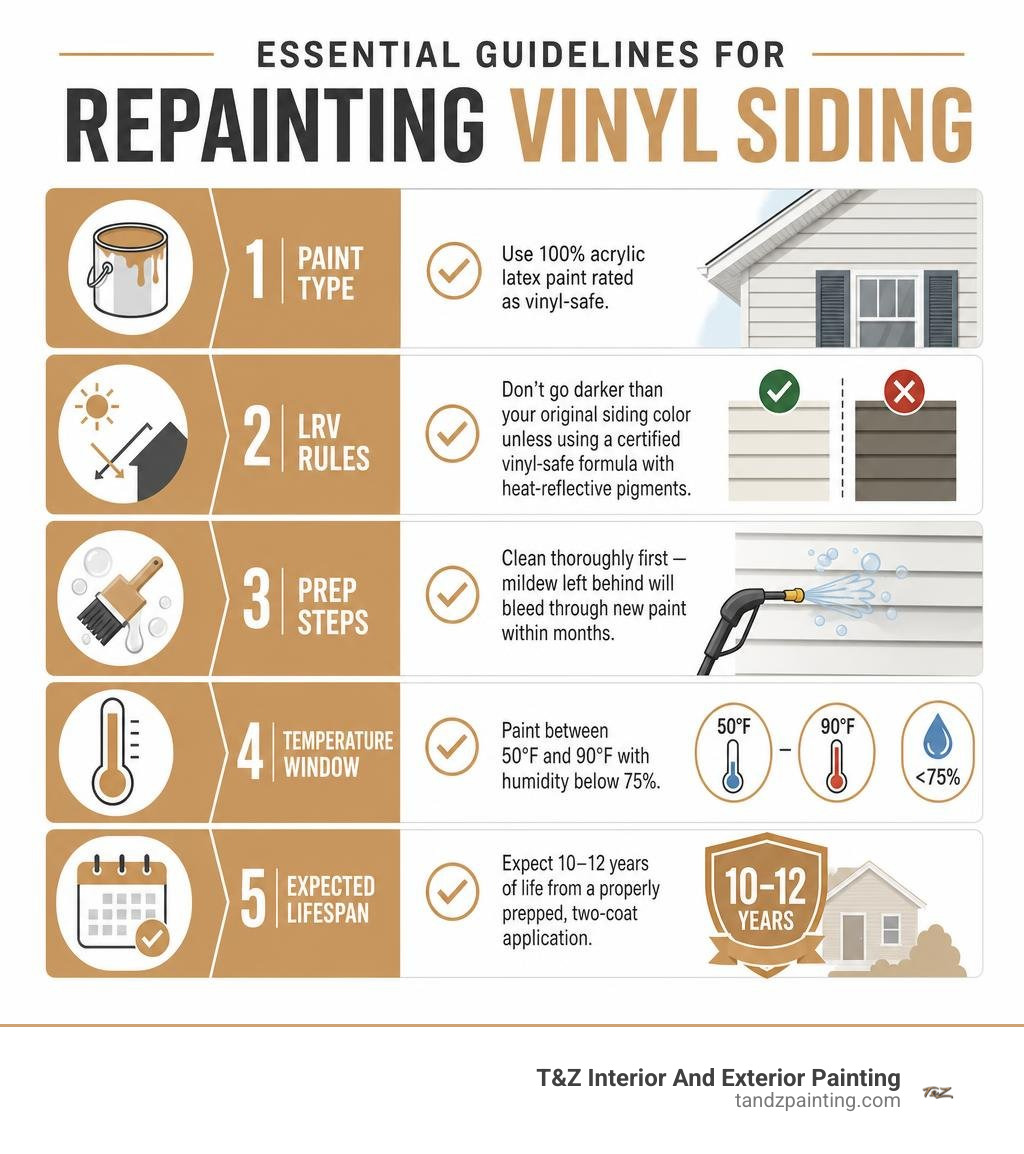
Want the short answer on how to repaint vinyl siding? Here’s what matters most:
- Use 100% acrylic latex paint rated as vinyl-safe — no oil-based products
- Don’t go darker than your original siding color unless you’re using a certified vinyl-safe formula with heat-reflective pigments
- Clean thoroughly first — mildew left behind will bleed through new paint within months
- Paint between 50°F and 90°F with humidity below 75%
- Expect 10–12 years of life from a properly prepped, two-coat application
According to the Vinyl Siding Institute, more than 32% of U.S. homes are clad in vinyl siding — and a large share of those homes were built between 1985 and 2010. That means millions of houses are now showing the classic signs of aging vinyl: chalking, fading, and colors that simply feel dated.
The good news? Repainting is absolutely possible — and for most homes, it’s a smart way to restore curb appeal and surface protection without a full replacement.
But vinyl isn’t like wood or fiber cement. It moves. It absorbs heat. And the wrong paint choice or a rushed prep job can cause peeling, warping, or worse — a voided manufacturer warranty. Getting it right means understanding a few rules before you ever open a can.
I’m Tomasz Niemotko, owner of T&Z Interior and Exterior Painting in Lombard, IL, and over 15 years of professional exterior painting experience — including countless vinyl siding projects across the Lombard area — has taught me exactly where homeowners go wrong when they try to repaint vinyl siding. In the sections below, I’ll walk you through everything you need to do it right.
Easy repaint vinyl siding word list:
Understanding Vinyl Siding: Rules, LRV, and Thermal Expansion
Before diving into rollers, brushes, and paint formulas, it helps to understand why vinyl requires a specialized approach compared to other exterior substrates. Vinyl paneling is composed of Polyvinyl Chloride (PVC), a durable material engineered to withstand weather elements, but one that expands and contracts dramatically as outdoor temperatures fluctuate throughout the year.
In regions like Chicagoland — with scorching summer humidity and freezing winter winds across communities like Elmhurst, Wheaton, and Downers Grove — a standard 12-foot vinyl panel can expand and contract by up to half an inch annually. Coatings applied to this surface must possess exceptional flexibility to move alongside the panel without cracking or losing adhesion.
The single biggest technical hurdle when you repaint vinyl siding revolves around heat absorption. Every paint color possesses a rating known as Light Reflectance Value (LRV), measured on a scale from 0 (absolute black, absorbing all light and heat) to 100 (pure white, reflecting all light and heat).
When traditional, non-specially formulated paint is applied in a shade darker than the original factory siding color, the dark pigments absorb excessive solar radiation. Standard vinyl panels reach their thermal deflection point — the threshold where PVC softeners break down and cause permanent buckling or warping — at approximately 165°F. On a sunny afternoon in mid-summer, a south-facing wall painted with a traditional dark coating can easily hit 180°F.
To solve this problem, paint manufacturers developed vinyl-safe formulas using heat-reflective inorganic pigments. These high-tech formulas allow homeowners to select modern mid-tone or deeper shades without transferring heat into the substrate.
Before selecting paints or colors, check manufacturer documentation and home insurance terms. Major siding brands like CertainTeed, Mastic, and Royal often contain original warranty clauses regarding topcoat applications, and home insurance coverage during partial weather damage claims can be affected if improper coatings cause structural distortion. Reviewing our Expert Tips for Stunning Exterior House Painting in 2026 can help guide your color strategy while keeping your home protected.
| Feature / Risk Factor | Vinyl-Safe Paint Formulas | Standard Exterior Acrylic Paint |
|---|---|---|
| Pigment Technology | Heat-reflective inorganic pigments | Standard heat-absorbing organic pigments |
| LRV Restrictions | Safe for darker shades (LRV down to ~35-40) | Restricted to original color shade or lighter (LRV ≥ 55) |
| Thermal Distortion Risk | Prevents panels from exceeding 165°F threshold | High risk of panels reaching 180°F, leading to warping |
| Coating Flexibility | Formulated for continuous thermal expansion | May become brittle or peel under heavy expansion |
| Adhesion Mechanism | Direct-to-substrate cross-linking resins | Standard mechanical grip (may require separate primer) |
When to Repaint Vinyl Siding vs. Replace Panels
Not every home with older siding is a candidate for fresh paint. Recognizing whether your exterior requires a surface update or structural panel replacement ensures you spend your time and budget wisely.
When vinyl siding reaches the 15 to 25-year milestone, solar UV exposure degrades the factory finish, creating a powdery chalk residue on the surface known as oxidation. As long as the underlying PVC panel remains structurally sound, full surface restoration with paint is ideal. Refinishing sound vinyl seals the weatherworn surface and restores complete moisture protection.
However, physical degradation signals that replacement is necessary. Over time, plasticizers leach out of older vinyl formulations, leaving the panels brittle. If pressing firmly on a hidden bottom edge causes the panel to crack or break like a potato chip, or if panels display extensive storm impact holes, extreme heat warping, or severe substrate rot behind the cladding, repainting will not restore strength. In those scenarios, full replacement is the appropriate path. For homes with intact structure and sound cladding, exploring our comprehensive Exterior Painting Service Complete Guide will show how professional refinishing restores beauty and strength.
Selecting the Right Paint Formulas and Primers

Choosing the correct coating chemistry is the difference between a pristine exterior that lasts over a decade and a peeling mess that strips off within three seasons.
Never use oil-based, alkyd, or solvent-reduced paints on vinyl siding. Oil-based formulas dry into a rigid, non-flexible film. When the underlying vinyl panel expands during summer warmth or shrinks in winter cold, rigid oil paint cannot flex. The bond snaps, resulting in widespread cracking, flaking, and total adhesion failure.
The gold standard for repainting vinyl siding is high-grade 100% acrylic latex paint incorporating proprietary urethane resins. Premium 100% acrylic paints offer outstanding elasticity, superior adhesion to non-porous surfaces, and high resistance to fading caused by harsh UV exposure. Urethane additives enhance tough physical resistance, keeping the finish intact through hail storms, wind-driven rain, and heavy lawn care activity.
A common question homeowners ask is whether a dedicated primer coat is mandatory. In most instances where vinyl panels are sound, mildly weathered, and thoroughly cleaned, modern direct-to-substrate 100% acrylic coatings perform as self-priming systems. They form a permanent bond without needing a separate primer.
However, a dedicated bonding primer is necessary under three specific structural conditions:
- Severe Weathering or Surface Pitting: If years of sun exposure have deeply eroded the factory texture, an exterior acrylic bonding primer fills micro-pores and unifies surface porosity.
- Persistent Surface Chalking: If heavy oxidation remains after thorough cleaning, applying a specialized chalk-binding primer locks down remaining microscopic dust before applying topcoats.
- Bare Unfinished Repairs: If you have patched panels or installed new unprimed replacement sections alongside existing siding, spot-priming ensures even absorption.
To dive deeper into surface coatings and preparation, read this practical guide on How to Paint Vinyl Siding alongside our resource on High Quality Paints.
Step-by-Step Guide: How Professionals Repaint Vinyl Siding
Achieving a smooth, factory-grade finish on vinyl panels requires a disciplined application method. Professional exterior crews rely on precise tool settings, optimal weather timing, and proper mechanical techniques to ensure maximum paint adhesion.
Step 1: Monitor Weather and Application Windows
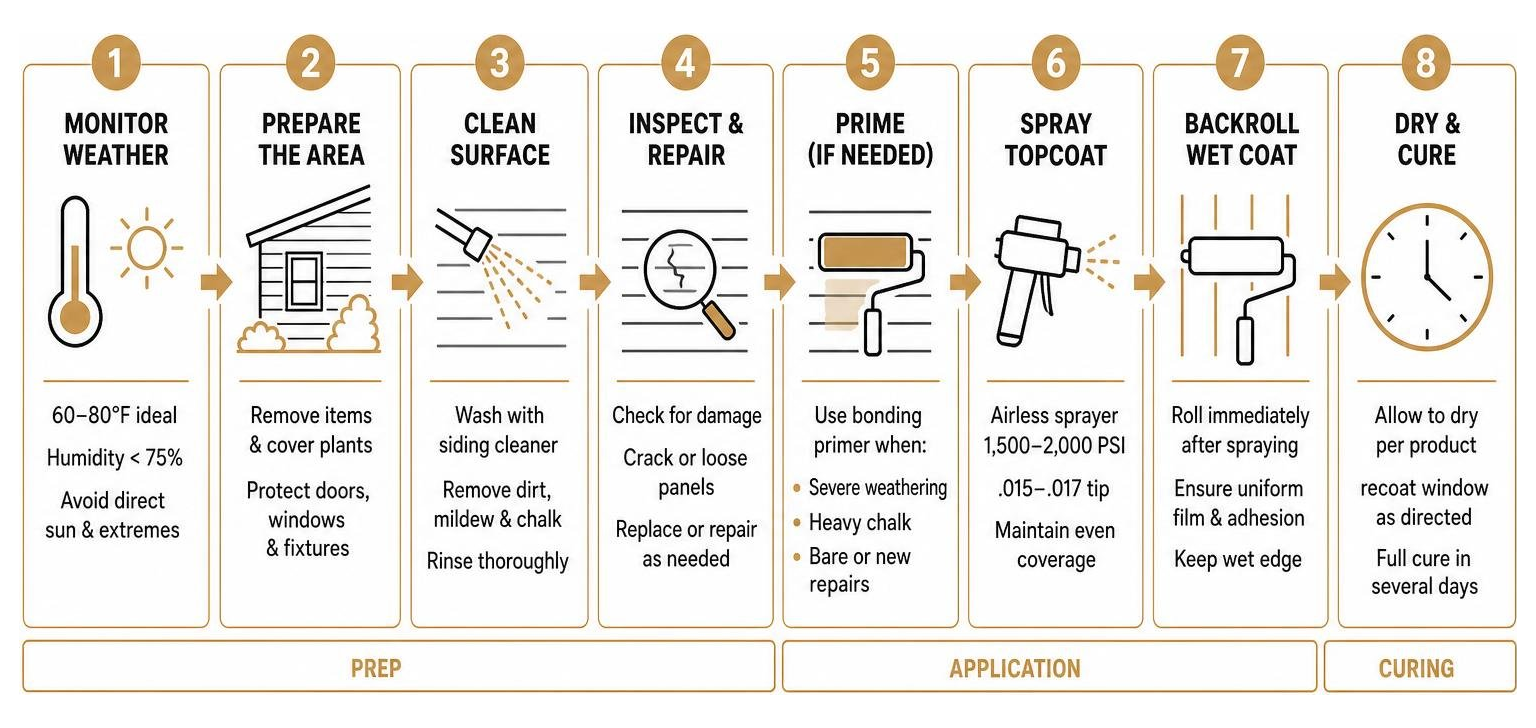
Never apply exterior paint to vinyl when ambient temperatures drop below 50°F or climb above 90°F. Optimal application conditions fall between 60°F and 80°F with relative humidity levels below 75%. Avoid painting surfaces in direct, intense sunlight; rapid surface heating flashes off water prematurely, stopping proper film formation and cross-linking.
Step 2: Set Up Spray Equipment
While brushes and rollers work well for smaller sections or trim, applying topcoats to large expanse siding walls is best accomplished using airless sprayers. Set airless spray equipment between 1,500 and 2,000 PSI using a fine-finish spray tip (typically a .015 or .017 size). Spraying delivers an even wet coat across panel overlaps without leaving heavy lap marks.
Step 3: Implement Spray and Backroll Technique
For maximum durability on textured wood-grain vinyl, spray application should always be paired with backrolling. As one painter sprays a uniform coat across 3 to 4 panel rows, a second painter follows immediately behind with a 3/8-inch or 1/2-inch nap roller, working the wet coating into the grain grooves and panel bottom lips. Learn more about professional spray procedures in our detailed guide to House Exterior Spray Painting.
Step 4: Apply Two Full Coats
Never rely on a single coat when repainting vinyl exteriors. Apply two complete, uniform coats, allowing at least 4 to 6 hours of dry time between coats depending on humidity levels. Two coats provide the total film thickness (typically 3 to 4 dry mils) needed to protect against solar exposure and physical wear.
Essential Prep Work Before You Repaint Vinyl Siding
The overall longevity of painted vinyl depends heavily on preliminary surface cleaning. Skipping or rushing prep work is the primary reason paint applications fail prematurely.
Vinyl surfaces collect airborne dirt, road grime, spider webs, and invisible organic spores over time. Shaded areas on north-facing walls in communities like Glenview, Wilmette, or Carol Stream frequently harbor mold and mildew colonies. Painting directly over organic growth or chalking traps contaminants beneath the film, triggering bubbling and peeling within 12 to 24 months.
Follow this complete prep sequence before starting topcoat application:
- Soft Wash Mildew Treatment: Avoid using high-pressure power washers above 1,800 PSI close to vinyl panels. Extreme water pressure forces moisture up behind the overlapping seams into wall cavities, soaking insulation and wood framing. Instead, perform a gentle soft wash using a broad solution of sodium hypochlorite (bleach) combined with an exterior cleaner or TSP substitute.
- Dwell and Hand Scrubbing: Spray the cleaning solution from bottom to top across siding panels. Allow the solution to dwell for 10 to 15 minutes to eliminate organic spores. Use a medium-stiff nylon bristle brush to scrub heavily soiled areas, corner posts, and soffits.
- Thorough Downward Rinsing: Rinse the siding thoroughly with clean water, directing the hose nozzle downward at a 45-degree angle. Rinsing downward prevents water from entering panel weep holes or penetrating underlying wall sheathing.
- Perform the Hand Chalking Test: Allow siding to dry completely for 24 to 48 hours. Walk around the exterior and firmly rub your bare palm across several sun-exposed panels. If a chalky white powder transfers to your skin, oxidation is still present. Repeat soft washing or apply a dedicated chalk-binding acrylic primer.
- Precision Masking: Mask off all window frames, light fixtures, hose bibs, doors, and roof line flashing using premium exterior painter’s tape and plastic drop sheeting. Cover surrounding landscaping and walkways to protect them from cleaning runoff and overspray.
For a complete breakdown of full-house prep standards, explore our companion guide on How to Prepare a House for Painting.
Common Mistakes That Cause Paint Failure on Vinyl
Understanding what not to do is just as important as following correct procedures. Avoid these common errors when updating your home’s exterior:
- Choosing Paints Below Safe LRV Thresholds: Applying standard dark paints without verifying vinyl-safe formula pigments causes vinyl panels to expand rapidly under direct solar heat. This heat stress leads to permanent panel buckling, structural warping, and pulled panel fasteners.
- Skipping Mildewcide Treatments: Rinsing panels with plain water without an anti-fungal mildewcide leaves dormant mold spores alive inside surface micro-grain. Spores bleed through the new coating, leaving dark green or black stains beneath fresh paint.
- Caulking Panel Seams and Joints: Never apply exterior caulk along horizontal vinyl overlap seams or inside vertical expansion channels. Vinyl panels must slide freely horizontally as temperatures change. Caulking joints locks panels in place, causing buckling as walls expand in warm weather.
- Painting Hot Surfaces in Direct Sunlight: Applying latex paint to sun-heated vinyl forces solvent water to evaporate instantly. This prevents paint resins from bonding correctly, resulting in surface blisters and poor adhesion.
- Neglecting Cure and Weather Windows: Applying topcoats right before expected rain or when nighttime temperatures drop below 50°F interrupts chemical curing, leaving soft coatings vulnerable to moisture washing.
Avoid coating failures by reviewing our technical manual on Painting Over Exterior Paint.
Frequently Asked Questions About Painting Vinyl Siding
Does painting vinyl siding void the manufacturer warranty?
In many instances, applying non-approved aftermarket paints to vinyl siding voids original manufacturer warranties covering material defects or color fading. Major producers specify that altering the factory finish with non-approved paints voids warranty coverage.
However, if your siding is 15 to 30 years old, original factory warranties have often expired or passed coverage limits. Refinishing sound vinyl with high-grade 100% acrylic coatings remains an effective way to protect panels and elevate home appearance. Always check existing documentation before beginning your project.
How long does fresh paint last on vinyl siding?
When vinyl siding is prepped thoroughly — including soft washing, mildew treatment, and surface drying — and finished with two coats of premium 100% acrylic vinyl-safe paint between 50°F and 90°F, you can expect the application to last 10 to 12 years.
Shortcuts in preparation, painting over active surface oxidation, or applying non-flexible coatings outside ideal temperature windows reduce coating life significantly, causing peeling or flaking within 3 to 5 years.
Can you paint vinyl siding a darker color than the original shade?
Yes, but only if you select a dedicated vinyl-safe paint color formulation. Standard dark paints absorb excessive solar heat, pushing panel temperatures past the 165°F warping threshold and causing permanent buckling.
Specially engineered vinyl-safe color collections utilize heat-reflective pigments that reflect infrared light away from the house. These specialized formulations allow homeowners to transition lighter beige or off-white vinyl to contemporary dark charcoal, navy, or slate tones safely without structural distortion.
Conclusion
Refreshing your exterior vinyl cladding doesn’t have to feel overwhelming. By selecting high-performance 100% acrylic vinyl-safe paints, respecting Light Reflectance Value rules, and completing careful surface cleaning, you can update your home’s curb appeal while adding reliable surface protection.
At T&Z Interior And Exterior Painting, our experienced craftsman teams have delivered high-quality exterior refinishing across Lombard, Wheaton, Elmhurst, Addison, Oak Brook, and nearby Chicagoland communities for over 15 years. Fully licensed, insured, and holding a 5.0 Google Reviews rating, we focus on careful prep, premium materials, and attention to detail on every project.
Ready to transform your home with durable, professional craftsmanship? Explore our specialized Exterior Painting Services today to discuss your project and schedule an expert consultation with our team!