
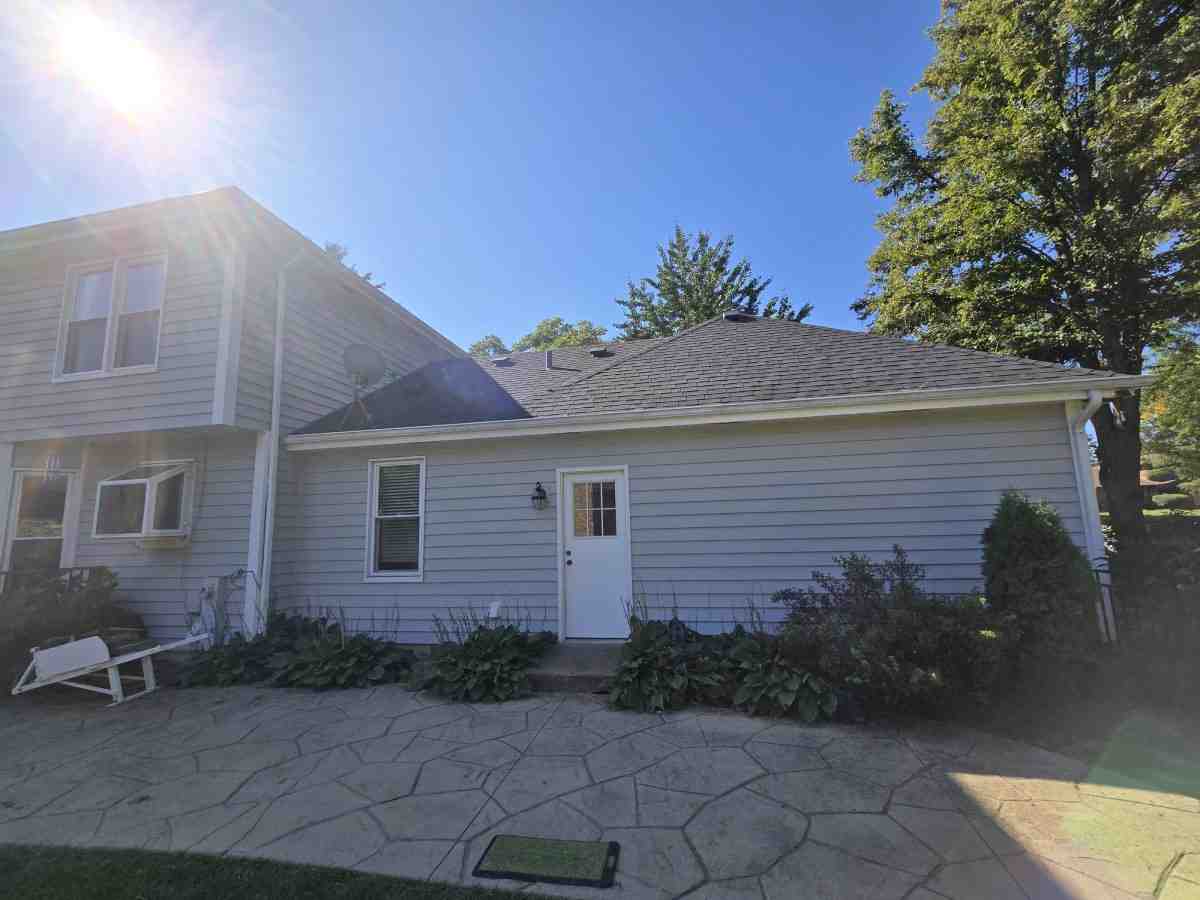
Why Spray Painting Is Ideal for Exterior Aluminum Siding
When homeowners ask us about refreshing their home exterior, spraying aluminum siding is almost always our top recommendation over traditional brush-and-roller methods. Aluminum siding features long, continuous horizontal or vertical lap panels. Applying paint with a brush or roller can leave lap marks, brush strokes, and uneven textures that detract from your home’s appearance.
Spraying creates an atomized mist of paint that settles evenly across the metal. It flows smoothly into narrow crevices, under lip edges, and over textured profiles, mimicking the original factory baked-on finish.
Professional spray application offers significant advantages:
- Uniformity: An airless sprayer eliminates the risk of heavy edges and roller stippling.
- Efficiency: Spraying covers wide surface areas quickly, minimizing the window during which wet paint is exposed to airborne dust, bugs, and pollen.
- Superior Adhesion: High-pressure sprayers propel paint micro-droplets into the fine surface profile of the substrate, ensuring a tight bond.
Using proper techniques for painting exterior aluminum siding creates a seamless protective shell across your entire home exterior. To understand how spraying compares to traditional methods on metal surfaces, learn more about can aluminum siding be spray painted? before starting your project.
Long-Term Protection and Curb Appeal
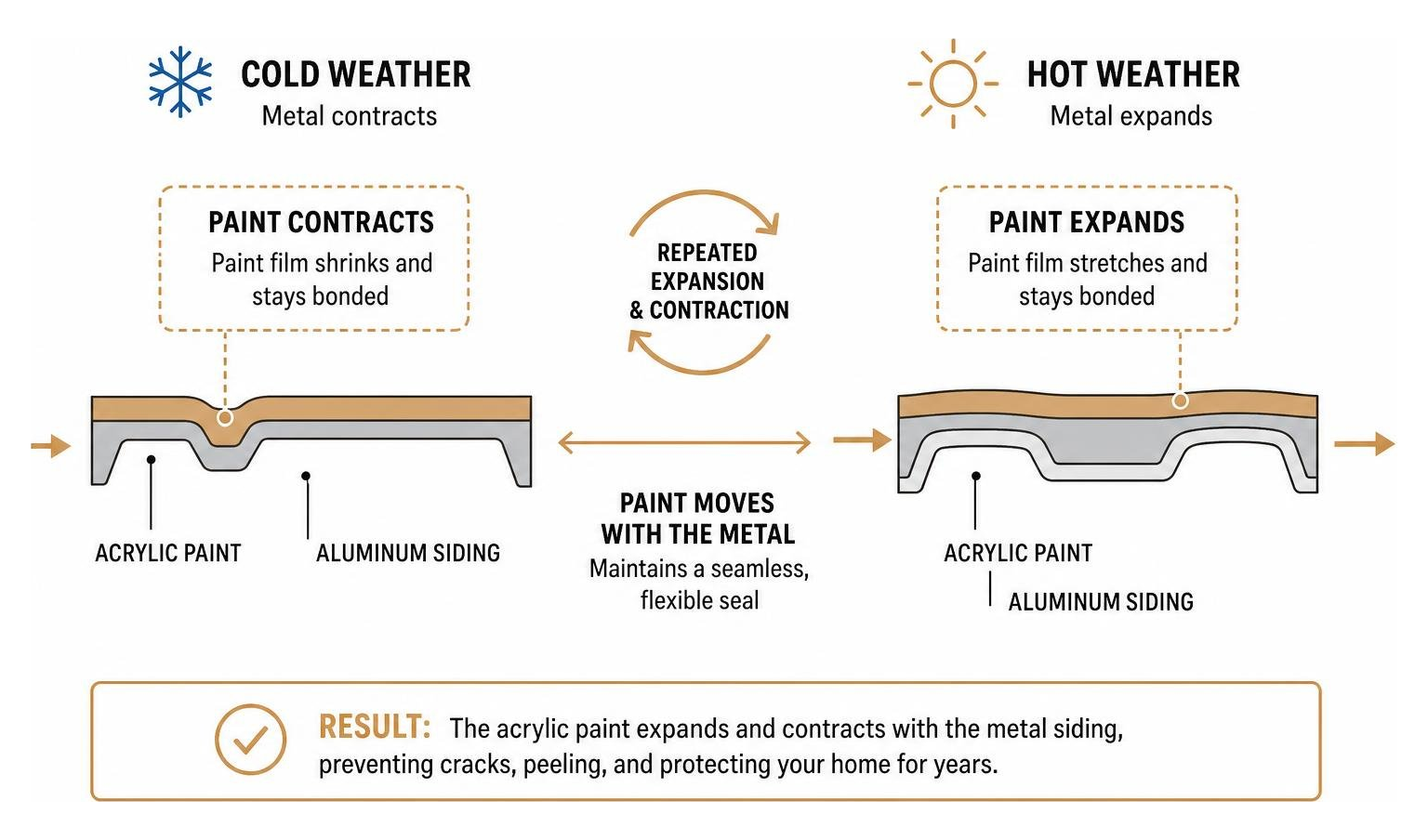
Aluminum siding is extremely durable. It does not rot, absorb moisture, or attract wood-boring insects. However, metal expands and contracts significantly as outdoor temperatures shift between freezing winter days and midsummer heat. Standard rigid paints cannot handle this thermal movement, which leads to cracking and peeling.
By pairing specialized exterior coatings with professional spray application, you create a flexible barrier that moves with the metal substrate. High-grade exterior paints retain their elasticity and color depth for years, resisting UV degradation, rain, and snow. A fresh coat restores bold color, hides minor surface imperfections, and protects against bare metal oxidation.
Proper surface preparation and spraying techniques directly affect paint durability, as highlighted in this expert guide on how to paint aluminum siding from Family Handyman.
Proper Preparation Work Before Spray Painting
Preparation accounts for roughly 70% of the overall success of any exterior spray project. Skipping prep work on a non-porous surface like metal guarantees paint failure. You can read more about foundational prep steps in our guide on how to prepare a house for painting.
Before washing or scraping, inspect older homes built between the 1940s and 1970s using a EPA-recognized lead test kit.
Cleaning and Repairing Metal Surfaces
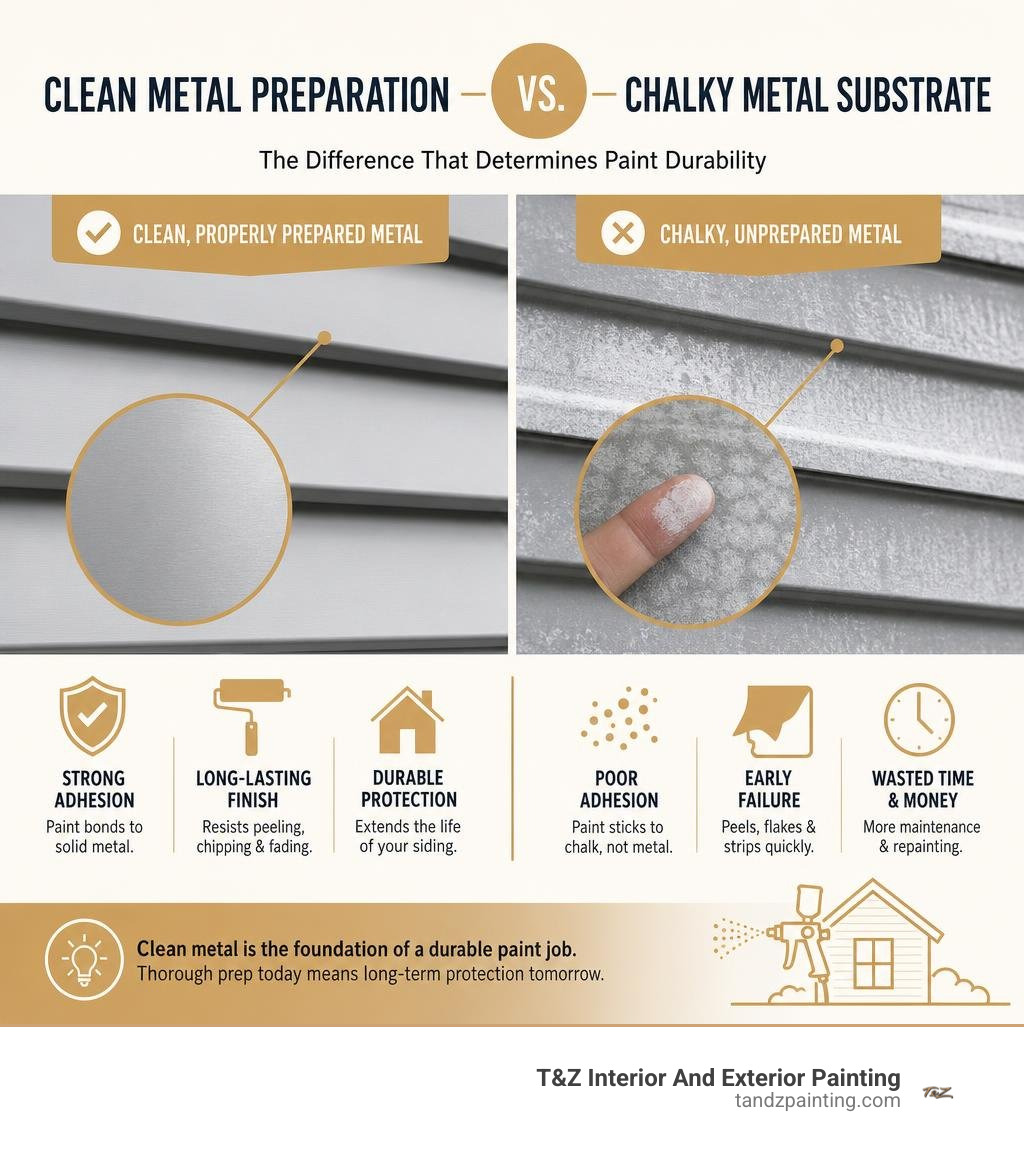
Over time, factory coatings break down into a powdery white residue called chalking. Fresh paint applied over chalking will adhere to the powder rather than the siding, causing the topcoat to strip off shortly after drying.
To clean the surface properly:
- Chemical Scrub: Mix 1 cup of trisodium phosphate (TSP) or a non-toxic TSP substitute, 1 cup of chlorine bleach, and 1 gallon of warm water. Apply the solution using a soft-bristle scrub brush in manageable horizontal sections from the bottom up to prevent streaking.
- Power Wash: Wash the siding using a pressure washer set between 1,500 and 2,000 PSI. Always point the spray nozzle straight or slightly downward. Never spray upward beneath the lap joints, as water can get trapped behind the metal and rot the wood framing underneath.
- Perform a Wipe Test: After the surface dries, rub a clean dark cloth across the metal. If white powder transfers to the cloth, repeat the washing process.
- Repair Dents and Gaps: Fill shallow dents using an exterior hydrophobic acrylic filler or automotive body filler, then sand it smooth using 100-grit sandpaper once fully cured. Strip away old, cracked caulk around windows, doors, and trim, replacing it with high-grade exterior acrylic latex caulk.
Allow the aluminum siding to dry thoroughly. In humid conditions or temperate seasons, allow up to 7 full days of drying time to ensure all moisture evaporates from seams and laps.
Masking, Site Protection, and Safety Precautions
Airless paint sprayers atomize paint into a fine fog that drifts easily on light breezes. Protecting surrounding areas is critical before spraying:
- Landscaping: Cover bushes, flowerbeds, and lawns with breathable canvas drop cloths or plastic sheeting.
- Fixtures and Glazing: Cover windows, entry doors, porch lights, hose bibs, and electric meters using heavy masking film and UV-resistant painter’s tape.
- Safety Gear: Wear full personal protective equipment (PPE), including an organic vapor respirator mask, eye protection goggles, nitrile gloves, and a spray suit to prevent chemical inhalation and skin contact.
Step-by-Step Guide to Spraying Aluminum Siding

Once surface prep is complete, mask off non-painted areas and wait for optimal weather before painting. The best window for exterior spraying is a dry, mild day with temperatures between 50°F and 85°F, low humidity (ideally between 40% and 50%), and low wind speed.
For detailed equipment selection and operating tips, check out our guides on house exterior spray painting and our comprehensive spray painting services guide.
Essential Equipment Needed for Spraying Aluminum Siding
Achieving a uniform, factory-grade finish on exterior siding requires specialized tools:
- Airless Paint Sprayer: A contractor-grade airless sprayer capable of maintaining 2,000 to 3,000 PSI delivers a steady flow rate without sputtering.
- Reversible Spray Tips: Use a 515 or 517 tip size. The first digit (5) produces a 10-inch spray fan pattern when held 10 to 12 inches away from the siding. The second two digits (15 or 17) denote an orifice size of 0.015 or 0.017 inches, ideal for un-thinned exterior paints.
- Tip Extension Pole: A 24- to 36-inch tip extension lets you reach high peaks, soffits, and lower edges without tilting the spray gun or over-extending on ladders.
- Back Roller: A medium-nap paint roller operated alongside the sprayer helps work topcoats into heavily textured or pitted metal surfaces.
Using the right materials ensures lasting results. Explore high-performance options in our article on don’t let your walls down with these high quality exterior house paints.
Paint Selection and Priming Requirements
Selecting the correct primer and paint system is essential for bare or oxidized metal surfaces.
Priming
Apply an acrylic self-etching or oil-based rust-inhibiting primer to any bare aluminum or corroded spots. Never use standard latex primers directly over un-primed bare metal. Ammonia in some latex formulations can react with bare aluminum, producing gas bubbles that cause peeling. Allow primer to dry for 2 to 4 hours before applying topcoats.
Topcoat
Use a 100% exterior acrylic latex paint. Acrylic resins provide the elasticity needed to handle aluminum’s thermal expansion and contraction without cracking. Avoid dark paint colors (such as dark chocolate brown or charcoal) on metal siding; dark shades absorb solar heat, driving up cooling costs and accelerating thermal stress on the panels.
Sheen
Choose a satin or low-lustre exterior finish. Satin sheens shed dirt and water effectively while hiding minor dents and surface irregularities far better than high-gloss or flat finishes.
Common Mistakes to Avoid When Spraying Aluminum Siding
To achieve professional results, watch out for these common application errors:
- Arcing the Spray Gun: Sweeping your wrist in an arc changes the distance between the tip and the metal, causing thick paint in the center of the stroke and thin paint on the ends. Keep the spray gun perpendicular to the siding at all times, moving your arm and torso steadily.
- Spraying in Direct Hot Sunlight: Applying paint onto hot metal bakes the coating instantly, preventing proper leveling and adhesion. Follow the shade around the house throughout the day.
- Skipping the Overlap: Fail to overlap each spray stroke by 50%, and you will end up with light stripes across your siding once dry.
- Applying Heavy Single Coats: Spraying one thick coat leads to runs, sags, and prolonged drying times. Always apply two thin coats, allowing 2 to 4 hours of drying time between passes.
Frequently Asked Questions
How long does a sprayed paint job on aluminum siding typically last?
When performed with thorough surface preparation, quality primers, and premium 100% acrylic latex paint, a sprayed finish on aluminum siding typically lasts between 6 to 10 years. In moderate climates protected from harsh coastal or severe winter elements, high-end coating systems can maintain their look and protection for up to 15 years before requiring touch-ups.
What type of paint and primer are best for aluminum siding?
The best primer for bare metal or heavily oxidized aluminum is a solvent-based, oil-based, or metal-etching bonding primer designed to seal non-porous surfaces.
For the topcoat, the optimal choice is a high-grade 100% exterior acrylic latex paint in a satin or low-lustre sheen. Acrylic formulas deliver strong adhesion, long-term color retention, and the flexibility needed to withstand thermal movement.
What is the best weather condition for spraying exterior metal siding?
The ideal conditions for spraying exterior aluminum siding are dry, calm days with ambient temperatures between 65°F and 75°F (though 50°F to 85°F is acceptable) and relative humidity between 40% and 50%.
Avoid spraying when winds exceed 8 to 10 mph to prevent overspray drift. Never paint under direct, intense midday sunlight or when precipitation is expected within 24 hours. Learn more about optimal scheduling in our guide on when is the best time to paint the exterior of your home.
Modern Exterior Color Palette Options
When selecting a new color for your aluminum siding, choose shades that enhance your home’s architecture while accommodating the physical traits of metal substrates. Light to mid-tone colors reflect solar heat, lowering cooling costs and reducing metal movement.
| Color Category | Recommended Shades | Functional Benefits | Architectural Style Match |
|---|---|---|---|
| Warm Neutrals | Cream, Warm Beige, Soft Taupe | Reflects high UV light; minimizes heat expansion | Craftsman, Traditional, Colonial |
| Cool Tones | Slate Gray, Muted Sage, Soft Pewter | Hides outdoor grime and dust; modern curb appeal | Modern Suburban, Split-Level |
| Classic Whites | Off-White, Antique White, Bright White | Max reflection; timeless appearance; lower surface temp | Farmhouse, Mid-Century Modern |
Transforming Your Home Exterior with Professional Service
Updating your home’s exterior aluminum siding through airless spray painting is one of the most effective ways to refresh your property’s appearance and extend its lifespan. With thorough cleaning, chalk removal, proper metal priming, and even application, aged siding can regain a clean, smooth, factory-like finish.
Achieving a durable finish requires specialized equipment, precise technique, and extensive preparation. For homeowners across Lombard, Elmhurst, Downers Grove, Schaumburg, and surrounding communities, T&Z Interior And Exterior Painting brings over 15 years of practical expertise to every project.
Our experienced, licensed, and insured painters use contractor-grade airless spraying systems and top-tier paint products to deliver clean, long-lasting results. Whether you need residential exterior painting or specialty metal coatings, our team approaches every home with attention to detail and professional care.
If you are ready to update your aluminum siding and boost your home’s curb appeal, explore our full range of professional application techniques by visiting our spray painting services page today.