
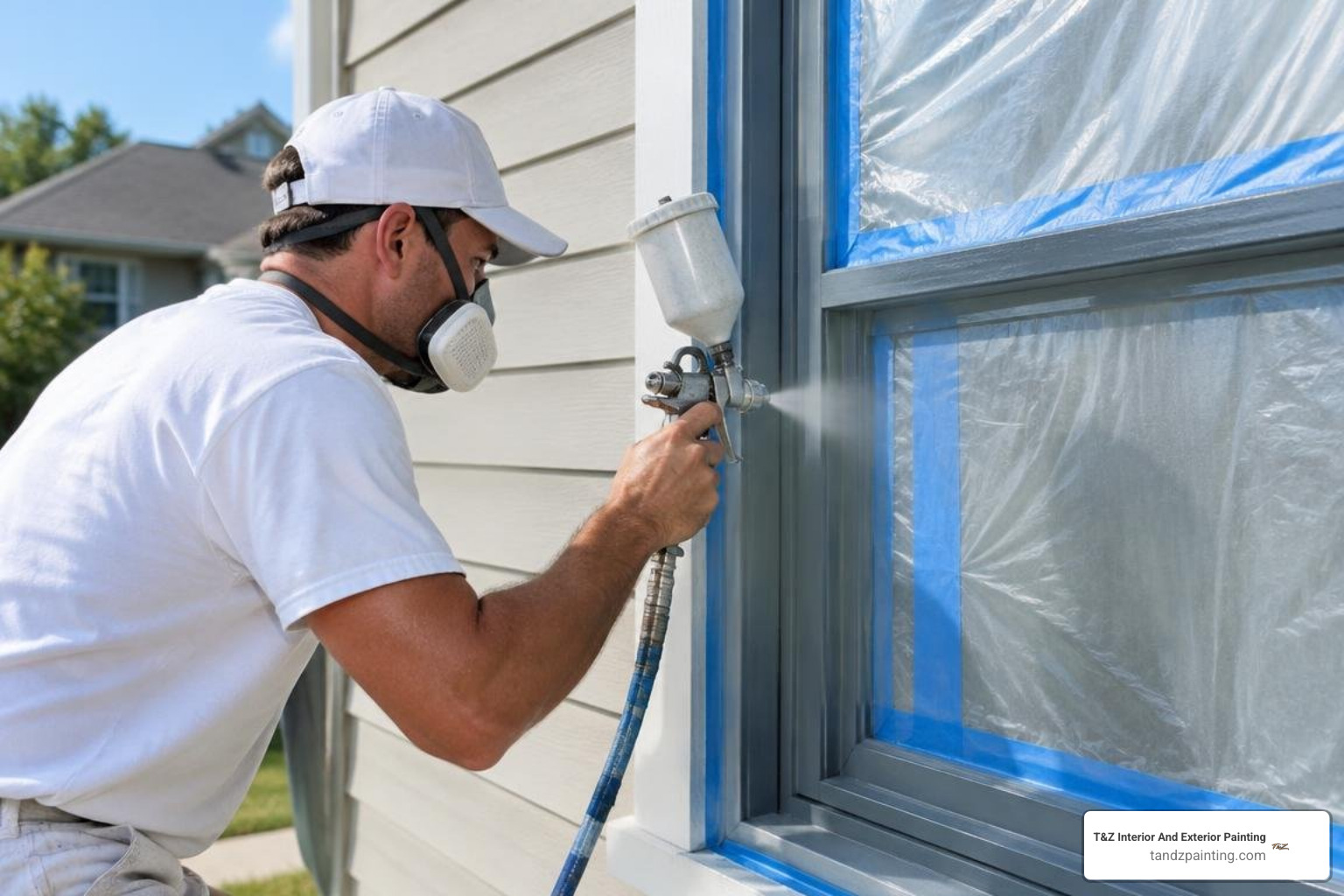
How to Respray Aluminum Window Frames
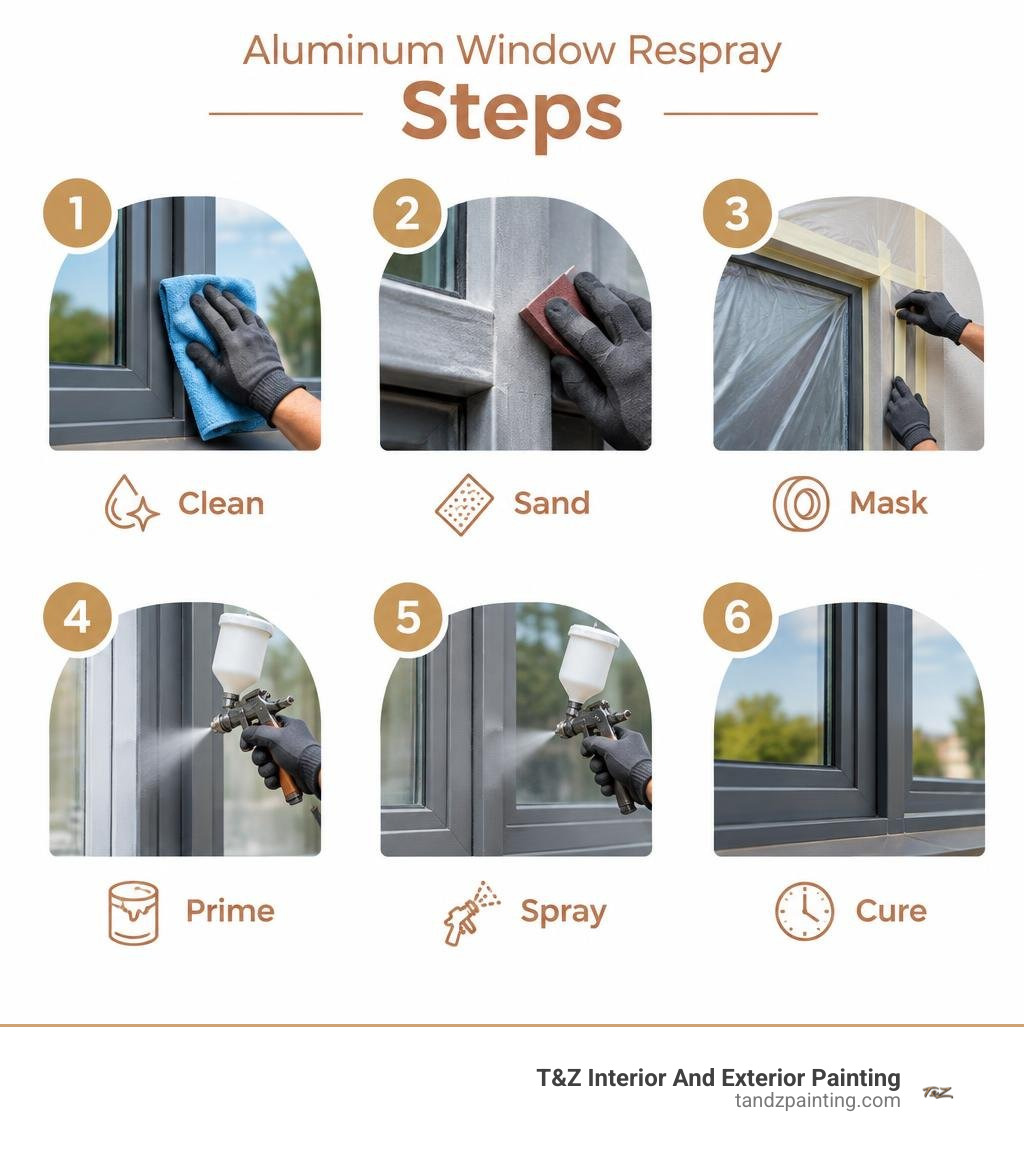
Yes, you can respray aluminum window frames without removing the windows. Clean and degrease the frames, lightly sand the surface, and mask the glass, seals, and nearby walls. Apply a primer made for aluminum, then spray thin coats of compatible exterior paint. Follow the product’s drying and curing times before using or cleaning the windows.
I’m Tomasz Niemotko, owner and founder of T&Z Interior And Exterior Painting, a licensed and insured painting contractor based at 1101 S Columbine Ave, Lombard, IL 60148. Founded in 2009, our company has over 15 years of experience in painting, spray application, and surface prep–the skills at the heart of an aluminum window respray.
Related content about aluminum window respray:
Why Choose an Aluminum Window Respray for Aging Frames?
Aluminum windows are celebrated for their structural strength and slender sightlines. The average lifespan of aluminum windows ranges from 20 to 25 years. Over time, constant exposure to ultraviolet rays, moisture, and temperature fluctuations causes the original finish to degrade. You might notice chalking, dullness, or pitted oxidation that makes your entire home look dated.
Tearing out window frames causes unnecessary disruption to surrounding siding and interior trim. Choosing an on-site spray application eliminates construction mess while delivering a refreshed architectural look.
| Consideration | Respraying Benefits | Practical Value |
|---|---|---|
| Project Disruption | Low impact | Completed in place with precision masking and on-site spraying |
| Material Longevity | Extended lifespan | Adds 10–15 years of robust weather protection to existing metal |
| Environmental Impact | Sustainable | Keeps sound metal extrusions in service and out of landfills |
| Aesthetic Customization | Limitless options | Broad palette of custom exterior colors and modern sheens |
| Curb Appeal Impact | Factory-grade finish | Restores smooth, uniform color across all window elevations |
Beyond aesthetics, recoating aluminum is an environmentally conscious decision. Discarding structurally sound metal frames creates unnecessary landfill waste. Refinishing existing extrusions revitalizes your exterior while preserving your building envelope.
Longevity and Protection for Aging Metal Frames
Raw aluminum naturally forms a thin oxide layer when exposed to air, but outdoor elements degrade this surface. Industrial pollutants, garden chemicals, and wind-driven rain break down factory coatings. This leaves the metal vulnerable to pitting and deep corrosion.
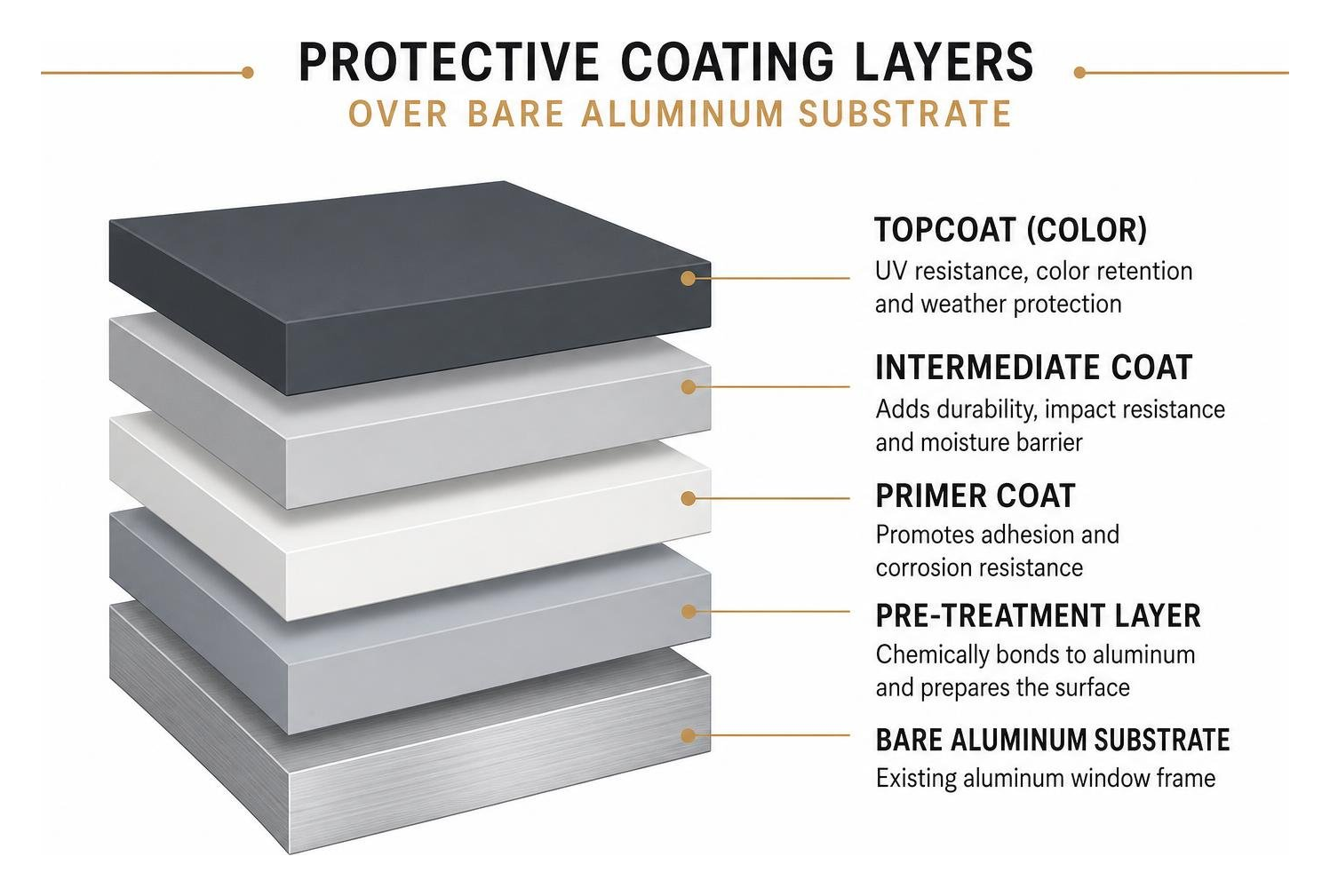
Applying a high-performance coating system seals the metal away from direct moisture and environmental contaminants. Professional coatings provide robust UV resistance that prevents future fading, chalking, and flaking. If you want to protect your exterior investments, working with experienced metal spray painter specialists ensures the substrate receives the chemical bonding and film thickness required for long-term defense.
Custom Color Matching and Aesthetic Modernization
Older homes often feature dated bronze, bright silver, or weathered cream anodized windows. A modern matte black, rich charcoal, or clean white finish completely transforms a home’s exterior elevation.
With spray application, you can select custom sheens that match your exterior architectural vision. Low-luster sheens like 10% eggshell or 25% satin hide minor surface imperfections while providing a sleek, contemporary appearance. Learn more about controlling exterior finishes with our outdoor spray paint metal tips to understand how environmental conditions influence paint flow and sheen uniformity.
Tools, Primers, and Specialist Coatings for Metal Windows
Achieving a durable finish on aluminum requires dedicated materials formulated specifically for non-ferrous metals. Standard latex house paints lack the flexibility and adhesion necessary to grip smooth metal.
Essential tools and products for refinishing aluminum window frames include:
- HVLP (High Volume Low Pressure) Spray Systems: These sprayers atomize paint at low pressures, creating a fine mist with minimal overspray, which is essential for working around glass and siding.
- Surface Degreasers and Neutral Cleaners: Specialized wax-and-grease removers or industrial detergents eliminate oil films, silicone residues, and road grime.
- Abrasive Pads and Fine Sandpaper: 120-grit to 400-grit silicon carbide sandpaper and medium scuff pads profile the metal without leaving deep scratches.
- Self-Etching and Direct-to-Metal (DTM) Primers: These primers contain mild acid components (such as phosphoric acid) that etch into the aluminum surface, creating a tight chemical bond.
- Industrial Acrylic Lacquers and Polyurethane Enamels: Exterior-grade topcoats formulated for architectural metal, such as Rust-Oleum’s protective enamels, provide color retention, weatherproofing, and resistance to chipping.
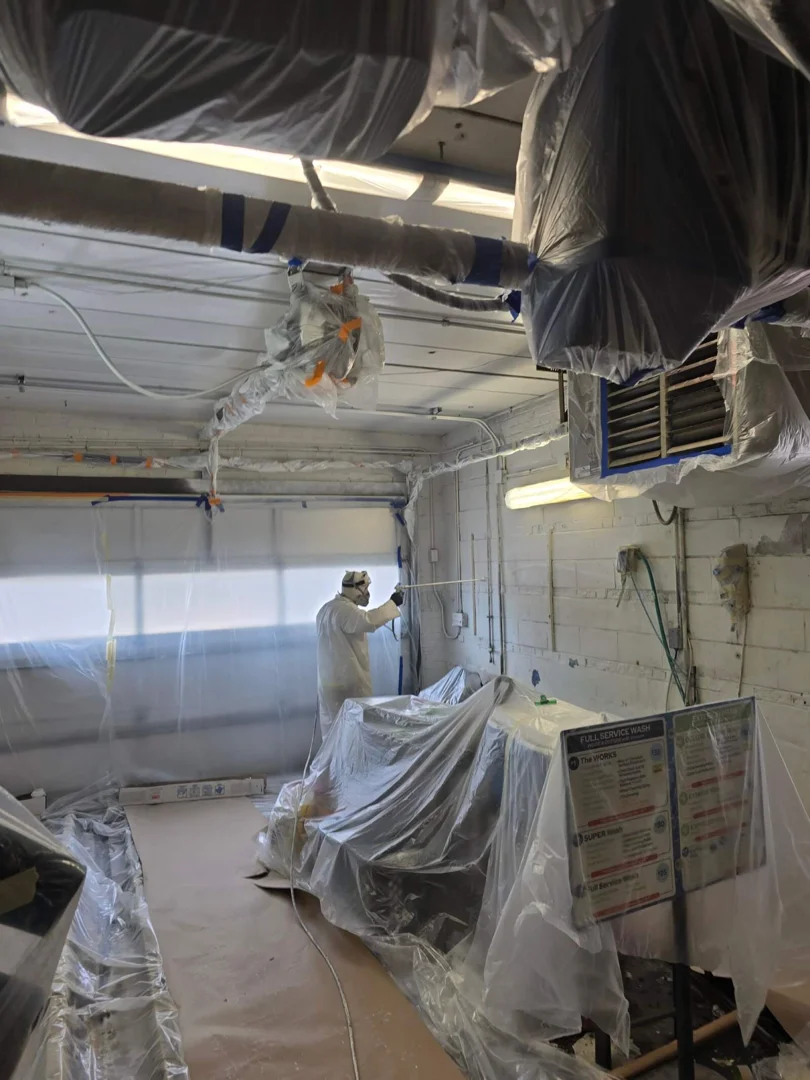
- High-Adhesion Masking Tapes and Solvent-Resistant Masking Film: Sharp edge-line tapes and durable films protect glass panes, brick, mortar, vinyl siding, and interior sills from atomized mist.
Complete Step-by-Step Window Refinishing Process
Refinishing aluminum extrusions on-site is a multi-stage process where preparation accounts for the majority of the labor. Shortcuts during prep will lead directly to peeling or flaking coatings down the road.
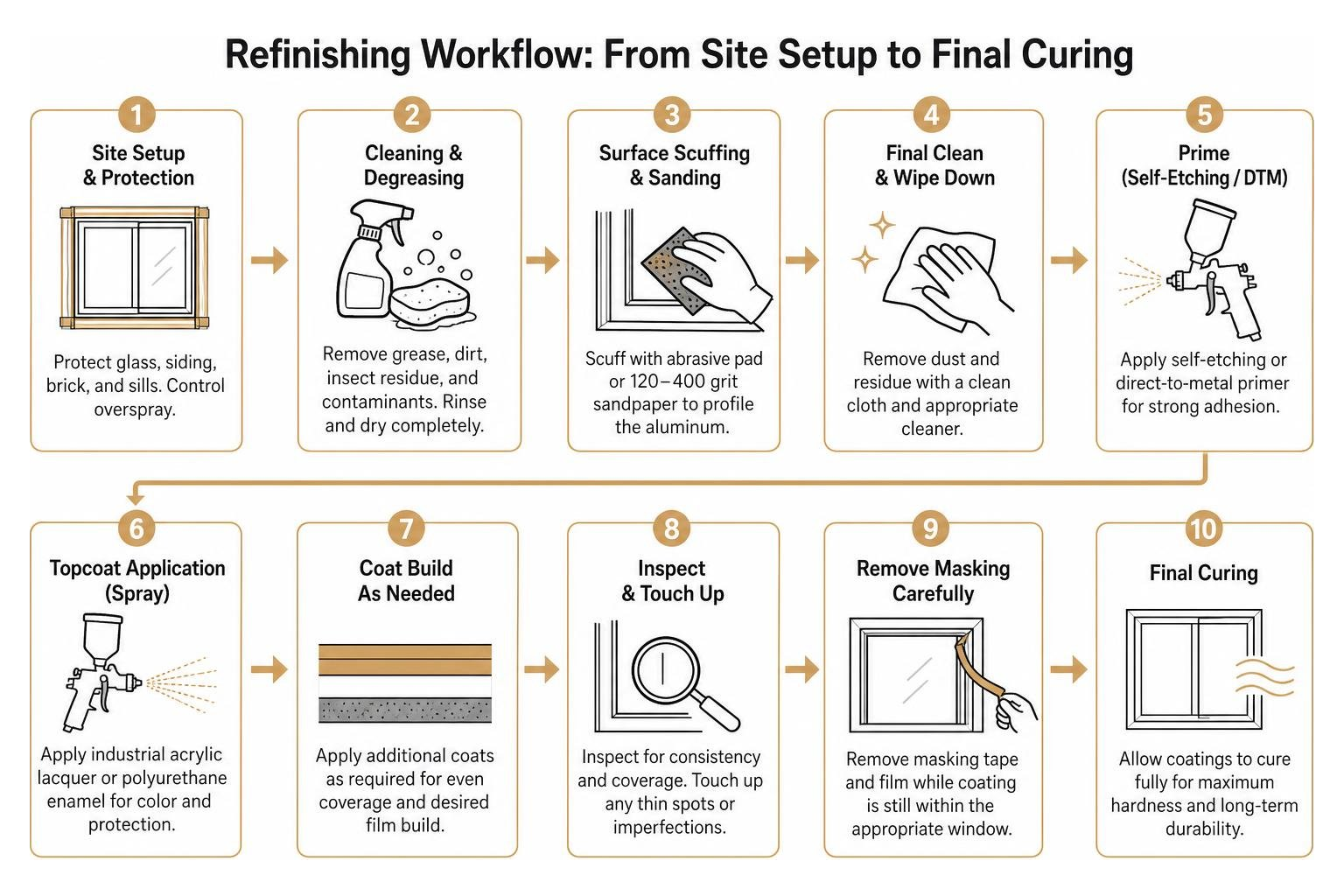
Surface Preparation for an Aluminum Window Respray
Before any paint touches the frame, the surface must be mechanically and chemically prepared.
- Initial Cleaning and Degreasing: Wash the entire frame thoroughly with a dedicated metal cleaner or heavy-duty detergent. Remove all grease, insect residue, and tree sap. Rinse the frame with clean water and let it dry completely.
- Mechanical Abrasion: Lightly abrade all exposed metal surfaces. Use 220-grit to 400-grit sandpaper or an abrasive scuff pad. Sanding cuts through chalking factory finishes and provides a mechanical “key” for the new coating to grip. Pay close attention to corners, interior reveals, and frame tracks.
- Dust Removal and Solvent Wipe: Wipe down the sanded profiles using a solvent-dampened microfiber cloth to pull away fine sanding dust and remaining oils.
- Precision Masking: Mask all glass edges with precision automotive or exterior-grade masking tape. Cover the entire glass pane with static-cling poly sheeting or heavy kraft paper. Tape and drape the exterior siding, brick, interior walls, weather seals, and surrounding hardware to prevent overspray.
Professional Application Techniques for an Aluminum Window Respray
Once the window frames are fully masked and contained, application proceeds in controlled stages.
- Etch Priming: Apply a thin, uniform coat of self-etching or epoxy-bonding metal primer using an HVLP spray gun. Maintain a consistent distance of 6 to 8 inches from the profile. Keep the gun perpendicular to avoid dry spray or heavy runs. A properly applied primer coat should look translucent to light, not thick or flooded.
- Flash-Off Time: Allow the primer to flash off and dry according to the manufacturer’s technical data sheet (typically 15 to 30 minutes depending on ambient temperature).
- Topcoat Application: Apply two to three light, wet coats of industrial-grade exterior metal enamel or acrylic lacquer. Move the spray gun with smooth, overlapping passes (about 50% overlap). Applying multiple thin coats prevents sags and builds the proper dry film thickness (DFT).
- De-Masking at the Right Angle: Once the topcoat has dried to the touch but before it fully cures, gently remove the masking tape. Pull the tape back slowly at a 45-degree angle. This prevents tearing the edge of the fresh paint film and keeps lines crisp.
- Curing Period: Allow the coating system to cure fully for at least 12 to 24 hours before operating sliding sashes, closing casements, or reinstalling hardware.
Professional On-Site Refinishing vs. DIY Projects
Many homeowners consider tackling window painting as a weekend DIY project using aerosol rattle cans. While spray cans can cover small hardware or decorative items, spraying architectural window frames across an entire house requires substantial skill and equipment.
DIY spraying often runs into problems with uneven atomization, high overspray drift, and inadequate surface bonding. A typical whole-home project involves hours of meticulous masking, ladder work, and fine spray control. Professional crews use commercial spray rigs that maintain stable fluid pressure and consistent fan patterns. This ensures every side of the extrusion receives an even coat.
For complex architectural assemblies, read our component repair and on-site spraying guide to see how on-site coatings restore exterior surfaces without the expense of structural demolition.
Post-Coating Care and Maintenance Schedule
Once your aluminum frames have been professionally coated, basic maintenance will keep them looking great for years to come.
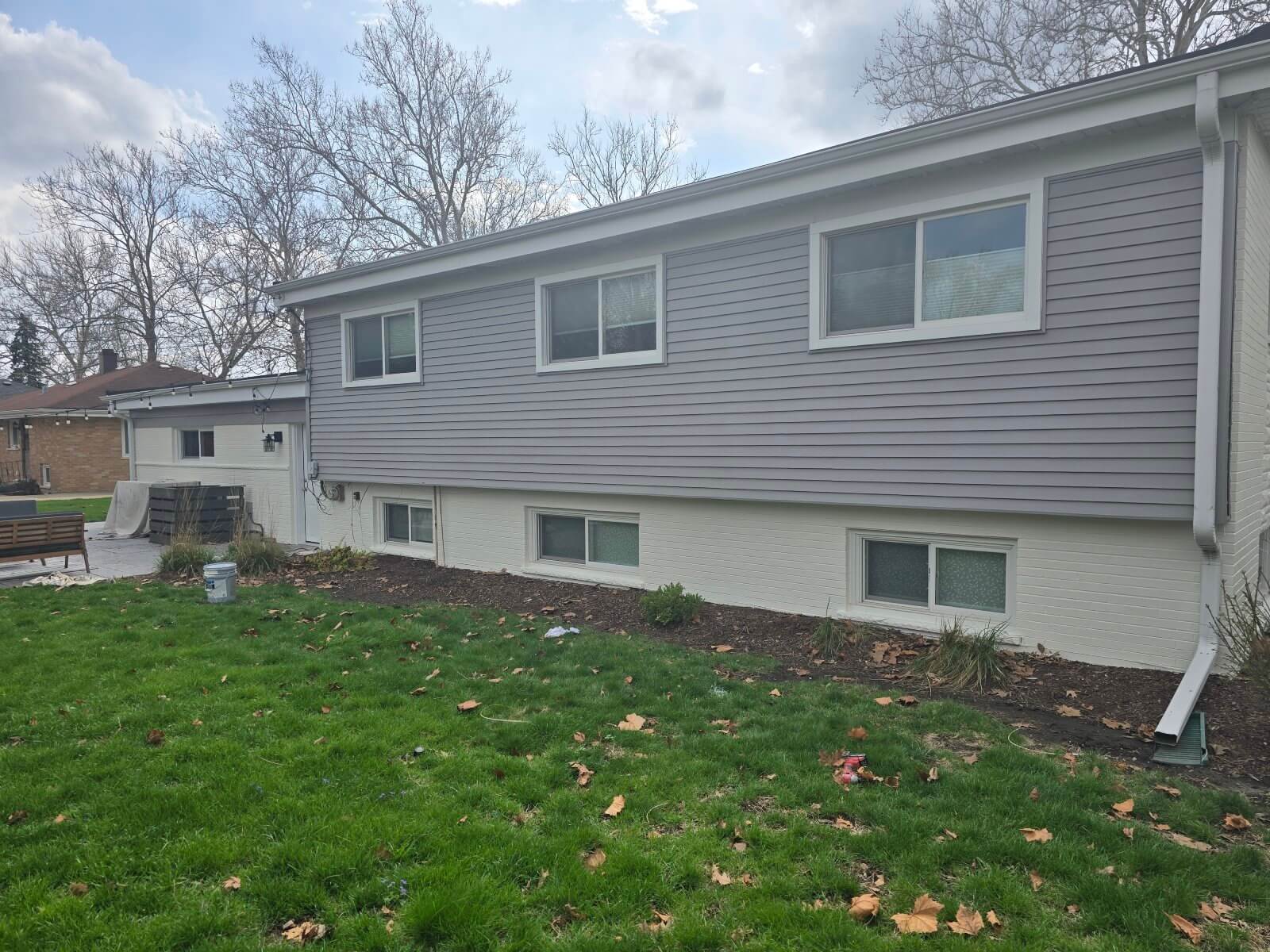
Follow this care routine to protect your finish:
- Routine Cleaning: Clean your window frames at least once a year in standard suburban neighborhoods. For properties exposed to heavy road dust or industrial air, clean the frames twice a year.
- Gentle Wash Solutions: Use warm water mixed with a mild, pH-neutral soap or car-wash concentrate. Never use abrasive scouring powders, bleach, ammonia, or solvent-based cleaners, as these can dull the topcoat.
- Soft Microfiber Materials: Wash and wipe the frames using clean microfiber cloths or soft non-abrasive sponges. Avoid stiff brushes and scouring pads.
- Hardware Lubrication: Once a year, apply a light mist of silicone-based lubricant to window locks, tracks, and hinges to ensure smooth operation without scratching the painted contact points.
- Weather Seal Inspection: Check rubber gaskets and perimeter caulk lines annually. Keeping seals pliable prevents water from working its way behind the frame profiles.
Frequently Asked Questions About Window Respraying
Can You Paint Directly Over Powder-Coated Frames?
Yes, you can paint over existing powder-coated aluminum frames, provided the original coating is structurally sound and firmly bonded to the metal. The surface cannot simply be sprayed as-is; it must be scuffed with fine abrasive pads to break the glossy factory glaze. After thorough degreasing and sanding, apply a specialized bonding primer formulated to adhere to cured thermoset polymers before applying your topcoat.
How Long Does a Resprayed Finish Last?
With thorough mechanical preparation, high-grade primers, and an approved exterior paint system, a resprayed aluminum window finish typically lasts 10 to 15 years. Longevity depends on sun exposure, local climate conditions, and routine maintenance. Keeping the frames clean of corrosive dirt and pollutants preserves the resin matrix and UV inhibitors in the topcoat.
Do Windows Need to Be Removed Before Spraying?
No, windows do not need to be removed. Professional window respraying is designed to be performed in-situ (on-site). Crews mask the glass panes, perimeter brick, siding, interior reveals, and surrounding tracks directly in place. This approach eliminates the risk of structural damage to interior trim, drywall, and exterior siding while delivering a factory-smooth finish with minimal disruption to your daily routine.
Conclusion
Refinishing your aluminum windows restores faded, oxidized metal into clean, modern architectural features that protect your home from the elements. By selecting the right primers, containing overspray, and applying durable topcoats, you extend the life of your window assemblies for years to come.
T&Z Interior And Exterior Painting is a locally owned, licensed, and insured painting contractor based at 1101 S Columbine Ave, Lombard, IL 60148. Founded in 2009 by Tomasz Niemotko, our team brings over 15 years of hands-on expertise to every project. We maintain a BBB accreditation and a 5.0 Google rating backed by 85+ reviews.
We stand behind the quality of our craftsmanship with a clear 2-year warranty on all work. We proudly serve homeowners and businesses across Lombard, Glen Ellyn, Villa Park, Oak Brook, Oakbrook Terrace, Downers Grove, Wheaton, Elmhurst, Addison, Itasca, Roselle, Bloomingdale, Carol Stream, Wood Dale, Westmont, Bensenville, Berkeley, Hillside, Schiller Park, Glendale Heights, Schaumburg, and Chicago.
If you are ready to modernize your home’s exterior, explore our professional spray painting services to learn what our experienced team can do for you. Visit tandzpainting.com to request a free estimate, or call us directly at (224) 240-0054 to discuss your next project.