
How to Spray Paint a Metal Door for a Lasting Finish
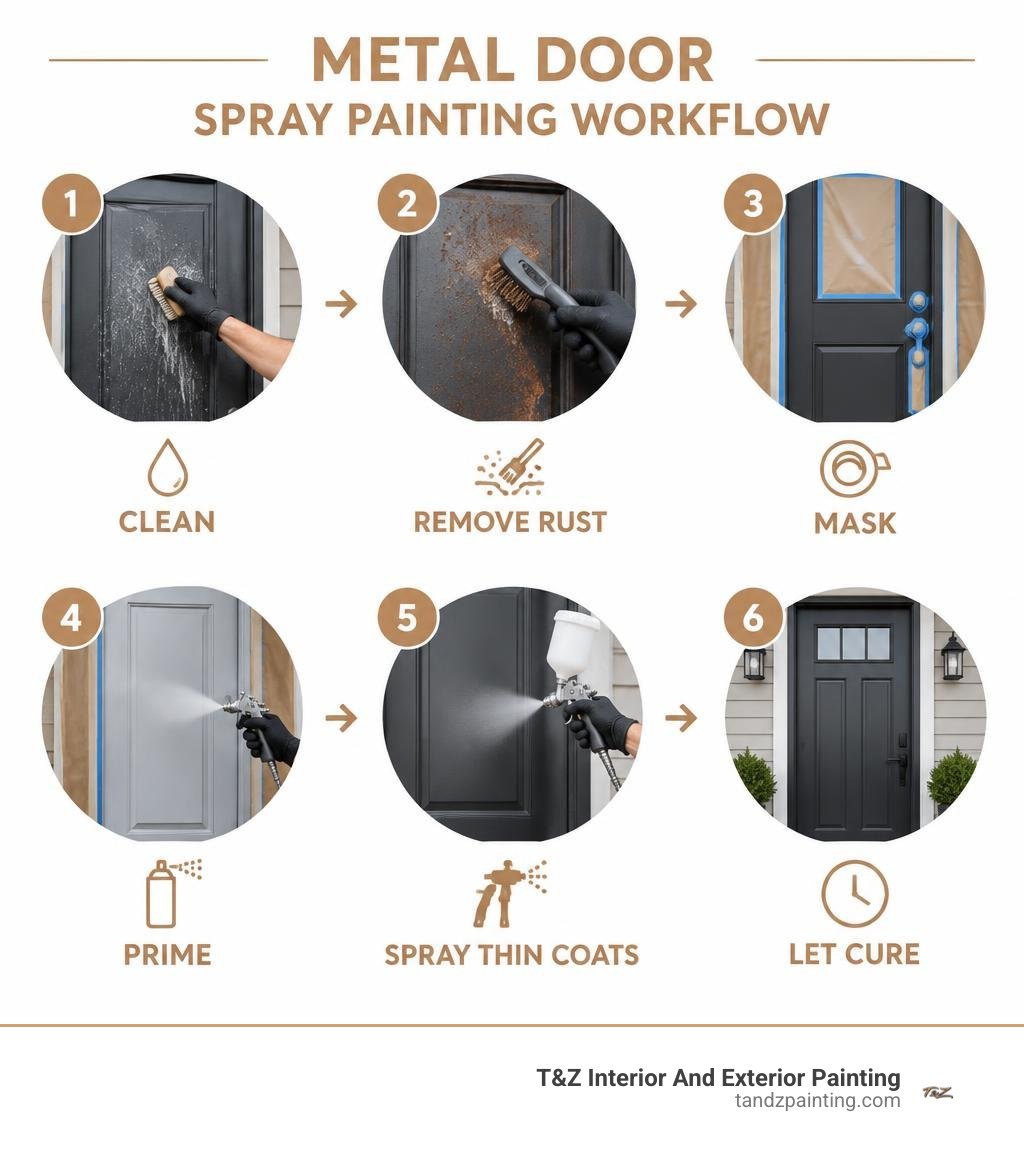
For spray painting metal doors, start by cleaning off dirt and grease, removing loose paint and rust, and masking glass, hardware, and nearby surfaces. Prime exposed metal with a compatible metal primer, then apply an exterior-rated spray paint in several thin, even coats. Follow the product label for drying and recoat times before using the door.
I’m Tomasz Niemotko, owner and founder of T&Z Interior And Exterior Painting, a licensed and insured painting contractor founded in 2009 in Lombard. My over 15 years of painting experience informs this guide to spray painting metal doors, from surface prep to the final coat.
Simple spray painting metal doors glossary:
Essential Preparation for Spray Painting Metal Doors
A flawless spray finish on a metal door depends entirely on the preparation work done before touching a spray trigger. Metal is non-porous and slick, meaning paint needs a perfectly clean, stable foundation to bond securely. Skipping basic prep leads to flaking, peeling, and premature rust formation within months.

Following proper metal preparation steps ensures the surface is degreased, de-rusted, and profiled for maximum adhesion.
Removing the Door vs. Painting on Hinges
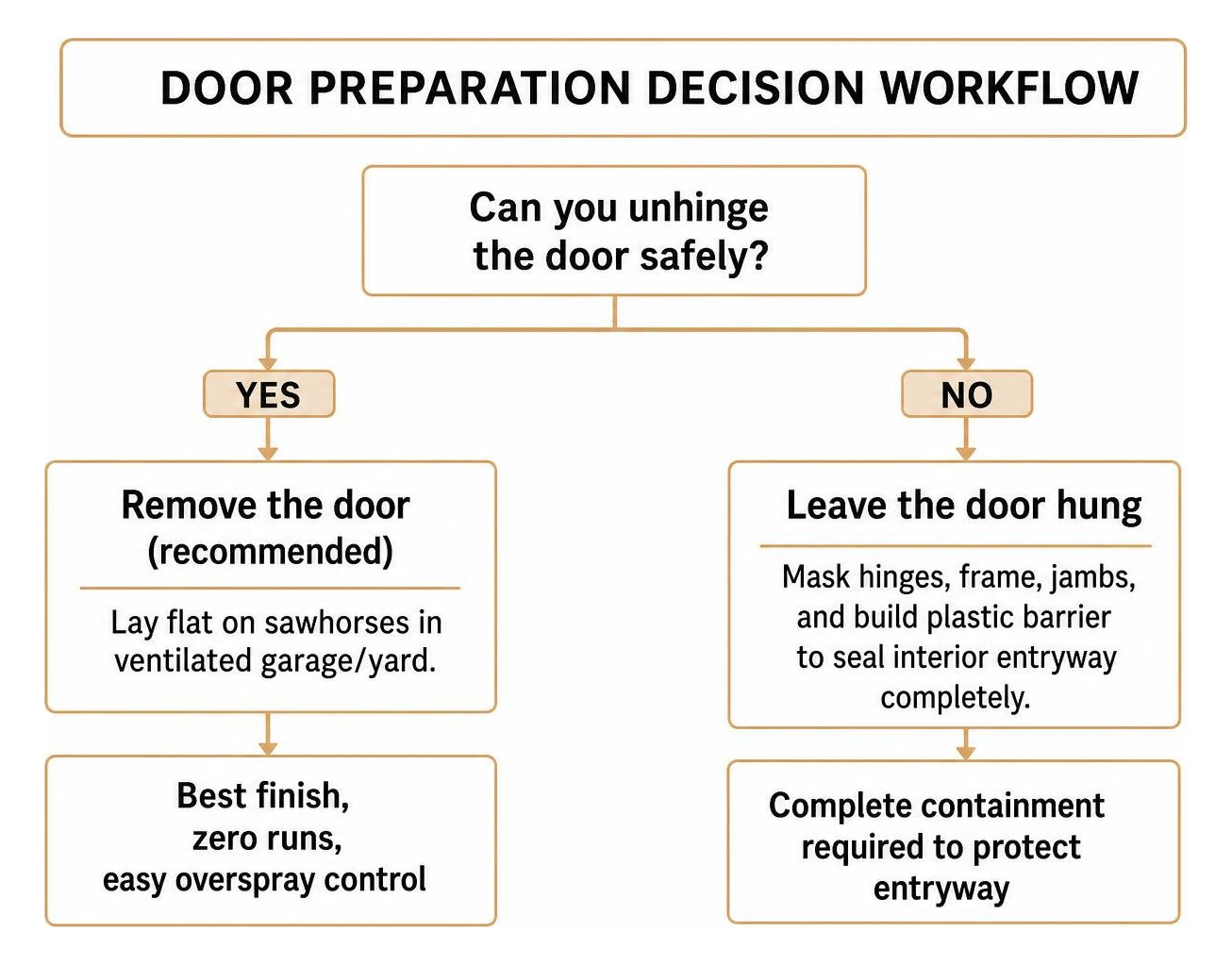
One common question is whether you should remove the door from its hinges or spray it in place:
- Removing the door (recommended): Taking the slab down allows you to place it horizontally on sawhorses. Spraying horizontally almost completely eliminates runs and sags, makes edge coating easier, and eliminates the risk of airborne overspray drifting into your entryway.
- Leaving the door hung: If you must leave the door hung, you must build a complete containment zone. Mask the hinges, weatherstripping, frame, threshold, and interior opening with painter’s tape, plastic sheeting, and heavy drop cloths.
Surface Cleaning, Degreasing, and Rust Removal
Every trace of airborne soot, oils, and hand grease must be removed:
- Degrease: Scrub the entire door with a solution of trisodium phosphate (TSP) or a dedicated heavy-duty cleaner to lift oils. Rinse thoroughly with clean water and dry completely.
- Scrape and wire brush: Remove loose, peeling paint and bubbling rust using a stiff wire brush or scraper.
- Sand: Feather out the edges of old paint with 120-grit sandpaper, then scuff-sand the entire surface with 220-grit sandpaper to give the coating mechanical “teeth.”
- Treat rust: Apply effective rust-inhibiting primers directly to any bare metal or previously oxidized areas to halt chemical corrosion.
- Tack cloth wipe: Remove all lingering sanding dust using a clean tack cloth.
Can You Skip Sanding When Spray Painting Metal Doors?
While scuffing the surface with 220-grit sandpaper provides the most reliable mechanical bond, certain chemical etching alternatives exist for specific components. For example, self-etching primers containing micro-acids can chemically bite into bare brass, steel, or aluminum without extensive mechanical abrasion. However, for full exterior metal door slabs that have existing factory finishes or weathered paint, light mechanical sanding remains essential to ensure topcoat longevity.
Primer and Paint Selection for Metal Doors
Choosing the proper primer and topcoat formula prevents peeling, chipping, and weathering.
Reviewing selecting the right metal primers helps determine whether your project calls for standard bonding agents, rust-converters, or high-performance industrial systems. Choosing a system with strong salt-spray resistance, low VOC emissions, and proven long-term durability will help your metal door hold up for years.
Priming Steel and Galvanized Metal
Standard raw steel requires an anti-corrosive primer to prevent rust. Galvanized steel, however, presents a unique challenge: the zinc coating reacts with standard oil-based alkyd primers, creating a soapy chemical film (saponification) that causes paint to peel off in sheets. Implementing correct galvanized metal preparation techniques with a dedicated acrylic bonding primer ensures lasting adhesion on galvanized metal.
Topcoat Chemistry: Acrylic Latex Enamel vs. Oil-Based Alkyds
- Exterior 100% Acrylic Latex Enamel: Highly flexible, excellent UV resistance, resists fading and chalking under direct sunlight, and dries quickly.
- Oil-Based Alkyd Enamels: Cures to a rock-hard, chip-resistant finish. While offering exceptional mechanical impact resistance, alkyds can become brittle over many years of heavy sun exposure.
For local homeowners, selecting durable exterior spray paints for Lombard metalwork provides optimal protection against humid Midwest summers and freeze-thaw winter cycles. Semi-gloss and satin sheens provide the best balance of cleanability and surface flaw concealment.
Comparing Application Methods: Spraying vs. Brushing vs. Rolling
Each application method has distinct advantages depending on your setup and desired finish quality:
| Method | Finish Quality | Application Speed | Overspray Risk | Best For |
|---|---|---|---|---|
| Spray Painting | Ultra-smooth, factory-like (no texture) | Extremely fast (5–10 min per coat) | High (requires masking) | Flat panels, raised architectural details, flawless finish |
| Rolling (Foam/Short Nap) | Slight orange-peel texture | Moderate | Low | Quick DIY updates where overspray cannot be managed |
| Brushing | Visible brush strokes possible | Slow | None | Intricate trim, edges, hardware touch-ups |
Spray Equipment: HVLP Sprayers, Airless Systems, and Aerosols
- HVLP (High Volume Low Pressure): Offers maximum transfer efficiency and minimal overspray, making it ideal for smooth door slabs and detailed paneling.
- Airless Sprayers: Best for large surfaces or multiple doors; atomizes unthinned exterior coatings rapidly under high fluid pressure.
- Aerosol Spray Cans: Practical for single doors or DIY projects. Many homeowners achieve excellent results by using wide fan nozzles and steady arm passes to maximize aerosol performance.
Step-by-Step Guide to Spray Painting Metal Doors
- Set up your spray area: Work in a well-ventilated garage or shaded outdoor area out of direct wind.
- Maintain distance: Hold the spray gun or can 6 to 10 inches away from the door surface.
- Keep a sweeping motion: Start your movement before pulling the trigger, and release the trigger after passing the door edge.
- Overlap passes: Maintain a consistent 50% overlap on each horizontal pass to ensure uniform film thickness without striping.
- Apply thin coats: Spray 2 to 3 light mist coats rather than one heavy, wet coat. Reviewing outdoor spray painting best practices will help you adjust your spray tempo for varying temperatures. For additional manufacturer guidance on painting a door, see Rust-Oleum’s door-painting guide.
Managing Drying, Recoat, and Full Cure Times
- Flash-off Time: Allow 10 to 20 minutes between light spray passes.
- Dry to Touch: Most quality enamels dry to the touch in 30 minutes to 2 hours.
- Recoat Window: Apply additional coats within the manufacturer’s specified recoat window (typically within 1 to 4 hours, or after 24 to 48 hours).
- Full Chemical Cure: While the door can usually be gently rehung after 24 to 48 hours, full cure to maximum surface hardness takes up to 30 days.
Common Spray Painting Mistakes and Finish Longevity
Avoid these common pitfalls when refinishing metal doors:
- Runs and Sags: Caused by spraying too close, moving too slowly, or applying heavy coats.
- Orange Peel Texture: Occurs when spray paint dries before leveling out, often caused by spraying in hot direct sun or using incorrect air pressure.
- Fish Eyes: Small crater-like flaws caused by oil, silicone, or grease left on the metal surface during prep.
When prepared and applied correctly, a spray-painted finish on an exterior metal door typically lasts 3 to 5 years before requiring touch-ups or a maintenance refresh. For commercial properties or high-traffic residential entrances, investing in precision metal spray solutions ensures heavy-duty protection against daily wear.
Frequently Asked Questions About Spray Painting Metal Doors
How do I prevent paint runs and overspray when spraying a metal door?
Keep your spray tip 6 to 10 inches from the surface, keep your wrist locked, and move in steady, parallel passes with a 50% overlap. Apply thin mist coats rather than soaking the surface, and always tape plastic sheeting at least 4 to 6 feet around the perimeter of your work zone.
How long does a spray-painted finish last on an exterior metal door?
A properly primed and spray-painted metal door lasts between 3 and 5 years under normal outdoor exposure. Longevity depends on sun exposure, seasonal temperature swings, and the quality of the rust-inhibiting primer and exterior enamel used.
Can I spray paint a metal door while it remains hung on its hinges?
Yes, but you must mask the hinges, latch hardware, frame, weatherstripping, and surrounding entryway walls with painter’s tape and plastic drop cloths. Spray light vertical or horizontal passes, keeping air movement steady to prevent overspray from drifting inside the home.
Conclusion
Restoring a weathered metal door with a smooth spray-painted finish boosts curb appeal and shields your entryway against moisture, rust, and seasonal wear.
At T&Z Interior And Exterior Painting, we bring over 15 years of industry experience to every project. Founded in 2009 by Tomasz Niemotko, our local team provides interior painting, exterior painting, cabinet painting, and professional spray painting services. We are fully licensed and insured, BBB accredited, hold a 5.0 Google rating with 85+ reviews, and back our craftsmanship with a 2-year warranty.
We proudly serve homeowners and businesses across Lombard, Glen Ellyn, Villa Park, Oak Brook, Oakbrook Terrace, Downers Grove, Wheaton, Elmhurst, Addison, Itasca, Roselle, Bloomingdale, Carol Stream, Wood Dale, Westmont, Bensenville, Berkeley, Hillside, Schiller Park, Glendale Heights, Schaumburg, and Chicago.
Ready to revitalize your home’s doors and architectural metalwork? Request a free estimate online at tandzpainting.com or call us directly at (224) 240-0054 today.
T&Z Interior And Exterior Painting
1101 S Columbine Ave, Lombard, IL 60148
Phone: (224) 240-0054
Hours: Monday–Friday 8 AM–7 PM, Saturday 8 AM–3 PM, Sunday Closed