
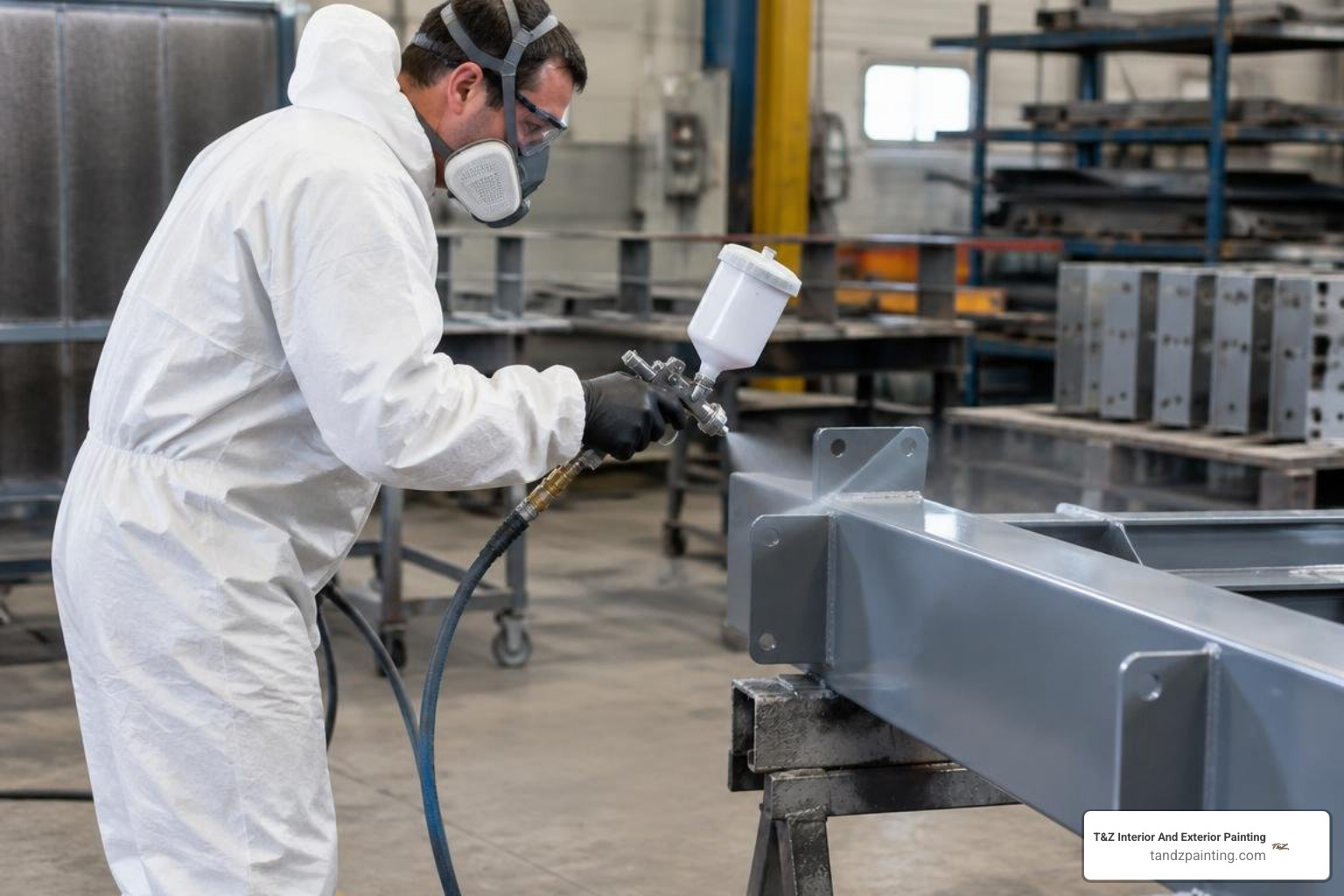
Choosing Metal Spray Painting Services in Lombard
For metal spray painting in Lombard, start with surface preparation, not color. Look for a painter who will clean the metal, remove loose rust or failing paint, and choose a primer and topcoat suited to the surface. Ask how the finish will handle weather or daily wear, and how long it needs to cure before use. The EPA provides useful guidance on managing lead paint hazards during surface preparation on older structures.
I’m Tomasz Niemotko, owner and founder of T&Z Interior And Exterior Painting, a licensed and insured contractor founded in 2009 at 1101 S Columbine Ave, Lombard, IL 60148. My guidance on metal spray painting services in Lombard draws on over 15 years of residential and commercial painting experience.
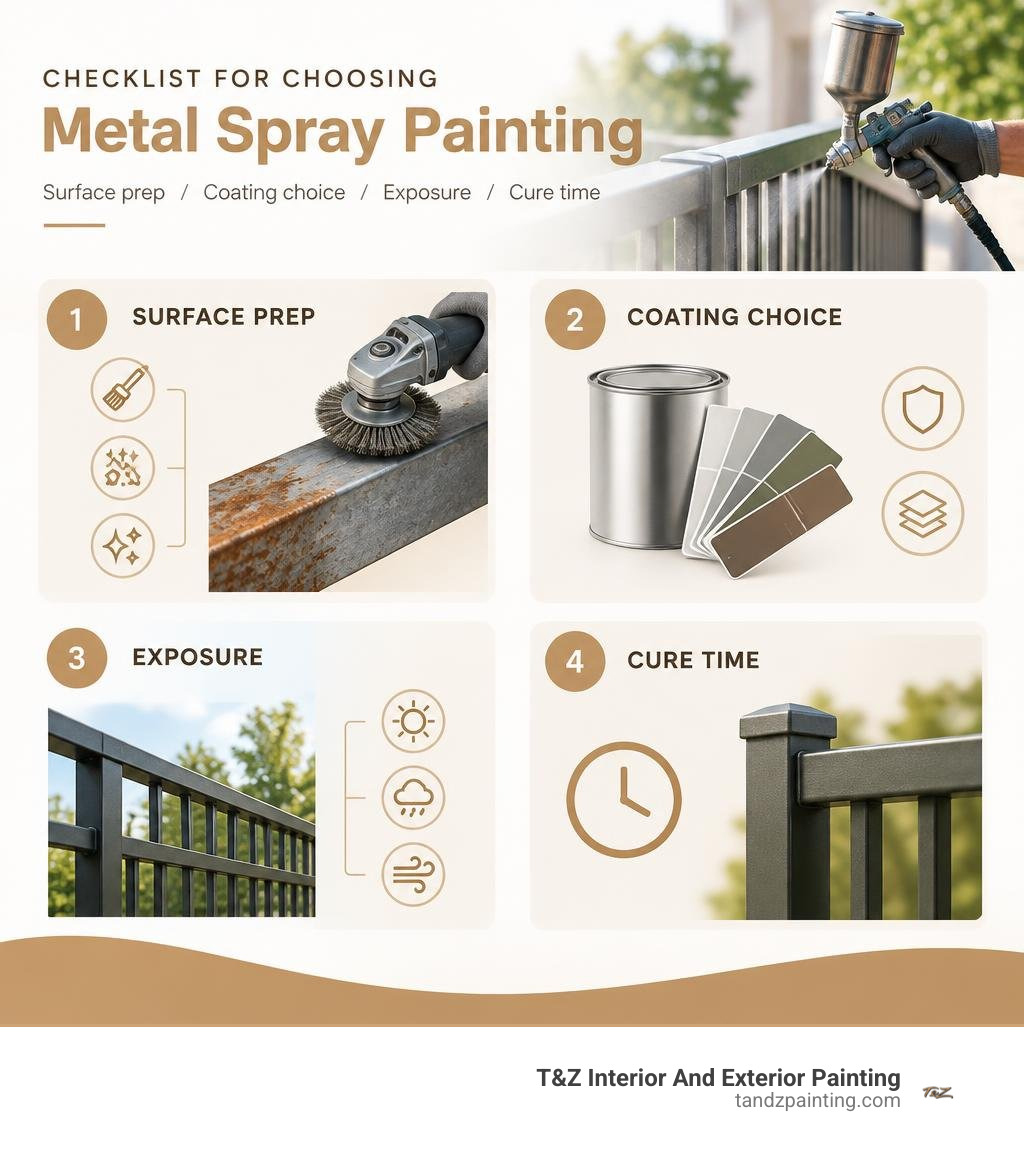
Helpful guides for metal spray painting:
Introduction
Architectural and structural metal adds strength, modern style, and classic charm to properties across Lombard, Glen Ellyn, Elmhurst, and Downers Grove. Whether you are updating wrought iron perimeter fencing, refreshing industrial steel doors, or protecting exterior railings from harsh Midwestern freeze-thaw cycles, spray finishing provides an even layer of protection that brush and roller methods simply cannot duplicate.
Metal is an unforgiving substrate. When moisture, oxygen, and road salts penetrate a weak coating, oxidation sets in beneath the surface. Rust expands, lifting the paint layer and compromising both structural integrity and curb appeal. Achieving long-term coating durability requires careful chemistry, precise atomization, and meticulous surface preparation.
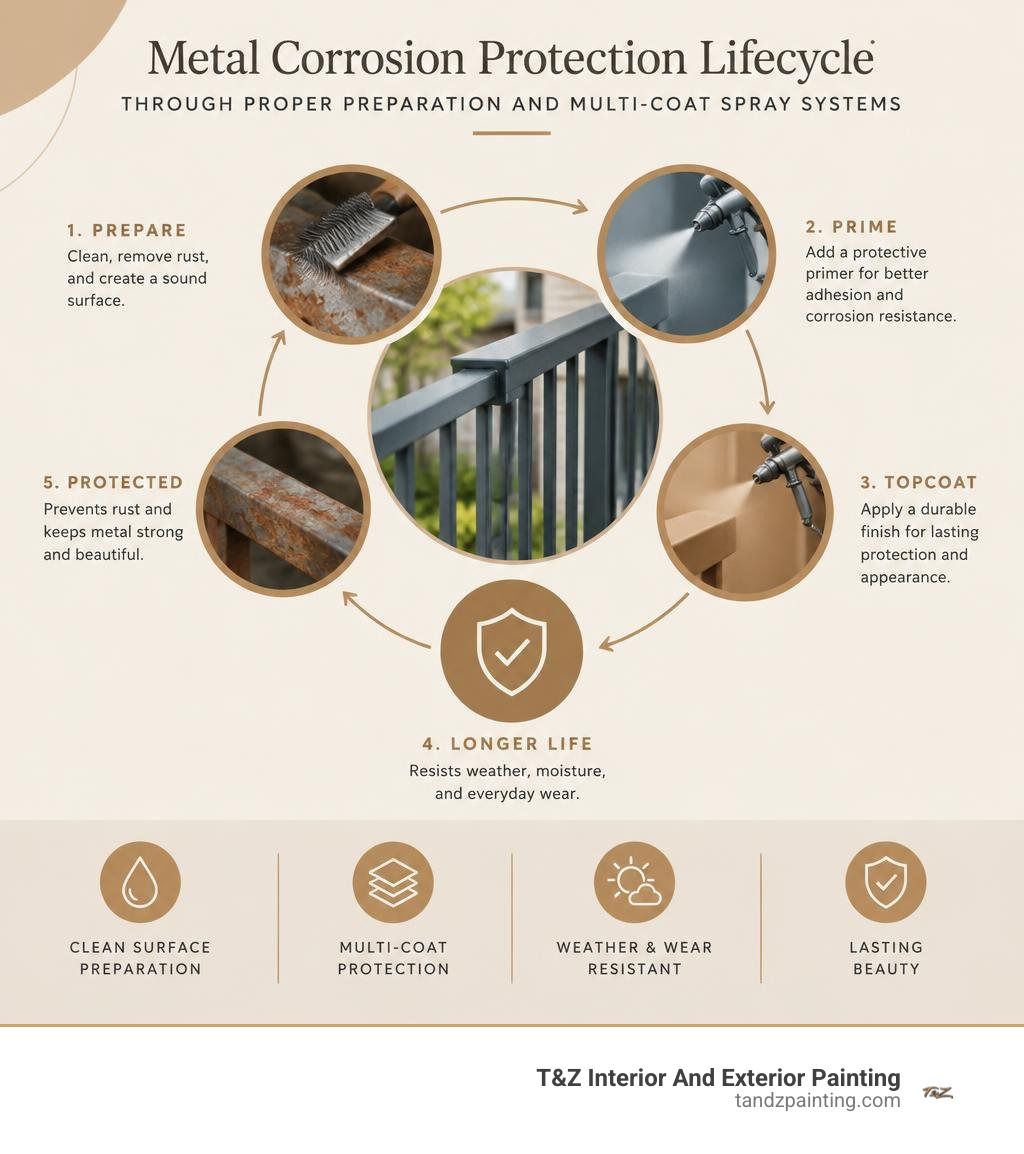
Spray Painting Methods and Finish Selection
Achieving a smooth, factory-grade finish on metal relies on atomization—the process of breaking liquid paint into tiny, consistent droplets using pressurized air or hydraulic force. When atomized paint hits the metal substrate, it flows together to form a uniform, seamless wet film without lap marks or brush strokes.
| Coating System | Recommended Metal Substrates | Durability & Exposure Profile | Best Application Scenario |
|---|---|---|---|
| Direct-to-Metal (DTM) Acrylic | Aluminum, clean steel, galvanized metal | Good UV resistance; flexible; mild to moderate exterior exposure | Exterior metal trim, residential gutters, siding accents, soffits |
| Alkyd / Oil-Based Enamel | Structural steel, iron railings, decorative gates | High abrasion resistance; rich gloss; moderate weather exposure | Interior and exterior metal staircases, handrails, metal furniture |
| Two-Component Epoxy Primer | Raw steel, heavy iron, industrial metal | Superior rust inhibition; outstanding chemical and moisture resistance | Basecoat for high-wear fixtures, commercial doors, structural frames |
| Urethane / Polyurethane Topcoat | Primed steel, aluminum, architectural metal | Exceptional color retention, gloss stability, and heavy abrasion defense | High-traffic commercial entrances, railings, exterior architectural features |
Liquid spray application offers outstanding versatility for properties in Lombard. Because liquid coatings cure naturally at room temperature or with mild air movement, our team can deliver high-performance finishes directly to stationary structural elements, fitted doors, and assembled railings on-site. Explore our specialized spray painting services to learn more about our on-site capabilities.
Selecting Liquid Coatings for Metal Surfaces
Choosing the right paint formulation depends entirely on the metal’s operating environment. For outdoor railings and exterior doors, exposure to driving rain, intense summer sun, and winter road salt requires a coating that resists chalking and cracking.
A complete coating system pairs a dedicated primer with a compatible topcoat. For heavy iron and structural steel, an epoxy or rust-inhibitive primer locks out air and water, while an enamel or polyurethane topcoat provides the outer shield. Review our recommendations for durable spray paints for metalwork to see how modern paint chemistry prevents rust before it starts.
Matching the Finish to the Metal Surface
Not all metals accept paint the same way:
- Ferrous Metals (Iron, Carbon Steel): Highly prone to oxidation. They require immediate priming with rust-inhibitive formulas like a rusty metal primer to stop existing surface corrosion.
- Non-Ferrous Metals (Aluminum, Copper, Brass): Aluminum resists rust but forms a natural oxide film that resists paint adhesion. It requires solvent degreasing and a specialty bonding primer.
- Galvanized Steel: Coated with a protective layer of zinc that reacts chemically with standard oil-based paints, creating a soapy film that causes peeling (a process called saponification). Galvanized surfaces require dedicated acrylic bonding primers formulated specifically for zinc coatings.
Color and sheen choices also play an important role. High-gloss finishes offer maximum cleanability and moisture resistance for heavy-touch areas like handrails, while satin and semi-gloss sheens soften reflections on expansive metal panels and siding accents.
Evaluating Metal Spray Painting Services in Lombard
When evaluating local contractors for your metal finishing project, consider equipment capabilities, containment protocols, and site safety. Precision spraying requires careful air-pressure regulation, professional masking techniques, and controlled fluid delivery to avoid dry spray, runs, or overspray on adjacent brick, glass, and landscaping.
Whether you need on-site finishing for architectural steel in Wheaton or decorative iron restoration in Oak Brook, partnering with an experienced contractor ensures every step is executed properly. Read our guide on commercial metal spray application to understand how professional crews manage complex commercial sites.
Surface Preparation Protocols for Metal Spray Painting Projects
No coating can outperform the surface beneath it. In fact, over 80 percent of premature coating failures stem directly from inadequate surface preparation.
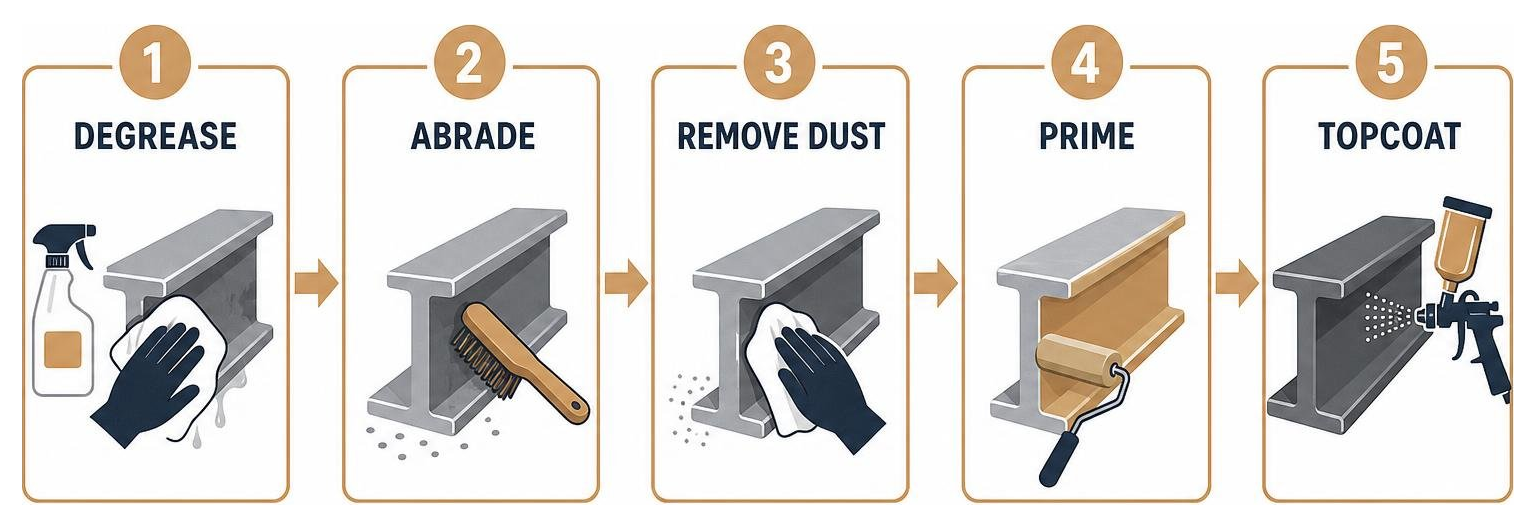
Our systematic surface preparation includes:
- Chemical Degreasing: Removing oil, grease, salt, and grime using specialized cleaning solutions. Painting over grease prevents the primer from bonding to the raw metal.
- Mechanical Abrasion: Scraping, wire-brushing, or sanding to remove all loose rust, scale, and failing paint layers.
- Profiling: Creating a mechanical “tooth” on smooth metal so the new primer can anchor firmly to the substrate. Learn more about how to prep metal surfaces for dependable adhesion.
- Dust Extraction: Wiping down the abraded surface with tack cloths or residue-free solvent cleaners to leave the metal clean.
- Perimeter Masking: Masking adjacent glass, concrete, siding, and flooring with precision tape, plastic sheeting, and heavy drop cloths to protect non-target surfaces from atomized overspray.
Project Scope, Scheduling, and Planning for Metal Finishing
Project timelines and work scopes vary based on the physical size, intricacy, and location of the metal elements. Intricate architectural railings or expanded metal mesh require specialized spray techniques to achieve full coverage on all sides without creating heavy edge buildups.
Planning your project involves evaluating:
- Total Surface Area & Geometry: Intricate scrollwork and lattice take more time to prep and spray than flat steel doors.
- Accessibility & Containment: Interior retail spaces or multi-story exterior railings may require scaffolding, specialized masking enclosures, and staged work schedules to avoid disrupting daily activities.
- Cure Times: While atomized spray finishes dry to the touch quickly, full cross-linking can take several days depending on ambient humidity and temperature.
For a complete overview of what to expect during a project, check out our guide to local spray painting services.
Environmental and Safety Considerations for Spray Painting
Spray painting liquid coatings requires strict attention to workplace safety and environmental protection. Atomized mists carry fine paint particles and solvent vapors that require proper management.
Our team follows strict safety protocols:
- Ventilation and Air Exchange: Utilizing portable explosion-proof exhaust fans, negative-air machines, and carbon filtration when spraying in enclosed commercial or residential spaces.
- Overspray Containment: Erecting temporary containment barriers to capture paint drift, protecting parked cars, neighboring structures, and nearby landscaping.
- Personal Protective Equipment (PPE): Technicians wear organic-vapor half-mask or full-face respirators, eye protection, and protective suits during all active spraying operations.
- Responsible Disposal: Handling solvent rags, empty containers, and masking paper according to local waste disposal regulations to protect our Lombard community and environment.
Quality Checks for Spray-Painted Metal
After the coating has dried, we perform thorough quality checks:
- Dry Film Thickness (DFT): Verifying the coating film matches the manufacturer’s target specifications to ensure protection without sagging or wrinkling.
- Visual Uniformity: Checking the finish from multiple lighting angles to confirm consistent sheen, complete opacity, and the total absence of orange peel or pinholes.
- Edge Encapsulation: Ensuring sharp metal corners, seams, weld lines, and fasteners are fully coated, eliminating micro-gaps where rust often starts.
Considerations for Residential and Commercial Metal Features
Metal fixtures endure different stresses depending on their function and setting:
- Commercial Doors & Frames: High-frequency foot traffic, keys, and cleaning chemicals cause heavy friction. Two-component urethane or tough enamel coatings resist scuffing and impact damage.
- Exterior Iron Railings & Balconies: Exposed to sun, rain, and snow, these require rust-inhibiting basecoats paired with UV-stable topcoats. Discover how professional rust prevention for commercial steel protects long-term structural integrity.
- Interior Architectural Trim & Staircases: Residential steel stair stringers, metal loft railings, and accent trim demand a clean, smooth finish that complements interior living spaces.
Frequently Asked Questions About Metal Spray Finishing
What should I consider when choosing a spray-applied finish for metal?
Focus first on the metal’s environment (indoor moisture, outdoor weather, chemical exposure) and the substrate type (steel, galvanized iron, aluminum). Then select a primer and topcoat system specifically engineered for those conditions, choosing a sheen and color that matches your design goals.
How do surface preparation methods affect metal coating adhesion?
Surface prep creates the foundation for the entire coating system. Removing grease, loose scale, and oxidation exposes solid substrate, while sanding creates microscopic texture that allows the primer to anchor securely. Skipping prep leads to bubbling, flaking, and early rust formation beneath the new finish.
What environmental and safety considerations apply to spray painting?
Proper spray painting requires adequate air movement, respiratory protection for applicators, overspray containment to protect nearby property, and safe handling of all masking and cleaning materials in accordance with local regulations.
Conclusion
A high-performance spray finish protects your metal investments against weathering, moisture, and daily wear while restoring its clean, professional appearance. When you need precision spray painting services in Lombard, Glen Ellyn, Villa Park, Oak Brook, Downers Grove, Wheaton, Elmhurst, Addison, or surrounding communities, work with an experienced team that focuses on detailed preparation and proven application methods.
At T&Z Interior And Exterior Painting, we take pride in delivering dependable, high-quality finishes for residential and commercial properties. Founded in 2009 by Tomasz Niemotko, our locally owned team brings over 15 years of hands-on experience to every project. We are fully licensed and insured, BBB accredited, maintain a 5.0 Google rating with 85+ reviews, and back our workmanship with a 2-year warranty on work.
Ready to protect and refresh your metal surfaces? Request a free estimate at tandzpainting.com or call us directly at (224) 240-0054 to discuss your next project.