
How to Find Wood Spray Painters Near Me
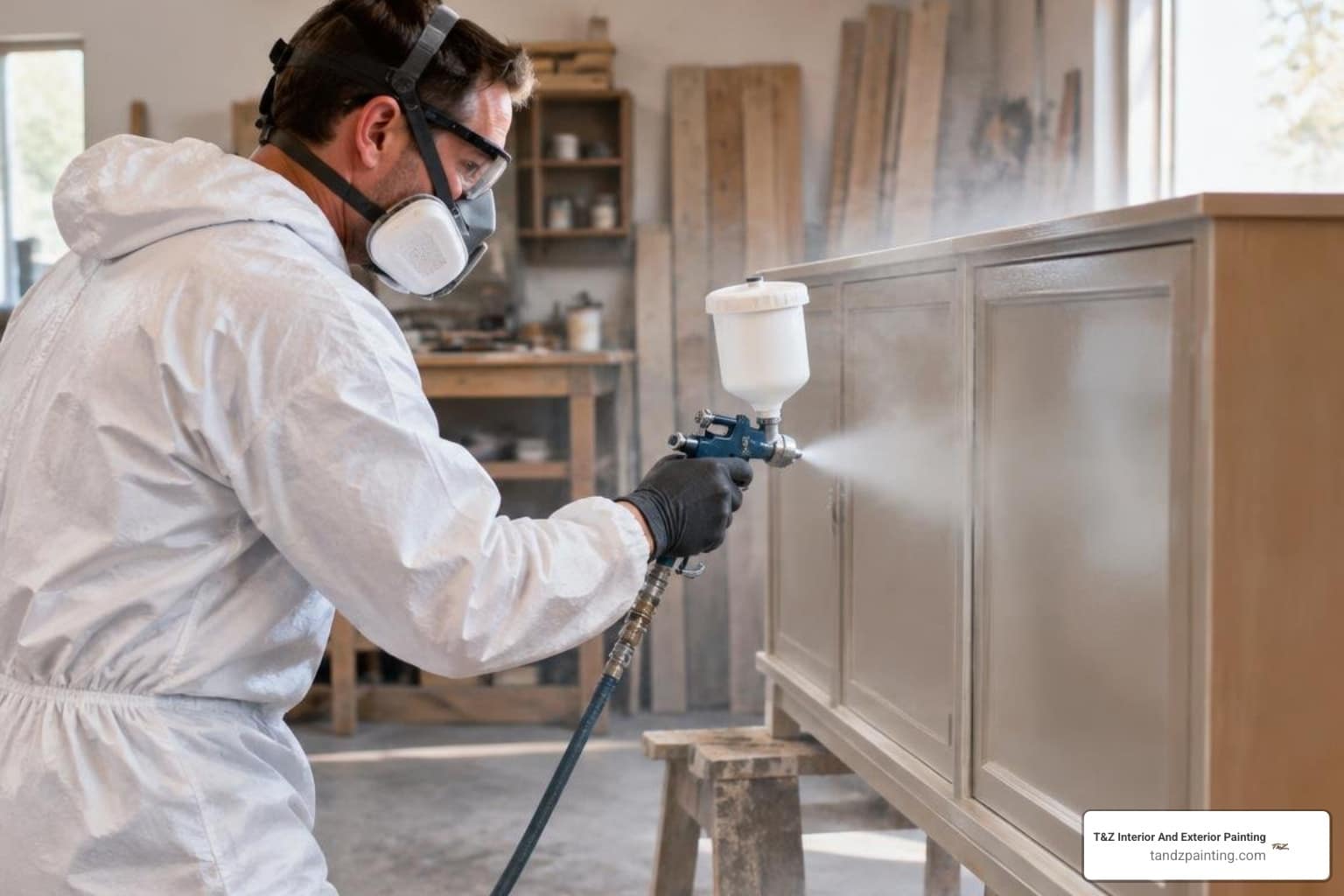
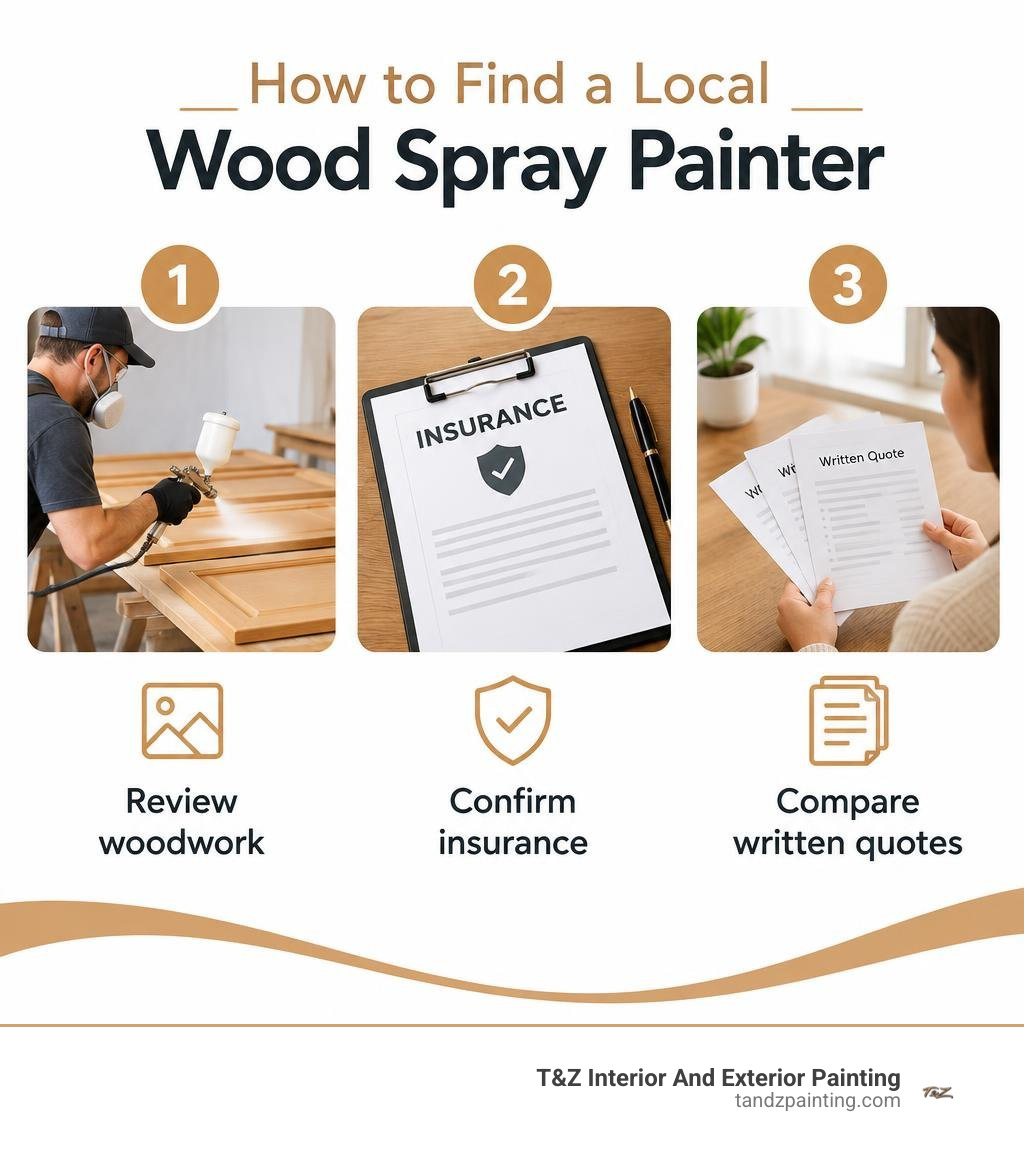
If you’re searching for wood spray painters near me in Lombard, start by checking photos of finished cabinets or furniture. Confirm the painter is insured, then ask for a written quote that covers cleaning, sanding, primer, paint, and protection of nearby surfaces. Those details tell you more about the job than a price alone.
T&Z Interior And Exterior Painting is a licensed and insured contractor based at 1101 S Columbine Ave, Lombard, IL 60148. We offer cabinet and furniture refinishing and spray painting; call (224) 240-0054 to discuss your project.
I’m Tomasz Niemotko, owner and founder of T&Z, which was founded in 2009. From over 15 years of painting experience, I’ll explain what homeowners looking for wood spray painters near me should expect from a lasting finish.
Wood spray painters near me word list:
Fine woodworking and custom architectural joinery demand an exceptional surface finish. Whether you want to refresh custom built-ins, update interior doors, or restore solid hardwood furniture, standard brush and roller methods often leave behind visible textures, brush marks, and uneven sheen levels. Spray finishing atomizes coatings into a fine mist, allowing the paint to level out into a smooth, factory-grade coat that highlights the natural beauty and craftsmanship of your woodwork.
Why Hire Professional Wood Spray Painters Near Me?
When dealing with detailed woodwork, intricate profiles, and high-traffic furniture, achieving a smooth finish requires specialized equipment, controlled spraying environments, and deep knowledge of wood movement. Partnering with a professional team ensures your woodwork is treated properly from initial cleaning to final clear coating. Professional finishing preserves the crisp profiles of custom millwork, avoids heavy paint buildup inside delicate joinery crevices, and protects your investment for years.
Using dedicated spray equipment allows for consistent coating thickness across complex shapes that are impossible to coat evenly by hand. For homeowners who want to transform valuable pieces or high-end cabinetry, our guide to furniture and wood spray painting explains how controlled application creates lasting elegance.
| Feature | DIY Brush & Roller Painting | Professional Wood Spray Finishing |
|---|---|---|
| Surface Texture | Visible brush strokes, roller stipple | Ultra-smooth, factory-like leveling |
| Coating Uniformity | Uneven thickness at corners and edges | Precise, uniform mil thickness |
| Complex Profiles | Paint pooling in grooves and carvings | Even coverage without bridging |
| Overspray & Mess | Low airborne mist, high drip risk | Controlled containment and ventilation |
| Durability & Adhesion | Moderate surface bond | Deep mechanical and chemical bonding |
Flawless Joinery Finishes vs DIY Brush Painting
Hand-applied finishes often drag along wood grain, especially on detailed trim, raised panels, and fine joints. When paint dries too quickly during brushing, brush marks lock in place. Spray painting atomizes the liquid paint into microscopic droplets that knit together on the wood surface before curing.
This process eliminates leveling marks, bridges tight seams seamlessly, and maintains the crisp edges of fine millwork. When working on spray painting for large surfaces or expansive paneled walls, spraying provides an unbroken field of color that manual tools simply cannot replicate.

Equipment and Techniques Used by Wood Spray Painters Near Me
Achieving a high-end finish on fine wood requires matching the right spray system to the specific coating viscosity:
- HVLP (High Volume Low Pressure) Systems: HVLP sprayers run at lower pressure while moving a high volume of air. This setup delivers high transfer efficiency with minimal overspray, making the standard choice for furniture, mantels, and fine joinery. Professional tools allow fine adjustment of the spray fan and atomization for ultra-smooth clears and enamels.
- Airless and Air-Assisted Airless Sprayers: For large interior trim packages or exterior siding and fences, airless systems push material at higher fluid pressures for fast, consistent coverage.
- Precision Fluid Regulators and Custom Nozzle Tips: Proper tip selection ensures thick primers and fine clear coats atomize cleanly without spitting or orange peel. Professionals rely on high-grade components to maintain steady fluid pressure and consistent fan patterns.
Essential Surface Preparation and Priming Steps for Fine Wood
Great spray finishes are built on careful preparation. Wood is a porous, living material that expands and contracts with changes in humidity. Any dust, natural oils, or surface imperfections left on raw wood will be magnified under a smooth sprayed topcoat.

Sanding, Cleaning, and Degreasing Wood Surfaces
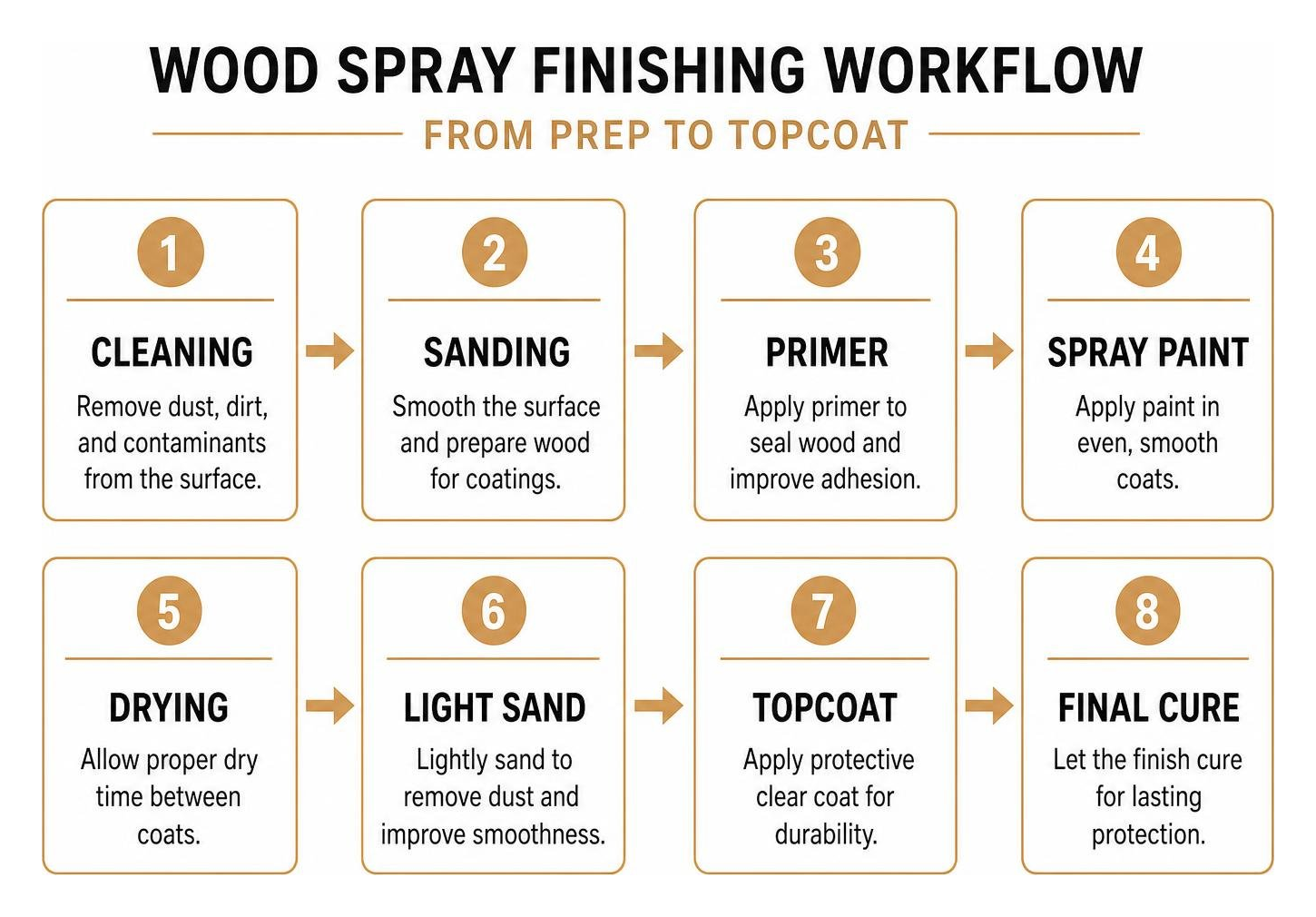
Before any paint touches the surface, the wood must undergo structured prep work:
- Hardware Removal: Remove all knobs, hinges, pulls, and catches to allow complete, edge-to-edge coverage.
- Degreasing and Cleaning: Wash the wood with a dedicated cleaner and degreaser to remove kitchen grease, body oils, and wax buildup.
- Progressive Sanding: Sand with fine-grit sandpaper (such as 120-grit followed by 180-grit and 220-grit) along the direction of the wood grain. This smooths raised grain and opens the pores for mechanical adhesion.
- Dust Extraction: Vacuum all crevices, then wipe the entire piece down using a tack cloth or lint-free microfiber cloth.
Crucial prep tools for fine joinery include:
- Random orbital sanders with dust collection
- Flexible sanding sponges for contoured profiles
- Quality degreasers (like Krud Kutter)
- Lint-free microfiber and tack cloths
- Professional masking tape and containment plastic
Choosing the Right Primer and Topcoat Protection
Never skip primer when spraying wood. Bare woods contain natural tannins and open pores that absorb topcoats unevenly. A quality primer seals porous grain, creates an even surface for paint bonding, and locks in wood tannins to prevent yellowing.
- Stain-Blocking Primers: High-adhesion oil-based or shellac-based primers, such as KILZ Original, block knot bleed and water stains effectively.
- High-Build Sanding Sealers: These primers level out open-grain woods like oak or ash, creating a smooth substrate.
- Protective Topcoats: For items that see daily handling, adding a clear polyurethane or enamel topcoat prevents chipping and scratching. Learn more about selecting products in our guide on choosing the best spray paint for wood.
Step-by-Step Process: How to Spray Paint Wood for Lasting Durability
Applying spray paint to fine wood follows a methodical sequence to ensure uniform mil thickness without runs, drips, or dry spray.
- Set Up Ventilation and Masking: Enclose the workspace using plastic sheeting and exhaust fans to capture overspray. Mask off any areas not being painted with sharp painter’s tape.
- Test the Spray Pattern: Always test your fan width and fluid flow on a piece of scrap cardboard or wood before aiming at your project.
- Maintain Consistent Distance: Hold the spray gun 8 to 12 inches away from the wood surface, keeping your wrist flexible to stay perpendicular throughout the stroke.
- Overlap Each Pass: Maintain a 50 percent overlap on every pass, triggering the spray gun just before the edge of the wood and releasing it after clearing the opposite edge.
- Apply Multiple Thin Coats: Build color through two to three light, even coats rather than one heavy coat. Allow proper flash-off drying time between coats as recommended by the manufacturer.
- Scuff Sand Between Coats: Lightly hand-sand between dried primer and paint coats using ultra-fine 320-grit sandpaper or a fine scuff pad, removing dust before the next pass.
Application Techniques for Indoor and Outdoor Woodwork
Indoor joinery, like built-in bookcases and trim, requires low-odor coatings and careful indoor overspray containment. Outdoor furniture, decks, and exterior millwork need paints formulated with flexible resins and UV inhibitors to handle changing seasons without cracking or peeling. Applying weather-resistant enamels protects exterior wood from rain, sunlight, and freeze-thaw cycles.
Comparing Wood Spray Finishes: Matte, Satin, and Gloss
Choosing the right sheen affects both the final look and the durability of your wood joinery. Understanding these differences helps you achieve the right factory finish for wood surfaces.
| Sheen Level | Light Reflectivity | Surface Smoothness | Cleanability & Durability | Best Applications |
|---|---|---|---|---|
| Flat / Matte | Very Low (0-5%) | Non-reflective, hides minor flaws | Moderate; best for low-contact areas | Decorative millwork, ceiling beams |
| Satin / Eggshell | Soft Glow (15-30%) | Smooth, warm luster | High; resists daily handling and scuffs | Furniture, interior doors, trim |
| Semi-Gloss | Noticeable Shine (40-60%) | Sleek, moisture-resistant | Very High; easy to wipe clean | Built-ins, architectural molding, cabinets |
| High Gloss | Mirror-Like (70%+) | Ultra-smooth, light-bouncing | Maximum hardness; shows every defect | Modern joinery, accent tabletops |
Cost Guide: Hiring Wood Spray Painting Services
Hiring a professional wood spray painter brings specialized equipment, controlled prep, and long-term durability to your project. Project costs reflect the detail and labor involved in the work.
Project Cost Breakdown and Pricing Factors
Several practical factors influence the overall investment for custom wood spray painting:
- Prep Work Intensity: Raw, porous wood or heavily damaged existing paint requires extensive filling, scraping, and progressive sanding before spraying can begin.
- Joinery Details and Size: Intricate fretwork, louvers, and complex paneled built-ins require more masking, hand detailing, and careful spray passes than flat panels.
- Coating Formulations: Industrial-grade urethanes, specialized stain-blocking primers, and high-durability clear topcoats carry higher material costs than standard latex paints.
- Site Containment: In-place spraying for interior millwork, trim, and doors requires complete masking of adjoining walls, floors, and ceilings with exhaust filtration to manage overspray cleanly.
How to Choose Qualified Wood Spray Painters Near Me
When searching for reputable wood spray painters in your local area, use these criteria to evaluate contractors:
- Review Detailed Portfolios: Look for close-up photographs of finished wood joinery, corners, and edges to verify a smooth, run-free finish.
- Verify Licensing and Insurance: Ensure the contractor carries comprehensive general liability and workers’ compensation coverage to protect your home.
- Check Authentic Customer Feedback: Look for positive community ratings and independent reviews on platforms like Google and the Better Business Bureau (BBB).
- Confirm Warranty Coverage: A reputable contractor should stand behind their craft with a clear written warranty on materials and labor.
Frequently Asked Questions About Wood Spray Painting
Can you spray paint wood without sanding first?
While specialty high-bonding primers allow paint to stick to certain clean surfaces, skipping sanding is not recommended for fine joinery. Lightly scuff sanding with fine sandpaper breaks the glaze of old finishes, removes raised grain, and creates a mechanical profile that keeps the paint from chipping or peeling over time.
Do I need to use primer before spray painting wood?
Yes. Bare wood contains open pores and natural tannins that can bleed through topcoats and cause uneven discoloration. A dedicated stain-blocking primer seals the grain, stops tannin bleed, and provides a uniform base so your finish coat cures with an even color and sheen.
What is the best spray paint for wood furniture?
The best coatings for fine wood furniture are durable acrylic enamels, waterborne alkyds, and industrial lacquers. Top products provide excellent leveling, scratch resistance, and color retention without remaining tacky or soft after drying.
Conclusion
A factory-smooth spray finish transforms fine wood joinery, custom built-ins, and furniture into standout architectural features. Proper surface cleaning, progressive sanding, high-adhesion priming, and multi-coat spray techniques ensure your woodwork stays protected and beautiful for years to come.
T&Z Interior And Exterior Painting is a licensed and insured painting contractor based at 1101 S Columbine Ave, Lombard, IL 60148. Founded in 2009 by owner Tomasz Niemotko, our team brings over 15 years of hands-on experience to every project. We are BBB accredited, hold a 5.0 Google rating with 85+ reviews, and back our craftsmanship with a solid 2-year warranty on work.
We proudly serve homeowners and businesses across Lombard, Glen Ellyn, Villa Park, Oak Brook, Oakbrook Terrace, Downers Grove, Wheaton, Elmhurst, Addison, Itasca, Roselle, Bloomingdale, Carol Stream, Wood Dale, Westmont, Bensenville, Berkeley, Hillside, Schiller Park, Glendale Heights, Schaumburg, and Chicago.
Whether you need detailed furniture refinishing, interior trim spraying, or complete spray painting services, we deliver smooth, lasting results. Contact us today at (224) 240-0054 or visit tandzpainting.com to request your free estimate.